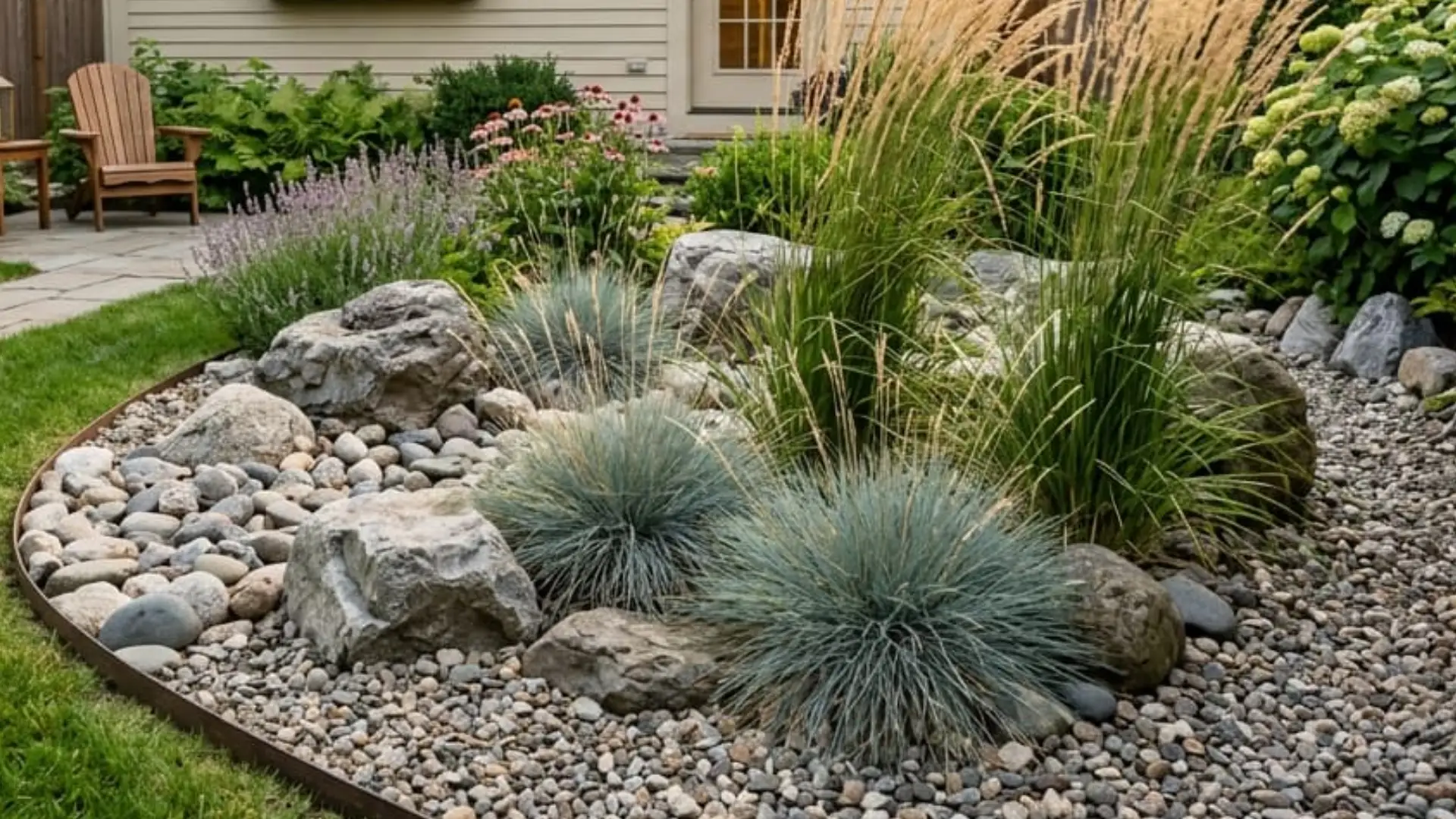
A small front bed should look good without turning into another weekend chore. That is why I like rock gardens for compact spaces: they stay tidy, handle heat well, and need far less attention than a traditional flower bed.
The best low-maintenance small rock garden ideas combine smart drainage, simple planting, and enough open space to keep the design from feeling crowded.
You do not need dozens of plants or expensive materials to make it work. A few well-placed rocks, hardy plants, gravel, and clean edging can change a small yard while keeping upkeep manageable through every season.
Here, you’ll find ideas that help you build a rock garden that looks polished and stays easy to maintain.
What to Plan Before You Start Your Small Rock Garden
Planning takes five minutes and prevents the most common redo later. Start by knowing the difference: a rock garden uses rocks or boulders as structural features, while a gravel garden relies on loose gravel as ground cover, though small yards often combine both.
Check your available space, daily sun exposure, and climate zone before choosing anything, since these factors control how much you can fit and which plants will survive with minimal watering.
When building, scale everything down. One dominant boulder and simple plant clusters usually look cleaner than several competing features.
Install in the right order, following the same basic site preparation steps used for any outdoor build: prepare the soil, add weed fabric, secure edging, place larger rocks, then spread gravel and add plants.
This sequence helps reduce weed breakthrough and future rework while keeping the finished bed balanced and manageable.
Low Maintenance Small Rock Garden Layout and Design Ideas
Layout is the decision that shapes everything else. In a small space, the wrong layout makes a bed look cluttered no matter how nice the individual pieces are.
1. Dry Riverbed Layout
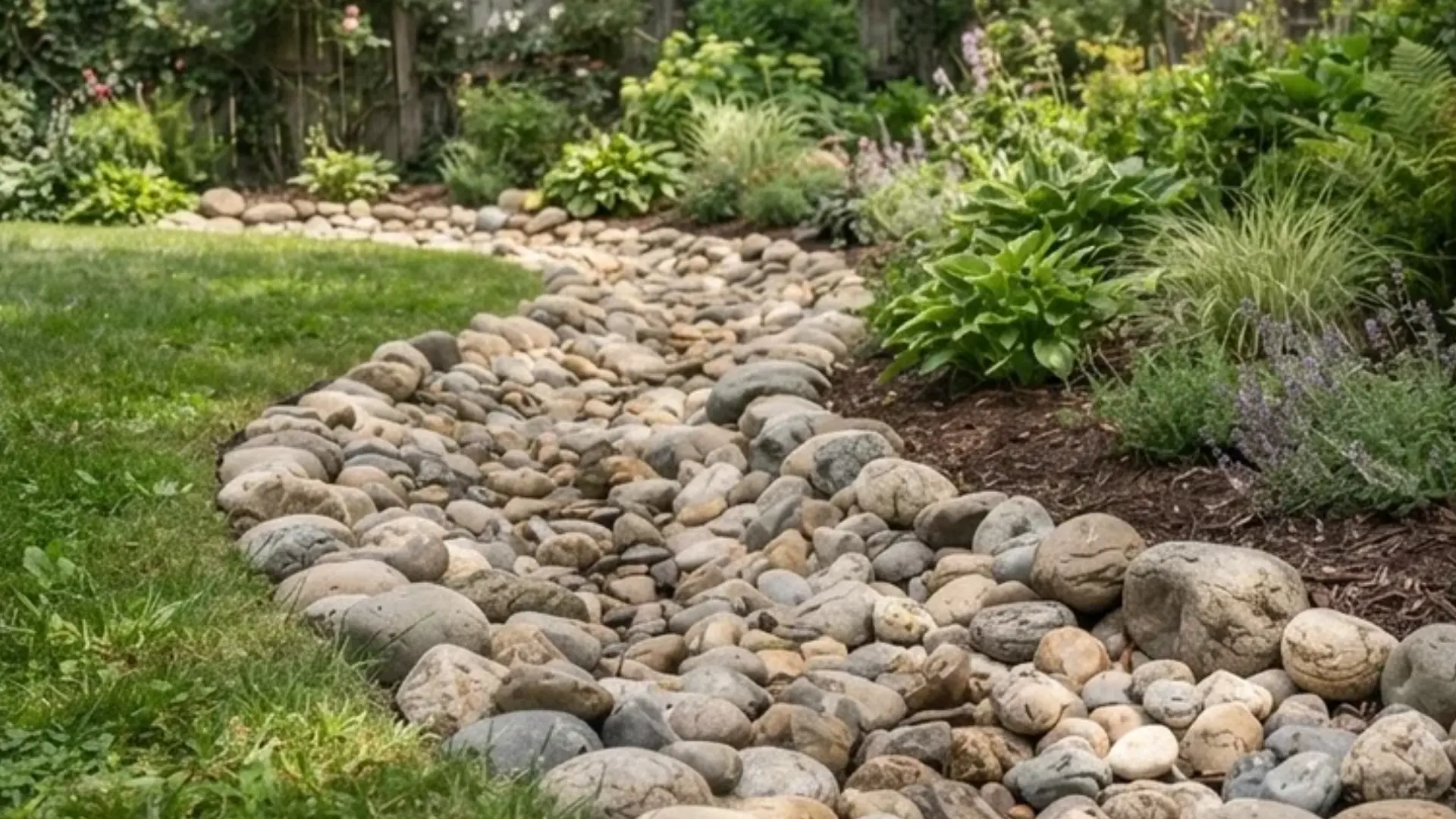
A dry riverbed uses curved lines of smooth stones to mimic a natural stream while making narrow or irregular spaces look more balanced.
Lay a curved path with a garden hose first to test the shape before you dig. Excavate 4 to 6 inches, add landscape fabric, then fill with mixed river rock sized 1 to 3 inches.
Vary the stone size along the curve so it reads as natural instead of poured from a bag.
2. Zen Minimalist Corner
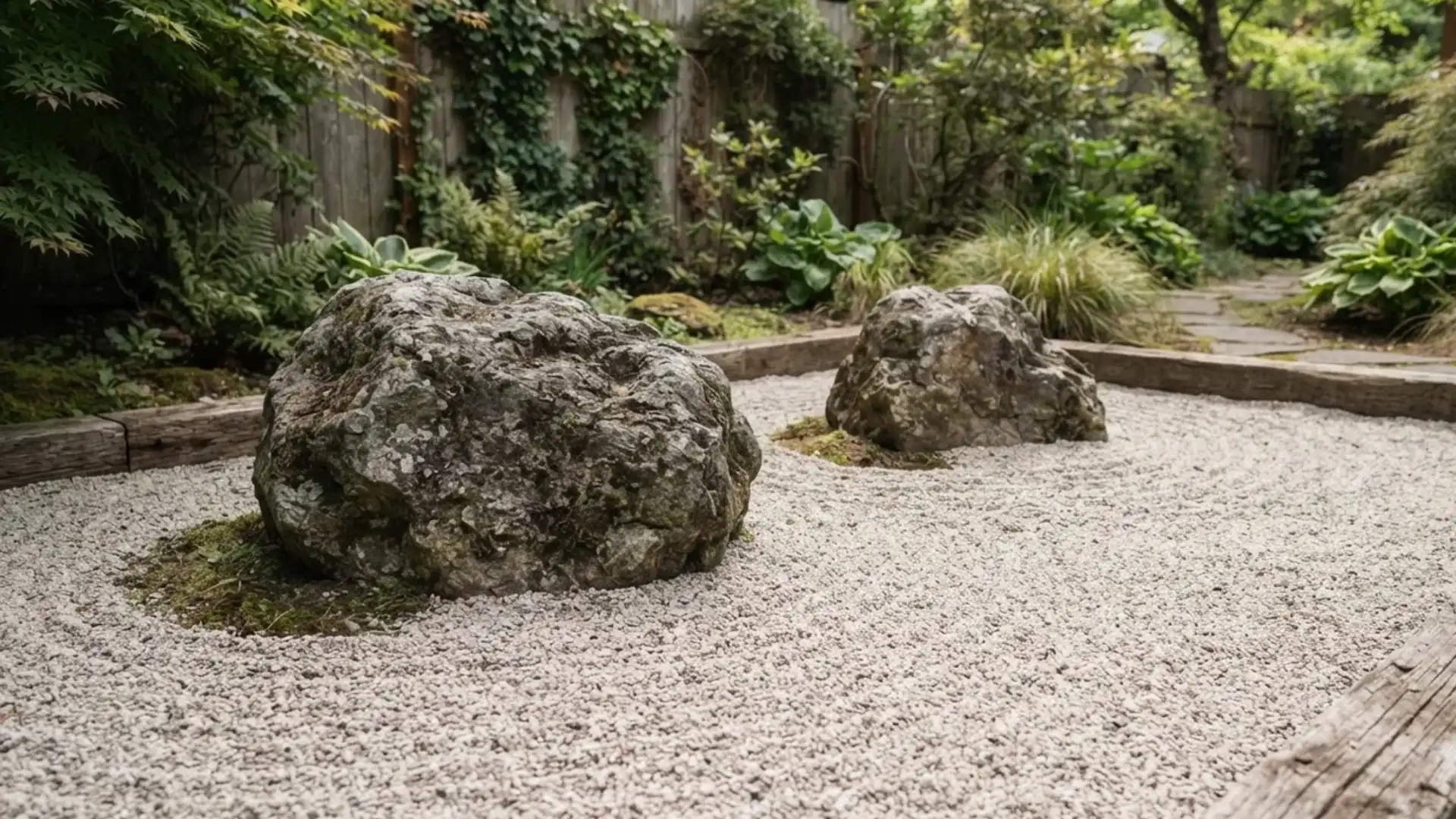
A neutral gravel base with one or two weathered boulders creates a clean focal point while making a small yard feel open and intentional.
Choose textured, weathered boulders, set them slightly into the ground, and rake the gravel in one direction for a natural, uncluttered look.
Tip: Avoid adding too many plants or decorative pieces, since open gravel space is what gives this layout its calm, clean appearance.
3. Curved Border Along a Walkway
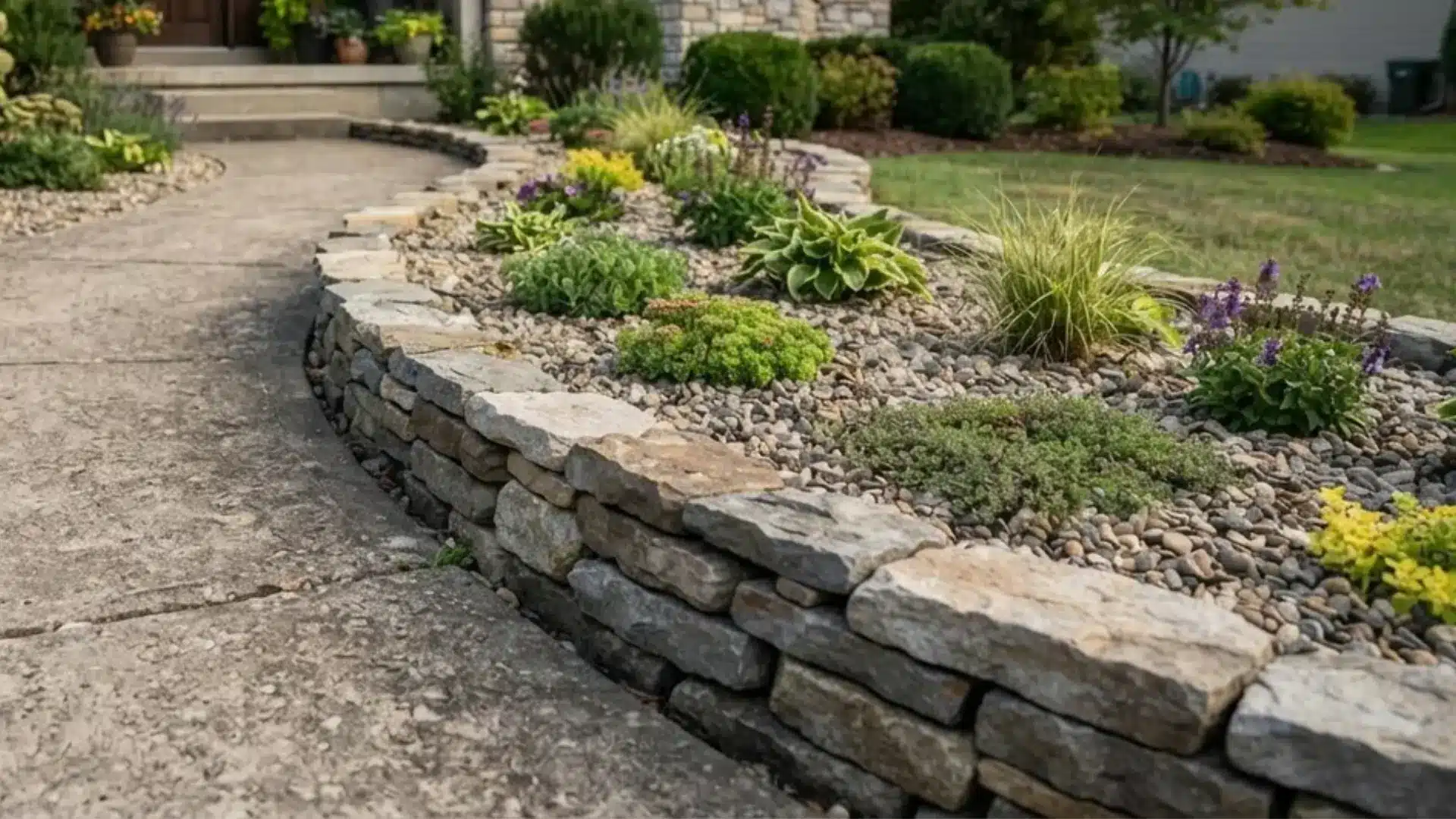
A curved rock border softens straight paths while creating a defined bed that feels natural, balanced, and easier to maintain in small yards.
Mark a gentle curve, cut the edge cleanly, add gravel, and space two or three plant clusters evenly along the bed.
4. Tiered Slope Rock Garden
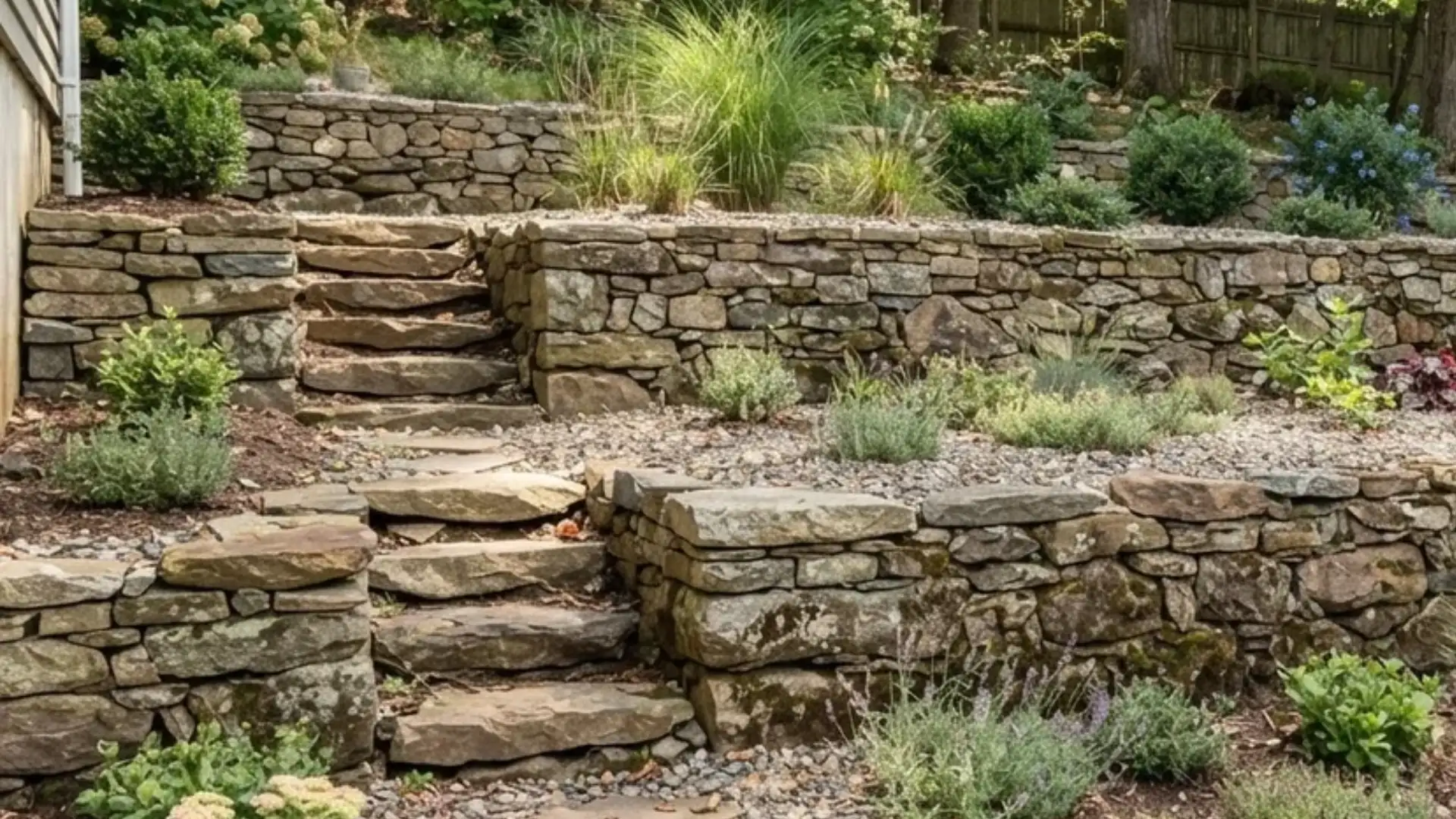
A tiered rock garden turns a difficult slope into a useful feature while helping control erosion and reducing the need for regular mowing.
Build upward from the bottom, backfill each level with draining soil the way proper yard grading calls for, and keep the design to two or three tiers for better proportion.
5. Circular Rock Island in a Lawn
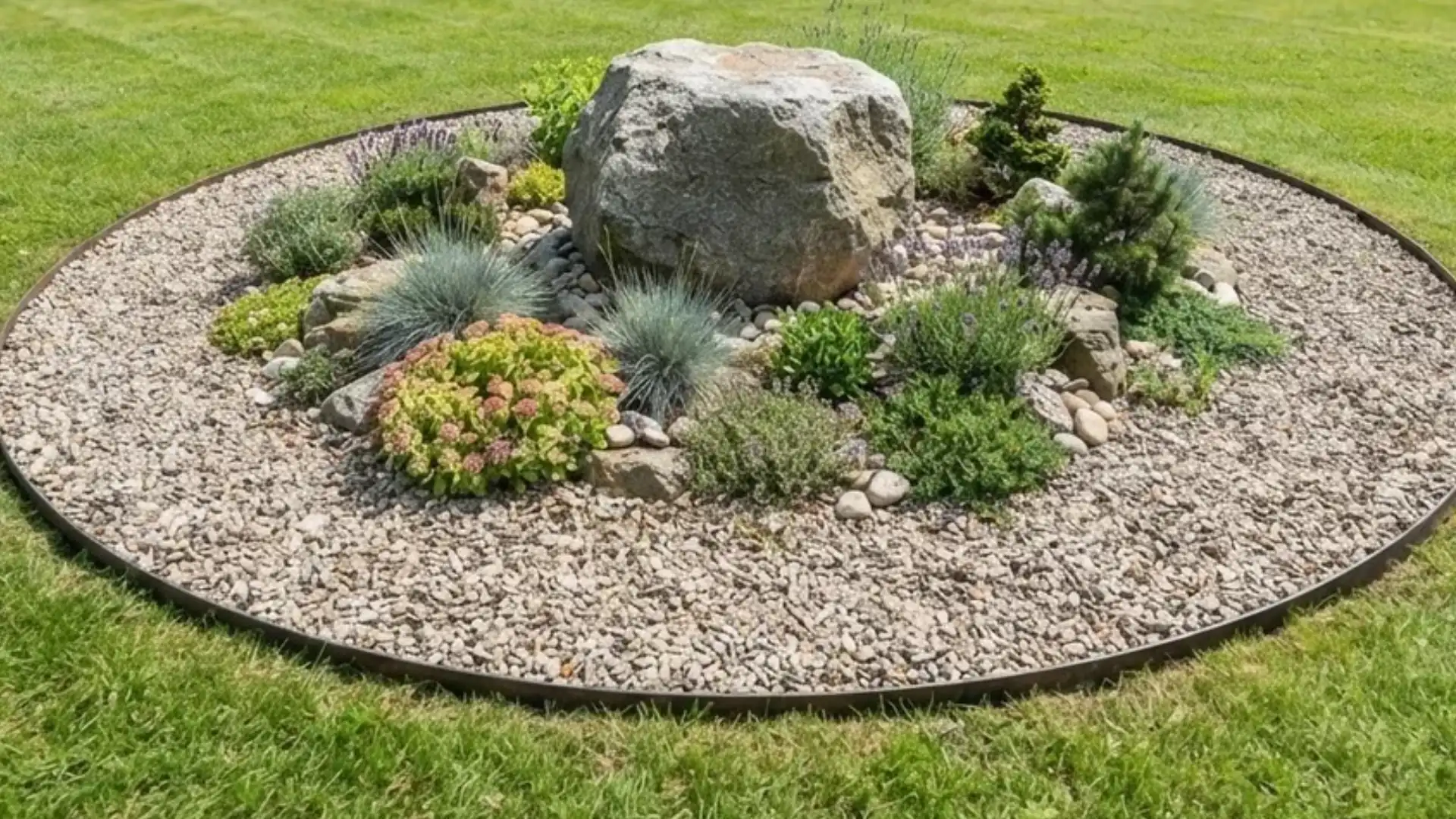
A circular rock island adds a clear focal point to an open lawn without connecting the bed to the house or outer boundary.
Keep the circle under eight feet wide, then fill it with gravel, one boulder, and a compact plant cluster placed near the center.
6. Corner Foundation Rock Bed
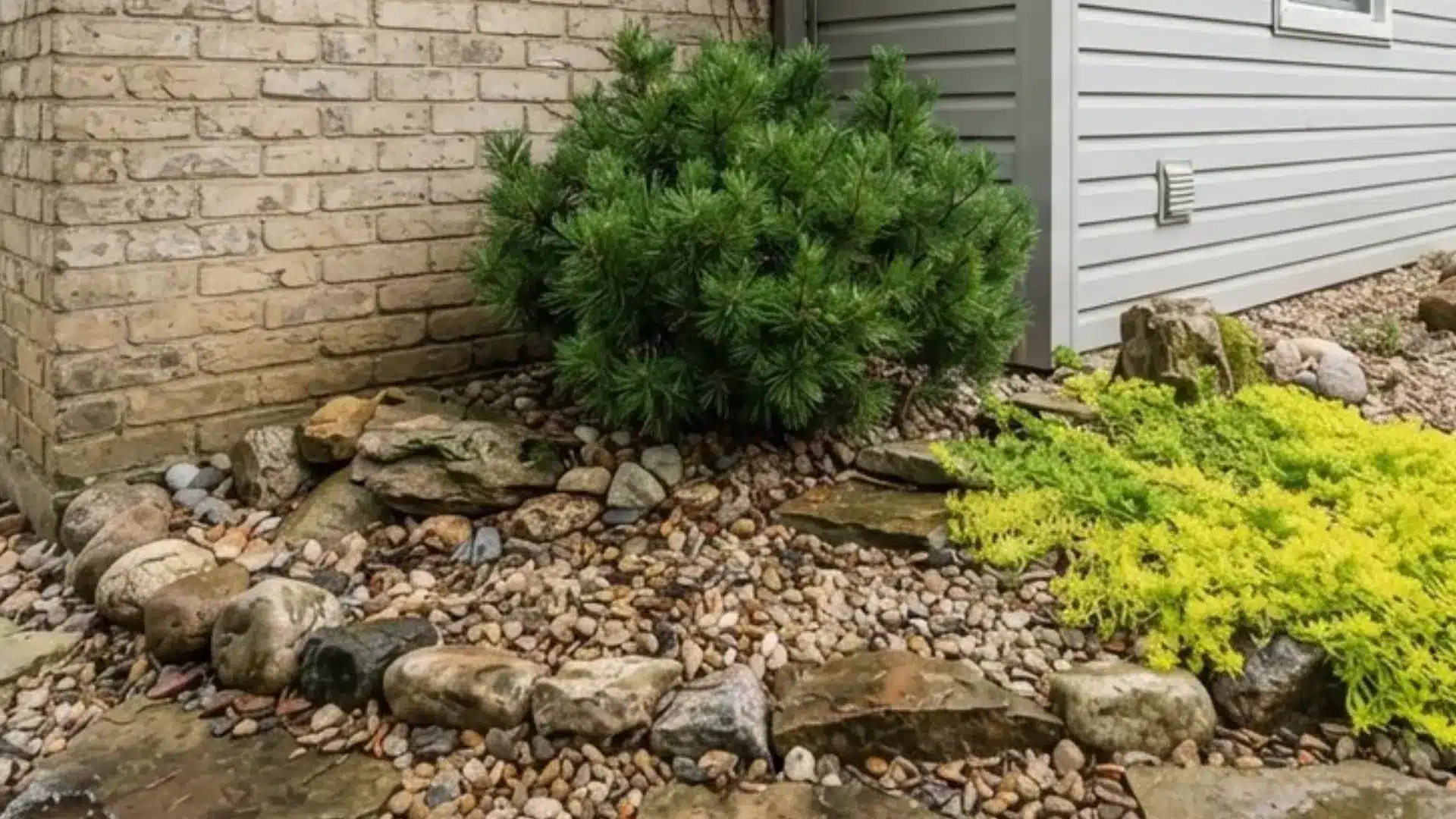
A corner rock bed uses awkward foundation space efficiently, reduces mowing, and gives the edge of the house a cleaner, finished appearance.
Clear grass away from the foundation, keep sightlines open, and use one taller plant with low groundcover filling the remaining bed area naturally.
Tip: Leave a small gap between rocks and the foundation to improve drainage and make future cleaning or repairs easier.
7. Raised Rock Garden Bed
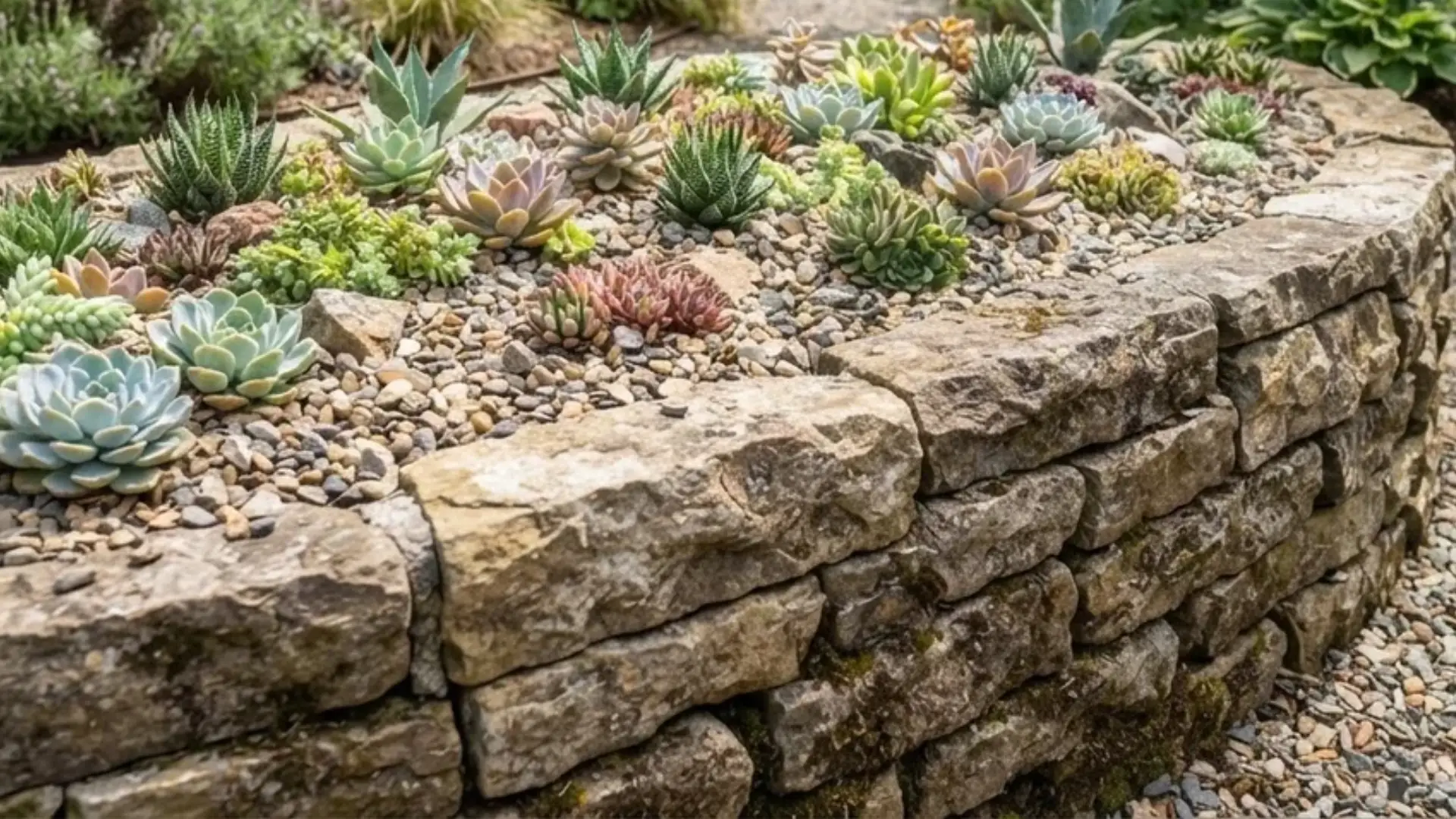
A raised rock garden improves drainage in difficult soil while adding height and structure to a flat yard without requiring much ongoing upkeep.
Build walls about 12 to 18 inches high, fill with fast-draining soil, and place succulents or alpine plants near the upper edges for drainage.
8. Rock Garden Around a Mailbox or Sign Post
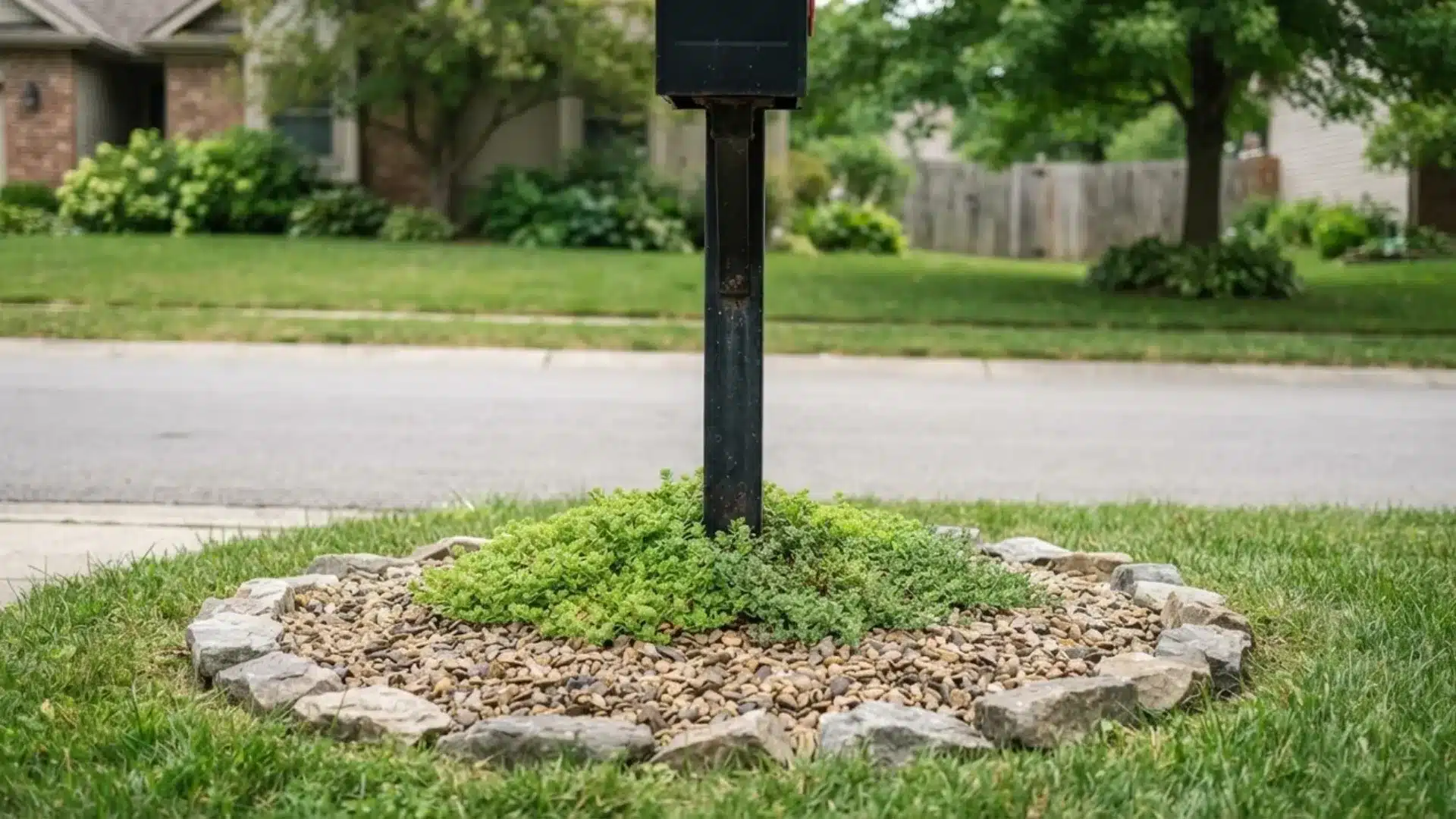
A small rock bed around a mailbox or sign post cleans up patchy grass while adding a neat detail near the street edge.
Clear a two- to three-foot area, add fabric and gravel, edge with larger stones, and finish with low spreading plants like creeping thyme.
Keep the layout simple, leave enough open space, and choose one clear focal point so your small rock garden feels balanced, tidy, and easy to maintain.
Rock, Gravel, and Hardscape Choices
The materials underneath your design decide whether the bed stays low-maintenance or turns into a weekly weeding chore, and they matter just as much here as they do in broader modern house exterior ideas.
These choices cover the base layer, borders, and stone selection that hold everything together.
9. Pea Gravel Base
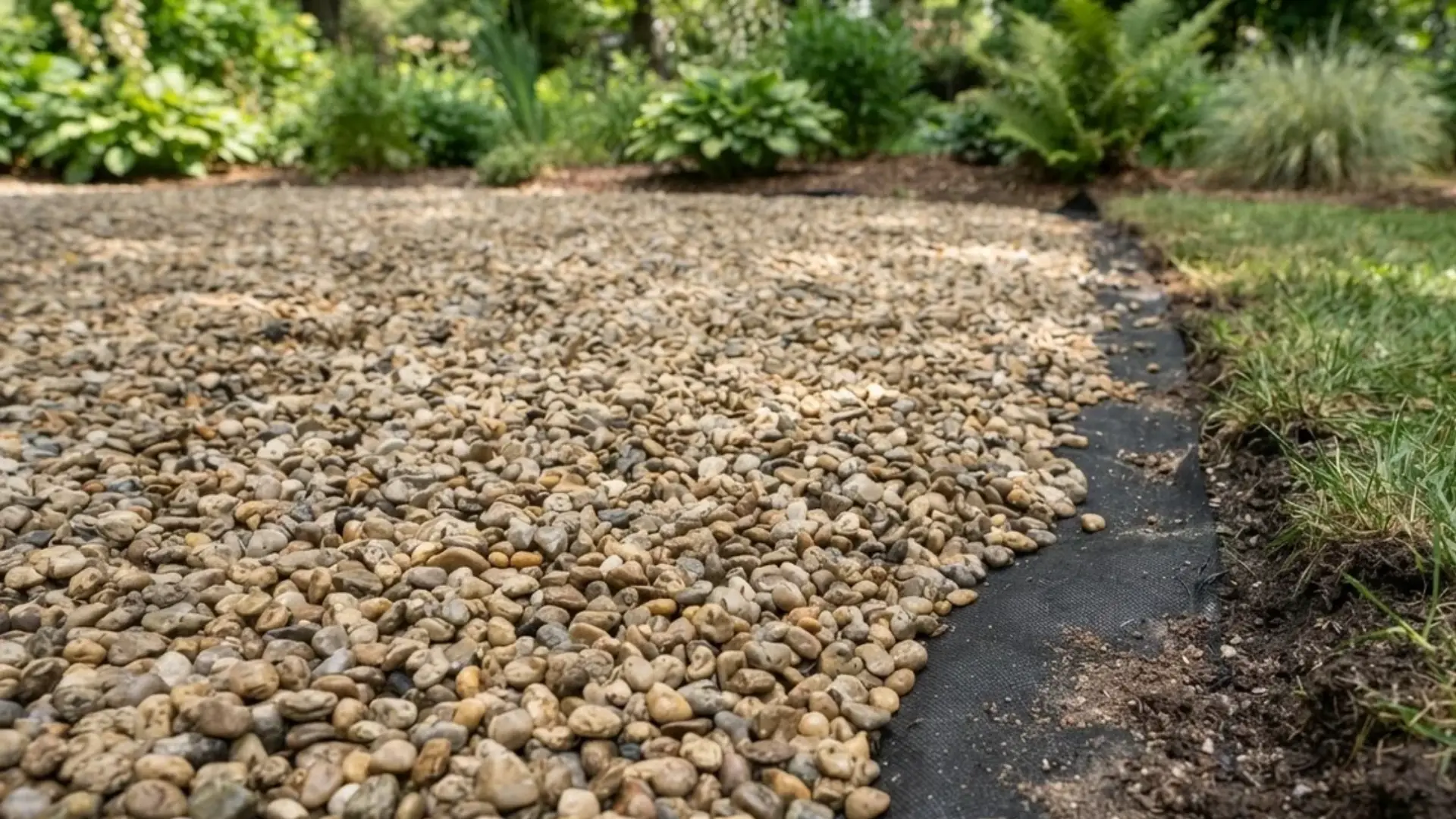
Pea gravel is affordable, drains quickly, and works well in small rock gardens, especially when the area also serves as a simple walking path.
Lay landscape fabric first, then spread 2 to 3 inches of gravel to prevent sinking, reduce weeds, and keep the surface easier to maintain.
10. Single Statement Boulder
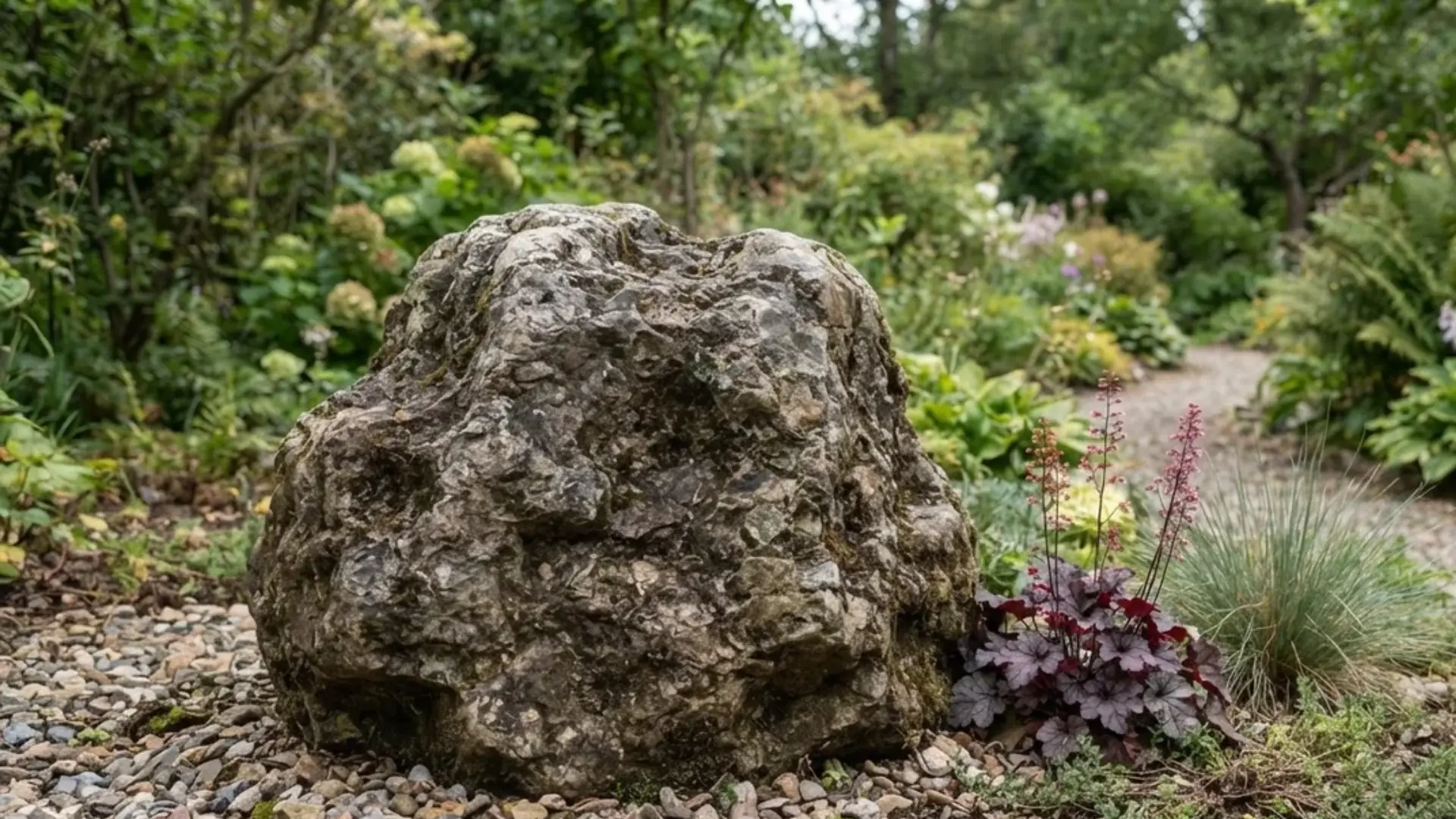
One large boulder creates a stronger focal point than several smaller rocks, helping a compact garden feel balanced, organized, and visually less crowded.
Choose one about one-third the bed width, bury the base slightly, and place it off-center so it feels naturally settled into the landscape.
Tip: Choose a boulder with natural texture and irregular edges so it blends into the bed instead of looking newly placed.
11. Mixed River Rock Sizes
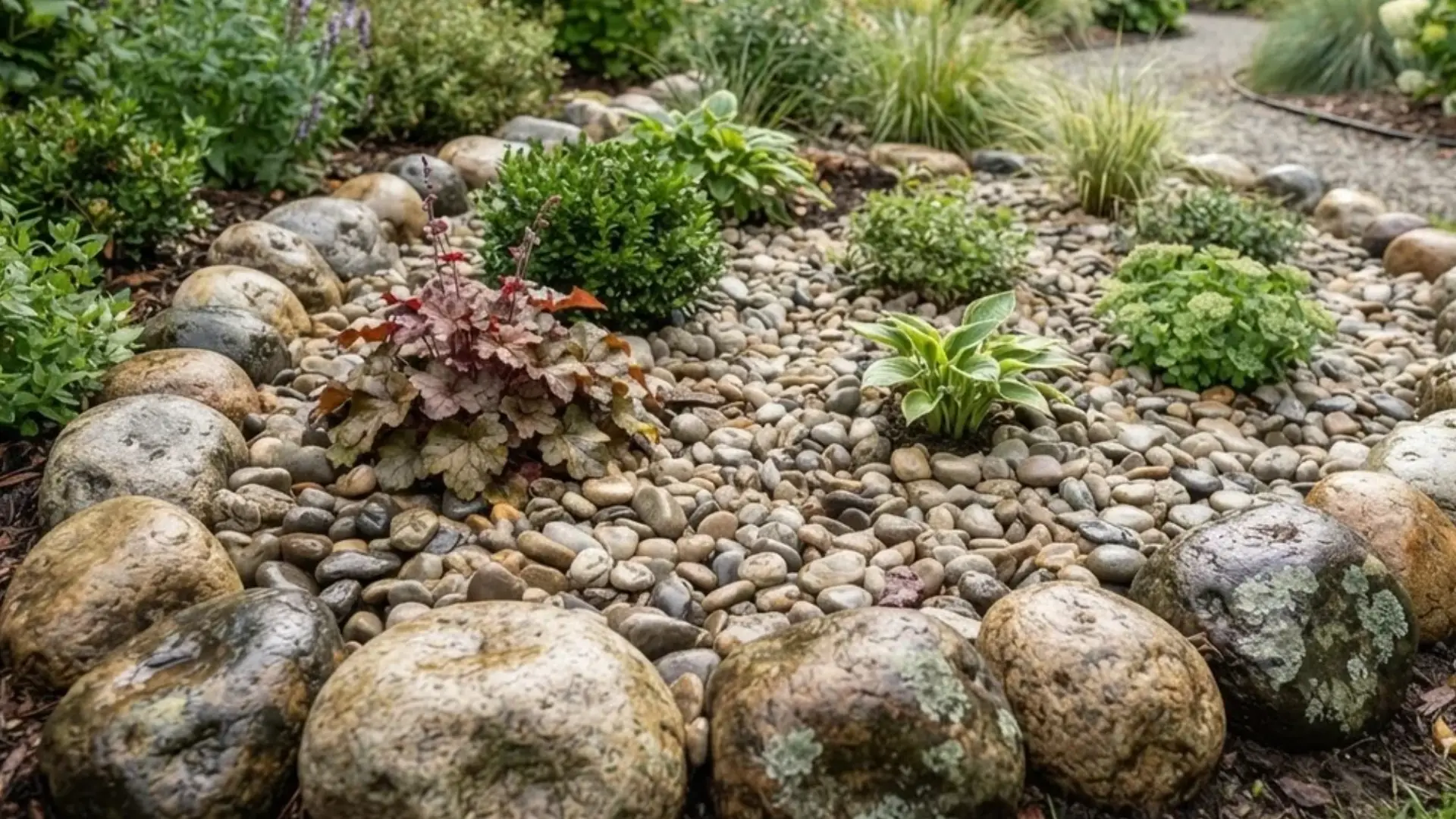
Mixing two or three river rock sizes adds natural texture and depth to a small garden without relying on extra plants or decorative features.
Place larger stones near edges or transition areas, fill gaps with smaller rock, and keep colors consistent so the finished bed feels planned.
12. Flagstone Stepping Path Through the Bed
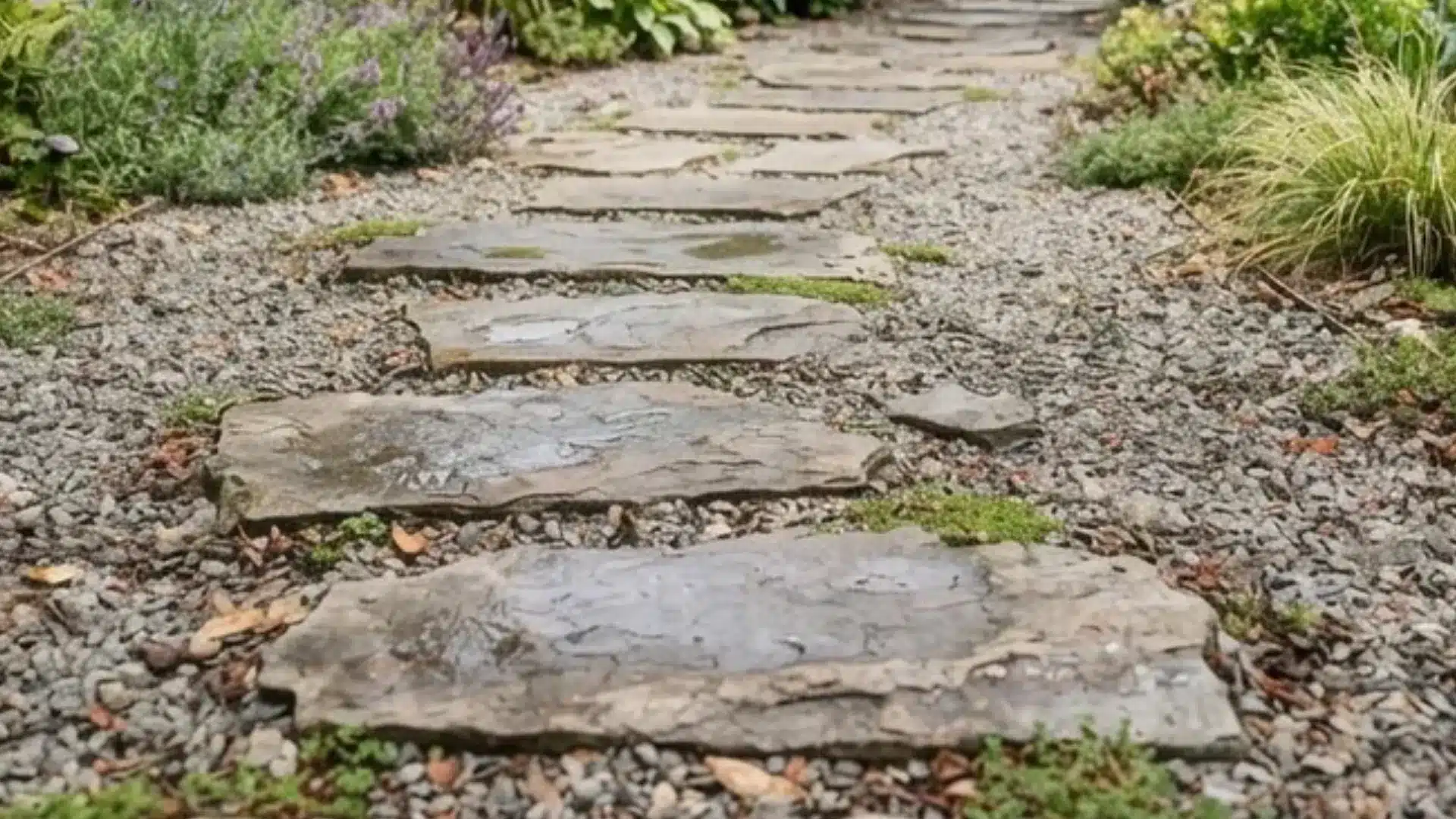
A short flagstone path provides easy access for occasional plant care while breaking up wide gravel areas and adding useful structure to the garden.
Space stones about 24 to 28 inches apart, set them slightly below gravel level, and dry-set them so adjustments remain easy later.
13. Decomposed Granite Ground Cover
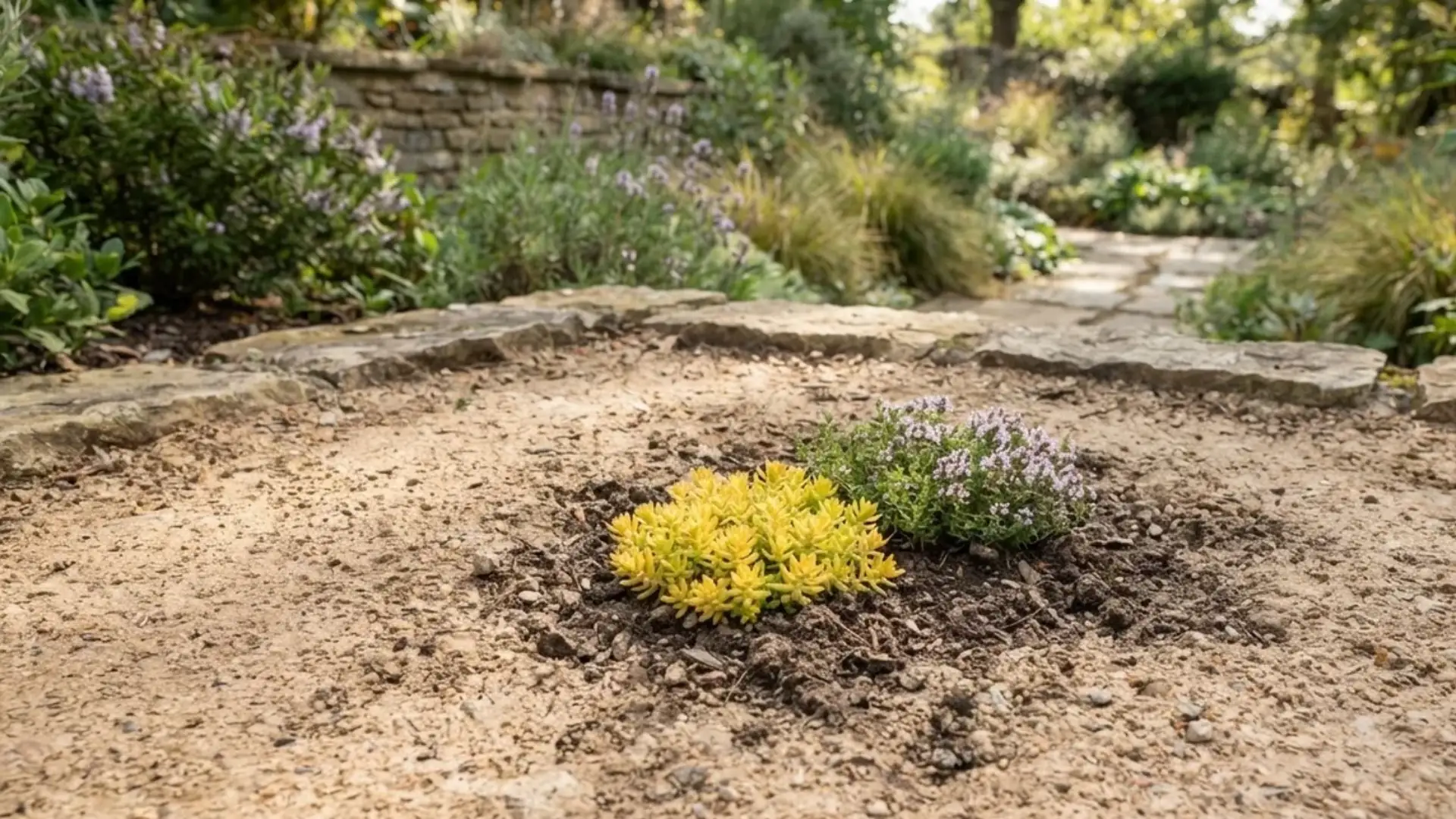
Decomposed granite creates a firmer, more stable surface than loose gravel, making it useful when a small rock garden also includes seating space.
Apply it in 1 to 2-inch layers over landscape fabric, compact each layer lightly, and leave loose planting pockets wherever plants will grow.
14. Metal Edging Border
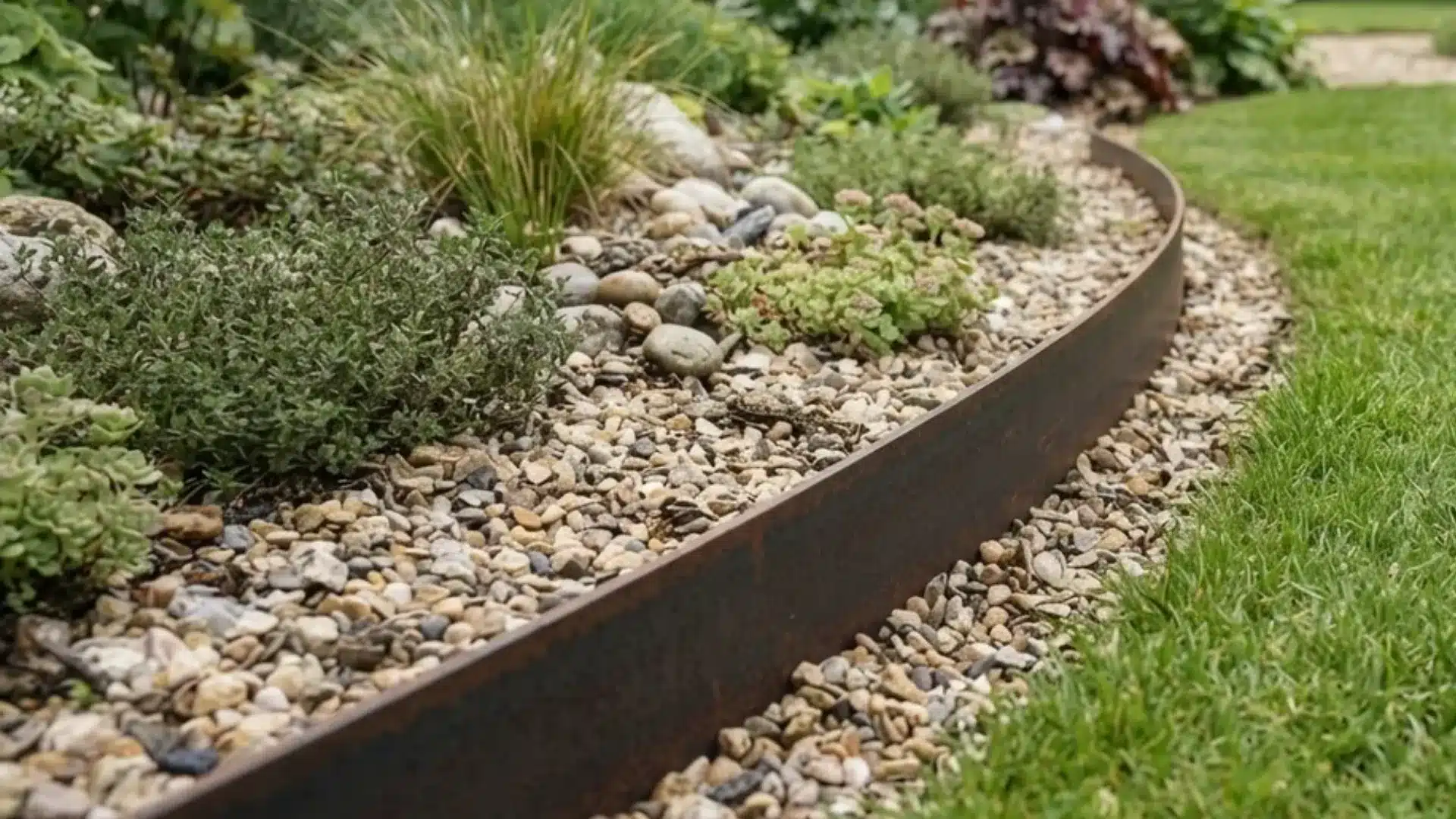
Metal edging keeps gravel contained, protects nearby lawn areas, and creates a crisp border that works especially well around curved or narrow garden beds.
Set the edging slightly above gravel height and stake it every 2 to 3 feet, giving curves enough support to stay firmly in place.
Tip: Check the edging after heavy rain or winter freezes and reset any sections that have shifted or lifted.
15. Dry-Stacked Rock Wall Accent
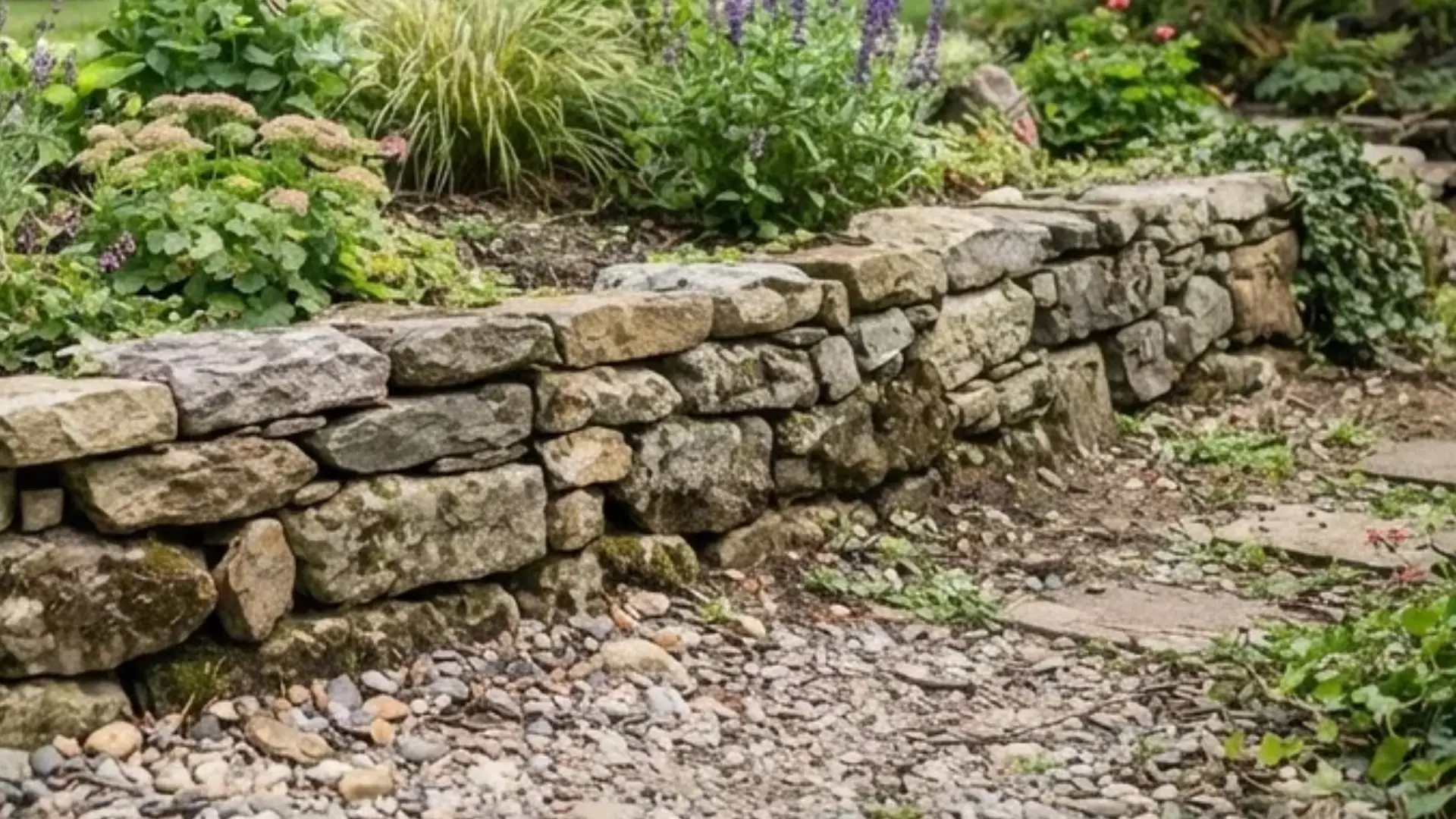
A low dry-stacked rock wall adds height and structure to a sloped or raised garden area without mortar or complicated construction.
Use flat-sided stones, bury the first course in a shallow trench, stagger the joints, and keep the wall below 18 inches in small yards.
Choose rocks, gravel, and edging that complement each other, drain well, and suit your space so the finished bed looks natural without requiring frequent upkeep.
Low-Maintenance Plant Pairings
Plants are where most small rock gardens go wrong. More variety looks busy in a tight space, and the wrong plant for your sun and soil means extra watering all summer.
16. Creeping Thyme Groundcover
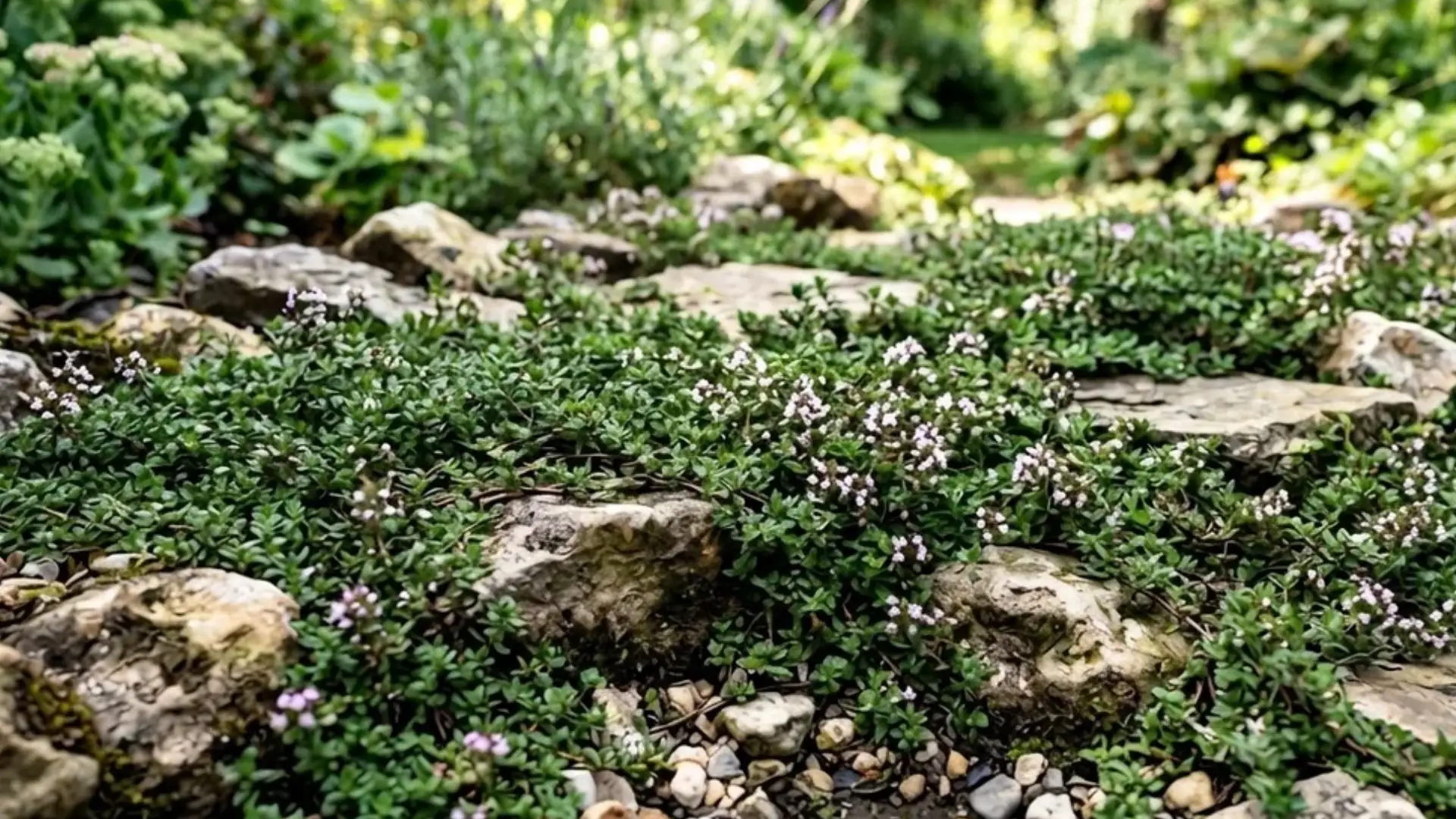
Creeping thyme spreads neatly along gravel edges and between rocks, creating a soft green carpet that adds texture, color, and a light fragrance without requiring mowing or frequent trimming.
Plant it in full sun; space starts 12 to 18 inches apart; water during the first month, then provide only occasional deep watering during unusually hot or dry weather.
17. Blue Fescue Grass Clumps
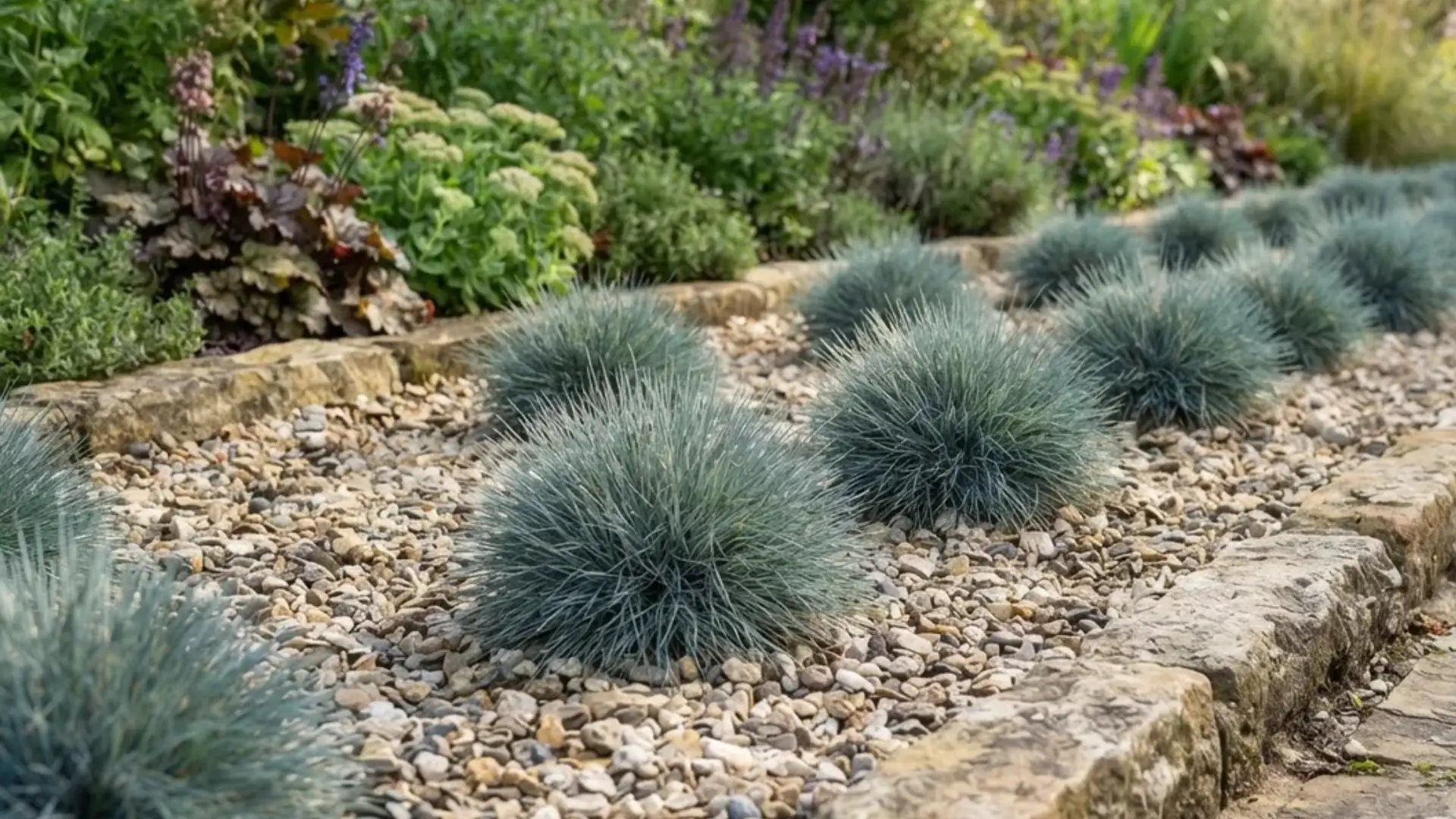
Blue fescue grows in compact blue-gray mounds that add shape and contrast to gravel beds while staying naturally tidy through most of the growing season with little attention.
Plant clumps 12 to 15 inches apart in full sun and well-draining soil; water during establishment, then remove dead blades once each year in early spring as needed.
Tip: Avoid overly rich soil, since too much fertilizer can make blue fescue floppy and reduce its compact shape.
18. Goldmoss Sedum Patches
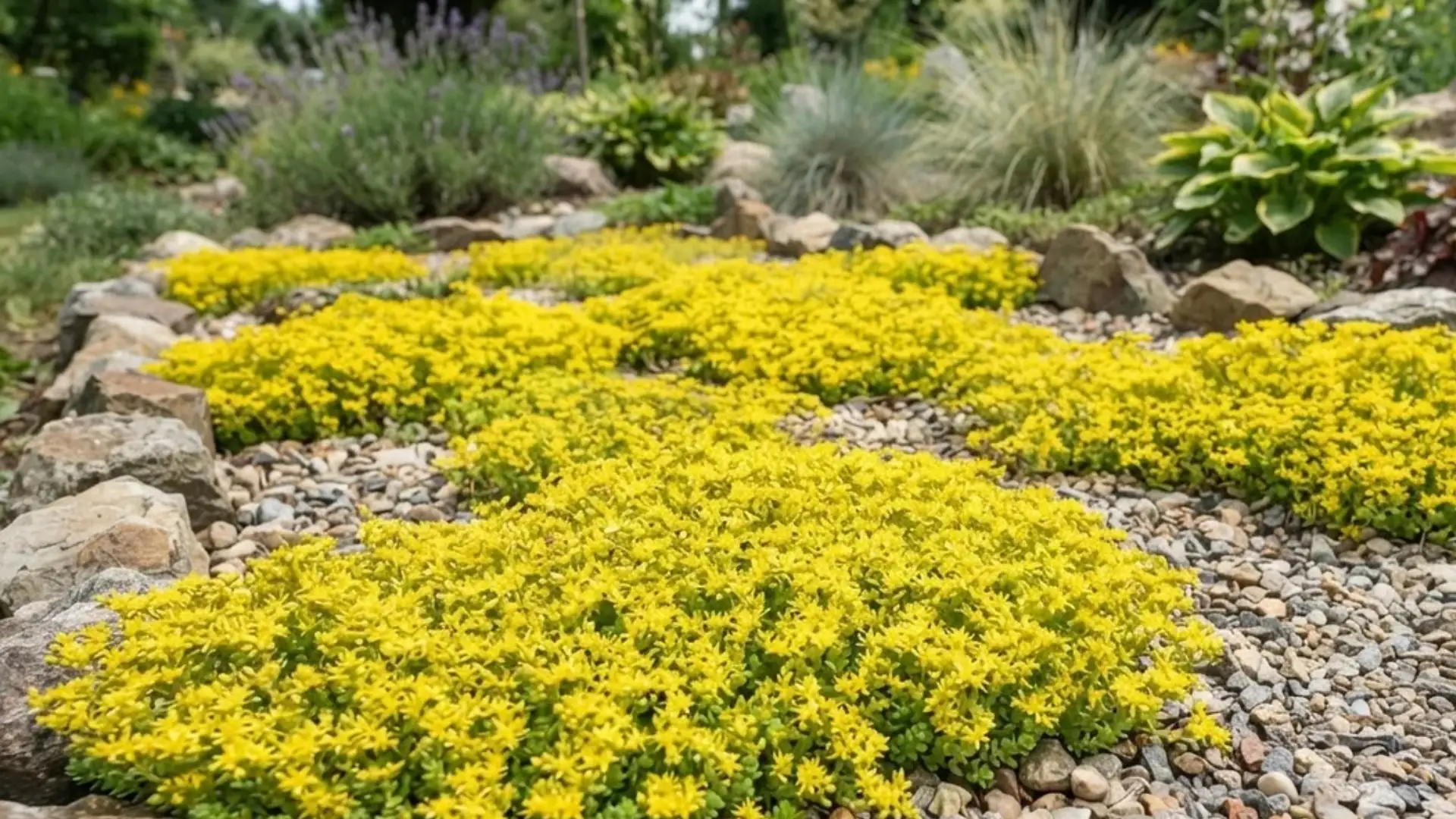
Goldmoss sedum forms low spreading mats covered with small yellow flowers in early summer, bringing bright seasonal color to rocky beds without creating extra work or demanding rich soil.
Plant it 10 to 12 inches apart in sun or light shade, use well-draining rocky soil, and water only during long dry periods once the plants become established.
19. Hens and Chicks Succulents
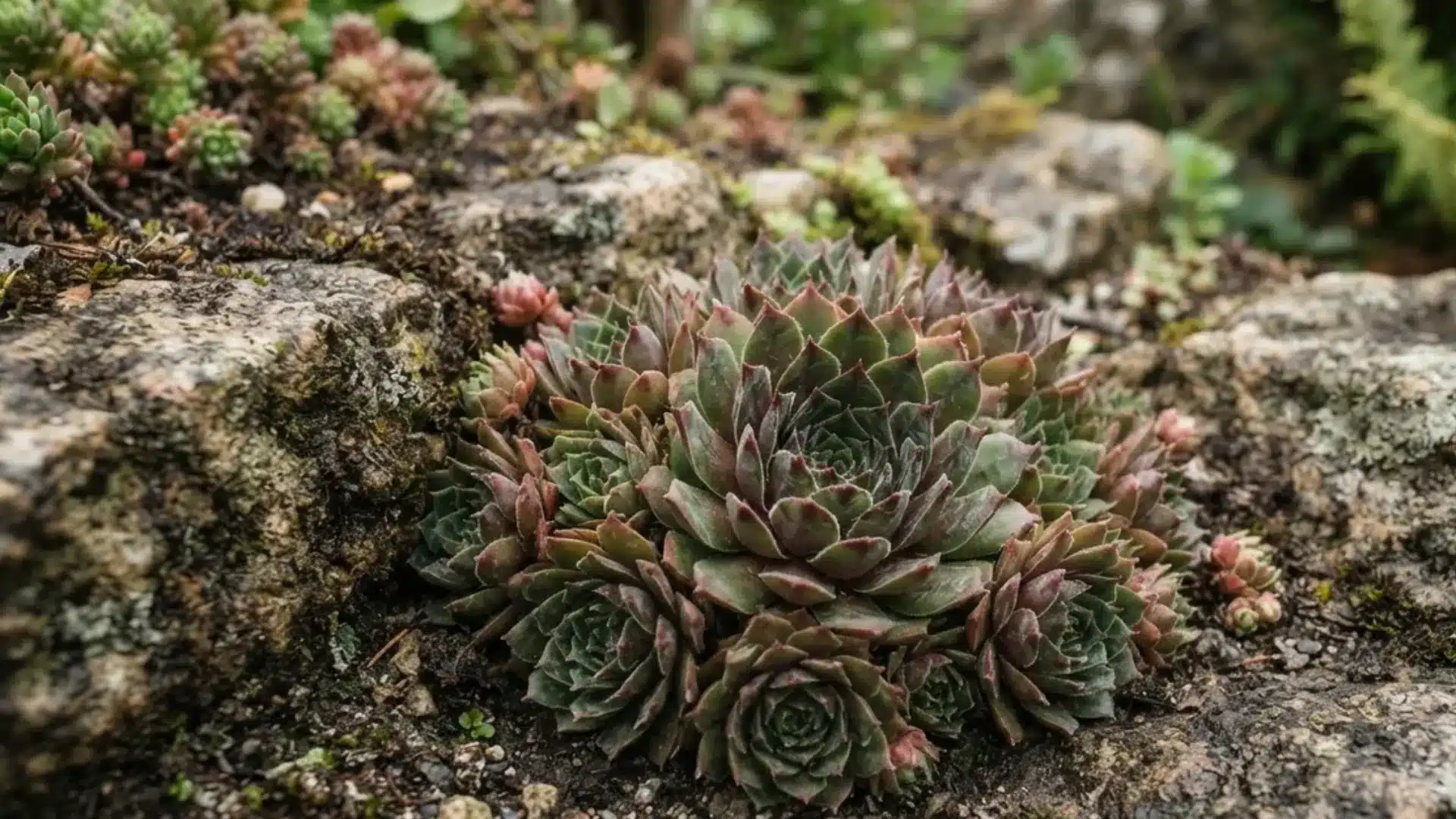
Hens and chicks form compact rosettes that multiply naturally, making them ideal for filling small gaps, shallow pockets, and rock crevices while keeping the garden structured and easy to manage.
Place rosettes 6 to 8 inches apart in shallow soil, water lightly for the first few weeks, then avoid regular watering because excess moisture can quickly cause problems.
20. Dwarf Mugo Pine Accent
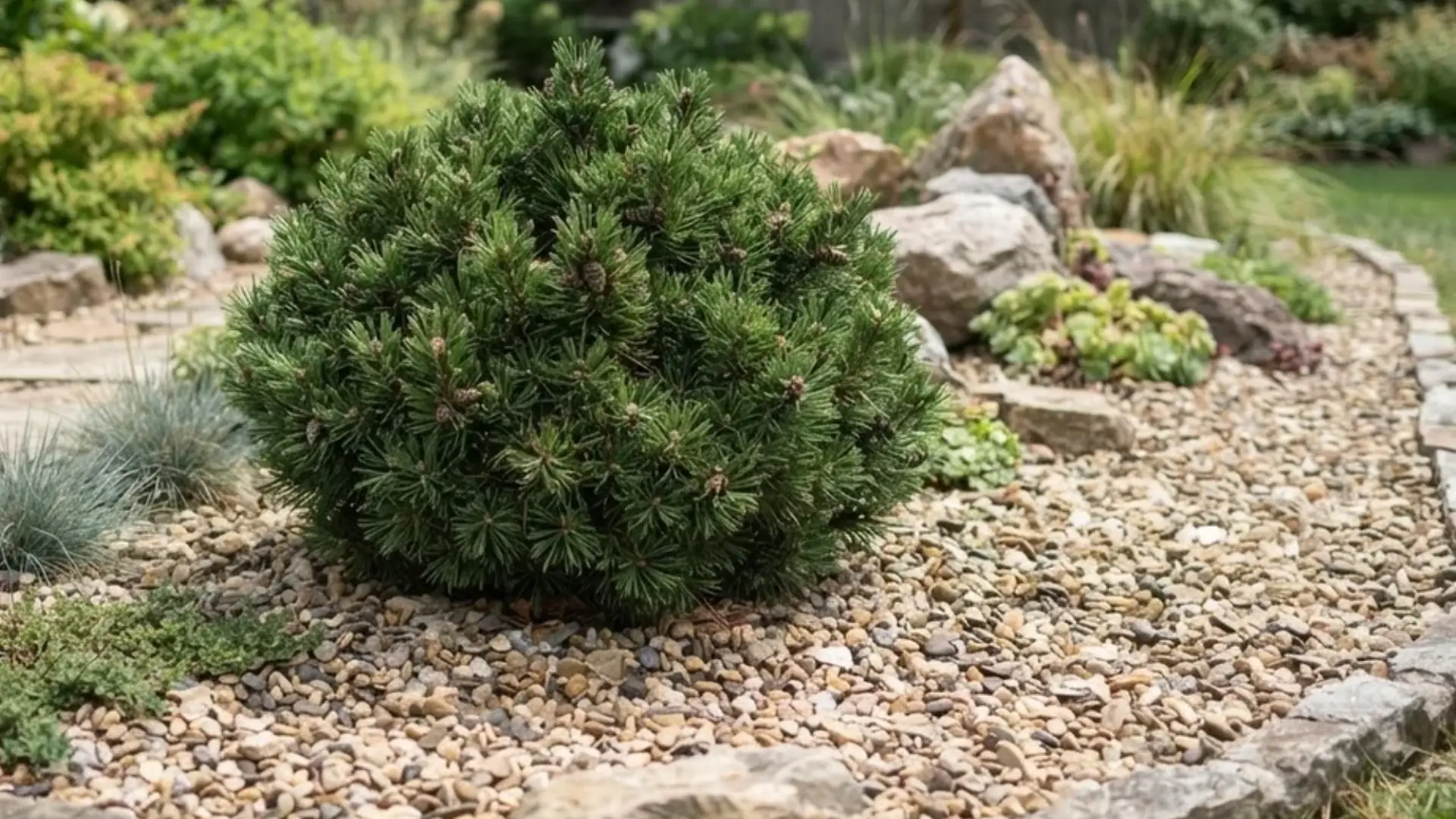
A dwarf mugo pine gives a small rock garden year-round greenery and strong structure while growing slowly enough to remain manageable without constant pruning, shaping, or seasonal replacement.
Use one plant as a focal point with 3 to 4 feet of space, and prune new spring candles only when you want to limit its mature size.
Tip: Give the pine enough breathing room from the start so nearby plants do not crowd its natural rounded form.
21. Lavender Border Planting
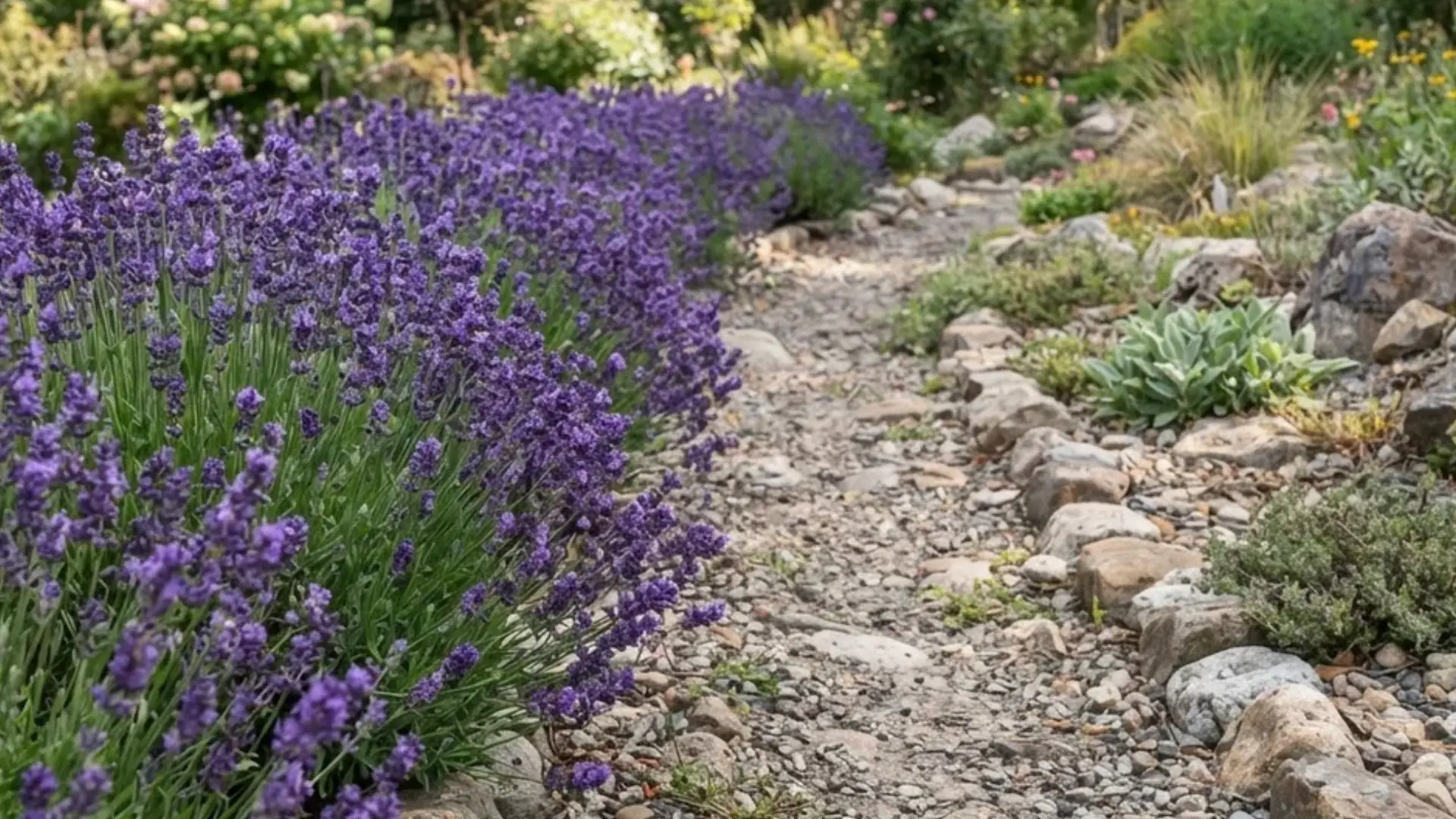
Lavender adds purple flowers, fragrance, and pollinator activity around a rock garden border while thriving in sunny, dry conditions that suit gravel beds and other fast-draining planting areas.
Space plants 18 to 24 inches apart; avoid wet soil and fertilizer, then trim about one-third after flowering each year to maintain a compact shape and healthy growth.
22. Yucca as a Focal Plant
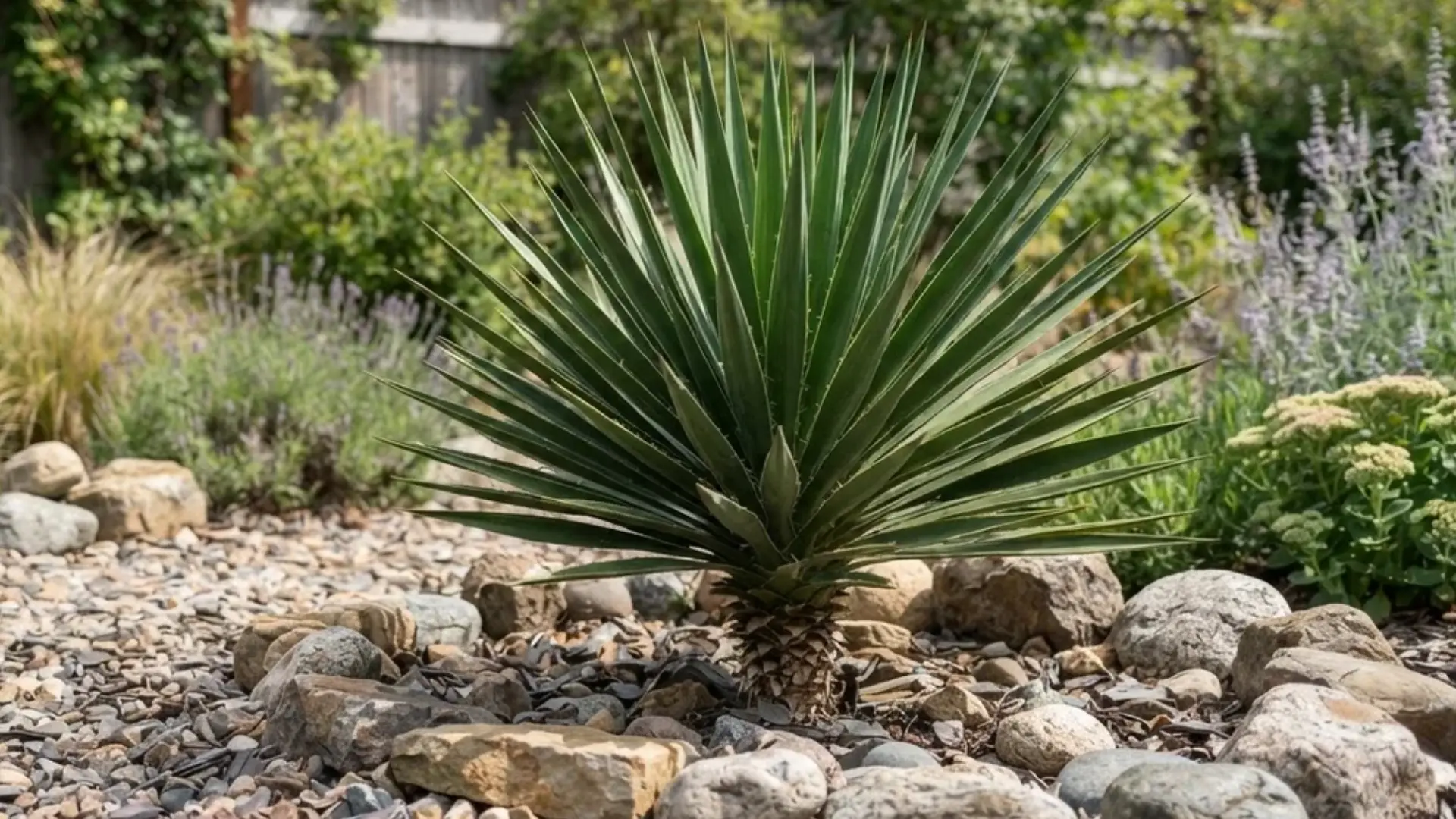
Yucca brings bold, spiky foliage and a strong architectural shape to a small rock garden, making it a great standalone focal plant that needs few companions to feel complete.
Plant it in full sun with excellent drainage and 3 feet of open space, water during establishment only, and remove old flower stalks once blooming has completely finished.
23. Moss Pockets in Shaded Corners
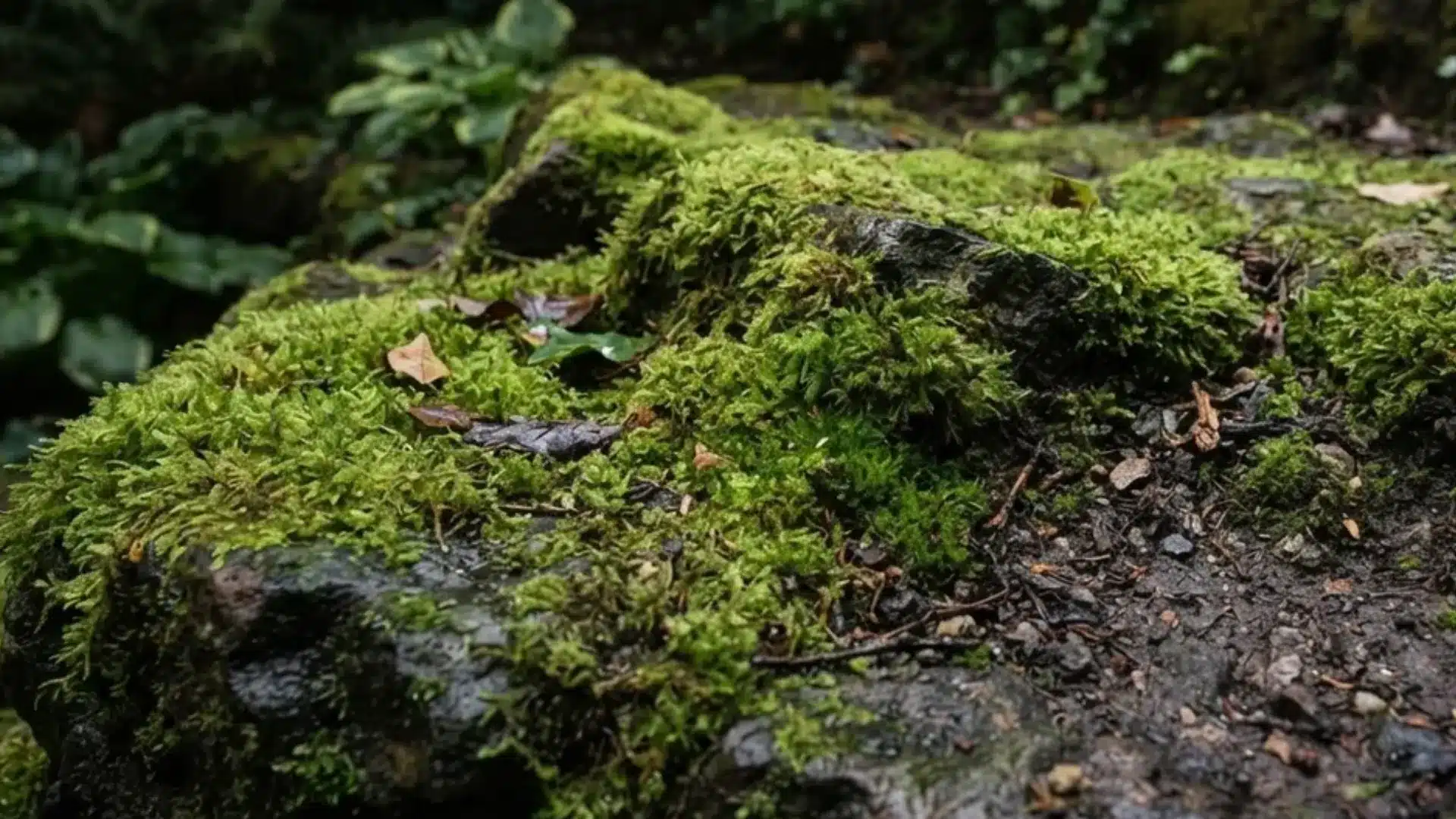
Moss adds soft green texture to shaded rock garden corners where sun-loving plants may struggle, helping unused spaces feel intentional without requiring fertilizer, trimming, or complicated seasonal care.
Press patches onto cleared soil or rock surfaces, mist regularly for the first two weeks, then water lightly only during unusually long dry periods after the moss establishes.
Combine just a few hardy plants with similar sunlight and water needs to create reliable color, texture, and structure without turning maintenance into a regular chore.
Finishing Touches and Add-Ons
The last few details are what separate a plain gravel patch from a rock garden that looks planned. These additions take an afternoon or less and don’t require much upkeep.
24. Solar Path Lights Along the Edge
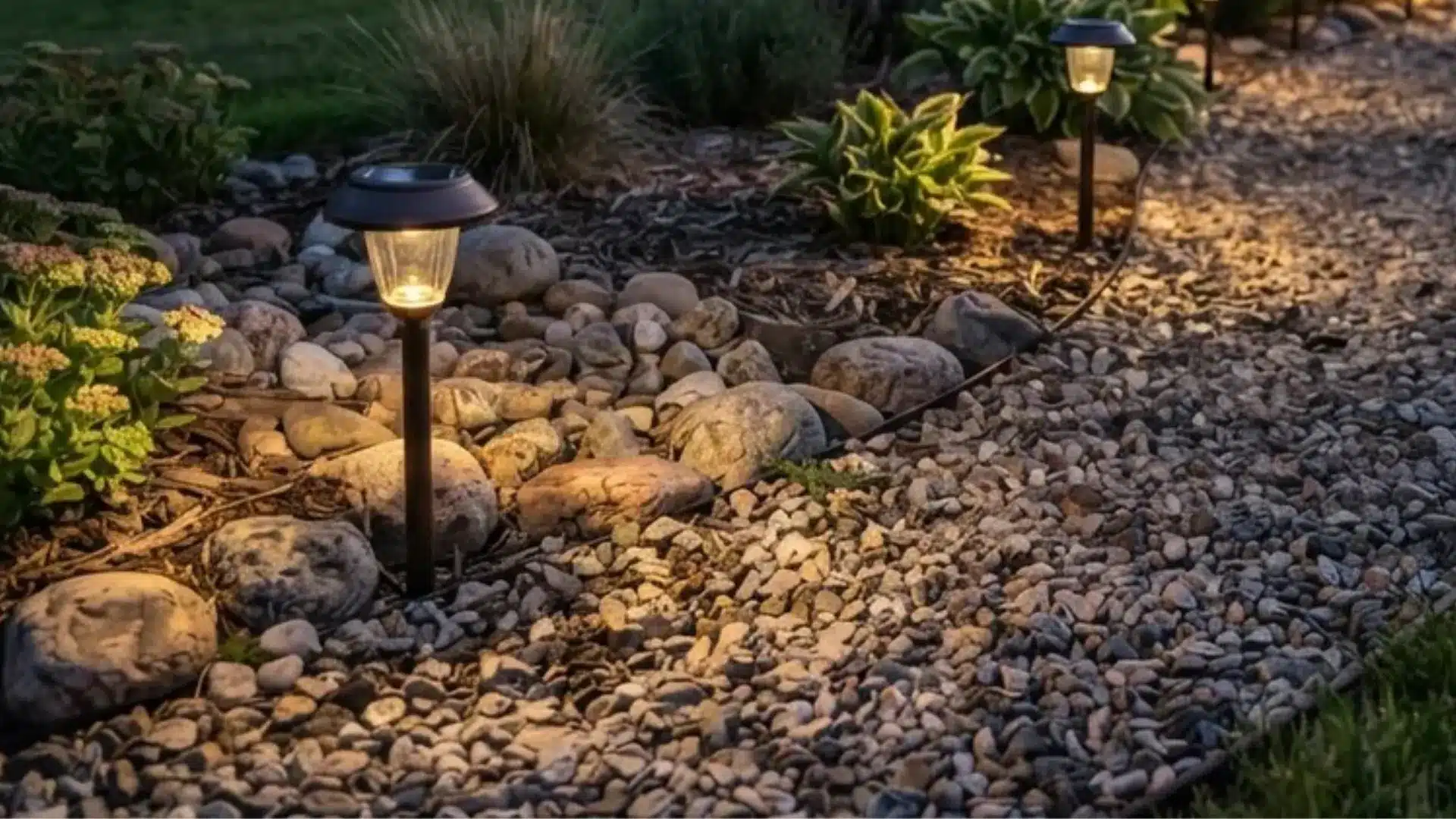
Solar lights along a rock garden edge add visibility and a soft glow at night without any wiring, timers, or added electric cost.
Space lights 3 to 4 feet apart along the outer curve, angling each one slightly toward the bed rather than straight up.
Push stakes into soil pockets between rocks for stability, and clean the solar panels every few months to keep charging reliable.
25. A Small Dry Fountain or Birdbath
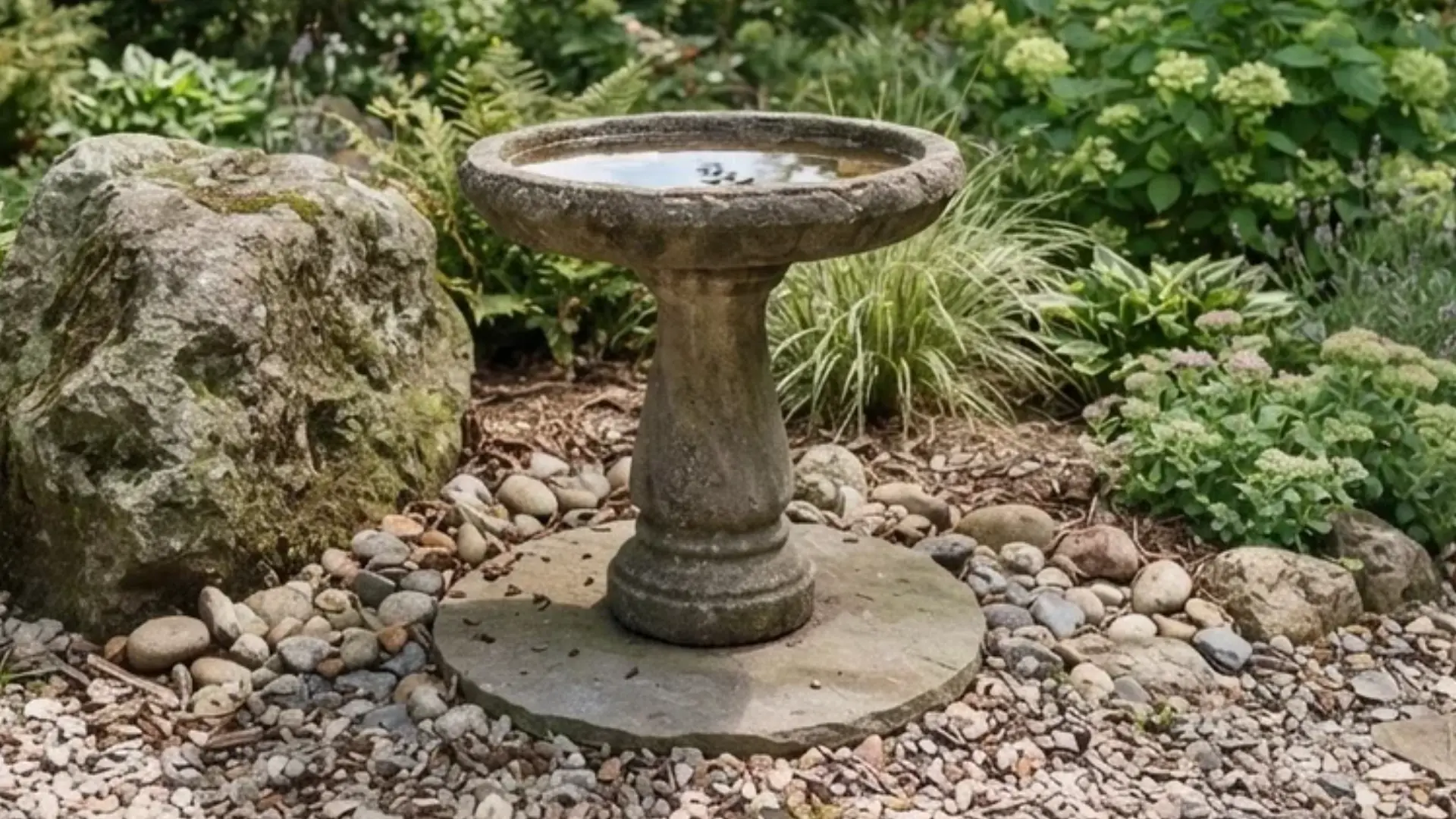
A dry-stacked stone fountain or a simple birdbath adds a focal point with movement or wildlife interest without the upkeep of a full water feature.
Set the birdbath on a stable gravel base near a boulder, clean and refill it weekly, and empty it before freezing weather arrives.
Tip: Place the feature where it is easy to reach for cleaning, refilling, or seasonal maintenance without stepping across the gravel bed.
26. Weathered Wood Accent Piece
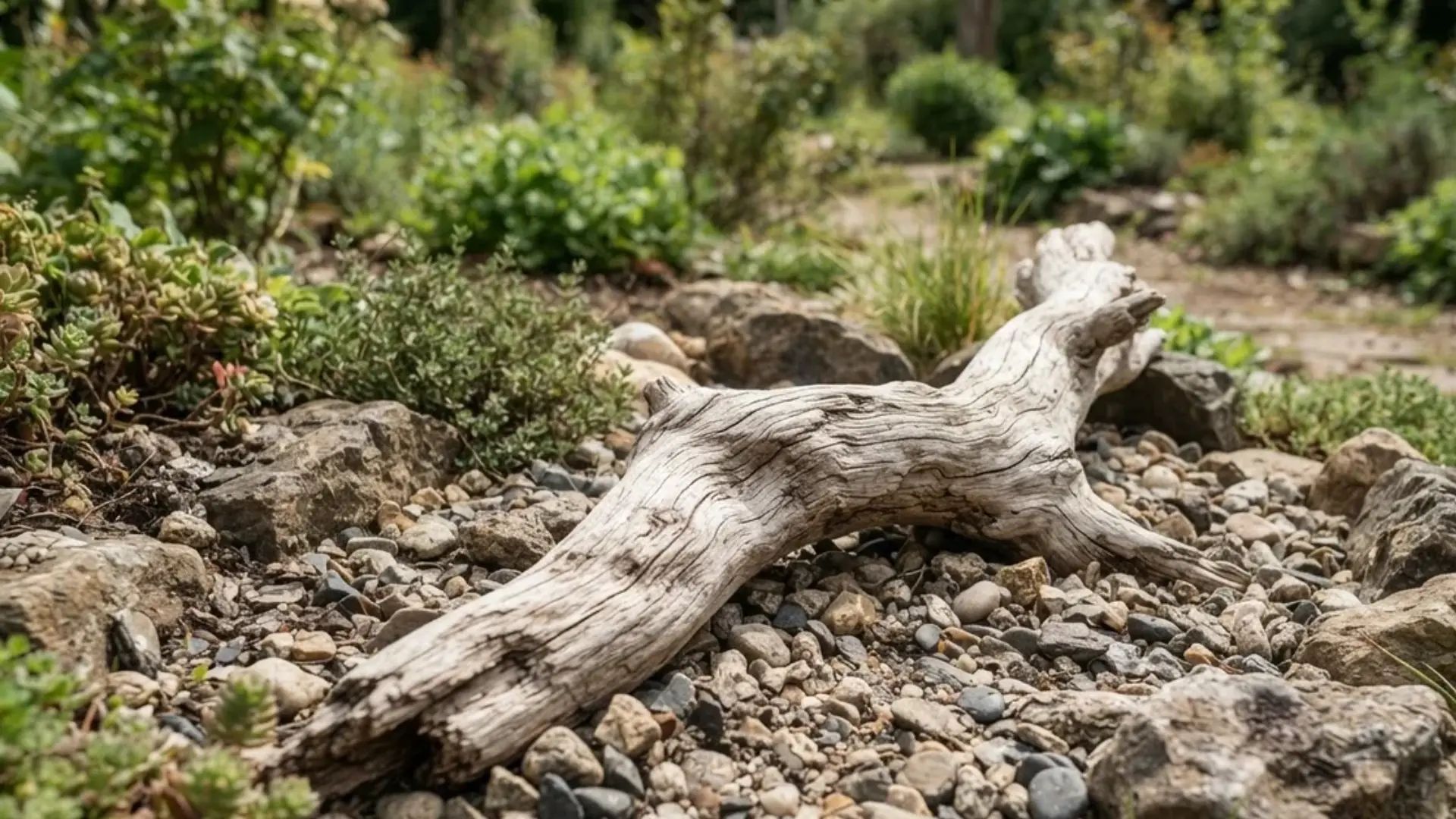
A single piece of driftwood or weathered branch adds natural texture and contrast against smooth gravel and rock without introducing anything that needs care.
Choose driftwood with visible grain or bleached color, set it partly into gravel near a boulder or plant cluster, and leave it untreated so it weathers naturally outdoors over time.
27. Succulent Planted in a Rock Crevice
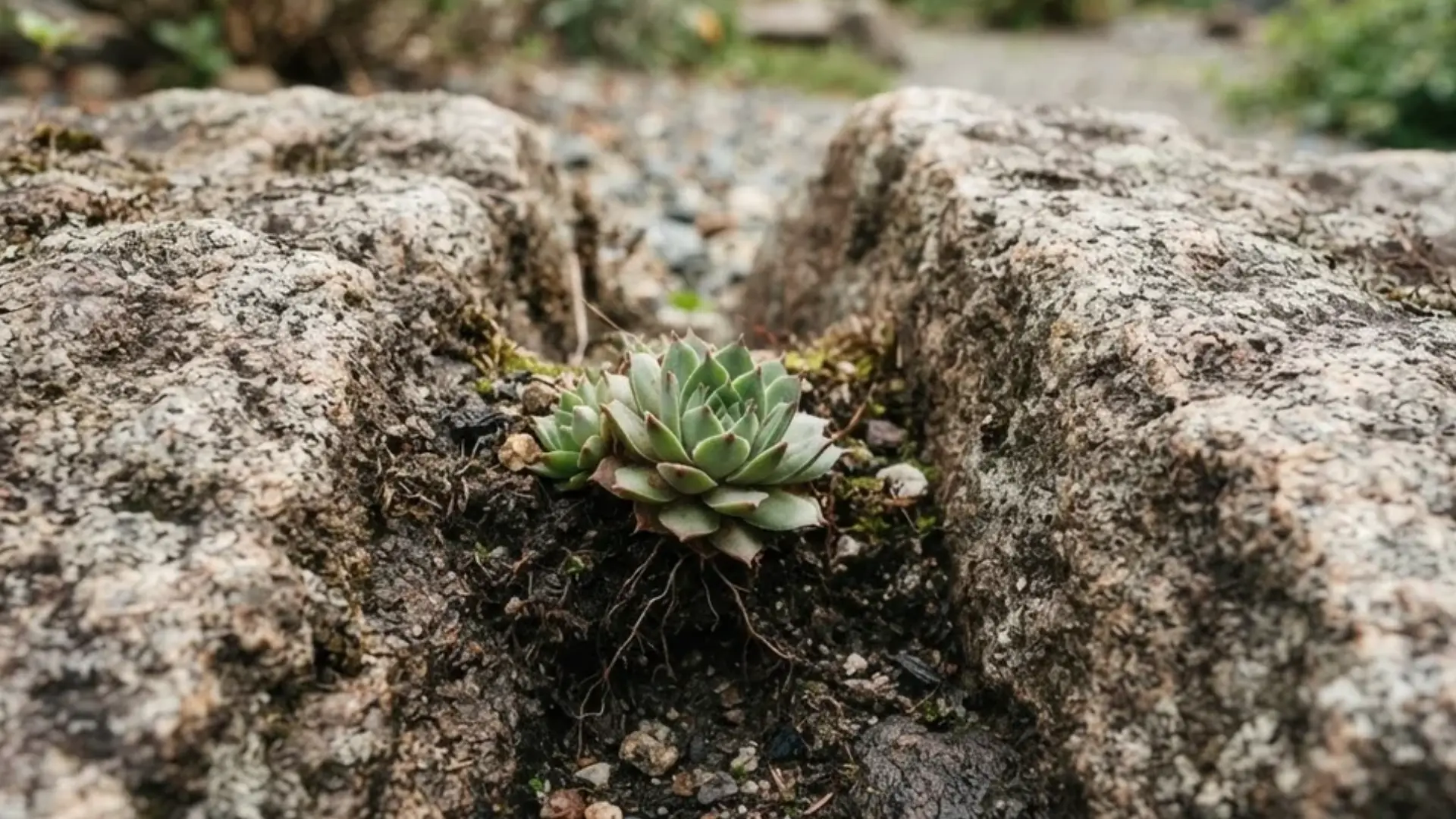
Tucking a single succulent into a crevice between larger boulders adds a deliberate detail and draws the eye without needing its own dedicated bed space.
Choose a small pocket with at least an inch of soil depth between rocks. Add a pinch of sand to the pocket if the soil is dense; succulents need sharp drainage even in small spaces like this.
28. Painted or Natural Stone Markers
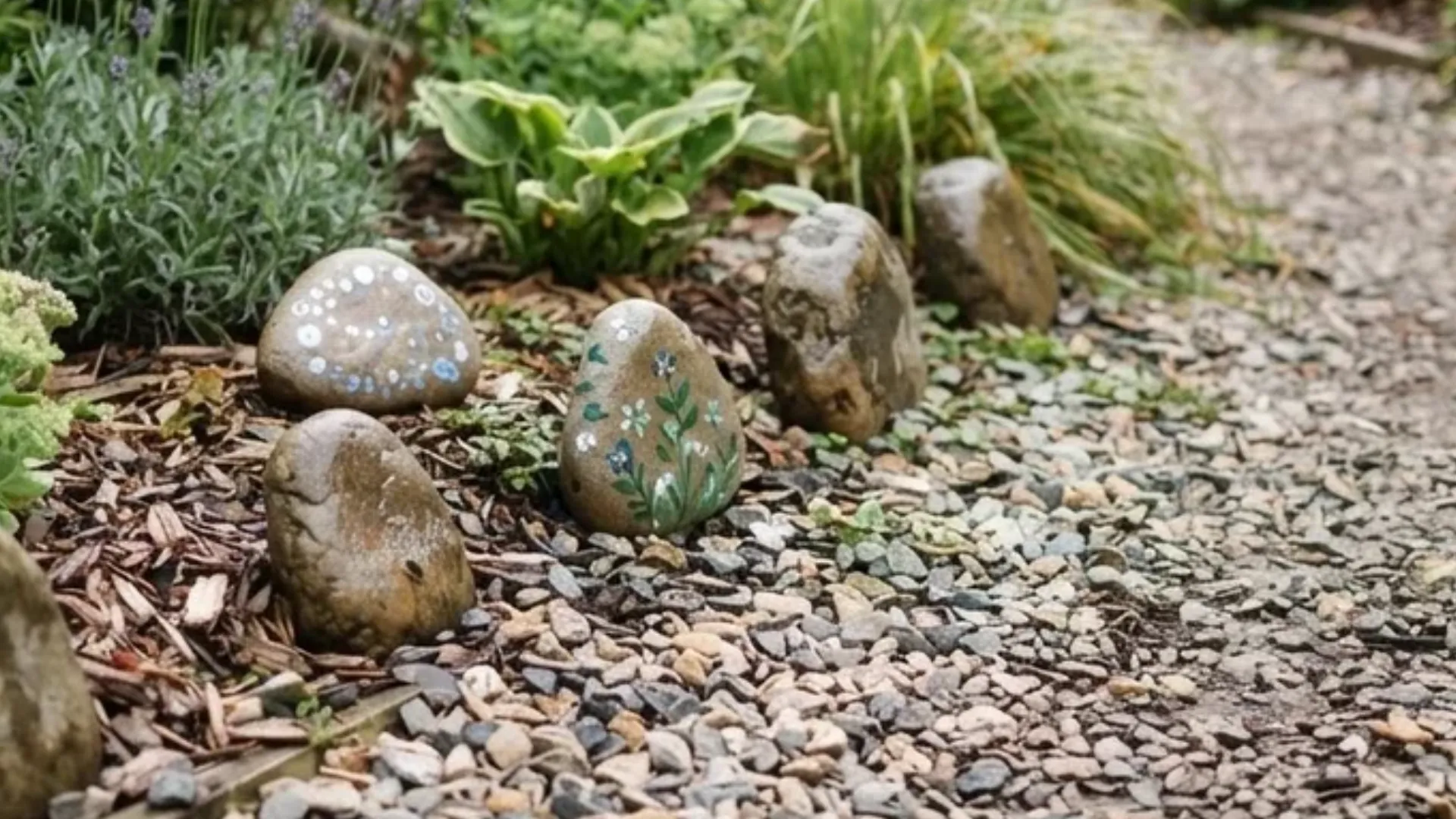
Small stone markers, whether plain fieldstone or hand-painted accent stones, add a personal detail along a path or bed edge with zero ongoing upkeep.
Place markers along a path edge or at bed corners, spacing them for visual rhythm rather than exact measurements. If painting, use outdoor-rated acrylic sealed with a clear topcoat so color holds through weather.
29. Seasonal Container Pop of Color
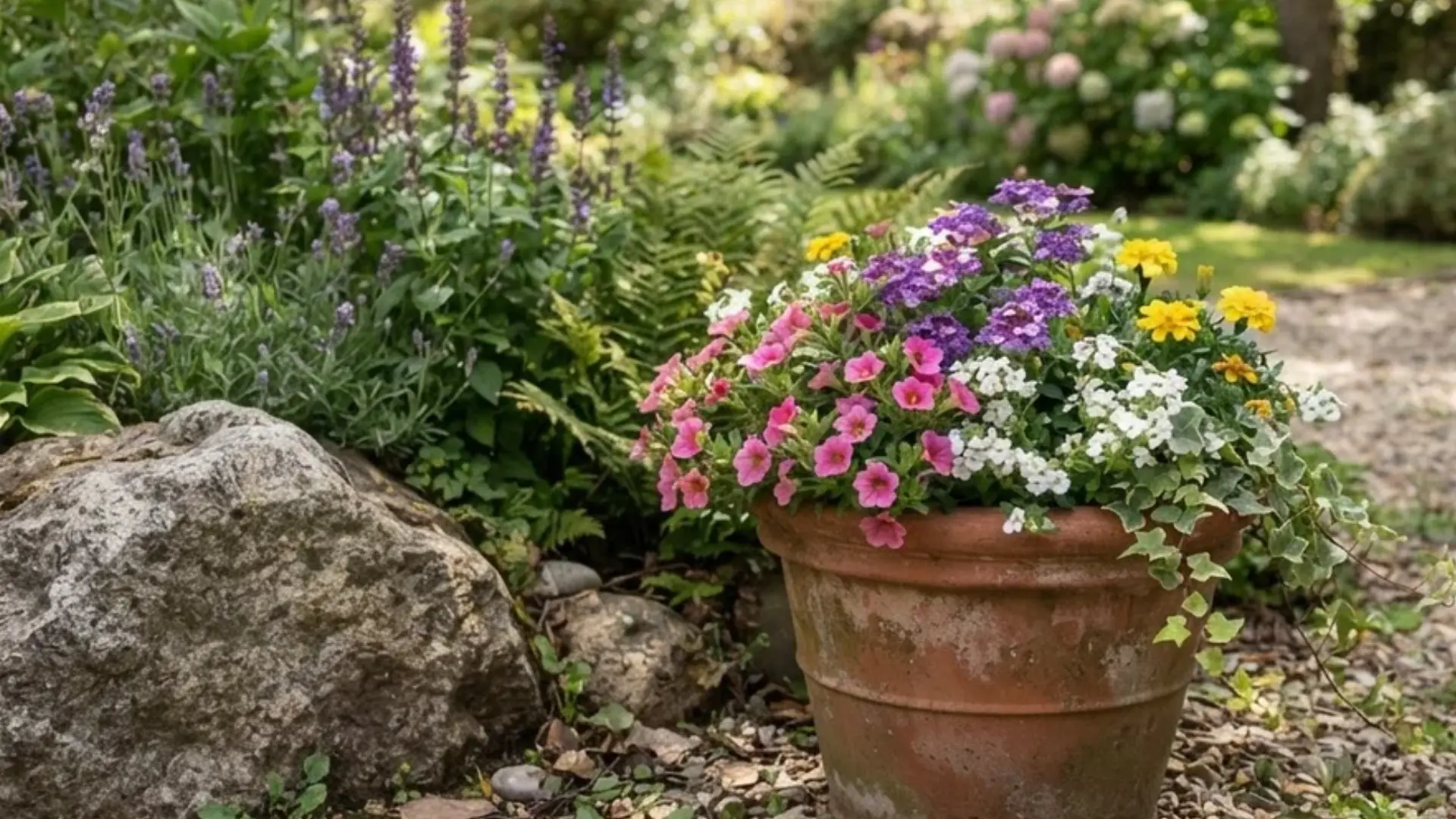
A single planted container set into the gravel bed lets you swap seasonal color in and out without disturbing the permanent low-maintenance planting around it.
Choose one container that matches your rock tones, then swap seasonal plants throughout the year to refresh color without replanting the entire bed.
Use a few practical finishing touches to add personality and seasonal interest, but keep them simple so they enhance the garden without creating extra maintenance work.
Common Small Rock Garden Mistakes to Avoid
These mistakes are the actual reason low-maintenance rock gardens stop being low-maintenance, turning a simple design into recurring weeding, watering, repairs, and plant replacement work.
- Skipping Weed Fabric: Leaving out weed fabric, or failing to overlap sections properly, creates gaps where weeds can push through gravel within a single growing season.
- Poor Fabric Placement: Loose, exposed, or badly secured fabric can shift beneath gravel, allowing soil and weed seeds to collect in areas that become difficult to clean.
- Inadequate Drainage: Gravel placed over poorly draining soil can trap water around roots, causing pooling and damaging plants that perform best in dry growing conditions.
- Wrong Sun Exposure: Plants placed in conditions that are too sunny or shaded often struggle, requiring additional watering, attention, or replacement to keep the bed presentable.
- Ignoring Climate Conditions: Choosing plants unsuited to local temperatures or rainfall increases ongoing care because they may need extra protection, watering, or frequent seasonal replacement.
Getting these basics right keeps maintenance predictable, protects your plants, and helps the rock garden stay clean, healthy, and manageable throughout every season for years.
Final Thoughts
A small rock garden works best when every choice has a purpose. I prefer keeping the design simple, because fewer materials and plants usually mean less work and a cleaner look.
The strongest low-maintenance small rock garden ideas balance good drainage, open space, durable hardscape, and plants that can handle your local conditions without constant attention.
Give the bed time to settle instead of filling every gap on day one, and you will get a more natural result as plants spread.
Start with a sketch, choose your focal point, and build around it slowly. Once the base is right, upkeep becomes minimal. Which idea from this list would you use in your yard? Share your pick in the comments.
Frequently Asked Questions
What is the 70/30 rule in gardening?
The 70/30 rule suggests filling roughly 70% of a bed with foundational, low-maintenance material like gravel or groundcover, and reserving about 30% for seasonal color or accent plants. In a small rock garden, this keeps the design structured while still leaving room for visual interest.
What are some low-maintenance plants for a rock garden?
Creeping thyme, blue fescue, and goldmoss sedum are strong choices because they tolerate dry conditions and need little pruning or watering once established. Succulents like sedum and hens and chicks work well too, especially in sunny spots, since they store water and rarely need attention.
What is the least expensive rock for landscaping?
Pea gravel and crushed stone are generally the most budget-friendly landscaping rocks, especially compared to cut stone, boulders, or river rock, which cost more due to size and sourcing. It also works well as a base layer or ground cover in small rock gardens without compromising the low-maintenance goal.
What are the key differences between a gravel garden and a rock garden?
A gravel garden uses loose gravel as the primary ground cover with plants set directly into it, while a rock garden centers on larger rocks or boulders as structural focal points, often with gravel used around them. Many small yard designs combine both approaches.