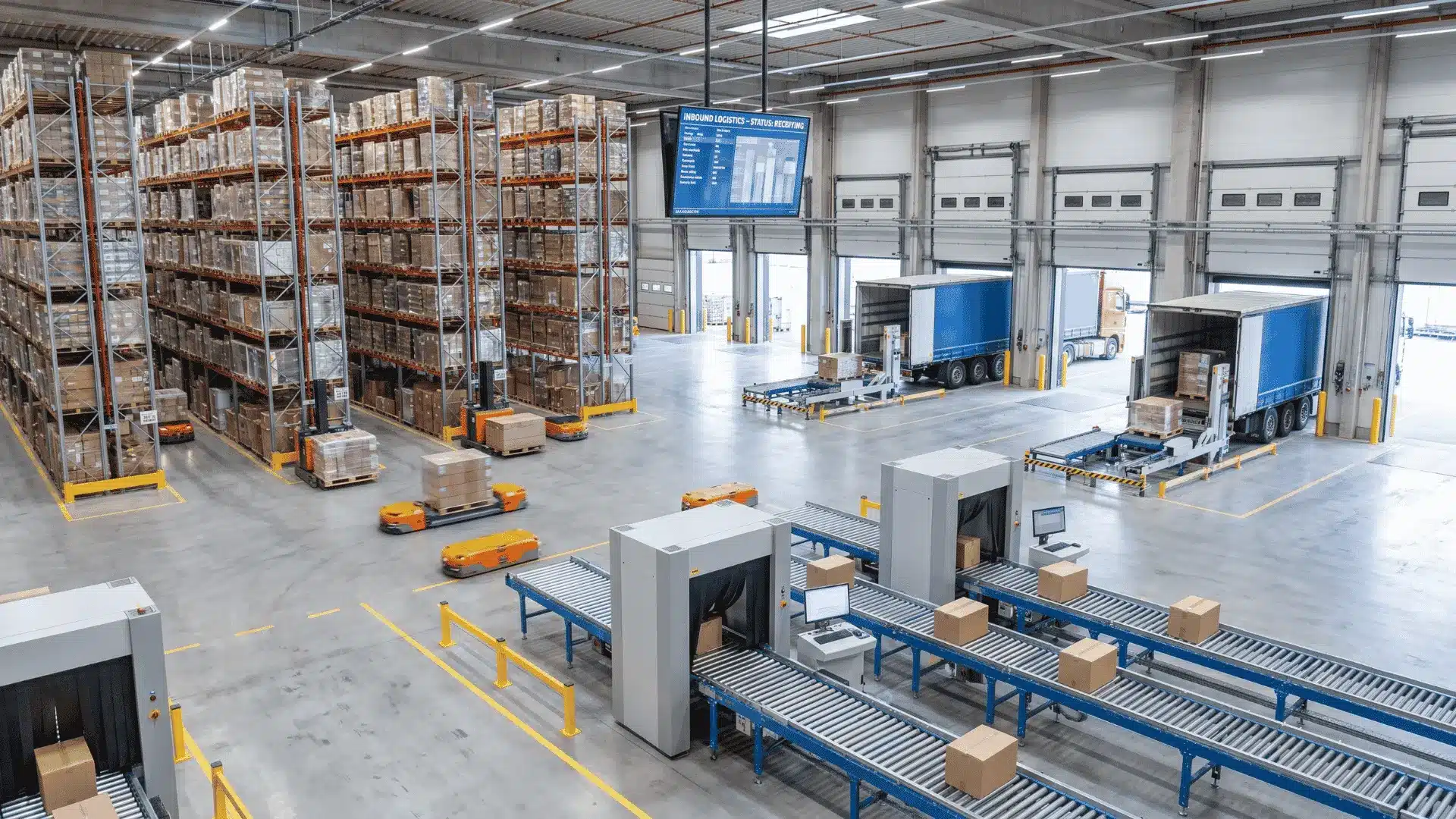
Inbound logistics is the backbone of every smooth-running supply chain, yet it often goes unnoticed until something goes wrong.
A delayed shipment or receiving error can ripple across production schedules, inventory levels, and customer deliveries all at once.
Getting this process right means lower costs, fewer disruptions, and materials that are always ready when production needs them.
Here you’ll find everything from a clear breakdown of what inbound logistics includes to how it differs from outbound logistics and practical ways to improve it.
What is Inbound Logistics?
Inbound logistics is the process of receiving, storing, and moving raw materials, components, or finished goods from suppliers to a company’s facilities.
It begins once an order is placed and ends when goods are delivered and ready for use or storage within the company.
This process does not include production or shipping to customers, which come later in the supply chain.
Inbound logistics is a key part of supply chain management (SCM), but it differs from SCM in scope.
SCM covers the entire process from sourcing to delivery, but inbound logistics focuses specifically on the movement and storage of goods before production or inventory use.
Inbound logistics differs from procurement. Procurement involves deciding what to buy, while inbound logistics manages the shipment and receipt of goods after the order is placed.
What Does Inbound Logistics Include?
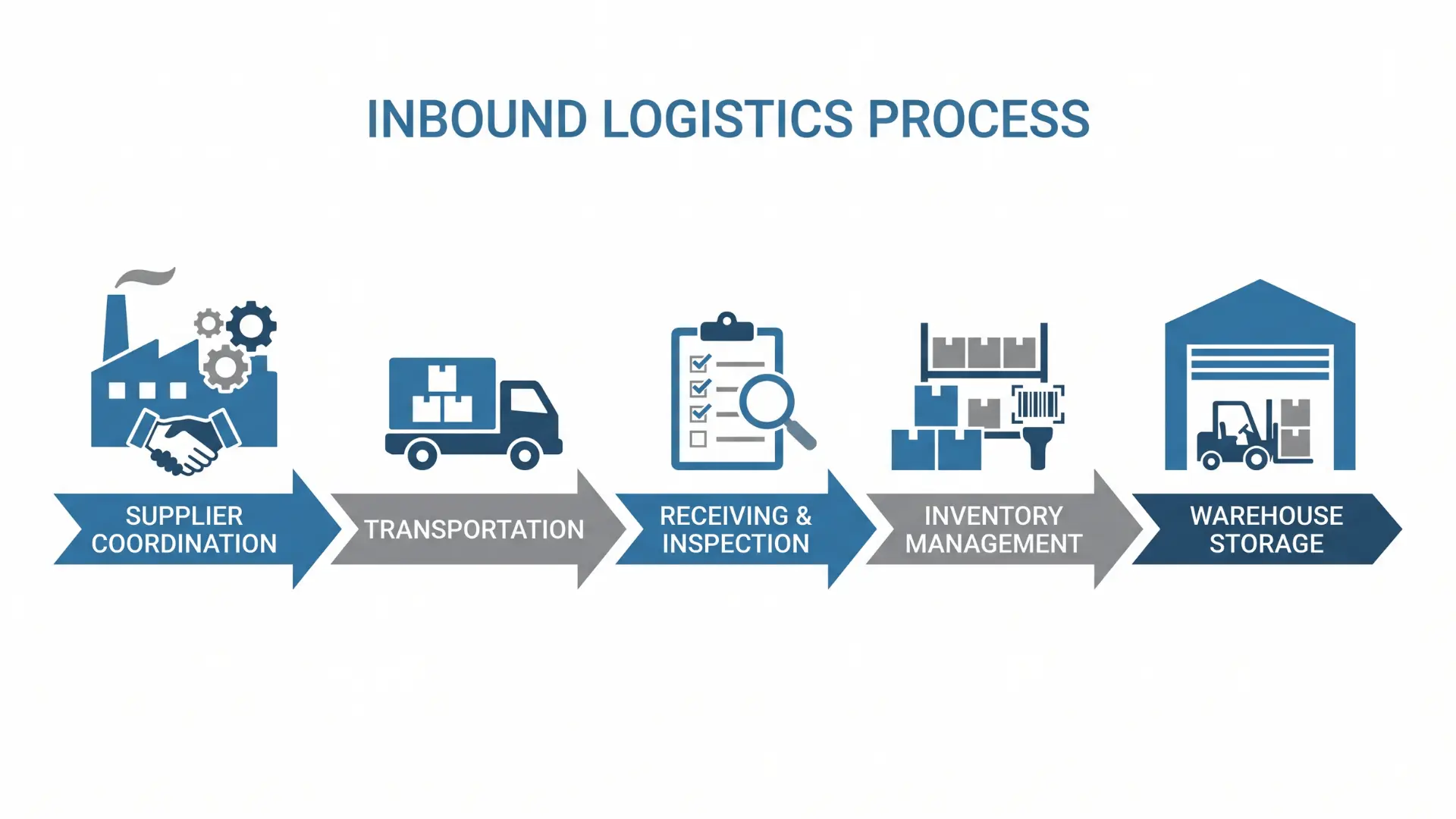
Inbound logistics includes all the steps involved in bringing goods, raw materials, or supplies from suppliers into a business. It helps companies ensure products arrive on time, are stored properly, and are ready for production or sale without delay.
The process usually includes:
- Supplier Coordination: Confirming order details, quantities, delivery dates, and shipment windows with suppliers prevents mismatches between what was ordered and what arrives.
- Transportation Management: Manages how goods are delivered, which carriers and shipping methods to use, and how to track shipments in transit.
- Receiving and Inspection: Delivery is checked against the purchase order for quantity, condition, and quality to catch errors before bad stock enters the warehouse.
- Inventory Management: Tracks stock levels, incoming goods, and low inventory to ensure sufficient materials are available for production without excess inventory.
- Warehousing and Storage: Goods are placed for easy access and quick retrieval, ensuring warehouse organization supports fast material delivery to the production floor.
One widely used approach in inventory management is just-in-time (JIT), in which materials are ordered and received only as needed for production.
This reduces the cost of holding excess stock and frees up warehouse space, but it requires accurate demand forecasting and reliable supplier delivery windows to work effectively.
Crossdocking routes incoming goods directly from the inbound dock to outbound shipments, minimizing handling and reducing storage time. This speeds up delivery and boosts efficiency.
It’s ideal for high-volume operations with short lead times or predictable demand, improving overall delivery speed and reducing handling costs.
All these activities work together to keep the supply chain running smoothly. If goods arrive late, damaged, or in the wrong quantity, it can slow down production, increase costs, and affect customer deliveries.
How Inbound Logistics Differs from Outbound Logistics and Supply Chain Management
Inbound logistics is often confused with outbound logistics and supply chain management. While all three are connected, they serve different purposes in business operations.
Inbound vs. Outbound Logistics
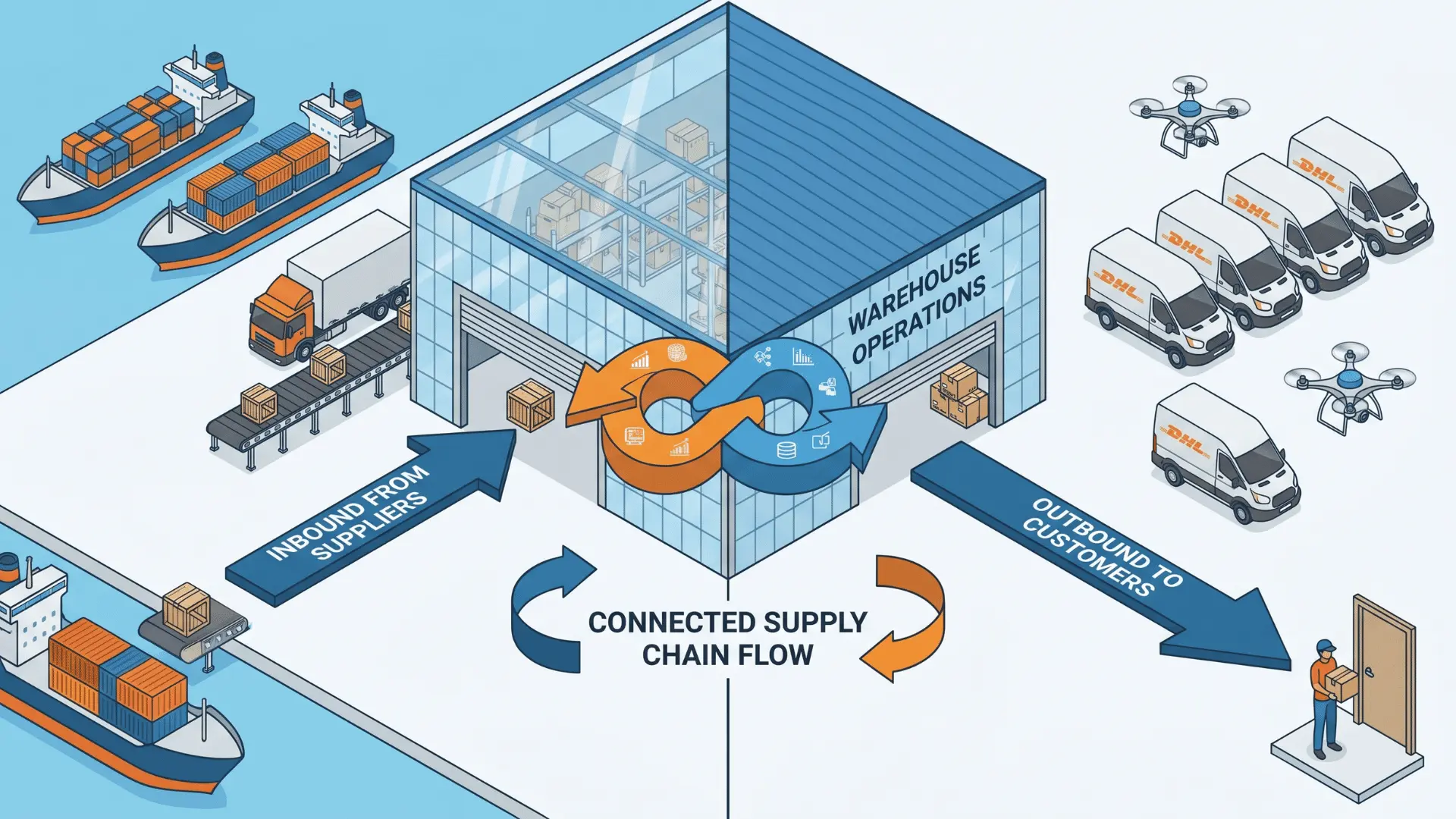
Inbound and outbound logistics focus on different stages of product movement. Inbound logistics manages the flow of goods into the business, while outbound logistics handles the delivery of products to customers.
| Basis | Inbound Logistics | Outbound Logistics |
|---|---|---|
| Meaning | Movement of goods from suppliers to the company | Movement of finished goods from the company to customers |
| Main Goal | Ensure materials arrive on time and in good condition | Deliver orders quickly and accurately |
| Goods Handled | Raw materials, components, or supplier goods | Finished products ready for sale |
| Key Activities | Receiving, inspection, inventory, and storage | Order processing, packing, shipping, and delivery |
| Main Challenge | Managing supplier delays and stock accuracy | Meeting customer delivery expectations |
| Business Impact | Supports smooth production and inventory flow | Directly affects customer satisfaction and sales |
Both processes are important for keeping the supply chain running smoothly. Inbound logistics supports production and inventory readiness, while outbound logistics ensures customers receive their orders without delays.
Reverse logistics involves handling goods that move back up the supply chain, such as customer returns, defective products, or excess inventory. It connects directly to inbound logistics.
A clear inbound receiving process makes it easier to manage returns, as returned goods re-enter the warehouse, require inspection, and impact inventory levels.
Inbound Logistics vs. Supply Chain Management
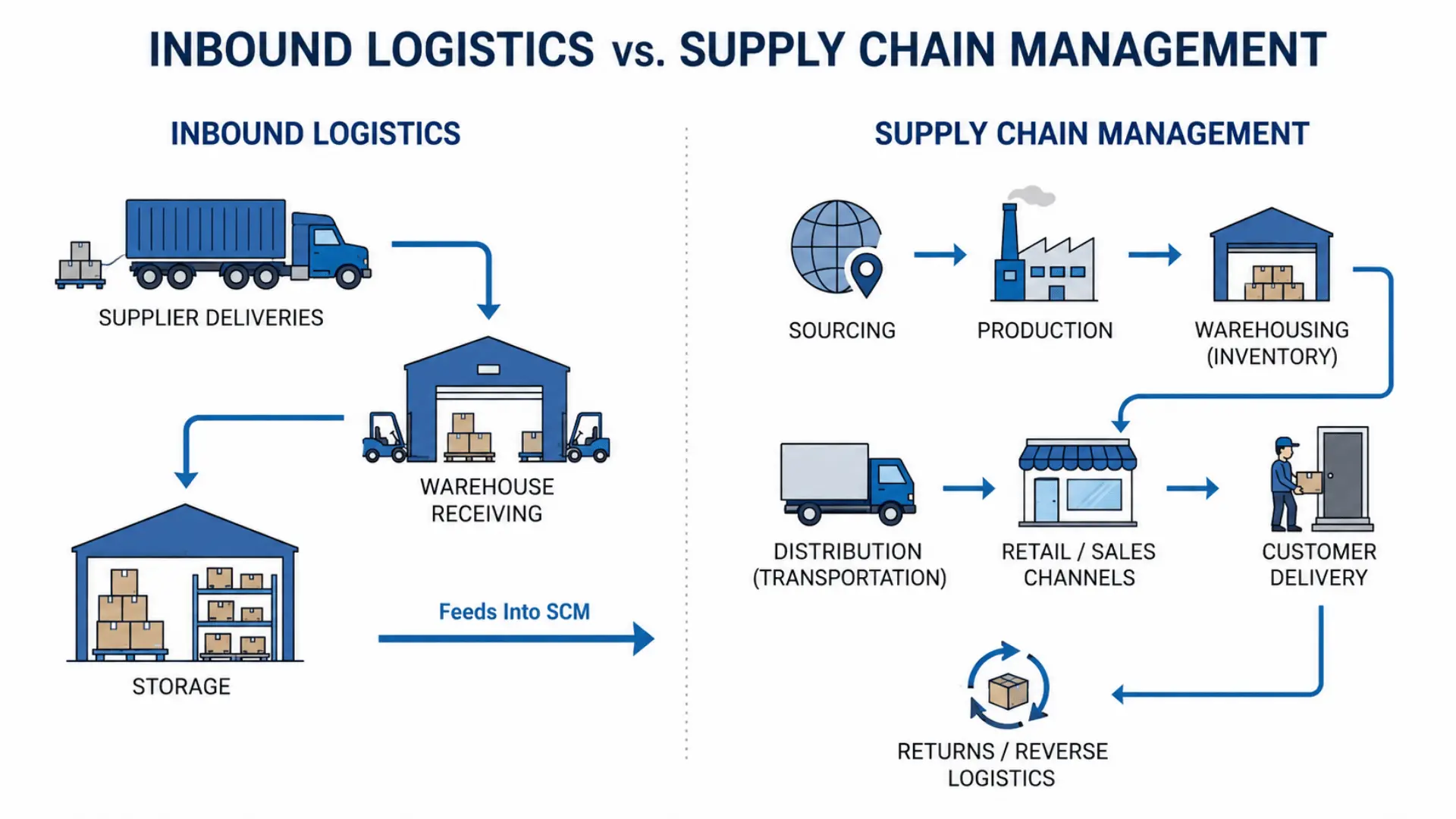
Inbound logistics is only one part of the larger supply chain process. Supply chain management covers every stage involved in moving goods from suppliers to customers.
| Basis | Inbound Logistics | Supply Chain Management (SCM) |
|---|---|---|
| Meaning | Managing incoming goods from suppliers | Managing the entire flow of goods from suppliers to customers |
| Scope | Focused only on incoming goods and storage | Covers sourcing, production, logistics, delivery, and returns |
| Main Focus | Transportation, receiving, and inventory handling | Overall supply chain planning and coordination |
| Process Coverage | Ends when goods are stored or ready for use | Covers every stage from sourcing to final delivery |
| Includes Production and Delivery? | No | Yes |
| Main Objective | Ensure materials are available on time | Improve efficiency, reduce costs, and maintain smooth operations |
Inbound logistics mainly focuses on operational tasks related to incoming goods. Supply chain management takes a broader approach by managing sourcing, production, storage, transportation, and customer delivery as a whole.
Why Inbound Logistics Matters?
Inbound logistics plays an important role in keeping business operations smooth and efficient. It ensures materials and goods arrive on time, in the right quantity, and in good condition.
When this process works well, production runs smoothly, costs stay under control, and customer orders are delivered on time.
Cost Control Through Better Inventory and Transportation
Inbound logistics reduces costs by consolidating shipments, lowering per-unit transportation costs. This minimizes waste and improves transportation efficiency.
Tighter inventory control prevents overstocking, saving warehouse space and reducing tied-up capital. This ensures more efficient use of resources.
For example, consolidating daily partial truckloads into fewer full loads significantly reduces freight costs without changing supplier relationships, optimizing both transportation and inventory.
Supports Smooth Production
Inbound logistics ensures production runs on schedule by delivering the right materials on time. Late deliveries can idle production lines and delay downstream shipments.
Setting clear delivery windows and verifying orders at receiving help prevent delays. Buffer stock further absorbs minor delays, ensuring continuous production.
With proper inbound logistics, businesses maintain smooth production by managing timely deliveries and maintaining stock levels that prevent line stoppages.
Better Visibility and Faster Problem Solving
Transportation management systems (TMS) and warehouse management systems (WMS) offer real-time visibility into shipments and stock levels. TMS tracks goods in transit and spots delays early.
WMS manages storage, incoming receipts, and inventory accuracy, ensuring better organization inside the warehouse. This system reduces errors and optimizes stock handling.
Together, TMS and WMS help businesses detect problems early, enable faster solutions, and prevent delays from impacting the production floor.
Improves Supplier Coordination
Inbound logistics strengthens supplier relationships by improving delivery accuracy. Businesses can collaborate with suppliers to reduce delays and maintain consistent inventory levels.
Reliable supplier coordination improves the overall supply chain stability, creating a more efficient system that reduces unnecessary delays.
Strong inbound logistics leads to better supplier coordination, ensuring timely deliveries and smoother operations across the supply chain.
How to Improve Your Inbound Logistics Process?
Understanding inbound logistics is one thing. Improving performance is where most businesses find real gains. Here are the most effective areas to focus on:
Take control of inbound transportation. Centralizing inbound transportation, selecting carriers, and standardizing delivery improves efficiency and scheduling, reducing unpredictability when suppliers handle shipments independently.
Standardize your receiving process. Inconsistent receiving causes inventory errors. A documented process for unloading, counting, inspecting, and recording goods ensures problems are caught early, preventing issues during production.
Use data to manage supplier performance. Track on-time delivery rates, order accuracy, and lead times for each supplier. Sharing this data with suppliers creates accountability and highlights areas for improvement.
Invest in the right technology. A transportation management system (TMS) and a warehouse management system (WMS) provide visibility across both transit and storage, reducing manual errors and improving decision-making speed during delays.
Review inventory levels regularly. Overstocking ties up cash and space, while understocking halts production. Setting reorder points based on lead times and demand patterns keeps inventory levels optimal.
Wrapping Up
Inbound logistics is more than moving goods; it connects suppliers, inventory, transportation, and production into one coordinated flow.
When managed well, it reduces costs, prevents delays, and keeps every downstream process running on schedule.
The difference shows up in production uptime, freight spend, and how quickly problems get resolved before they escalate.
If your inbound process has gaps, start with one area: receiving accuracy, supplier lead times, or transportation consolidation, and build from there. Small, consistent improvements compound into a supply chain that rarely surprises you.
Frequently Asked Questions
Who is responsible for managing inbound logistics in a company?
A logistics or supply chain manager typically oversees inbound logistics, working alongside procurement, warehouse, and transportation teams to keep operations running smoothly.
How does inbound logistics affect a company’s cash flow?
Overstocking ties up working capital, while stockouts halt production and delay revenue. Strong inbound logistics keep inventory lean and cash flow predictable.
What is the difference between inbound logistics and freight management?
Freight management covers transportation only. Inbound logistics is broader and includes receiving, inspection, inventory tracking, warehousing, and supplier coordination beyond the shipment itself.
Can small businesses benefit from optimizing inbound logistics?
Absolutely. standardizing receiving, tracking supplier lead times, and aligning reorder points with actual demand helps small businesses cut costs and avoid stockouts.