Supply chain network design determines whether your operations run efficiently or quietly bleed cost, and most organizations don’t revisit it until the damage is done.
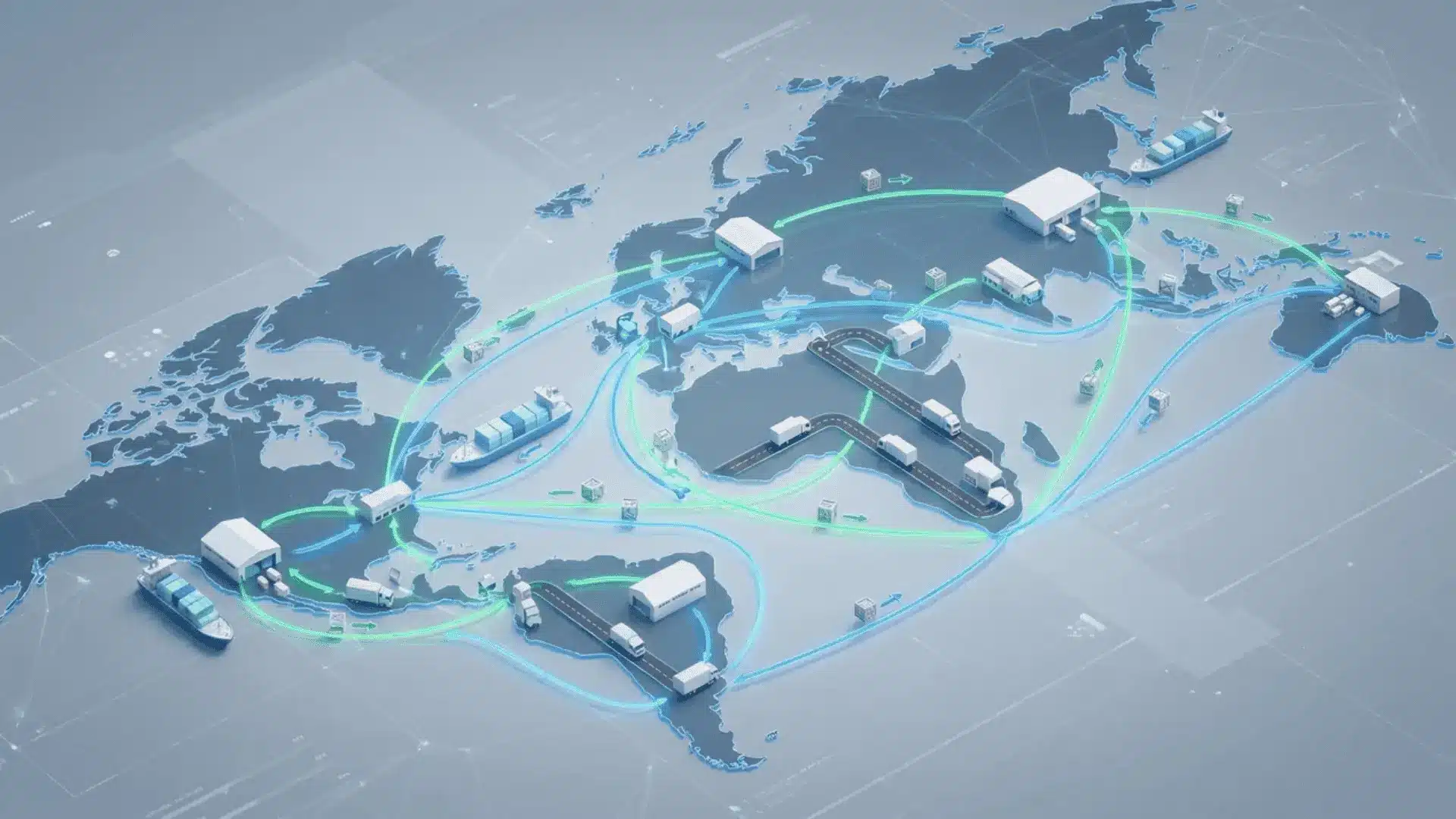
A supply chain isn’t a straight line. It’s a web of facilities, routes, and inventory decisions that compound into either competitive advantage or structural drag.
The difference between a network that performs and one that erodes margins comes down to how deliberately it was designed, and how often that design is revisited.
Here you’ll find a complete breakdown of what supply chain network design is, the decisions it governs, how the process works, and when to act on it.
What is Supply Chain Network Design?
Supply chain network design is the strategic process of configuring how your supply chain physically operates. It covers where facilities sit, how goods flow, and how inventory is positioned.
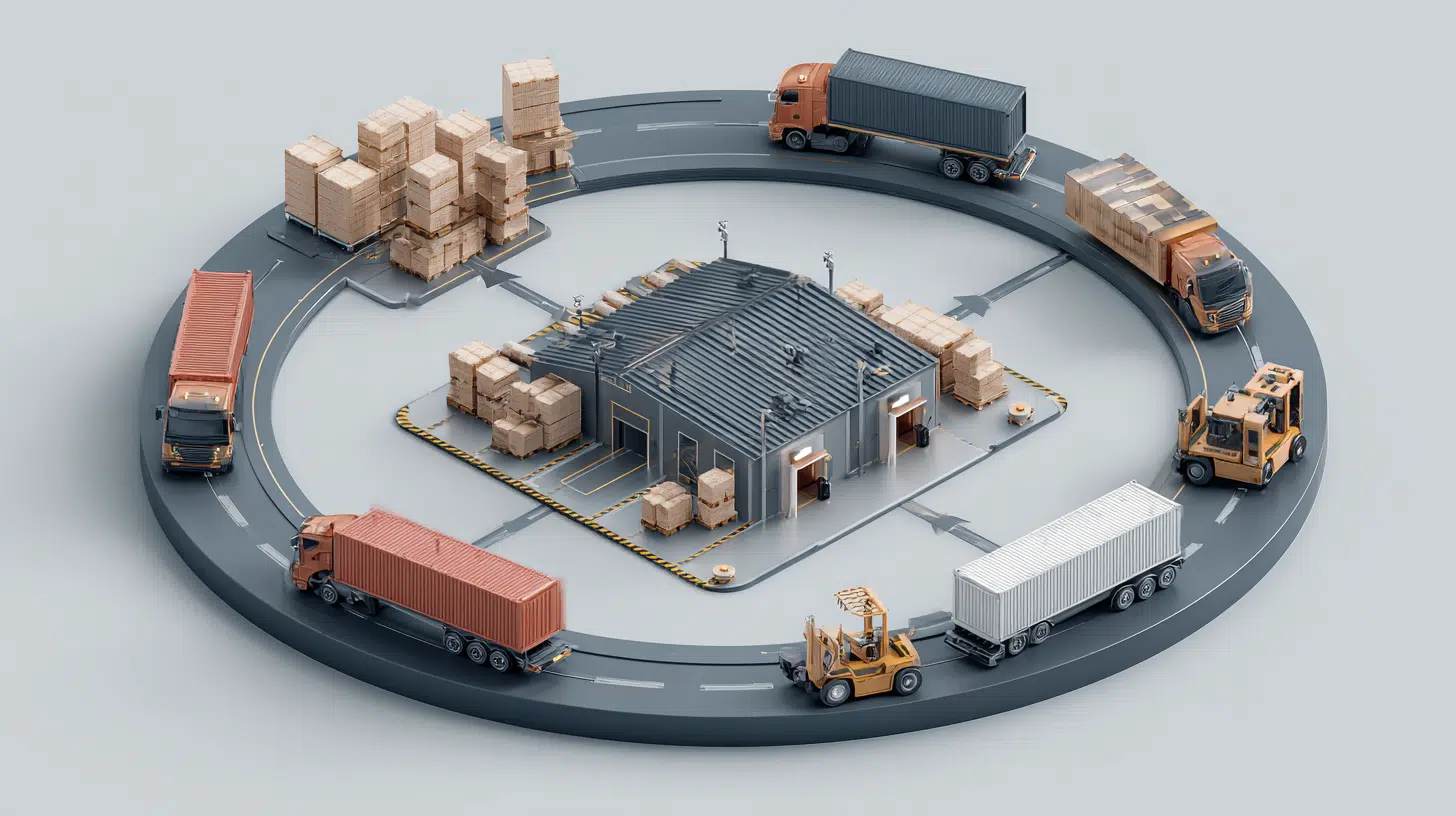
Most people picture a supply chain as a straight line: supplier to factory to warehouse to customer. In reality, it’s a web of facilities, transportation links, and relationships across multiple tiers.
Network design is the discipline of deliberately structuring that web. It governs:
- Facility locations and distribution center placement
- Capacity at each node in the network
- Transportation routes and mode selection
- Inventory positioning across the system
It’s not the same as day-to-day supply chain management. That manages what’s already built. Network design determines the structure in which those operations run.
It’s also not a one-time project. Demand shifts, costs change, and business models evolve. Network design is a continuous strategic process.
Every network carries one core tension: cost, speed, and resilience pull in different directions.
- Optimize for cost alone: your network becomes fragile
- Optimize for speed alone: margins erode
- Optimize for resilience alone: you over-invest in redundancy
No configuration wins on all three. Network design finds the right balance for your business, and revisits it as that business changes.
What a Well-Designed Supply Chain Network Delivers
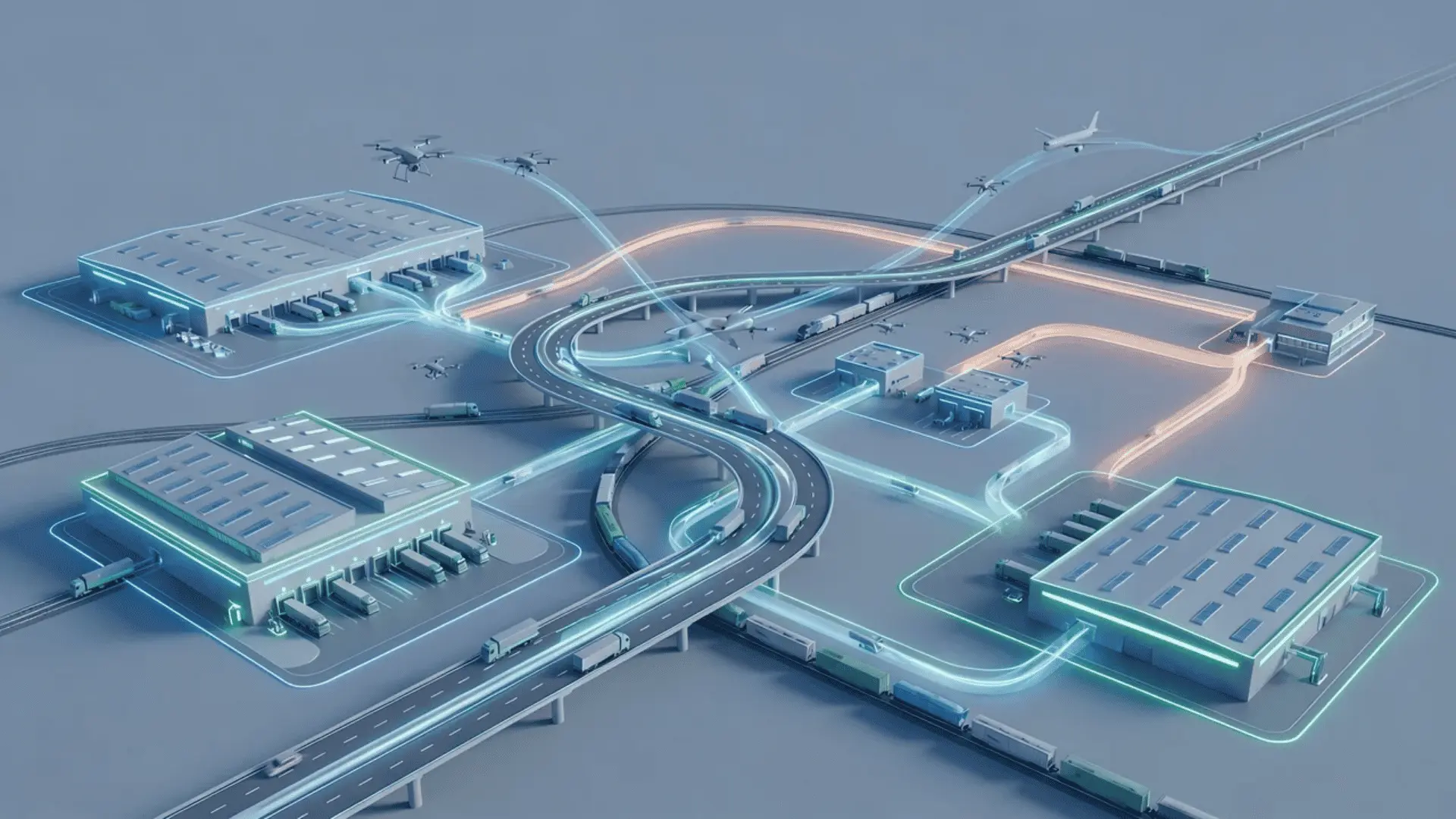
A well-designed network reduces costs, improves delivery speed, enhances resilience, and fosters sustainability, all through structural decisions made before operations begin.
1. Cost Reduction
- Network design models the total landed cost, transportation, warehousing, inventory holding, and service penalties together
- Optimizing one cost in isolation often inflates another; modeling all simultaneously finds genuine savings
- Well-designed networks consistently reduce overall supply chain costs by 5–15%
2. Improved Service Levels
- Facility placement and route design directly determine how fast the product reaches the customer
- When nodes are positioned closer to demand concentrations, lead times shrink without adding cost
- The result is faster, more reliable delivery, not as a logistics improvement but as a structural one
3. Supply Chain Resilience
- Geographic diversification of facilities and suppliers reduces exposure to single-point disruptions
- When one node goes down, a resilient network has alternate routes and buffer capacity already built in
- Resilience isn’t a cost; it’s a design choice made at the network level
4. Better Inventory Positioning
- Network design determines where stock lives, not just how much of it exists
- Positioning inventory closer to demand reduces safety stock requirements and carrying costs simultaneously
- Poor positioning forces organizations to hold more stock everywhere to compensate for structural gaps
5. Sustainability and Carbon Reduction
- Route optimization and facility consolidation directly reduce transportation miles and emissions
- Organizations that integrate carbon metrics into network design from the start achieve better environmental and financial outcomes than those that retrofit sustainability later
- Sustainability built into the network is cheaper and more effective than sustainability layered on top
These benefits compound. Resilience improvements also reduce cost risk. Better inventory positioning simultaneously improves service levels. Structural decisions do what operational fixes rarely can.
Key Decisions in Supply Chain Network Design
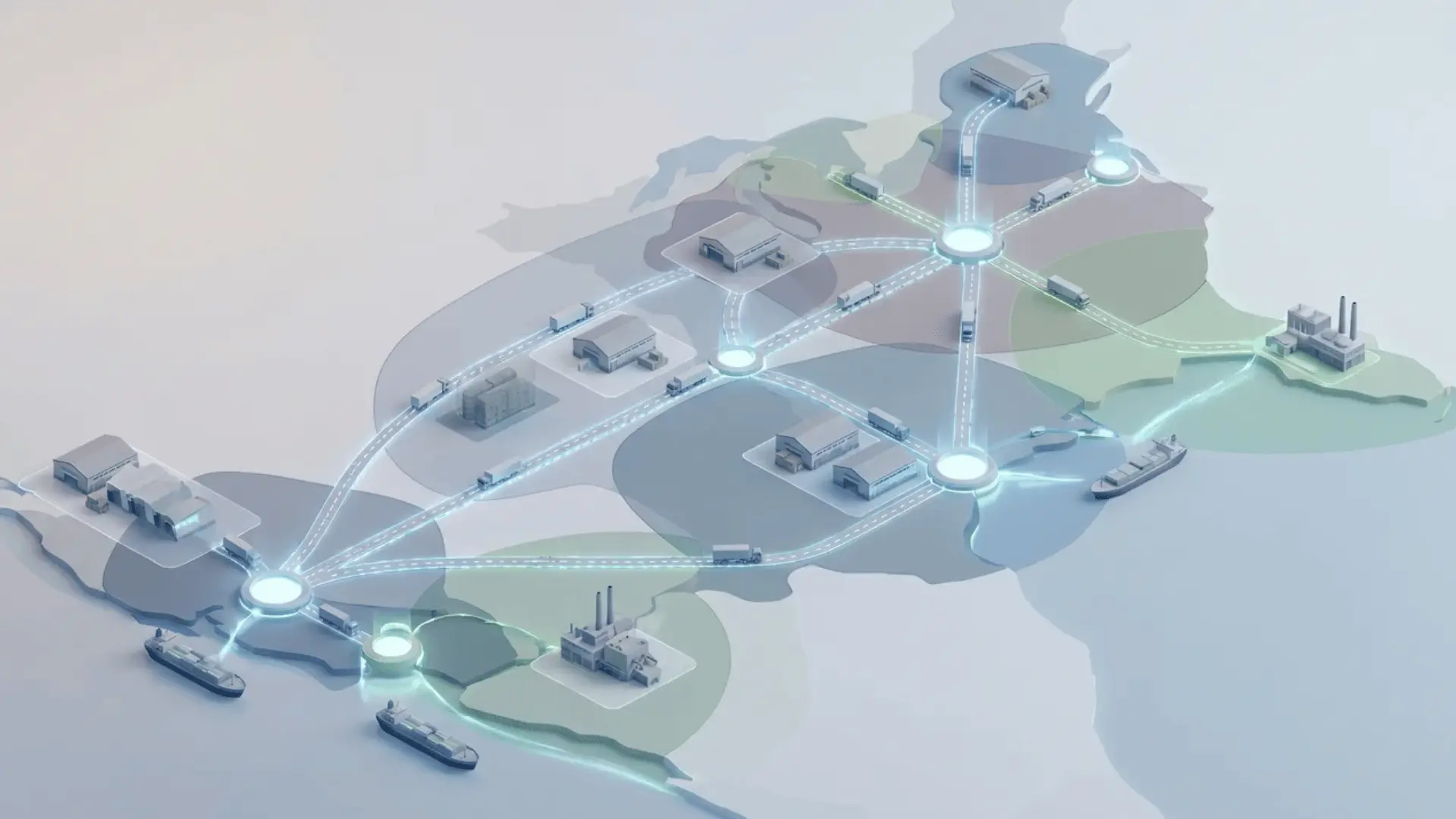
Supply chain network design governs four core decisions: facility location, capacity allocation, distribution routes, and inventory positioning; none of them work in isolation.
Most underperforming network redesigns fail because decisions were optimized separately, not because the wrong decision was made. Isolated optimization shifts costs rather than reducing them.
When facility location is locked in before transportation costs are modeled, or capacity is set before inventory requirements are known, the network produces suboptimal results regardless of the quality of individual decisions.
The four decisions are interdependent. A facility location choice constrains where inventory can be held. A capacity decision determines which routes remain viable across the network.
Facility Location and Capacity
This is the foundational decision: how many facilities, where they sit, and how much capacity each node can handle across the network.
- Greenfield analysis evaluates entirely new locations based on demand proximity, labor costs, infrastructure, and tax environment for optimal placement
- Brownfield analysis works within existing facility constraints, optimizing placement and capacity without building new infrastructure from scratch
- Capacity decisions determine whether a node absorbs demand surges or requires overflow routing to another facility in the network
- Getting location wrong doesn’t just affect that facility; it cascades into every downstream routing and inventory decision, network-wide
Facility location is the decision most organizations prioritize first. It is frequently not the highest-leverage decision in the network.
Distribution Routes and Transportation
Once facilities are in place, the network must define how the product moves efficiently between nodes and to the customer.
- Route design covers paths goods take across the network, from supplier to DC, DC to regional hub, hub to last mile
- Mode selection determines whether paths use road, rail, air, or ocean freight, each carrying different cost, speed, and reliability profiles
- Multi-echelon logistics structures movement across multiple tiers simultaneously, rather than optimizing each leg independently for cost or speed
- A transportation management system (TMS) enforces route logic operationally, but the routes themselves are a network design decision, not a logistics one
Transportation costs are visible and easy to optimize in isolation. That visibility is exactly why single-variable optimization here rarely reduces total network cost.
Inventory Positioning
Inventory positioning answers where stock lives across the network, not just how much total inventory the organization needs to carry.
- Positioning decisions are driven by demand forecasting, where demand concentrates, how variable it is, and how quickly it must be served
- Safety stock requirements at each node depend directly on lead time variability and demand volatility specific to that location in the network
- Nodes positioned too far from demand require higher safety stock to maintain service levels, a structural cost, no replenishment policy fully offsets
- When facility locations are set without modeling inventory implications, organizations consistently hold more network-wide stock than better positioning would require
Inventory positioning is where interdependence across all four decisions becomes most visible. It is the decision most directly affected by every other network choice.
The Supply Chain Network Design Process
Supply chain network design follows six steps, from scope definition through continuous monitoring. Where effort concentrates, and where projects fail, is rarely where teams expect.
Step 1: Define Objectives and Scope
Scope definition locks which markets, products, facilities, and constraints the model will cover. Undefined scope causes model bloat and unreliable outputs.
Set your KPIs before data collection begins, including cost per shipment, on-time delivery, inventory turns, and carbon output.
Step 2: Collect Data
Data collection covers demand by SKU, channel, and region, plus facility costs, transportation rates, lead times, and inventory levels across every node.
This step consumes 30–50% of the total project time. Rushing it creates errors that carry through every step that follows.
Step 3: Build and Validate the Baseline Model
The baseline model reproduces current network performance before any redesign begins. Validate it against 2–3 historical periods to confirm it reflects reality.
If the baseline is off, every scenario built on top of it is wrong.
Step 4: Scenario Planning
Scenario planning tests alternative network configurations against the validated baseline. Common scenarios include adding or consolidating DCs, shifting sourcing locations, and adjusting inventory positioning.
Always test extremes, too. What happens if your highest-volume facility goes offline?
Step 5. Evaluate and Select
Each scenario is assessed against the KPIs set in Step 1, not just the one that wins on a single metric.
A scenario that cuts costs but raises single-point risk may be the wrong call depending on your strategic priorities.
Step 6: Implement and Continuously Review
Run a pilot on a subset of the network before full rollout. It surfaces issues before they affect the entire operation.
The final step isn’t just “implement.” It’s a monitor and a revisit. Leading organizations treat network design as a continuous capability, not a one-time project.
How Optimization Works in Supply Chain Network Design
Network optimization isn’t about finding the cheapest configuration. It’s about finding the configuration that genuinely minimizes the total system cost across all variables simultaneously.
Total Landed Cost Modeling
Total landed cost modeling captures all cost components together,, transportation, inventory holding, facility overhead, and service penalties, rather than optimizing each separately.
Most optimization efforts fail because they target one variable at a time. Reducing transportation costs by consolidating shipments increases inventory holding costs and extends lead times.
When you optimize a single lever, total cost rarely drops. It just shifts from one line item to another.
When all components are modeled together, the optimization finds configurations where reducing one cost doesn’t inflate another. That’s the difference between reducing costs and shuffling them.
The Trade-Off Triangle
No network wins simultaneously on cost, speed, and resilience. Optimization maps the viable frontier of configurations that perform acceptably across all three, not a single best answer.
- Push for cost: the network becomes leaner but more fragile under disruption
- Push for speed: service levels improve, but facility and transportation costs rise
- Push for resilience: redundancy builds in, adding overhead that pure cost models would eliminate
The goal is to identify which point on that frontier matches your strategic priorities. Optimization makes the trade-off deliberate; it doesn’t eliminate it.
Optimization Model Types
Different network problems require different modeling approaches. The three primary types suit different levels of complexity and uncertainty.
- Optimization models are mathematical and deterministic; they find the lowest-cost configuration given fixed inputs and defined constraints
- Simulation models are stochastic and scenario-based; they test network performance under variable or uncertain conditions, including disruptions
- Hybrid models combine both optimization and simulation, which identify candidate configurations, and simulation stress-tests them against real-world variability
No single model type is universally superior. The right choice depends on the level of uncertainty the network faces and the level of confidence the decision requires.
When to Redesign Your Supply Chain Network?
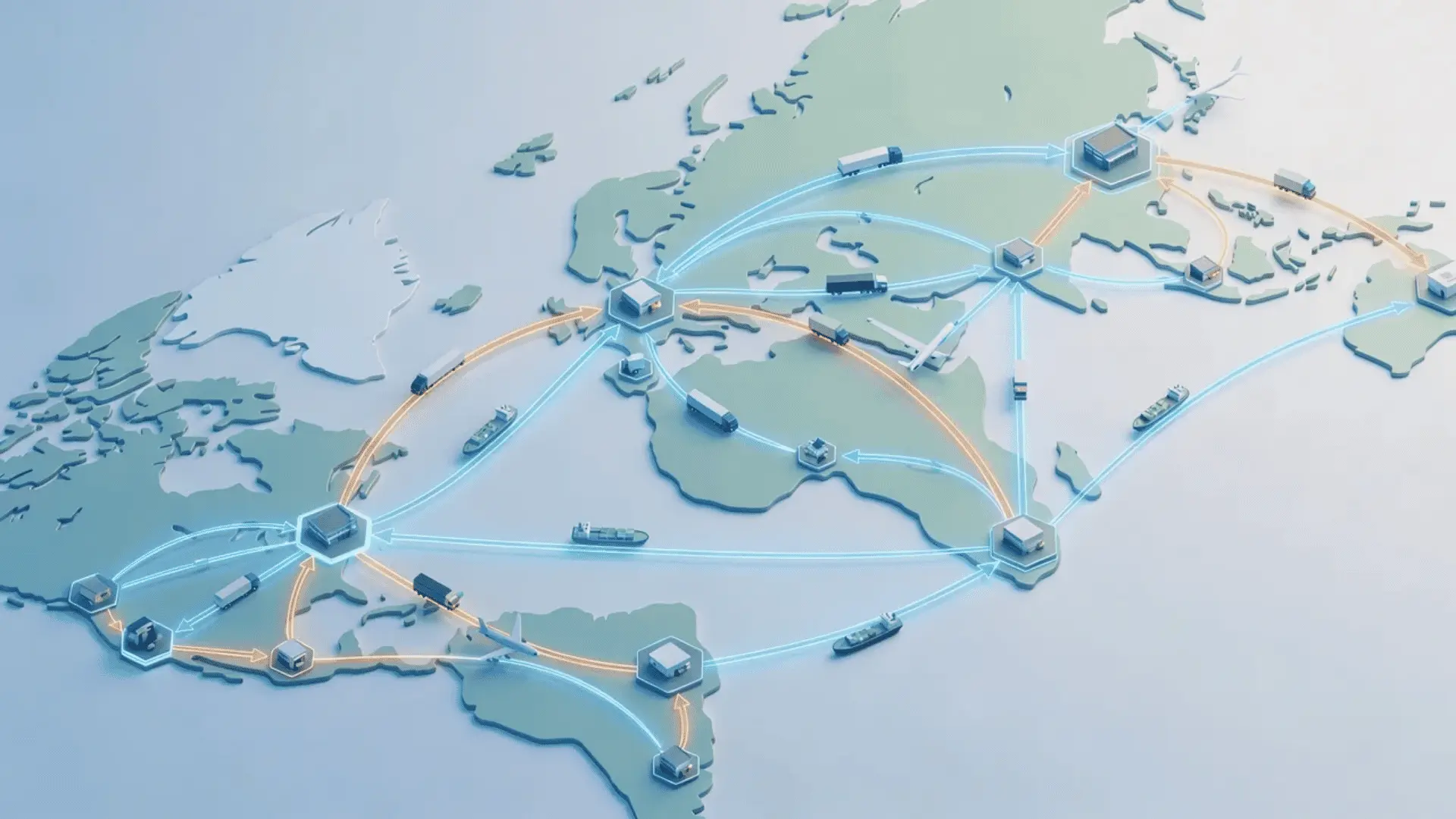
A network redesign is warranted when your current structure can no longer efficiently serve your demand, costs, or strategic realities.
Most organizations wait for a crisis to trigger a redesign. By then, the network has been quietly eroding margins for months or years.
A redesign should be initiated when any of the following conditions are present:
- Significant demand shifts: volume growth, decline, or geographic redistribution. The current network wasn’t built to handle
- Geographic expansion or contraction: entering or exiting markets changes where demand lives relative to your nodes
- New channel launch: adding e-commerce or omnichannel fulfillment changes the physics of how your network needs to operate
- Major disruption or cost spike: a supply shock or carrier cost surge that exposes structural vulnerabilities in the current configuration
- M&A activity: overlapping networks created by mergers almost always require consolidation and redesign
- Elapsed time: if your last full review was more than 3–5 years ago, the network has drifted regardless of whether a trigger event occurred
Most organizations operate on a 2–3 year review cycle. E-commerce, FMCG, and omnichannel retailers are moving toward annual or continuous optimization using digital twins, updating the network model in real time as demand, costs, and suppliers change.
Networks drift silently. A structure built for last year’s demand mix accumulates inefficiency quarter by quarter without triggering an obvious alarm. Organizations that redesign proactively, before cost impact hits the P&L, consistently outperform those that wait.
Conclusion
Supply chain network design isn’t a one-time project. It’s the foundation every operational decision runs on, whether you’ve built it deliberately or not.
Now you know how the process works, which decisions matter most, and what separates a high-performing network from one quietly bleeding cost.
Take a hard look at your current network. Is it built for where your business is today, or where it was three years ago? The best time to redesign is before the cost impact forces you to.
Frequently Asked Questions
What is the difference between supply chain network design and supply chain optimization?
Network design sets the physical structure, facilities, routes, and inventory positioning. Optimization fine-tunes performance within that structure. Design comes first; optimization works inside it.
How long does a supply chain network design project typically take?
Most projects run three to six months from data collection through scenario evaluation. Data collection alone typically consumes 30–50% of that timeline, depending on system complexity.
Can small and mid-sized businesses benefit from supply chain network design?
Yes. Even single-DC operations benefit from deliberate facility placement and route design. Cloud-based modeling tools have made network design accessible to organizations well beyond enterprise scale.
What is the biggest risk of not designing your supply chain network deliberately?
Network drift. Demand shifts and cost structures change while the physical network stays fixed, quietly accumulating inefficiency without triggering a visible alarm until margin damage is significant.