Logistics stops being simple the moment your order volume outgrows what your team can physically manage without dedicated infrastructure and systems.
A 3rd-party logistics provider steps in as an external partner, handling warehousing, fulfillment, freight coordination, and returns under a single operating relationship.
What most businesses don’t realize is how much the provider type, pricing model, and contract structure determine whether outsourcing actually saves money or quietly costs more.
Understanding how the model works, where it breaks down, and when it genuinely makes sense will help you evaluate any provider with clarity before committing.
What is a Third-Party Logistics (3PL) Provider?
A third-party logistics (3PL) provider is an external company that handles your supply chain operations, warehousing, order fulfillment, freight coordination, and returns on your behalf.
What makes this different from hiring a courier or using a storage unit is the level of integration. A 3PL connects directly to your systems.
It tracks your inventory, processes your orders, and makes real-time decisions about how your goods move without you having to manage each step.
Your 3PL physically holds your inventory, but you still own it. The stock sitting in their warehouse is yours. They’re operating it, not buying it from you. That’s what separates a 3PL from a distributor, which takes ownership of the goods they hold.
What Services Does a 3rd Party Logistics Provider Actually Manage?
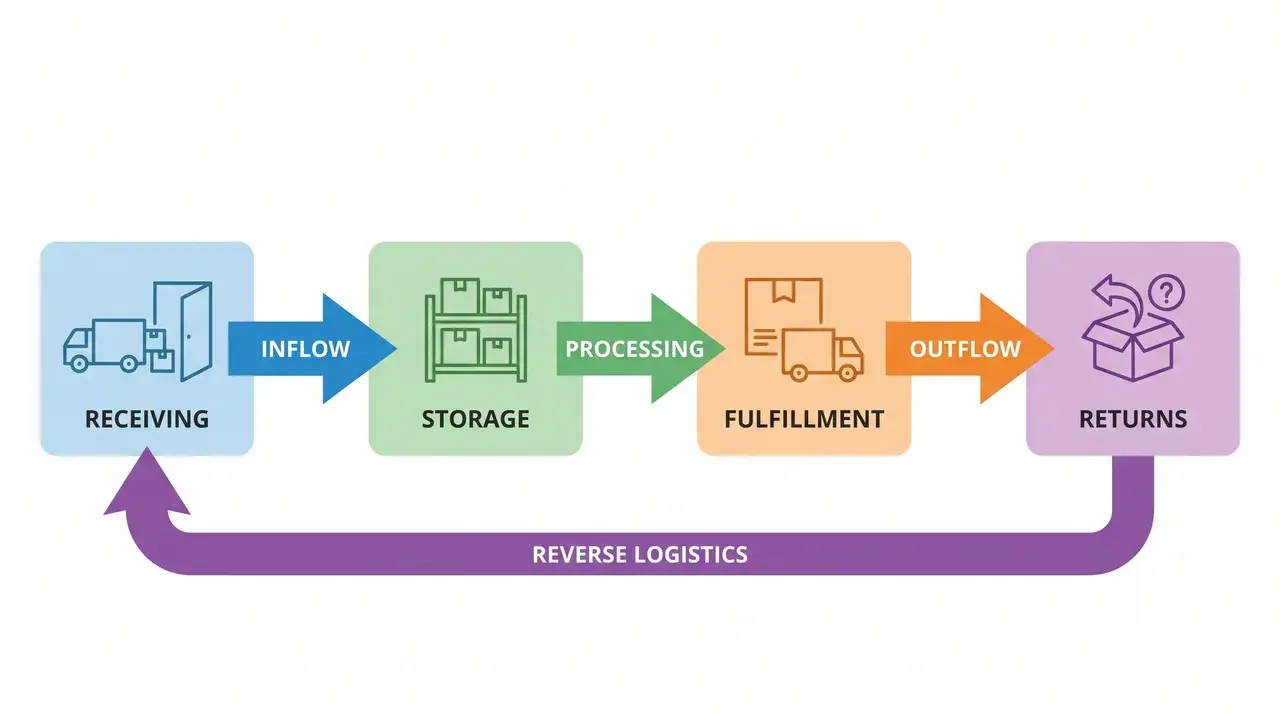
3PL providers manage warehousing, fulfillment, freight, and returns, but these aren’t separate products you pick from a menu. They run in sequence. Each one depends on the one before it working correctly.
Warehousing and Inventory Management
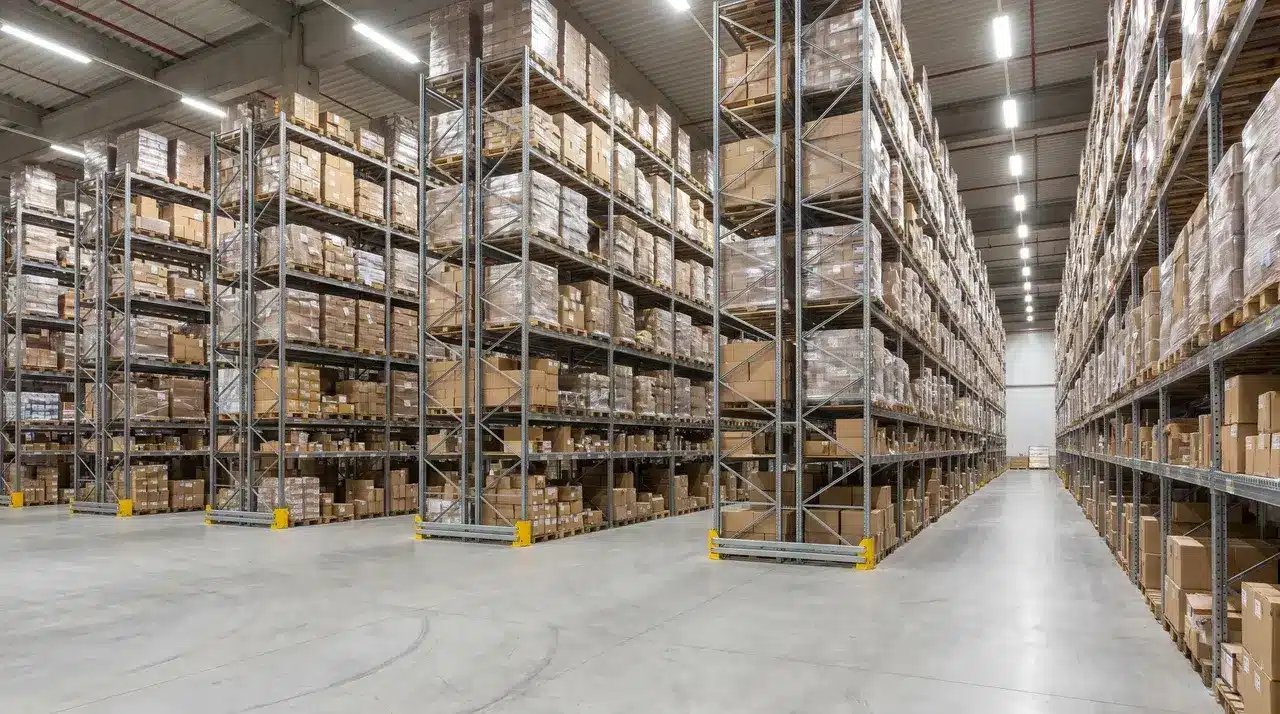
Warehousing is where the operating model begins. When your inventory arrives at the 3PL facility, it gets received, counted, and logged into a warehouse management system (WMS).
Every service that follows draws from that record.
If the receiving count is wrong, fulfillment ships the wrong quantities. If put-away locations aren’t tracked, picking slows down, and errors increase.
A 3PL’s WMS accuracy isn’t a technical detail; it’s the foundation everything else runs on.
Order Fulfillment (Pick, Pack, Ship)
Once an order comes in, the 3PL picks the item from its stored location, packs it according to your specifications, and hands it to a carrier. This is the most visible part of what a 3PL does.
What makes it work well is clean upstream inventory data. When stock locations and quantities are accurate, fulfillment is fast, and error rates stay low.
When they’re not, you see it immediately in customer complaints and return volumes.
Freight and Transportation Coordination
3PLs coordinate the movement of goods from ports to their warehouses and from warehouses to customers and retailers.
This is a coordination function. Most 3PLs don’t own the trucks; they manage relationships with carriers and route shipments on your behalf.
The value here is access. A 3PL moving volume across many clients can negotiate better carrier rates than most individual businesses can on their own.
Reverse Logistics
Returns come back into the same inventory system they left from. The 3PL inspects returned items, decides whether they’re restockable, and updates the record accordingly.
For businesses in high-return categories, such as apparel, electronics, and anything with sizing or fit, this stage deserves serious attention during provider selection.
A weak returns process doesn’t just create operational friction. It corrupts the inventory data that drives everything else.
How Does 3PL Pricing Work?
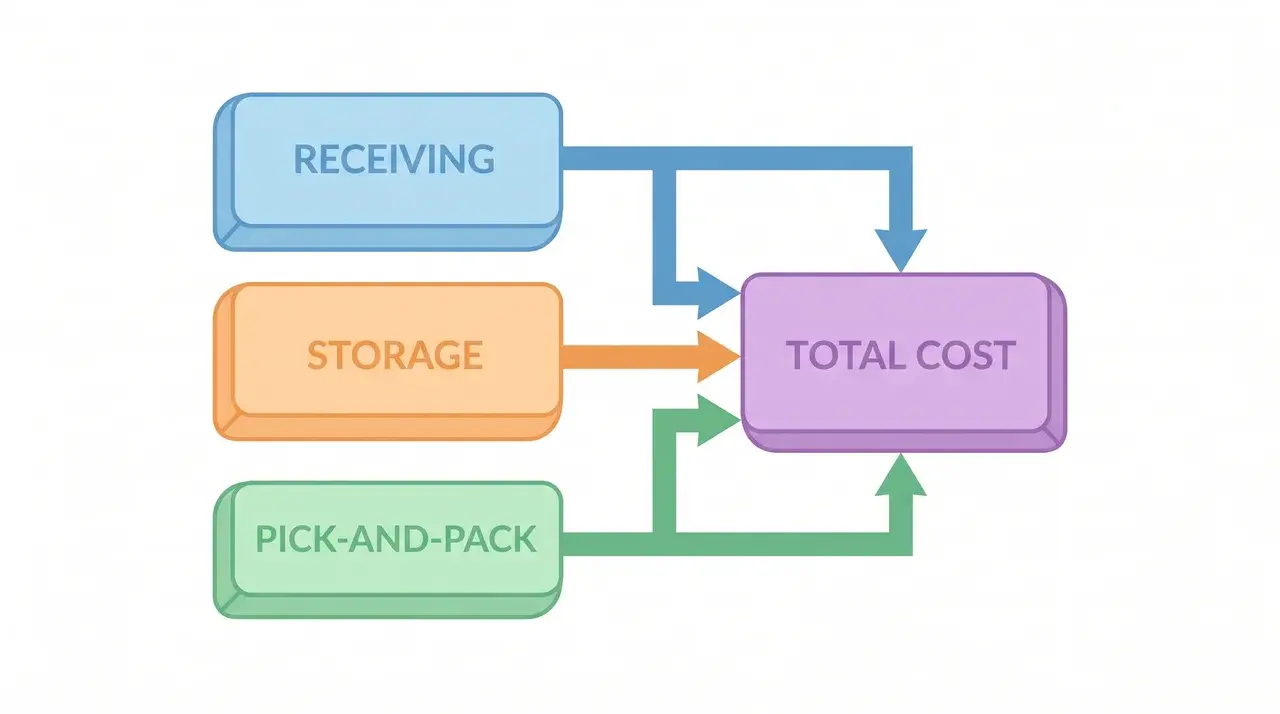
3PL pricing includes receiving, storage, and pick-and-pack fees. How each behaves under your inventory profile matters more than the headline rate.
Receiving fees are one-time charges when inventory arrives. Typically, a flat fee per pallet or unit is processed on intake.
Storage fees diverge by model. Pallet-based pricing charges per position monthly. Cubic-foot pricing charges are based on space occupied, quickly penalizing oversized or slow-moving inventory.
Pick-and-pack fees are per-order labor charges. At high volumes, these dominate your monthly bill. Most 3PLs also enforce minimums regardless of actual order activity.
Before comparing providers, calculate your expected bill using real SKU dimensions, inventory dwell time, and order volume. The lower pick fee often leads to worse storage behavior.
Asset-Based vs. Non-Asset-Based 3PLs: What Does the Difference Mean in Practice?
Asset-based and non-asset-based 3PLs solve logistics differently. The right choice depends on whether your business consistently values capacity stability or operational flexibility more.
| Factor | Asset-Based 3PL | Non-Asset-Based 3PL |
|---|---|---|
| Infrastructure Ownership | Owns warehouses and transportation assets directly | Uses external carrier and warehouse networks |
| Capacity Control | Stronger control during peak demand periods | Depends on market-wide carrier availability |
| Pricing Structure | Higher fixed overhead limits flexibility | More competitive pricing under normal conditions |
| Operational Flexibility | Limited by the owned infrastructure footprint | Can adjust routes and partners more easily |
| Peak Season Reliability | Better for predictable seasonal demand | Higher risk during overloaded market conditions |
| Best Fit | Businesses needing stable fulfillment capacity | Businesses needing adaptable logistics operations |
Neither model is automatically better. The decision depends on whether your business prioritizes pricing flexibility year-round or guaranteed logistics capacity during peak demand periods.
- Asset-based providers include DHL Supply Chain, Ryder Supply Chain Solutions, and UPS Supply Chain Solutions.
- Non-asset-based providers include C.H. Robinson and Total Quality Logistics.
- Hybrid providers, those that own some infrastructure while coordinating through external networks for broader coverage, include XPO Logistics and GXO Logistics.
What a 3PL is Not?
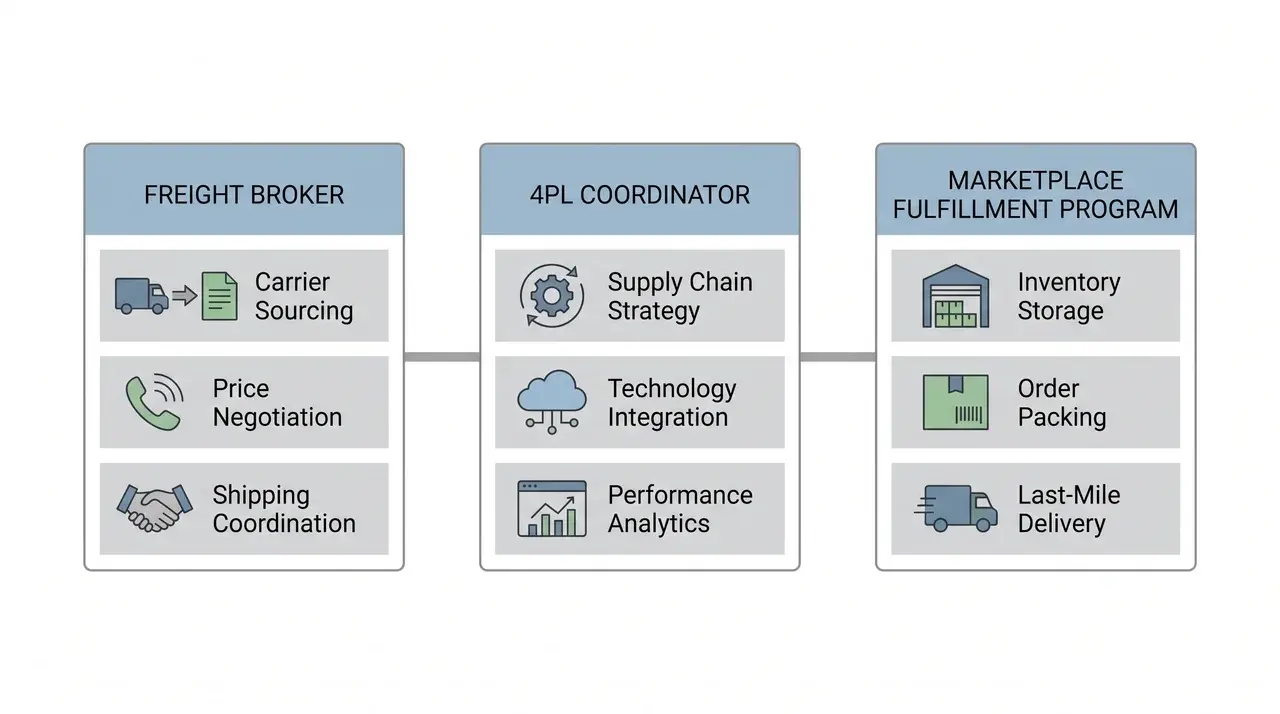
A 3PL is not a freight broker, a 4PL coordinator, or a marketplace fulfillment program, and confusing these leads to evaluating the wrong type of provider entirely.
A freight broker only arranges transportation between shippers and carriers. A 3PL stores, handles, and manages inventory directly, creating different operational and legal responsibilities.
A 4PL sits above the 3PL, not beside it. A fourth-party logistics provider manages your 3PL and other supply chain partners on your behalf. It’s a management layer, not an operational one. If you’re working with a 4PL, you likely have a 3PL underneath it.
The Marketplace fulfillment programs handle storage and shipping like traditional 3PLs, but inventory operates inside platform-controlled ecosystems shaped by marketplace rules, pricing, and priorities first.
Where Does a 3PL Fit in the Broader Logistics Framework?
The “PL” numbering system describes how much logistics ownership a business retains versus delegates to others. Higher numbers mean more outsourcing.
- 1PL: The business owns and operates everything: trucks, warehouse, staff, and fulfillment.
- 2PL: A single-mode carrier moves goods but doesn’t store or manage them.
- 3PL: Full delegation of storage, fulfillment, and freight to one external operating partner.
- 4PL: A management layer above the 3PL, coordinating multiple supply chain partners strategically.
A 4PL doesn’t touch your inventory. It manages the relationships and strategy sitting above your 3PL operations.
For most businesses outsourcing logistics for the first time, the relevant decision is which 3PL to choose. The layers above it apply only when supply chain complexity spans multiple regions or providers simultaneously.
When Does it Make Sense to Use a 3PL?
The variable-cost argument for 3PLs is real, but it’s conditional. Not every business benefits from outsourcing logistics.
A 3PL converts fixed costs, leases, headcount, and equipment into variable costs that scale with order volume. That works when the volume fluctuates.
Seasonal peaks, growth spurts, and geographic expansion are where the model earns its keep. You stop paying for capacity you’re not using.
The calculus changes when volume is high and stable. At consistent throughput, in-house infrastructure often costs less over a three- to five-year horizon.
The honest trigger for outsourcing is one of three conditions:
- Fulfillment is consuming operational attention that belongs elsewhere in the business.
- Order volume is growing faster than internal infrastructure can scale.
- Reaching customers faster requires geographic distribution you can’t build alone.
If none of those conditions are present, a 3PL may be premature.
Wrapping Up
A 3rd party logistics provider is not a commodity service. The provider type, asset structure, and pricing model all produce meaningfully different operational outcomes.
The difference between a good fit and a costly mistake comes down to matching the provider’s strengths to your actual volume, inventory profile, and fulfillment requirements.
Operational fit, pricing structure, and provider type are not fine print. They are the variables that determine whether outsourcing logistics compounds your growth or quietly works against it.
Start with the conditions that justify a 3PL, then work outward to pricing, provider type, and contract terms before any conversation with a vendor.
Frequently Asked Questions
What is the difference between a 3PL and a freight broker?
A freight broker only arranges transportation between shippers and carriers; it does not store or handle inventory. A 3PL manages the physical goods directly, including warehousing, fulfillment, and returns, making it operationally and legally responsible for a broader portion of your supply chain.
What is the difference between a 3PL and a 4PL?
A 3PL executes logistics operations, storing inventory, fulfilling orders, and coordinating freight. A 4PL manages those operations strategically on your behalf, overseeing your 3PL relationships without handling physical goods. A 3PL is an execution layer. A 4PL is a management layer placed above it.
When should a business start using a 3PL?
A business should consider a 3PL when fulfillment is consuming internal operational capacity, when order volume is growing faster than infrastructure can scale, or when geographic expansion requires distributed warehousing. If volume is stable and predictable, in-house logistics may cost less over a three- to five-year horizon.
How much does a 3rd party logistics provider cost?
3PL pricing includes receiving, storage, and pick-and-pack fees. Storage costs vary significantly between pallet-based and cubic-foot pricing models depending on product dimensions and inventory turn rate. Most providers also apply monthly minimums. Actual cost depends on SKU profile, order volume, and average inventory dwell time, not headline rates alone.