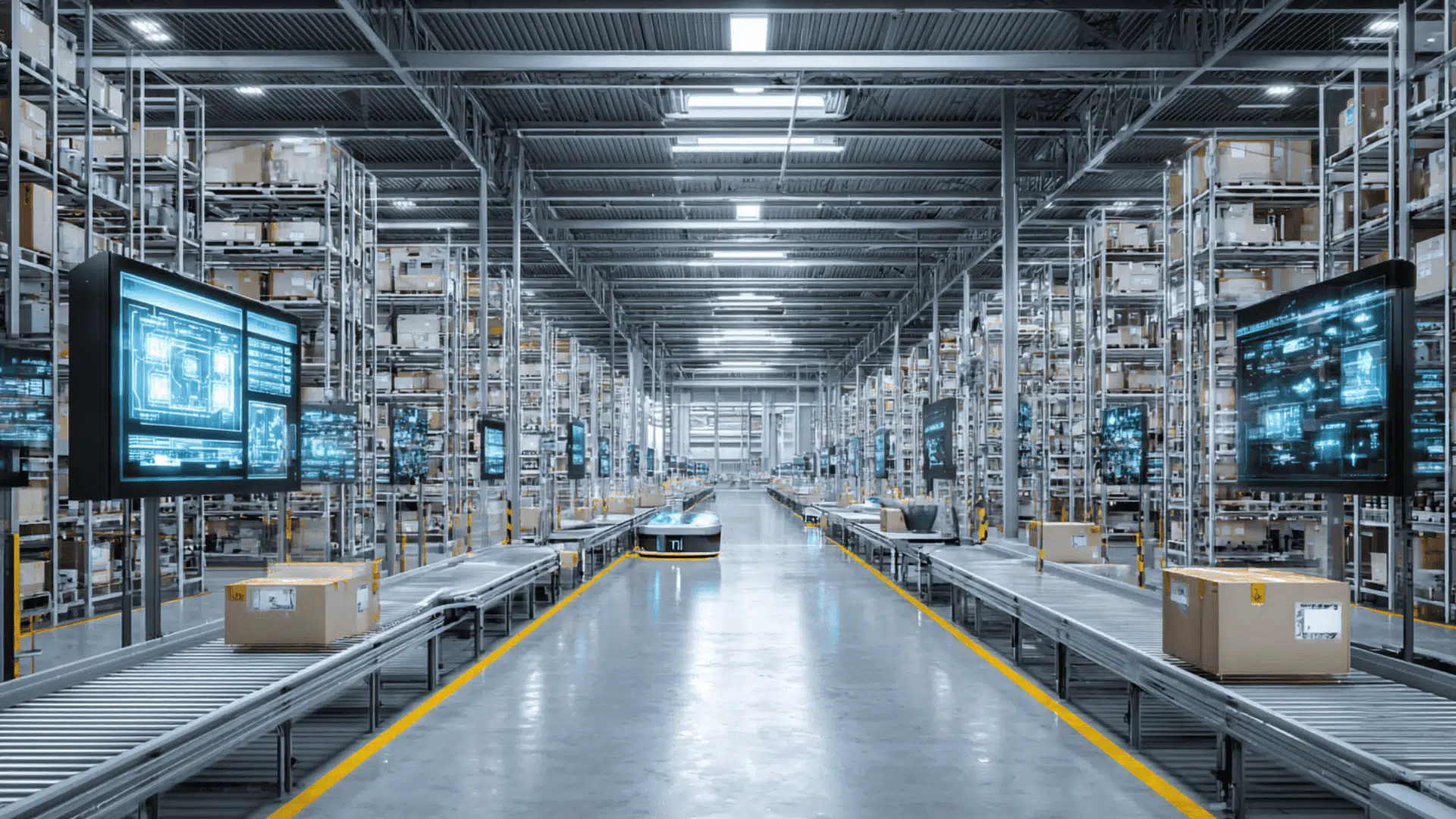
Automation has changed how materials move through warehouses and production floors.
Automated material handling uses smart systems and machines to transport, store, and organize goods with minimal human effort. It’s not just about speed; it’s about precision, safety, and long-term efficiency.
Today, I’ll break down how these systems work, their benefits, costs, and what to consider before investing.
You’ll also learn how to choose the right automation partner and plan implementation effectively. Let’s start by understanding what this really means.
What is Automated Material Handling?
Automated material handling means using machines and smart systems to move, store, and manage materials with little human effort.
It replaces manual lifting or moving with automated tools that work faster and more safely.
Here are a few common examples:
- Conveyor systems: Move goods along a set path for sorting or packaging.
- Robotic arms: Handle repetitive jobs like picking or stacking items.
- Automated Guided Vehicles (AGVs): Follow fixed routes to move materials between areas.
- Autonomous Mobile Robots (AMRs): Use sensors and AI to navigate around obstacles and adapt in real time.
- Automated Storage and Retrieval Systems (ASRS): Store and retrieve products from high-density storage racks automatically.
Together, these systems help warehouses, factories, and other facilities work faster, safer, and with fewer errors.
Key Components of AMH Systems
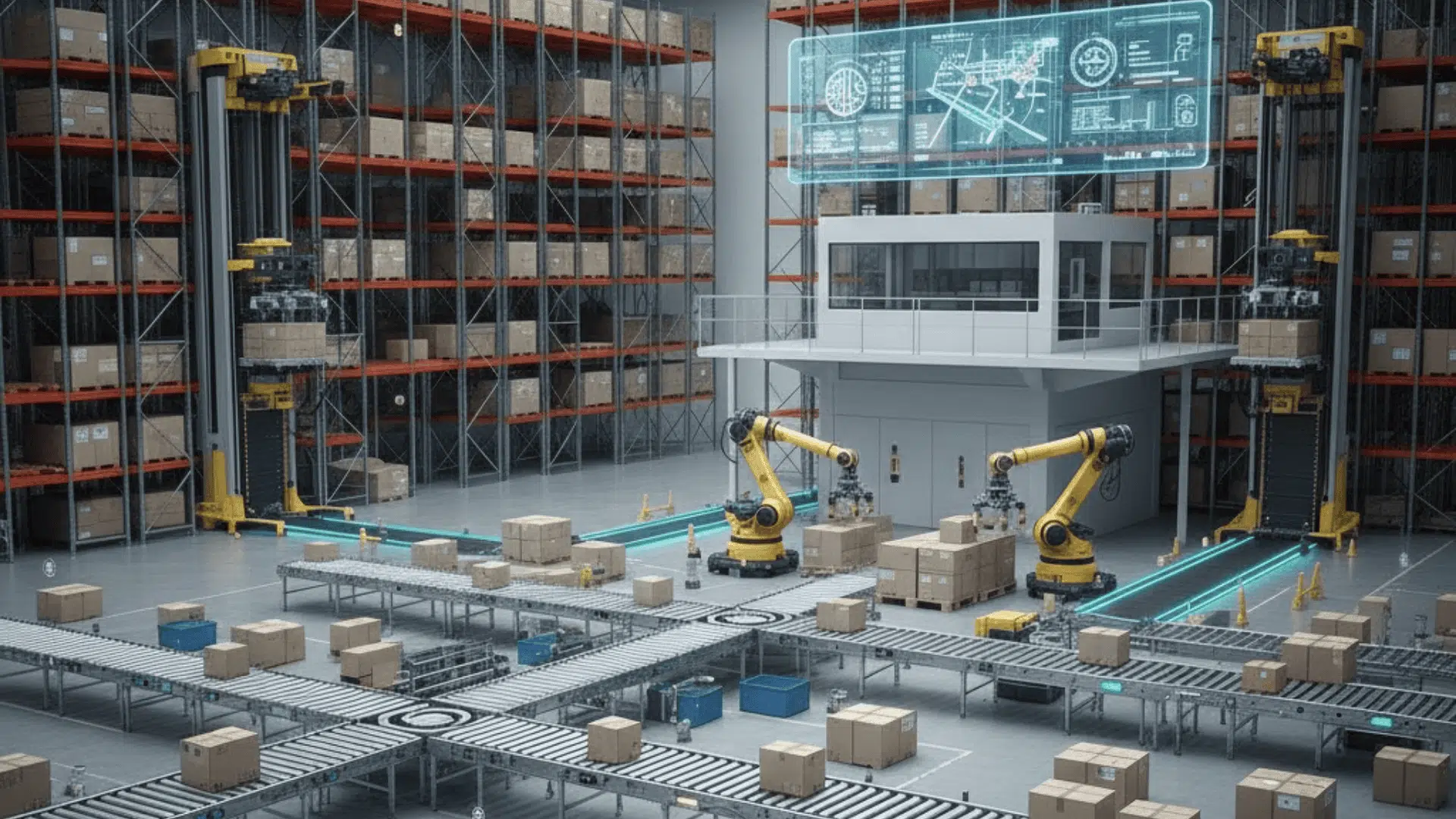
Automated material handling systems rely on several core components that work together to move, store, and manage materials efficiently.
1. Conveyor Systems
Conveyors move goods along fixed paths within warehouses or factories. They’re ideal for repetitive, high-volume tasks. Common types include:
- Belt conveyors: Move boxes or products over flat or inclined surfaces.
- Roller conveyors: Use rotating cylinders to transport heavier items.
- Overhead conveyors: Carry products above the workspace to save floor space.
These systems help maintain continuous flow while reducing manual effort and movement time.
2. AGVs vs. AMRs: Differences, Pros, and Cons
Both Automated Guided Vehicles (AGVs) and Autonomous Mobile Robots (AMRs) transport materials automatically, but they differ in flexibility.
AGVs: Follow fixed paths using magnetic strips or tracks.
- Pros: Reliable and safe for structured layouts.
- Cons: Less adaptable to layout changes.
AMRs: Use sensors, cameras, and AI to navigate freely.
- Pros: Flexible and easy to reprogram for new routes.
- Cons: Higher upfront cost and more complex setup.
Choosing between them depends on how dynamic your facility layout is.
3. ASRS: Storage Efficiency and Integration
An Automated Storage and Retrieval System (ASRS) stores and retrieves goods automatically using cranes or robotic shuttles.
It improves space efficiency by stacking products vertically and reduces errors through precise item tracking.
ASRS systems often connect with Warehouse Management Systems (WMS) for real-time inventory visibility and faster order fulfillment.
4. Robotic Arms: Use Cases in Picking and Palletizing
Robotic arms automate repetitive handling tasks like picking, sorting, or stacking products on pallets.
They’re widely used in manufacturing and logistics to speed up packaging and improve accuracy.
Advanced models include sensors and vision systems that let them handle different product shapes and weights.
5. Software Backbone: WMS/MES Integration
Software connects and coordinates every part of an AMH system.
- Warehouse Management Systems (WMS): Track inventory, orders, and product locations.
- Manufacturing Execution Systems (MES): Control production and material flow between machines.
Together, they synchronize automation hardware with business operations, improving visibility, decision-making, and efficiency.
Benefits of Automated Material Handling
Automated material handling helps businesses work faster, safer, and with fewer mistakes.
- Efficiency and speed: Systems run continuously, reduce delays, and streamline material flow. Workers can focus on higher-value tasks instead of repetitive ones.
- Safety and ergonomics: Automation reduces manual lifting and movement, lowering the risk of injuries and improving comfort for employees.
- Accuracy and error reduction: Machines follow precise commands, minimizing picking or sorting errors and ensuring consistent product handling.
- Space utilization: Automated systems use vertical and compact layouts, maximizing storage without needing more floor space.
- ROI and scalability: Despite the upfront investment, automation cuts labor costs, boosts output, and can scale easily as your operations grow.
Real-World Applications of Material Handling Automation
| Industry | How It’s Used | Key Benefits |
|---|---|---|
| Warehousing & eCommerce | Moves and sorts products for order fulfillment, packaging, and shipping. | Faster delivery times, fewer picking errors, better inventory tracking. |
| Manufacturing & Assembly | Transports raw materials and finished goods between workstations or storage areas. | Continuous production flow, reduced manual handling, higher accuracy. |
| Semiconductors | Transfers wafers and components in cleanroom environments using AMHS. | Precision handling, contamination control, 24/7 operation. |
| Airports and Postal Systems | Automates luggage and parcel sorting using conveyors and scanners. | Quicker sorting, lower labor costs, improved reliability. |
| Libraries & Healthcare | Sorts books, lab samples, or medical supplies using compact conveyors and robots. | Streamlined operations, faster service, and reduced human error. |
These examples show how automation can adapt to different industries while solving unique handling challenges.
How to Implement AMH in Your Facility
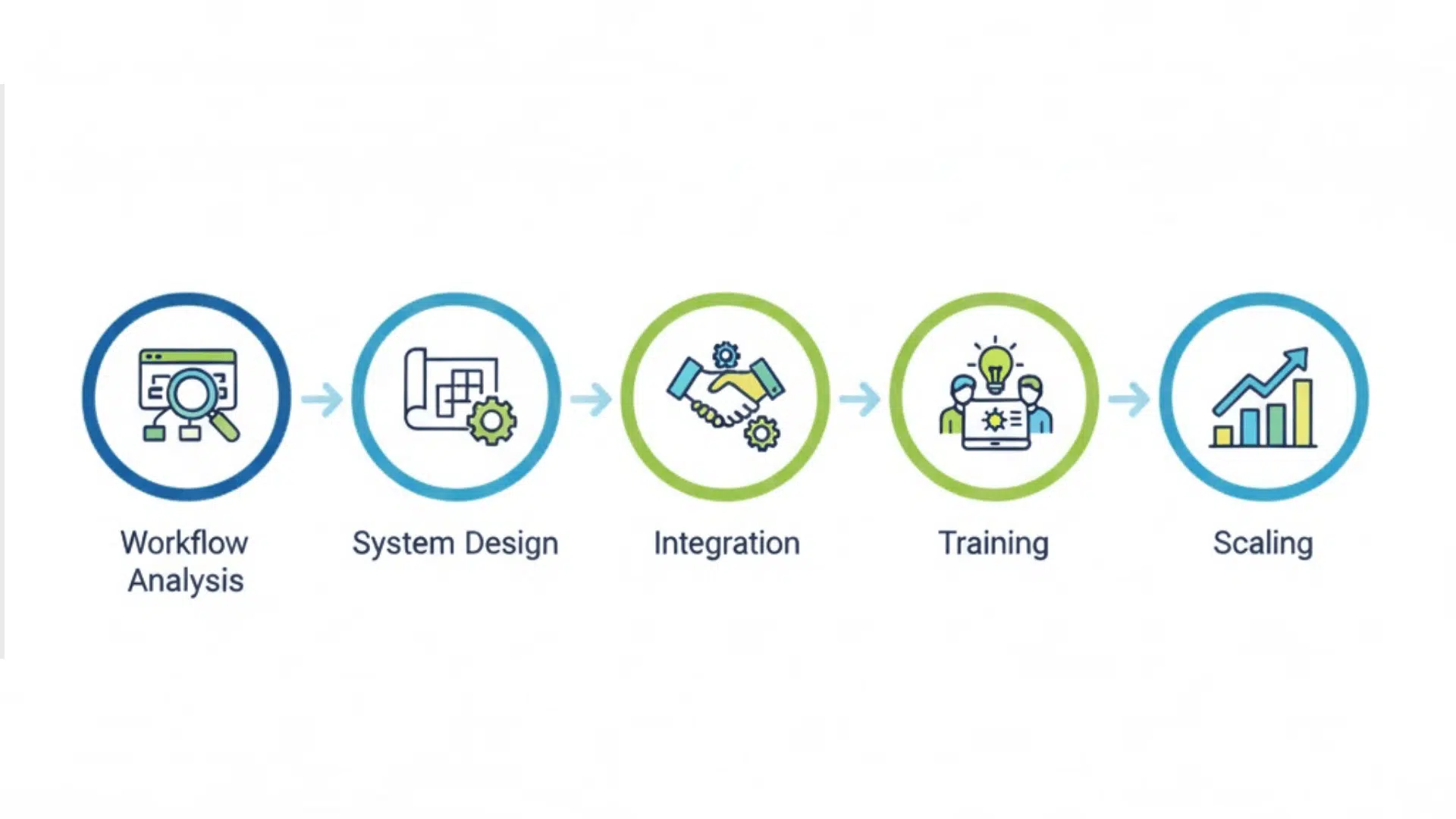
Implementing automated material handling takes planning and structure. Each stage ensures the system fits your operations and runs smoothly long term.
1. Assessment Phase: Workflow Analysis
Begin by reviewing how materials currently move in your facility. Identify repetitive, time-consuming, or risky tasks where automation can make the most impact.
2. System Design and Vendor Selection
Design a setup that fits your space, workload, and budget. Compare vendors carefully for product quality, reliability, and technical support. Choose one that allows future expansion.
3. Integration with Existing Infrastructure
Plan how the system will connect to your existing Warehouse Management System (WMS) or Manufacturing Execution System (MES). Proper integration ensures smooth data flow and minimal downtime.
4. Training and Change Management
Train your staff to operate and maintain the new systems confidently. Open communication helps build trust and reduces resistance to new technology.
5. Maintenance and Scaling Strategies
Schedule regular maintenance and inspections to prevent breakdowns. As your operation grows, expand automation gradually by adding new modules, robots, or conveyors.
Cost and ROI Breakdown of AMH Systems
Understanding costs and returns helps you plan automation with realistic expectations.
Typical System Costs
The cost of automated material handling depends on the scale and complexity of your setup.
- Basic systems like conveyors or small-scale robotics are more affordable.
- Mid-level automation with AGVs, ASRS, and control software falls in the middle range.
- Full-scale systems with robotics, AI integration, and warehouse redesign cost more but deliver higher long-term value.
You should also plan for installation, software licensing, training, and regular maintenance.
ROI Timelines by Industry
Most facilities see returns within 2 to 5 years, depending on size and automation depth.
- Warehousing and eCommerce: Fast ROI due to high labor savings and throughput gains.
- Manufacturing: Moderate ROI as systems improve consistency and reduce waste.
- Semiconductors and healthcare: Longer ROI timelines because of specialized equipment and cleanroom requirements.
Key factors that speed up ROI include reduced labor costs, fewer errors, and better use of space.
ROI Calculation Example
You can estimate ROI using this simple formula: ROI (%) = (Annual Net Benefit ÷ Total Investment Cost) × 100
Annual Net Benefit includes labor savings, fewer errors, increased output, and lower waste, minus operating costs.
You can also calculate the Payback Period by dividing the total investment by annual savings.
Creating or using a simple ROI calculator can help you see how automation fits your budget and growth goals.
Challenges and How to Overcome Them
| Challenge | How to Overcome It |
|---|---|
| Integration barriers | Use open, compatible systems that connect easily with existing WMS or MES. Start with pilot projects before scaling. Involve IT and operations teams early to ensure smooth communication. |
| Workforce transition | Provide hands-on training and clear communication to build confidence. Reassign workers to higher-value roles like system monitoring or quality control. Emphasize improved safety and reduced physical strain. |
| Cybersecurity and system downtime | Secure your network with firewalls and access controls. Keep software updated and back up data regularly. Choose vendors that offer strong technical support and recovery plans. |
Preparing for these challenges in advance helps create a smooth, safe, and sustainable automation setup.
Choosing the Right Automation Partner

When selecting a vendor for your automated material-handling (AMH) project, keep these criteria in mind:
- Strong automation expertise & proven track record: Choose a partner who has done projects similar to yours before. That ensures they know practical challenges and workflows.
- Flexible, scalable solutions: The vendor’s systems should grow with your business, letting you expand capacity (robots, storage, conveyors) without overhauling everything.
- Smooth integration with existing infrastructure: Good vendors help tie automation systems into your current software (WMS/MES/ERP) and processes.
- Strong after-sales support & maintenance: Because AMH systems are complex, you need reliable support for maintenance, troubleshooting, updates, and scaling.
- Data & analytics capabilities: A vendor offering software for warehouse control, monitoring, and analytics can help you track performance, optimize workflows, and forecast needs.
- Modularity & adaptability: The solution should adapt to your product mix, space constraints, and changing demands (e.g., seasonal peaks, new SKUs).
Top Automated Material Handling Service Providers
| Provider | Strength / Ideal For | Considerations / Limitations |
|---|---|---|
| Swisslog | Full-scale automation: AS/RS, conveyors, robotics, integrated software, suitable for large, complex warehouses. | Higher upfront cost and maintenance; may be less flexible for small or rapidly changing inventories. |
| AutoStore (as implemented by integrators) | Very good for high-density storage, modular growth, small-to-mid warehouses, and fast ROI. | Best suited for small goods / standardized bins; may need additional systems for full warehouse automation. |
| Bastian Solutions | Offers custom integration, consulting, and mixed automation (AGVs/AMRs, conveyors, AS/RS) for versatile needs across industries. | As a system integrator, performance depends on design & planning; more complex setups may demand careful project management. |
| Vecna Robotics(and similar agile-robot providers) | Good fit when flexibility, modular deployment, and rapid scaling are important (e.g., changing SKU mix or seasonal demand). | Per-unit throughput may be lower than heavy-duty fixed automation for very high-volume operations. |
Choosing What’s Right for You
- If you run a large warehouse with steady high volume, Swisslog might be ideal because of its comprehensive, integrated automation.
- If you have smaller or mid-size operations, want modular growth, or value flexibility & space efficiency, AutoStore is a strong option.
- If you need custom solutions, mixed automation technologies, or industry-specific workflows, Bastian Solutions offers flexibility through integration and consulting.
- If your business requires agility, frequent SKU changes, or flexible scaling, consider providers like Vecna Robotics.
Wrapping Up
Automated material handling continues to shape the future of logistics and manufacturing by improving efficiency, safety, and consistency.
The right setup can save time, reduce errors, and scale effortlessly with your business.
While costs and challenges exist, smart planning and reliable partners make automation a powerful long-term investment. As technology advances, these systems will only become more flexible and accessible.
Now’s the time to assess your operations and explore how automation can move your business forward. Start your upgrade plan today!