Shipping something temperature-sensitive is not just about speed. It is about keeping your item protected from the moment it leaves your hands until it arrives.
FedEx cold shipping works differently from what most people expect. The cooling comes from the packaging you choose, not from anything FedEx does in transit.
The gap between a successful delivery and a spoiled one usually comes down to a few decisions made before the box is even sealed. Getting those right is simpler than most people realize.
Those three decisions, the right system, the right packing, the right service speed, are what every successful cold shipment comes down to.
What is FedEx Cold Shipping and How Does it Actually Work?
FedEx cold shipping is not a special delivery speed. It is a packaging system you add on top of your normal shipping choice.
You pick your usual FedEx service at checkout, and then you add the cold shipping packaging separately.
This packaging is designed to keep items within a set temperature range for a limited number of hours. After that time runs out, the cooling effect stops, no matter where the package is. It could still be in transit, in a warehouse, or already delivered.
For example, if the packaging lasts 96 hours, you should not plan delivery to arrive exactly 96 hours later. It is safer to make sure it arrives well before that limit, ideally with extra time in hand. Delays can happen, so that buffer helps make sure your items stay protected the whole way.
Which FedEx Cold Shipping Option is Right for What You’re Sending?
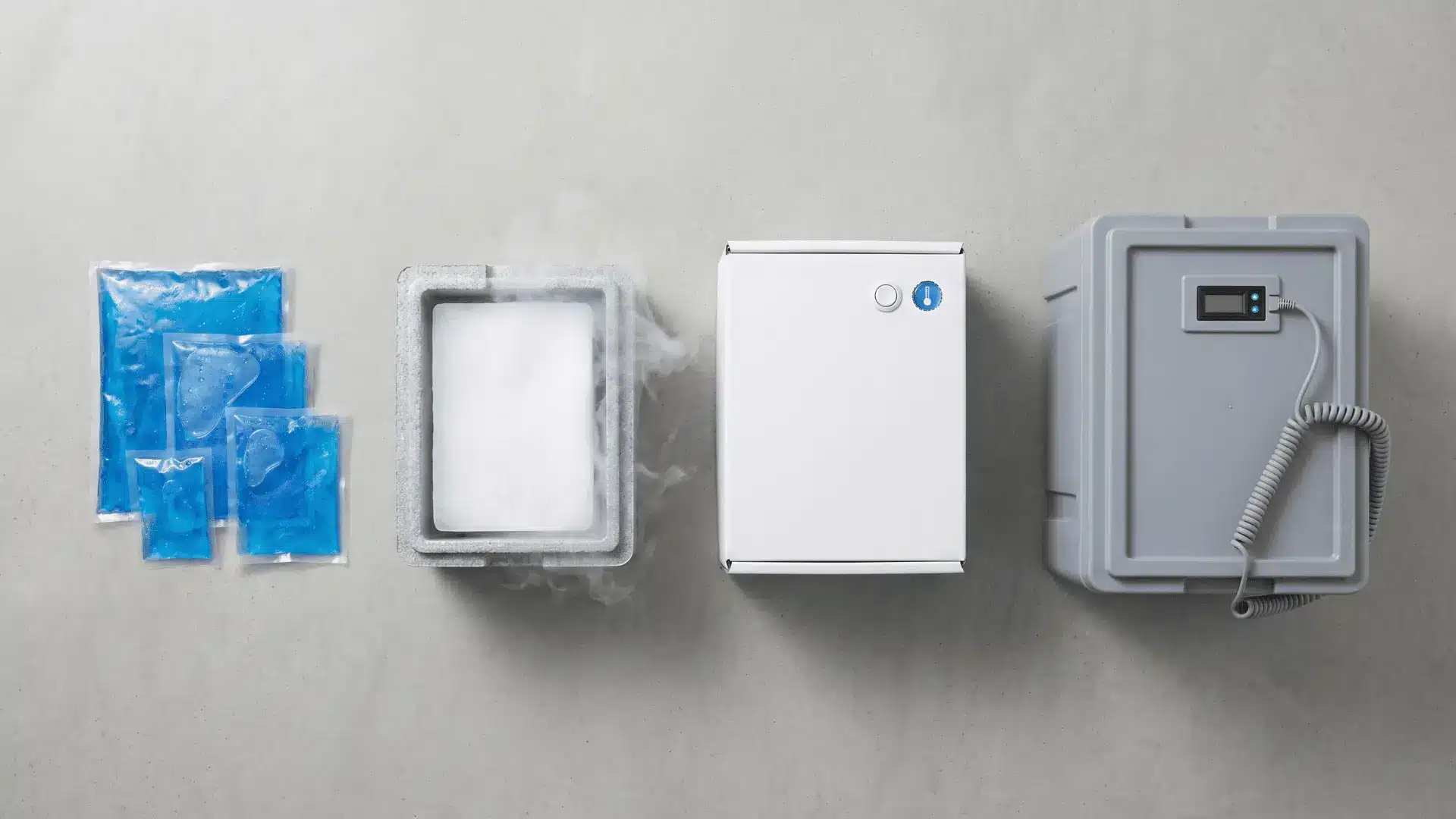
Two variables determine which option you need: the temperature range your item must stay within, and how long it will be in transit. Once you know your required temperature range, most options either qualify or don’t.
NanoCool Cold Shipping Box
NanoCool is a ready-to-use refrigerated shipping box. You just press a button, and it starts cooling on its own within minutes. No ice packs or freezing needed.
It holds a steady 2°C to 8°C range, depending on whether you choose 48 or 96 hours. It’s simple, clean, and works well when you need consistent refrigeration without prep.
It won’t work if you need anything outside that range. Anything colder or more flexible calls for a different option.
Gel Packs
Gel packs are a more flexible and budget-friendly option for keeping items cool.
With enough coolant and good insulation they hold a typical refrigerated band suitable for most standard chilled products, though the exact range depends on how many packs you use and how well the box is packed.
They do need to be frozen before use, so you have to plan ahead. That extra prep is the main trade-off for the lower cost.
They are not meant for frozen shipments. If your item must stay below 0°C, gel packs won’t be enough.
Dry Ice
Dry ice is used when items must stay frozen throughout shipping. It keeps temperatures well below freezing, unlike gel packs or NanoCool.
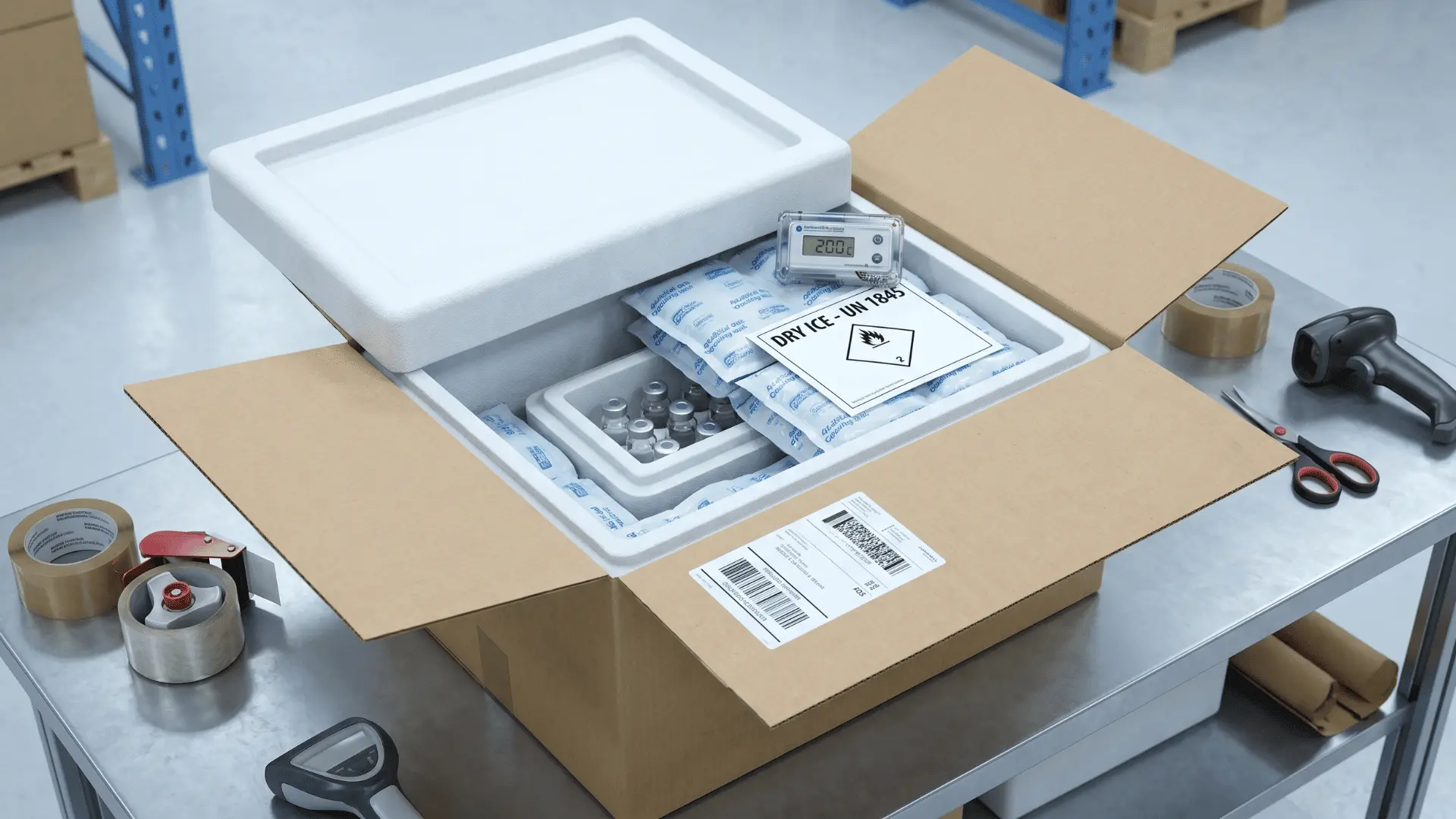
It also comes with strict rules. Dry ice is classified as a Class 9 hazardous material (UN1845), so every shipment needs a Class 9 hazard label, the net weight of dry ice in kilograms marked on the box, and packaging that lets carbon dioxide gas vent instead of building up pressure. A standard perishable label does not cover it.
It is not needed for refrigerated items. If your product doesn’t require freezing, dry ice adds unnecessary cost and complexity.
Active Reusable Containers (Credo Cube, C-Safe, Envirotainer)
These are advanced containers used mainly for pharma and high-value shipments. They use built-in cooling systems instead of disposable materials.
Some of these hold temperature for up to five days, longer than any disposable setup, which is why they suit bulk pharma freight and shipments where an unexpected delay can’t be allowed to break the cold chain.
They are not practical for small or occasional shipments. These are typically used when consistency and scale matter most.
How to Pack and Ship a Cold Package with FedEx?
Start with a good insulated box and pick a shipping speed that gets the package there at least 12 hours before the cooling ends. These two decisions matter most.
Before packing, chill the empty box first. If you skip this, the insulation warms up your product before the cooling even begins.
Packing Sequence
This is the exact packing order to follow so that the temperature remains stable from start to finish and your product stays protected throughout the shipment.
- Bottom layer: Place a layer of frozen coolant at the bottom of the box
- Center placement: Put your product in the middle so it stays evenly protected
- Side protection: Add coolant on all four sides around the product
- Top layer: Cover the product with coolant on the top as well
- Liquid safety: Double-bag any liquids in sealed plastic before packing
- Final setup: Close the foam insert and place it inside a strong corrugated outer box
Make sure the foam walls are at least 1.5 inches thick. Anything thinner won’t hold temperature long enough.
Choosing Your FedEx Service Speed
Don’t just match your shipping time to the coolant’s total duration. That’s where most people go wrong.
Instead, subtract 12 hours from the coolant life. That is your real safe delivery window.
For example, if your coolant lasts 96 hours, aim for delivery within 84 hours. If a service says 90 hours, that is too close.
Also remember weekends and holidays. A Friday shipment can easily stretch into Monday and eat into your cooling time.
This matters most for frozen shipments. A package handed off Friday afternoon can sit two or more days before delivery, and most perishable shippers avoid this entirely by shipping early in the week and reserving late-week sends for overnight service only.
How Much Does FedEx Cold Shipping Cost?
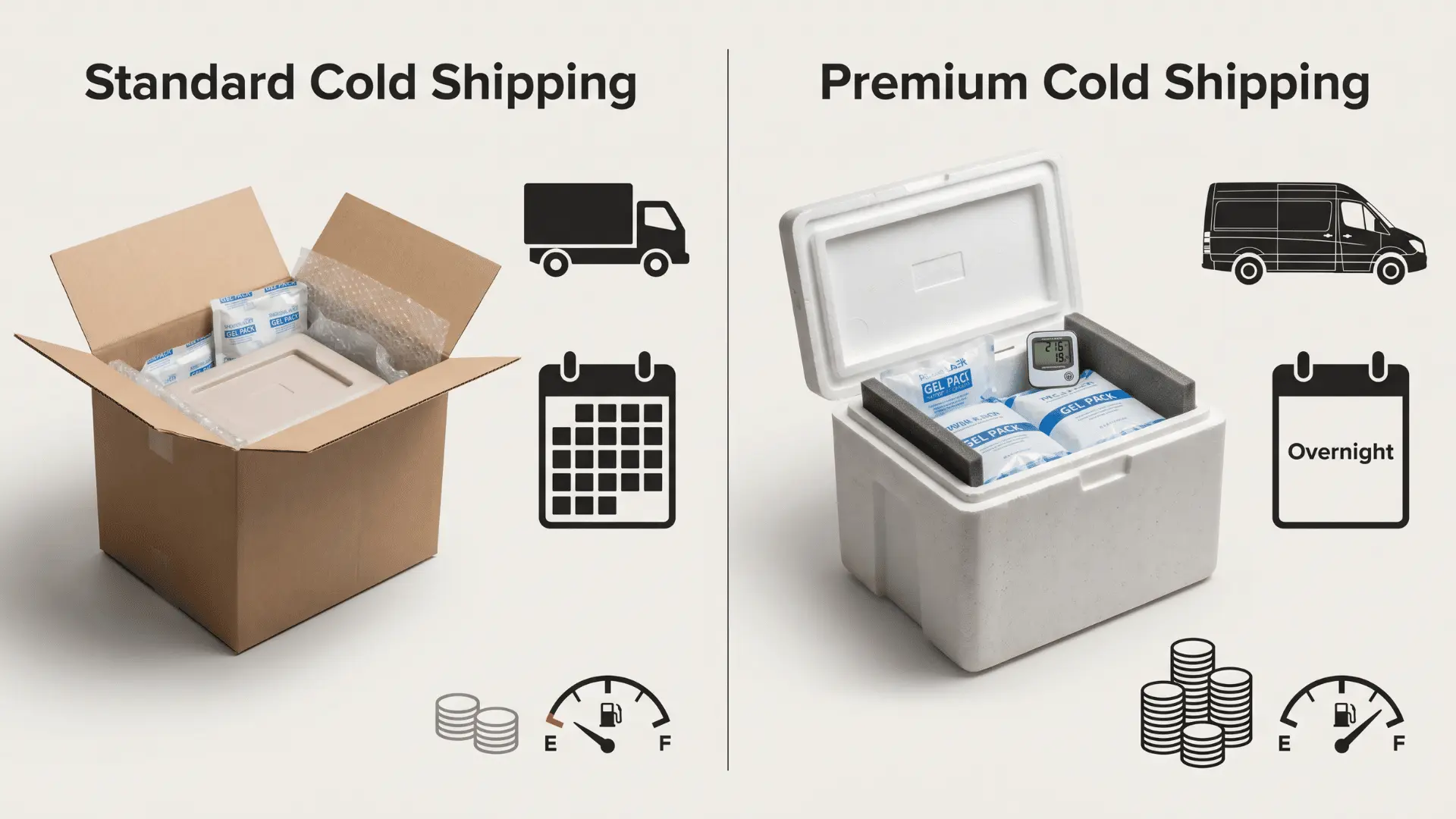
FedEx cold shipping cost isn’t a single fixed price. It’s built from two main parts: packaging and service speed, and both shift depending on how fast and how controlled the shipment needs to be.
| Cost Component | What’s in it? | What pushes the price up? | Worth knowing |
|---|---|---|---|
| Packaging Cost | Cold chain packaging like NanoCool boxes, gel packs, dry ice, or bulk active containers | Choice of system (FedEx/Veritiv-supplied vs self-sourced), and level of thermal control needed | Pre-built systems usually cost more per shipment than DIY materials |
| Service Speed Cost | FedEx delivery service (overnight, 2-day, standard express) | Faster guaranteed delivery, longer distance, heavier shipments, higher declared value | Standard FedEx rate structure applies |
| Key Cost Drivers | Overall shipment setup | Packaging tier, service speed, weight, dimensions, destination | These three factors have the biggest impact on total cost |
| Pricing Reference | External pricing sources | None inside the shipment itself | Current packaging rates are listed on the FedEx cold shipping page or the Veritiv portal |
One thing worth knowing up front: the packaging charge and the transportation charge are billed separately. Buying a NanoCool box does not include the cost of moving it; your FedEx service rate is added on top.
The final cost is always the combination of packaging choice and delivery speed. Faster transit and higher-control packaging raise the total, while simpler setups and slower services reduce it.
Conclusion
Cold shipping success comes down to matching the right packaging to your item’s temperature requirements and transit window, not just booking the fastest available service.
Every FedEx cold shipping option covered here has a specific range, a duration limit, and a failure point. Understanding all three is what keeps a shipment from becoming a loss.
The sequence that protects a shipment is always the same: temperature range first, duration second, service speed third. That order exists for a reason, and skipping any step is where things go wrong.
Pick your packaging, build in the buffer, and book accordingly. The FedEx cold shipping page is the right place to start before your next shipment goes out.
Frequently Asked Questions
Does FedEx ship cold packages?
Yes. FedEx offers several cold shipping configurations, including the NanoCool self-activating box, which maintains 2°C to 8°C for 48 or 96 hours, gel pack setups for refrigerated items, and dry ice for frozen shipments. The packaging is selected and ordered separately from the service speed you book at checkout.
How long does FedEx cold shipping keep items cold?
It depends on the packaging. The NanoCool box holds temperature for 48 or 96 hours, depending on configuration. Gel packs vary by quantity and how long they were pre-frozen. Whichever option you use, your chosen service speed must guarantee delivery at least 12 hours before the coolant’s rated limit, not at it.
Do I need to do anything special to ship with dry ice through FedEx?
Yes. Dry ice is classified as a Class 9 Miscellaneous Hazardous Material. That classification requires a specific hazard label on the outer box. You can source the label yourself or have FedEx deliver it. A standard perishable label is not a substitute. The Class 9 label is a legal requirement.
Where do I order FedEx cold shipping boxes?
NanoCool boxes and temperature-controlled packaging can be ordered through the FedEx cold shipping page or the Veritiv order portal. Gel packs and dry ice can be sourced on your own if you prefer, though FedEx-compatible options are available through both portals. Check FedEx.com directly for current availability before purchasing.