We spend most of our waking hours at work. We sit in chairs, sit at desks, sit in meetings, and sit near our coworkers. The air that we breathe while we’re there impacts our health and productivity.
One of the most neglected elements of a healthy workplace is indoor air quality. Bad air can lead to headaches, fatigue, respiratory problems, increased sick days, and lower productivity among your employees. One of the leading causes of poor indoor air quality is high humidity. That’s where dehumidifiers come in.
Humidifiers vs Dehumidifiers
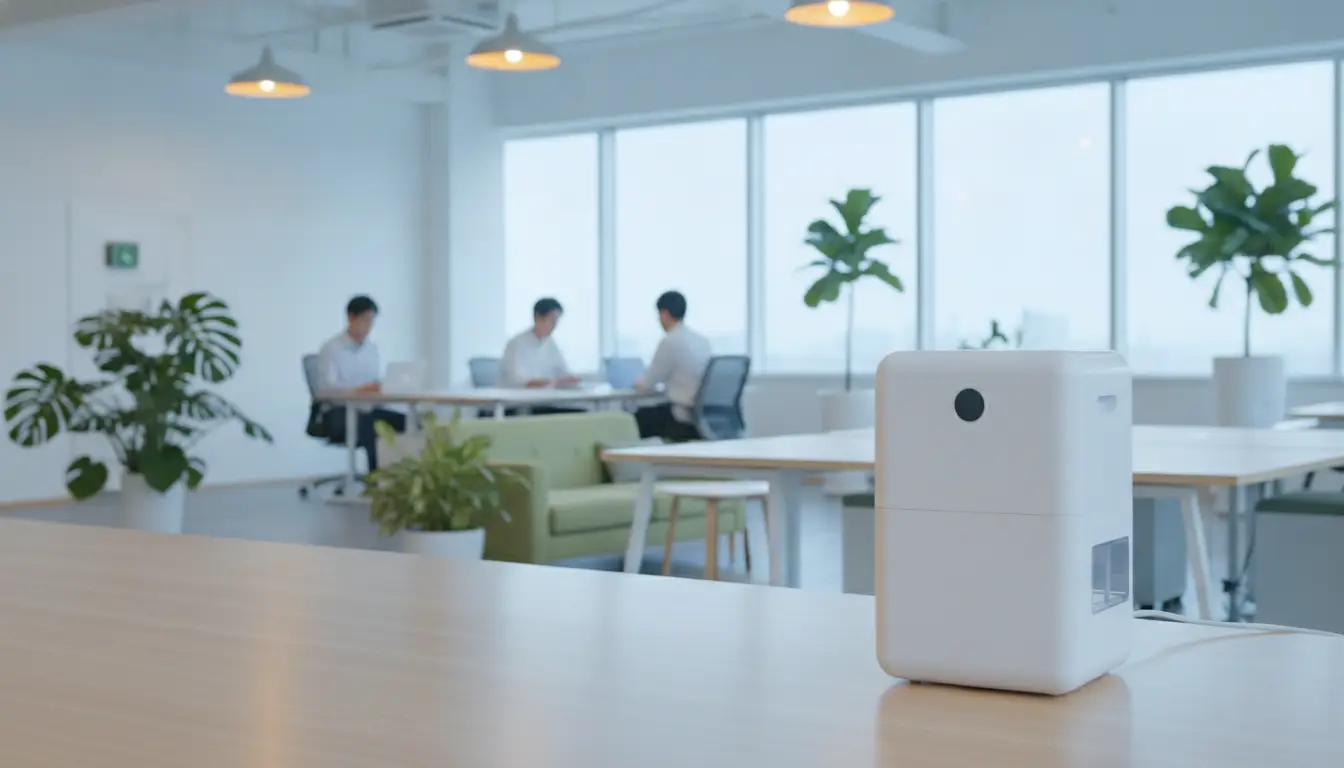
What is a Dehumidifier? Humidifier Definition: A device that reduces the level of humidity in the air. This is done by sucking moist air into the unit, condensing the moisture out of it, and returning dry air back into the room.
Dehumidifiers collect that moisture into a removable water tank that you drain regularly. There are two basic types: portable dehumidifiers and whole-building units. Portable units can be moved to different rooms. Whole-building units are installed on your HVAC system to serve your entire space. Both types remove humidity from the air to maintain a safe, comfortable level.
What’s the Best Humidity Level for Office Buildings?
Relative humidity (RH) is how we measure humidity. It’s the percentage of moisture in the air compared to how much it can hold at that temperature. Ideally, you want to maintain an indoor humidity level between 40% and 60%.
Over 60% and you’ll start to see mold growth and dusty indoor allergens like dust mites thrive. The air also feels heavy and hard to breathe. Below 30% and you run into issues as well. Low humidity causes dry eyes, dry skin, and dry throats.
According to researchers at Baylor College of Medicine and the University of Arizona, office workers in low humidity and high humidity conditions experienced greater stress responses than workers in comfortable conditions. Dry conditions led to a 25% greater stress response while overly humid conditions led to a 19% greater stress response.
The Dangers of High Humidity in Offices
High humidity causes problems for your business in many ways.
The first issue is dust mites and mold. High humidity gives mold and mildew a place to grow. It thrives on fabrics, paper, and materials found inside walls and HVAC ductwork. Once there, mold releases spores into the air. As people breathe those spores, mold can cause allergies, asthma, and other respiratory issues.
A second issue is dust mites. Dust mites feed on dead human skin cells. They flourish in moist environments, and their waste particles cause allergic reactions. High humidity attracts dust mites, especially in high traffic areas with lots of carpeting and furniture.
The third issue is that high humidity makes the air feel heavy. High humidity prevents sweat from evaporating from your skin. This makes you feel hotter than you actually are because your body can’t cool itself properly. Employees become lethargic, sticky, and tired. Studies show this type of discomfort causes employees to lose focus and produce less while at work.
Lastly, excess moisture ruins your office. Condensation forms on windows, walls, computers, and desks. Long-term exposure to moisture can lead to rust, rot, and expensive repairs.
How Does a Dehumidifier Help?
Think of a dehumidifier as a preventative measure for all of these problems. By eliminating excess humidity from your indoor space, a dehumidifier:
Prevents mold and mildew. Humidity levels below 60% prevent mold from growing on walls, floors, fabrics, and other surfaces. Without excess humidity in the air, spores won’t spread and your indoor air will remain cleaner and healthier.
Decreases allergens. Dust mites can’t survive without moisture. Keeping humidity low prevents them from spreading just like mold. Employees with allergies and asthma will benefit from lower humidity levels. Fewer distractions from allergies mean more productivity.
The temperature will go down. Dry air feels cooler. It also feels easier to breathe. Your employees will feel more comfortable and focused on their work.
Helps preserve your office. You won’t have moisture damaging your office building and equipment.
Saves money on energy bills. Air conditioners work harder when humidity is high. Dehumidifiers reduce the strain on your cooling system. Your system won’t turn on as often, use less electricity, and last longer.
Types of Dehumidifiers for Office Buildings
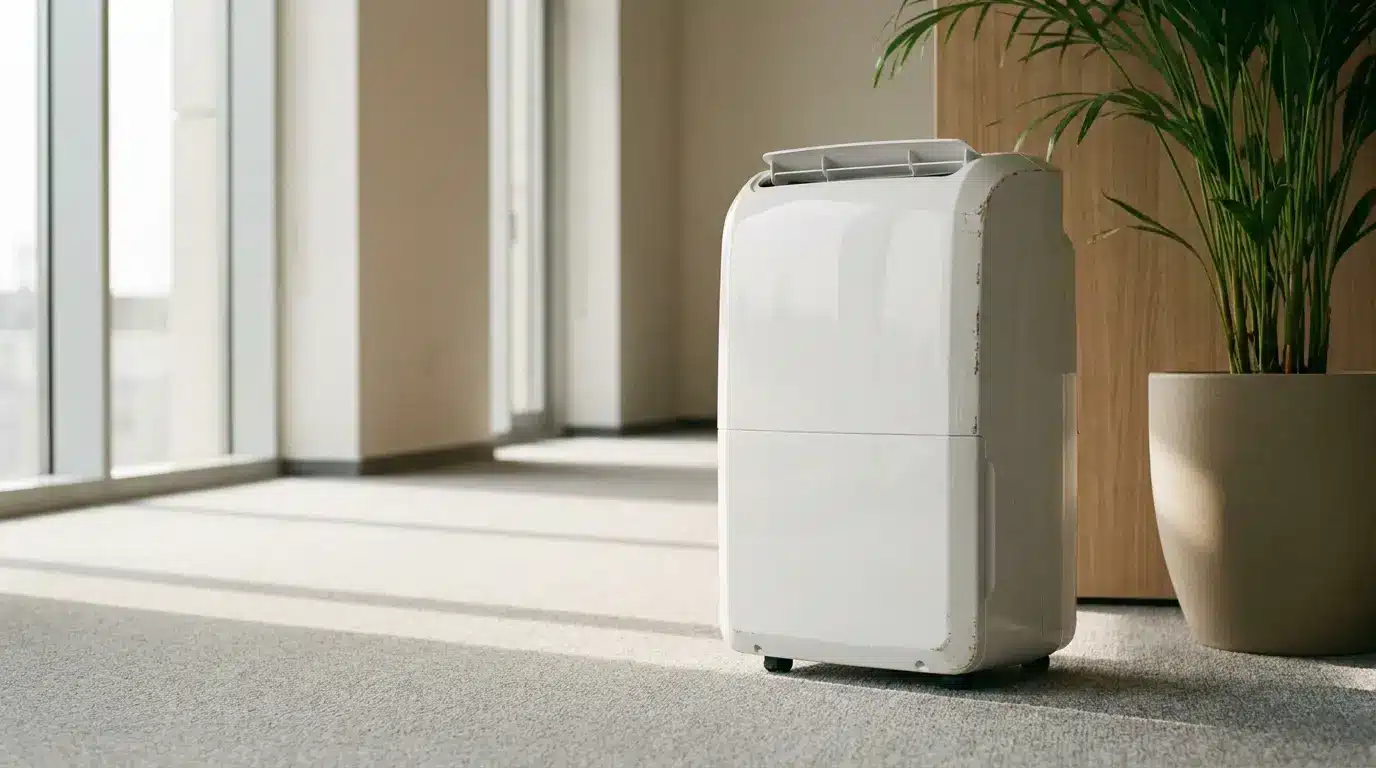
When choosing a dehumidifier, there are a few things you should consider:
Size
Dehumidifiers have a water extraction capacity measured in pints. If you have a small office of less than 500 square feet, try a 30-pint dehumidifier. Large open offices will need 70-pint models or whole-building dehumidifiers.
Noise
You don’t want something that’s going to distract your employees while they try to work. Most manufacturers design dehumidifiers with insulated, quiet motors. Look for ones advertising “low noise” or ones that are rated below 50 decibels.
Energy Efficiency
You should always choose Energy STAR rated products when possible. These models consume less power and save you money over time.
Auto-Shutoff or Continuous Drain
Look for a model with auto-shutoff. This means when the water tank is full, the unit will stop extracting water and notify you. Some models allow you to hook up a continuous drain. These always drain into your office’s built-in drain line. No more bending over empty dehumidifier buckets.
Integrating a Dehumidifier Into Your Workspace
Ideally, you want to use a dehumidifier along with other healthy airflow practices. Use it in combination with HVAC maintenance and filter replacement, ventilation, and air filters that target allergens. Measure your humidity levels with a hygrometer. Hygrometers cost less than $20 at your local hardware store.
Place your hygrometer somewhere central to your office to get the most accurate reading. Servicing your dehumidifier is just as important. Clean the filter every couple of months. Empty the tank daily or ensure your continuous drain is working properly.
Your employees spend a lot of time at the office. Give them the best breathing environment possible. A dehumidifier is an inexpensive solution that improves employee health, comfort, and productivity.
Office Improves IAQ by Controlling Humidity
The Problem
Staff members working in a multi-storey office building in Singapore began complaining about stuffy air, musty odours, headaches, and general discomfort during humid months. Facilities management also observed condensation around windows and mould growth inside multiple air handling units.
An indoor air quality investigation discovered that indoor relative humidity often rose above 65%, promoting mould growth, dust mites, and poor thermal comfort.
The Solution:
Management put together a humidity control strategy that involved:
- Adding commercial dehumidifiers to high-humidity zones in the office building.
- Installing humidity sensors and integrating them into the building management system (BMS).
- Keeping indoor relative humidity between 45% – 55%.
- Increasing HVAC preventative maintenance and replacing air filters regularly.
- Continuously monitoring indoor air quality and humidity levels.
The Results:
After just a few months, the facilities team began to notice:
- Indoor humidity levels stayed within recommended comfort levels
- Musty odours and condensation were reduced
- HVAC units experienced far less mould growth
- Employees were happier and more comfortable while working
- Building managers kept indoor air healthier and reduced the load on air conditioning equipment
FAQs
What Is the Best Humidity Level for Office Buildings?
We recommend setting your office building’s humidity between 40% – 60% RH. However, most experts agree that 45% – 55% RH is ideal for optimizing comfort, productivity and indoor air quality for building occupants.
Why Should I Control Humidity in My Office?
Humidity can have a big impact on your indoor air quality. If indoor air is too humid, it can promote the growth of mould, dust mites, bacteria and musty odours. It also makes your employees feel hot and sweaty which isn’t good for productivity. Keeping your indoor humidity at comfortable levels creates a better, healthier workplace for everyone.
Will a Dehumidifier Make My Employees More Productive?
Did you know that uncomfortable humidity levels can make it hard for employees to concentrate? Keeping indoor humidity at comfortable levels allows employees to focus on their work rather than how stuffy it feels. Additionally, proper humidity levels can help reduce some allergies and asthma symptoms.
Does a Dehumidifier Help With Mould in Offices?
Not only do dehumidifiers prevent mould spores from growing by removing excess humidity from the air, but they also help eliminate mould that’s already present. Keeping indoor humidity below 60% is one of the most effective ways to prevent mould growth in your building.
What Is the Difference Between a Portable and Whole-Building Dehumidifier?
Portable dehumidifiers are great for small spaces such as single offices, meeting rooms, archives, or other areas with concentrated moisture issues. Whole-building units are installed directly onto an HVAC system to treat humidity for an entire building.
Can Dehumidifiers Help My Employees With Allergies?
Dust mites and mould thrive in humidity levels above 60%. By reducing indoor humidity levels, you make the office environment less hospitable for these allergy triggers. If you have employees who suffer from asthma or hay fever, they may notice their symptoms improve with indoor humidity control.
How Does a Dehumidifier Work With My HVAC System?
Many businesses use a combination of HVAC equipment and dehumidifiers to treat the air in their facilities. HVAC systems regulate temperature, and dehumidifiers help control indoor humidity. Dehumidifiers use less energy than your HVAC system to remove moisture from the air, so they work well together to improve indoor air quality and can even help you save money on cooling costs.
Are Commercial Dehumidifiers Energy Efficient?
Yes! Newer commercial dehumidifiers are designed to run as efficiently as possible. You can also look for models with smart features like humidity sensors, programmable settings, and automatic operation functions. The right dehumidifier can help you maintain optimal indoor humidity levels while keeping your overhead low.
How Often Should I Maintain Dehumidifiers in Offices?
Basic dehumidifier maintenance includes wiping down the exterior, cleaning or replacing filters, cleaning the drain tube or bucket, flushing coils, and checking humidity sensors. For office or commercial dehumidifiers, you’ll also want to schedule annual maintenance with a qualified HVAC technician.
How Can I Monitor Humidity Levels at My Business?
By installing digital hygrometers or smart humidity sensors around the office, facilities managers can ensure they are always aware of their indoor conditions. When you can identify humidity problems as they happen, you can maintain a healthier indoor air environment for building occupants.