The trade lane between China and the US remains the busiest freight corridor on the planet, and if you import goods, source building materials, or bring in manufactured components for your projects, you already know it is not getting simpler. Tariffs have been reshuffled more than once in the past two years. Ocean freight spot rates have swung by thousands of dollars per container depending on the season and whatever geopolitical event landed last week. And the number of platforms promising to fix all of this has multiplied faster than the problems themselves.
That said, 2026 is a genuinely useful moment to reassess how you ship from China. Not because the problems have disappeared, but because the tools for managing them have improved in ways that actually matter to importers who move smaller volumes or who are sourcing for the first time. If you have been relying on a freight broker who calls you back two days later with a quote, or you have been manually navigating Alibaba only to stall at the payment and logistics stage, this is worth reading.
The Tariff Picture Has Shifted Again
Section 301 tariffs from 2018 are still in place across most product categories: electronics, furniture, textiles, machinery, and more, all sitting at a 25% duty rate. They survived the February 2026 Supreme Court ruling on emergency economic powers tariffs, and there is no practical sign of them lifting anytime soon. What has changed is the de minimis situation. The $800 threshold that allowed low-value shipments to enter the US duty-free was tightened in early 2025, which hit direct-to-consumer importers hard. If you were routing small parcels through express services and relying on that exemption to keep landed costs down, you have probably already adjusted.
The practical takeaway for 2026 is this: duty costs are a known quantity now. Plan for them in your landed cost calculations rather than treating them as a variable. Most experienced importers are building tariff costs into supplier negotiations, unit pricing, and product selection decisions before anything gets booked. If you are sourcing a new product category, check the Harmonized Tariff Schedule code before you get attached to a supplier price.
For anything entering under Delivered Duty Paid terms, your freight partner handles the customs clearance and pays duties on your behalf, then invoices you for the total. DDP sounds convenient and it is, but confirm exactly what is included in the quote. Some forwarders bundle customs brokerage fees into DDP; others add them separately on arrival.
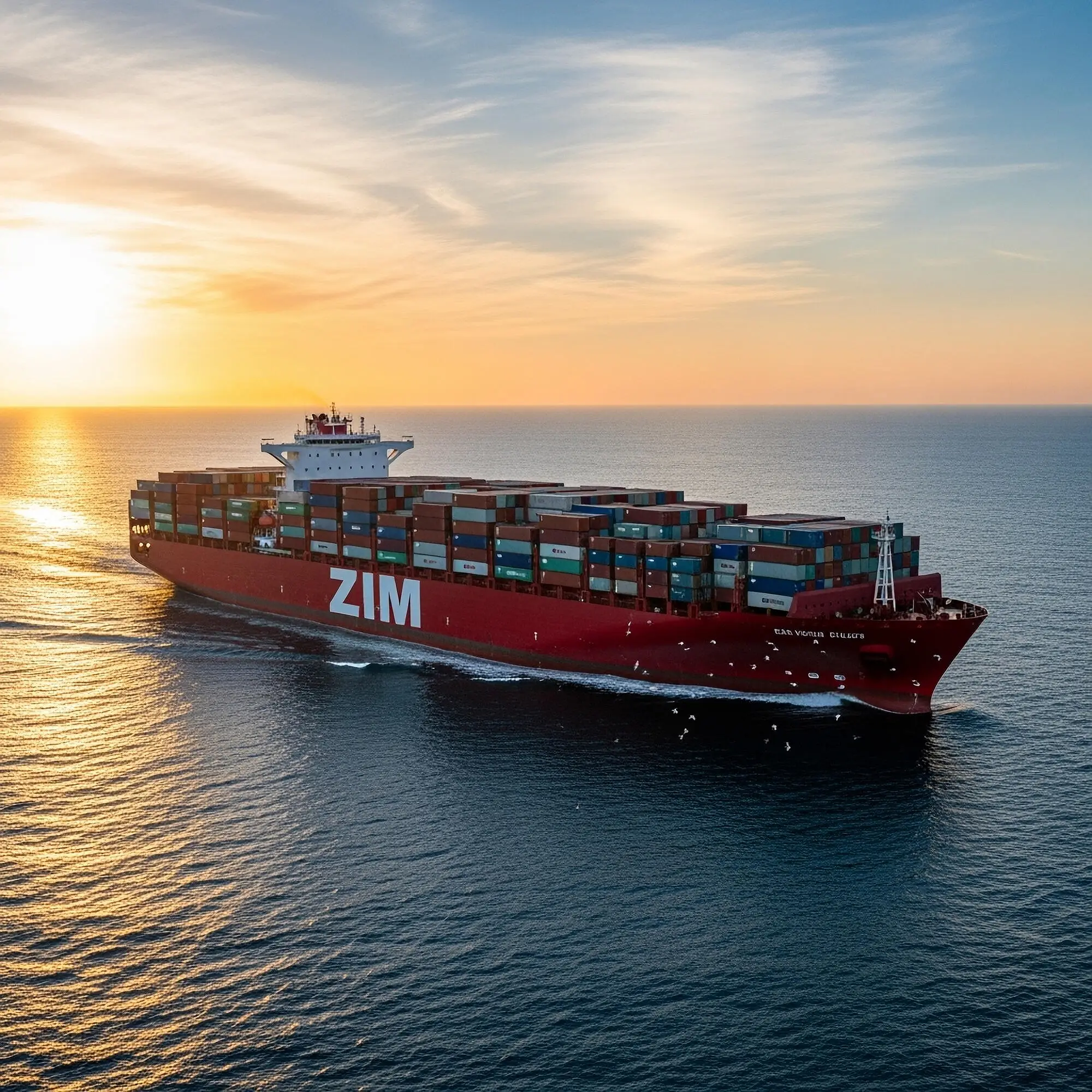
FCL, LCL, or Air: Which One You Actually Need
Full-container load shipping makes sense when your volume fills a container. A 20-foot container out of Shanghai to Los Angeles currently runs somewhere between $2,500 and $3,500 on the spot market; a 40-foot container lands between $3,500 and $6,000. Those rates are reasonable by historical standards, though they can move quickly when port congestion or blank sailings enter the picture. If you are shipping consistently enough to forecast your volumes, you can lock in prices up to two weeks ahead through some digital forwarders, which reduces exposure to spot rate spikes.
Most small and mid-size importers, and particularly those sourcing for specific projects rather than ongoing inventory,are better served by LCL shipping. You pay for the cubic meters your cargo actually occupies inside a shared container. West Coast LCL rates are currently running around $50 to $80 per CBM. Transit times run slightly longer than FCL because your cargo gets consolidated at origin and deconsolidated at destination, which adds handling and a few days. The other thing worth knowing about LCL: if another shipper in your container has a documentation problem, your cargo can sit while theirs gets resolved. It does not happen often, but factor it into time-sensitive shipments.
Air freight is the third option and the most misunderstood. People tend to reach for it only in emergencies, which means they pay panic rates. If you build air freight into your planning for the right cargo, specifically high-value items with low volume where the per-unit cost of faster transit justifies the rate, it is a legitimate logistics strategy rather than an expensive fix. Port-to-port from Shanghai Pudong or Shenzhen to Los Angeles, JFK, or Chicago typically runs three to seven business days. Door-to-door adds collection and final delivery, bringing the practical range to five to eleven days total.
What the Digital Forwarder Shift Actually Means for You
The freight forwarding industry spent years promising digitisation and delivering PDF quotes via email. That has actually changed now. There is a class of forwarder that gives you instant online quotes, real-time shipment tracking, and the ability to book, pay, and manage documentation through a single interface. For importers who moved smaller volumes and used to feel like a low priority for traditional freight brokers, this is a meaningful change.
Ship4wd is one of the more complete examples of this type of platform. Backed by ZIM Group and recognised as the 2026 Digital Freight Shipping Solution Provider of the Year by SupplyTech Breakthrough, it covers the full range of modes: FCL, LCL, air, and express lanes. What makes it worth noting for importers specifically is the China sourcing integration. In late 2025, Ship4wd opened access to parts of China’s wholesale marketplace that previously required Chinese language capability and domestic payment methods. You can now find verified factories, communicate with suppliers, and book freight within the same platform, with each order photographed at Ship4wd’s China warehouse before payment is released to the supplier. For small and mid-sized businesses that have historically found direct factory sourcing too complex to navigate, that is a genuine workflow change rather than a cosmetic one.
The full feature set includes DDP customs clearance, built-in cargo insurance, and Amazon FBA compatibility for those routing goods to fulfilment centres. Payment options cover PayPal, credit cards, ACH, and wire transfer, which removes the USD conversion problem that used to create friction with Chinese suppliers. Instant quotes are available without creating an account, which is useful if you are comparing options before committing.
No platform is perfect. Some users note a learning curve with advanced booking features, and it is worth confirming with their team exactly how shipment exceptions get communicated, particularly for time-sensitive cargo. But as a starting point for importers who want to consolidate sourcing and freight into fewer moving parts, it is worth getting a quote and comparing it against your current setup.
Before You Book: Five Things Worth Confirming
Regardless of which forwarder you use, certain checks will save you money and headaches later.
Know your Incoterms before you negotiate with a supplier. FOB means the supplier is responsible for getting goods to the port of origin; you take over from there. EXW puts even more on you. DDP flips the responsibility to the freight partner. The Incoterm in your purchase order determines who pays for what and who bears risk at each stage of the journey.
Get the HS code for your product before requesting quotes. Rates, duties, and even whether certain goods need import licences depend on the commodity code. If you are shipping something that spans multiple categories, a customs broker can advise on the right classification.
Confirm actual dimensions and weight before booking, not estimates. Freight is priced on whichever is greater: actual weight or volumetric weight. Suppliers occasionally give optimistic measurements. A small discrepancy on a single shipment turns into a meaningful cost difference at scale.
Ask about the cargo cutoff date at origin, not just the estimated departure date. Missing the cutoff by a day can push your cargo to the next sailing, which may be a week later.
If you are using a DDP quote, ask for the customs brokerage fee as a line item. Some forwarders include it; others charge it separately on arrival. Knowing the difference upfront avoids a surprise invoice when your goods clear US customs.
The Bigger Picture for 2026
China remains the primary source for a wide range of goods relevant to construction, home building, renovation, and product-based businesses: steel components, prefab panel systems, hardware, electrical fittings, solar and battery storage products, and consumer goods of every category. Shifting sourcing away from China entirely is a policy goal for some large manufacturers but it is not a realistic option for most small importers in 2026. The cost infrastructure, manufacturing depth, and supplier density are not replicated elsewhere at scale yet.
The smarter approach is understanding the actual cost structure, including tariffs, freight, insurance, customs brokerage, and the cost of your own time, and finding partners who make the operational side less time-consuming. Whether that means switching to a digital forwarder, renegotiating supplier Incoterms to reduce your logistics burden, or getting more disciplined about HS code classification to avoid classification surprises, the improvements are available if you look for them.
Shipping from China in 2026 is not simpler than it was three years ago. But the tools for navigating it are better than they have ever been.