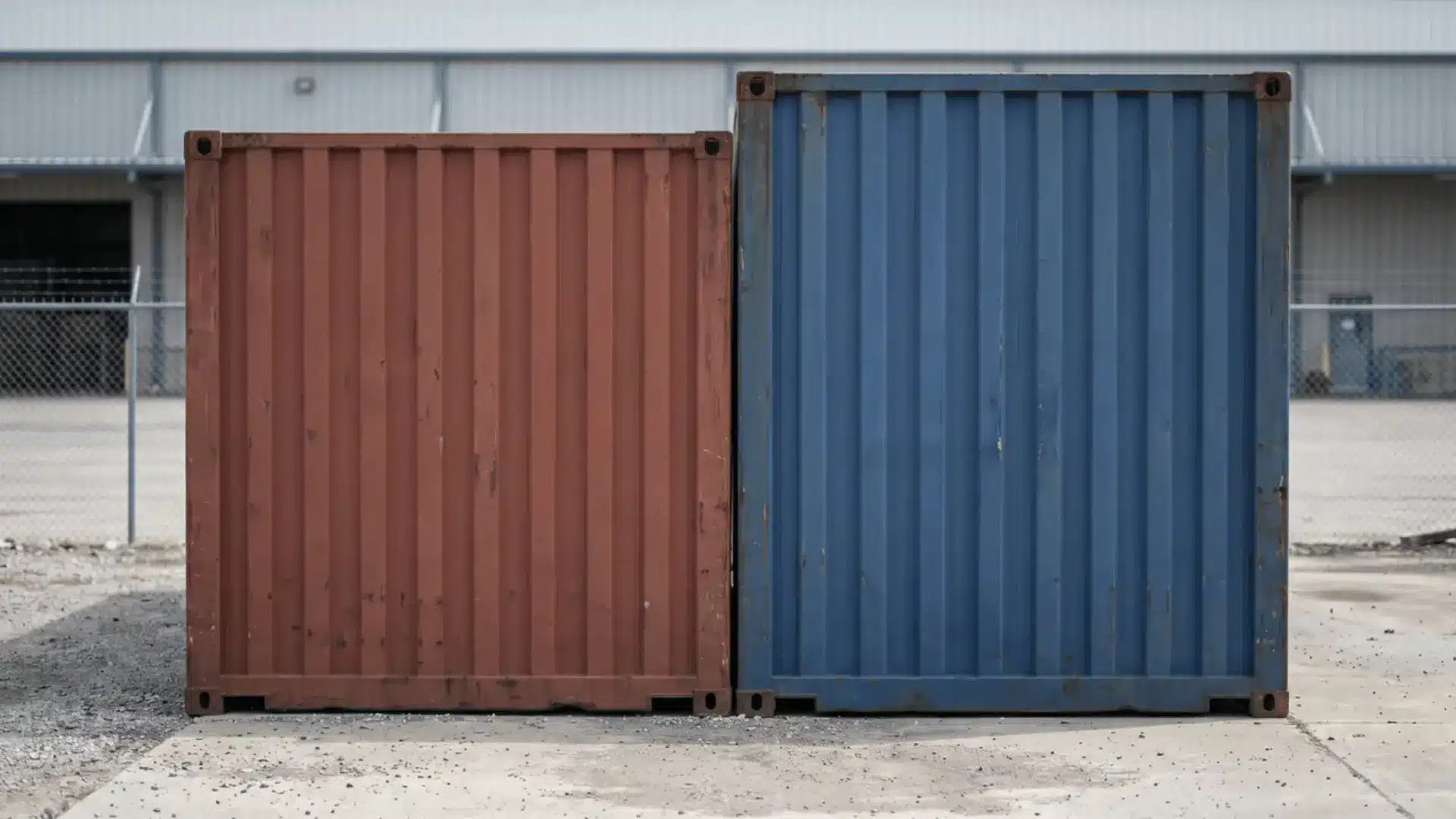
I’ve handled more shipping containers than I can count, and one thing always trips people up: height. It seems simple, just check the specs, but the difference between external and internal measurements can derail a project fast.
Whether you’re stacking units, moving tall cargo, or converting containers into workspace, knowing the real usable height is crucial.
Here, I’ll break down how standard and High Cube containers differ, why the extra foot matters, how doors and insulation impact space, and why length never changes height.
Understanding this prevents costly mistakes and keeps your project on track.
Standard Shipping Container Dimensions by Length
If you’re also wondering how long shipping containers are, the answer depends on the use case; the three standard lengths are 10ft, 20ft, and 40ft, each at the same 8-foot width.
While height is standardized, container length varies depending on storage and transport needs. Below are the most common ISO container sizes with full external dimensions.
| Container Type | Length | Width | Height |
|---|---|---|---|
| 10ft Standard | 10 ft | 8 ft | 8 ft 6 in |
| 20ft Standard | 20 ft | 8 ft | 8 ft 6 in |
| 40ft Standard | 40 ft | 8 ft | 8 ft 6 in |
| 10ft High Cube | 10 ft | 8 ft | 9 ft 6 in |
| 20ft High Cube | 20 ft | 8 ft | 9 ft 6 in |
| 40ft High Cube | 40 ft | 8 ft | 9 ft 6 in |
High Cube containers keep the same length and width as standard units, with the only difference being the additional one foot of height.
Internal vs. External Height
The outside height of a container is not the same as the usable space inside. The difference comes from how the container is built.
A standard container has an internal height of about 7 feet 10 inches (2.39 m).
A High Cube container has an internal height of about 8 feet 10 inches (2.69 m).
Steel floor cross-members sit above the lower frame rails, and the roof has corrugated reinforcement.
This structural design strengthens the container but reduces interior clearance by roughly 8 to 10 inches.
Note: Always plan using internal height, not external measurements. Assuming both are the same can lead to costly clearance issues.
Door Opening Height
The door opening is shorter than the internal ceiling; a detail that matters for moving tall equipment or furniture in and out.
- Standard container door opening: approximately 7 feet 5 inches (2.27 m) tall, 7 feet 8 inches (2.34 m) wide
- High Cube container door opening: approximately 8 feet 5 inches (2.58 m) tall, 7 feet 8 inches (2.34 m) wide
If your cargo or use case involves tall items passing through the doors, not just stored inside, plan against the door height, not the internal ceiling height.
Standard vs. High Cube – Why the Extra Foot Exists?
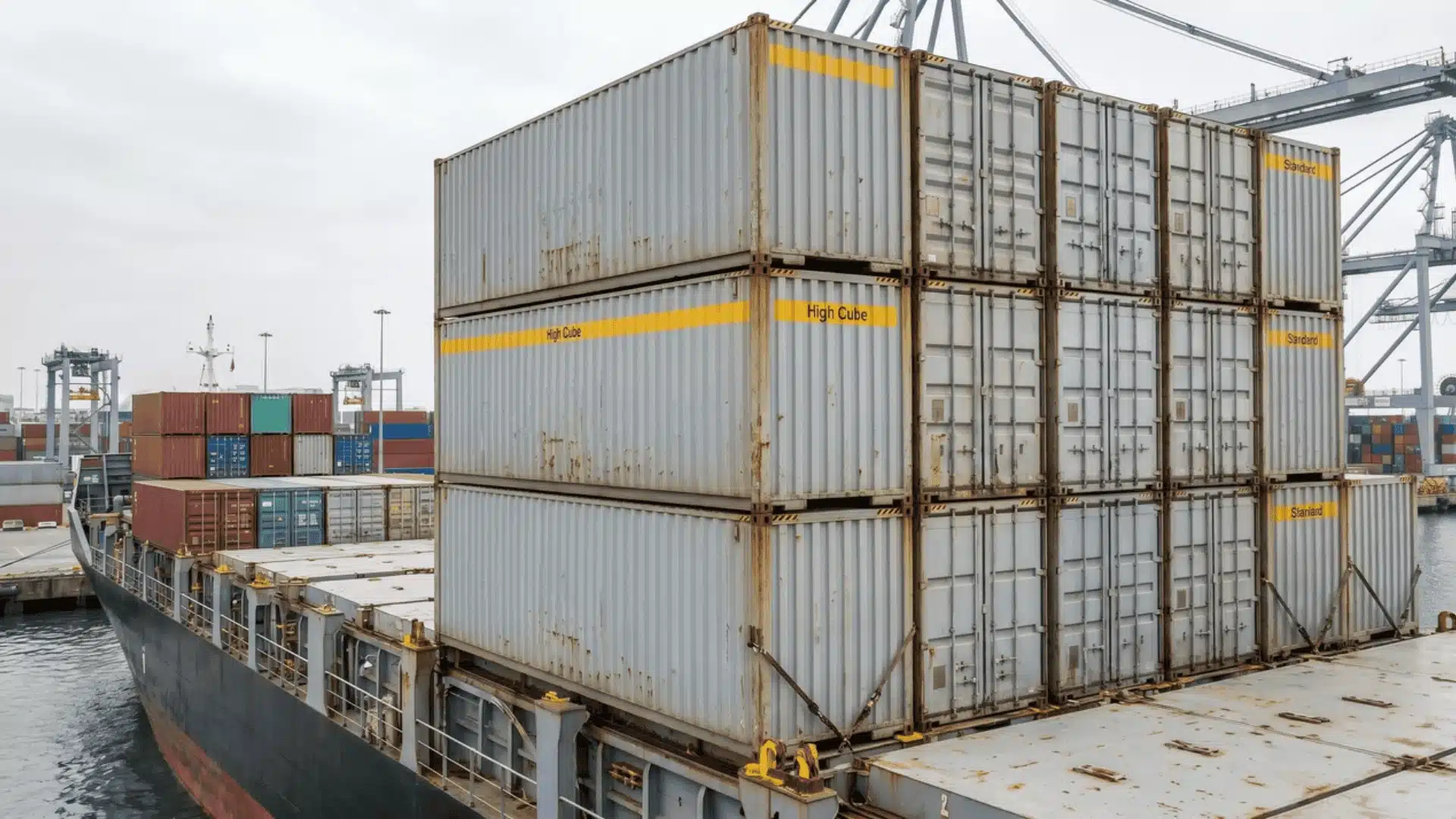
High Cube containers were not created randomly. They were introduced to solve a volume limitation in standard containers.
The standard 8’6″ height was designed for safe ship stacking and transport clearance. It fits road and rail height restrictions in most regions. This made the global movement efficient, but it limited vertical storage space inside.
Why Was High Cube Developed?
As global trade expanded, cargo types changed. Furniture, lightweight goods, and palletized freight needed more vertical room.
Adding an extra foot increased the container’s cubic capacity by roughly 340 cubic feet on a 40ft unit, going from approximately 2,390 to 2,700 cubic feet, without changing its footprint.
When Is High Cube Commonly Used?
High Cube containers are most common in 40ft units. They are widely used for warehousing, container modifications, and tall pallet stacking.
Does Height Change with Container Length?
A longer container carries more cargo, but it sits at the same height as a shorter one. The reason comes down to how containers lock together in transit.
- All standard 10ft, 20ft, and 40ft containers share the same height of 8 feet 6 inches (8’6”).
- All High Cube versions of those sizes share the same height of 9 feet 6 inches (9’6”).
This consistency exists because of ISO stacking requirements. Uniform corner castings and fixed alignment points allow containers of different lengths to lock together safely.
As a result, containers can be stacked interchangeably on ships, trains, and trucks. A longer container is not a taller container.
Exceptions to Standard Height
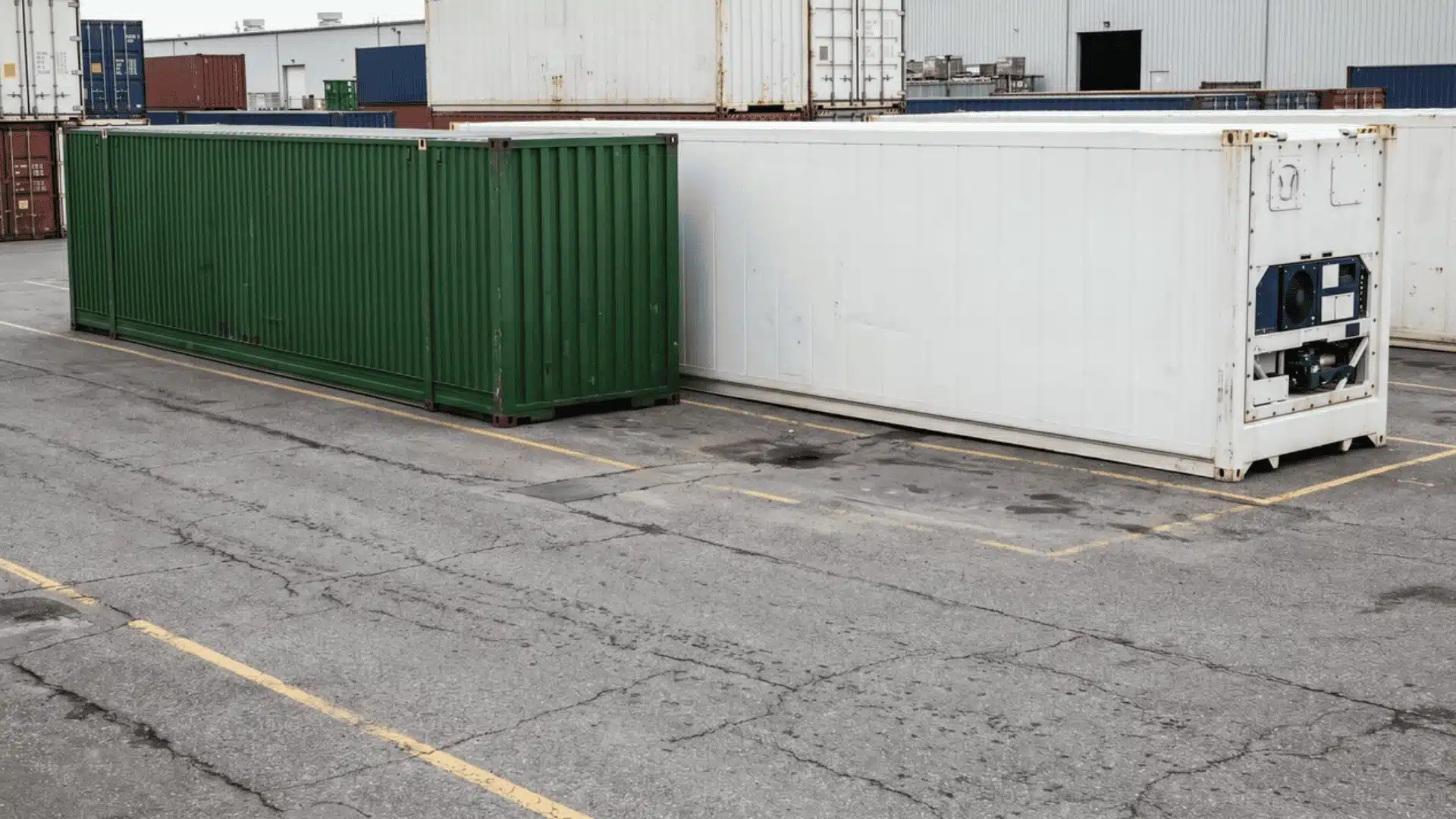
Most containers follow the 8’6” or 9’6” standard. However, a few purpose-built types vary slightly in height or usable space.
53-Foot Domestic Containers
53-foot containers are designed mainly for North American freight systems.
- Typically 9 feet 6 inches tall: This matches the standard High Cube height used in domestic freight systems.
- Not ISO-certified for international ocean shipping: These containers are built for North American land transport rather than global sea transport.
These units are optimized for domestic road and rail use rather than global sea transport.
Refrigerated Containers (Reefers)
Refrigerated containers usually match the standard external heights of 8’6” or 9’6″. The difference appears inside.
- Internal height is reduced due to thick insulation: Insulated walls and ceiling panels reduce usable vertical clearance.
- Cooling machinery takes up additional interior space: The refrigeration unit occupies part of the internal volume, limiting full-height usage.
The insulated walls and ceiling reduce usable vertical clearance compared to a dry container.
Specialty Containers
Some containers are built for very specific cargo requirements rather than general transport.
- Half-height containers: shorter units designed for dense bulk cargo
- Open-top containers: maintain standard height but replace the fixed roof with a removable cover
These variations serve operational needs and do not change the global height standards used for standard and High Cube containers.
Container Height in Feet, Meters, and Inches (Quick Reference Table)
Below is a quick unit conversion guide for both external and internal container heights.
| Container Type | Height Type | Feet & Inches | Inches | Meters |
|---|---|---|---|---|
| Standard | External | 8 ft 6 in | 102 in | 2.59 m |
| Standard | Internal | 7 ft 10 in | 94 in | 2.39 m |
| High Cube | External | 9 ft 6 in | 114 in | 2.89 m |
| High Cube | Internal | 8 ft 10 in | 106 in | 2.69 m |
Summary: How Tall is a Shipping Container?
Here is the complete answer in one clear view.
- Standard containers: 8 feet 6 inches (8’6″) tall
- High Cube containers: 9 feet 6 inches (9’6″) tall
- Length does not affect height: 20ft and 40ft share the same height
- Internal height is lower: typically 8–10 inches less than external height
- High Cube difference: adds exactly one extra foot of vertical space
In short, most shipping containers are either 8’6″ or 9’6″ tall, with High Cube providing the added foot of height.
Conclusion
From my experience, misjudging a container’s height is a common trap. Standard units give you 8’6”, High Cube adds an extra foot, but internal clearance, door openings, and specialty builds all shift what you can actually use.
I’ve seen projects stall because someone assumed external measurements matched interior space.
Knowing these nuances upfront saves headaches, ensures cargo fits, and helps when modifying or stacking containers. Always double-check internal heights and door clearances before committing.
By understanding the why behind these standards, you can plan with confidence and avoid the costly mistakes I’ve witnessed too often. Check your container’s height before making a move.
Frequently Asked Questions
Can shipping containers be stacked higher than two units?
Yes, shipping containers can be stacked several units high on ships or in yards, depending on engineering limits and load distribution requirements.
Do shipping container doors reduce usable height?
The door opening height is slightly lower than the internal ceiling height due to the upper door frame structure and reinforcement.
Are shipping container heights the same worldwide?
Yes, standard and High Cube container heights follow ISO regulations globally, ensuring compatibility across international shipping networks.
Can container height be modified after purchase?
Yes, containers can be raised or lowered through structural modification, but this requires professional engineering to maintain safety and structural integrity.