Purchasing an electric humidor is not an impulse decision. For most buyers, it represents a significant investment, often hundreds or thousands of dollars, in a storage system that is expected to perform reliably for years or even decades.
Unlike smaller manual humidors, electric models are engineered systems. They regulate humidity automatically and, in many cases, temperature as well. That added precision makes them attractive, but it also means buyers need to evaluate quality carefully before committing.
If you are researching electric humidors, you are likely looking for more than just capacity. You want stability, durability, warranty protection, and a retailer you can trust.
What Is an Electric Humidor?
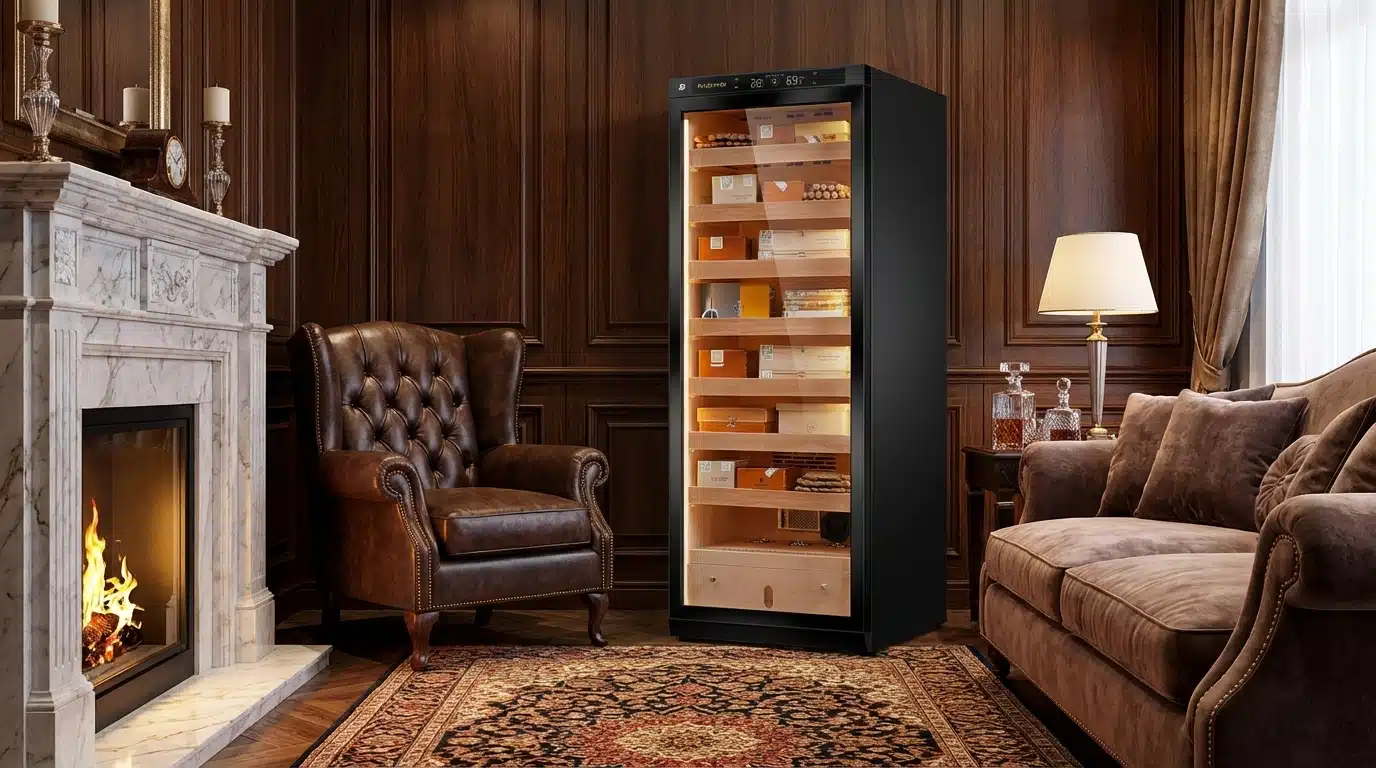
An electric humidor is a climate-controlled storage unit designed to maintain consistent humidity, and sometimes temperature, through powered components. Instead of relying solely on passive humidification packs or sponges, these units use electronic sensors, fans, and compressors or thermoelectric systems to regulate internal conditions automatically.
The key benefit is stability. Environmental fluctuations inside a home or business can impact traditional humidors, especially in regions with changing seasons. Electric models reduce the need for constant monitoring and manual adjustment, offering set-and-forget consistency once properly configured.
For serious collectors or businesses managing larger inventories, that reliability is often the primary reason to upgrade.
Who Needs an Electric Humidor?
Electric humidors are particularly valuable for two groups: individual collectors with growing collections and commercial environments.
For individuals, electric models provide peace of mind. If you travel frequently or do not want to check humidity levels daily, automation eliminates much of the guesswork. Larger cabinet-style electric humidors also offer increased capacity and improved internal airflow, supporting long-term aging.
For cigar lounges, retail shops, country clubs, and hospitality venues, electric humidors are often essential. Commercial environments demand consistent conditions across higher volumes. Automated systems ensure that multiple shelves or compartments maintain uniform humidity, even with frequent door openings and higher traffic.
In both cases, the goal is the same: consistency without constant manual intervention.
Compressor vs. Thermoelectric Systems
Not all electric humidors are built the same. Two common cooling technologies dominate the category: compressor-based systems and thermoelectric systems.
Compressor systems function similarly to refrigerators. They offer strong cooling power and are well suited for warmer climates or commercial environments. They tend to be more robust and can handle larger cabinet sizes.
Thermoelectric systems use solid-state components and are typically quieter, with fewer moving parts. They are energy efficient and work well in climate-controlled homes where extreme cooling is not necessary.
Choosing between the two depends on your environment, cabinet size, and performance expectations.
Features That Define a High-Quality Electric Humidor
When evaluating models, focus on the structural and mechanical details that determine long-term performance.
1. Seal Integrity
A powerful cooling or humidification system is useless if the cabinet does not seal properly. Look for solid door construction, quality hinges, and tight gaskets. Air leaks cause systems to work harder and shorten lifespan.
2. Airflow Design
Even airflow ensures uniform humidity across all shelves. Larger cabinets should include internal fans or circulation systems to prevent dead zones where conditions differ from top to bottom.
3. Adjustable Shelving
Flexibility matters. Adjustable or removable shelves allow you to configure storage as your collection evolves. Businesses in particular benefit from adaptable layouts.
4. Digital Controls and Monitoring
Clear, accurate digital displays make it easier to confirm that internal conditions are stable. Some premium units include dual sensors for both humidity and temperature.
5. Noise and Placement
Compressor units may produce more sound than thermoelectric models. Consider where the humidor will live, whether in a lounge, office, retail floor, or private home, and select accordingly.
Why Warranty Coverage Matters
An electric humidor is a mechanical device. Over time, components such as compressors, fans, and control boards may require service. A strong warranty provides reassurance that your investment is protected.
At minimum, buyers should look for at least one year of manufacturer warranty coverage. However, premium brands often go further. Some manufacturers, including Raching, offer up to a six year warranty on their compressor systems, reflecting confidence in their engineering.
Equally important is the retailer’s role. A reputable retailer should help facilitate warranty claims rather than leaving customers to navigate the manufacturer alone. Companies such as Refined Traditions not only carry established brands but also assist customers with filing warranty claims and provide ongoing setup support, which can be especially helpful during installation and initial calibration.
When spending thousands of dollars, post-purchase service matters as much as the product itself.
Researching Reviews and Reputation
Because electric humidors are long-term purchases, due diligence is essential. Look for consistent feedback regarding stability over time, customer service responsiveness, ease of setup, noise levels, and build quality.
Avoid relying on isolated reviews. Instead, look for patterns across multiple sources. Established retailers and brands with transparent specifications and responsive support teams generally provide a safer purchasing experience.
Think Long-Term, Not Just Immediate Needs
Many buyers underestimate how quickly their collections grow. Choosing a cabinet slightly larger than your current needs often prevents an upgrade a year or two later.
Additionally, consider aesthetics. Electric humidors frequently function as furniture pieces in living spaces or retail environments. Finish, lighting, and overall presentation should complement the room.
Final Thoughts
Buying the best electric humidor requires balancing technology, craftsmanship, warranty protection, and retailer reputation. Automation delivers stability, but only when paired with strong construction and reliable support.
If you approach the purchase with the mindset that this is a long-term investment, one that should perform consistently for years, you will naturally gravitate toward quality systems with meaningful warranties and retailers who stand behind their products.