Termites are responsible for billions of dollars in property damage across the United States every year, and most homeowner insurance policies do not cover it. The frustrating part is that the damage is usually well underway before anyone notices a thing.
Unlike a leaky roof or a cracked window, termite damage hides behind walls, under flooring, and inside structural beams. By the time the signs become obvious, repair costs can climb quickly.
The good news: termites do leave clues. Knowing what to look for can save you thousands of dollars and months of headache. This guide walks through the most common signs of termite damage, what treatment options look like, and how to protect your home long term.
Why Termite Damage Is Easy to Miss
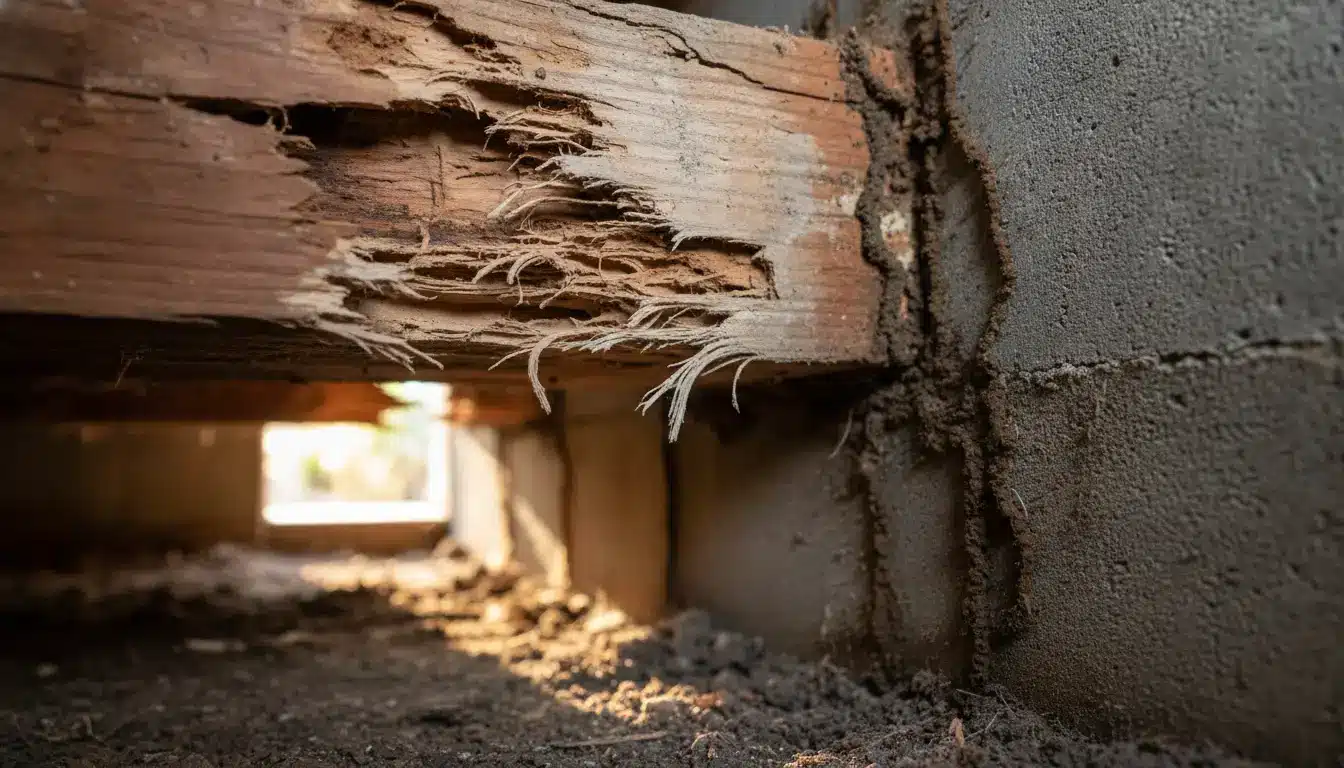
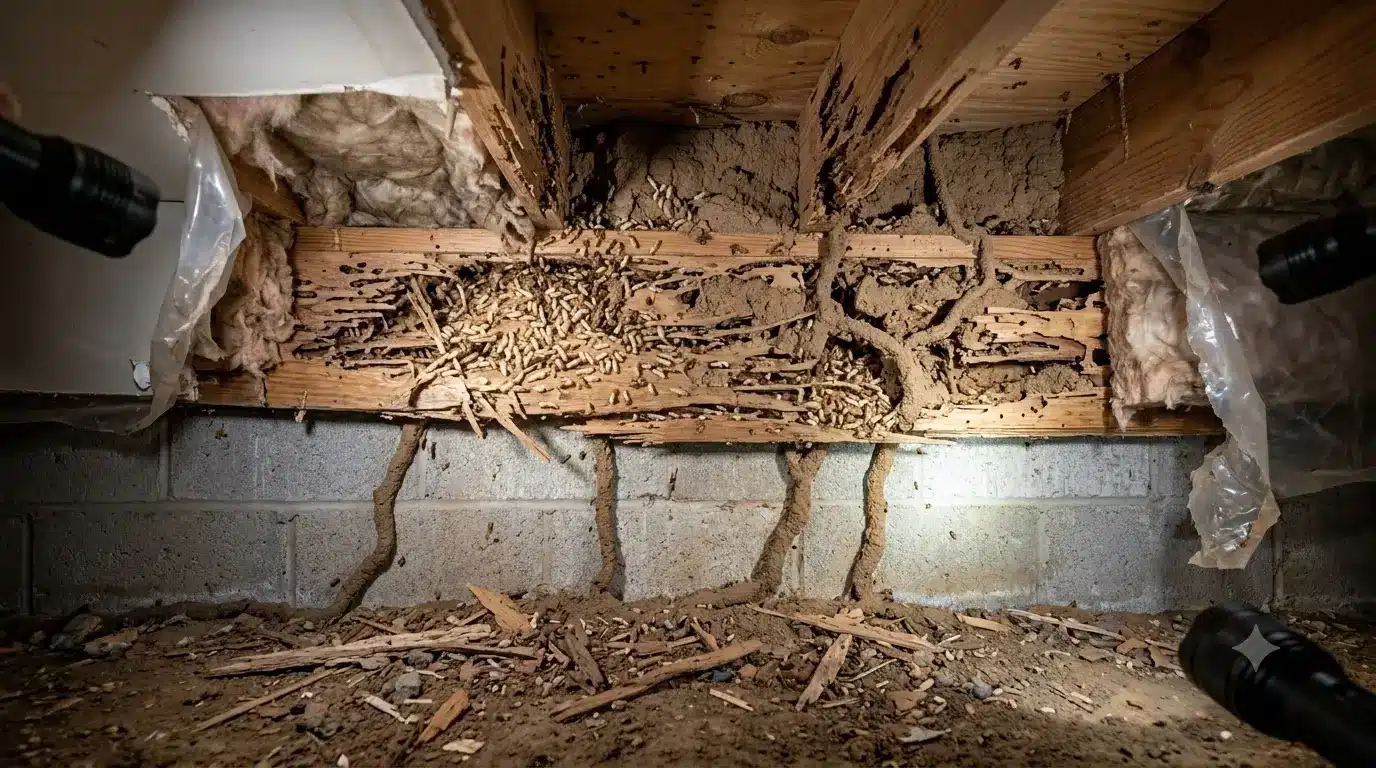
Termites eat wood from the inside out. A beam, baseboard, or door frame can look perfectly fine on the surface while being almost entirely hollowed out underneath. That is what makes them so destructive. There is no smell, no obvious debris, and no noise you would notice during the day.
This is one of the reasons that advanced termite and pest control has become such a priority for homeowners, especially in regions where subterranean species thrive. These termites build their colonies underground and travel through mud tubes to reach the wood in your home, often going undetected for months or even years.
The Most Common Signs of Termite Damage
Not every clue is dramatic. Many of the earliest warning signs look like minor cosmetic issues or general wear. Here is what to watch for.
Mud Tubes on Foundation Walls
Subterranean termites build pencil thin mud tubes along concrete foundations, crawl space walls, and piers. These tubes connect their underground colony to the wood they are feeding on. If you see narrow, dirt colored lines running vertically along your foundation, that is one of the clearest signs of active termite activity.
Hollow or Soft Sounding Wood
Tap on baseboards, window frames, door frames, and exposed beams with a screwdriver handle or your knuckle. Solid wood produces a firm, dense sound. Wood that has been damaged by termites will sound hollow, papery, or dull. In more advanced cases, the wood may crumble or flake away with light pressure.
Buckling Floors and Sticking Doors
Termite damage to subfloor framing can cause floors to buckle, sag, or feel spongy underfoot. Doors and windows that suddenly stick or will not close properly can also point to structural shifts caused by termites feeding on surrounding framing. These symptoms are easy to blame on humidity or settling, which is exactly why they get overlooked.
Discarded Wings and Frass
Termite swarmers shed their wings after landing, leaving small, translucent piles near windowsills, door frames, or light fixtures. Drywood termites also push tiny, pellet shaped droppings called frass out of the wood they are feeding on. If you keep sweeping up fine grit in the same spot or finding wings near entry points, it is worth a closer look.
Bubbling or Peeling Paint
Paint that bubbles, peels, or appears water damaged without an obvious moisture source can indicate termite activity beneath the surface. Termites introduce moisture into the wood as they feed, which can push outward and affect the finish. This is especially common along exterior trim and around window frames.
Where to Check First
Some areas of a home are more vulnerable than others. When doing a visual inspection, focus on these spots:
- Foundation perimeter: Look for mud tubes on concrete walls, piers, and where the foundation meets the siding.
- Crawl spaces and basements: Check floor joists, sill plates, and any wood in direct contact with soil or concrete.
- Exterior door and window frames: Probe the wood with a flat head screwdriver. Soft spots or flaking indicate damage.
- Garage framing: Attached garages often have wood framing close to grade level, making them easy entry points.
- Attic rafters: Drywood termites can establish colonies in upper levels, especially in warmer climates.
How Different Treatment Methods Work
Once termites are confirmed, treatment depends on the species and how far the damage has spread. Understanding the basics helps you ask better questions and evaluate what a professional recommends.
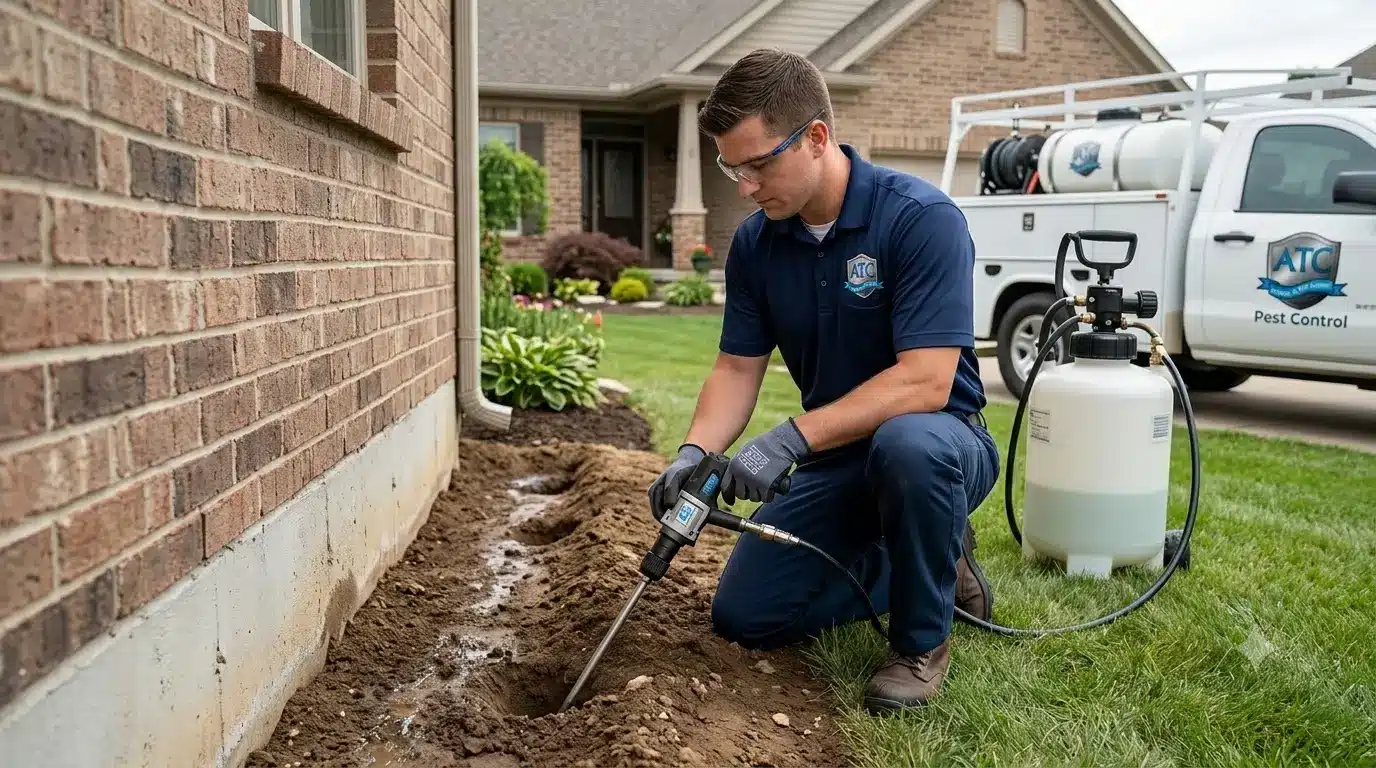
Liquid barrier treatments are among the most common approaches for subterranean termites. A product is applied to the soil around and beneath the foundation, creating a treated zone that termites cannot pass through without exposure. When done correctly, the termites carry the material back to the colony, which leads to colony elimination over time rather than just surface control.
Bait station systems take a different approach. Stations containing a slow acting material are placed in the ground around the structure. Termites feed on the bait and share it with the colony. These systems can be effective, but they depend on termites finding the stations, which can take longer to produce results.
The EPA’s guide to identifying and controlling termites is a useful starting point for homeowners who want to understand how these methods are regulated and what to look for in a treatment plan.
How to Reduce the Risk Before It Starts
Prevention does not replace professional inspections, but it does make your home a less attractive target. A few consistent habits go a long way:
- Store firewood, lumber, and mulch at least 20 feet from your home’s foundation.
- Fix leaky faucets, hose bibs, and HVAC condensation lines promptly. Termites thrive in moist environments.
- Make sure gutters and downspouts direct water away from the foundation, not toward it.
- Seal cracks in the foundation and around utility penetrations where pipes and wires enter the home.
- Keep soil graded so water drains away from the structure rather than pooling against it.
Long Term Monitoring and Maintenance
Even after a successful treatment, termites can return, especially in areas with high soil moisture and warm temperatures. An annual professional inspection is the most reliable way to catch new activity before it becomes a structural problem.
Between inspections, stay in the habit of checking your foundation, crawl space, and exterior trim at least once a season. Look for new mud tubes, soft spots in wood, and any of the warning signs covered earlier in this guide.
For a broader look at protecting your home from pests across all four seasons, JackCooper’s year-round pest prevention guide covers seasonal maintenance routines that keep your property secure throughout the year.
Taking the Next Step
If anything on this list looks familiar, the most important step is to get a professional inspection before assuming the worst or attempting a fix on your own. Termite damage that looks minor on the surface may extend much deeper into the structure, and accurate identification of the species determines which treatment approach will actually work.
If you are exploring your options, ATC Pest Control offers Glen Rock termite treatment backed by a full warranty, using liquid application methods designed to eliminate the colony rather than just manage surface activity. It is worth a conversation if you want clarity on what you are dealing with and what the right next step looks like.
Regardless of where you live, the priority is the same: act on the early signs, not the late ones. A professional inspection can confirm whether termites are present, identify how far the damage extends, and outline the right course of action before repair costs multiply.
Termites are patient. Your home inspection schedule should not be.