You paid for coverage. The package arrived damaged. And now UPS is telling you the claim doesn’t qualify.
It happens more than most shippers expect, not because the coverage failed, but because UPS package insurance doesn’t work the way most people assume.
Declared value isn’t a guarantee. It’s a liability cap with conditions, and if your packaging, documentation, or item type doesn’t meet UPS’s requirements, you can walk away with nothing.
This guide breaks down exactly what UPS covers, what it excludes, how declared value pricing works, why claims get denied, and when switching to third-party insurance makes more financial sense.
By the end, you’ll know what you’re actually paying for and whether it’s worth it.
What UPS Package Insurance Actually Covers
UPS(United Parcel Service) doesn’t use the word “insurance.” Instead, they use the term declared value, and that difference affects what you can actually collect on a claim.
Every UPS shipment automatically includes up to$100 in carrier liability. This means if your package is lost or damaged, UPS may reimburse you up to $100: no extra steps, no added fees.
But this isn’t a guarantee. UPS still investigates each situation before paying anything. Coverage depends on how the item was packed, what documentation you have, and whether the loss meets their reimbursement criteria.
Declared Value vs. True Shipping Insurance
Here’s the key distinction most shippers miss:
- Declared value raises UPS’s liability limit, but to collect, you typically need to show that UPS was responsible for the loss or damage — it does not transfer your financial risk to an insurer
- True insurance means a separate insurer steps in to cover your loss, often with fewer conditions
- Even with the added declared value, UPS can still deny your claim after investigating
- Third-party insurers typically offer coverage that pays without requiring proof of carrier fault, and with fewer category exclusions
So when you “add insurance” through UPS, you’re really just increasing the cap on what UPS might pay, not what they will pay.
There’s one more condition most shippers don’t find out about until a claim is denied: to collect on declared value, you generally need to demonstrate that UPS caused the loss or damage.
If UPS can point to your packaging, the item’s condition before shipping, or any factor outside their control, they can reduce or reject the payout regardless of your declared amount.
Third-party insurance doesn’t work this way. Tt pays based on the loss itself, not on whether the carrier is at fault.
What UPS Does Not Cover

Not every loss qualifies for reimbursement, even if you paid for extra declared value. Claims commonly get denied for:
- Poor or insufficient packaging
- Missing cushioning or void fill
- Fragile items that weren’t double-boxed
- Prohibited items listed in the UPS guidelines
- Concealed damage was reported too late
- No proof of the item’s value before shipping
A few categories face hard exclusions regardless of declared value: cash and negotiable instruments (checks, money orders), precious metals (gold bars, bullion), fine art and antiques, and live animals.
If your shipment falls into one of these categories, third-party specialty insurance is the only option that provides coverage.
How UPS Insurance Costs Work
Adding coverage above $100 isn’t free. UPS charges extra based on your item’s declared value, and the cost scales as that value rises.
Here’s how the pricing breaks down:
| Declared Value | What You Pay |
|---|---|
| $0 – $100 | Free (included automatically) |
| $100.01 – $300 | Flat fee of $3.90 |
| $301 – $50,000 | $1.30 per additional $100 of declared value |
| Above $50,000 (select domestic) | Up to $70,000; rate varies by shipment type |
Note: Rates reflect standard UPS account pricing. Fees may vary depending on how you ship — UPS account, UPS.com, or third-party retailer. Confirm current rates at checkout.
So for a $1,000 item, expect to pay roughly $12–$13 on top of your base shipping rate. A $3,000 shipment adds around $35 or more in declared value fees.
One thing these fees don’t change: to collect on a claim, you still need to show that UPS was responsible for the loss or damage. Declared value raises the ceiling on what UPS might pay; it doesn’t guarantee payment. That’s why documentation and proper packaging matter even more as your declared value climbs. A denied claim on a $3,000 shipment costs you far more than the fee you paid to declare it.
When to Add Coverage and When to Skip It
| Shipment Type | Extra Coverage Worth It? | Why |
|---|---|---|
| Laptops, cameras, audio equipment | Yes | High replacement cost; loss causes immediate financial impact |
| Collectibles or one-of-a-kind items | Yes | Can’t be replaced at any price |
| Business inventory | Yes | Loss directly affects revenue |
| Jewelry and luxury goods | Yes | Often excluded from standard UPS coverage regardless |
| Legal documents, contracts, certificates | Yes | Replacement cost is real, sometimes significant |
| Items under $100, easily replaceable | No | Free included coverage is sufficient |
| Products with strong manufacturer warranty | No | Warranty may cover the loss without a claim |
| Low-risk, well-padded shipments | No | Damage unlikely; fee adds cost without meaningful benefit |
| Losses you can absorb without financial strain | No | Self-insuring over time is often cheaper for high-volume shippers |
For inexpensive, replaceable goods, the cost of added declared value can outweigh the benefit. Some frequent shippers simply self-insure by absorbing minor losses over time.
Why UPS Claims Get Denied
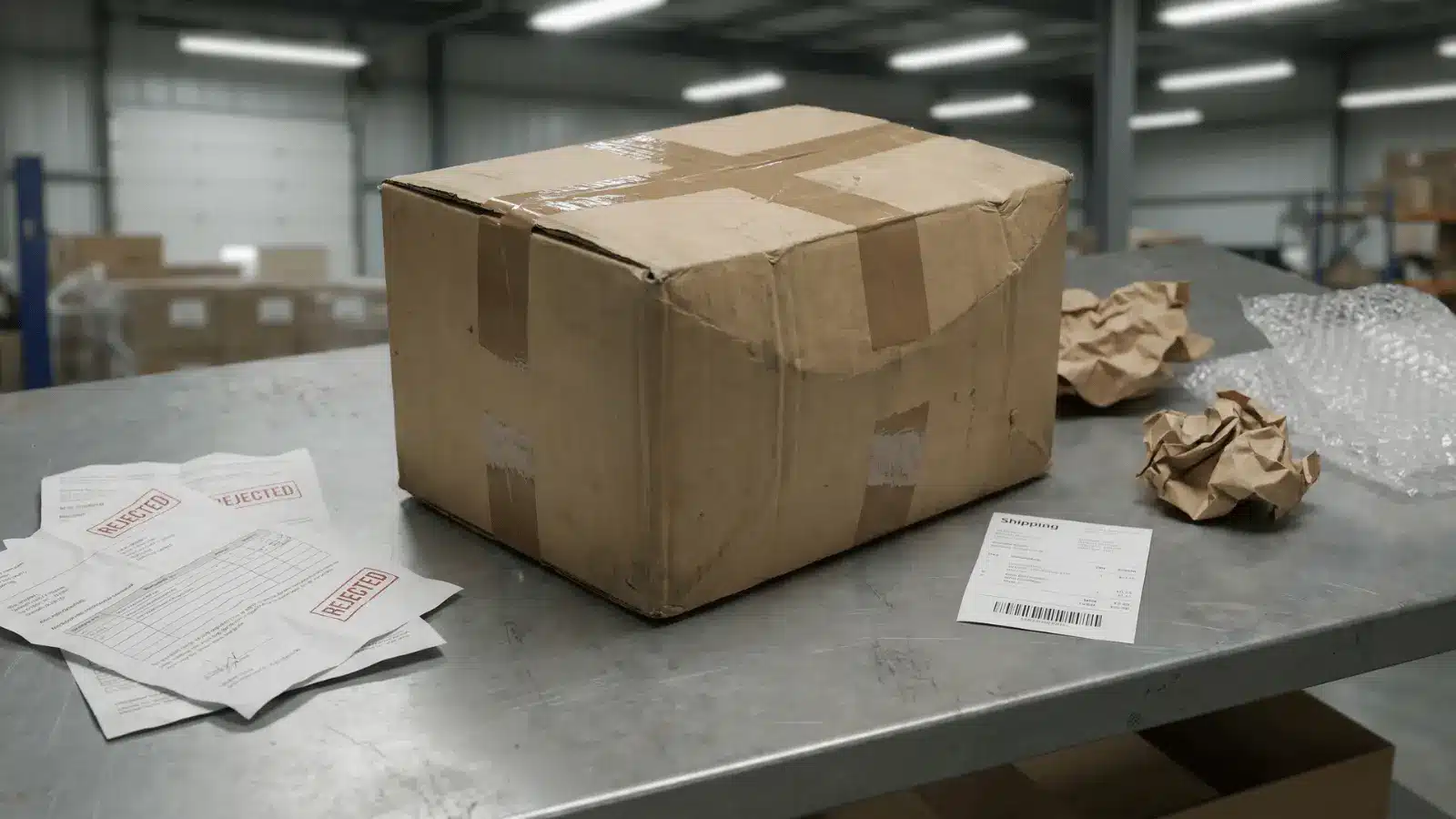
Claim denials follow predictable patterns. A claim denial doesn’t mean UPS made a mistake; it often means the shipment didn’t meet their requirements.
UPS investigates every damage or loss claim. They look at how the item was packed, what the shipper can prove, and whether the damage was caused by a UPS handling error or pre-existing conditions.
The most common reasons claims fail:
- Packaging didn’t meet UPS standards
- No photos of the item before shipping
- No receipt or proof of item value
- Damage wasn’t reported within the required window
- The item was on the prohibited or restricted list
Packaging Rules that Affect Claim Approval
Packaging is the single biggest factor in claim outcomes. UPS expects:
- Double-boxing for fragile or high-value items
- 2 inches of cushioning on all sides
- Proper void fill to prevent shifting
- Weight-appropriate boxes, no overstuffed or underbuilt packaging
- New or like-new corrugated boxes, not reused shipping boxes with old labels
If the packaging doesn’t meet these standards, UPS can deny the claim regardless of what you declared. The liability shifts to the sender.
The Difference Between UPS-Packed and Customer-Packed Shipments
Where you pack your item matters. If you ship through The UPS Store and pay for their Pack & Ship service, UPS takes on more responsibility for the packaging.
Damage claims from these shipments tend to go smoother because UPS can’t blame the sender for improper packing.
If you pack the item yourself, expect more scrutiny. UPS will assess whether your packaging meets their standards, and customer-packed shipments face a higher burden of proof.
In practice, this means keeping photos of how you packed the item before the box was sealed as your primary defense. Without that, UPS’s assessment of your packaging is the only evidence on the table.
UPS Insurance vs. Third-Party Shipping Insurance
Third-party shipping insurance exists because the carrier’s declared value has real limits. Companies like InsureShield and ParcelPro offer standalone shipping insurance policies.
Here’s how they differ from UPS declared value:
| Factor | UPS Declared Value | Third-Party Insurance |
|---|---|---|
| Who pays claims | UPS (after investigation) | Independent insurer |
| Coverage flexibility | Limited | Broader |
| Claim speed | Slower | Often faster |
| High-value items | Limited or excluded | Usually included |
| International coverage | Restricted | Often available |
Third-party coverage makes more sense when:
- Your item exceeds UPS’s declared value maximum
- You ship internationally and need consistent protection
- You’re a business shipping fragile or luxury inventory regularly
- You want faster, less disputed claims handling
- You’re shipping items that UPS explicitly excludes
Because third-party insurers aren’t investigating whether their own handling caused the damage, claims tend to resolve with less documentation friction. For a business processing dozens of shipments a month, that difference in claims overhead adds up faster than the difference in premium cost.
How UPS Insurance Claims Work
If something goes wrong, here’s what the process looks like at a high level:
- Report the issue promptly; notify UPS as soon as damage or loss is discovered. Delays can disqualify your claim.
- Gather documentation before you file: tracking number, photos of the item and packaging, proof of value, and your shipping receipt.
- Submit through UPS’s online claims portal. Have everything ready before you start; incomplete submissions slow the process.
- Expect an investigation. UPS may request a physical inspection of the damaged item or packaging, especially on higher-value claims.
- Wait for resolution; UPS will approve, partially approve, or deny. If denied, you can appeal with additional documentation.
The timeline can range from a few days to several weeks, depending on complexity. Disputed claims or missing documentation will stretch that out further.
What You Need Before Filing a Claim
Having everything ready before you file speeds things up significantly. You’ll need:
- Tracking number for the shipment
- Proof of value, original receipt, invoice, or appraisal
- Photos of the damage, both the item and the packaging
- Original packaging materials, UPS may request an inspection
- Shipping receipt showing the declared value you paid for
Missing any of these can slow down or completely block reimbursement. Document everything before the package leaves your hands.
Quick Decision Framework
Use this as a starting point:
- Under $100 → Included coverage is likely fine
- $100–$500 → Add declared value; make sure packaging and proof of value are solid
- $500–$2,500 → Evaluate whether UPS limits cover you fully; consider third-party
- Over $2,500 or fragile items → Third-party insurance is usually the smarter choice
- Business shipments → Third-party policies offer faster claims and fewer disputes
The biggest mistake shippers make is assuming that paying for coverage means they’ll automatically get paid. Coverage is only as strong as your documentation and packaging.
Final Thoughts
UPS package insurance can protect you, but only if you understand what it actually covers. Declared value isn’t a guarantee. It’s a liability cap that still depends on your packaging, your documentation, and UPS’s investigation process.
Before your next shipment, take a moment to weigh the item’s value against the risk. Use the decision framework in this guide to choose the right level of protection.
One final reminder: no coverage works without proper packaging and proof of value. Get both right, and you’re in a much stronger position.
Want to learn more about smart shipping decisions? Check out other blogs for more helpful guides.
Frequently Asked Questions
Does UPS insurance cover shipping costs if my item is lost?
Yes. UPS declared value coverage typically includes both the item’s value and any shipping charges paid at the time of loss.
Is UPS package insurance mandatory?
No, it’s optional. Coverage above the free $100 is optional, but it is strongly recommended for any shipment worth more than $200.
Can UPS deny a damage claim?
Yes. UPS can and does deny claims, most often citing improper packaging, prohibited items, or missing proof of value.
Is declared value the same as insurance?
No. Declared value increases UPS’s liability cap. True insurance transfers your risk to a separate insurer and typically involves fewer conditions for payout.
How long do UPS claims take?
Simple claims can be resolved in 8–15 business days. Complex or disputed claims may take longer, especially if a physical inspection is required.