Homeowners updating a farmhouse kitchen often face a distinct design choice: embrace the bold personality of colored tile or stick with tried-and-true classics. You may be picturing the soft sage of a hand-glazed ceramic square tile behind your range, or perhaps the crisp, clean lines of white subway tile wrapping around your sink.
Both options promise to complement the sturdy wood, exposed beams, and vintage fixtures that define the modern farmhouse look. However, the right pick for your space depends on more than just personal taste—it comes down to how each tile style interacts with natural light, cabinetry, and the overall atmosphere you want to create.
Understanding the real-world impact of Square Green Tile vs white subway tile will help you confidently select the finish that not only matches your vision but also meets the practical demands of a busy kitchen.
Square Green Tile Aesthetics in Modern Farmhouse Kitchens
Consider the impact of a 4×4-inch hand-glazed square tile in a muted green. This surface, when used as a backsplash, instantly injects personality and warmth into a kitchen with white oak cabinetry and black hardware. The subtle variation in glaze creates a gentle, organic look reminiscent of vintage farmhouse ceramics
. Green tile works especially well to echo the surrounding landscape in rural or suburban homes, enhancing the connection between kitchen and garden. Choosing Square Green Tile allows you to introduce a pop of color without overpowering other elements; this option pairs beautifully with butcher block counters or open shelving in reclaimed wood.
This choice is ideal for homeowners who want their kitchen to feel fresh, yet rooted in tradition, while ensuring the space feels both current and inviting.
Subway White Tile Versatility for Rustic Spaces
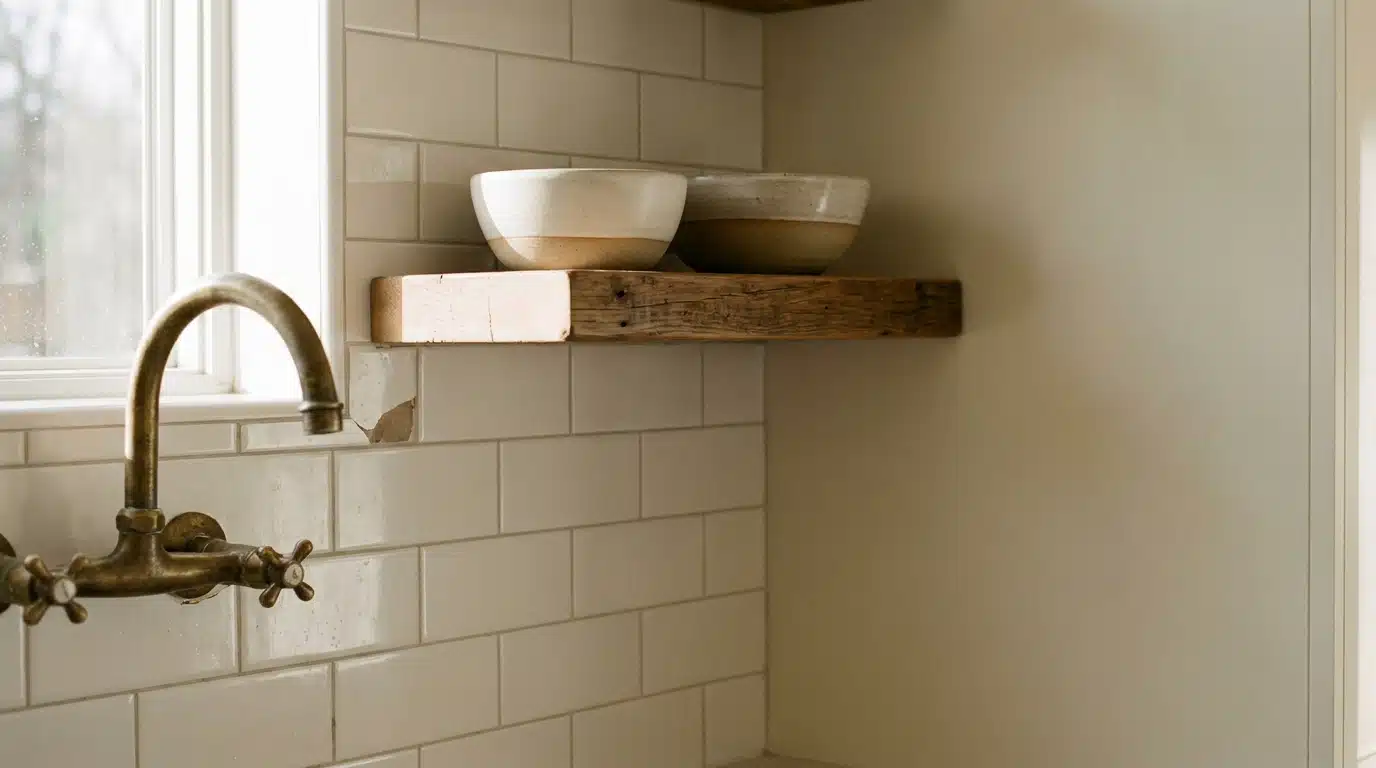
White subway tile, commonly sized at 3×6 inches, is recognized for its ability to adapt to nearly any design scheme. In a modern farmhouse kitchen, this tile offers a backdrop that highlights natural wood, aged metals, and vintage-style lighting.
The classic running bond (offset brick) pattern is favored for its visual rhythm, while a stacked or herringbone layout can add subtle interest without straying from tradition. Homeowners can choose a matte or glossy finish, depending on whether they want a muted or reflective surface.
The bright, clean surface of white tile amplifies natural light, making smaller kitchens feel larger and more open. According to kitchen backsplash design guides, this style remains a top pick for anyone seeking a timeless look that won’t compete with other farmhouse features.
Comparing Cost and Installation Requirements
Evaluating Square Green Tile vs white subway tile means weighing both material prices and installation demands. Handcrafted green tiles, especially those with unique glazes, tend to be pricier per square foot than mass-produced white subway tiles.
Installation time can be longer for square tiles if there are color variations that require careful placement for a cohesive appearance. Subway tiles are usually easier for professional installers to work with, given their uniformity and widespread availability.
Some homeowners might choose to install white subway tiles themselves, following DIY tile installation techniques that emphasize proper surface preparation and grout selection. In contrast, Square Green Tiles often require a professional touch to ensure the pattern looks intentional and the finish remains consistent across the backsplash or accent wall.
Making the Final Design Choice for Your Home
To decide between green square tile and white subway tile, examine your kitchen’s lighting, cabinet color, and the mood you want to evoke. For example, a kitchen with deep walnut cabinets and brass fixtures might benefit from the cool contrast and earthy charm of a green tile backsplash, while a space dominated by open shelving and painted shaker cabinets could be unified by the simplicity of white subway tile.
The decision also hinges on how much you want the backsplash to serve as a focal point versus a supporting element. Pairing either tile with colored grout—such as charcoal with white subway or cream with green squares—can further customize the look. Ultimately, the best fit comes from balancing enduring farmhouse appeal with your personal vision for the space.
Conclusion
Focus on the overall atmosphere you want to create: choose green square tile if you want a signature accent with natural character, or opt for white subway tile when you value flexibility and a timeless backdrop. Review sample boards in your actual kitchen light before ordering, and consult with a tile specialist if you’re unsure about installation details.