
Many businesses think that procurement just means placing orders. Trust me, it doesn’t. Procurement is the system that decides whether your business spends smart or bleeds quietly.
Get it wrong and costs creep, suppliers underdeliver, and operations stall. Get it right and everything downstream runs cleaner.
This guide covers what it actually is, why it matters, and how it works, from the four main types to the seven steps every cycle follows.
If you’re new to the topic, or trying to sharpen how your business handles it, start here.
What Does Procurement Mean?
Procurement is the end-to-end process of sourcing, negotiating, and acquiring goods or services from external suppliers, from identifying a need to managing vendor relationships after the deal closes.
It’s more than placing an order. Purchasing is a single transaction. Procurement is the full system around it, checking suppliers, negotiating terms, and tracking performance over time.
What makes it strategic is intent. Every decision targets cost reduction, risk management, and operational protection, not just fulfilling an immediate need.
How it looks depends on the business. A manufacturer runs formal cycles with global suppliers. A small business blends procurement and purchasing into one process. The structure changes. The purpose doesn’t.
Why Does Procurement Matter for Your Business?
Once you understandwhat procurement means in practice, it’s clear why it touches cost, risk, and operations all at once.
- Cost control: Strategic sourcing and volume discounts reduce costs before invoices arrive. Procurement typically influences a large share of a company’s total spend, so even a 5-10% improvement in sourcing terms can move the bottom line more than most internal cost-cutting efforts.
- Risk management: Supplier vetting and compliance checks happen before contracts are signed. A diversified vendor base stops one failure from disrupting your entire operation.
- Operational continuity: When the right materials arrive on time, your team stays focused. No missing orders. No last-minute scrambling for alternatives.
When procurement works, costs stay controlled, risks get caught early, and operations run without interruption. That’s the point of it.
Different Types of Procurement
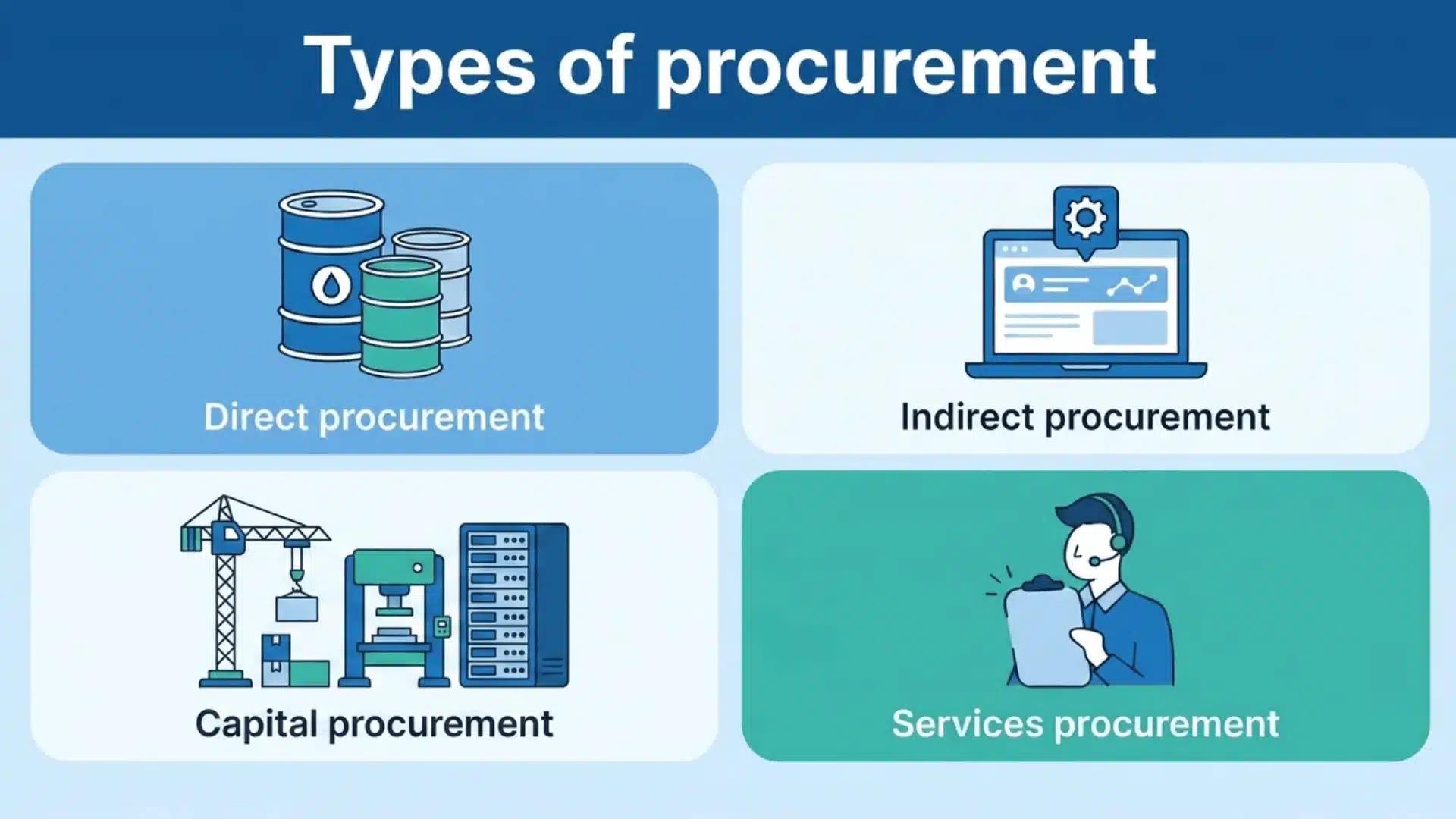
Not all procurement works the same way. What you’re buying changes the strategy, the people involved, and the risk you’re managing. These are the four main types of procurement every business deals with.
Direct Procurement
This covers goods and raw materials that go into your final product. Any disruption here hits production and revenue fast. It needs tight supplier relationships and close monitoring at all times.
Example: A car manufacturer sourcing steel, chips, and components from global suppliers.
Indirect Procurement
These are goods and services that keep daily operations running. They never touch the final product. Easy to ignore, but costs add up quickly without proper oversight.
Example: Office supplies, SaaS subscriptions, facility maintenance contracts.
Services Procurement
Here you’re buying outside expertise for specific work. You’re not buying a product, you’re buying results. Clear scope and strong contracts matter more here than anywhere else.
Example: Hiring a cybersecurity firm or contracting a marketing agency for a product launch.
Capital Procurement
These are big, expensive purchases that take long planning and approval from multiple teams. They’re hard to reverse. The stakes are higher, so the process is slower and more careful.
Example: A logistics company buying a delivery fleet. A factory investing in new equipment.
Some sources list goods procurement separately. In practice, it falls within direct and indirect. The real split is physical items versus labour or expertise.
Who Owns Procurement in a Business?
In a small business, one person might run the whole process, sourcing, negotiating, and paying, with no formal title attached.
Larger companies build out a procurement department, usually led by a Chief Procurement Officer (CPO). The CPO owns supplier strategy, spend policy, and risk across the entire business, not just individual purchases.
Procurement doesn’t work in isolation. Finance sets the budget and checks the numbers. Legal reviews contracts and compliance. IT and operations confirm what’s actually needed and when. The bigger the spend, the more these teams have to align before a deal closes.
That’s why procurement keeps showing up in C-suite conversations. It’s no longer a back-office task. It’s a function that touches budget, risk, and strategy at the same time.
What Are the 7 Steps of the Procurement Process?
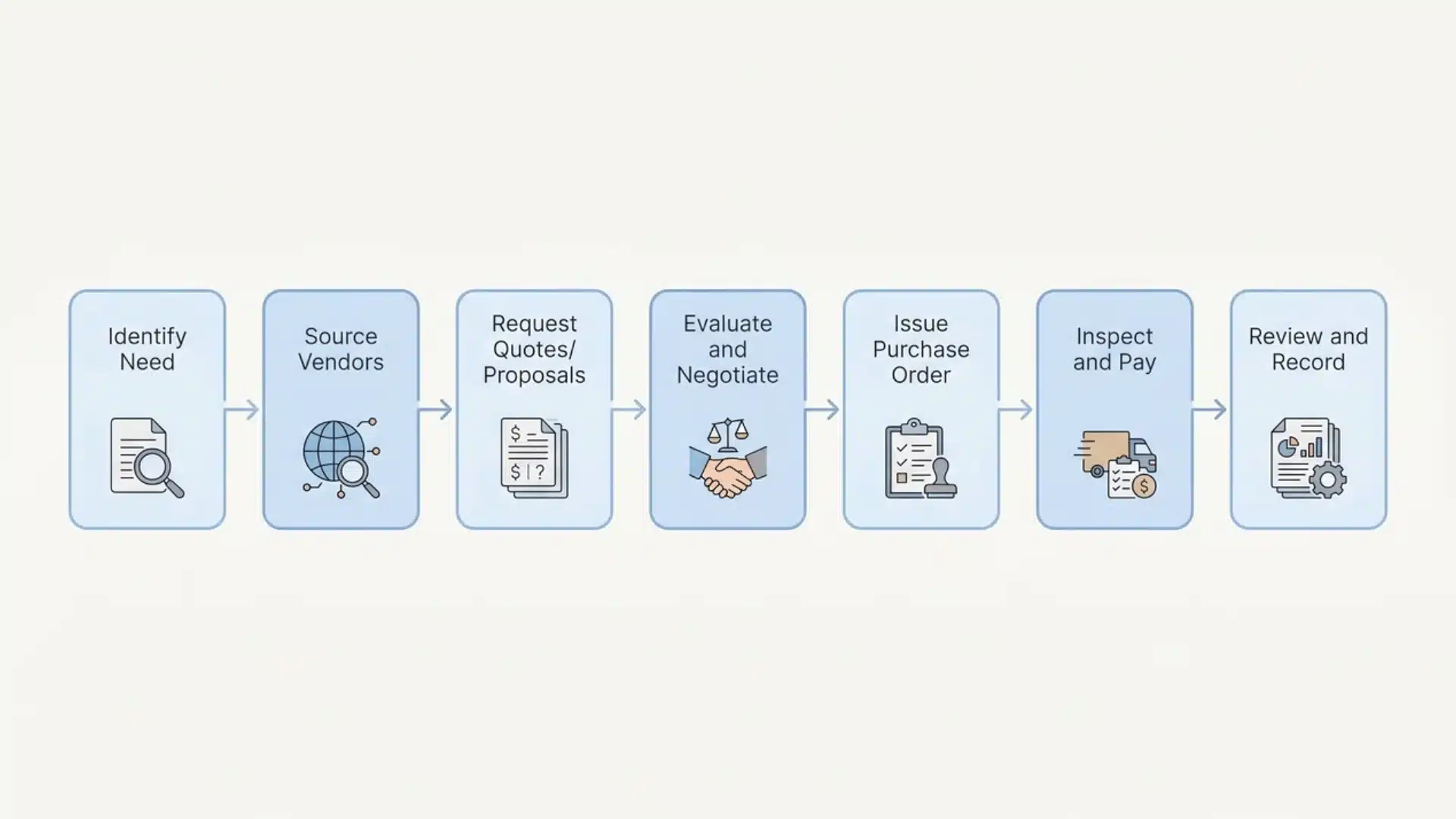
Everyprocurement process follows the same path, from identifying a need to reviewing supplier performance.
1. Identify the Need
Define what’s required before anything moves. Nail down the quantity, quality standard, and timeline. Bring stakeholders in early.
Changes made after sourcing begins cost more time and money. The clearer the need, the smoother everything that follows.
2. Source Vendors
Research potential suppliers, check references, and assess financial stability. New vendors need full vetting. Existing ones have a track record.
Don’t rely on one option. Build a shortlist so you have real choices when it’s time to decide.
3. Request Quotes or Proposals
An RFQ asks for a price on specific items with clear specs. An RFP invites suppliers to propose a full solution for complex needs.
Always get at least three quotes; a single quote is just a guess, while three give you a real comparison to negotiate from.
4. Evaluate and Negotiate
Compare suppliers on price, quality, delivery, and risk. Don’t just pick the cheapest. Look at the full picture before deciding.
Negotiate contract terms and get everything in writing. A verbal agreement protects nobody when something goes wrong.
5. Issue a Purchase Order
The purchase order is the formal record of what the buyer is ordering, what it costs, and when the supplier is expected to deliver it.
It gives both sides something concrete to work from. The buyer has proof of agreed terms, and the supplier has clear instructions to fulfill.
6. Inspect and Pay
When goods arrive, run a 3-way match. Compare the PO, the invoice, and the delivery receipt. All three must align.
Only release payment when everything checks out. This one step catches errors, prevents overpayment, and blocks fraud.
7. Review and Record
Track supplier performance after each cycle, on-time delivery rate, defect or return rate, and response time to issues. Delivery delays, quality issues, and communication gaps only matter when they are recorded consistently.
That record gives you leverage the next time pricing, terms, or reliability come up for discussion. The cycle does not end at payment, it ends when the results are reviewed.
Procurement vs. Purchasing: What’s the Difference?

Both terms describe spending money with suppliers. But one is a transaction. The other is a system built around it.
| Procurement | Purchasing | |
|---|---|---|
| Scope | End-to-end process | Single transaction |
| Focus | Strategy, value, relationships | Ordering and payment |
| Timeframe | Long-term | Immediate need |
| Goal | Reduce cost and risk | Fulfil an immediate requirement |
| Supplier relationship | Ongoing and regularly reviewed | Ends when the order is placed |
| Risk management | Built into every stage | Not a concern |
Once you see the difference, it’s hard to unsee it. Purchasing gets the order placed. Procurement makes sure the order was worth placing.
Common Procurement Challenges and How to Solve Them
Procurement problems usually come from weak visibility, slow processes, and inconsistent control. The clearest way to present them is to pair each issue directly with the practical fix.
- No spend visibility: When purchasing data is split across teams and systems, controlling costs becomes difficult. Centralize purchasing data in one system so spend is easier to track and manage.
- Manual workflows: Spreadsheet approvals and paper-based steps slow decisions and create more room for mistakes. Automate repeatable tasks like purchase orders, approvals, and invoice matching to reduce delays.
- Maverick spending: Off-policy buying weakens procurement control and reduces negotiating power over time. Set clear approval rules, preferred vendors, and spending limits so purchasing stays within process.
- Supplier risk: Vendor delays, quality issues, or financial instability can disrupt operations quickly, especially when a single supplier covers a critical part. Diversifying that supplier base and reviewing performance regularly catches risk before it becomes a disruption.
- Weak performance tracking: Recurring problems stay hidden when no one measures cycle time, savings, or delivery performance. The fix is consistent: track procurement KPIs so issues surface before they grow into bigger costs.
Handled well, these fixes do more than solve isolated problems. They create a procurement process that is easier to control, cheaper to run, and harder to disrupt.
Wrapping Up
Procurement isn’t just about buying. It’s about how well your business controls cost, manages risk, and keeps operations running without interruption.
The difference between reactive and strategic sourcing isn’t complexity. It’s structure. Clear policies, checking suppliers, and a process your team actually follows.
Start with the seven steps. Map where your current process holds up and where it doesn’t. Small gaps compound quietly, but so do small improvements.
Frequently Asked Questions
What is procurement with examples in business?
Procurement is the process of sourcing and acquiring goods or services from outside suppliers. A retailer negotiating bulk pricing with a manufacturer is one straightforward example.
What are the 4 types of procurement?
The four types are direct, indirect, services, and capital procurement. Each covers a different category, from raw materials to outside expertise to high-value asset purchases.
What are the 5 methods of procurement?
The five common methods are open tendering (any qualified supplier can bid), restricted tendering (only pre-approved suppliers are invited), request for quotation (suppliers quote a price on clear specs), single-source procurement (one supplier is chosen directly, often for specialized needs), and request for proposal (suppliers submit a full solution for complex requirements). The right method depends on the complexity and value of what’s being bought.
What is procurement management?
Procurement management is the process of planning, organising, and overseeing how a business sources and buys goods or services. It ensures every purchase follows a structured, controlled process.