When most people picture a hazmat problem, they picture the obvious version. A tanker overturnedon the highway. A giant chemical plume. Workers in full protective suits. Something dramaticenough that nobody in the area needs help deciding it is serious.
That is not how a lot of real freight problems begin.
More often, it starts with a load that looked routine at pickup and starts feeling less routine onedetail at a time. A drum shows up with a damaged label. A pallet has a sharp, sour smell thatnobody can place. A package is warm when it should not be. A driver gets told, “It’s just cleaningproduct,” which is one of those phrases that can mean almost anything and usually means nobodyasked enough follow-up questions.
That gray zone is where mistakes happen. Not because people are reckless, but because they arebusy, used to solving small problems fast, and tempted to treat every delay like a paperwork issueinstead of asking whether the freight itself has changed the risk.
Thefirstredflagisvaguecertainty
A normal load usually stays normal when everyone can describe it clearly. What it is. How is itpacked? Whether it leaks, reacts, corrodes, ignites, or needs temperature control. The problem startswhen the confidence is high, but the details are fuzzy.
You hear it in ordinary language. “It’s non-hazardous.” “It’s just shop supplies.” “It’s basicallypaint.” “It’s sealed, so it’s fine.” Those are not useful answers when a shipment has damagedpackaging, mixed contents, residue on the outside, or paperwork that does not line up with what isactually on the trailer.
That is also where a lot of teams confuse freight familiarity with freight safety. Plenty of productsseem normal because people see them every day: aerosol cans, solvents, lithium batteries, poolchemicals, automotive fluids, adhesives, cleaners. But every day, commercial products can still fallunder hazardous materials rules depending on composition, quantity, condition, and packaging. TheU.S. Pipeline and Hazardous Materials Safety Administration lays out how hazardous materials areidentified and regulated in transportation, and the gap between “common item” and “regulateditem” is wider than many non-specialists realize. PHMSA’shazmatoverview is useful for exactlythat reason.
Good execution at this stage is not dramatic. It looks like someone is slowing the handoff downbefore the problem becomes mobile. A receiver notices that the package count matches, but themarkings do not. A dispatcher hears “minor spill” and asks what spilled, what it touched, andwhether anyone actually knows the material. A warehouse lead stops cleanup until the team is surethey are dealing with routine housekeeping and not something that requires a different responsestandard, which is where understanding what HAZWOPER covers becomes relevant in the realworld.
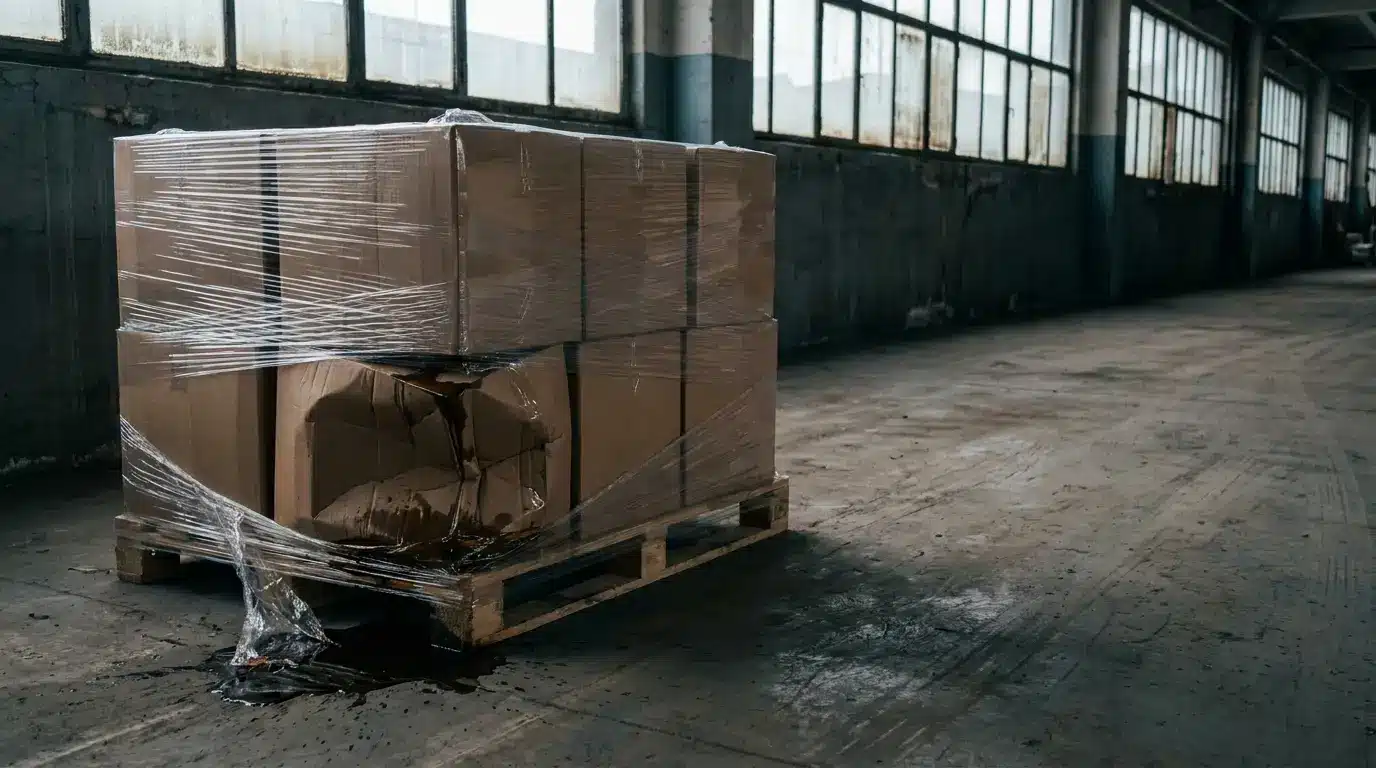
Bad execution looks different. People start solving the wrong problem. They rewrap a leaking palletbefore identifying the substance. They move a compromised load closer to other freight to “get itout of the way.” They focus on saving the schedule before they confirm whether the load is still safeto move.
Condition Changes Matter More Than the Original Plan
When freight turns risky, people love blaming paperwork. Sometimes that is fair. Missingdeclarations, incomplete labels, bad commodity descriptions, and copied-and-pasted shipment notesabsolutely create risk. But the deeper problem is usually that too many people treated thepaperwork as a finished answer instead of a clue.
That shows up in small, familiar ways. A shipment is described in generic terms because theshipper wants it processed faster. Someone downstream assumes the first description was alreadyverified. A carrier notices something odd but does not escalate because nobody wants to be theperson who delays a pickup over “probably nothing.”
A lot of freight trouble lives inside that phrase: probably nothing.
This matters even more when the supply chain includes brokers, third-party warehouses, repackaging, cross-docking, or handoffs between teams that do not all see the original productinformation. The more touches a load has, the more likely it is that critical knowledge gets reducedto shorthand. That is part of why strong freightforwarding and logistics processes matter. Notbecause process language sounds impressive, but because every extra handoff is anotheropportunity for details to get flattened into “consumer goods,” “parts,” or “miscellaneous supplies.”
The fix is less glamorous than people hope. Better questions beat better slogans. What exactly is inthe package? Is the label current and readable? Has the packaging been compromised? Is there anyreason temperature, pressure, impact, or contamination changed the condition of the load sincepickup? If nobody can answer those cleanly, the shipment is already asking for more caution thanthe schedule wants to give it.
OSHA’s own HAZWOPER guidance exists because cleanup and emergency response are notinterchangeable with everyday handling, just because they happen in the same workplace. OSHA’sHAZWOPER page makes that distinction clear, and it is a distinction that operations teams ignoreat their own expense.
The Paperwork Problem Is Usually a People Problem First
When freight turns risky, people love blaming paperwork. Sometimes that is fair. Missingdeclarations, incomplete labels, bad commodity descriptions, and copied-and-pasted shipment notesabsolutely create risk. But the deeper problem is usually that too many people treated thepaperwork as a finished answer instead of a clue.
That shows up in small, familiar ways. A shipment is described in generic terms because theshipper wants it processed faster. Someone downstream assumes the first description was alreadyverified. A carrier notices something odd but does not escalate because nobody wants to be theperson who delays a pickup over “probably nothing.”
A lot of freight trouble lives inside that phrase: probably nothing.
This matters even more when the supply chain includes brokers, third-party warehouses, repackaging, cross-docking, or handoffs between teams that do not all see the original productinformation. The more touches a load has, the more likely it is that critical knowledge gets reducedto shorthand. That is part of why strong freightforwarding and logistics processes matter. Notbecause process language sounds impressive, but because every extra handoff is anotheropportunity for details to get flattened into “consumer goods,” “parts,” or “miscellaneous supplies.”
The fix is less glamorous than people hope. Better questions beat better slogans. What exactly is inthe package? Is the label current and readable? Has the packaging been compromised? Is there anyreason temperature, pressure, impact, or contamination changed the condition of the load sincepickup? If nobody can answer those cleanly, the shipment is already asking for more caution thanthe schedule wants to give it.
OSHA’s own HAZWOPER guidance exists because cleanup and emergency response are notinterchangeable with everyday handling, just because they happen in the same workplace. OSHA’sHAZWOPER page makes that distinction clear, and it is a distinction that operations teams ignoreat their own expense.
What Good Judgment Looks Like Before Things Get Worse
The best freight teams are not the ones that never see weird situations. They are the ones who donot let weird situations pretend to be normal for too long.
That usually starts with a simple habit: they treat sensory clues seriously. Not dramatically. Seriously. If a trailer is hotter than expected, if there is bulging, hissing, residue, vapor, staining, corrosion, or a smell that does not belong, that is not the moment for casual optimism. It is themoment to pause and narrow the unknowns.
They also resist the urge to crowdsource a technical decision from the nearest available person. Every warehouse has somebody who has “seen this before.” That can help, but familiarity is not thesame thing as authorization or training. Somebody who once cleaned a leaking container ofdetergent is not automatically the right person to evaluate an unidentified spill near other freight.
A practical way to think about it is this:
That difference matters. If a truck is late, you call, reroute, and update. If a pallet has shifted, yousecure and restack. If a load is leaking, reacting, off-gassing, overheating, or no longer clearlyidentifiable, speed stops being the priority. Containment, identification, and proper escalation takeover.
This is also where companies get tripped up by culture. Some operations environments quietlyreward the person who “keeps things moving” no matter what. That sounds efficient until the wrongshipment comes along. A stronger culture rewards the person who can tell the difference between a delay problem and a safety problem.
The same logic shows up in specialized freight, too. Anyone working around coldchainlogistics already understands that condition changes can destroy product integrity fast. Hazardous freightadds another layer: sometimes, condition changes do not just spoil the cargo, they change the levelof risk around the cargo.
Wrap-Up Takeaway
A load does not have to look dramatic to stop being routine. In real operations, the shift usuallyhappens through small warning signs: vague descriptions, damaged packaging, strange odor, heat, residue, missing labels, or a team that is too eager to classify the issue as minor before anyoneknows what they are dealing with. The costly mistake is not always bad intent or poor work ethic. Itis treating uncertainty like an inconvenience instead of a signal. Strong judgment in freight comesdown to knowing when movement is the answer and when movement is exactly what should stop. A useful next move today is to review your last few “minor” shipment incidents and ask one bluntquestion: Did your team actually identify the risk, or just work around it fast enough to stay onschedule?