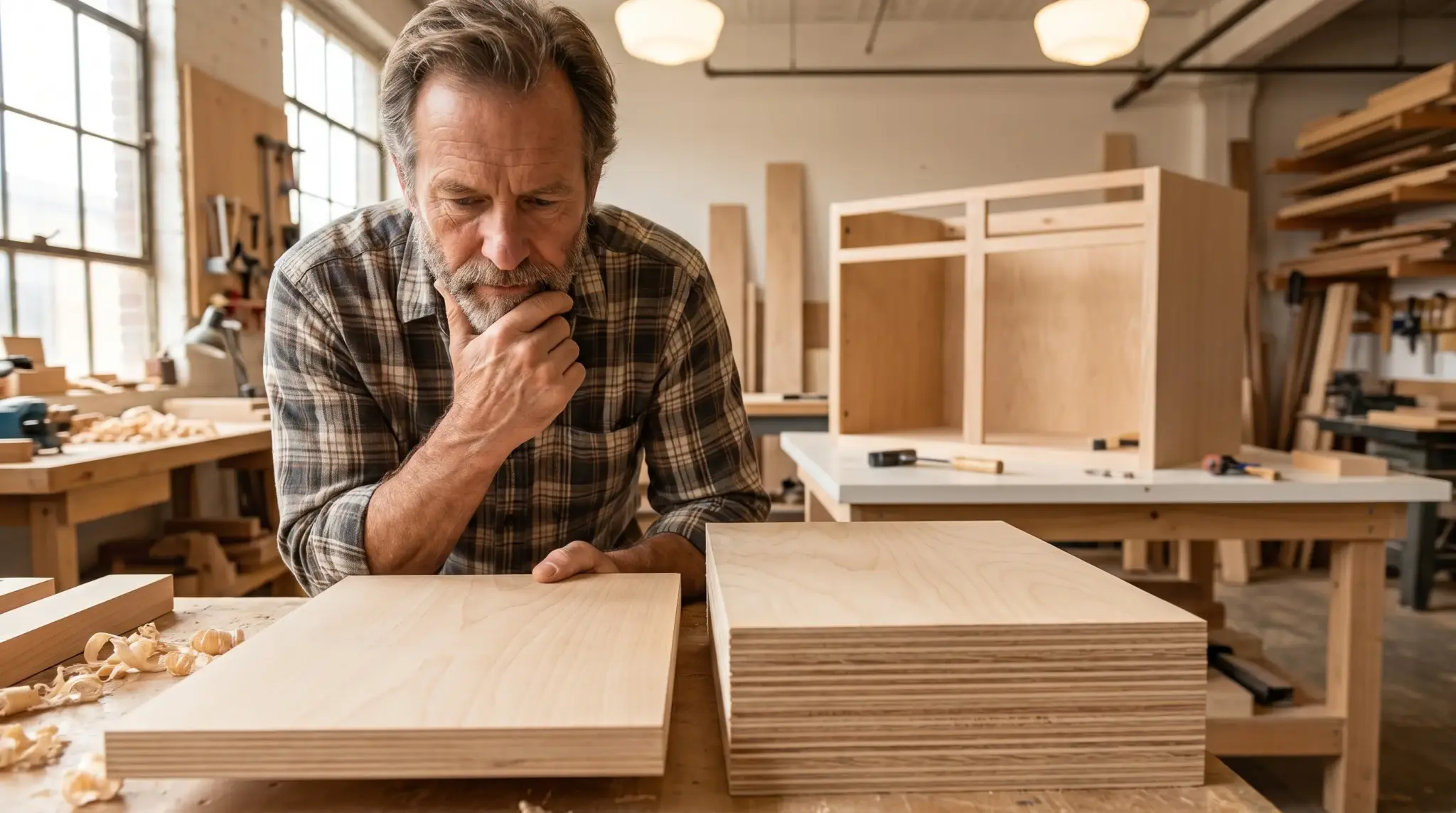
Walk into any cabinet shop or job site, and one thing becomes clear pretty quickly—nobody experienced just grabs plywood randomly. The material choice is deliberate, because it directly affects how the cabinets will look, feel, and hold up over time.
Most problems in cabinetry don’t come from installation mistakes. They start earlier, at the material level. Cabinets that begin to sag, chip, or loosen within a year usually weren’t built with the right panels to begin with.
Plywood might look similar from a distance, but in practice, the differences show up fast—especially once cutting, assembling, and finishing begins.
What “Cabinet-Grade” Actually Means
The term gets used everywhere, but it’s often misunderstood.
Cabinet-grade plywood isn’t about branding—it’s about consistency. When professionals talk about quality panels, they’re looking at a few key things:
- Sheets stay flat after cutting
- Faces are clean and usable without excessive prep
- The internal core is stable and free of large voids
What they don’t rely on:
- Marketing labels
- Generic “premium” claims
- Packaging descriptions
If the core is inconsistent, the panel won’t perform well, no matter how good it looks on the outside.
The Two Materials That Actually Make Sense
For kitchen cabinets, most experienced builders consistently rely on two types of panels:
- Prefinished plywood
- Baltic birch plywood
Each serves a different purpose, and trying to replace one with the other usually leads to trade-offs.
When Prefinished Plywood Is the Smarter Choice
If you open a cabinet and see a smooth, clean interior with no visible finishing marks, you’re looking at prefinished plywood.
The advantage here isn’t just appearance—it’s efficiency.
Using prefinished plywood panels for kitchen cabinetsremoves several steps from the process:
- No sanding interiors
- No staining or sealing
- No waiting for finishes to cure
For cabinet shops or contractors handling multiple projects, this saves a significant amount of time. It also improves consistency, since every panel comes ready with the same surface quality.
Best Uses for Prefinished Plywood
- Cabinet boxes
- Interior shelving
- Closet systems
Where It Has Limits
- Edges that will be heavily shaped or exposed
- Projects that require custom finishing after installation
When Baltic Birch Becomes Necessary
For more demanding work, especially where precision matters, Baltic birch is often the better option.
UsingBaltic birch plywood sheets for cabinet construction provides a level of consistency that standard plywood can’t always match.
The key difference is in the structure:
- Multiple uniform plies
- Minimal internal voids
- Dense, consistent core
This results in:
- Cleaner cuts
- Stronger joints
- Better performance under load
Where Baltic Birch Works Best
- Drawer boxes
- Custom cabinetry
- CNC and detailed cut work
When accuracy and durability matter, Baltic birch behaves more predictably during fabrication.
Why Using One Material for Everything Fails
One of the most common mistakes is trying to simplify the process by using a single material across the entire project.
It sounds efficient, but it usually leads to unnecessary cost or performance issues.
For example:
- Using Baltic birch everywhere increases cost and requires additional finishing work
- Using prefinished plywood everywhere limits flexibility in areas that need strength or machining
Most professionals split usage:
- Prefinished for interiors
- Baltic birch for structural and precision components
That combination keeps both cost and performance balanced.
Core Quality Matters More Than Surface Appearance
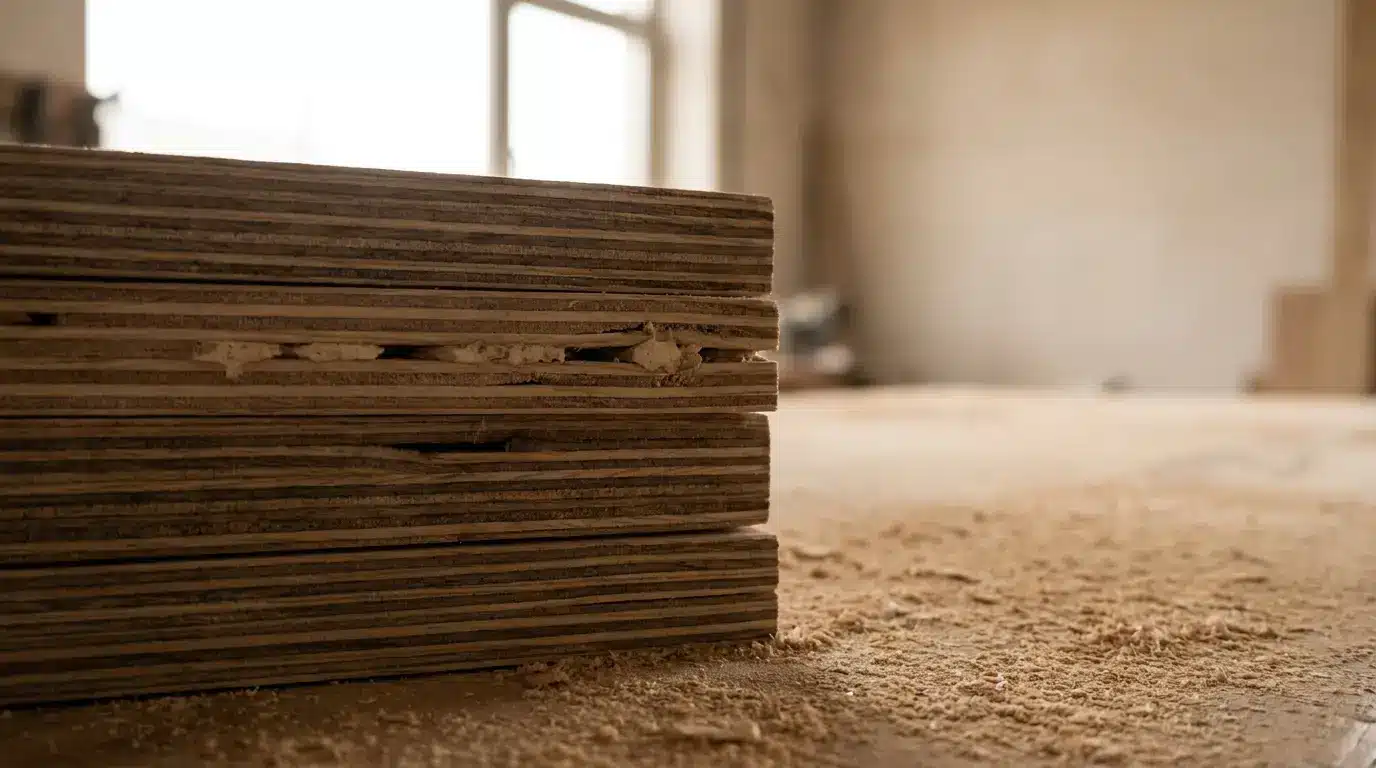
A smooth surface might look good initially, but the real performance comes from what’s inside the panel.
Lower-quality plywood often includes:
- Voids between layers
- Soft filler material
- Inconsistent density
These issues don’t always show immediately, but they appear during use:
- Screws fail to hold properly
- Edges chip during cutting
- Panels flex under weight
Once those problems appear, the material has already cost more than expected.
Choosing the Right Thickness
Thickness decisions are often made out of habit, not necessity.
While 3/4″ plywood is common, it’s not always required everywhere.
Typical Thickness Choices
- 3/4″ for cabinet structure
- 1/2″ for backs with support
- 1/4″ for lighter components like drawer bottoms
Using thicker panels than needed:
- Adds unnecessary cost
- Increases weight
- Doesn’t always improve durability
Matching thickness to the function of each part leads to better efficiency.
Finish vs Flexibility
Every material decision involves trade-offs.
Prefinished Plywood Offers
- Faster production
- Clean surfaces
- Less labor
But it limits flexibility once cutting begins.
Baltic Birch Offers
- Greater control during fabrication
- Stronger structural performance
But it requires additional finishing steps.
Choosing between them depends on the project’s priorities—speed or control.
Where Projects Usually Go Wrong
Most issues don’t come from major mistakes. They come from small decisions that add up.
Common problems include:
- Mixing inconsistent plywood batches
- Using lower-grade panels for large cabinet sections
- Poor storage before installation
- Rushing cuts with worn tools
Even high-quality plywood can perform poorly if handled incorrectly.
Good Handling Practices
- Storing sheets flat
- Keeping them in stable conditions
- Using sharp, appropriate tools for cutting
Material quality and handling go together.
How to Avoid Costly Mistakes When Buying
A lot of wasted money happens before the material even reaches the shop.
Buying based purely on price is one of the biggest mistakes. Lower-cost panels often introduce hidden issues that slow down production and increase waste.
Professionals usually check:
- Flatness of the sheet
- Edge quality after a quick cut
- Consistency across multiple panels
These checks take very little time but prevent larger problems later.
Storage also plays a role. Panels exposed to humidity or stored improperly can warp slightly, affecting alignment during installation.
Good Storage Practices
- Keeping panels flat
- Avoiding moisture exposure
- Minimizing unnecessary handling
Lower-quality plywood often creates more waste due to defects, which offsets any initial savings.
Consistent material allows for better planning, cleaner cuts, and fewer delays.
Why Consistency Saves More Than Price
Two panels can look identical but behave completely differently during fabrication.
Lower-quality options may:
- Slow down cutting
- Increase defects
- Create more unusable material
Over time, these issues cost more than the difference in price.
Reliable panels:
- Improve workflow
- Reduce mistakes
- Keep projects on schedule
That’s where real savings happen.
How Professionals Make the Decision
Instead of overcomplicating it, most follow a simple approach:
- If the interior is visible, use prefinished plywood
- If precision cutting is required, use Baltic birch
- If edges will be exposed, avoid weak-core panels
- If speed matters, prefinished plywood usually wins
- If durability matters most, Baltic birch is usually the better choice
Simple decisions, based on function.
Final Thought
Choosing plywood for kitchen cabinets isn’t about finding a single “best” option. It’s about understanding how each material performs and using it where it makes sense.
When the right panel is used in the right place, everything becomes easier—cutting, assembly, installation, and long-term performance.
That’s when projects run smoothly, and that’s how unnecessary costs are avoided.