I still remember a client’s tax notice bouncing back six months after their move. One form never got filed, and it’s a mistake I don’t want you to repeat. That’s when I started keeping a business address change checklist for every relocation I help plan.
Moving your business is exciting, but the address change part is where most owners slip up. Miss the wrong agency, and you risk lapsed licenses, delayed refunds, or a Google listing that quietly vanishes from search.
This checklist walks you through the update in the exact order it needs to happen. Government agencies first, then money, then everywhere your customers actually look for you.
Work through it section by section, and nothing falls through the cracks.
Before You Move: What to Line up First
Before sending any address updates, create a complete list of all accounts, agencies, vendors, and services associated with your current business location.
Review recent bank statements, tax records, bills, subscriptions, and vendor invoices to identify anyone who may still use the old address.
Start this process four to six weeks before moving, as government agencies and financial institutions may require additional processing time.
Online profiles can usually be updated closer to the move date. Assign one team member to manage the checklist, record each notification, and follow up when confirmation is required.
Using one organized list prevents missed accounts, repeated work, and last-minute confusion.
Who to Notify, in Order
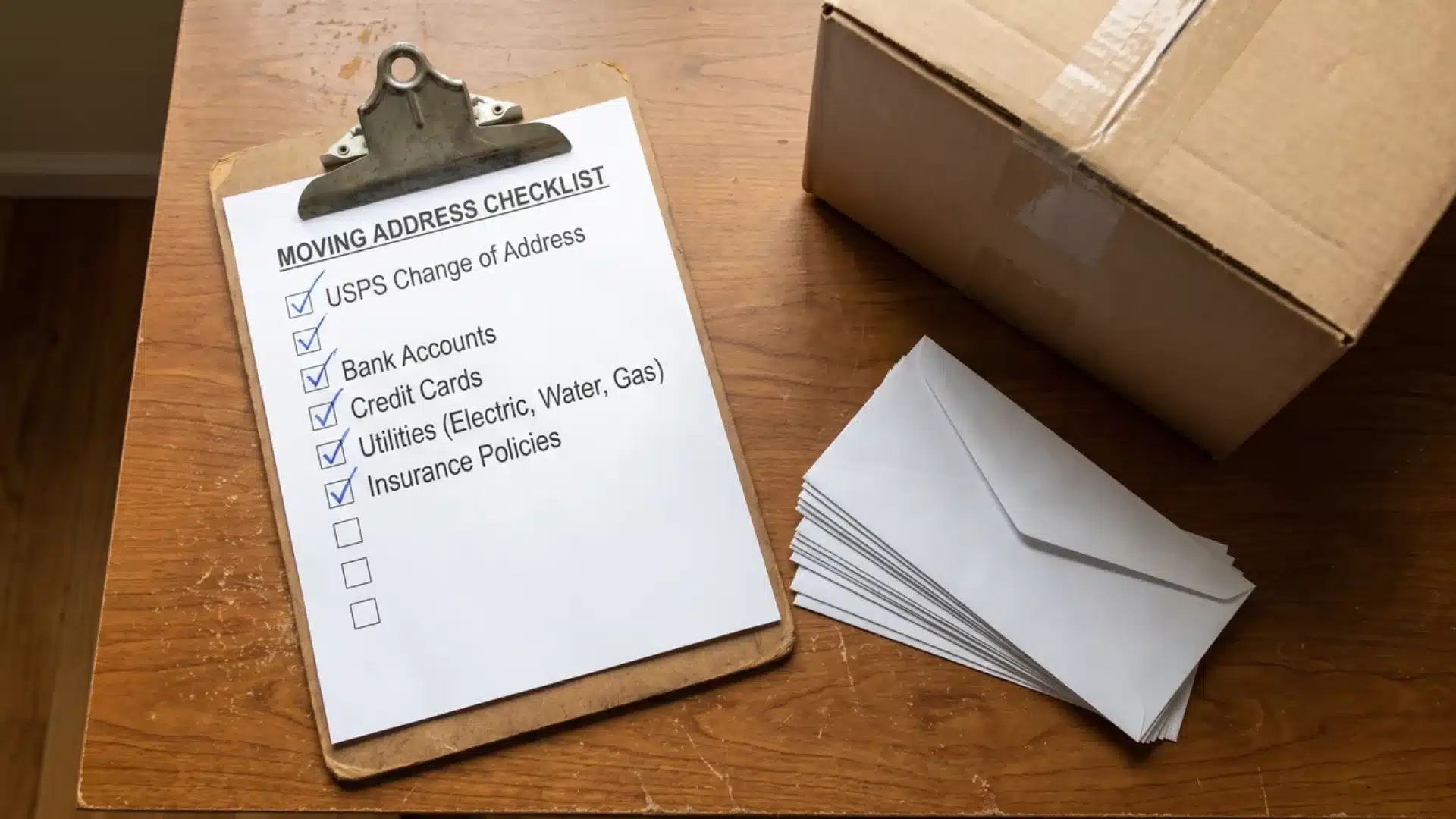
Prioritize address updates by processing time. Start with agencies and banks, then notify vendors, clients, and online platforms.
1. Government Agencies First
Start with the IRS by filing Form 8822-B to update your business mailing address or physical location. The 60-day deadline applies only when the responsible party changes, but filing early still helps prevent delayed tax notices
Next, update records with your state, city, and local authorities.
- Contact the Secretary of State for registered address requirements.
- Amend your Articles of Organization, Articles of Incorporation, or Statement of Information if your registered business address is part of that filing; this is separate from a general Secretary of State address update and often has its own form.
- Review city and county licenses, permits, and inspection records.
- Update USPS using a business change-of-address request.
- Provide proof that you are authorized to submit the change.
USPS forwarding lasts only 12 months, so treat it as temporary protection while permanent address updates are processed
2. Financial Accounts Next
Notify banks, credit card companies, payment processors, insurers, and lenders soon after government agencies. Most financial institutions allow address changes online, by phone, or through a local branch.
Make sure the new address appears on every financial record associated with the business.
- Update checking, savings, and credit card accounts.
- Contact loan providers and equipment financing companies.
- Review merchant processors and payment platforms.
- Notify business credit reporting agencies directly.
- Confirm the address used on billing statements and tax records.
- Update your company information inside the CRM.
An outdated address on a business credit file may delay financing or vendor approval. Record confirmation numbers or emails so you can verify that each institution completed the update.
3. Vendors, Clients, and Partners
Tell vendors, suppliers, clients, and business partners about the move before the new address takes effect. Early notice reduces the chance of missed shipments, returned invoices, and delayed payments.
Use a short email or formal letter that clearly states the effective date.
- Contact regular suppliers and delivery partners first.
- Update billing and shipping details on vendor portals.
- Notify clients who send contracts, checks, or paperwork.
- Review leases, loans, and service agreements.
- Check whether formal contract amendments are required.
- Ask key partners to confirm that their records were changed.
Keep the wording consistent across every notice. A clear effective date helps contacts understand when they should stop using the old location.
4. Website and Digital Presence
Update your website and online business listings once the official records and financial accounts are underway. Begin with the contact page, footer, location pages, and any structured business information used by search engines.
Then check each public platform where customers may look for your address.
- Update Google Business Profile.
- Review industry directories and local listings.
- Change addresses on review platforms.
- Correct map pins and location details.
- Update email signatures and online forms.
- Edit social media profiles last.
Consistent address details help customers find the right location. Google and other platforms cross-check your business name, address, and phone number across listings, and mismatches between them are a common reason a listing loses local search ranking.
What Happens if You Miss a Step
Missing even one address update can create bigger problems later. If the IRS still has your old address, tax notices, filing reminders, or audit requests may never reach you on time.
An outdated bank address can also delay the delivery of fraud alerts and important statements, allowing suspicious activity to go unnoticed for longer.
Business credit records matter too, since lenders may review them before discussing rates or approval terms. If the address is wrong, the application process can slow down or raise questions. Customers face another risk.
Someone who visits the old location or finds outdated details online may assume the business has closed. That can damage trust, reduce foot traffic, and create confusion that takes far more effort to correct than the original address update.
Confirming the Change Actually Went Through
Notifying someone isn’t the same as confirming they updated it. Government forms especially can sit in a queue longer than you’d expect.
Watch for the IRS confirmation notices CP148A and CP148B, which typically arrive at your old and new address a few weeks after you file Form 8822-B.
Check your next bank and vendor statements for the new address. If the old one is still printed, call and ask them to fix it. Online forms don’t always take effect right away.
Search your business name online a month after the move. If a directory listing or review site still shows the old address, correct it directly through that platform.
Conclusion
I’ve walked enough business owners through this business address change checklist to know one thing. Order beats speed, every time, and rushing any single step usually costs you weeks later.
Lock down your government filings first, since those protect your legal standing. Then handle your money side, and finish with the places where customers actually see you.
Skip ahead to the visible stuff before your IRS and state paperwork clears. You’ll end up with mismatched records for months.
Don’t let that be your business. Save this checklist and work through it a section at a time. Confirm each step before you move to the next.
When you’re ready, bookmark this page and open Form 8822-B to start your first update.
Frequently asked questions
How long does the IRS take to process a business address change?
Processing usually takes four to six weeks after you mail Form 8822-B. You should get a confirmation notice once it’s updated. If six weeks pass with nothing, call to confirm the form arrived.
Do I need to notify the IRS if I’m not changing my responsible party?
Yes, but the strict 60-day deadline only applies to responsible party changes. A plain address update has no hard deadline, though mailing it early avoids delays with future notices.
What happens if I forget to update my business address with my bank?
Statements, fraud alerts, and account notices may keep going to your old address until you catch it. Update your bank as soon as your new address is confirmed.
Can I use a virtual mailbox instead of updating everyone individually?
A virtual mailbox can catch stray mail after a move. It doesn’t replace updating your official address with agencies, banks, and vendors directly.