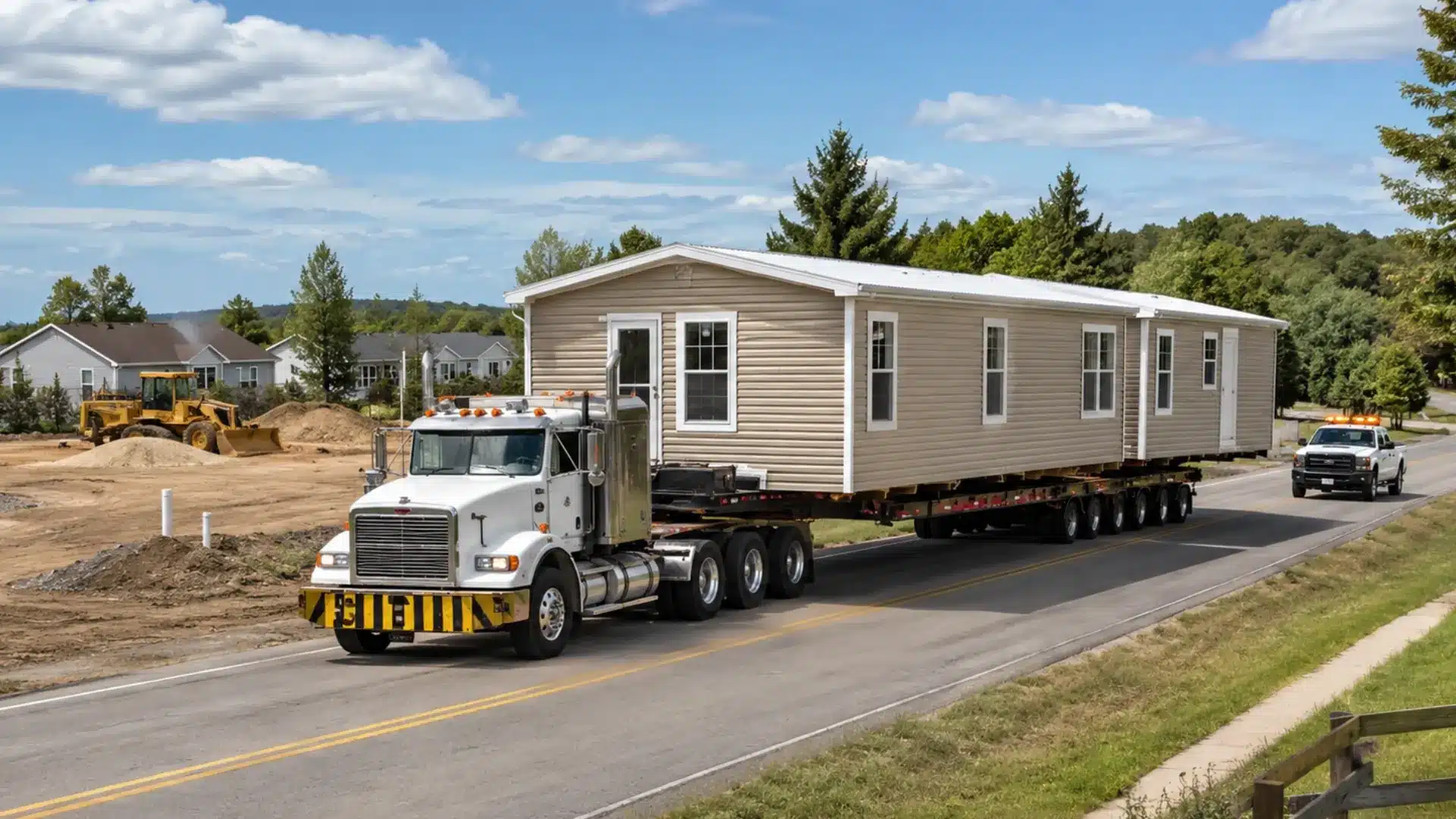
The tiny house market is growing 6.1% each year, and with its success comes the need for a greater focus on how this type of property can be moved to better match owners’ needs. And if it wasn’t already obvious, relocating a tiny house requires much more than just hitching it to a strong truck and driving away.
The plumbing fixtures, water lines, and fragile glass surfaces in a compact bathroom are subject to severe vibrations and shifting forces during transit. Failing to secure these components can lead to fractured pipes, shattered shower doors, and costly structural water damage.
There are dozens of tiny-home plumbing failures reported by owners during transit each moving season. These issues are almost entirely preventable if you follow a systematic breakdown strategy before the wheels start turning. Proper preparation ensures that your compact sanctuary arrives at its next destination completely intact and fully functional.
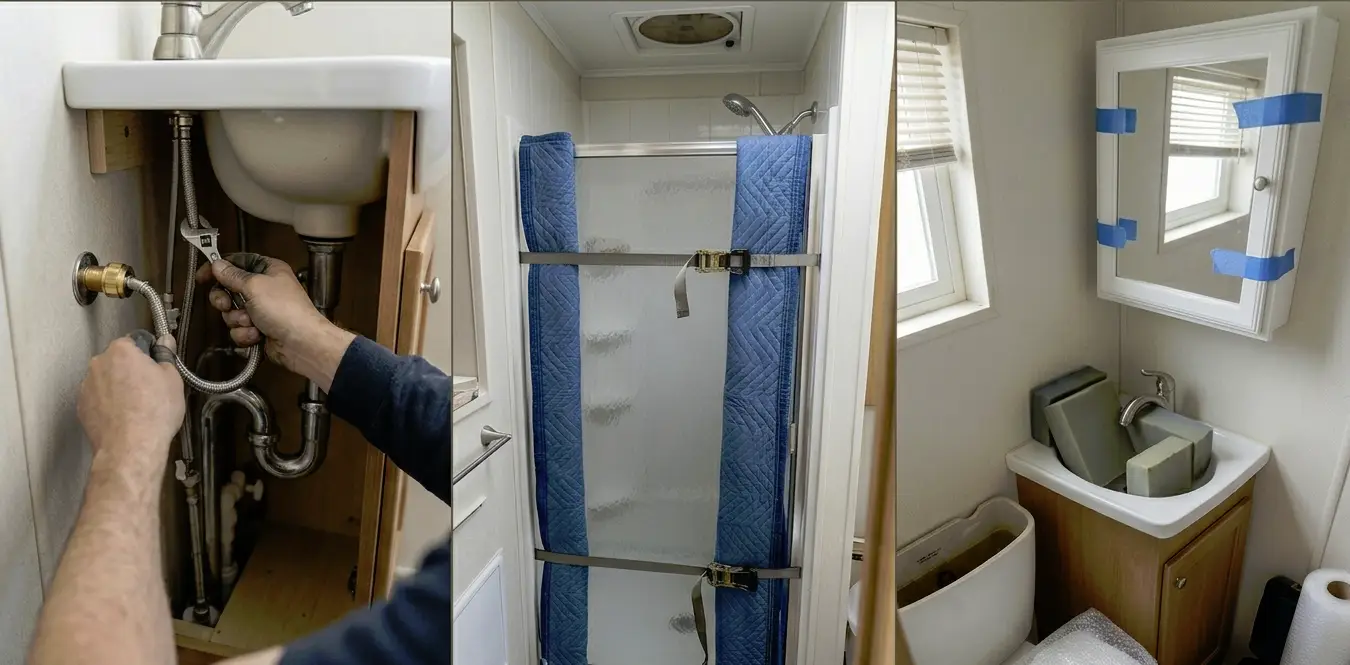
Image Source: Google Gemini
Mastering the Utility Disconnection Strategy
The very first step in preparing your tiny bathroom for transport is isolating the utility connections to prevent accidental leaks or electrical shorts. It’s a good time to see how the whole structure is holding up, especially if you took the DIY approach to building it in the first place.
You must shut off the main water supply and disconnect any external hoses or shore power lines that feed the bathroom pod. This step protects the internal plumbing framework from sudden pressure surges during teardown.
Once the main line is safely shut off, you need to eliminate every drop of residual water trapped in the pipes. Open all sink faucets, shower valves, and toilet flush levers to let gravity completely drain the system. Leaving water in the lines during transit creates sloshing forces that strain pipe joints, and it poses a major freezing risk if you are moving through colder climates.
Draining the Water Heater Pod
Your dedicated water heater requires special attention because it holds a significant amount of heavy, stagnant water and must comply with government regulations. Locate the low point drain valves on your water heater tank and connect a short garden hose to direct the water safely outside. For tiny homes equipped with a tankless water heater, you will need to utilize a small utility pump to run a descaling solution through the system before blowing out the lines with compressed air.
Capping Internal Plumbing Lines
After the water is fully drained, unthread your external supply lines and seal the intake ports with threaded brass caps. You should also insert removable rubber expansion plugs into the gray-water sink drains and the main shower drain opening. This prevents residual moisture from splashing upward into your living space and blocks highway drafts from pushing sewer gases back up through the p-traps.
Protecting Fixtures and Glass Elements
Tiny home bathrooms rely heavily on space-saving designs, often featuring lightweight porcelain or tempered glass. These materials are highly susceptible to cracking under continuous highway vibrations. You must immobilize every moving part and wrap fragile surfaces in shock-absorbing materials.
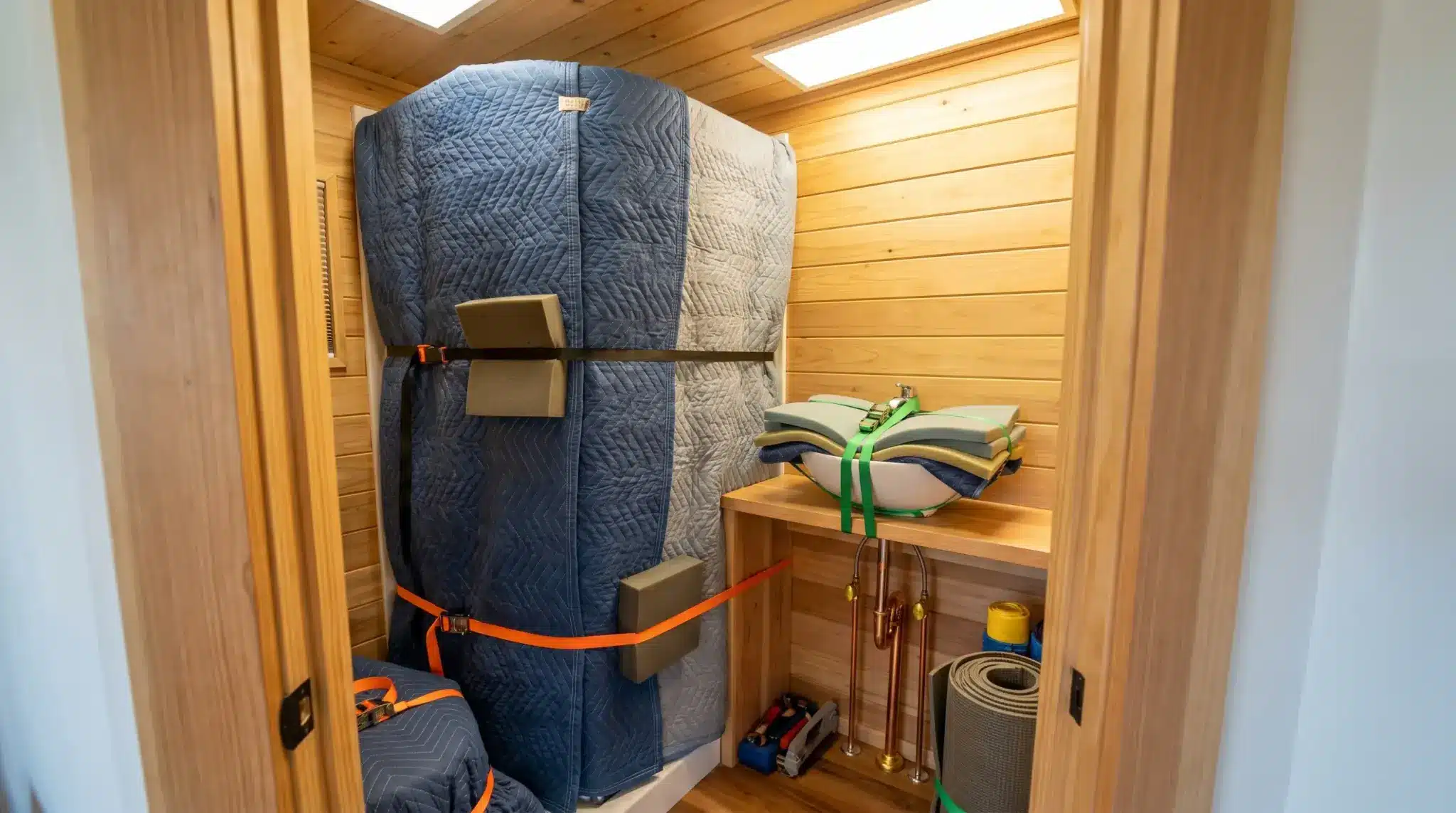
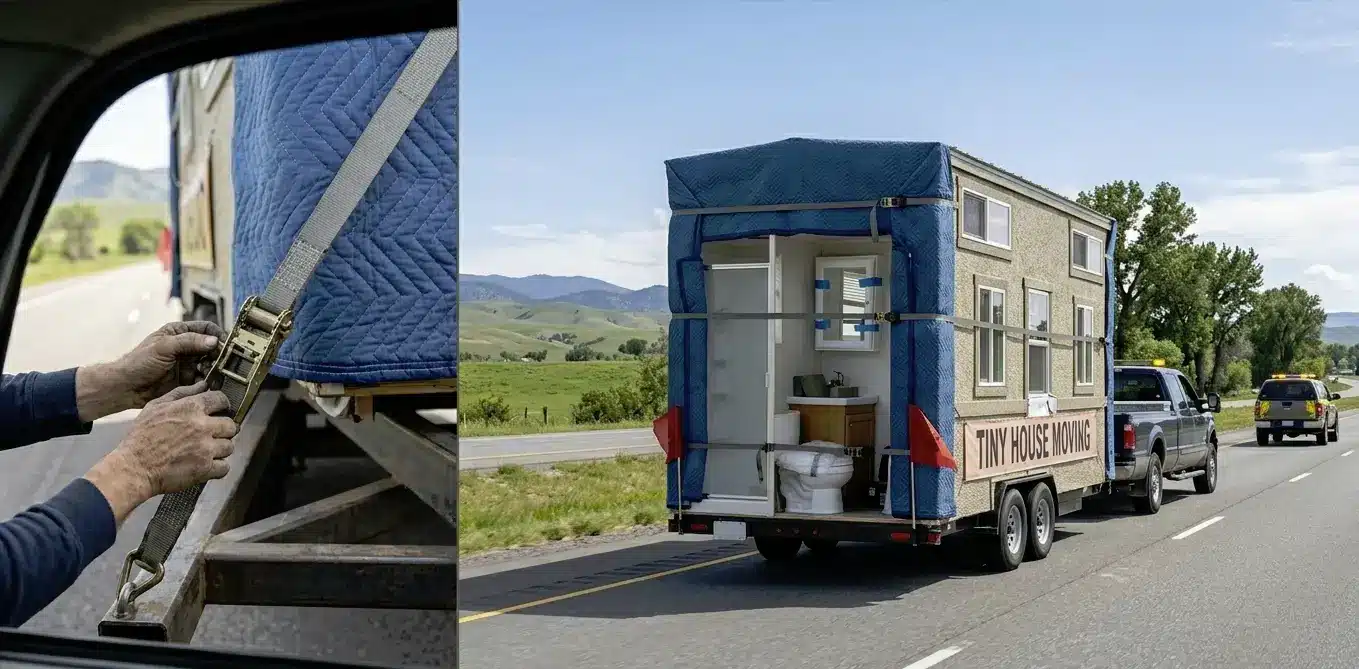
Shower doors made of tempered glass are notorious for shattering during transit if they are allowed to slide freely. Wrap the entire glass panel in thick moving blankets and secure it tightly to the shower wall using heavy-duty bungee cords or ratcheting cargo straps. If your bathroom features a porcelain toilet, remove the heavy tank lid, wrap it separately in bubble wrap, and store it safely on the floor.
The interior of your bathroom must be completely packed down to prevent loose projectiles from flying during the journey. You can use this checklist to ensure no loose items damage your finishes:
- Remove all glass soap dispensers, mirrors, and decorative shelving from the walls
- Place thick foam blocks inside the sink basin to support the faucet spout
- Tape all medicine cabinet doors shut using low-residue painter’s tape
Minimizing Post Move Plumbing Vulnerabilities
The physical stress of a long road trip can loosen threaded fittings and degrade older rubber seals. When you arrive at your new destination, you must perform a rigorous inspection before restoring full water pressure to the home. Small hairline cracks in plastic P-traps or loose water supply lines can quickly cause mold growth behind your walls if they go unnoticed.
Take the time to examine every exposed joint underneath your bathroom sink and behind the shower access panel. Look for signs of stress whitening on plastic plumbing lines or small droplets of water near connection points. If you notice any worn-out washers or cracked fittings, replace them immediately with high-quality brass components to ensure long-term durability.
Planning a quick post-move refresh or small bath reconfiguration is the perfect opportunity to address layout inefficiencies or outdated fixtures. If you discover extensive hidden water damage or decide that your current compact setup needs a professional layout optimization, it is wise to partner with an experienced team specializing in quality bathroom remodeling projects. A professional can help you redesign the space with durable, transit-ready materials that withstand the rigors of mobile living.
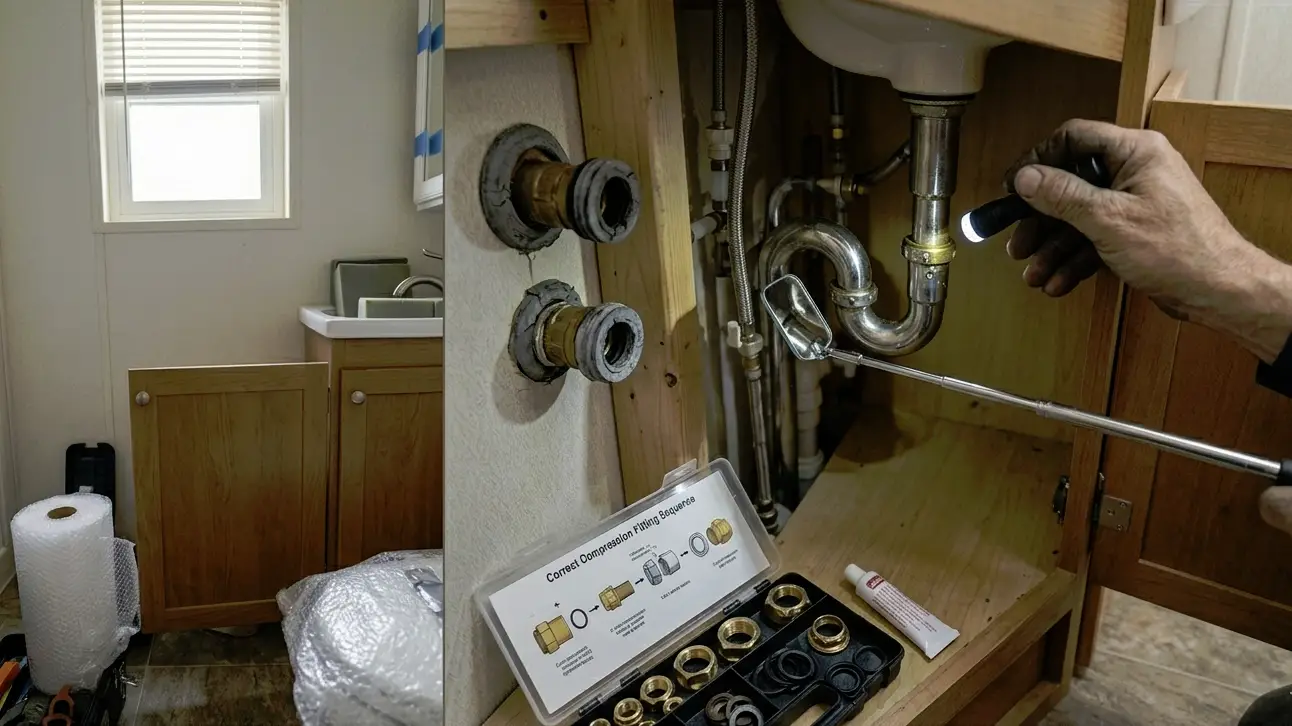
Image Source: Google Gemini
Executing the Post Transit Leak Assessment
Once your tiny home is perfectly leveled and stabilized at the new site, you can begin restoring your bathroom utilities. Reconnect your external water supply hose carefully, but leave the main interior shutoff valves closed at first. This allows you to check the incoming pressure line for any immediate issues before introducing water to the interior fixtures.
Slowly open the main water valve just a quarter of the way to gradually pressurize the bathroom system. Walk through the bathroom and listen closely for any hidden hissing sounds that indicate escaping air or pressurized water leaks behind the paneling. Keep the water pressure low for the first ten minutes while you test the toilet flush mechanism and run the shower valve.
If the entire system remains dry after this initial testing period, you can safely open the water valves fully. Keep a close eye on the bathroom floor and cabinet interiors for the first twenty-four hours of regular use. Finding a small leak early prevents serious structural rot and ensures your mobile lifestyle remains comfortable and worry-free. Check out our blog for more expert guides to all types of tiny home, transport, and freight-related topics.