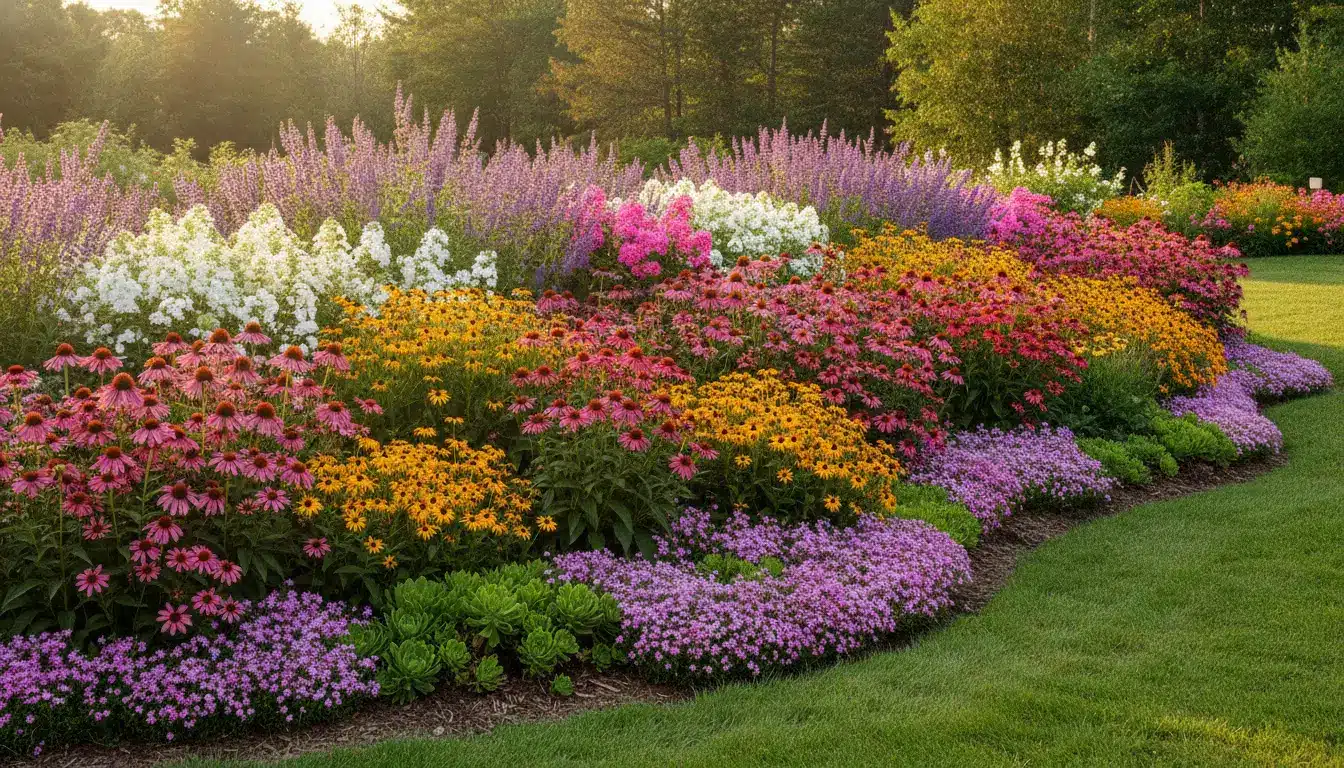
Most flowering gardens look great for three weeks in June and then go quiet. A well-planned perennial garden doesn’t do that. With the right plant selection and a bit of layering logic, you can have something blooming from early April through October without replanting anything each year.
Here’s how to build one properly.
Start With Your Site Conditions, Not the Plant Catalog
Before you pick a single plant, walk your yard at three different times of day and note where the sun actually falls. A bed that looks sunny at noon might only get four hours of direct light. That number matters more than any other factor when choosing perennial plants.
Most perennials fall into three light categories: full sun (6+ hours), part shade (3 to 6 hours), and shade (under 3 hours). Mixing plants with incompatible light needs in the same bed is the most common reason perennial gardens fail in the first two years.
Soil drainage is the second factor people skip. Push a screwdriver into your bed after a rain. If it goes in easily, you have decent drainage. If the ground stays waterlogged for more than 24 hours, you’ll need to amend with organic matter or raise the bed before planting anything that doesn’t specifically tolerate wet feet.
Plan for Three Seasons of Bloom, Not One
The classic mistake is loading a bed with spring bloomers and ending up with bare stalks by July. A strong perennial garden has plants covering at least three windows:
Spring (April to May): Peonies, baptisia, and creeping phlox are reliable starters. Peonies need 6 to 8 hours of sun and take 2 to 3 years to hit full stride, so plant them where you intend to leave them.
Summer (June to August): Echinacea (coneflower), rudbeckia, and salvia carry the garden through the hottest stretch. Rudbeckia is drought-tolerant once established and flowers from July through September in most zones. Salvia rebloms if you cut it back by a third after the first flush.
Late season (September to October): Asters and sedums are the workhorses here. Sedums hold their shape through frost and give the bed structure well into November.
Layer by Height
A flat perennial bed looks unfinished. The general rule: tallest plants at the back, medium in the middle, ground-level plants at the front edge.
For a standard 5-foot-deep border:
- Back row (3 to 5 feet): Russian sage, tall phlox, Joe Pye weed
- Middle row (18 to 36 inches): Echinacea, rudbeckia, salvia, daylilies
- Front edge (under 18 inches): Creeping phlox, sedum, low-growing asters, ornamental grasses
Leave 18 inches between plants in the same row. They’ll fill in by year two, and overcrowding early is harder to fix than it looks.
Add Shade-Tolerant Plants to Fill the Gaps
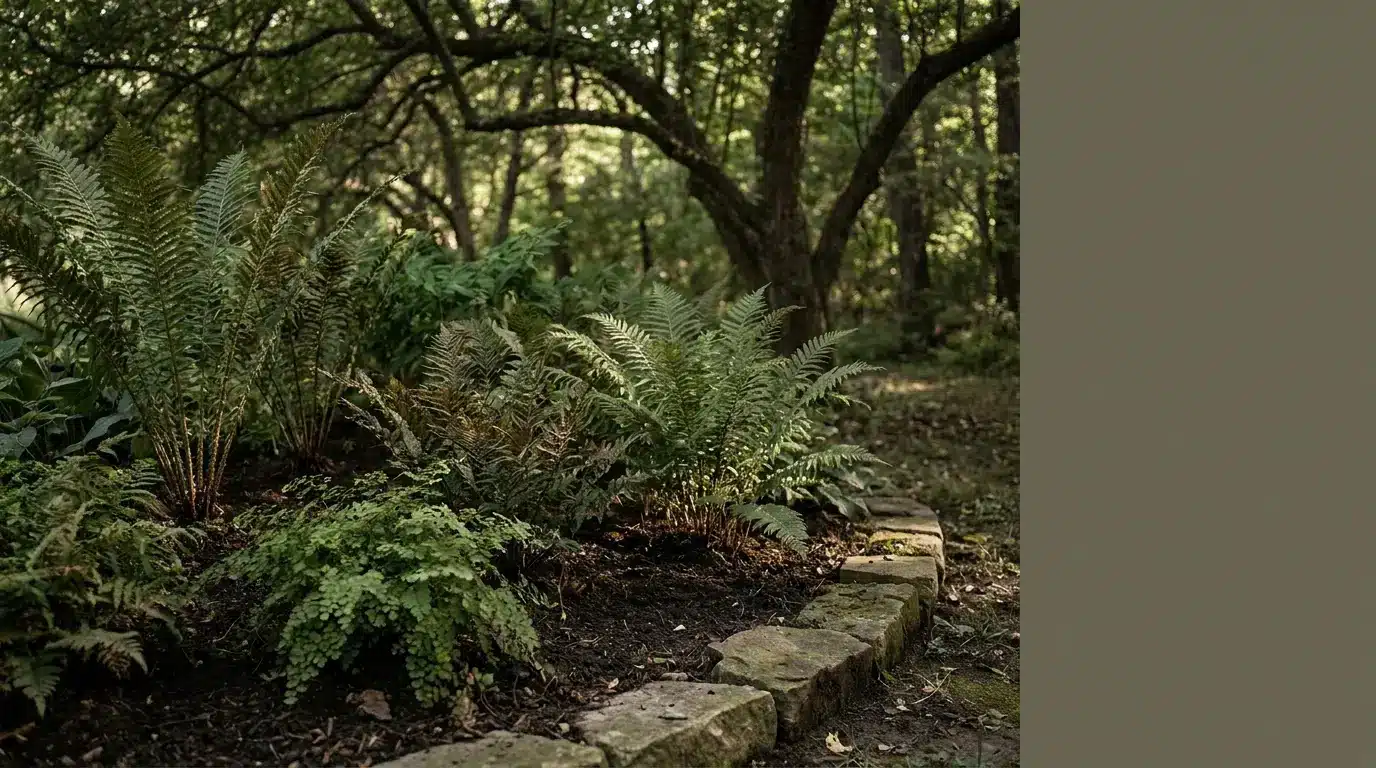
Most gardens have at least one shaded corner where sun-loving plants won’t perform. Rather than leaving it empty, use plants that actually prefer low-light conditions.
Ferns are the best default here. They ask for almost nothing once established, spread slowly to fill space, and stay green from late spring through first frost. A mixed planting of ostrich fern, cinnamon fern, and autumn fern gives you different heights and textures in a shaded bed without any of them competing with each other aggressively.
If you’re also working on a larger property and want to add canopy over time, pairing shade ferns with tree seedlings planted along the bed’s perimeter gives the understory plants the dappled light they prefer once the trees mature.
Hostas, astilbe, and hellebores are solid companions for ferns in part shade. Astilbe blooms in June and July and adds vertical color that ferns don’t provide on their own.
Soil Prep Before Planting
Dig 12 inches deep, not 6. Perennial root systems go deeper than annuals, and compacted subsoil is a long-term drag on plant health. Work in 3 to 4 inches of compost before planting and avoid walking on the prepared bed.
A soil test run through your county extension office costs under $20 and tells you pH, nutrient levels, and what amendments you actually need. If pH is off, fertilizer doesn’t fix it. Most perennials prefer a pH between 6.0 and 7.0.
Planting Timing
Spring and early fall are both good planting windows for perennials. Spring planting gives plants a full growing season to establish before winter. Fall planting (6 weeks before first frost) lets roots settle in while the soil is still warm, so the plant hits the ground running in spring.
Bare-root plants purchased online should go in the ground within a day or two of arrival. Keep them cool and damp in the meantime, not wet. Container plants have more flexibility but still benefit from planting on a cloudy day to reduce transplant stress.
First-Year Expectations
Perennials follow a predictable pattern: the first year they sleep, the second year they creep, the third year they leap. Year one, most plants put energy into root development rather than above-ground growth. Don’t judge the garden by what it looks like in October of the first season. Water consistently (every other day for the first week, then 2 to 3 times weekly depending on rainfall), keep weeds down, and let them settle.
By year two, you’ll see real spread. By year three, a well-chosen collection of perennials should be largely self-sustaining with minimal intervention.
Maintenance That Actually Matters
Deadheading extends bloom time on most perennials. Remove spent flowers before they set seed and many plants will push out a second flush. Rudbeckia, echinacea, and coreopsis all respond well to this.
Divide clumps every 3 to 5 years when they start showing dead centers or reduced flowering. Dig the entire clump, split it with a sharp spade, and replant the outer sections. This costs nothing and doubles your plant count.
Cut stalks to the ground in late fall or leave them standing until early spring. The seed heads feed birds through winter, and the structure catches snow in ways that can be visually interesting. Both approaches are valid.
FAQ
How many perennials do I need for a 10-foot border? A 10-by-5-foot bed needs roughly 20 to 25 plants at standard 18-inch spacing, assuming a 3-row layout with some variation at the edges. Buy in odd numbers — groups of 3 or 5 have more visual weight than pairs.
Can I mix perennials and annuals? Yes, and it’s often a good approach. Annuals fill gaps in the first year while perennials establish, and they can cover the quiet periods between perennial bloom times. Plant them as fillers, not as the focal point of the bed.
Do perennials come back every year without replanting? Most do, though lifespan varies. Long-lived perennials like peonies, hostas, and coneflower can persist for decades. Short-lived ones like lupine and delphinium may need replacing every 2 to 3 years. Check the plant tag before buying if longevity matters to your plan.
What perennials work in hot, humid climates? Rudbeckia, salvia, echinacea, daylilies, and lantana all handle heat and humidity well. Avoid plants bred for cool summers (like delphiniums) if you’re gardening in USDA zones 7 and above.