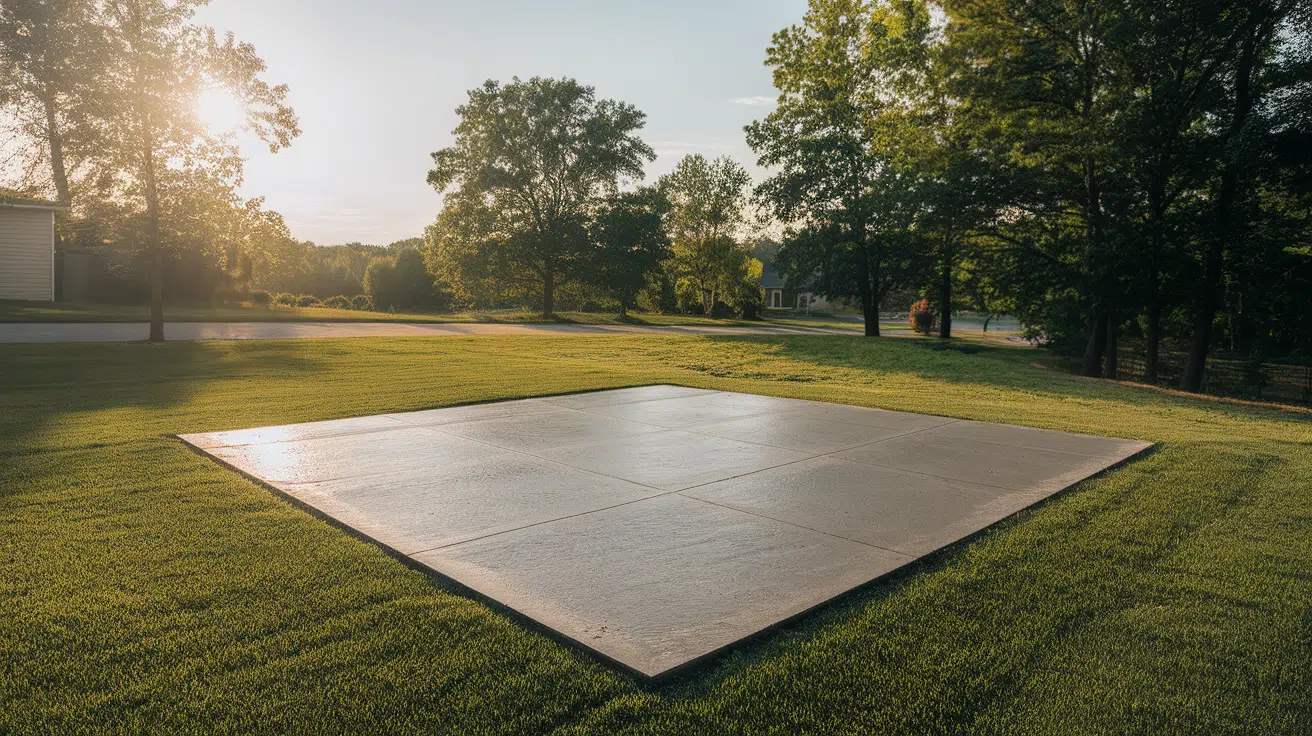
Pouring a concrete slab is one of the simplest ways to create a strong base for a patio, shed, garage, or home project.
Before getting started, most homeowners want a clear idea of what it will cost and what to expect.
This guide gives you easy-to-understand price ranges, real examples, and a quick breakdown of common slab sizes. By the end, you’ll have a solid starting point to plan your budget and avoid surprise costs along the way.
Average Concrete Slab Cost Per Square Foot
Most concrete slabs cost $6 to $12 per square foot to install. This range covers the basics for most residential projects, whether you’re pouring a patio, a shed base, or a small garage floor.
The price usually includes the concrete mix, basic prep work, framing, pouring, and finishing the surface.
Some projects may fall on the lower end of the range if they’re smaller and straightforward. Others land on the higher end when you need a thicker slab or a cleaner, smoother finish. But for most homeowners, the average cost stays right in the middle.
This quick estimate gives you a simple starting point before looking at costs by size or project type.
What Affects Concrete Slab Cost
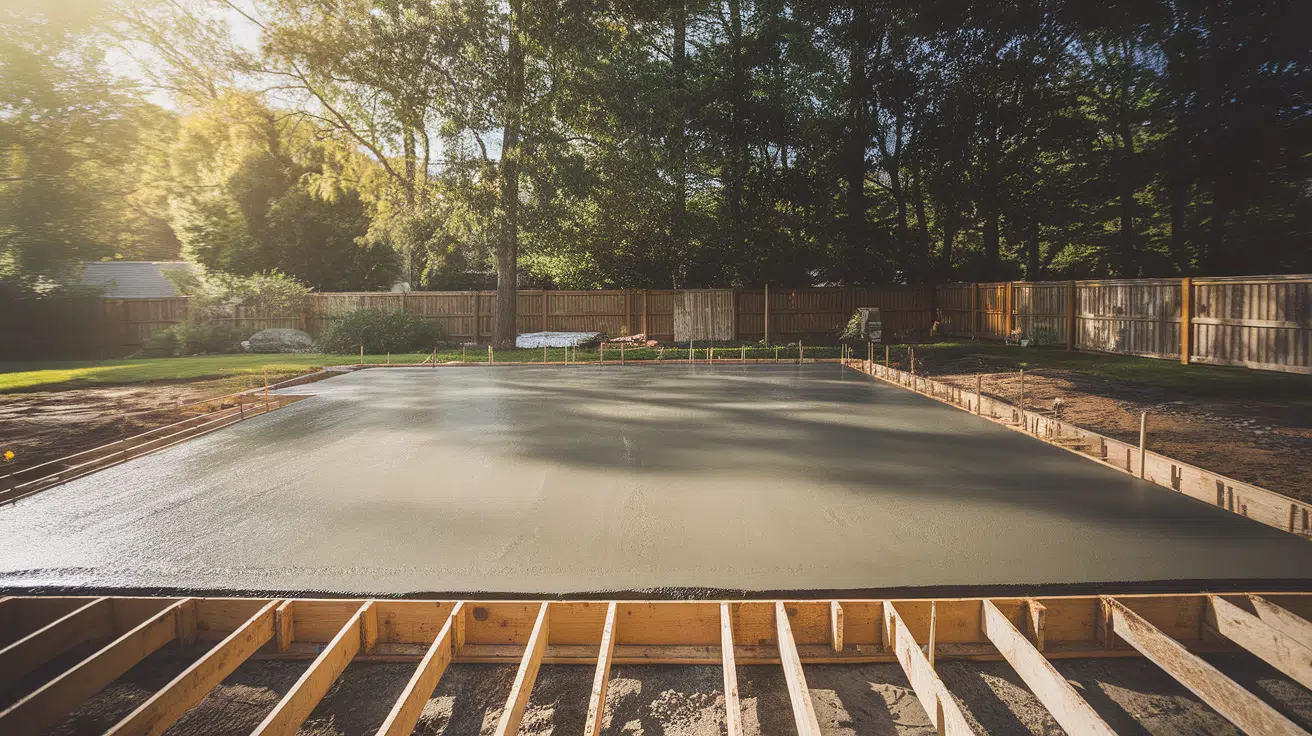
Concrete slab prices can shift a lot depending on what your project needs. Here are the main things that change the final cost:
1. Size, Thickness, and Concrete Volume
Bigger slabs use more concrete, more time, and more labor, which naturally raises the price. Thicker slabs also cost more because they require extra material to support a heavier weight. The amount of concrete you need is the biggest part of the total cost.
2. Reinforcement, Base, and Subgrade Prep
Some projects need added support like wire mesh, rebar, or fiber reinforcement. The base under the slab must also be leveled and compacted to prevent cracking.
When the ground needs extra prep work, the overall price goes up. Extra support and prep help the slab last longer and stay strong over time.
3. Finish Type and Appearance
A simple broom finish is usually the most affordable. Smooth, polished, or decorative finishes cost more because they take additional tools, skill, and time.
Stamped or colored concrete can raise the price even more. Choosing a finish often comes down to your budget and the look you want.
4. Labor Rates and Accessibility
Labor makes up a big part of slab cost, and rates can vary by region. If your yard is hard to access or requires special equipment to deliver the concrete, it may add to the price.
Easier projects tend to stay on the lower end of the range. Simple, open spaces usually lead to quicker and cheaper installs.
Concrete Slab Cost By Size
Knowing the cost by size makes planning easier, especially for common projects like patios, sheds, and garages.
| Slab Size | Square Feet | Average Cost Range |
|---|---|---|
| 10×10 | 100 sq ft | $600 – $1,200 |
| 12×12 | 144 sq ft | $860 – $1,700 |
| 20×20 | 400 sq ft | $2,400 – $4,800 |
| 24×24 | 576 sq ft | $3,400 – $6,000+ |
| 30×30 | 900 sq ft | $5,400 – $10,800 |
These numbers give you a quick starting point. As you look at your own project, remember that the final cost will depend on your exact size and needs.
Concrete Slab Cost By Project Type
Different projects need different types of concrete slabs, so the cost can vary quite a bit.
| Project Type | Typical Cost Range |
|---|---|
| Shed or Small Outbuilding | $600 – $4,800 |
| Patio Slab | $4 – $12 per sq ft (basic) |
| Garage Floor Slab | $2,400 – $6,900+ |
| Driveway Slab | $6 – $15 per sq ft |
| House Foundation Slab | $6 – $14 per sq ft |
These ranges help you compare different project types at a glance. Once you know your project’s purpose and size, you’ll have a much clearer idea of what to budget.
Materials and Labor Cost Breakdown
It helps to know where your money actually goes when you pour a concrete slab. Here’s a quick breakdown of the main costs involved.
- Materials ($3–$7 per sq ft): This includes the concrete mix, gravel base, forms, and basic reinforcement. Higher-strength concrete or thicker slabs push this number up.
- Labor ($3–$5 per sq ft): Labor covers framing, pouring, leveling, and finishing the slab. Skilled labor is important because good finishing helps prevent cracks and uneven spots.
- Optional Add-Ons ($0.50–$10+ per sq ft): Extras like rebar, vapor barriers, insulation, or decorative finishes add to the total price. These upgrades are optional but can help with strength or appearance.
Understanding this breakdown makes it easier to compare quotes and spot what you’re really paying for.
Simple Concrete Slab Cost Calculator
You can estimate your concrete slab cost with one quick formula. All you need is the size of your slab and the average price per square foot.
Formula: Square feet × Cost per sq ft = Total cost
For example, a 10×10 slab is 100 square feet. If the average price is $8 per square foot, the total cost would be: 100 sq ft × $8 = $800
You can use this same formula for any size – just plug in your own measurements. Most basic slabs fall in the $6 to $12 per square foot range, so sticking to this number gives you a good starting estimate
DIY vs. Hiring a Concrete Pro
Some homeowners like tackling small concrete jobs themselves, while others prefer bringing in a pro. Here’s a quick look at what each option offers.
When DIY Makes Sense
- Good for small, simple slabs like a small shed pad or walkway
- Helps you save on labor costs
- Works best if you already have basic tools
- Fine when the ground is level and the project doesn’t need special reinforcement
When Hiring a Professional is Better
- Best for bigger slabs like garages, patios, or driveways
- Needed when the slab must meet building codes
- Helpful for tricky sites with slopes or drainage issues
- Ideal if you want a clean finish or decorative concrete work
Note: A simple way to save money is to do basic site prep yourself, like clearing the area, while still hiring a pro to handle the pouring and finishing.
Conclusion
Pouring a concrete slab is one of the most reliable ways to build a strong base for any project, big or small.
Once you know the cost per square foot and the price for different slab sizes, it becomes much easier to plan your budget and avoid surprises.
No matter if you’re putting in a patio, a shed floor, or a full garage slab, having a clear idea of the cost helps you make better choices and stay on track.
If you’re ready to move forward, start by measuring your space and comparing a few quotes from local concrete pros.
A quick conversation can give you a solid estimate and help you choose the best option for your project.