Choosing a countertop water filter gets confusing fast. One model promises stronger filtration, another costs less, and several use completely different systems.
I know how hard it is to compare those claims when you just want cleaner water that fits your kitchen and daily routine.
The best countertop water filter should match your water concerns, available space, budget, and preferred filtration method.
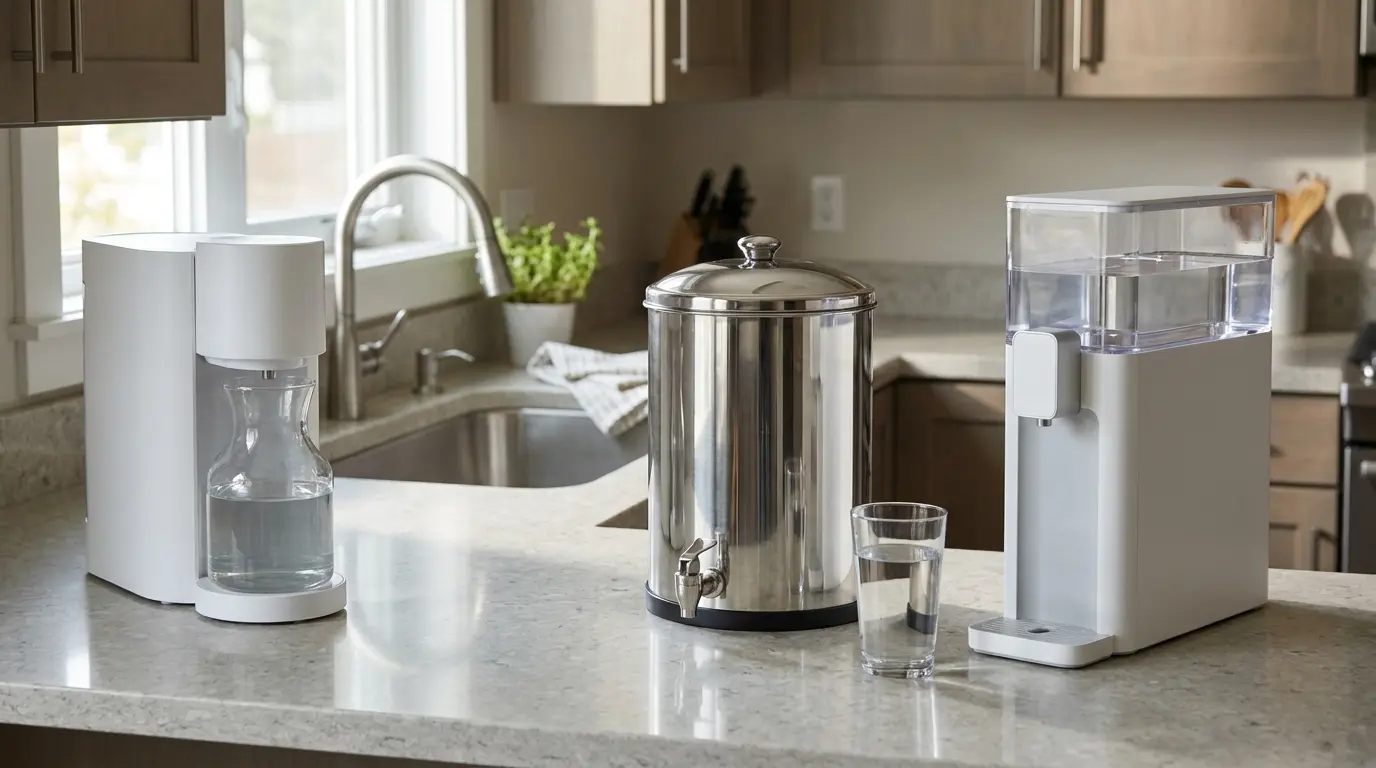
Here, you can compare reverse osmosis, gravity, carbon, and faucet-connected options without sorting through too many product details.
I also explain the key trade-offs, including capacity, power needs, wastewater, and contaminant reduction, so you can make a practical choice with more confidence.
What Should You Know Before Buying a Countertop Water Filter?
Before buying a countertop water filter, I always look at three things first: counter space, power access, and what is actually in the water.
These basics quickly narrow down your options. Faucet-direct filters work well if you want something simple connected to the tap.
Gravity filters require no plumbing or electricity, making them handy for rentals or flexible setups. Plug-in systems suit kitchens with a nearby outlet and enough counter space.
If you’re outfitting the rest of the counter at the same time, it helps to review a short list of everyday kitchen essentials before deciding how much space the filter itself can realistically take up. Then comes filtration.
Reverse osmosis, carbon, and ion exchange target different contaminants. Check your local water report first, then choose the filtration method that matches what you actually want removed. For many renters and off-grid setups, a gravity water filter is the simplest starting point.
What Are the Best Countertop Water Filters Right Now?
The top rated water filters include reverse osmosis, gravity, carbon, and faucet-connected models, each suited to different budgets, contaminants, spaces, and daily needs.
1. AquaTru Carafe
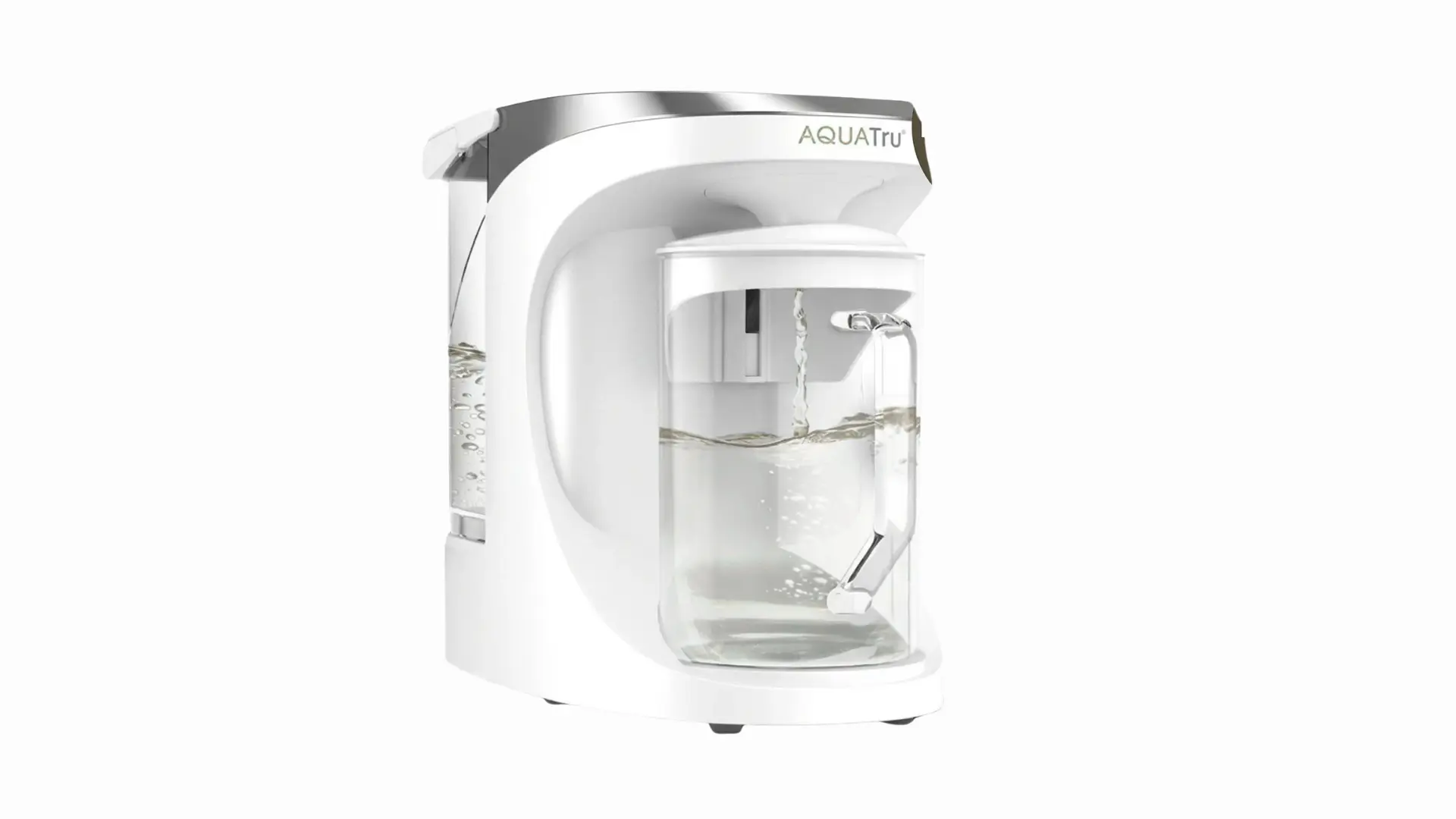
AquaTru Carafe combines four-stage reverse osmosis filtration with a removable glass carafe. It is certified to reduce 84 contaminants and keeps purified water easy to store in the refrigerator.
Its compact countertop setup suits buyers who want broad filtration without installing a permanent under-sink system.
- Cost: $375
- Best for: Broad countertop filtration without under-sink installation
- Filter type: Four-stage reverse osmosis
- Capacity: 0.66-gallon tap tank and 64-ounce glass carafe
2. Brondell Cypress
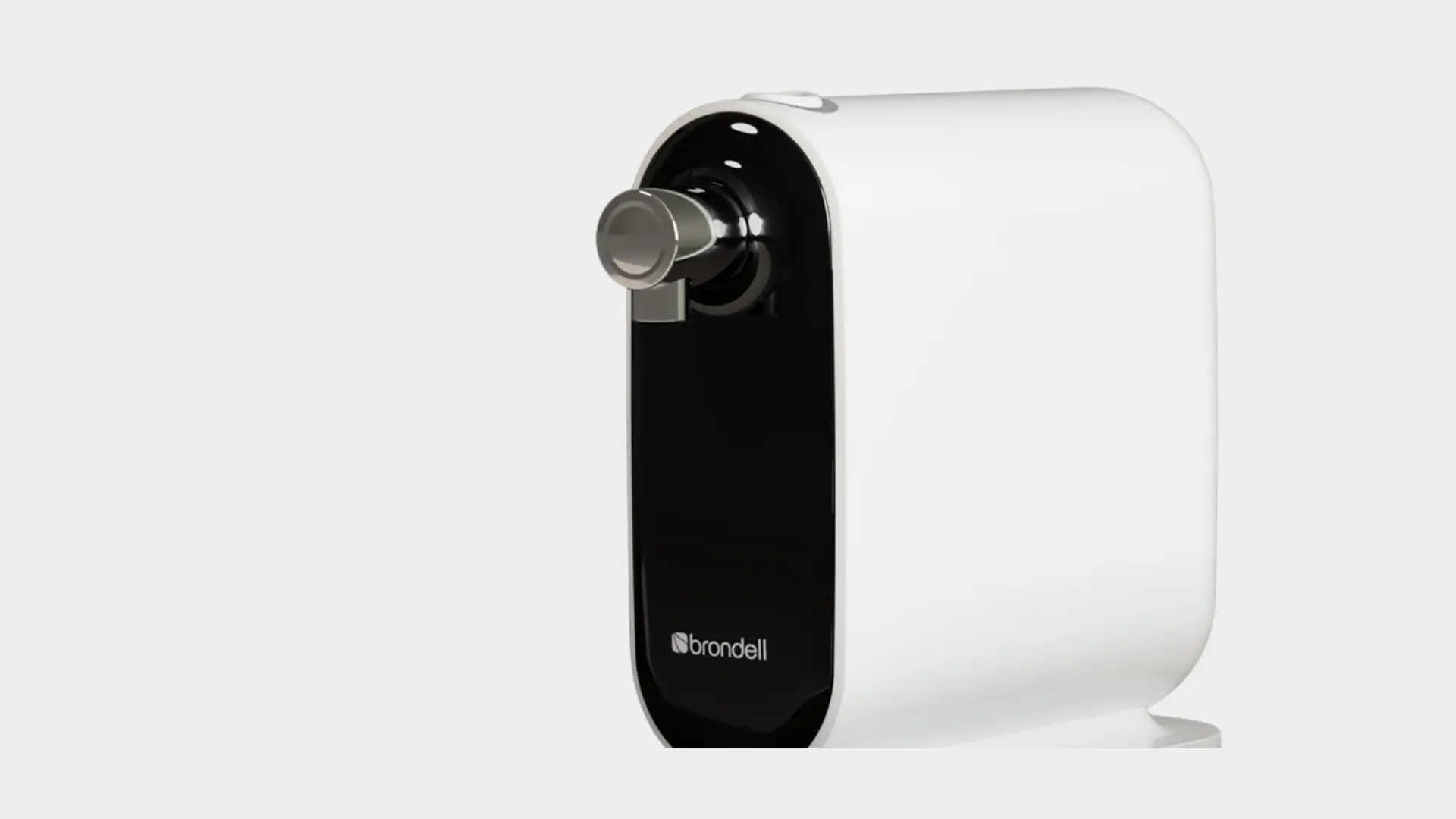
Brondell Cypress filters water directly from the faucet, so there is no reservoir to refill. Its three-stage carbon and Nano Trap system provides filtered water on demand while taking up little counter width.
It works well for households that prefer a faucet-connected setup over pitcher-style filtration.
- Cost: $194.99
- Best for: Households wanting faucet-direct countertop filtration
- Filter type: Three-stage carbon and Nano Trap filtration
- Capacity: Faucet-fed system, so there is no storage reservoir
3. Culligan Gravity With MaxClear
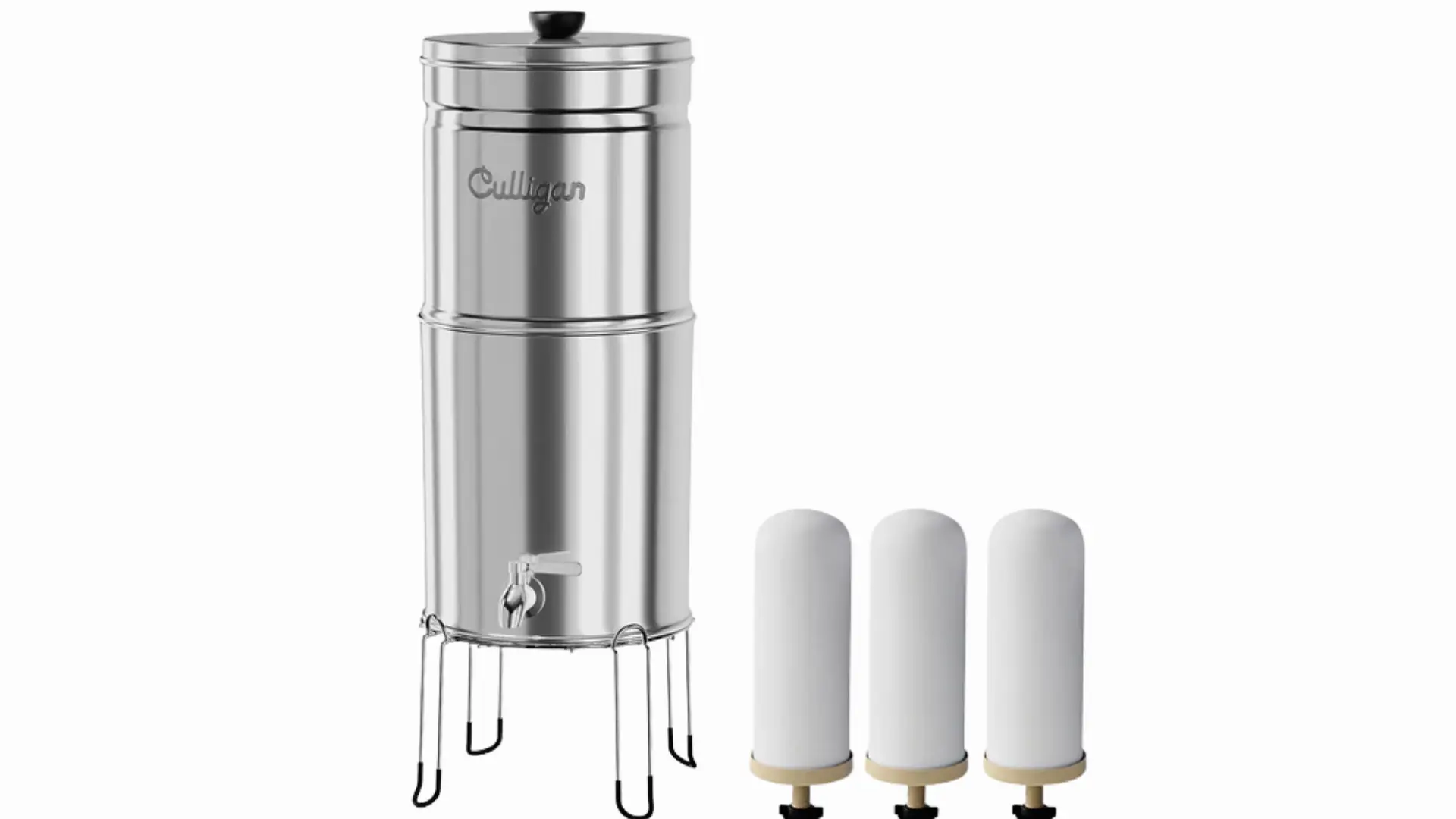
Culligan MaxClear keeps countertop filtration simple with a gravity-fed design that needs no plumbing or electricity.
Ceramic and carbon filtration sit inside a stainless-steel body, while two available sizes support different household needs. The larger Venture model makes more sense when several people use filtered water every day.
- Cost: Around $230, depending on size and configuration
- Best for: Families wanting filtration without plumbing
- Filter type: Gravity-fed ceramic and carbon filtration
- Capacity: 2.25 gallons for Scout or 3 gallons for Venture
4. Alca Pure Countertop RO Filter
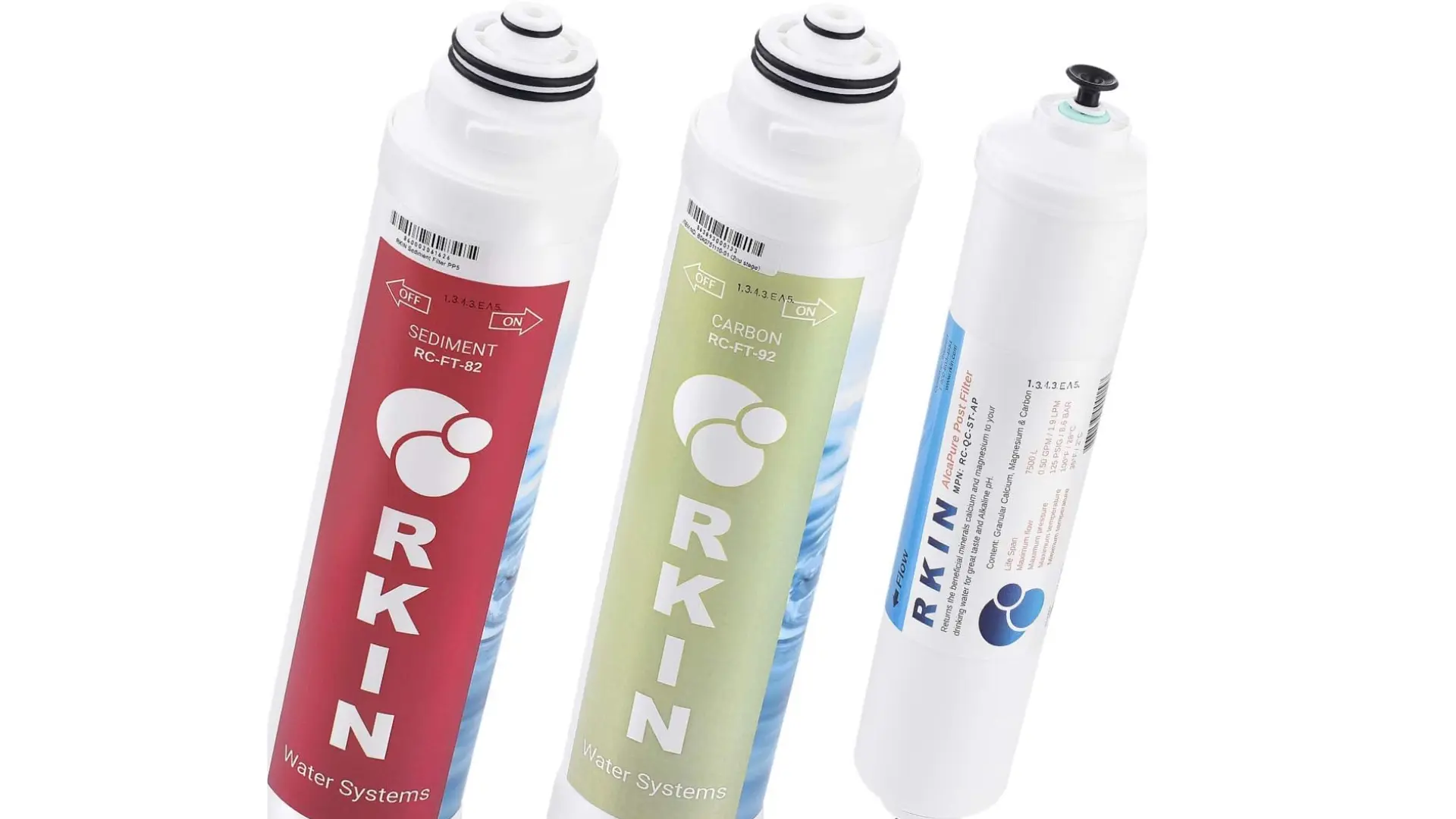
The AlcaPure Zero Installation Purifier combines reverse osmosis with an alkaline post-filter that adds calcium and magnesium back into purified water. It is especially useful when fluoride reduction is a priority.
The one-gallon tap-water reservoir gives households a practical countertop option without requiring a permanent installation beneath the sink.
- Cost: $369.95
- Best for: Fluoride-focused filtration with added minerals
- Filter type: Multi-stage reverse osmosis with alkaline post-filtration
- Capacity: 1-gallon tap-water reservoir
5. Brita Hub
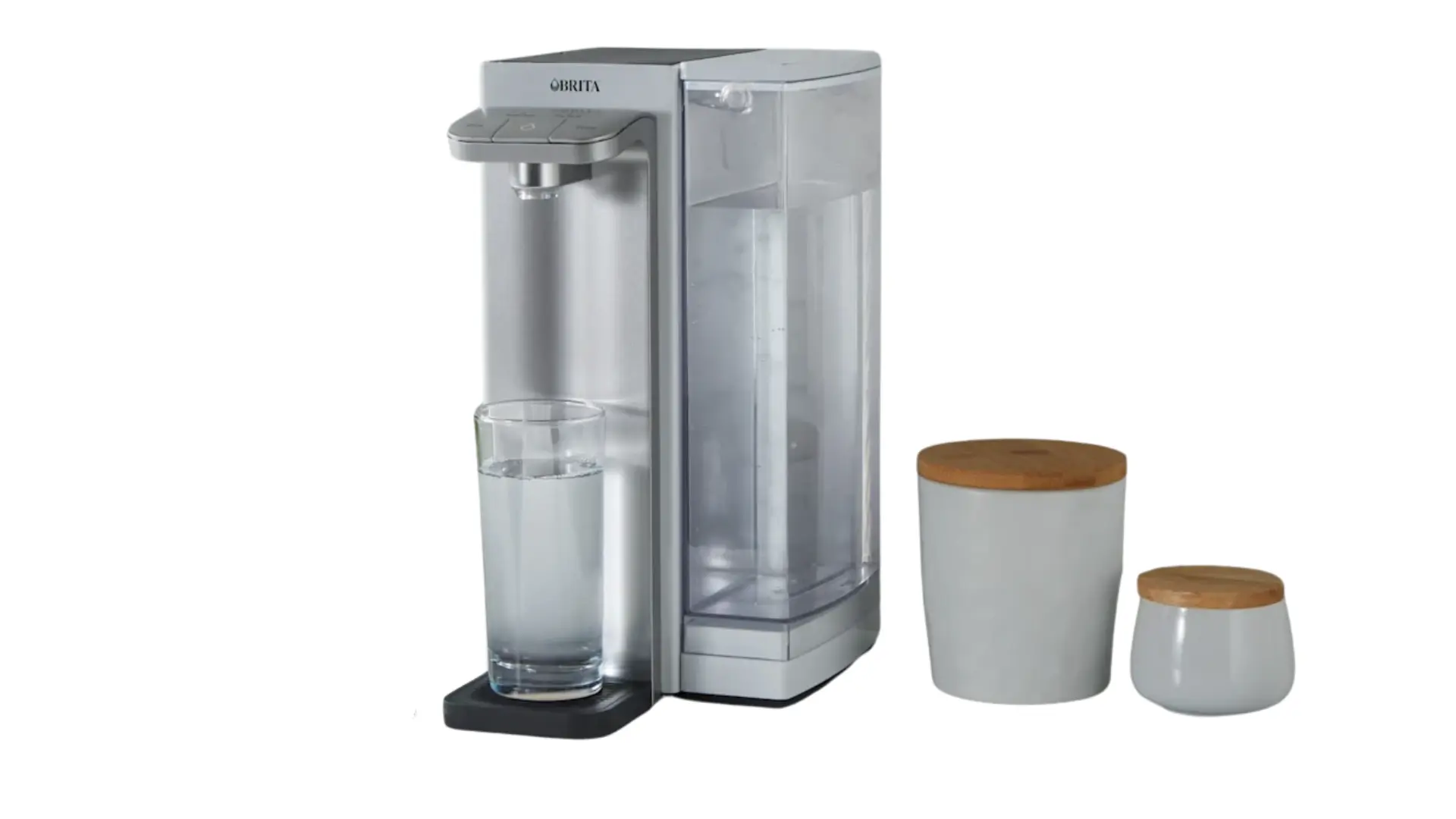
Brita Hub focuses on quick, convenient dispensing for everyday drinking. Instead of waiting for a gravity pitcher, fill the reservoir and press a button for filtered water.
Preset dispensing options make filling common glasses and bottles easier, while the 12-cup reservoir provides enough capacity for regular household use.
- Cost: $194.95
- Best for: Fast, convenient everyday dispensing
- Filter type: Powered carbon-based filtration
- Capacity: 12-cup reservoir
6. Waterdrop A2
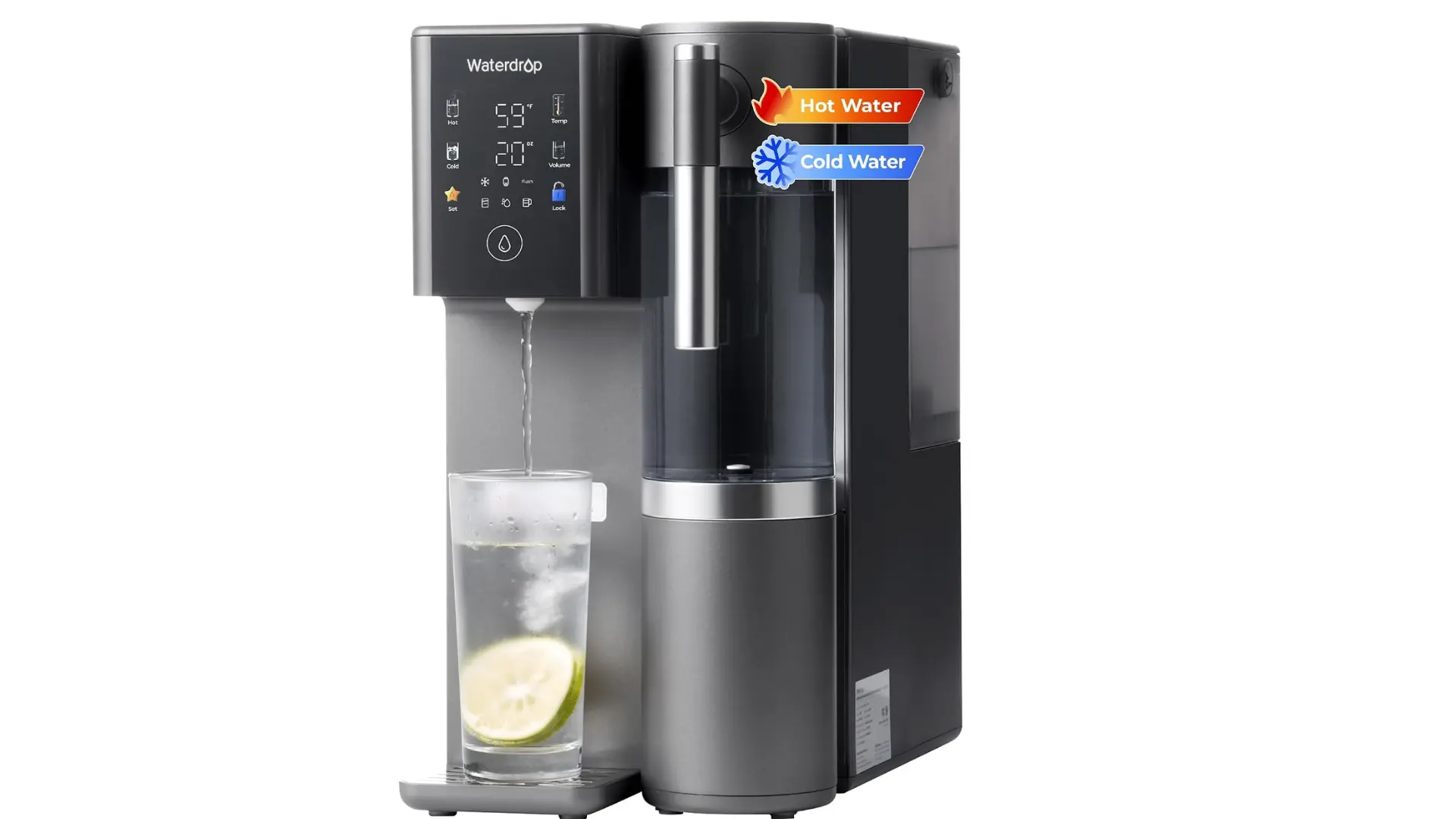
WaterDrop A2 combines five-stage reverse osmosis with hot and cold water functions.
The setup suits people who regularly prepare tea, coffee, or chilled drinks and want one countertop machine for several tasks. Its large feed tank and portable pitcher also reduce the need for frequent refilling.
- Cost: $409 sale price, $499 regular price
- Best for: Hot, cold, and purified water from one machine
- Filter type: Five-stage reverse osmosis
- Capacity: 159-ounce feed tank and 40-ounce portable pitcher
7. Big Berkey
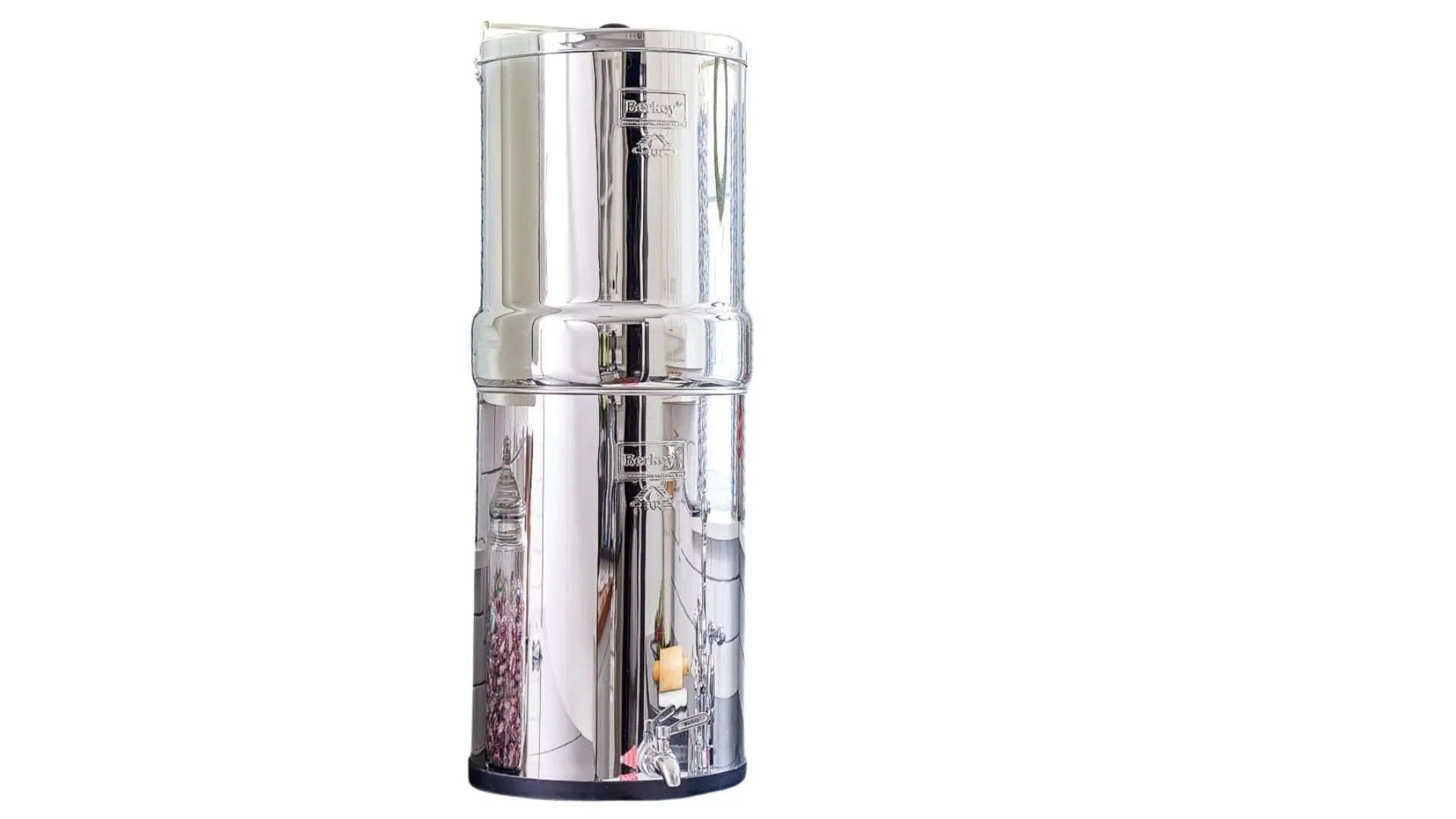
Big Berkey focuses on capacity and straightforward gravity filtration. Its stainless-steel chambers hold 2.25 gallons, making it useful for families or homes with higher daily drinking-water needs.
Because the system requires no plumbing or electricity, you can place it wherever you have enough usable counter space.
- Cost: Around $367
- Best for: Families and higher daily water use
- Filter type: Gravity-fed filtration
- Capacity: 2.25 gallons
8. LifeStraw Home Studio Dispenser
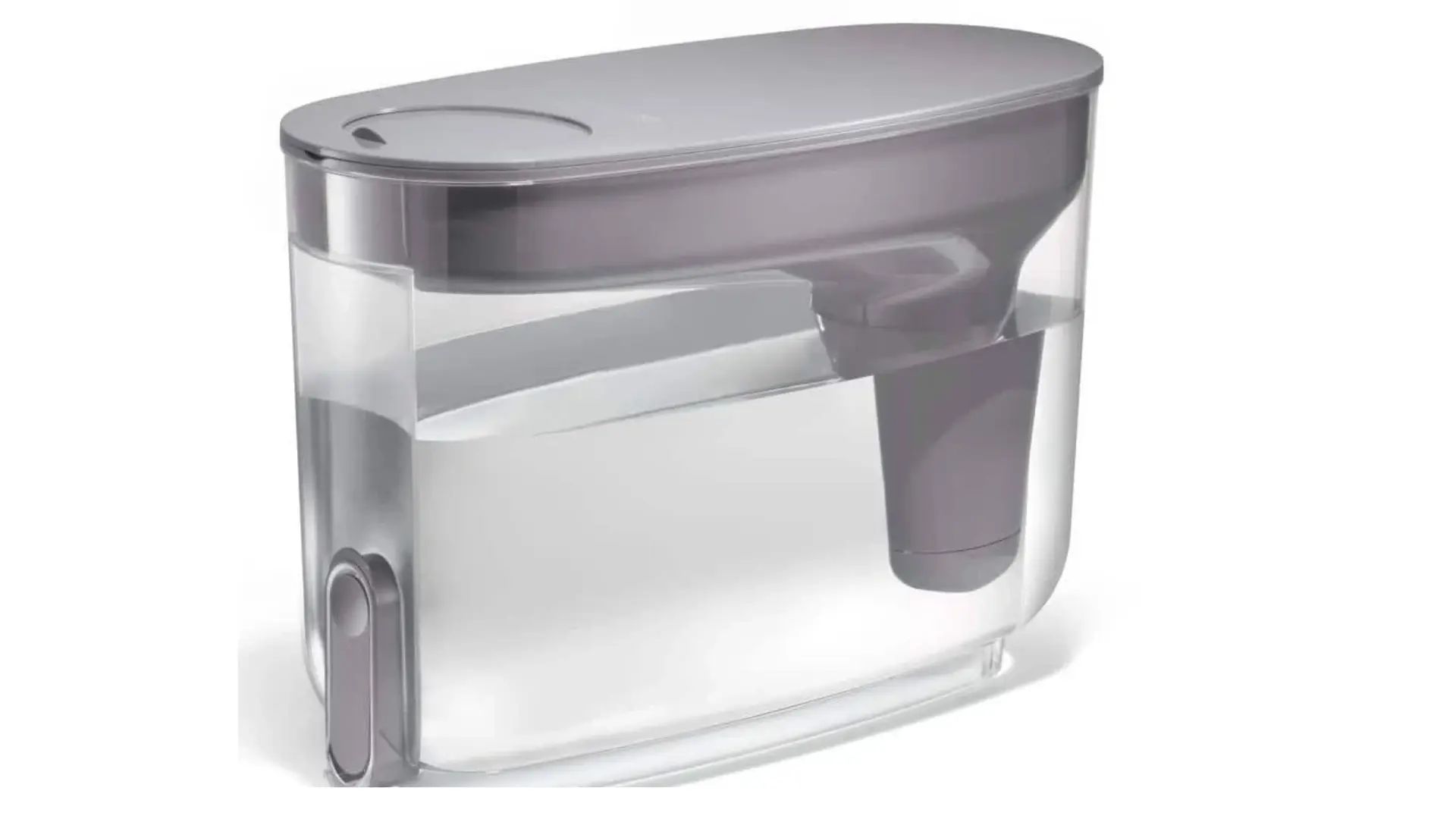
LifeStraw Home offers substantial filtration at a much lower price than many countertop reverse osmosis systems. Its slim gravity-fed dispenser holds 18 cups and can sit on a countertop or refrigerator shelf. It suits budget-conscious households that want easy filtration without plumbing, electricity, or a large countertop appliance.
- Cost: Around $65
- Best for: Budget-conscious households wanting simple filtration
- Filter type: Gravity-fed membrane and activated-carbon filtration
- Capacity: 18 cups, or 144 ounces
9. Aquasana Clean Water Machine
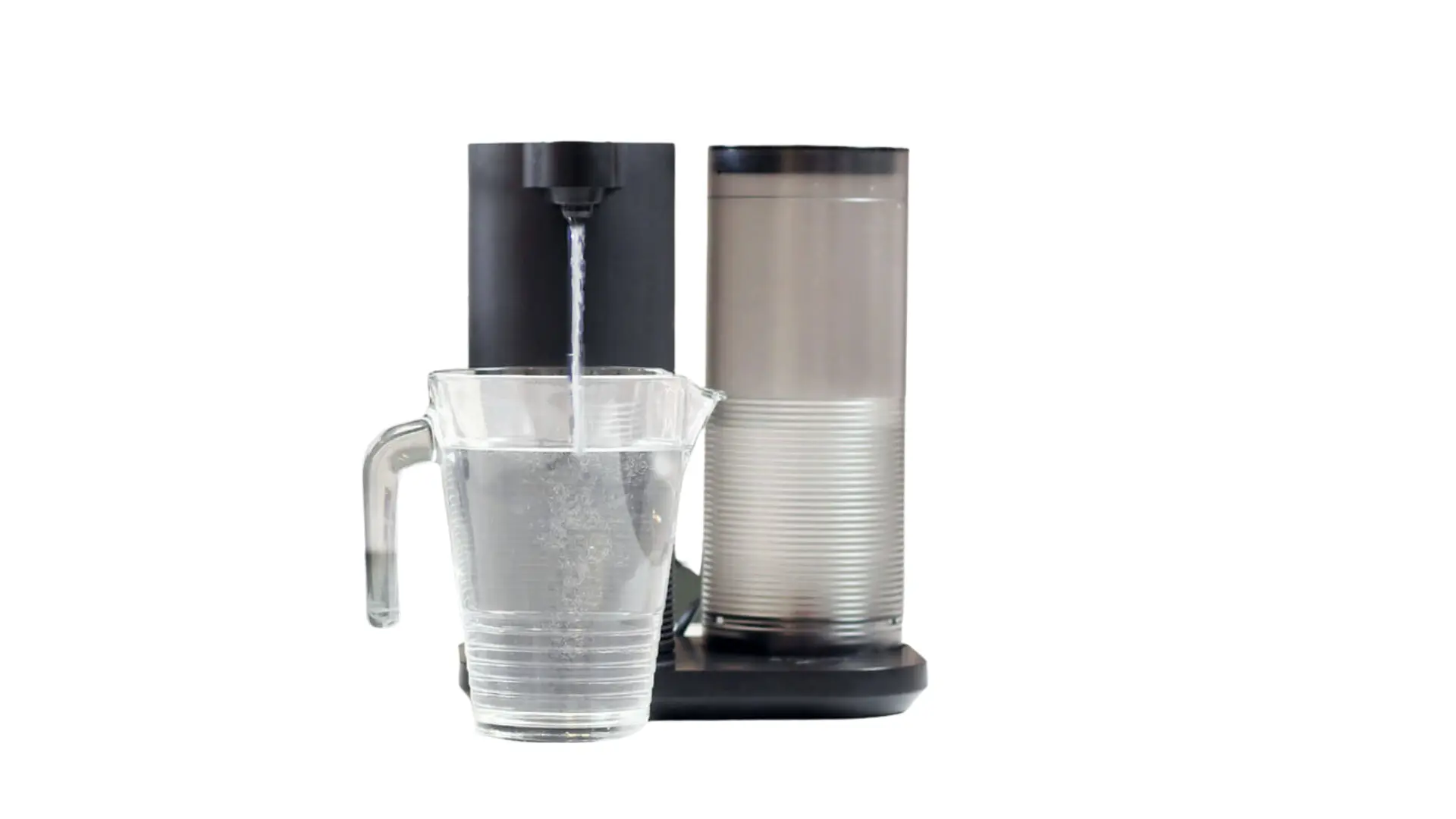
Aquasana Clean Water Machine provides powered filtration in a narrow countertop unit. Its 64-ounce tank dispenses filtered water quickly without the larger footprint of many reverse osmosis machines. That makes it a practical choice for apartments and smaller kitchens where counter space matters but fast dispensing remains important.
- Cost: $399.99
- Best for: Smaller kitchens needing fast countertop filtration
- Filter type: Powered Cellarium filtration
- Capacity: 64-ounce water tank
10. Boroux Legacy
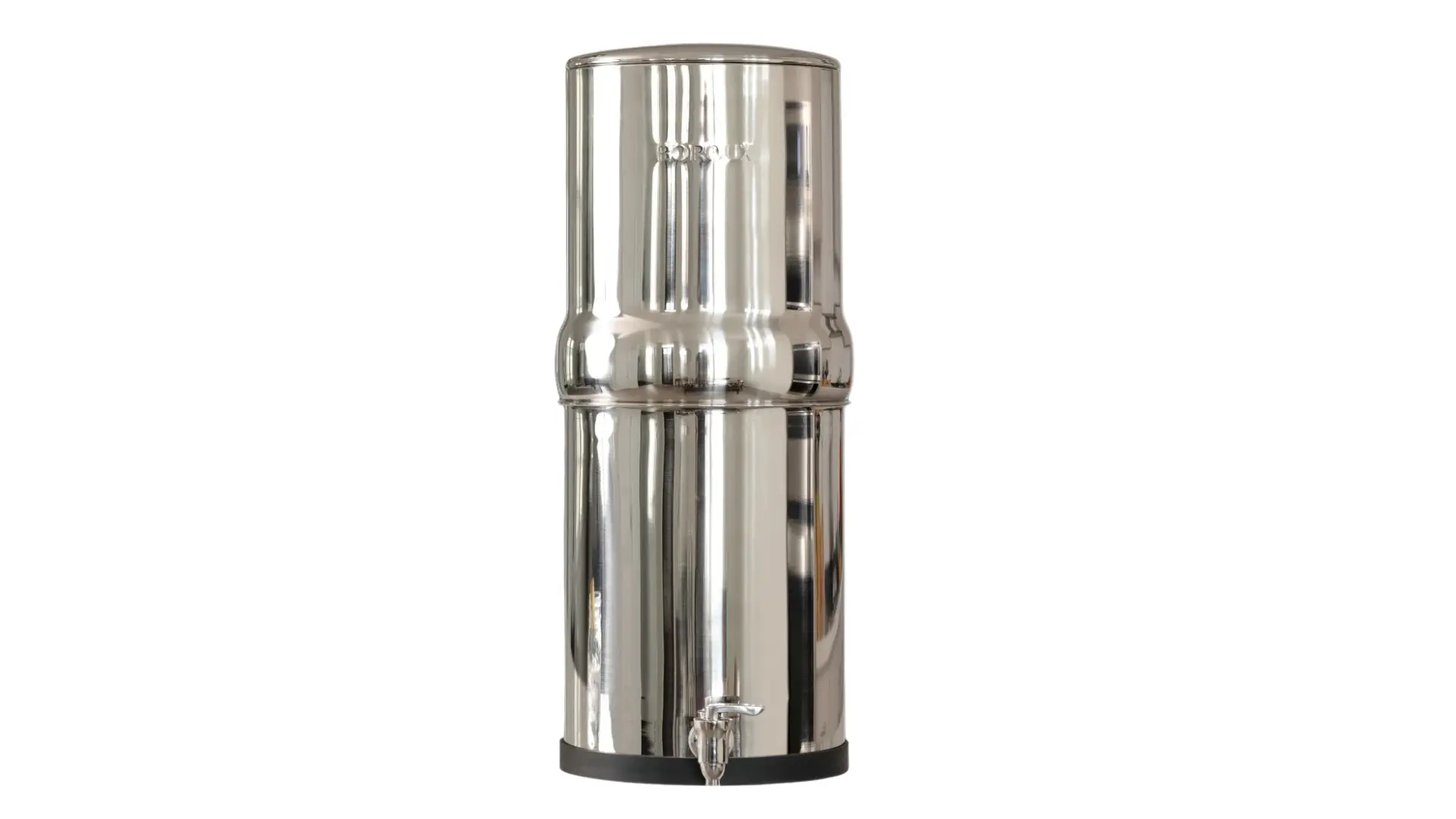
Boroux Legacy combines a three-gallon capacity with a polished stainless-steel body. The gravity-fed carbon system keeps operation straightforward while offering more water storage than many pitcher-style filters. It fits buyers who want a larger countertop system that can remain visible while avoiding a plastic-heavy design.
- Cost: $355 sale price, $399 regular price
- Best for: Buyers balancing appearance with large capacity
- Filter type: Gravity-fed carbon filtration
- Capacity: 3 gallons
11. Santevia Filter
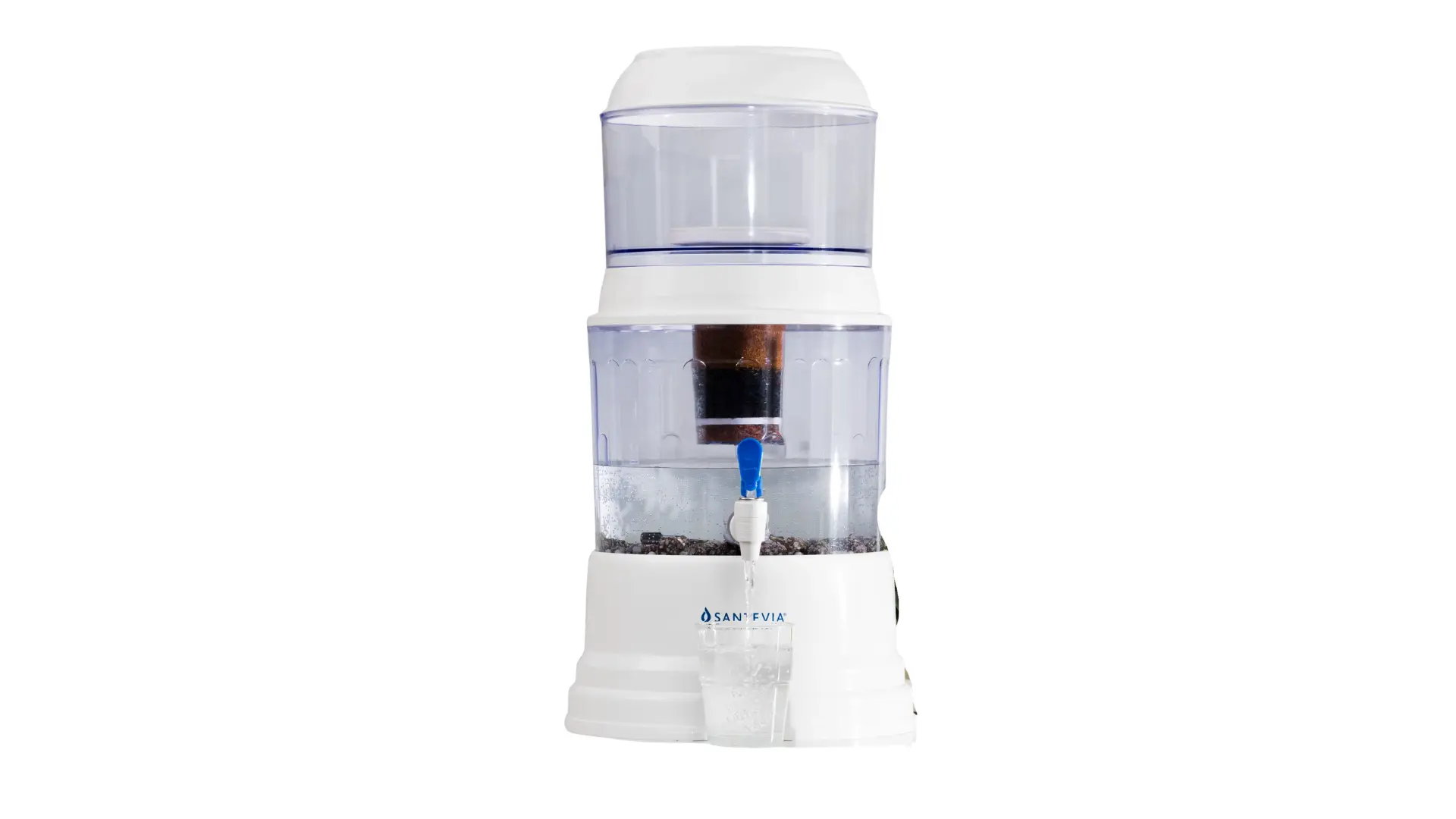
Santevia filters water while adding calcium and magnesium through mineral stones. Its multi-stage gravity system may suit households that want cleaner drinking water but prefer to keep more mineral character than intensive purification methods can leave behind. The 2.6-gallon capacity also supports regular family use without constant refilling.
- Cost: $179.99
- Best for: Households wanting filtered, mineral-enhanced water
- Filter type: Multi-stage gravity filtration with mineral stones
- Capacity: 2.6 gallons, or 10 liters
12. Bluevua Reverse Osmosis Filter
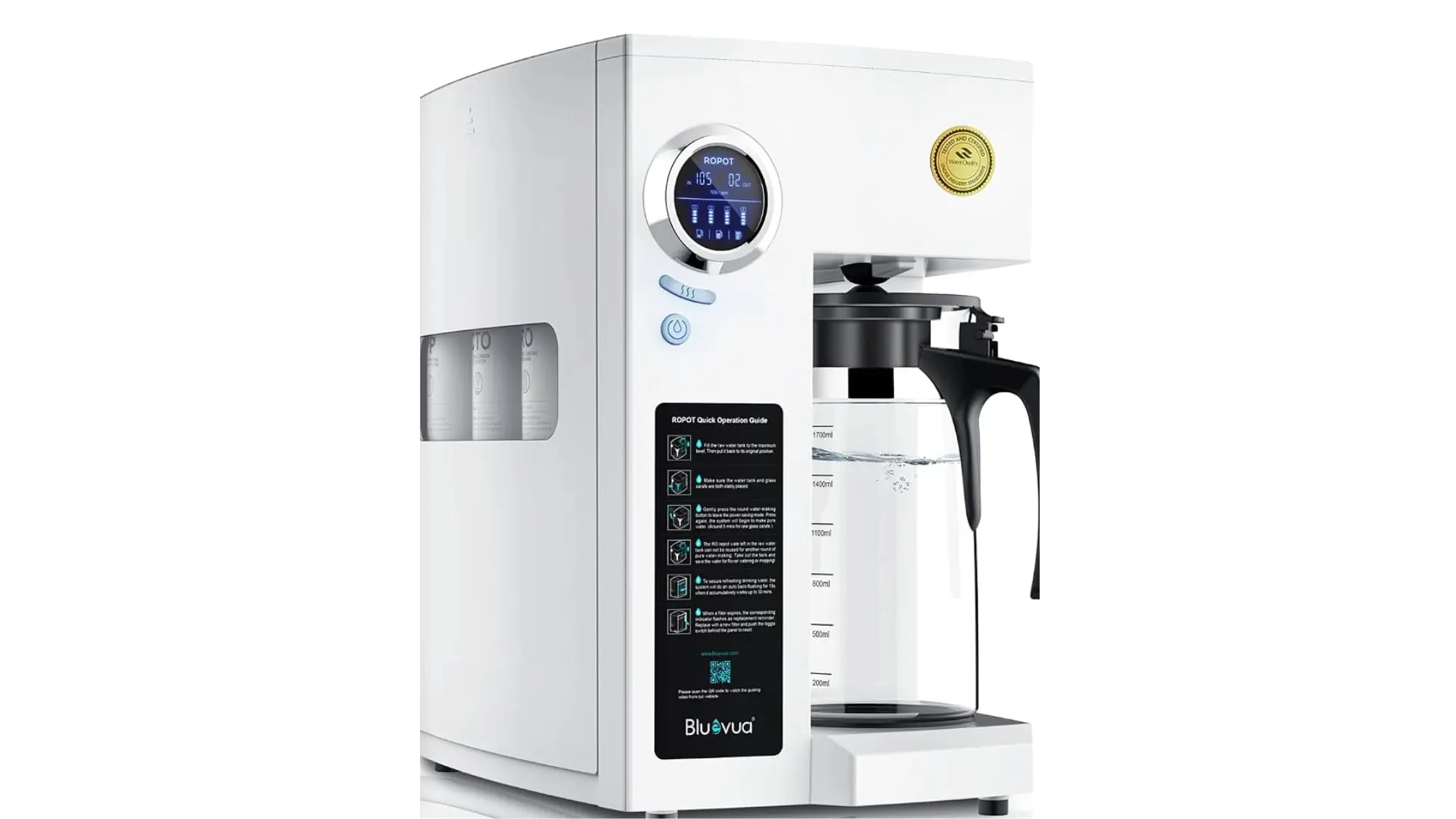
Bluevua ROPOT pairs countertop reverse osmosis with a removable 1.7-liter glass carafe. After filtration, the carafe can move directly to the table or refrigerator instead of keeping every glass beside the machine.
It suits buyers who want purified water with more flexible serving and storage options.
- Cost: Around $299, depending on version and promotion
- Best for: Buyers wanting purified water in a portable glass carafe
- Filter type: Multi-stage reverse osmosis
- Capacity: 1.7-liter removable glass carafe
13. Rorra Filter
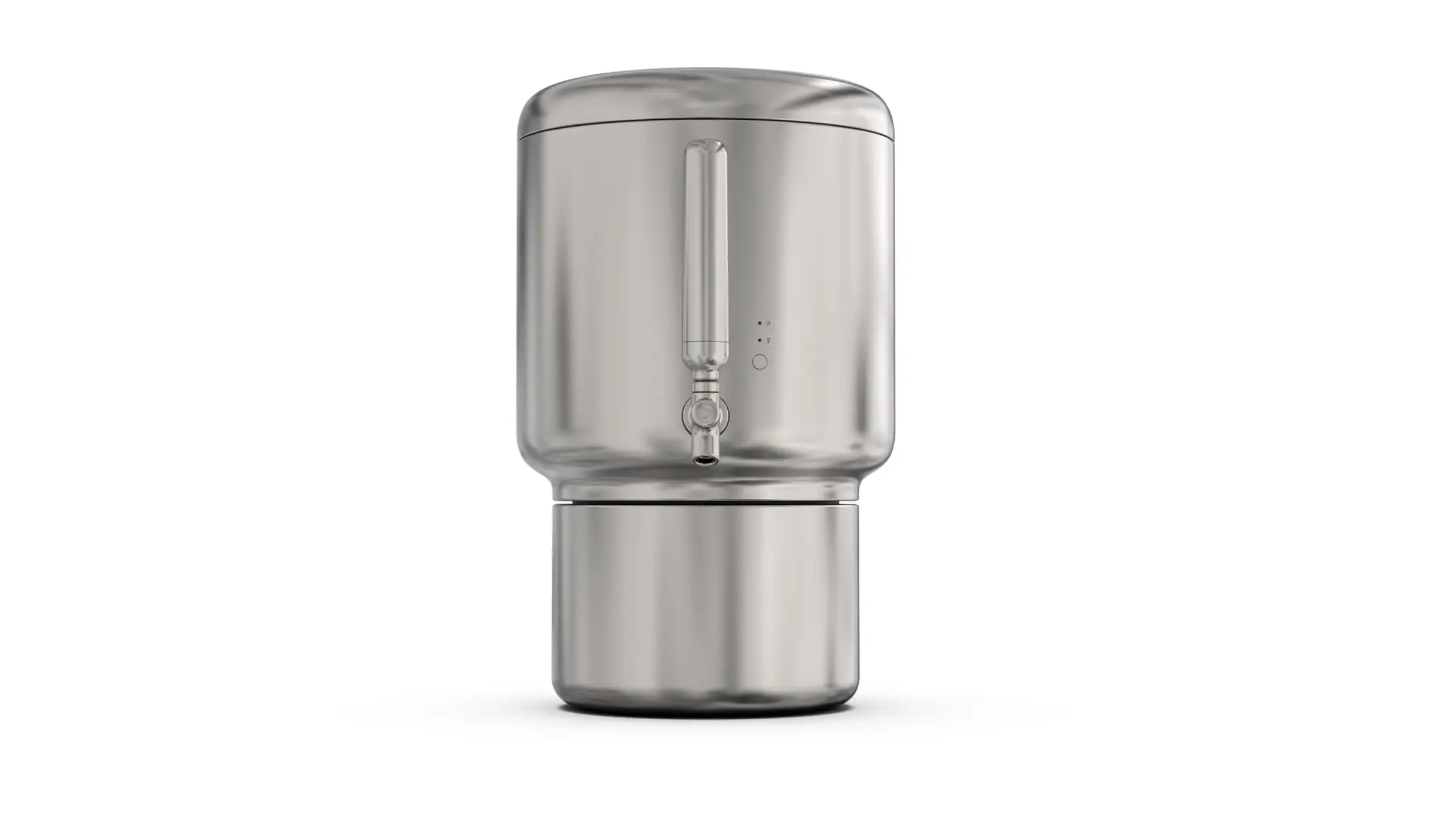
Rorra uses electrokinetic nanofiber filtration rather than reverse osmosis, targeting contaminants while leaving naturally occurring minerals in the water.
Its stainless-steel gravity system provides 2.5 gallons of total capacity, giving families more water storage than a standard pitcher. It suits buyers who prefer filtration without the mineral reduction associated with RO.
- Cost: $449
- Best for: Buyers who want filtration without stripping water like RO
- Filter type: Gravity-fed electrokinetic nanofiber filtration
- Capacity: 2.5 gallons total, including 1.5 gallons filtered
14. Sans Water Purifier
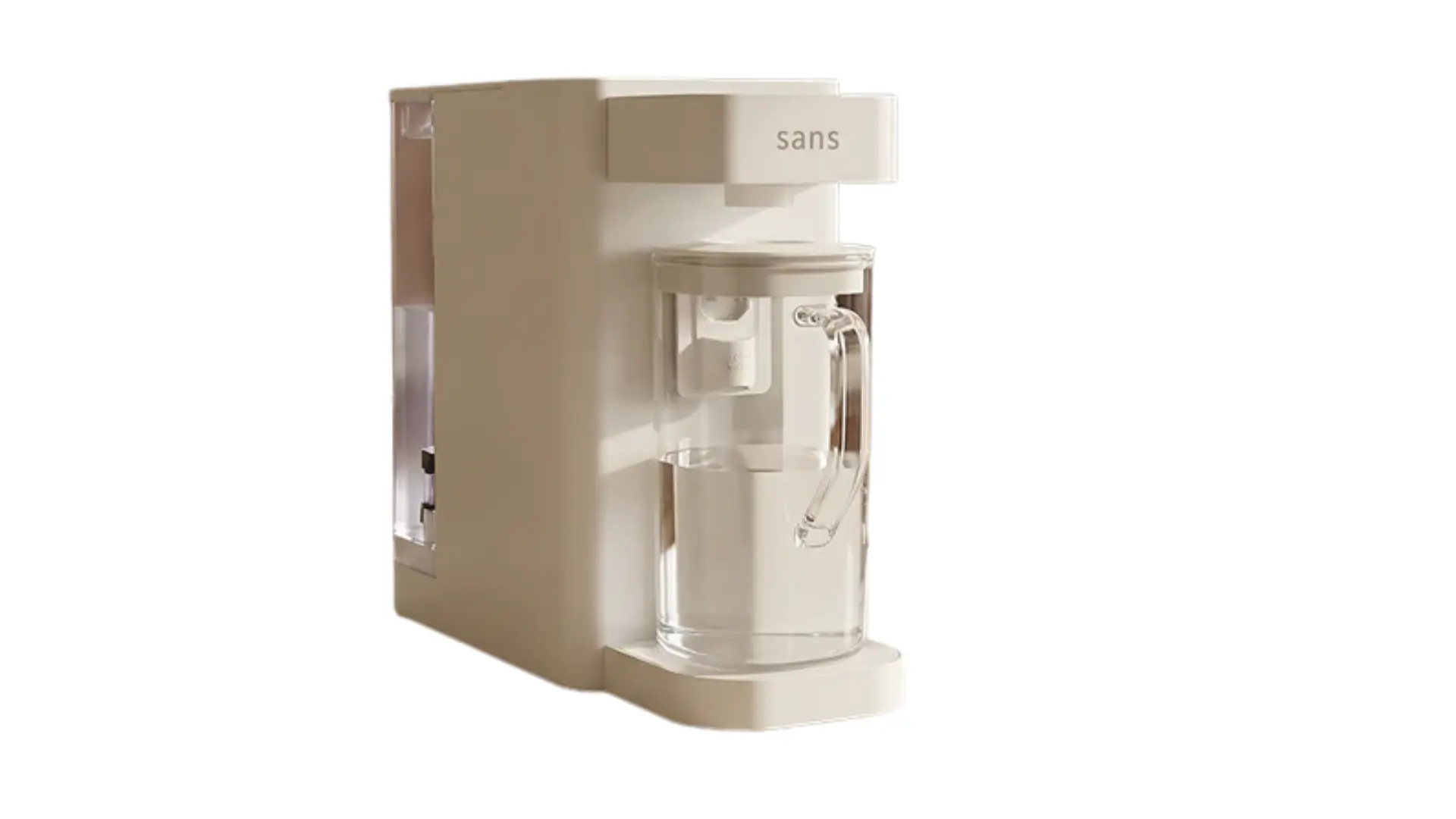
Sans Water Purifier combines four-stage reverse osmosis, UV-C treatment, instant hot water, and automatic pitcher filling in one countertop unit.
Its feature set works well for smaller households that want strong purification without an under-sink installation. The 118-ounce tap-water tank also supports regular daily use before another refill is needed.
- Cost: $399.99 sale price, $499.99 regular price
- Best for: Compact kitchens wanting feature-rich RO filtration
- Filter type: Four-stage reverse osmosis with UV-C
- Capacity: 118-ounce tap-water tank
15. Epic Pure Dispenser
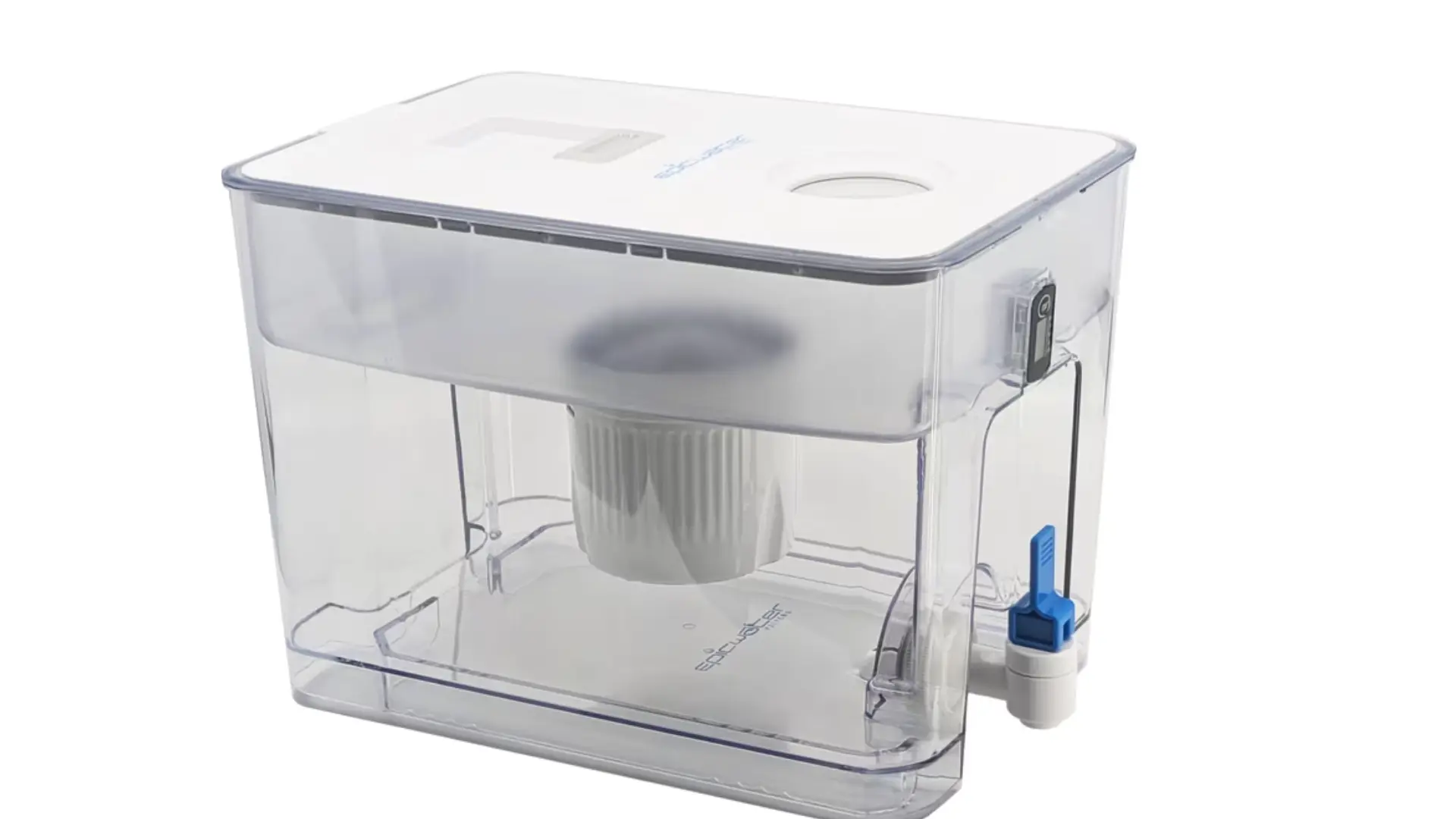
Epic Pure XP uses gravity-fed dual-layer filtration in a straightforward dispenser format. Fill the container, let water pass through the filter, and use the spout as needed.
Its nearly two-gallon capacity reduces refill frequency compared with smaller pitchers, making it a practical option for families wanting uncomplicated countertop filtration.
- Cost: $89.10 sale price, $99 regular price
- Best for: Families wanting straightforward gravity filtration
- Filter type: Gravity-fed dual-layer filtration
- Capacity: Nearly 2 gallons
What Trade-Offs Should Actually Change Your Decision?
The biggest differences between countertop water filters usually come down to three things: power, wastewater, and how much filtration you actually need. Once you compare those properly, choosing between reverse osmosis, gravity, and other systems becomes much simpler.
- Power access: Reverse osmosis countertop systems often need an outlet to run pumps, displays, heating, or cooling features.
- Wastewater: RO systems create reject water during filtration. More efficient models waste less, but it is still something to consider
- Contaminant removal: This is where RO usually has the advantage. It is better suited for concerns such as fluoride, lead, PFAS, and high dissolved solids.
The trade-off is that their contaminant reduction depends heavily on the specific filter media and certifications.
Which Filter Should You Choose Based on Your Water Concerns?
Your water report should guide your filter choice more than price, brand, or ratings. Once you know the main concern, the right filter type becomes much easier to narrow down.
| Water concern | Best filter type | Why it fits |
|---|---|---|
| PFAS, lead, or fluoride | Reverse osmosis | RO is one of the strongest options for reducing these contaminants when the system is specifically certified for them |
| Chlorine taste and odor | Carbon or gravity filter | These filters are usually enough when your main goal is improving taste, smell, and everyday drinking quality |
| High TDS | Reverse osmosis | RO removes a much larger share of dissolved solids than standard carbon or gravity filtration |
| Budget, rental, or no outlet | Gravity filter | Gravity systems are affordable, need no electricity, and usually require no plumbing or permanent installation |
| Mineral retention or broad contaminant concerns | Carbon, ion exchange, or reverse osmosis | Carbon and ion exchange retain more minerals, while certified RO is better when several contaminants need reducing at once |
The key is to match the filter to your actual water report. If you mainly want cleaner-tasting water, a simpler system may be enough. If PFAS, lead, fluoride, or high TDS are the concern, a properly certified reverse osmosis system deserves stronger consideration.
Conclusion
Choosing the right countertop filter comes down to matching the system with your water, space, and daily habits. I would start with your water report, then compare filtration type, capacity, power needs, and maintenance.
Reverse osmosis suits broader contaminant concerns, while gravity and carbon systems can work well for simpler needs, smaller budgets, or kitchens with limited space.
The best countertop water filter is not automatically the most expensive model. It is the one that handles the contaminants you care about without adding features you do not need.
Use the comparisons above to narrow your options, then check the product details before buying. Share your pick or read related water-filter articles next.
Frequently Asked Questions
Do countertop water purifiers work?
Yes, but effectiveness depends on the filtration type. Reverse osmosis systems remove the widest range of contaminants, including lead and PFAS, while gravity-fed and ion-exchange models handle dissolved solids well but reduce fewer contaminant categories overall.
Is there a countertop water filter that removes microplastics?
Reverse osmosis systems are generally the most effective at reducing microplastics due to their fine filtration membranes. Carbon-only or basic gravity filters typically don’t target microplastics specifically, so checking for RO or sub-micron filtration matters if this is a priority.
What is the most recommended water filter?
Recommendations vary by need, so there isn’t a single universal answer. RO systems are most recommended for broad contaminant removal, while gravity-fed models are favored for no-electricity, no-waste convenience at a lower price point.
What is the best countertop water filter according to Reddit users?
Reddit discussions tend to favor practical, budget-conscious picks over lab-certified leaders, with users often prioritizing simplicity and low maintenance over maximum contaminant removal, especially for households without severe water quality concerns.