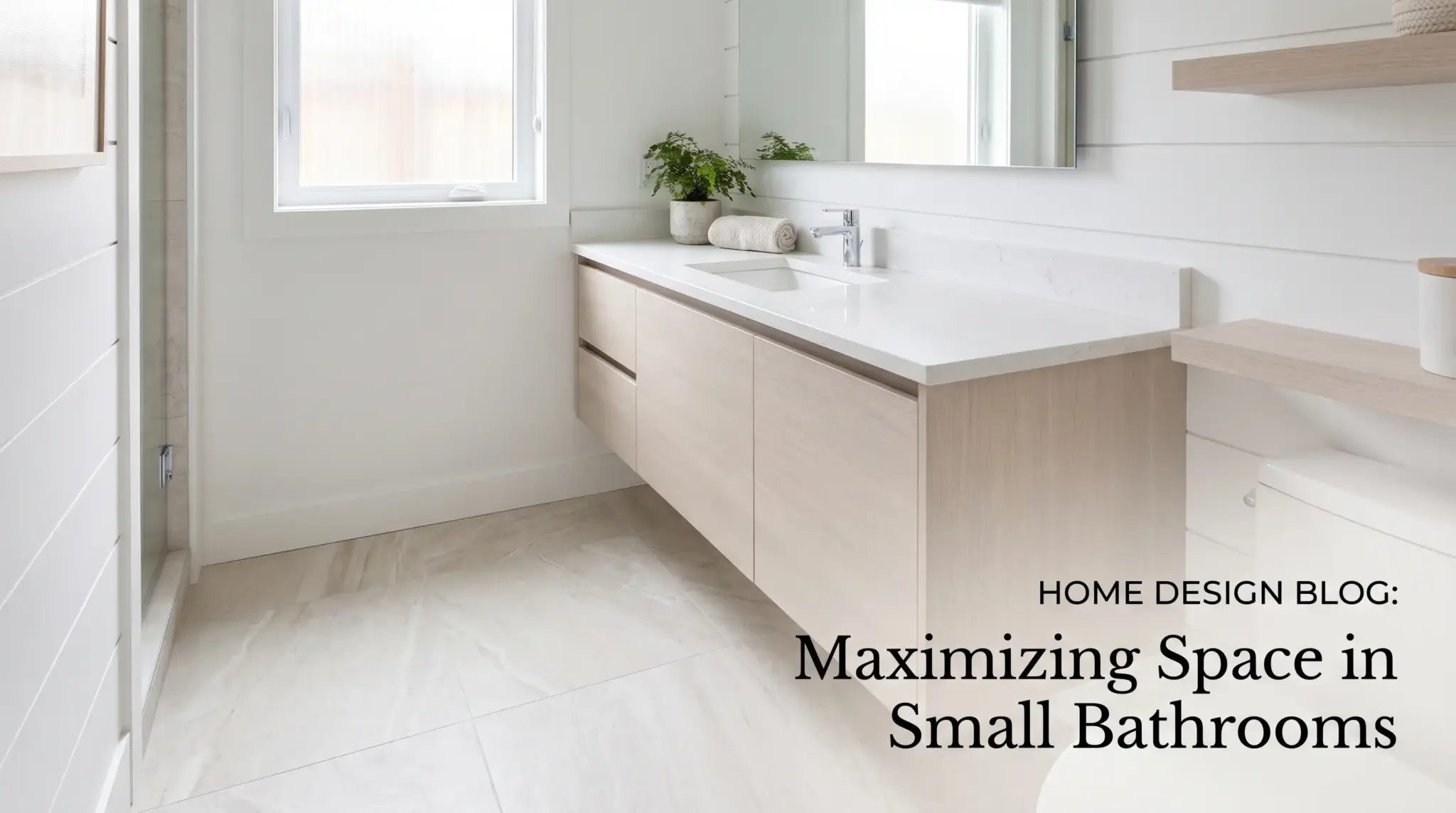
Tiny homes are ruthless teachers. Every inch has to earn its place. Anything that sits heavy, low, or far into the room quickly becomes a problem.
That same logic belongs in the bathroom, especially in homes where the layout is fixed and every fixture competes for space. A few blocked inches at floor level can make the whole room feel tighter than the measurements suggest.
The best small bathrooms often follow one quiet rule: let the floor breathe. When more floor stays visible, the room feels lighter, cleaner, and easier to use. The sink wall plays a major role. A bulky cabinet can weigh the room down, while a better-scaled bathroom vanity can keep storage within reach without making the space feel boxed in.
What Tiny Homes Understand About Floor Space
Tiny homes make one thing clear fast: open floor area changes how a room feels. Even when the square footage stays the same, a visible floor creates a sense of order. It gives the eye somewhere to rest and helps the room feel easier to move through.
Bathrooms benefit from the same principle. A sink cabinet that runs all the way to the floor can be useful, but in a compact room, it can also feel heavy. The space already has a toilet, shower, door swing, mirror, lighting, and storage competing for attention.
A wall-mounted design shifts that balance. It keeps the sink area functional while opening up the floor beneath it. That small change can make the room feel cleaner, lighter, and better planned without moving walls or changing the plumbing.
Why the Sink Wall Carries So Much Weight
The sink wall usually becomes the busiest part of the bathroom. It holds the mirror, lighting, counter space, storage, plumbing, and often the first thing people see when the door opens. When that zone feels bulky, everything else feels closer.
Traditional vanities can work well in larger bathrooms. In compact layouts, they often create a solid block from wall to floor. That block cuts off sightlines and makes the room feel full before towels, toiletries, cleaning supplies, or extra products are added.
Good storage should match the room’s scale. A lighter profile, cleaner lines, and visible space underneath can make the sink wall feel intentional instead of crowded.
Storage Should Help the Room Feel Lighter
Storage earns its place when it makes the bathroom easier to use. Trouble starts when a cabinet adds bulk without solving the right problem. Deep drawers can be helpful, but depth has a cost when it crowds the walkway or makes the sink wall feel dense.
Tiny-home thinking favors storage with purpose. Drawers should fit the items people reach for most. Open floor space should stay open. Corners should feel clear, not packed. The goal is to reduce daily friction, not fill every available gap with cabinetry.
Clearance is part of that decision. The National Kitchen & Bath Association’s bathroom planning guidelines recommend planning clear space in front of fixtures, which is easy to overlook when choosing a vanity by width alone. Depth, drawer swing, and door clearance can change how comfortable the room feels once everything is installed.
The Floor Line Changes the Whole Room
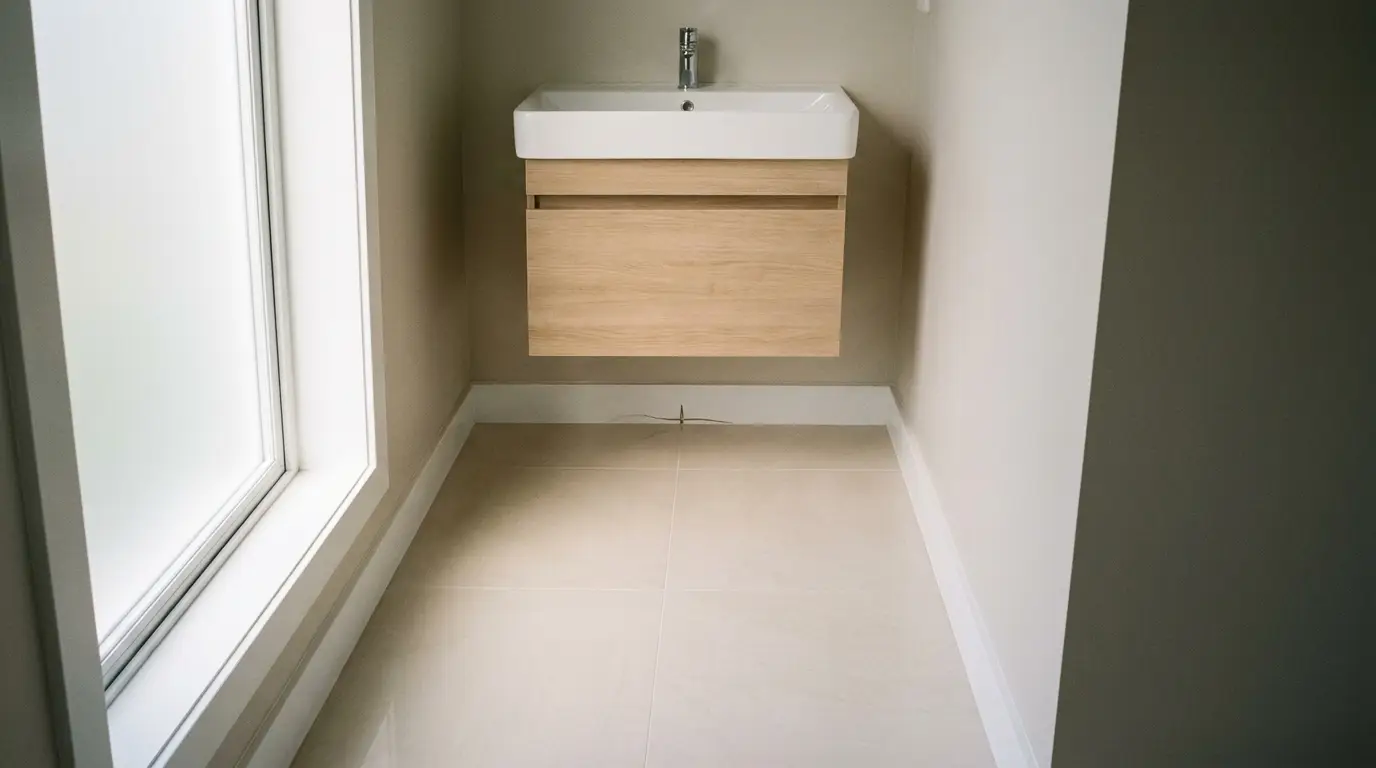
Visible floor does more than create the feeling of space. It changes how the bathroom reads at a glance. When tile or flooring continues beneath the sink area, the room feels less interrupted. The eye can move across the space instead of stopping at a solid cabinet base.
That matters most in narrow bathrooms, powder rooms, and older homes where the layout is already fixed. A lighter sink wall can soften awkward proportions without a full remodel. It can also make cleaning easier, since dust, water spots, and hair have fewer tight corners to collect around.
The effect is subtle, but reliable. More open floor gives the room a calmer rhythm and makes the layout feel more deliberate.
Where the Rule Works Best
The “let the floor breathe” rule is most useful in bathrooms that already feel tight before anyone adds products, towels, or cleaning supplies. Powder rooms are a clear example. They need presence, but they rarely need deep storage. A lighter vanity can make the space feel finished without turning it into a box.
Shared bathrooms need a different balance. The room may need drawers, counter space, and closed storage, but the vanity still has to leave enough room for people to move without bumping into open doors or each other. In that case, a slimmer profile can matter as much as width.
Primary bathrooms have more space to work with, but the same rule applies. A double vanity can be useful, yet it should still leave the floor feeling open and the walkway comfortable. Larger bathrooms can feel crowded when every wall is treated like a storage opportunity.
What to Measure Before Replacing the Vanity
A vanity can look perfect online and still feel wrong once it lands in the room. Before replacing one, measure more than the wall where it will sit. Check the distance from the vanity edge to the toilet, shower, tub, and door swing. Then open nearby drawers, cabinets, and doors to see where they compete for space.
Depth is often the detail that causes trouble. A few extra inches can make the walkway feel tighter or cause drawers to hit trim, towel bars, or the bathroom door. Height matters as well, especially in homes with children, older adults, or shared bathrooms.
Wall strength also deserves attention for wall-mounted pieces. So does the path into the room if the vanity arrives assembled. The tiny-home lesson is simple: every fixture should respect the room around it, and small bathroom layouts work best when open floor space, door swing, and fixture depth are planned together.
The Best Upgrade May Be the Space You Leave Open
A smarter bathroom does not always come from adding more. Sometimes it comes from choosing what should stay light, clear, and easy to use.
That is the lesson tiny homes bring to everyday bathroom design. When the floor stays visible, the room feels more open. When storage has a purpose, the sink wall feels calmer. When a vanity fits the room instead of dominating it, the whole layout starts to work better.
Letting the floor breathe is a small rule, but it changes how the bathroom feels in real life. The room becomes easier to clean, easier to share, and easier to move through. For a space used every day, that kind of breathing room is worth planning for.
Interlinking Suggestion
Link from https://www.jackcooper.com/limited-space-small-bathroom-designs-with-shower-ideas/ to this article with anchor: letting the floor breathe