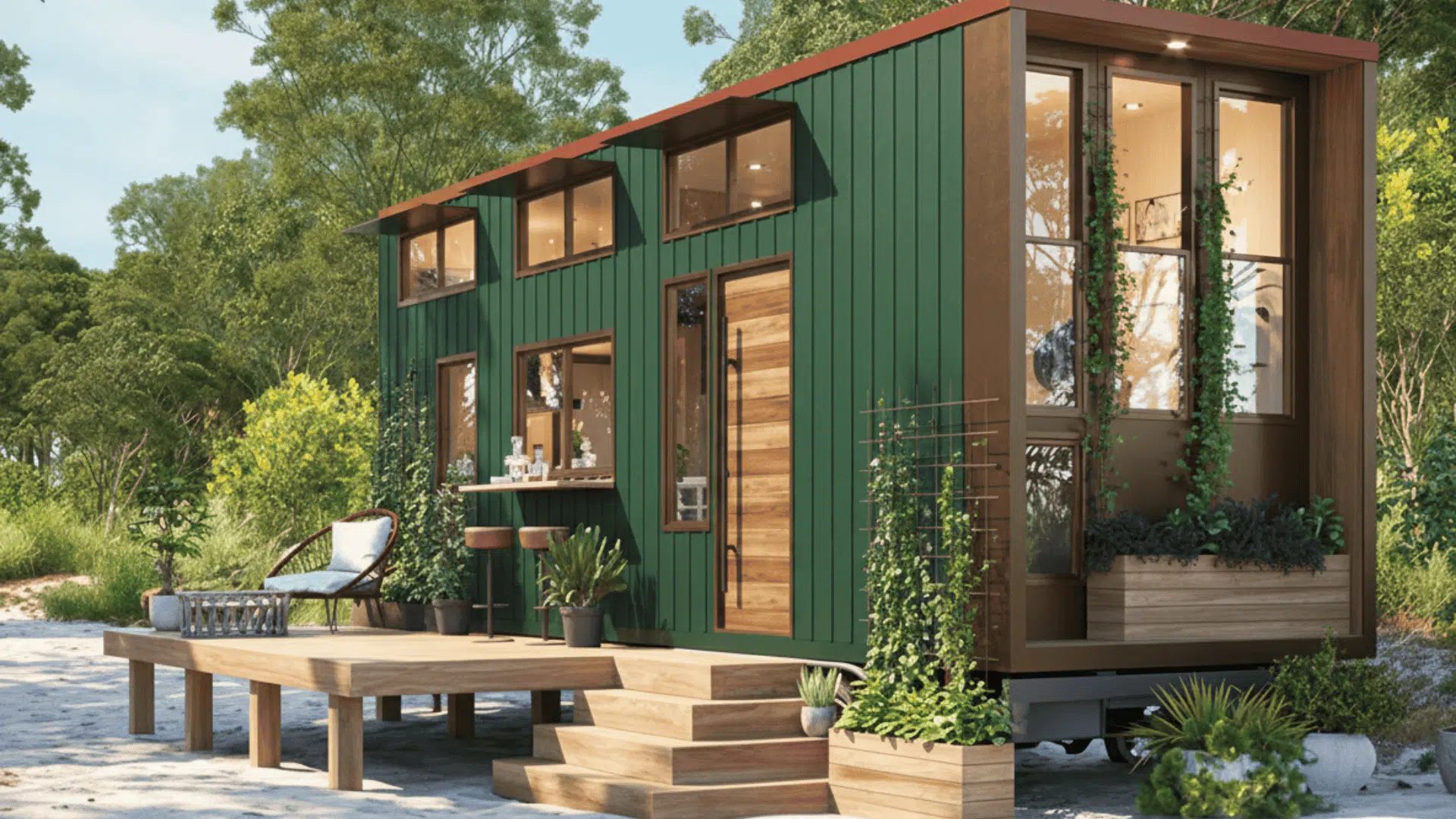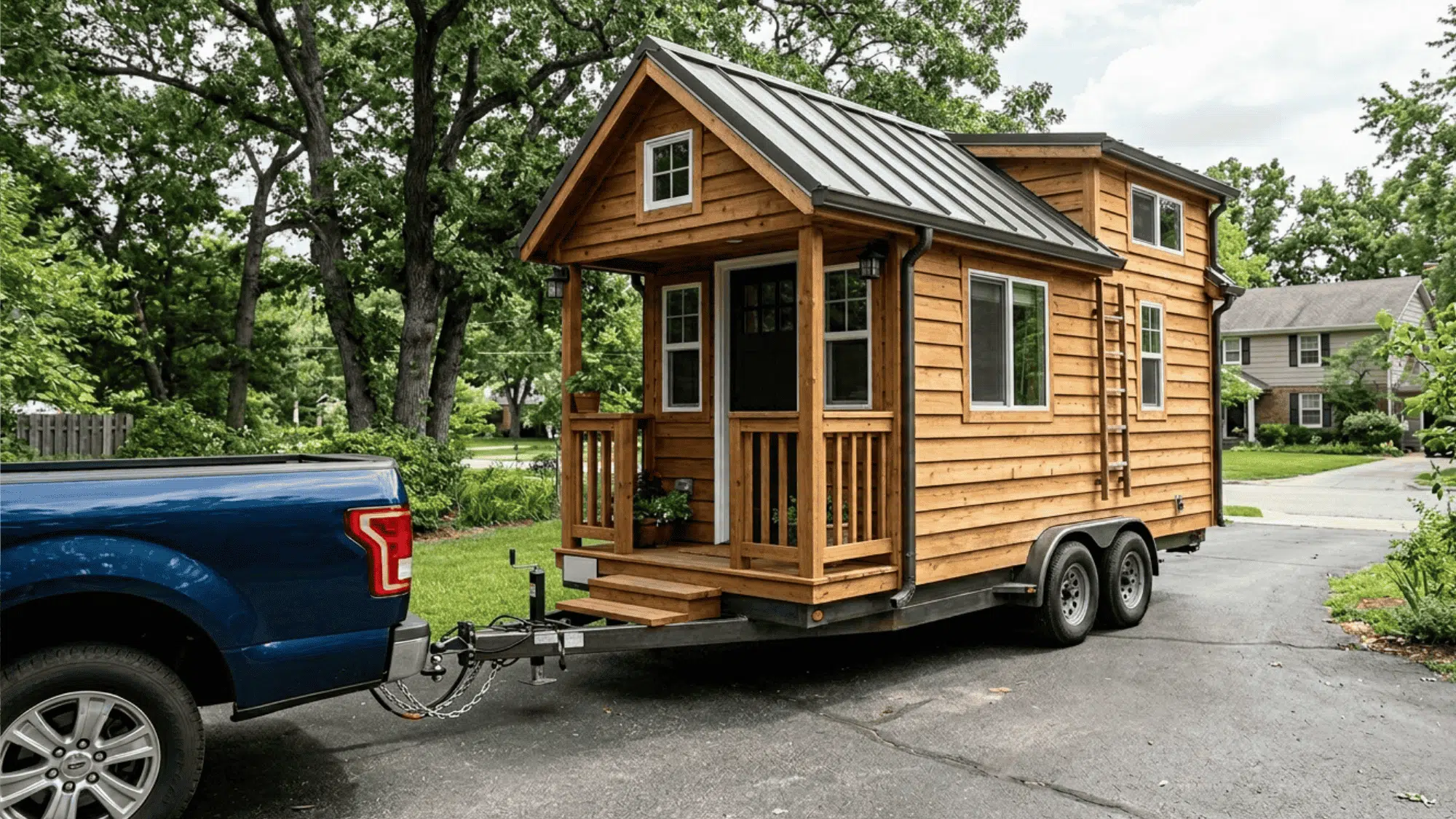
Owning a home feels out of reach for most people right now. Prices are wild, mortgages are brutal, and renting forever? Not exactly the dream. But many people are quietly finding a smarter way out.
Tiny house trailers make it possible to own a real home, skip the massive debt, and still have the freedom to move whenever life calls. They’re a genuine housing solution that’s growing fast.
And the options? Way more varied than most people expect. Here’s a breakdown of the most popular types for you, and what makes each one worth knowing about.
Why Tiny House Trailers are Becoming Everyone’s First Choice?
Tiny house trailers have exploded in popularity over the last decade, and it’s easy to see why. With the average American home costing over $400,000, many people are looking for smarter, cheaper ways to live.
A tiny house on a trailer can cost between $30,000 and $100,000, a huge difference. They also use less energy, which means lower monthly bills. Since they sit on wheels, owners can easily move them to new locations.
Younger generations especially love the freedom and simplicity they offer. Today, more than 10,000 tiny homes are built every year across the United States.
Popular Tiny House Trailers You Should Know About
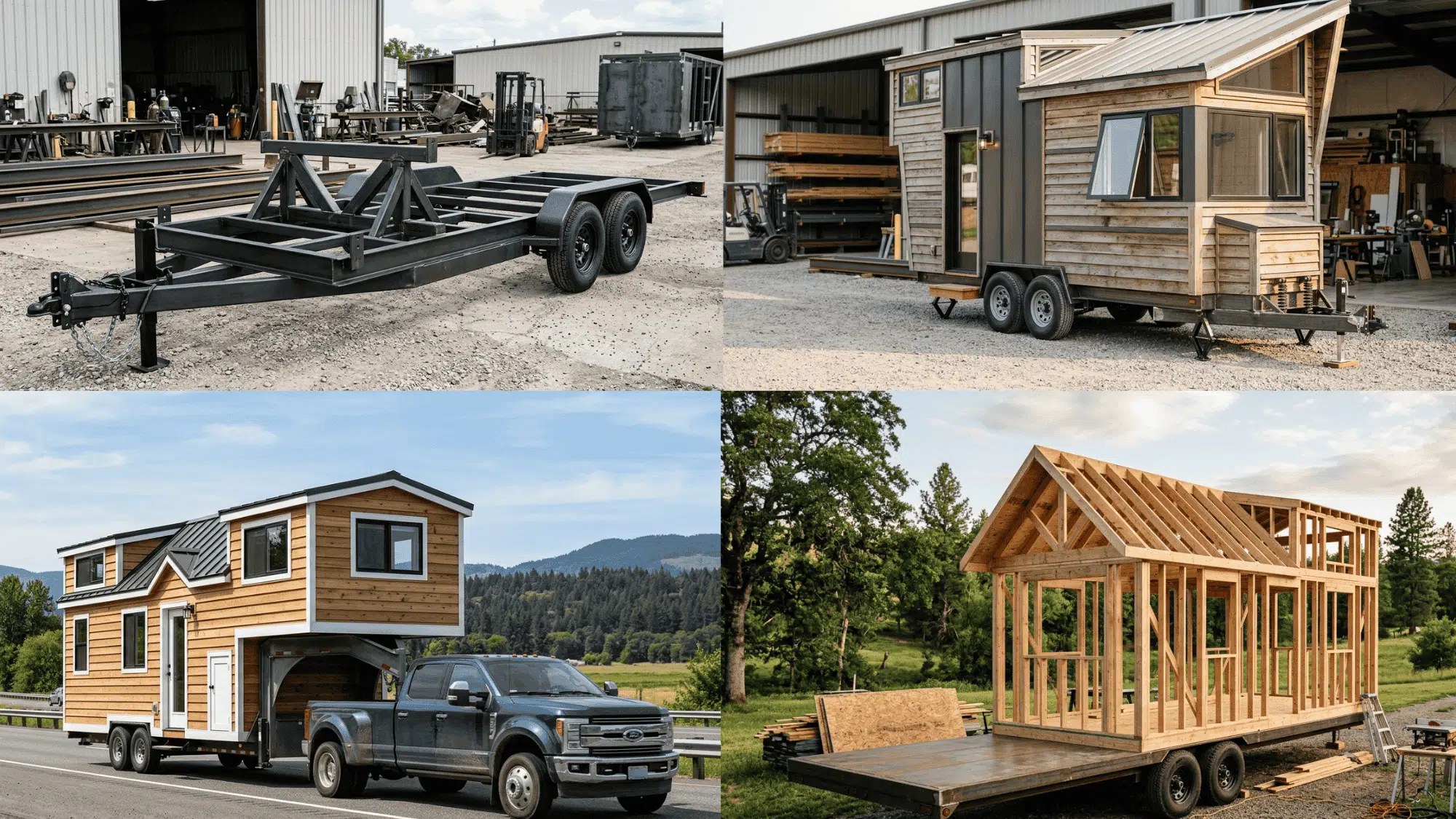
Not all tiny house trailers are built the same way. The type you pick affects your ceiling height, total build weight, and how safely you can tow. Here are some of the best types you need to know before you buy:
1. Bumper Pull Tiny House Trailer
The bumper pull is the most common tiny house trailer out there. It attaches to a standard ball hitch at the back of almost any pickup truck. No special vehicle needed, just hook up and go.
- Weight capacity: Up to 20,000 lbs
- Hitch type: Standard ball hitch
- Best for: First-time builders
- Length options: 16 ft – 32 ft
- Price range: $3,500 – $8,500
- Key feature: Works with most standard pickups
2. Gooseneck Tiny House Trailer
The gooseneck hooks inside the truck bed, not behind it. This pushes the weight over the rear axle for much better highway stability. Heavy buildings with stone, brick, or timber need this type.
- Weight capacity: Up to 40,000 lbs
- Hitch type: In-bed gooseneck ball
- Best for: Heavy material builds
- Length options: 20 ft – 40 ft
- Price range: $5,500 – $13,000
- Key feature: Needs a gooseneck-ready truck bed
3. Fifth Wheel Tiny House Trailer
A kingpin coupling locks low and centered in the truck bed, wiping out trailer sway. It is the steadiest towing option for any tiny home. Mountain roads and strong crosswinds are far easier to handle with this setup.
- Weight capacity: Up to 35,000 lbs
- Hitch type: Kingpin coupling
- Best for: Long-distance towing
- Length options: 22 ft – 40 ft
- Price range: $6,000 – $14,000
- Key feature: Needs a dedicated in-bed fifth wheel hitch
4. Flatbed Tiny House Trailer
No rails, no fender wells, no preset anchors, just a clean, open steel deck. Builders have total freedom to design their floor plan without having to work around anything. Architects and custom builders love it for that reason.
- Weight capacity: Up to 25,000 lbs
- Hitch type: Bumper pull or gooseneck
- Best for: Custom and unique floor plans
- Length options: 16 ft – 36 ft
- Price range: $4,000 – $10,000
- Key feature: Fully clear deck, zero obstacles
5. Deck Over Tiny House Trailer
The deck runs over the top of the wheels, not between them. That removes wheel well bumps and gives you a flat, full-width building surface. You gain more usable floor space compared to most standard trailer types.
- Weight capacity: Up to 30,000 lbs
- Hitch type: Bumper pull or gooseneck
- Best for: Maximizing floor width
- Length options: 20 ft – 40 ft
- Price range: $5,000 – $11,000
- Key feature: No wheel wells cutting into floor space
6. Double Drop Tiny House Trailer
The deck dips lower in the middle and rises at both ends. Your tiny home sits in that lowered center section, bringing the whole structure closer to the ground.
This directly solves bridge clearance and height restriction problems on the road.
- Weight capacity: Up to 28,000 lbs
- Hitch type: Gooseneck or fifth wheel
- Best for: Tall builds with height limit concerns
- Length options: 20 ft – 36 ft
- Price range: $6,500 – $13,500
- Key feature: Lowest ride height for taller home designs
7. Triple Axle Tiny House Trailer
Three axles share the load, so no single point of the frame takes too much stress. The structure stays aligned and strong far longer under heavy weight.
This type is built for two-story tiny homes or builds using very dense materials.
- Weight capacity: Up to 45,000 lbs
- Hitch type: Gooseneck or fifth wheel
- Best for: Oversized and very heavy builds
- Length options: 24 ft – 48 ft
- Price range: $7,500 – $15,000
- Key feature: Needs a commercial-grade tow vehicle
8. Tandem Axle Tiny House Trailer
Two axles give you a balanced load and smooth, predictable handling on the road. It works for the widest range of standard tiny home builds. No special truck or hitch setup required, just a reliable everyday performer.
- Weight capacity: Up to 24,000 lbs
- Hitch type: Bumper pull, gooseneck, or fifth wheel
- Best for: Standard all-around builds
- Length options: 18 ft – 34 ft
- Price range: $4,500 – $9,500
- Key feature: Easiest to find parts and service for
9. Single Axle Tiny House Trailer
One axle makes this the lightest and cheapest tiny house trailer you can buy. Some large SUVs can tow it, no heavy-duty truck needed. It fits small studio builds, weekend getaways, and tight budgets perfectly.
- Weight capacity: Up to 10,000 lbs
- Hitch type: Standard bumper pull
- Best for: Small and minimalist builds
- Length options: 12 ft – 20 ft
- Price range: $2,500 – $5,500
- Key feature: Towable by capable SUVs
10. Custom Tiny House Trailer
Every single spec, axle count, deck height, frame width, and steel grade is built around your exact floor plan. Nothing is off the shelf. It costs more and takes longer, but the fit is perfect.
- Weight capacity: Built to your specs
- Hitch type: Chosen per build needs
- Best for: Unique and professional builds
- Length options: Any size
- Price range: $8,000 – $18,000+
- Key feature: Engineer consultation before production starts
11. Expandable Tiny House Trailer
Slide-out sections extend from the deck when you are parked and fold back in for road-legal towing. You get a bigger home without breaking the width limits on the highway.
Full-time tiny home residents find this type especially worth the investment.
- Weight capacity: Up to 22,000 lbs
- Hitch type: Gooseneck or fifth wheel
- Best for: Full-time residents who want more space
- Length options: 20 ft – 34 ft
- Price range: $7,000 – $14,000
- Key feature: Slide-outs retract to legal towing width
12. Low Profile Tiny House Trailer
The entire frame is built as shallow as possible from end to end, not just in the middle like a double drop. Every inch saved at the trailer level means more ceiling height inside your home.
Builders in height-restricted states find this type especially useful.
- Weight capacity: Up to 21,000 lbs
- Hitch type: Bumper pull or gooseneck
- Best for: States with strict road height limits
- Length options: 18 ft – 32 ft
- Price range: $5,000 – $10,500
- Key feature: Low frame depth across the full length
13. Steel Frame Tiny House Trailer
Steel is the most widely used material in tiny house trailers because it is strong, weldable, and fixable almost anywhere. Galvanized or powder-coated versions hold up much better in wet and salty climates.
It is the most practical choice for most builders in the long term.
- Weight capacity: Up to 30,000 lbs
- Frame material: Carbon, galvanized, or powder-coated steel
- Best for: Durability and easy repairs
- Length options: 16 ft – 40 ft
- Price range: $4,000 – $12,000
- Key feature: Fixable at any local welding shop
14. Aluminum Frame Tiny House Trailer
Aluminum is 30 to 40 percent lighter than steel, reducing your tow vehicle’s fuel needs and cutting fuel costs on long trips. It never rusts, not even near the coast or in humid heat.
The downside is a higher price and the need for a specialist welder if something breaks.
- Weight capacity: Up to 18,000 lbs
- Frame material: Aircraft-grade aluminum alloy
- Best for: Frequent travelers who want to save weight
- Length options: 16 ft – 30 ft
- Price range: $6,000 – $14,000
- Key feature: Rust-proof, no coating ever needed
15. Off-Road Tiny House Trailer
This type is built for life beyond paved roads. Heavy-duty suspension, reinforced undercarriage, and extra ground clearance let it handle gravel tracks, forest paths, and uneven rural land.
If off-grid living is the goal, no other tiny house trailer gets you there.
- Weight capacity: Up to 26,000 lbs
- Hitch type: Gooseneck or heavy-duty bumper pull
- Best for: Off-grid and remote living
- Length options: 18 ft – 34 ft
- Price range: $7,500 – $16,000
- Key feature: Independent suspension for rough terrain
How to Pick the Right Tiny House Trailer for Your Specific Needs?
Every tiny house trailer on this list is good, but not every one is right for you. The best choice depends on where you live, how often you move, and what you plan to build.
| Factor | What to Consider | Why It Matters |
|---|---|---|
| Climate | Rainy or snowy region? Choose powder-coated or weather-treated steel | Protects the trailer from rust and damage over time |
| Build Weight | Pick a trailer rated at least 20% above your estimated weight | Ensures safety and prevents overloading |
| Mobility | Towing often? Go lighter. Staying parked? Heavier frame works | Affects ease of transport and stability |
| Length | Balance between space and towing ease | Too long is hard to tow, too short limits layout |
| Budget | Think beyond upfront cost | Better quality saves money in the long run |
| Customization | Consider custom trailers for unique layouts or weight needs | Ensures better fit and balance for your build |
| Warranty | Check support and coverage | Makes repairs and part replacement easier |
Conclusion
Picking a tiny house trailer isn’t just a practical decision; it’s the foundation on which everything else gets built. Get it right and the whole project flows. But if you get it wrong, it costs way more to fix later.
Now you know that there’s a type for every build, every budget, and every lifestyle. It’s just about matching the right one to the right situation.
So, take the time, ask the right questions, and don’t rush the decision. Because once the right trailer is under that home, the rest starts to fall into place pretty naturally.