A panic room sounds intense, but the idea behind it is pretty simple. It’s just a controlled space in your home that stays reliable when the rest of the place doesn’t.
People think it’s only for big houses or dramatic situations, but once you see how flexible the concept is, it starts to feel way more practical.
In this blog, I’ll break down how these rooms actually work, what sets them apart from regular spaces, the different levels you can build, and how to figure out whether one makes sense for your home.
It’s a lot clearer once you see how all the pieces fit together.
What a Panic Room is and How It Works
When people talk about a panic room, they’re really just talking about a space that’s built to keep you safe when things go sideways.
A panic room is basically a reinforced room inside your home where you can go if there’s a real threat. Could be a break-in. Could be a storm. Could be anything that makes you think, yeah, I shouldn’t be out there right now.
It’s not always some hidden space behind a bookshelf. Sometimes it’s just a normal-looking room with upgrades. Stronger walls. A tougher door. A way to contact help. Enough essentials to wait things out. If it lets you lock down, stay safe, and call for help, it counts.
People use them because they want a backup plan. A safety net inside their own home. It’s that simple.
What Makes It “Safe”: Core Features of Panic Rooms
Here’s the stuff that actually matters. The things that take a regular room and make it a panic room.
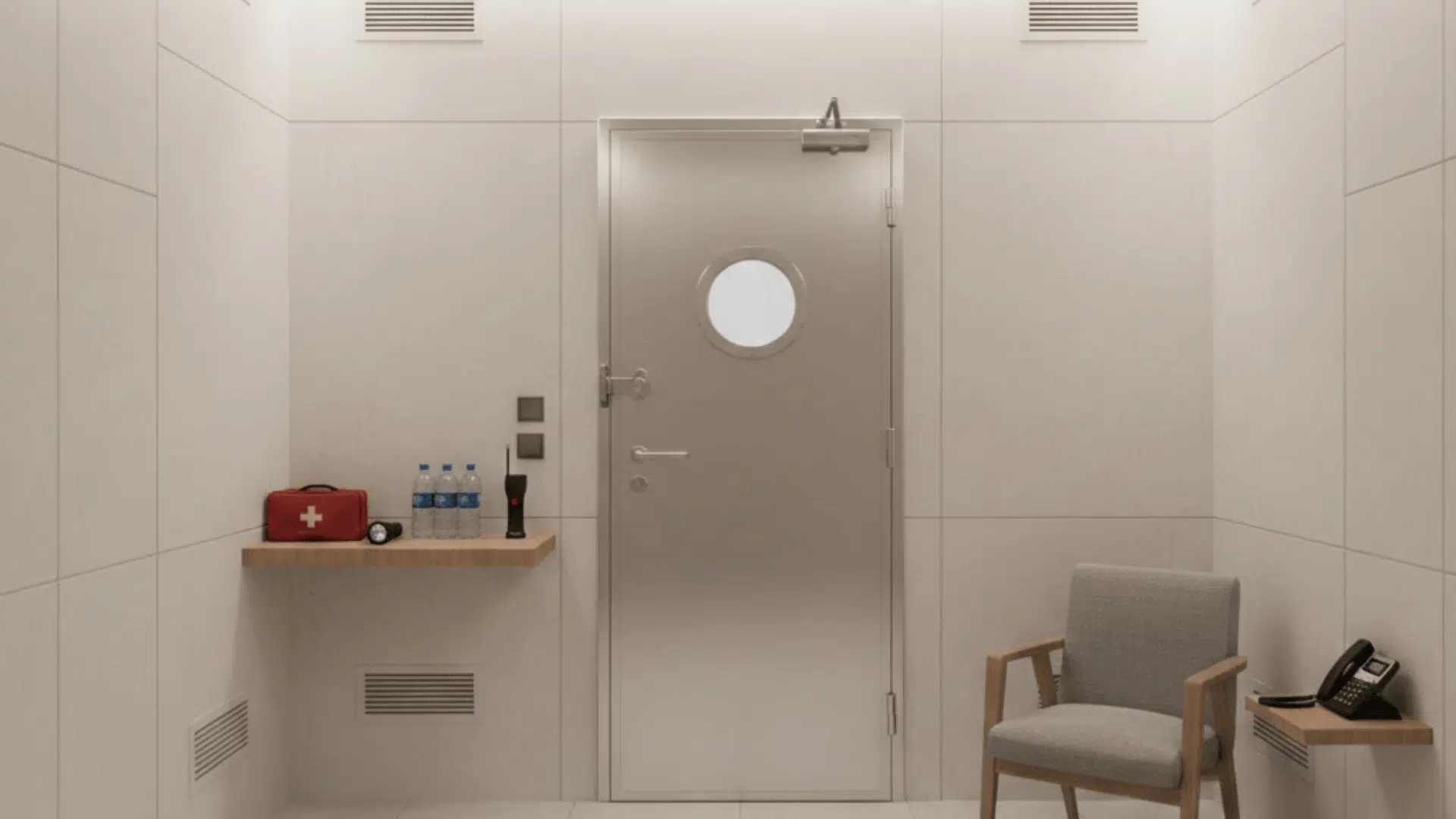
- Reinforced structure: The walls, the ceiling, the floor… they’re beefed up. Not flimsy drywall. Something that can hold up against force or debris. That’s what keeps you protected.
- Secure door systems: The door is the real difference-maker. Heavy. Strong hinges. Solid locks. Harder to break through. Sometimes it looks like a normal door, but it’s not.
- Communication tools: You need a way to talk to the outside world. A phone line. A radio. Maybe internet. Something that still works if everything else stops cooperating.
- Power and ventilation: There’s backup power, so things keep running. Air stays fresh. The room doesn’t turn into a sauna or something unsafe. Ventilation is a bigger deal than people realize.
- Supplies: Water. A little food. First-aid stuff. Flashlights. Whatever helps you get through a few hours without stress. Doesn’t have to be over the top. Just enough.
That’s the core setup. Not complicated. Just practical.
Panic Room vs. Safe Room: What’s the Difference?
People mix these terms up all the time. The short answer is they’re basically the same thing, but the vibe is different.
A panic room is usually focused on fast threats. Home invasion. Security situation. Something sudden. You get inside. Lock the door. Wait for help.
A safe room is more of a broad category. It could be for storms. It could be for security. Could be both. Sometimes it’s built to handle weather more than people. Sometimes it’s the other way around.
If you’re just trying to understand the basics, you can treat them the same. If you’re building one, the differences start to matter. But for everyday conversation, people use the terms interchangeably.
Why People Use Panic Rooms Today
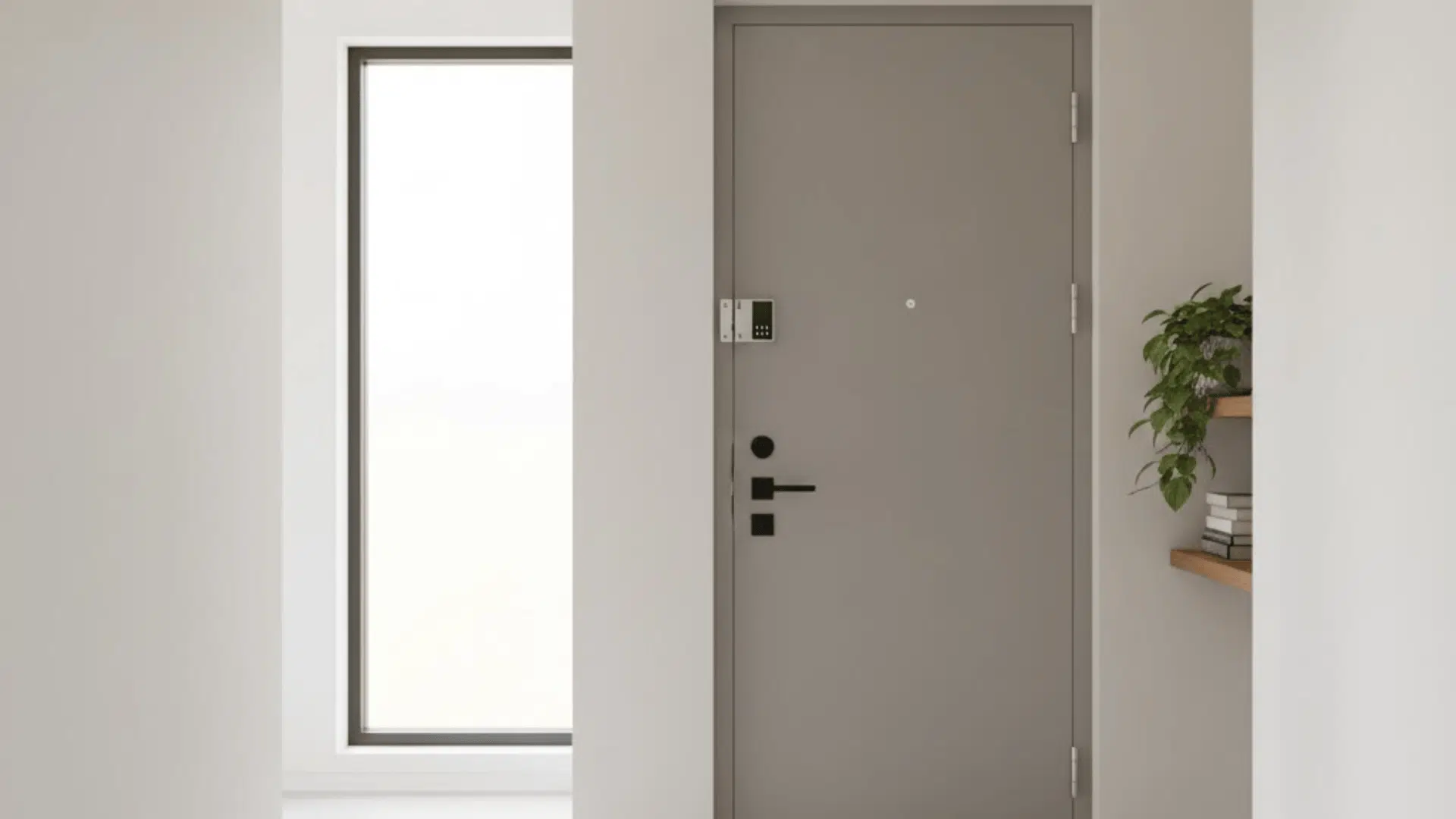
People build panic rooms for a handful of reasons, and most of them are pretty straightforward. It’s about having one spot in the house that’s ready for the worst case, even if it never happens. A simple backup plan.
Home invasions and personal security: This is the first thing most people think of. A panic room gives you a place to move fast and lock down if someone tries to get inside your home.
It buys you time. It keeps you out of harm’s way. And it lets you contact help without being exposed. Quick in. Door locked. Situation contained.
Severe weather and storm protection: Storms hit out of nowhere. Tornadoes, hurricanes, high winds. A reinforced room inside the home gives you a safe spot that stays stable when everything outside gets loud and unpredictable. Instead of scrambling for shelter, you already know where to go.
High-risk professions or public exposure: Some people have jobs or public roles that attract attention they don’t always want.
It could be business owners. Could be public figures. Could be anyone who deals with unpredictable situations. A panic room evens things out. It gives them a controlled space when life gets weird.
Peace of mind for families: Sometimes it’s not about a specific threat. It’s just knowing the backup plan exists. Families with kids often like having one place they can trust in an emergency. Even if they never need it, the comfort alone is worth something.
What’s Inside a Panic Room: A Room-by-Room Breakdown
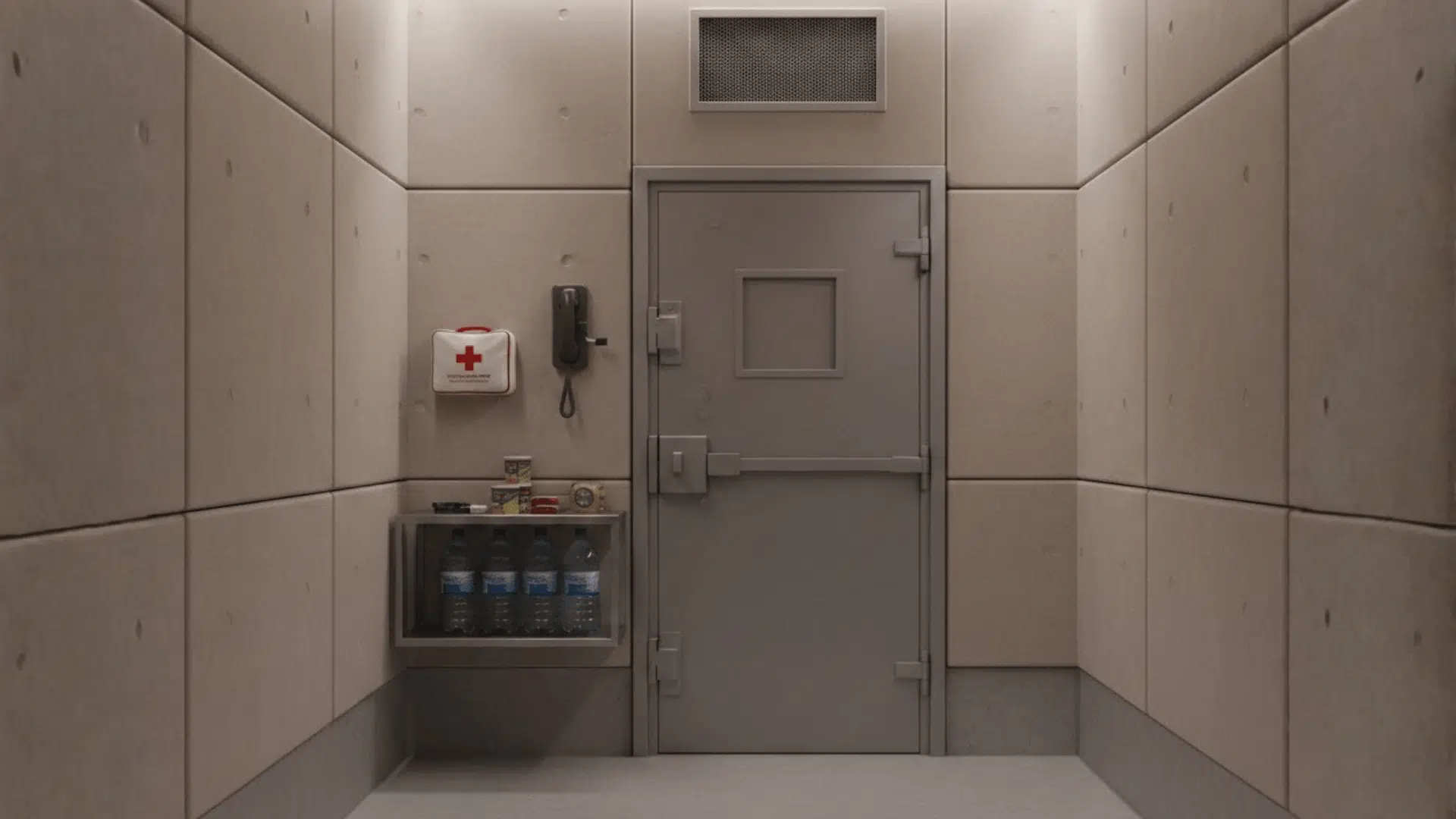
When you open up a panic room, it doesn’t look like some sci-fi bunker. It just looks like a regular room that’s been upgraded in all the right places. Everything in there is meant to keep you safe, comfortable, and connected long enough for help to show up.
1. Structural Reinforcement
This is the backbone of the whole thing. The walls, ceiling, and floor are all built to hold up better than the rest of the house. You’re not dealing with the usual thin drywall.
It’s tougher material. Stronger layers. Something that can take a hit and stay standing.
2. Doors and Locking Systems
The door carries a lot of the workload. It’s heavy. Solid. Harder to get through. The locks are reinforced too.
Sometimes it blends in so it doesn’t look suspicious from the outside, but once you close it, you know you’re behind something serious.
3. Communication Tools
You need a reliable way to reach out. That’s usually:
- A landline that stays active even if power drops
- A radio or backup option
- Maybe internet if the setup supports it
The whole point is having a way to talk to the outside world when things get real.
4. Air Filtration and Ventilation
Ventilation might not be the first thing you think about, but it’s one of the most important parts. Fresh air has to keep moving.
Filters remove smoke or dust. Some rooms even have systems to deal with more extreme situations. It’s all about staying safe and comfortable without opening the door.
5. Power Sources
Most panic rooms have some form of backup power. Could be batteries. Could be a generator. The idea is simple. Lights stay on.
Communication tools keep working. Ventilation doesn’t stop. Even if the whole house loses power, this room keeps going.
6. Food, Water, and Supplies
You don’t need a whole supermarket in there. Just the basics. Water. Snacks or emergency rations. First-aid supplies. Flashlights.
A few comfort items if you’ll be in there for a while. It’s all meant to make the wait easier and safer.
Simple Checklist: What Every Panic Room Should Have
Most people never get a clear list, so here’s one. Easy to follow. Easy to build from.
- Strong reinforced walls
- Heavy, secure door with reliable locks
- Backup power for lights and ventilation
- Fresh air system or filters
- Landline, radio, or another communication method
- Water and basic food supplies
- First-aid kit
- Flashlight and spare batteries
- Emergency charger or power bank
- Small tool kit
- Extra clothing or blankets
- Copies of important documents
If you’ve got these covered, you’re already way ahead of what most people think they need.
How Long Can You Stay Inside a Panic Room?

People always wonder how long you’re supposed to stay in a panic room. The truth is, most situations don’t last that long. You’re usually in there for a short stretch while things calm down or while help gets to you.
But some rooms are built to handle longer stays, especially during storms or lockdown situations. It all depends on the setup, the supplies, and a bit of common sense.
Short Stays (Minutes to Hours)
Most panic rooms are meant for quick situations. Think break-in or something sudden. You get inside. Lock the door. Call for help. And you wait.
A few minutes. Maybe an hour. Sometimes a little more.
The room handles that easily. You’ve got power. You’ve got air. You’ve got a door that won’t fold under pressure. The point is just getting you through the moment until things outside settle down.
Extended Stays (Storms or Lockdowns)
Some panic rooms are built for longer stays. These usually double as storm shelters or safe rooms.
They’ll have better ventilation. More supplies. A sturdier power setup. They’re built to give you enough time to sit through a full weather event or stay isolated until authorities clear the area.
A few hours is normal. Half a day isn’t unusual. Some higher-end rooms can support people for a full day or more, but that’s not typical for most homes. Most families don’t need something that extreme.
The idea is simple: stay comfortable enough to wait things out without having to open the door early.
What a Panic Room Cannot Do
This part matters because movies have given people wild expectations.
A panic room is not:
- A forever bunker
- A place you live in for days
- Something that protects you from every possible threat
- A full replacement for emergency planning
It won’t fix structural issues in the rest of your home. It won’t magically keep you safe in every scenario. It’s not designed for long-term survival. And if the room isn’t built with proper ventilation, you can’t just lock yourself in there indefinitely.
It’s a short-term safety space. A buffer. A controlled environment when you need one the most. That’s it. And that’s enough for almost everyone.
Types of Panic Rooms (From Basic to Advanced)
Below is a quick look at the different types of panic rooms so you can see how they stack up side by side:
| Type | What It Is | Who It’s For |
|---|---|---|
| Basic reinforced closets or storage rooms | A normal closet or small room with upgraded walls, a stronger door, and basic emergency supplies. Simple setup. | Homeowners who want an affordable, quick emergency space without major construction. |
| Mid-level safe rooms for storms | Reinforced structure built to handle tornadoes, hurricanes, and debris. Better ventilation. More stable during impact. | People in storm-heavy areas who need protection during extreme weather. |
| High-security rooms with advanced tech | Includes surveillance feeds, backup power, advanced air filtration, hidden entry points, and stronger materials. | Families or individuals focused on personal security, privacy, or threat-level scenarios. |
| Underground panic rooms and bunkers | Fully underground shelters with maximum reinforcement, independent systems, and long-term supplies. | Anyone preparing for severe threats or wanting the highest level of isolation and protection. |
Once you line them up like this, it’s pretty clear how each one fits a different level of need and budget.
Where to Put a Panic Room in a Home
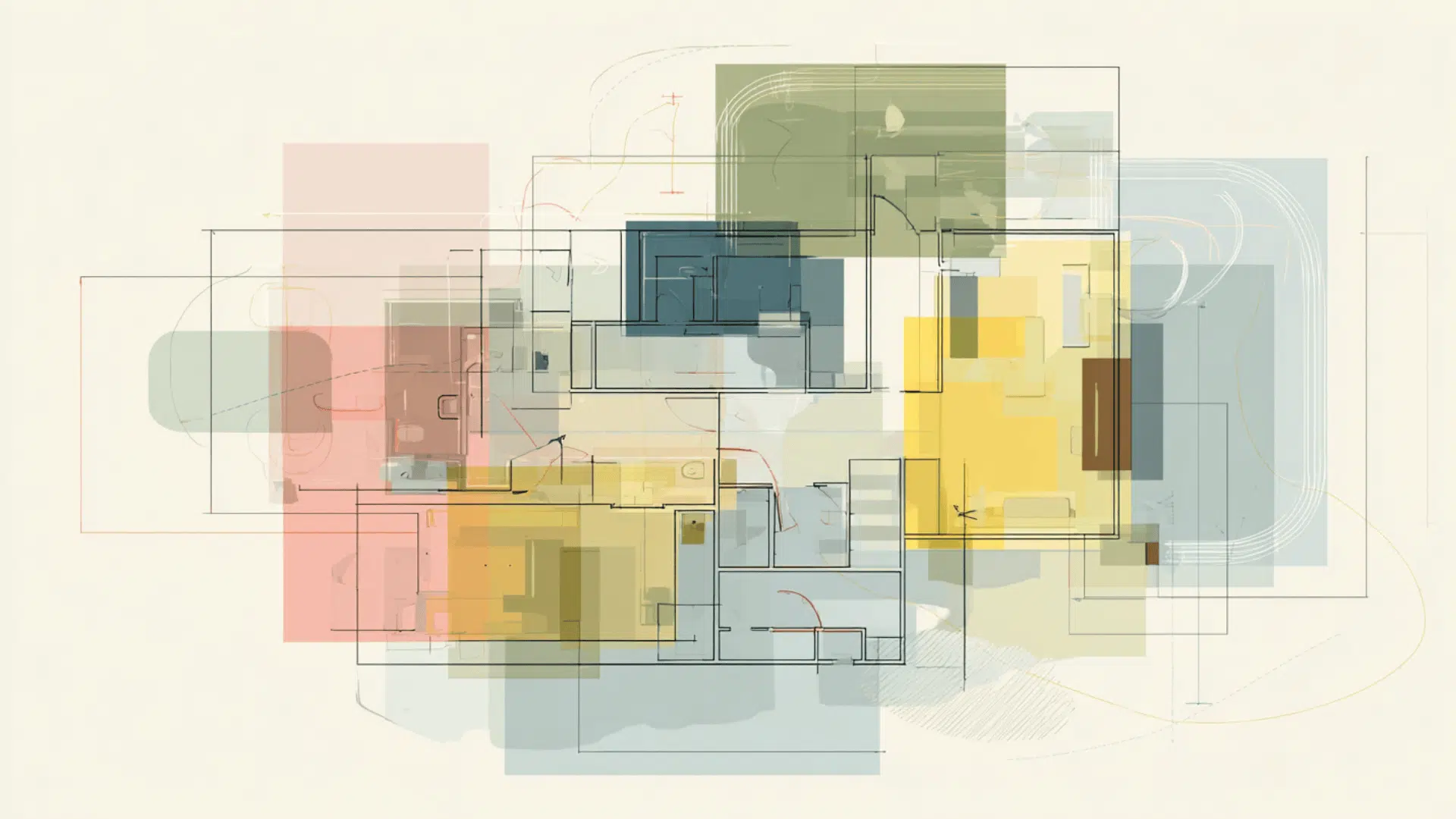
Most people have no idea where a panic room is supposed to go, and the search results aren’t great at explaining it.
The truth is, you don’t need a secret hallway or a hidden bookcase. You just need a spot in the house that’s already strong, already central, and easy to get to when you actually need it.
Placement matters more than anything else, because the whole room depends on how fast you can reach it.
1. Best Locations in Most Homes
A few spots show up again and again because they just work better than others.
- Closets: A lot of homes already have closets with good framing, and they’re usually near bedrooms. That makes them fast to reach, day or night.
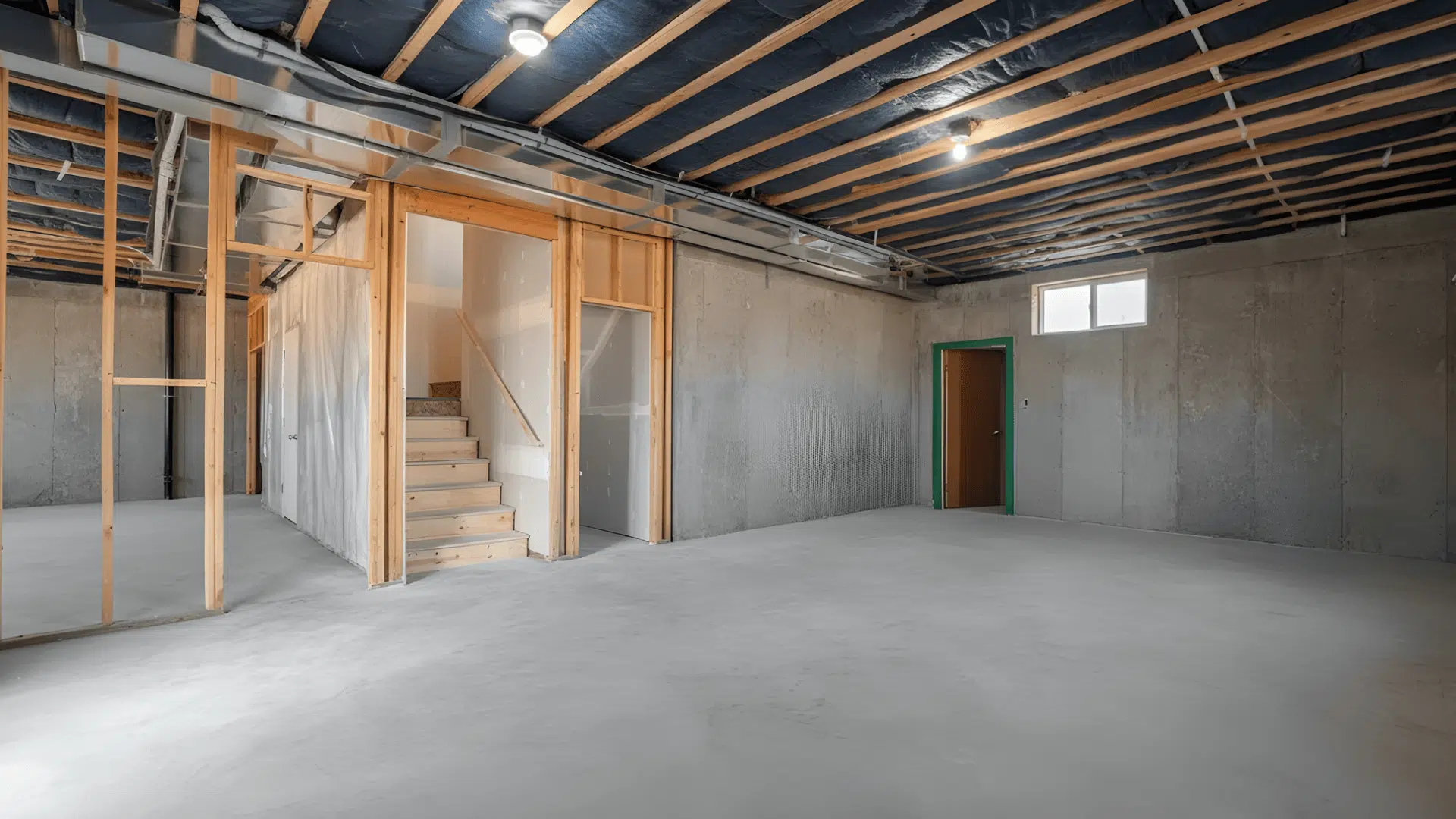
- Basements: Basements are naturally protected by the ground around them. They’re stable, quiet, and already built with thicker materials. Great for storms and long waits.
- Interior rooms: Rooms without exterior walls stay safer during break-ins and bad weather. They’re tucked deeper into the home, which adds another layer of protection without needing major construction.
If you can get a room that’s central, solid, and close to where you spend most of your time, you’re already on the right track.
2. Space Requirements
You don’t need a giant room. Most panic rooms start small.
- A little bigger than a walk-in closet works fine.
- Enough space for you to sit comfortably.
- Room for a reinforced door to swing closed without hitting anything.
- Space for basic supplies, ventilation equipment, and communication tools.
The real goal is making the room functional, not huge. A compact space is easier to reinforce, cheaper to build, and safer in emergencies.
3. Considerations for Apartments and Renters
This part trips people up, but you have more options than you think.
- You can reinforce existing interior rooms without tearing down walls.
- You can install a stronger door with permission from the landlord.
- You can set up a portable safe-room kit that includes communication tools and supplies.
- You can choose a bathroom or an interior closet since these rooms already have better framing than most living spaces.
Renters don’t need permanent construction. The goal is to create a protected space you can reach quickly, even if you can’t rebuild anything.
How Much Does a Panic Room Cost?
Most people expect panic rooms to cost a fortune, but the price range is wider than it looks. You can start small and practical, or you can go all the way into custom builds with tech packed into every corner.
Here’s a clean breakdown so you can see the numbers without digging around:
| Type of Panic Room | What You Get | Typical Cost |
|---|---|---|
| Budget conversions | Reinforced closet or small room, stronger door, basic ventilation, communication tools, essential supplies. Minimal construction. | $1,000-$5,000 |
| Standard safe rooms | Thicker walls, reinforced framing, heavy-duty door, improved ventilation, backup power, and more reliable communication setups. Often used for storms or home security. | $10,000-$50,000 |
| High-end custom builds | Full structural reinforcement, advanced tech, hidden entrances, surveillance feeds, independent power, high-grade air filtration. Built for maximum protection. | $50,000+ |
Should You Build a Panic Room?
Not everyone needs a panic room, and not every home is the right fit for one. If it makes sense, great. If not, you’ll know right away.
Risk Assessment Checklist
Here are a few questions that help clarify things fast:
- Do you live in an area with frequent break-ins or slow emergency response times?
- Do you deal with severe storms like tornadoes or hurricanes?
- Do you work in a profession where unwanted attention or threats are more common?
- Do you feel unsafe at home during certain hours or situations?
- Do you have space inside your home that could realistically be reinforced?
If you’re answering yes to a few of these, a panic room starts making more sense.
Lifestyle and Family Considerations
Some families benefit more from having a dedicated safe space.
- Kids who panic easily during emergencies
- Elderly relatives who can’t move quickly
- Parents who travel and want their family to have a secure fallback
- People who spend long hours at home alone
- Households with valuables that attract attention
A panic room can give everyone a single place to go without confusion or hesitation. One spot. One plan.
When You Don’t Need One
A lot of people assume they need a panic room because it sounds impressive, but here are the cases where it’s usually unnecessary:
- You live in a building with strong security already
- You have fast local emergency response times
- You’re in a low-risk area for both crime and severe weather
- You don’t have space for reinforcement without major construction
- Your concerns could be handled with simpler upgrades, like better locks or a home security system
In those situations, you might get more value from small improvements instead of a full panic room build.
How to Build a Panic Room: DIY vs. Professional

Building a panic room isn’t an all-or-nothing thing. Some parts are simple enough for most people to handle on their own.
Other parts really need a pro, because mistakes in the foundation, door installation, or ventilation can wipe out the whole point of having the room in the first place.
The goal is to blend what you can do yourself with what absolutely needs expert hands.
1. What You Can Safely Do Yourself
There are a few upgrades that are simple, practical, and low-risk.
- Reinforcing an existing room with heavier materials
- Adding interior deadbolts or stronger hardware
- Setting up communication tools like a landline, radio, or backup phone
- Stocking supplies and organizing the room layout
- Installing battery-powered lighting or emergency equipment
- Improving basic insulation for sound and heat
These are the kinds of tasks that don’t change the structural integrity of the room. You’re just tightening things up and making the space more usable in an emergency.
2. What Requires a Professional Builder
This is the part you don’t want to guess on. Professionals handle the pieces that actually define how safe the room is.
- Reinforcing walls with ballistic or impact-rated materials
- Installing a true panic-room door with proper framing
- Adding advanced ventilation or air-filtration systems
- Running independent power or backup electrical lines
- Building hidden entry points or escape routes
- Upgrading structural components inside basements or load-bearing walls
These aren’t cosmetic changes. They affect stability, safety, and code compliance. A pro makes sure the room actually performs the way it’s supposed to when things get serious.
3. Safety Standards and Certifications
If you’re building a panic room that needs to stand up to storms, break-ins, or impact forces, certain standards come into play. These aren’t just fancy labels. They’re what confirm the room was built to a real benchmark, not someone’s guess.
Common standards include:
- FEMA guidelines for storm-safe construction
- ICC 500 standards for residential safe rooms
- Ballistic ratings for doors, walls, and windows
- Fire and ventilation codes for enclosed spaces
- Electrical standards for backup power systems
If a builder can’t explain which standards they follow, that’s a red flag. A real panic room should meet, or exceed, the requirements for whatever threats it’s meant to handle.
Safety Tips and Mistakes to Avoid
A panic room only works if the simple things are done right. Most issues come from small details people don’t think about until they’re already inside.
- Keep ventilation clear and working: Fresh air has to move freely. Make sure vents aren’t blocked, and the system is tested every so often. A panic room with stale air becomes uncomfortable fast.
- Have more than one way to communicate: Don’t rely on a single phone. Keep a landline, a radio, or a backup device so you’re covered if power drops or signals fade.
- Check power sources regularly: Backup batteries and emergency lights only help if they actually turn on. Test them once in a while and replace anything weak.
- Avoid overpacking the room: Too much furniture or storage makes the room harder to move around in during an emergency. Keep the layout simple and open.
- Don’t use the room as long-term storage: Storing chemicals, flammable items, or heavy clutter inside the room creates extra risk and takes away usable space.
- Close the door fully during emergencies: A reinforced door only works when it’s shut and locked. Leaving it cracked “just in case” cancels out the whole point.
- Know the room’s limits: Most panic rooms aren’t built for days of isolation. Treat it as a short-term shelter, not a bunker.
Wrapping Up
A panic room isn’t about living in fear. It’s about having one space in your home that stays steady when everything else feels unpredictable.
Once you understand how these rooms work, where they fit best, and what they actually need inside, the whole idea becomes a lot more practical.
It’s not about building something dramatic. It’s about creating a plan that works for your home, your family, and the way you live.
If you’ve been thinking about adding a panic room, now’s a good time to look at your space, weigh your needs, and start building a setup that makes you feel more secure.