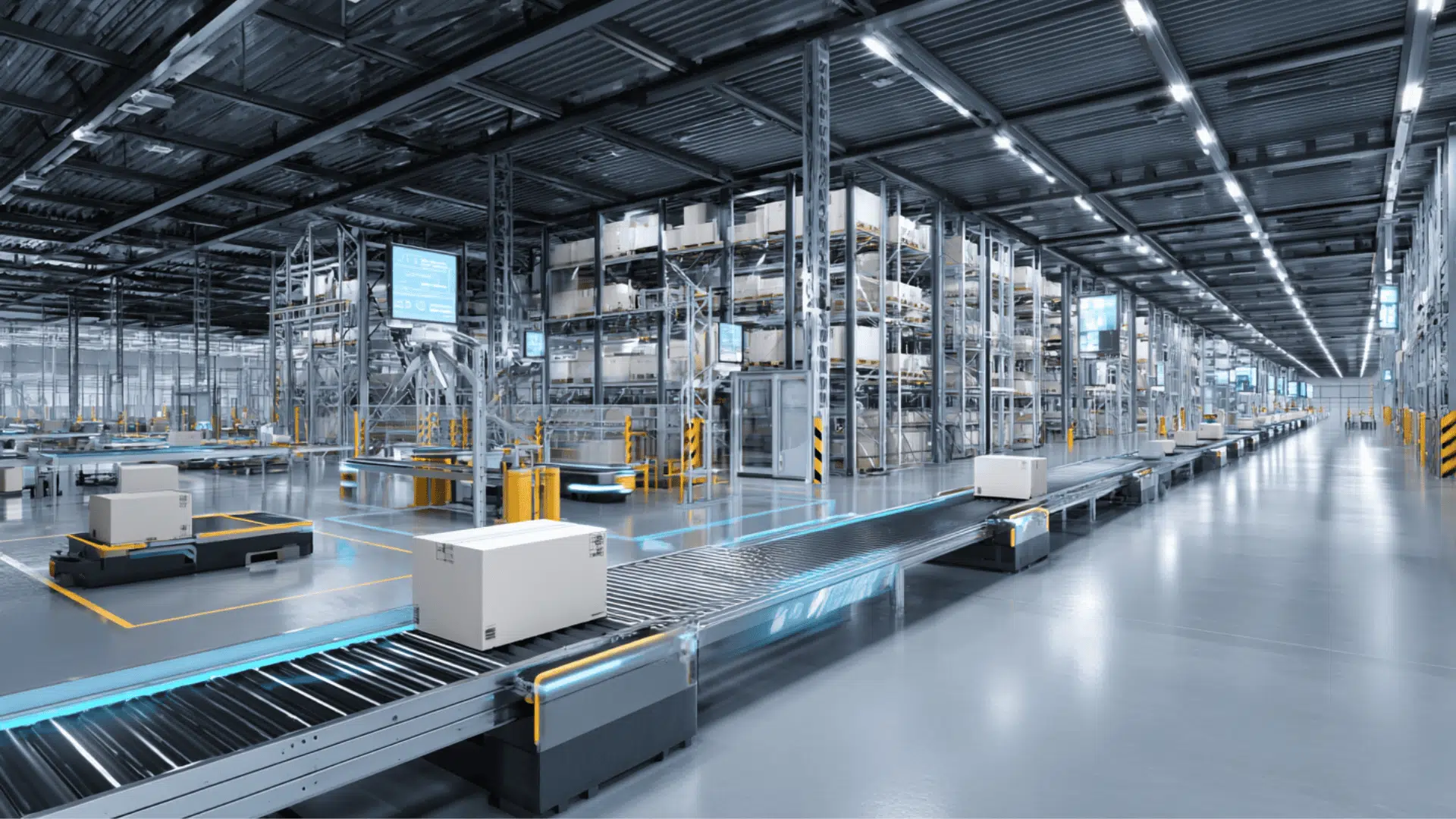
Warehousing is changing fast as companies race to keep up with rising customer expectations and supply chain demands.
Automated warehouse systems are reshaping how goods are stored, moved, and shipped – reducing delays and human error. Instead of relying on manual labor, modern warehouses now run on smart machines, data, and precision.
In this blog, I’ll break down how automation works, the core technologies behind it, the real costs and returns, and lessons from leading companies using it successfully.
By the end, you’ll see how automation can make warehouse operations faster, safer, and more reliable, starting with what this system really is.
What is an Automated Warehouse System?
An automated warehouse system uses machines, sensors, and software to move, store, and manage goods with little or no human help.
These systems handle tasks like picking, packing, sorting, and inventory tracking using technologies such as robots, conveyors, and automated storage systems.
Unlike traditional warehouses, which rely heavily on manual labor for every task, automated systems are controlled by computers and data. This means:
- Orders are processed faster and more accurately.
- Inventory levels update in real time.
- Less human effort is needed for repetitive or heavy work.
In short, automation replaces manual movement and tracking with smart technology that makes warehouse operations faster, safer, and more efficient.
Key Components and Technologies of AMS
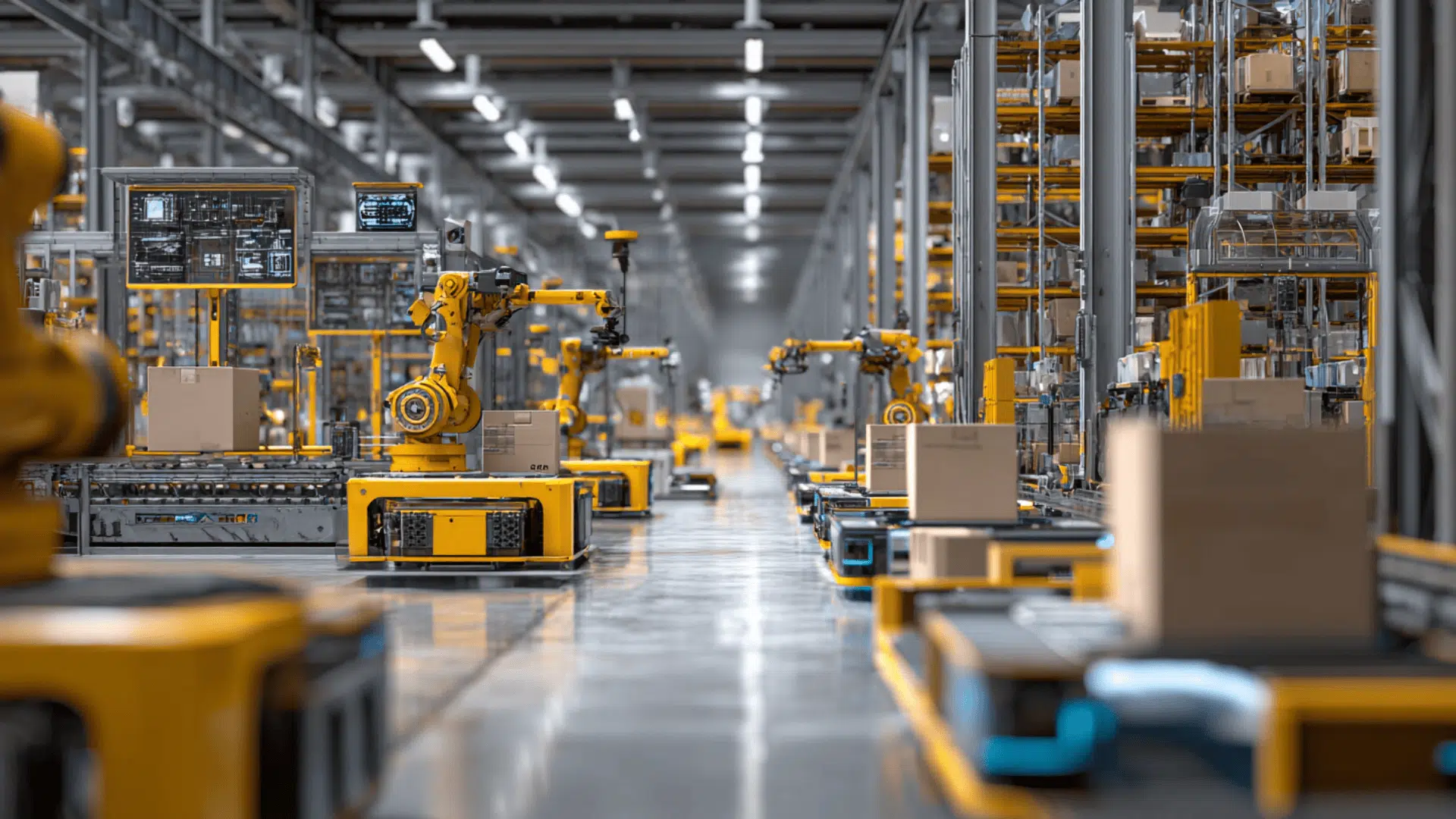
Automated warehouse systems rely on several technologies working together to handle storage, movement, and order fulfillment. Each system plays a specific role in improving speed, accuracy, and overall efficiency.
1. AS/RS (Automated Storage and Retrieval Systems)
These systems use cranes, shuttles, or conveyors to automatically store and retrieve products from racks. They help maximize vertical space and speed up order picking. Commonly used in e-commerce, manufacturing, and cold storage facilities.
2. Autonomous Mobile Robots (AMRs)
AMRs move freely around the warehouse using sensors and maps to avoid obstacles. They’re used for transporting goods, assisting in picking, and reducing worker travel time. These robots adapt to changing layouts, making them ideal for dynamic and fast-growing operations.
3. Automated Guided Vehicles (AGVs)
AGVs follow predefined routes marked by magnetic strips or sensors to transport items between stations. They’re ideal for repetitive material-handling tasks in structured environments. Because their paths are fixed, they offer predictable performance with minimal supervision.
4. Automated Sortation Systems
These systems use conveyors, scanners, and software to sort items quickly based on size, weight, or destination. They’re essential for high-volume operations like parcel centers and fulfillment hubs. Their speed and accuracy make them a core part of time-sensitive logistics workflows.
5. Automated Picking Systems
These technologies combine robotics, vision systems, and AI to identify and pick items accurately. They help reduce human error and speed up order fulfillment in industries handling thousands of SKUs daily. Their precision allows warehouses to process more orders with consistent quality.
Benefits of Automated Warehouse Systems
Automation transforms warehouse operations by improving efficiency, consistency, and safety. It helps companies handle higher volumes while reducing human error and workplace risks.
- Speed and throughput improvements: Automated systems move goods faster, shortening order fulfillment and delivery times.
- Higher accuracy and reduced errors: Smart sensors and robotics ensure precise picking, packing, and inventory tracking.
- Better space utilization: Vertical and compact storage systems maximize available warehouse space.
- Enhanced worker safety: Machines handle heavy lifting and repetitive tasks, reducing injury risks.
- Lower operational costs: Automation cuts expenses linked to labor, waste, and inefficiencies over time.
- Reduced labor dependency: Systems help manage labor shortages by handling repetitive, time-consuming tasks efficiently.
Challenges and Limitations of Warehouse Automation
No system is perfect. While automation brings major benefits, it also comes with challenges that businesses need to plan for before implementation.
| Challenge | Description |
|---|---|
| High upfront investment | Initial costs for equipment, installation, and software can be significant, especially for large-scale automation. |
| Integration complexity with legacy systems | Connecting new automation technology with older WMS or ERP systems can cause compatibility and data flow issues. |
| Downtime during transition | Switching from manual to automated operations often requires temporary shutdowns or slower processing periods. |
| Maintenance and technical skill requirements | Automated systems need regular maintenance and skilled technicians to handle repairs, updates, and troubleshooting. |
Step-by-Step Guide to Implementing Warehouse Automation
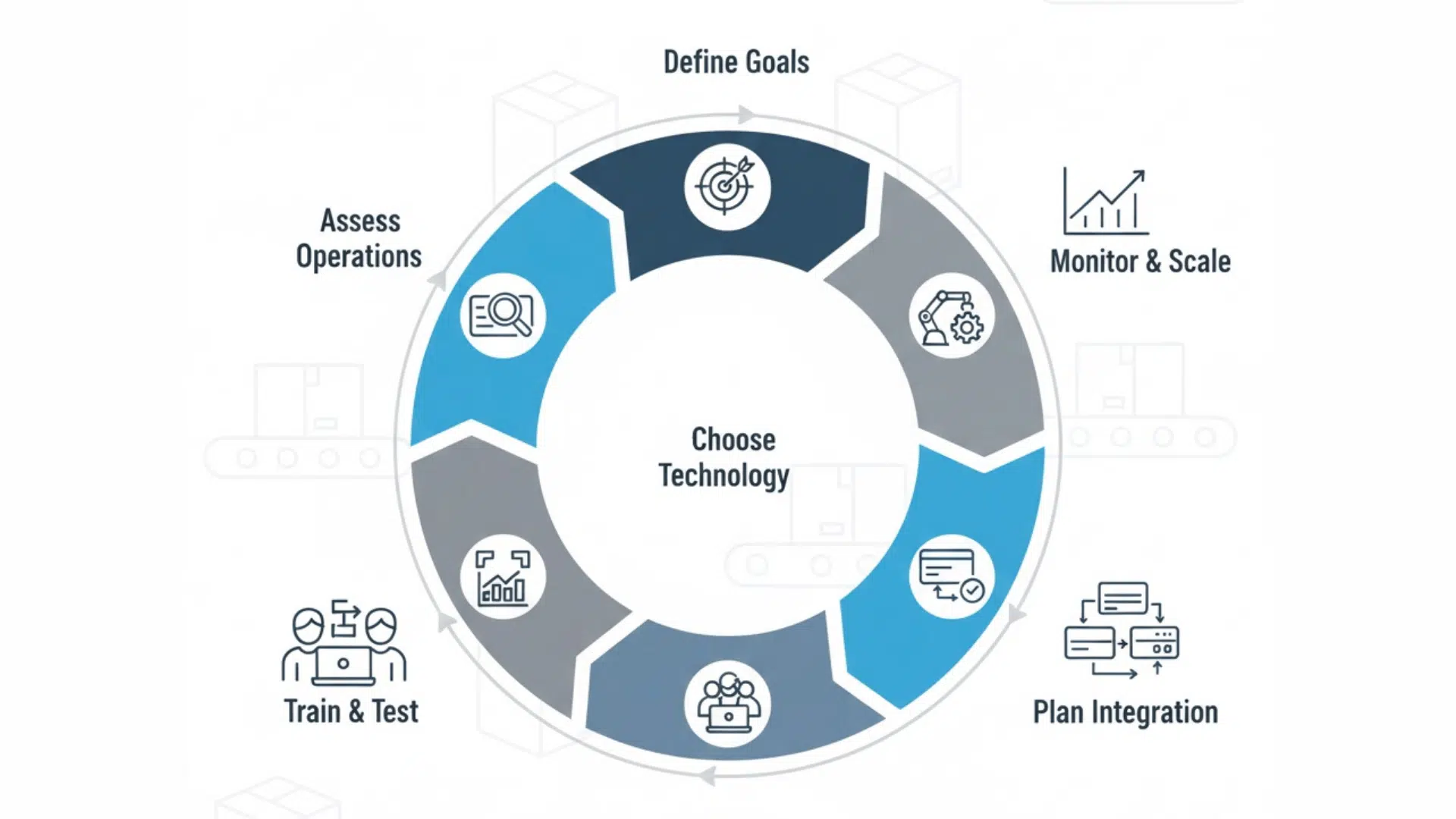
Successful automation starts with careful planning and ends with ongoing optimization. Each stage builds on the last to ensure a smooth and effective transition.
1. Assess Current Operations (Workflow Analysis)
Review how goods move through your warehouse today. Identify bottlenecks, repetitive tasks, and areas where automation can deliver the biggest impact.
2. Define Automation Goals (Speed, Space, Accuracy)
Set clear objectives, such as reducing picking time, increasing throughput, or improving inventory accuracy, to guide your automation strategy.
3. Choose the Right Technology Stack
Select systems that match your warehouse size, product type, and goals. Consider AS/RS, AMRs, AGVs, or sortation systems depending on your needs.
4. Plan for Integration with WMS/ERP
Ensure your automation tools connect smoothly with your existing warehouse management or enterprise systems for seamless data flow.
5. Train Workforce and Test Systems
Prepare staff to work alongside new technology. Conduct pilot tests to fine-tune processes and ensure system reliability before full rollout.
6. Monitor, Optimize, and Scale
After implementation, track performance data regularly. Use insights to improve workflows, address issues early, and expand automation gradually.
Automation isn’t a one-time project; it’s an evolving process. Continuous monitoring and data-driven improvements keep your system efficient and adaptable as your operations grow.
Cost and ROI Analysis
Understanding the long-term financial impact of automation is key before making an investment. While costs can be high upfront, the long-term savings and productivity gains often justify the expense.
Typical Cost Range by System Type
- Automated Storage & Retrieval Systems (AS/RS): $500,000–$5 million depending on size and complexity.
- Autonomous Mobile Robots (AMRs): $20,000–$50,000 per robot, plus software integration costs.
- Automated Guided Vehicles (AGVs): $40,000–$150,000 each based on load capacity and navigation system.
- Automated Sortation Systems: $500,000–$2 million for large-scale operations.
- Automated Picking Systems: $100,000–$1 million depending on the level of robotics and AI integration.
ROI Timeline (Short, Medium, Long Term)
- Short term (1–2 years): Reduced labor costs, fewer picking errors, and improved safety.
- Medium term (3–5 years): Higher throughput, better inventory accuracy, and improved customer satisfaction.
- Long term (5+ years): Major savings through optimized space use, energy efficiency, and lower maintenance costs.
Example Cost-Benefit Case Study
A mid-size e-commerce warehouse invested $1.5 million in AMRs and AS/RS technology. Within two years, they:
- Increased order fulfillment speed by 40%
- Reduced picking errors by 60%
- Cut labor costs by 30%
The system paid for itself in just under three years, proving that automation, when well-planned, delivers strong long-term returns.
Case Studies: Leading Automated Warehouses

Real-world examples show how automation transforms operations at scale. These companies demonstrate different approaches to efficiency, accuracy, and innovation in warehouse management.
| Technology / Company | How It Works | Key Benefit | Best Use Case |
|---|---|---|---|
| Amazon Robotics (Kiva Systems) | Robots move entire shelves to stationary workers using a goods-to-person method | Faster picking and reduced walking time | High-volume fulfillment centers |
| AutoStore Compact Storage | Robots retrieve bins from a stacked cube-style grid system | Maximizes floor space and speeds up orders | Retailers and e-commerce warehouses |
| Symbotic AI-Driven Logistics | AI-powered robots sort, store, and pick items in modular systems | Higher accuracy and flexible inventory handling | Large distribution centers with varied SKUs |
| Walmart & Ocado Automation | Robots manage grocery picking while AI schedules inventory and delivery | Faster grocery fulfillment and smooth workflow | Automated grocery and fresh-food operations |
Across these examples, automation led to measurable gains: 30–50% faster fulfillment, 25–40% fewer errors, and significant labor cost reductions. Each company’s success highlights how tailored automation strategies can deliver high efficiency and scalability.
Future of Warehouse Automation
AI, machine learning, and predictive analytics will play a larger role in warehouse decision-making. Systems will predict demand, adjust inventory levels automatically, and optimize picking routes in real time to reduce downtime and waste.
Integration with IoT and digital twins will create connected warehouses where every piece of equipment and product communicates through sensors. Digital twins, virtual replicas of warehouse operations, will allow managers to test layouts, workflows, and maintenance plans before making changes.
Sustainability and energy-efficient automation will become a priority. More systems will use low-power robots, recyclable materials, and smart energy management to reduce environmental impact and operating costs.
Cloud-based WMS for real-time visibility will continue to expand. Cloud platforms will connect multiple facilities under one system, enabling live performance tracking, remote management, and faster decision-making across global operations.
Wrapping Up
Automation is no longer a luxury; it’s becoming essential for keeping warehouses efficient, scalable, and resilient.
Automated warehouse systems bring clear gains in accuracy, safety, and long-term savings, but success depends on planning, integration, and continuous improvement.
As technology evolves, AI and robotics will only deepen their role in how inventory moves and how data drives decisions. The best time to prepare for that shift is now.
If you’re ready to modernize your warehouse operations, start by assessing where automation can make the biggest impact.