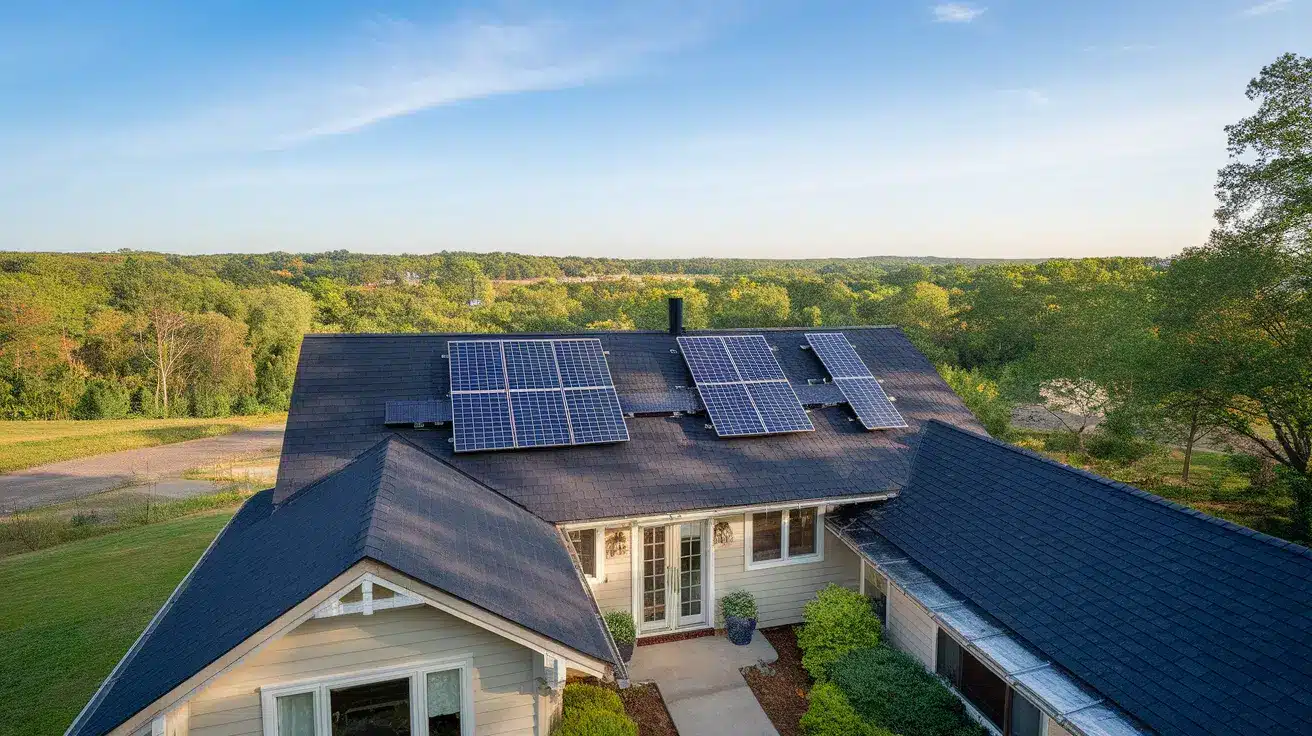
Many people believe solar panels stop working without bright sunshine, but that’s far from the truth.
The real question isn’t whether solar needs direct sunlight; it’s how much light is enough to power your home efficiently.
In this guide, I’ll break down how solar panels perform under different lighting conditions, from cloudy days to full shade.
You’ll also learn what affects their output, how weather and location play a role, and what you can do to keep them producing strong results year-round.
By the end, you’ll know exactly how solar fits into your home’s energy plan. Let’s start by understanding how they work.
How Solar Panels Work With and Without Direct Sunlight
Even when the sky isn’t perfectly clear, solar panels still create energy. Let’s look at how they do that, with and without direct sunlight.
The Real Science Behind Solar Cells
Solar panels are made up of many small units called photovoltaic (PV) cells. These cells absorb photons, which are tiny particles of light. When photons hit the cells, they knock electrons loose, creating an electric current that powers your home.
Direct sunlight gives PV cells more photons, so they generate more energy. Indirect sunlight, light that’s scattered by clouds or reflected off surfaces, still reaches the panels but with less intensity, leading to reduced output.
Direct Sunlight vs. Indirect Sunlight (With Output Table)
Even without full sun, solar panels don’t stop working. Here’s a simple comparison of how much power you can expect in different conditions:
| Sunlight Condition | Approximate Output Efficiency | What’s Happening |
|---|---|---|
| Clear, direct sunlight | 100% | Full photon exposure; panels at peak performance |
| Light clouds / hazy sky | 70–80% | Some photons scattered; still good output |
| Heavy clouds / overcast | 30–50% | Diffused light only; reduced but steady power |
| Partial shade | 10–30% | Blocked cells reduce flow across panel strings |
| Full shade / nighttime | 0–5% | Minimal or no usable light available |
In short, direct sunlight gives the best performance, but panels can still produce electricity from scattered light on cloudy or shaded days.
How Weather Affects Solar Panel Output
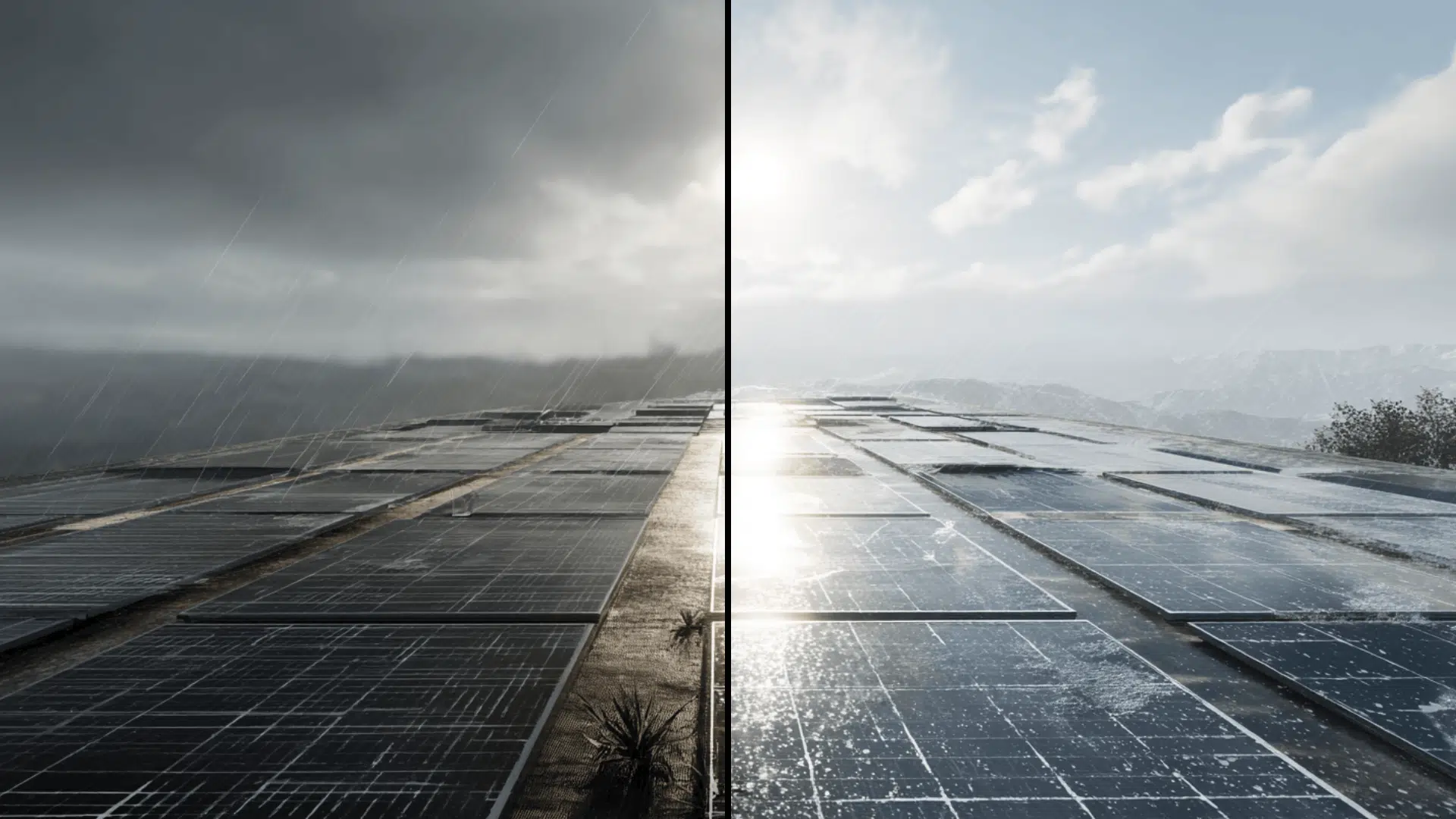
Weather plays a big role in how much electricity your solar panels produce. Some conditions reduce sunlight, while others can help keep your panels working better over time.
1. Cloudy Weather
Light clouds scatter sunlight but don’t block it completely. On these days, your panels can still work at 70–80% efficiency.
When the clouds are thick and dark, less light reaches the panels. Output may drop to 30–50%, depending on how dense the cloud cover is. Even then, the system continues generating power throughout the day.
2. Rain
Rainy days lead to lower energy production since clouds block direct sunlight. However, rain has an upside; it helps wash away dirt and dust from the panels.
This natural cleaning can slightly improve performance once the weather clears.
3. Snow
Light snow can let some sunlight pass through, allowing the panels to keep producing energy at reduced levels.
But when heavy snow fully covers the panels, they can’t absorb light and temporarily stop generating power. Once the snow slides off or melts, performance returns to normal.
4. Fog and Haze
Fog and haze often get overlooked, but they can lower efficiency by reducing how much light reaches the surface.
Even so, panels still pick up scattered light and continue producing some electricity, just at a smaller fraction of their full capacity.
Do Solar Panels Work in Shade: Complete Guide
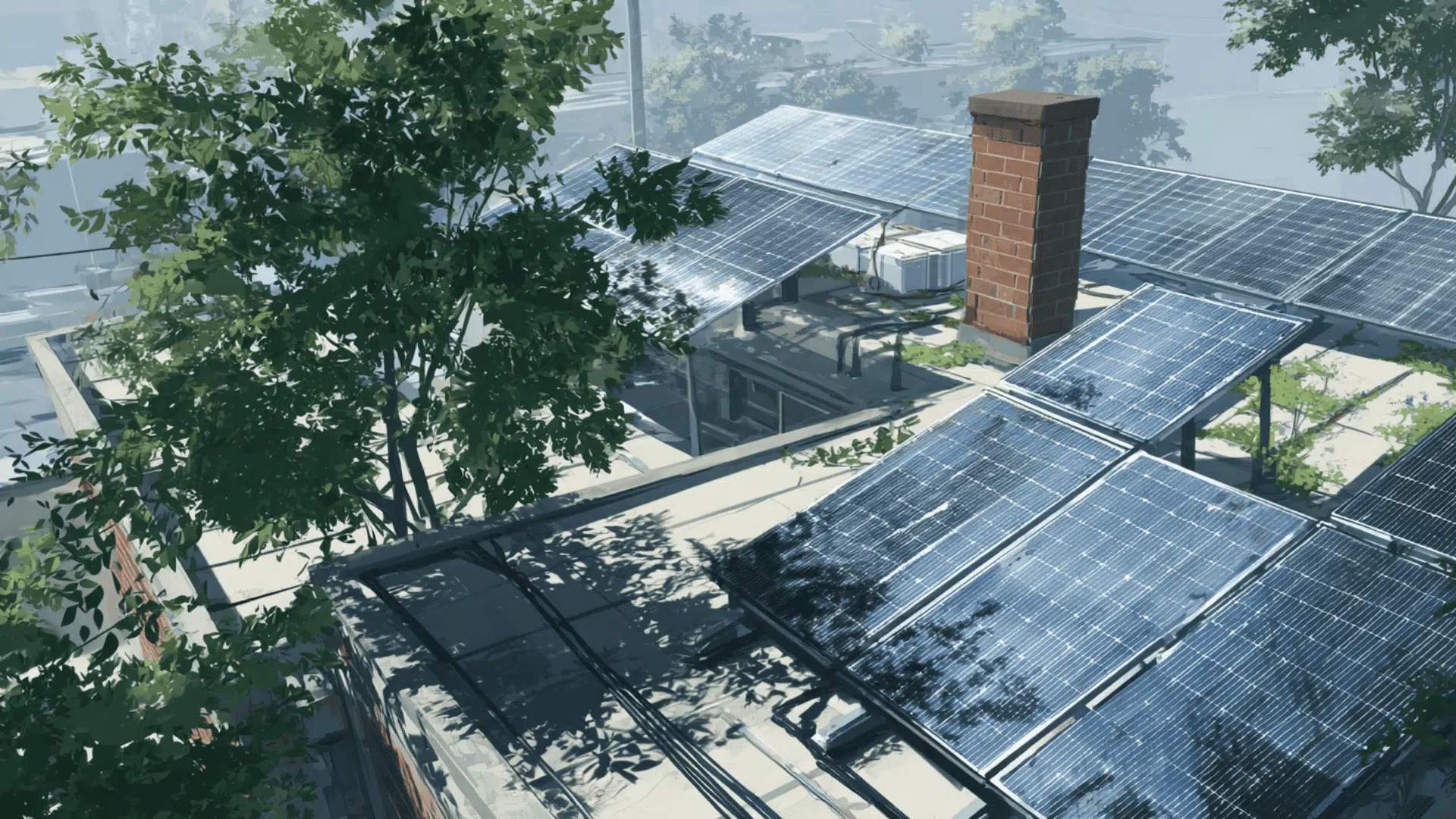
Shade doesn’t stop solar panels from working, but it can affect how much energy they produce. Let’s break down what happens when part of a panel is shaded and how to fix it.
Why Shade Reduces Energy
Solar panels are made up of smaller cells connected in strings. When one cell in a string is shaded, it can block the flow of electricity through that section, lowering the entire panel’s output.
To prevent total power loss, most modern panels include bypass diodes. These allow electricity to flow around shaded cells, so only a portion of the panel is affected instead of the whole array.
How Much Output You Lose in Shade
Even small patches of shade can make a noticeable difference. The amount of power you lose depends on how much of the panel is covered.
| Shade Level | Approximate Power Loss | What Happens |
|---|---|---|
| Light partial shade (10–20%) | 10–30% | Only part of one panel string is blocked |
| Moderate shade (30–50%) | 30–60% | Multiple cells shaded, current drops sharply |
| Heavy or full shade | 70–100% | Most cells blocked; panels produce little or no power |
Even though panels still pick up some indirect light, too much shade over time can lower your total system performance.
Best Setup for Shaded Roofs
If your roof gets partial shade from trees or nearby buildings, smart design choices can help reduce energy loss.
- Microinverters: Each panel works independently, so shade on one panel doesn’t drag down the rest.
- Power optimizers: Adjust power output at the panel level to minimize shade losses.
- Strategic placement: Install panels where they get the most direct sunlight, even if it means splitting them across roof sections.
- Tree trimming: Keeping branches clear ensures more consistent sunlight.
With the right equipment and layout, even shaded properties can benefit from solar energy without major efficiency losses.
How Much Sunlight Solar Panels Actually Need
The number of sunlight hours your panels receive affects how much energy they produce. Understanding this will help you know if solar is a good fit for your home.
4–6 Hours Rule Explained
Most solar experts recommend 4–6 hours of direct sunlight per day for panels to perform at their best.
“Direct sunlight hours” doesn’t mean the entire day. It refers to the peak sunlight period, usually between 10 a.m. and 4 p.m., when the sun is strongest, and the panels produce maximum energy.
Even if your panels get less direct sun during other times, they can still create power from scattered or reflected light throughout the day.
Sun Hours vs. Daylight Hours
It’s easy to confuse daylight hours with sun hours, but they’re not the same thing.
- Daylight hours include all the time between sunrise and sunset, even when the sun is low or behind clouds.
- Sun hours measure the total amount of solar energy (irradiation) that reaches your location in a day, expressed in kilowatt-hours per square meter (kWh/m²).
This number is more useful than clock time because it shows the quality of sunlight your panels receive, not just the duration.
What If You Get Less Than 4 Hours?
If you live in a cloudy or northern area, don’t worry, solar can still work for you. Here’s how to make the most of limited sunlight:
- Use high-efficiency panels that convert more light into power.
- Add microinverters or optimizers to handle uneven lighting.
- Adjust panel tilt and direction to capture the strongest possible light.
- Keep panels clean so dirt or snow doesn’t block valuable photons.
Even with less than four peak sunlight hours, you can still generate meaningful energy and reduce your electricity costs with a well-designed solar setup.
Real-World Examples: Cloudy Regions vs. Sunny Regions
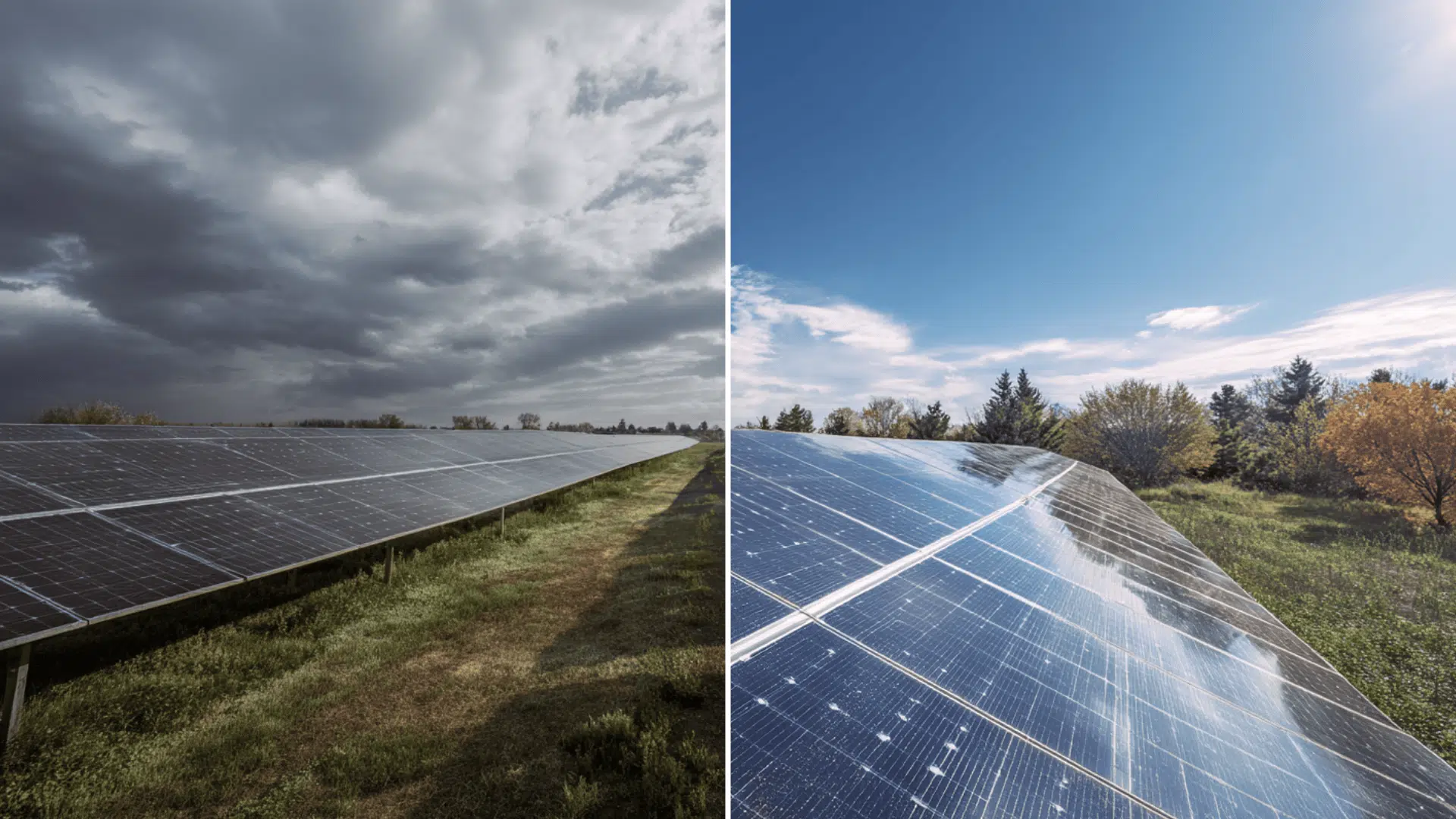
Let’s see how solar power works in real places, even in cloudy regions.
Solar Performance in Cloudy Regions (like Germany / Cloudier U.S. States)
Germany may not get as much sunshine as sunny states, yet solar works extremely well there. In 2024, German solar-PV systems produced 74 TWh of electricity and supplied about 15% of its total power needs. — Clean Energy Wire
Even under diffuse or cloudy conditions, modern solar panels still generate power. Some newer tech (like specialized low-light–optimized modules) can perform better in such weather. — gobesolar.com
That shows: a cloudy or “less-sunny” climate doesn’t automatically mean solar is useless. Solar capacity and good panel choice make a big difference.
Solar Performance in Sunny States (like Arizona, Nevada, California)
In sun-rich areas, solar panels get ample direct sunlight, which means greater, more consistent output. This adds up quickly over a year.
Because they start from a higher baseline of irradiance, solar systems in sunny states often yield more electricity per watt of capacity. That translates into faster return on investment, especially if electricity rates are high.
However, as real-world data from cloudy places like Germany shows, sunny weather helps but isn’t strictly required for solar to be worthwhile.
Tips to Improve Solar Output Without Direct Sunlight
- Choose high-efficiency monocrystalline panels: These panels convert more light into power, making them ideal for areas with limited sunlight.
- Use microinverters or optimizers: They allow each panel to work independently, so shade on one won’t drag down the whole system.
- Keep panels clean: Dust, pollen, or bird droppings can block light and reduce output. Regular cleaning helps maintain steady performance.
- Place panels at the right tilt and direction: Aim for a south-facing position (in the northern hemisphere) and adjust the tilt to match your location’s latitude for the best results.
- Avoid shading between 10 a.m. and 2 p.m.: This is when the sun is strongest, so keeping panels clear during these hours can make a noticeable difference in production.
Small changes like these can add up to a meaningful boost in energy generation over time, especially in less sunny regions.
Common Myths About Solar and Sunlight
| Myth | Reality |
|---|---|
| Solar doesn’t work in winter | Solar panels work year-round. In fact, they often perform better in cold weather because cooler temperatures improve efficiency. Shorter days reduce total output, but production continues as long as there’s light. |
| Solar doesn’t work in cloudy climates | Even in cloudy regions, panels still generate energy from indirect sunlight. Countries like Germany and the UK, both known for overcast weather, produce a large share of their electricity from solar. |
| Solar only works in hot places | Heat doesn’t boost performance; it can actually lower it slightly. What matters is the amount of sunlight, not temperature. Cooler, sunny days are ideal for efficiency. |
| Artificial light can power solar panels | Solar panels can technically generate small amounts of power from strong artificial light, but it’s minimal compared to sunlight. Artificial light isn’t a practical energy source for home solar systems. |
Wrapping Up
Solar panels don’t need direct sunlight to be effective; they just need daylight. Even under clouds, shade, or light rain, they continue producing usable energy.
What truly determines efficiency is panel quality, placement, and system design. With options like microinverters, high-efficiency monocrystalline panels, and smart installation angles, solar power remains a practical choice in almost any climate.
If you’re considering solar for your home, evaluate your roof’s sunlight exposure and explore the best system setup for consistent energy year-round.
Ready to see how much energy your roof could produce? Get a professional solar assessment today and start saving on your power bills.