
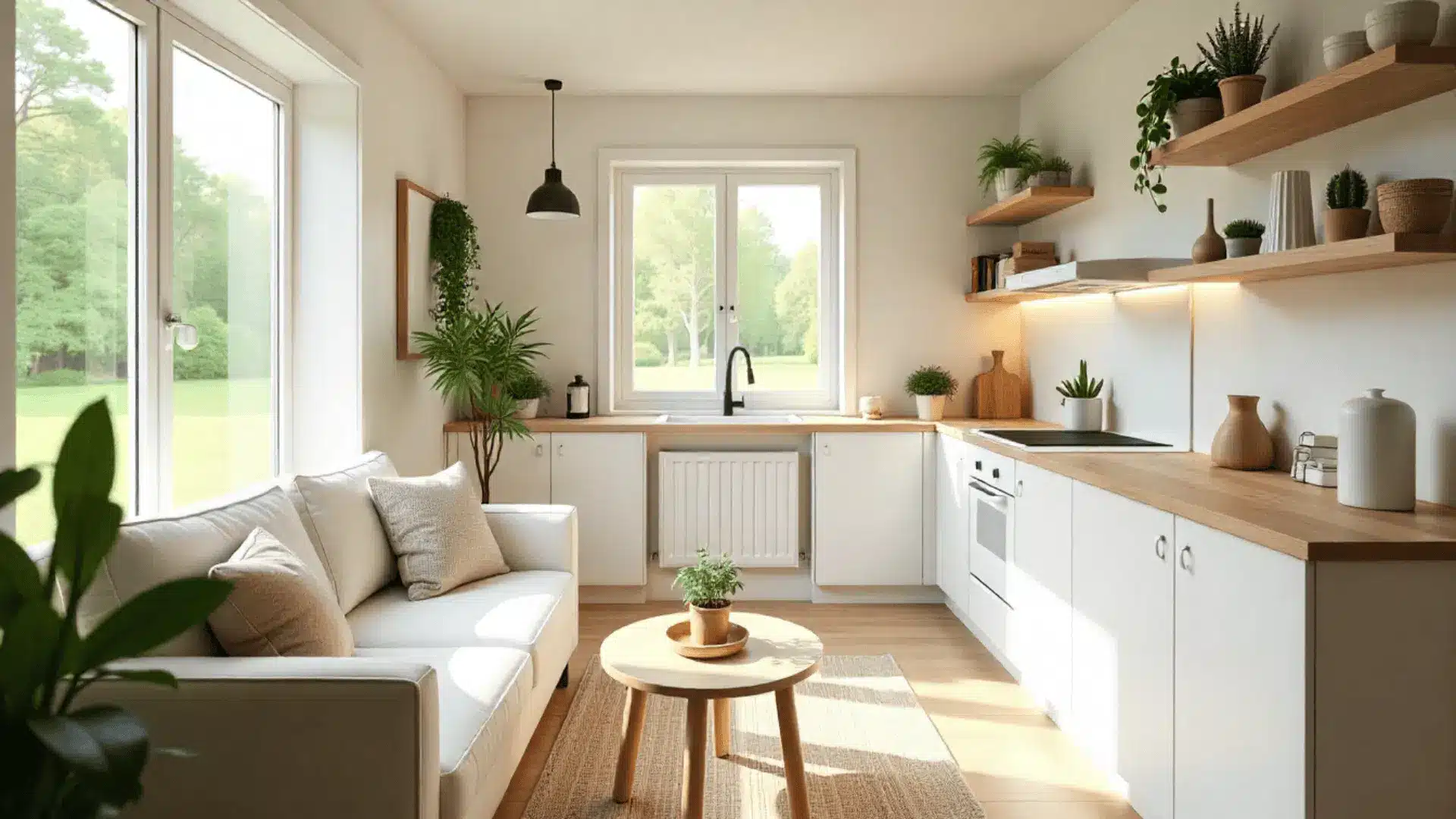
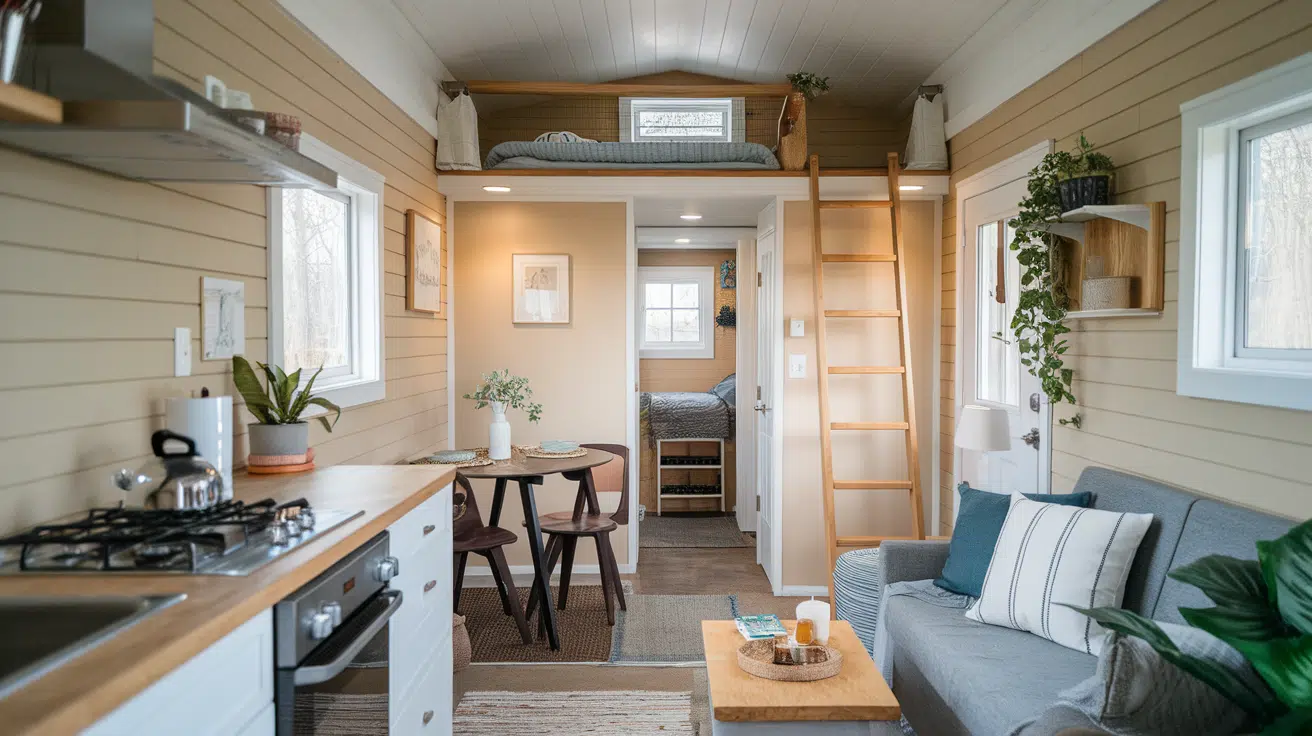
Designing a tiny house interior is all about making every inch count without giving up comfort or style.
The beauty of a small home lies in how intentionally it’s planned. With thoughtful choices, even the smallest rooms can feel open and balanced.
In this blog, I’ll share how to design a simple and functional tiny home that feels spacious and practical.
You’ll find ideas for different rooms, smart layouts, storage strategies, and affordable ways to make your home both stylish and sustainable.
Let’s start by understanding what makes a tiny house feel simple and complete.
What Makes a Tiny House Interior ‘Simple’
A simple, tiny house focuses on what really matters: function, flow, and minimalism.
Every piece should serve a purpose and still leave the room feeling open and calm. Clean layouts, light colors, and uncluttered surfaces make small spaces feel much bigger.
Avoid overcrowding your rooms with too much furniture or decor. Keep corners bright and airy using soft lighting or mirrors. The goal is to create a space that feels peaceful, not packed.
Design Styles That Work Best in Tiny Homes
- Modern Minimalist: Clean lines, neutral tones, and open layouts make the space feel fresh and organized.
- Rustic Charm: Warm wood textures and earthy tones bring comfort and a homely feel.
- Traditional accents like vintage or antique Heriz rugs, known for their rich patterns and durability, can ground a small space while adding warmth and character without overwhelming the room.
- Scandinavian Style: Bright colors, simple decor, and practical furniture add both function and calm.
- Boho Small Space: Play with colorful fabrics, plants, and layered textures for a cozy and lively look.
Each of these styles works because it balances beauty with practicality, perfect for tiny homes that need both.
Room-by-Room Tiny House Interior Ideas
Every room in a tiny home should serve a purpose while still feeling comfortable and inviting. With the right design approach, you can make each space, no matter how small, look organized, bright, and easy to live in.
Living Room
The living room is the heart of any tiny home. With the right balance, it can feel open, welcoming, and perfectly suited for everyday living.
1. Smart Seating
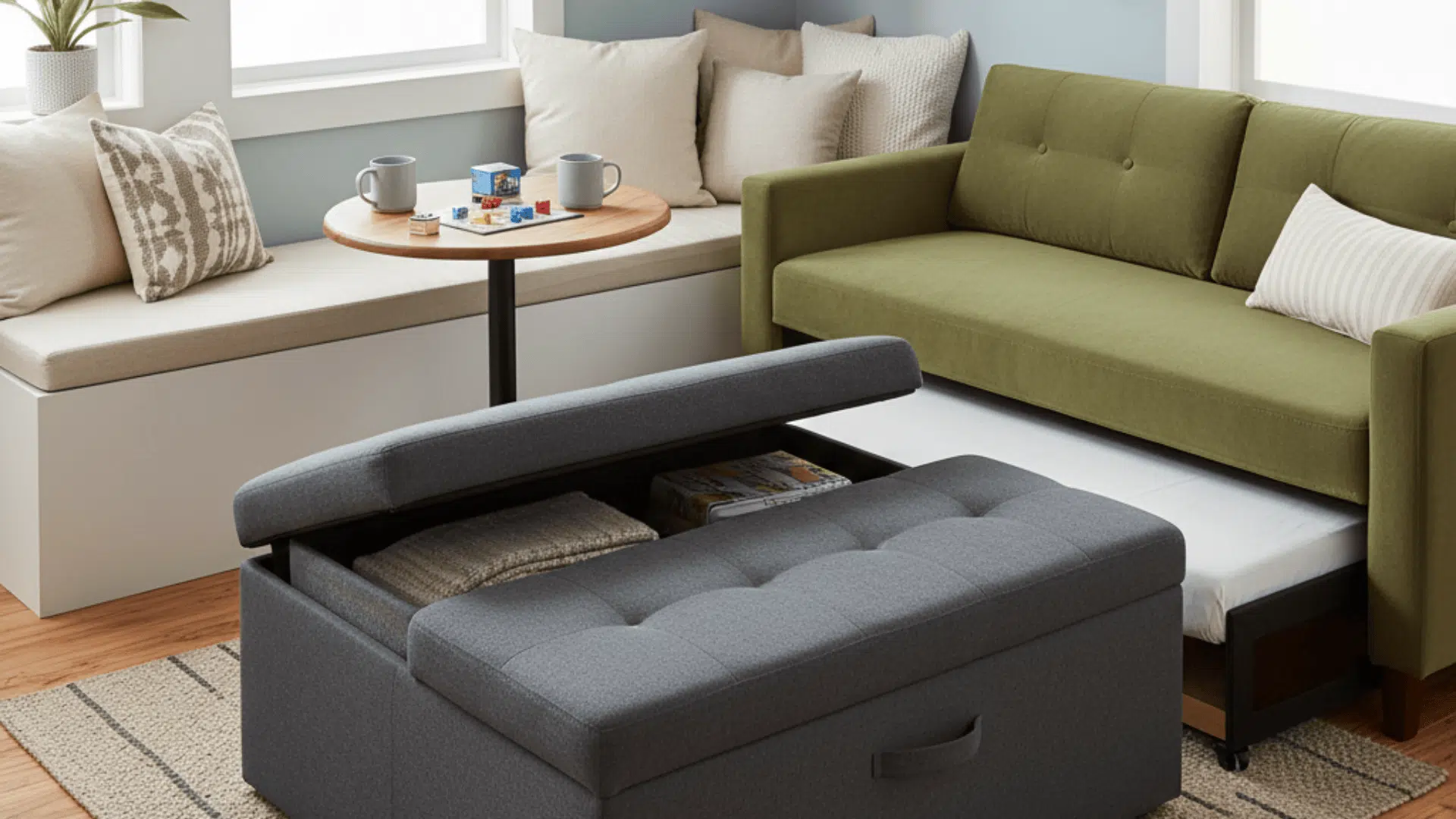
Choose seating that works harder for you. Storage ottomans, pull-out couches, or corner benches save valuable floor space while keeping the area cozy and functional.
These flexible pieces can shift from lounging to dining or entertaining easily, giving you more usability without adding clutter or crowding your small living room.
2. Layered Lighting
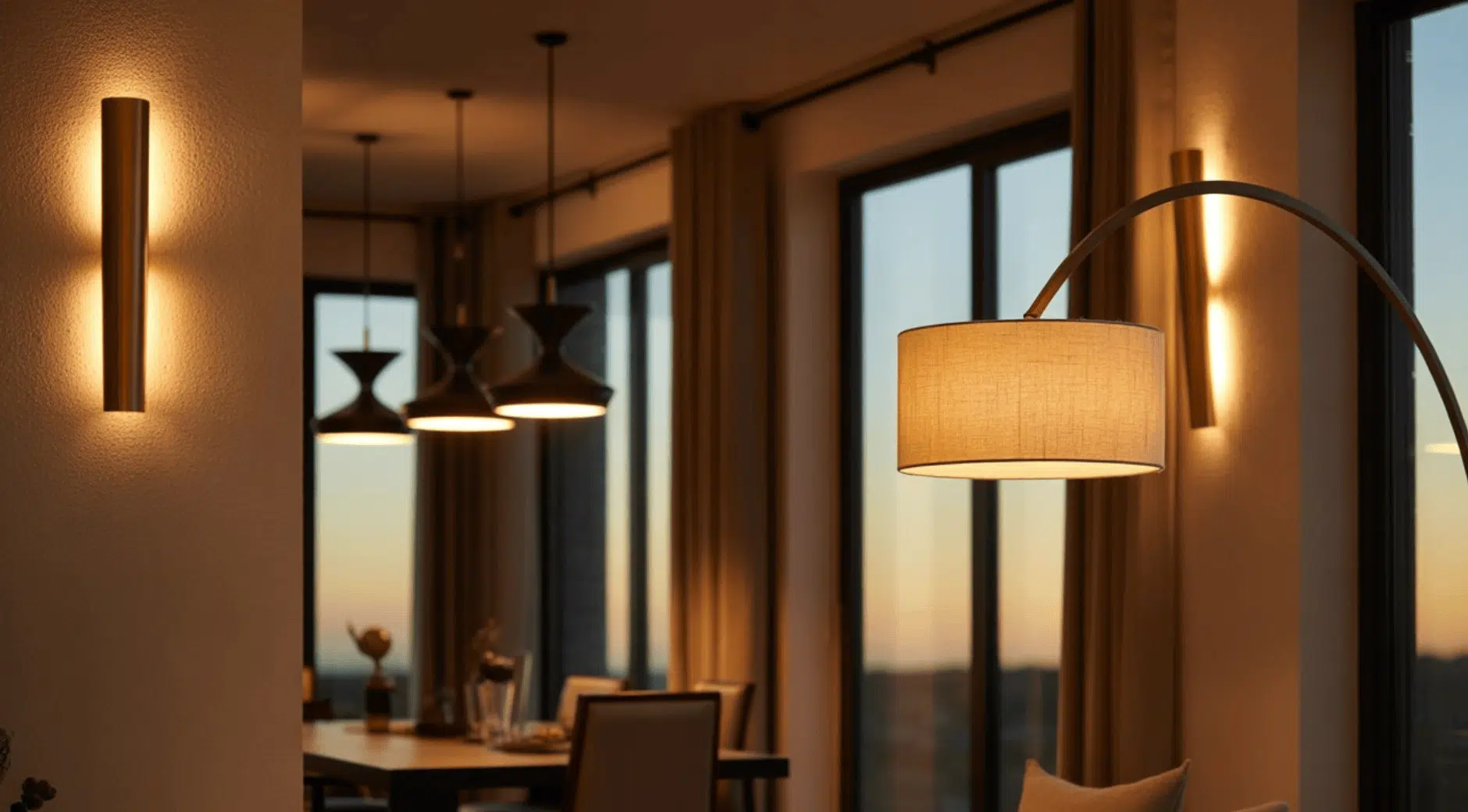
Combine different types of lighting to make your space more dynamic. Use wall sconces for accent light, pendant lights for focus, and floor lamps for warmth.
Layered lighting gives the room a cozy atmosphere while ensuring every corner stays bright. It also helps define zones within your open living area.
3. Light Colors and Mirrors
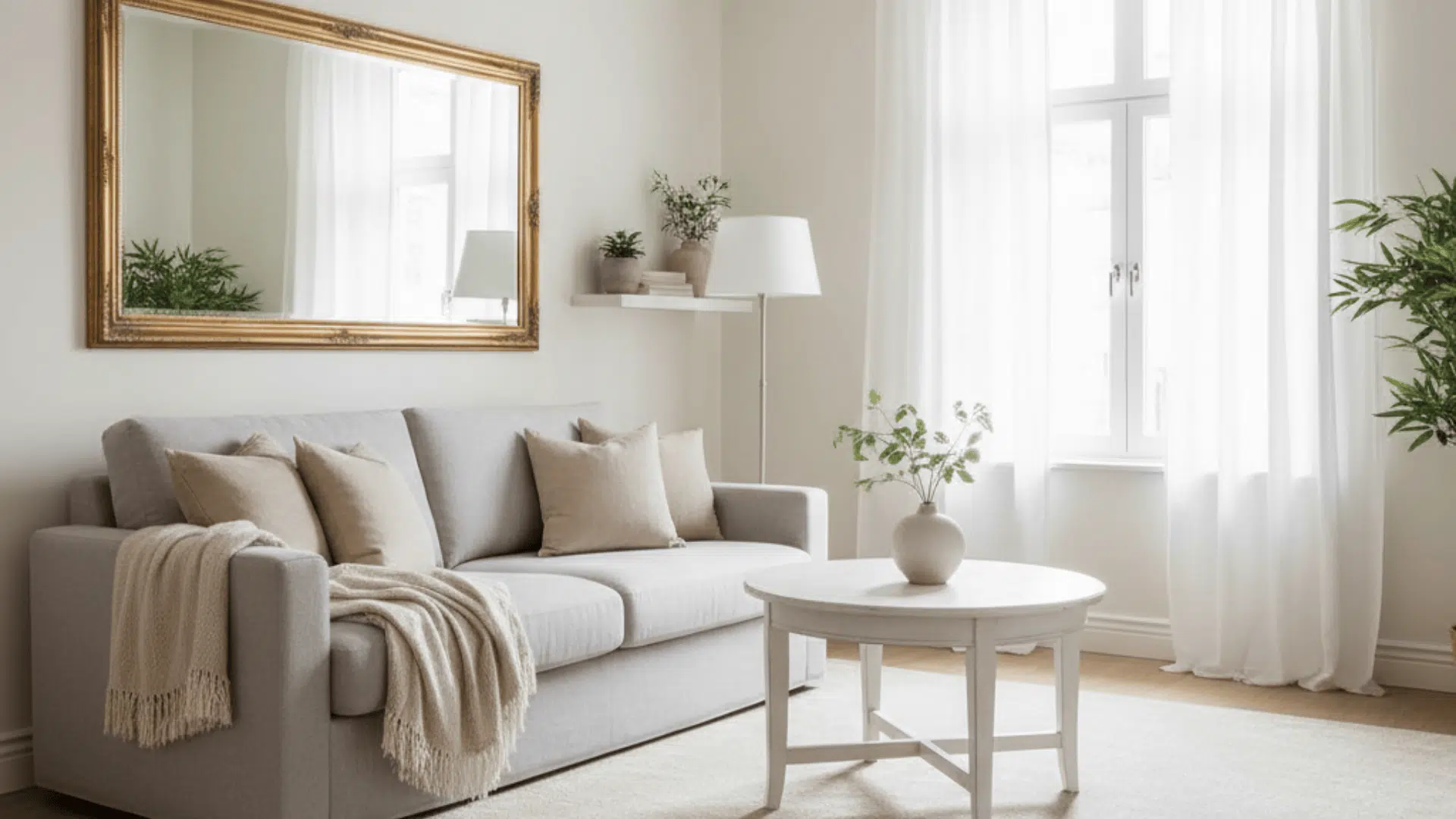
Light shades and reflective surfaces are key to opening up small spaces. Use neutral walls, soft fabrics, and sheer curtains to let light travel freely.
Adding one large mirror can double visual depth and brightness. Together, these simple details make your living room appear airy, clean, and balanced.
Kitchen
Tiny house kitchens work best when designed for efficiency and flow. Smart planning ensures your kitchen feels open, easy to use, and pleasant to cook in, no matter how limited the space.
4. Compact Appliances
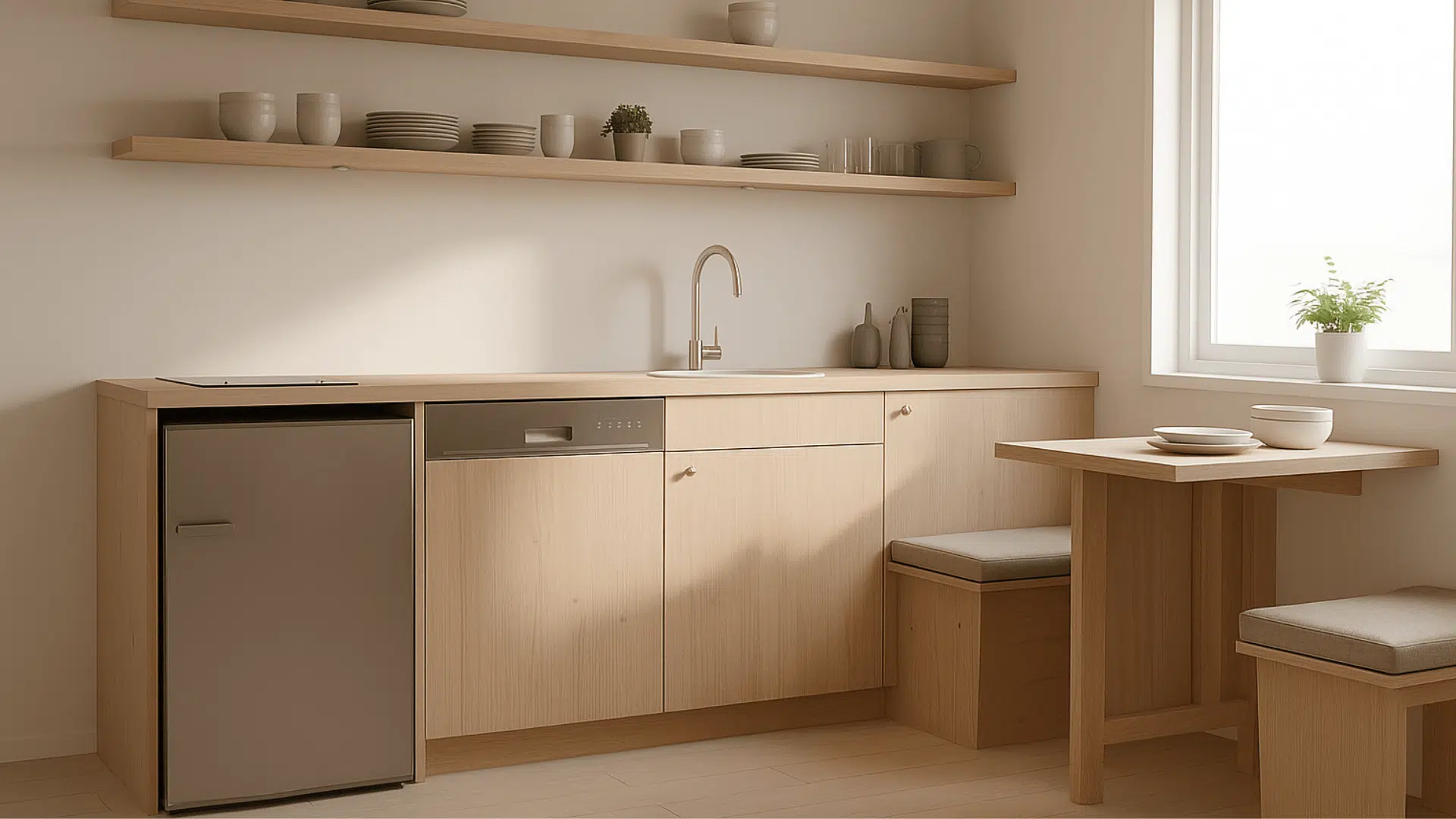
Choose appliances that fit your lifestyle without overwhelming the room. Mini fridges, two-burner stoves, and slim dishwashers are perfect for small layouts.
Install them neatly into counters or under cabinets to save every inch. These compact solutions deliver full functionality while maintaining a clean, balanced look across your kitchen.
5. Open Shelves
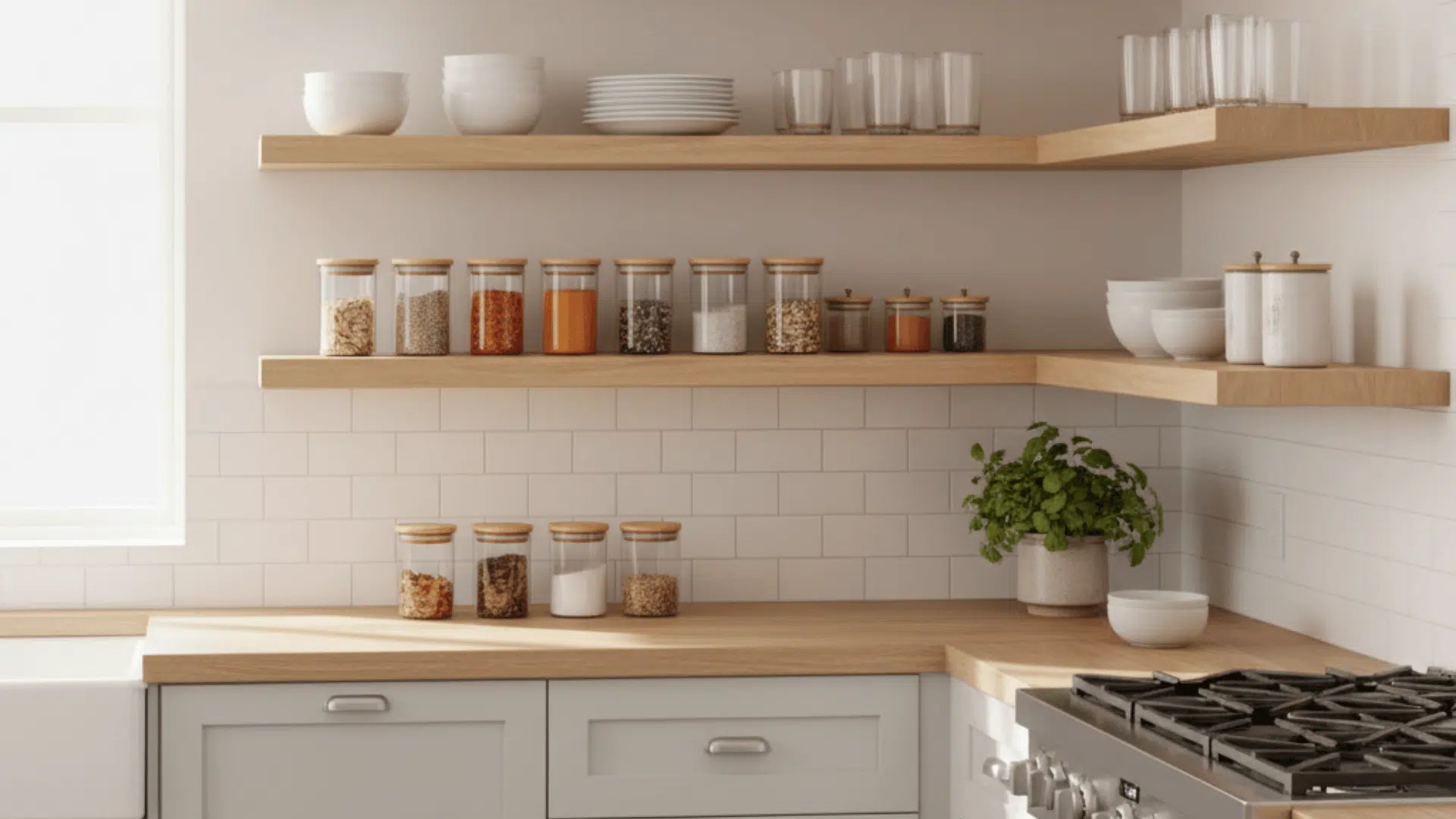
Replace bulky cabinets with open shelving to keep your kitchen bright and accessible. Display everyday items like dishes, glasses, or spices within easy reach.
Use small baskets or matching jars for organization. Open shelves lighten the visual weight of the room and help create a sense of openness and simplicity.
6. Neutral Tones
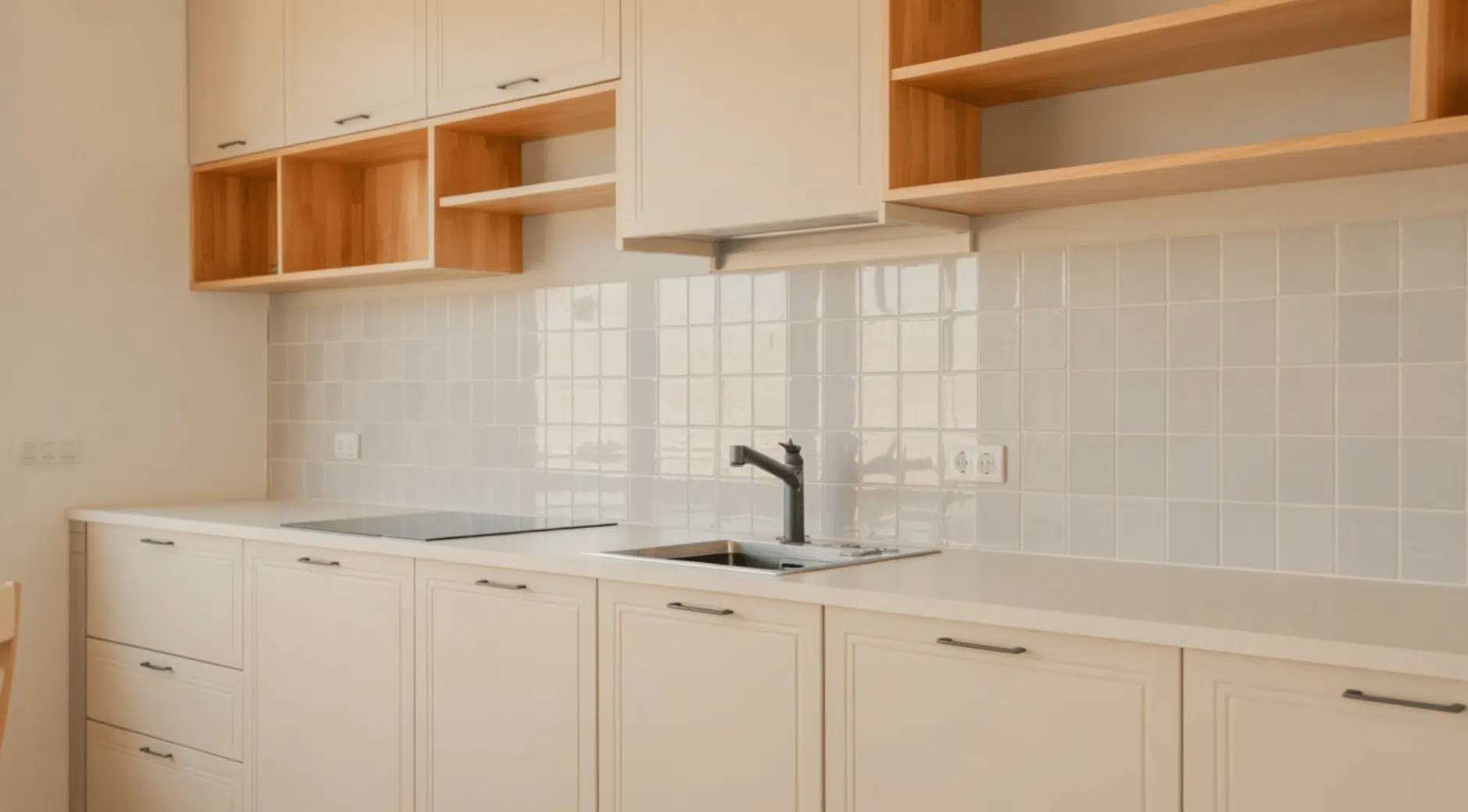
Light, neutral tones such as white, cream, or soft gray make compact kitchens appear larger. These colors bounce natural light around and keep the space from feeling crowded.
Pair them with touches of wood or matte metal to introduce warmth and contrast without losing that airy, modern look.
Bathroom
In tiny homes, bathrooms should balance comfort, function, and smart use of space. Focus on compact fixtures and clever storage solutions to keep your space practical.
7. Space-Saving Fixtures
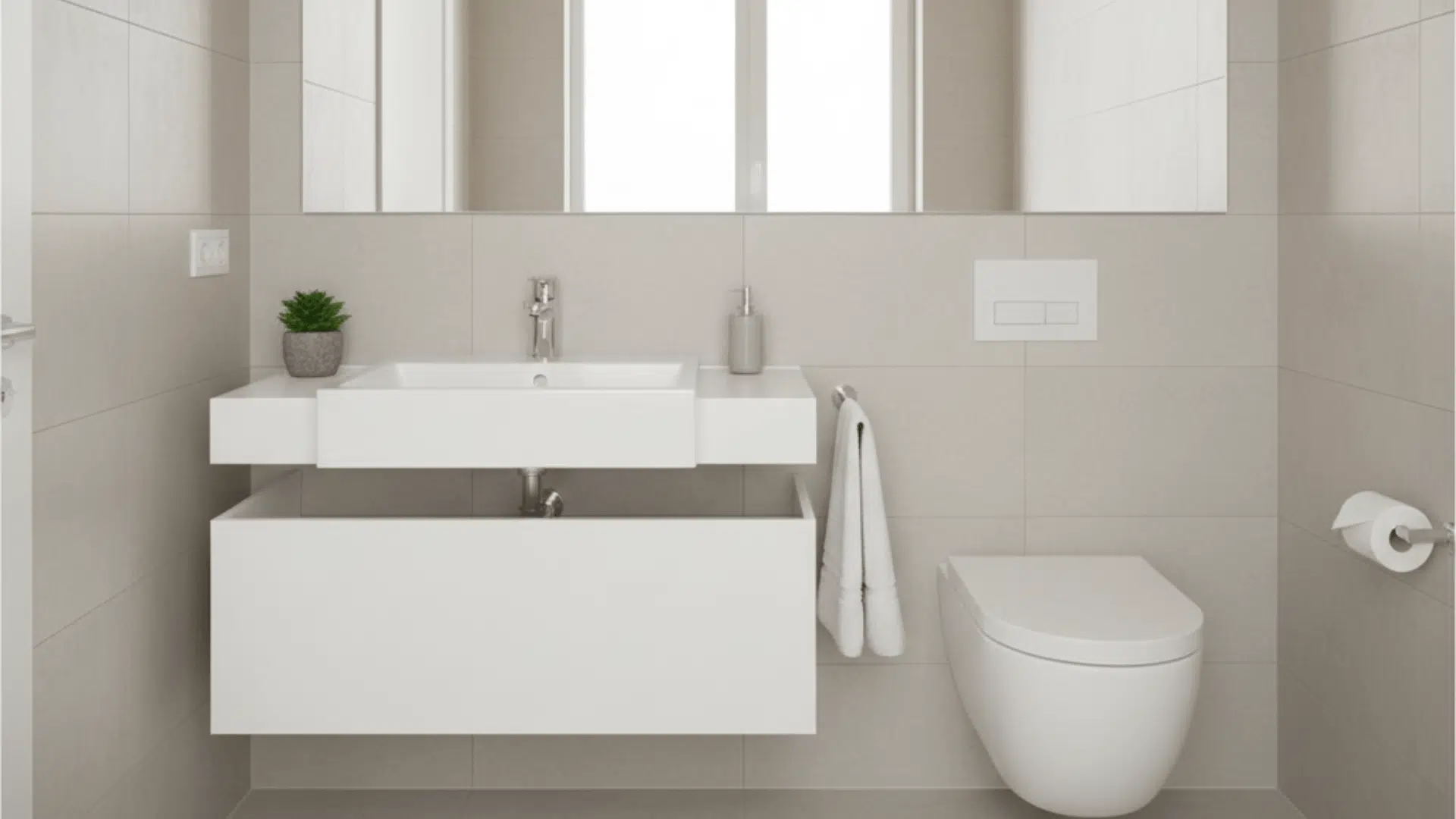
Install wall-mounted sinks, floating vanities, and compact toilets to free up floor space. These choices make cleaning faster and give your bathroom a more open layout.
Even with minimal square footage, you can enjoy a full-function bathroom that feels comfortable and uncluttered by focusing on smart, space-efficient design.
8. Pocket or Sliding Doors
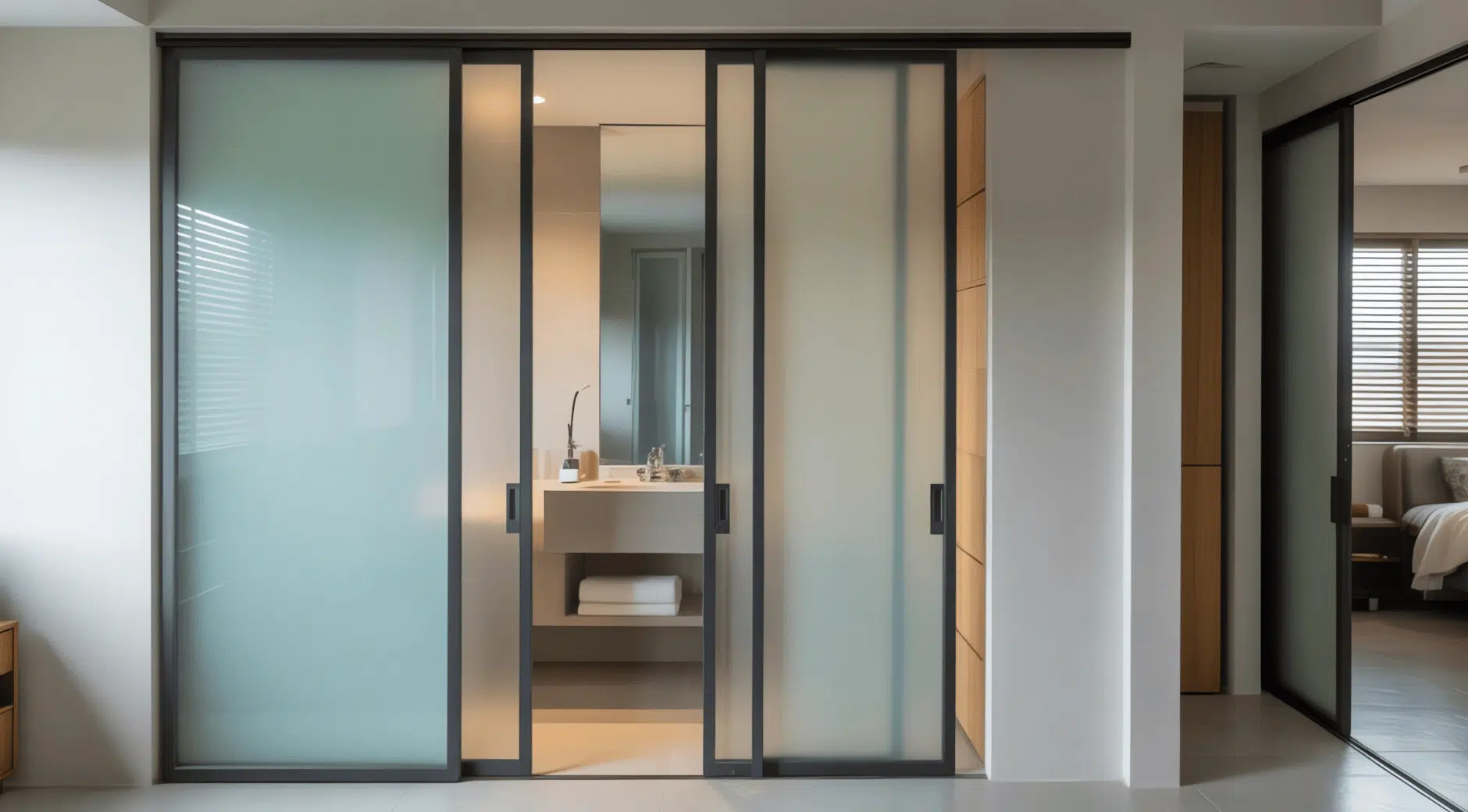
Traditional doors take up precious space, so swap them for pocket or sliding ones. These designs help your bathroom mix smoothly into nearby areas without blocking movement.
They also make the room feel bigger by reducing unnecessary barriers, all while keeping privacy and ease of access intact.
9. Vertical Storage
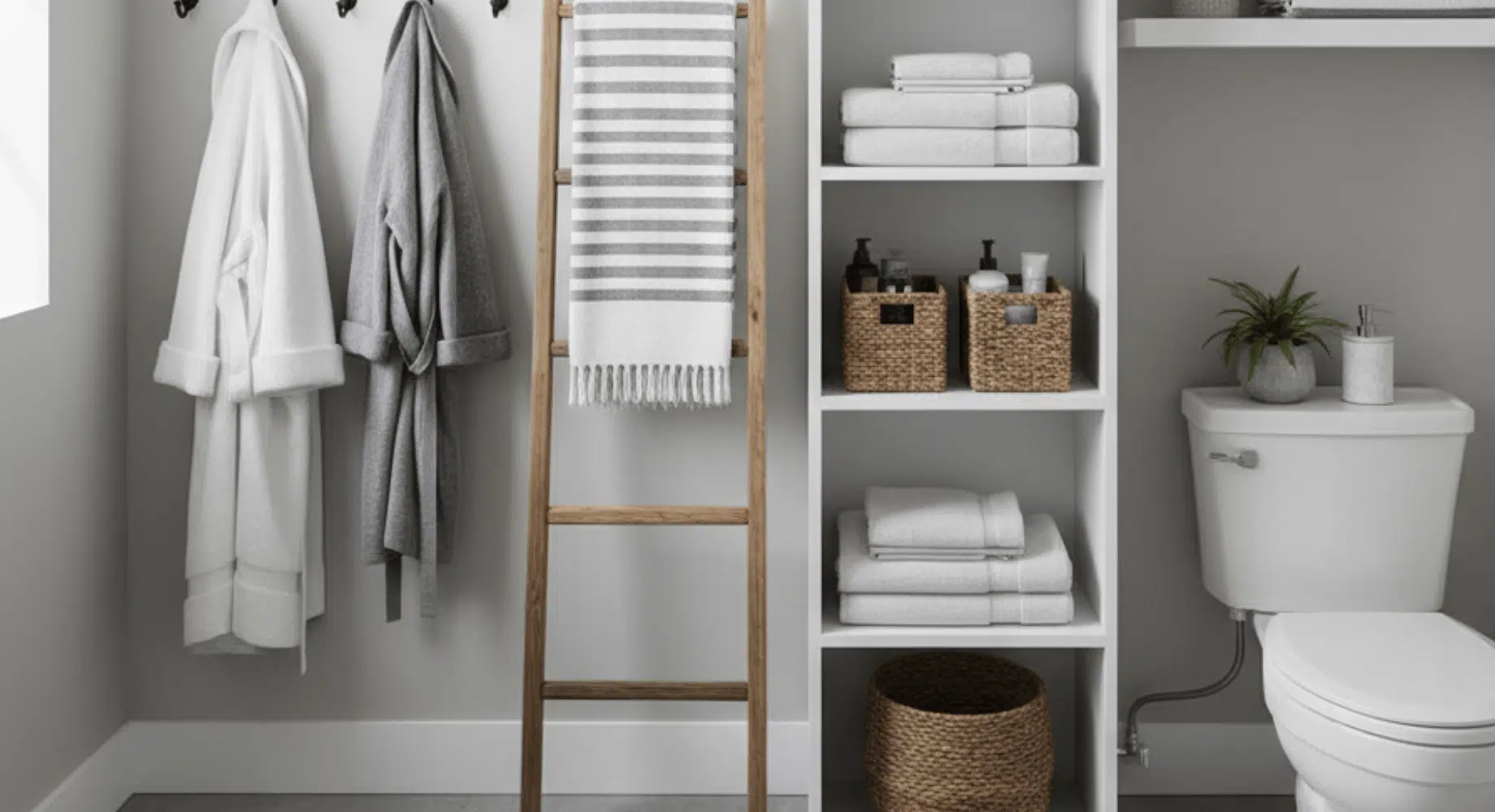
Use every inch of wall height to your advantage. Tall shelves, towel ladders, and wall hooks free up counters and keep essentials neatly arranged.
Vertical storage prevents clutter and gives your bathroom a clean, structured appearance. It’s an easy way to add both function and visual balance.
Bedroom
For bedrooms, focus on using height, hidden storage, and warm lighting to create a restful area that feels open yet personal, a space where you can unwind without clutter or compromise.
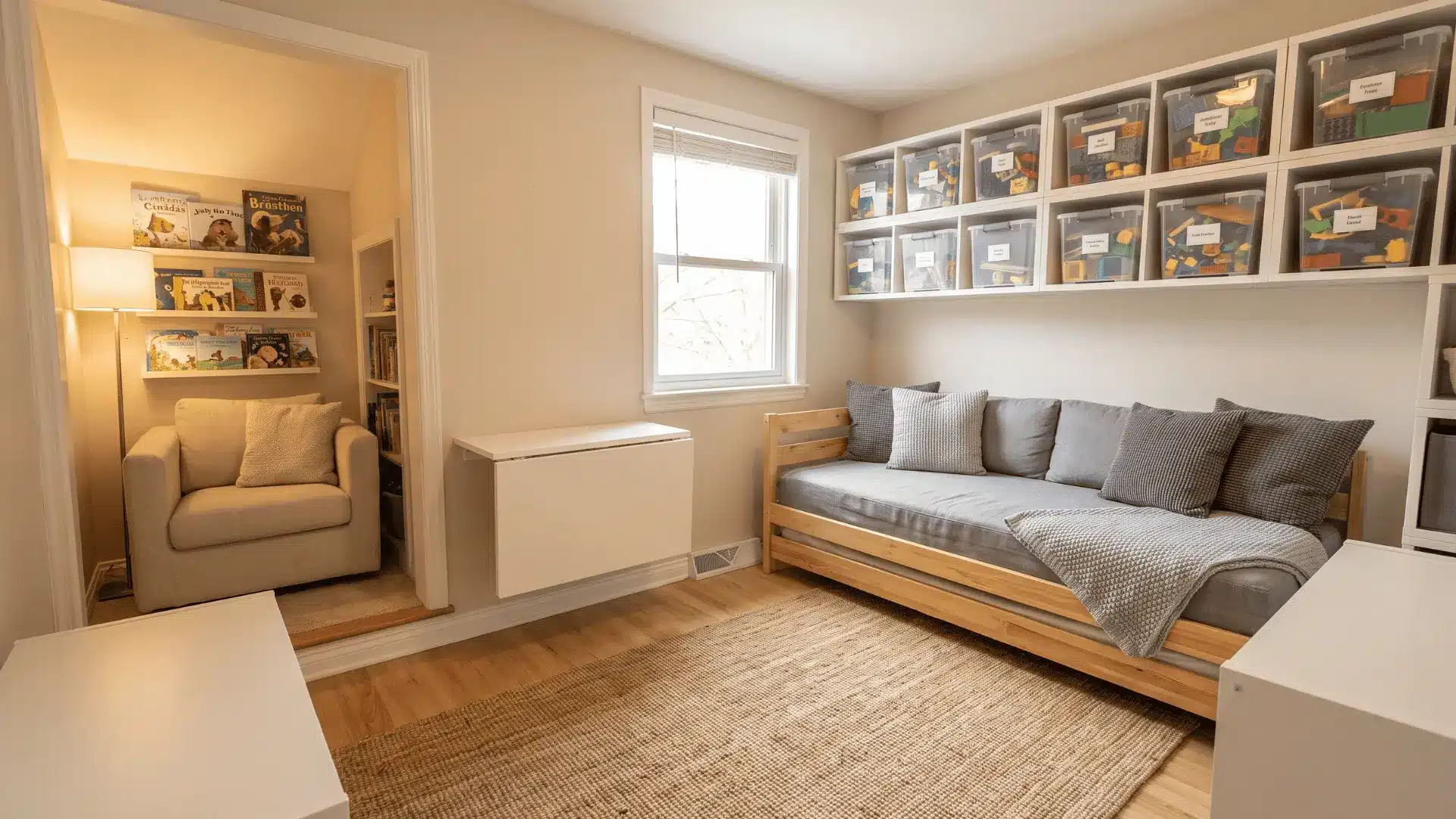
10. Lofted Bed
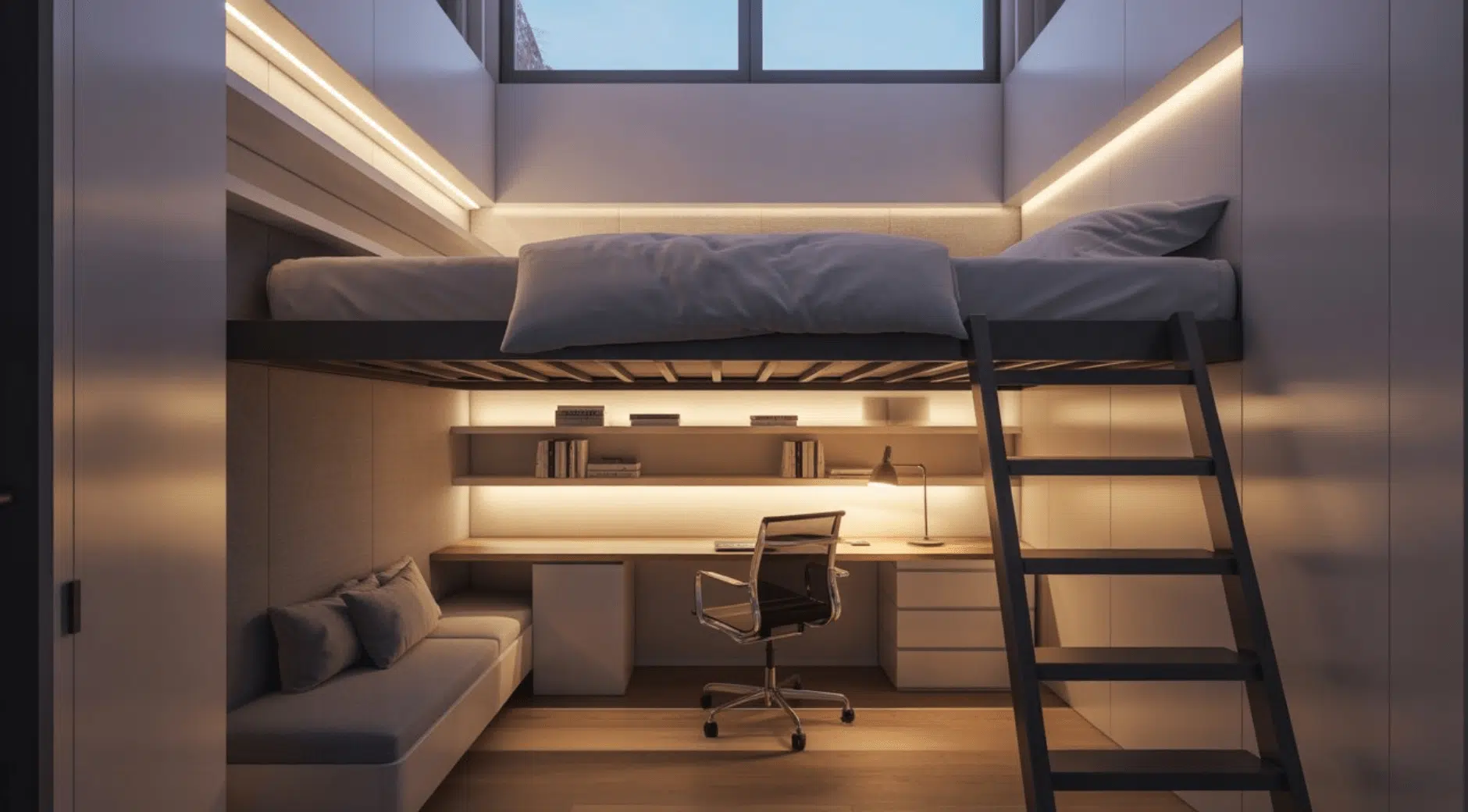
Raising your bed opens up valuable space below for a closet, desk, or reading nook. Lofted beds make rooms feel taller and visually lighter.
They’re perfect for maximizing vertical space while giving the bedroom a cozy, tucked-away feel that separates sleep from the rest of daily activity.
11. Under-Bed Storage
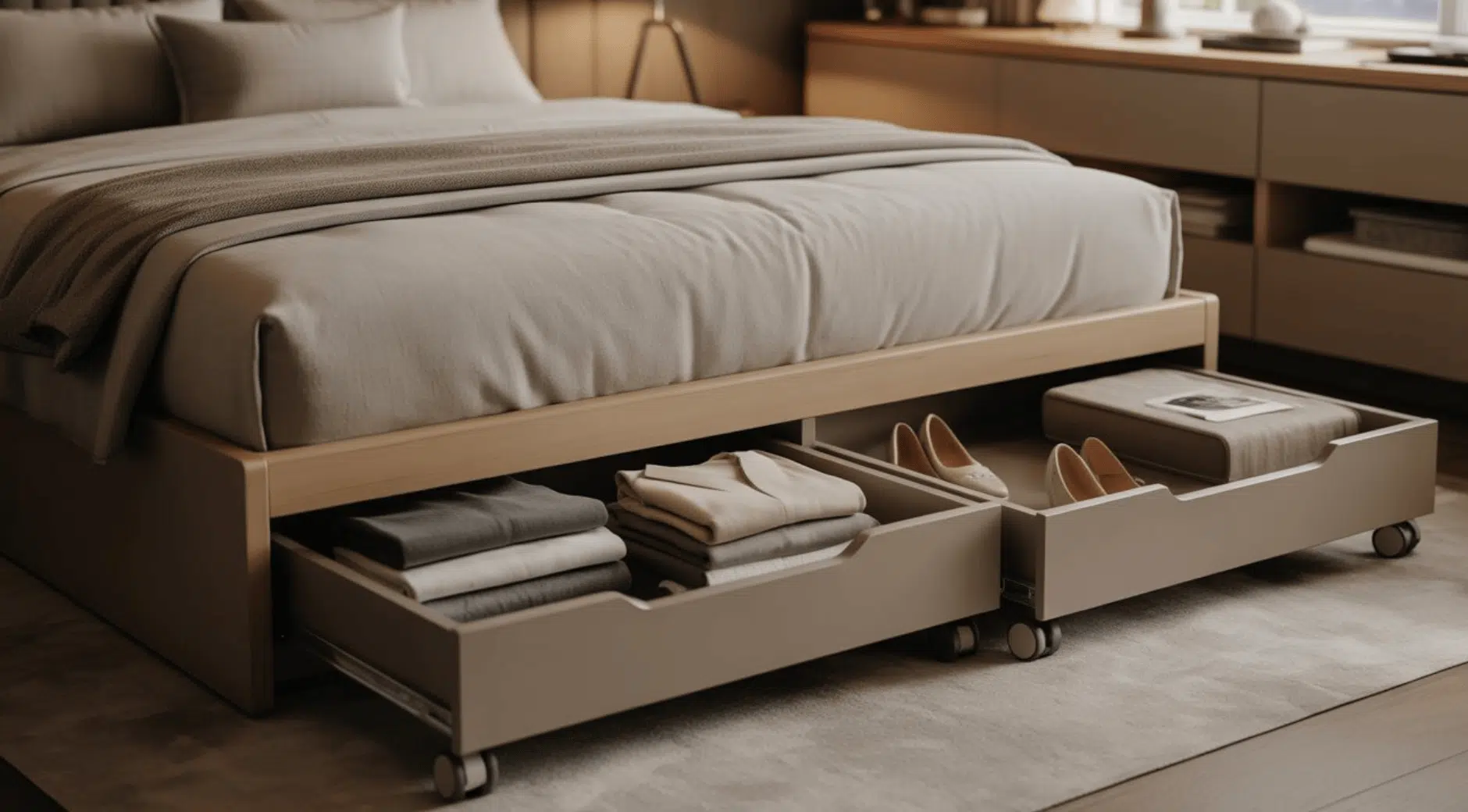
Use drawers or rolling bins beneath the bed to store extra clothes, linens, or shoes. This smart setup keeps essentials nearby without crowding the room.
Choose low-profile designs that slide easily, making it simple to keep your bedroom tidy and organized while freeing up valuable floor space.
12. Fold-Down Desk
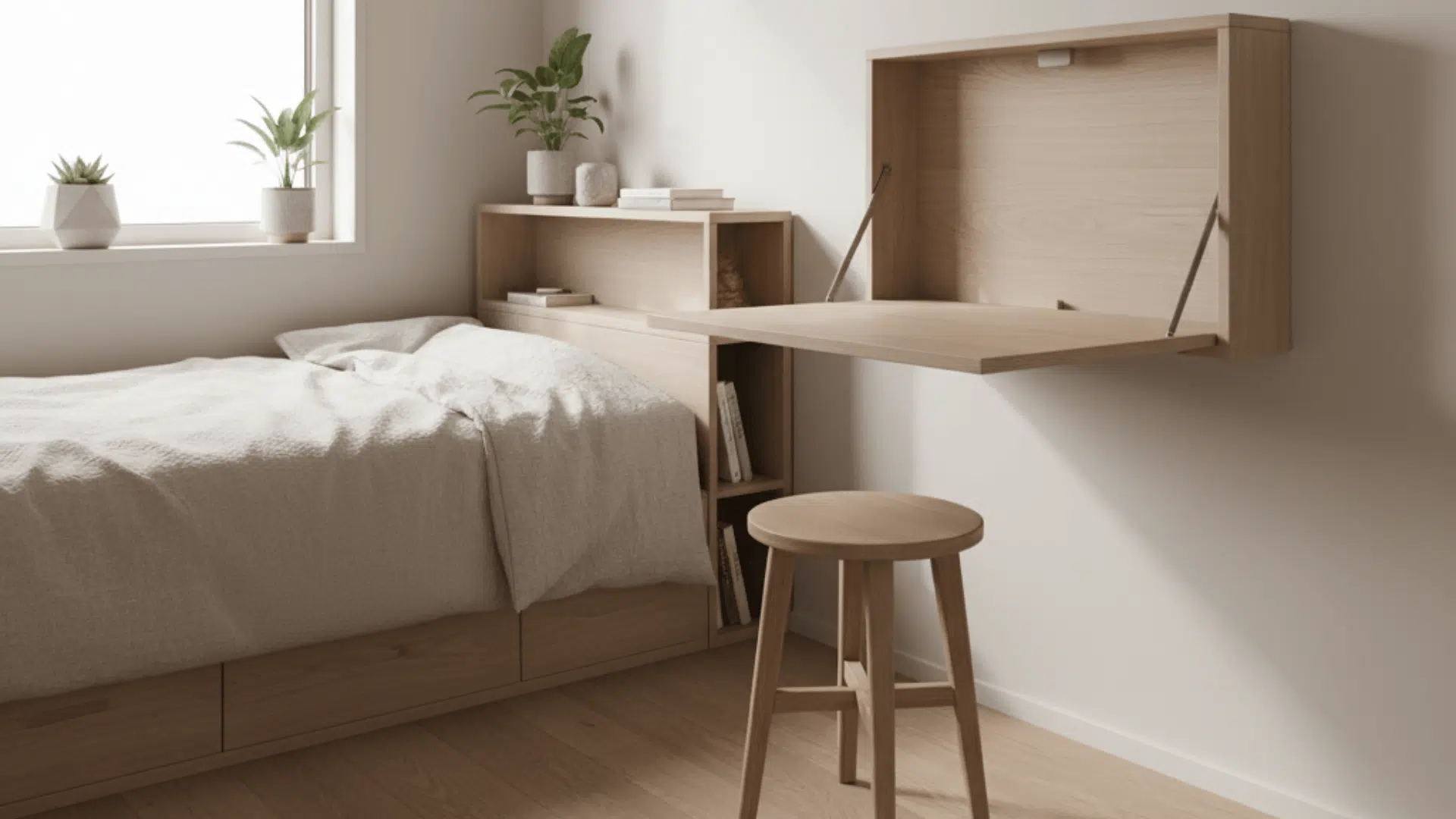
Add a fold-down desk that tucks neatly against the wall when not in use. It creates a small workspace or vanity without taking up permanent space.
When folded, it keeps your bedroom open and clutter-free. Pair it with a lightweight stool that can slide under the bed or hang on the wall for easy access.
13. Built-In Shelving
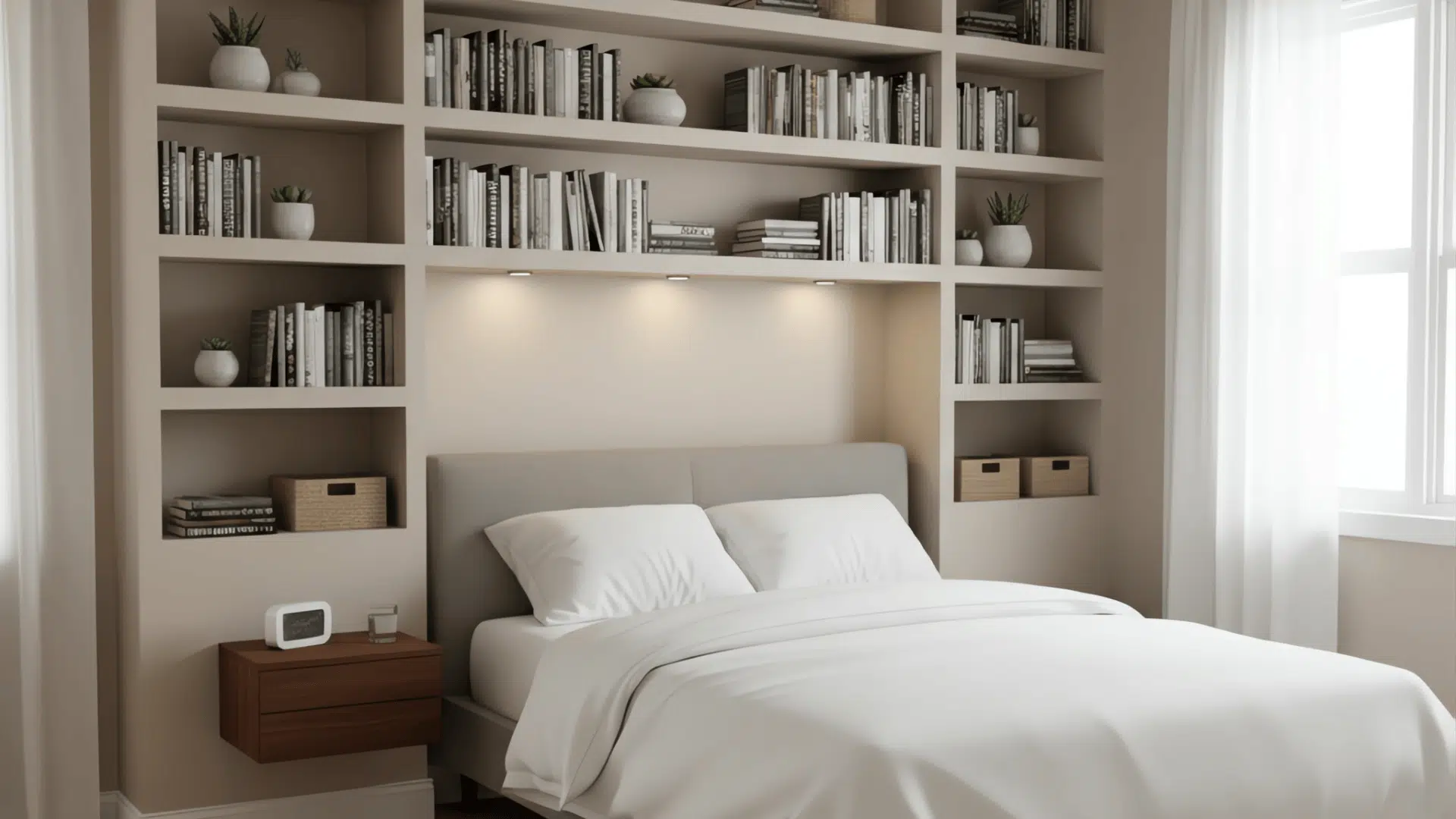
Built-in shelves make great use of wall recesses or corners that often go unused. They provide a place for books, decor, or small baskets without taking up floor space.
Add a few near the bed for easy access to nighttime essentials and to give your room a clean, built-in look.
Smart Layouts for Tiny Homes
A smart layout is what makes a tiny home comfortable and practical. It helps you use every inch of space without feeling crowded. With the right plan, your home can look open, organized, and easy to live in.
Open-Plan Living Spaces
An open layout helps your home feel bigger and brighter. It combines key areas like the kitchen, dining, and living room into one connected space. This design keeps things simple and improves how you move around.
Keep the color palette light and clutter minimal so the room feels fresh and easy to maintain.
Multi-Functional Furniture
In small homes, furniture should do more than one job. The right pieces can save space and keep things organized without sacrificing comfort.
Affordable brands like IKEA, Wayfair, and Amazon have plenty of small-space solutions that fit both style and budget. Choose items that mix into your space and serve more than one purpose.
Loft and Vertical Design
Using your home’s height is one of the best ways to expand living space. Loft areas make perfect sleeping nooks, reading spots, or even storage zones without taking up valuable floor area.
Vertical layouts add dimension and make your home feel taller and brighter. They’re key to turning small footprints into functional homes.
Maximizing Space and Storage in Small Areas
Smart organization and design can make even small spaces feel open and functional. Here’s how to maximize storage and flow without cluttering your home:
- Start by editing what you own. Keep only what you use often and store seasonal or rarely used items off-site. Decluttering first makes any layout more efficient.
- Plan your furniture placement around movement, not walls. Leaving clear walking paths makes even compact rooms feel larger and more comfortable to use.
- Use consistent materials and finishes throughout your home to create visual continuity. Matching tones between furniture, walls, and flooring helps small spaces look seamless and calm.
- Lastly, keep storage flexible. Instead of built-ins everywhere, try movable carts, stackable bins, or collapsible pieces that can adapt as your needs change.
Practical choices like these make a small home feel functional without feeling boxed in. Everything has space to breathe, and so do you.
Budget and Sustainability Tips
Smart design choices can help you save money and live responsibly.
Start by finding affordable furniture at IKEA, Wayfair, or local thrift stores. Mixing new and secondhand pieces adds both value and character while keeping costs low.
Get creative with DIY storage using crates, floating shelves, or reclaimed wood. These small projects reduce waste, save money, and add a personal touch to your space.
Choose eco-conscious materials like bamboo, recycled glass, or low-VOC paint. You can also install solar panels or switch to LED lighting to lower energy use and utility costs.
Compact, energy-efficient appliances are perfect for small homes. They save space, cut power use, and reduce long-term expenses, making your tiny home practical, sustainable, and affordable.
Conclusion
Creating a home that feels open and welcoming isn’t about size; it’s about intention. With these simple, tiny house ideas, you can design a space that fits your lifestyle while keeping it warm, practical, and clutter-free.
Focus on what truly matters, like smart layouts, natural light, and functional design choices that make everyday living easier.
Start small by updating one room or trying a new storage idea, and you’ll see how simplicity can completely reshape the way your home feels.
If you’re ready to take the next step, find creative tiny home layouts and decor ideas to bring your vision to life.








4 Responses
How much is the home
How about the house and chances are good i can be a oner for
Is the house still available ore else
It’s
Taking a break to get access or not