Quick Answer: For modular homeowners, choosing between a solar generator and permanent solar comes down to whether you prioritize affordable backup power or whole-home bill elimination. A portable solar generator is the better choice if you want immediate, permit-free outage protection, live on leased land, or want to avoid drilling into your roof. A permanent solar system is the stronger investment if your modular home sits on a permanent foundation on owned land and you want to drastically reduce—or eliminate—monthly electric bills over time. Many homeowners get the best of both worlds by pairing grid-tied permanent solar with a portable solar generator for emergency backup.
Key Takeaways
- Different Core Strengths: Solar generators are built to power essential circuits and appliances (1,000W–3,600W+) during blackouts or off-grid, while permanent solar arrays (5kW–12kW+) offset an entire modular home’s daily electricity usage.
- Built-In Blackout Protection: Standard grid-tied permanent solar automatically shuts off during grid outages unless paired with a costly whole-home battery bank, whereas a solar generator delivers instant off-grid power right out of the box.
- Zero Roof Modifications: Portable solar generators require no permits, electrical work, or roof penetrations—preserving factory roof warranties and moving with you if you ever relocate.
- Upfront Cost vs. Long-Term ROI: Solar generators offer a low barrier to entry (

- The Hybrid Sweet Spot: Combining a grid-tied rooftop array with a 2,000Wh–3,600Wh portable solar generator gives you lower monthly utility bills plus reliable blackout protection without spending $10,000+ on a permanent wall battery.

What Are the Two Solar Options?
Before comparing costs and capabilities, it helps to clarify what separates a portable solar generator from a traditional rooftop or ground-mounted solar installation.
How a Solar Generator Works
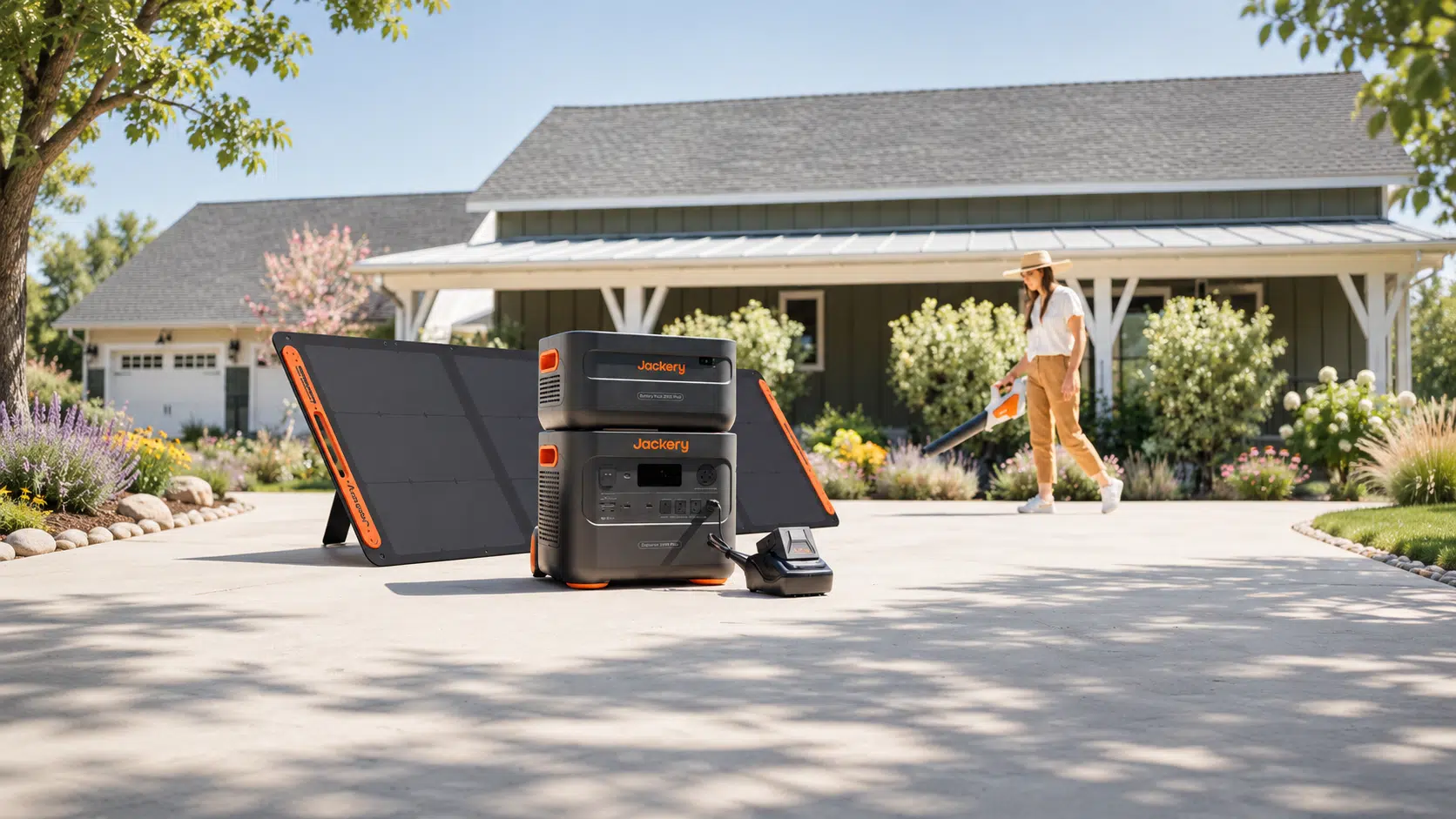
A solar generator is an all-in-one, plug-and-play system that combines a high-capacity portable power station with foldable or rigid portable solar panels. When placed outdoors in direct sunlight, the panels capture solar energy and send direct current (DC) electricity through a cable into the power station.
Inside the unit, a built-in charge controller regulates the incoming power and stores it in a lithium battery—most commonly Lithium Iron Phosphate (LiFePO4) for safety and longevity. When you need electricity, an internal inverter converts stored DC energy into standard 120V (or, on larger models, 240V split-phase) alternating current (AC) power, allowing you to plug household appliances directly into the unit’s outlets.

How a Permanent Solar System Works
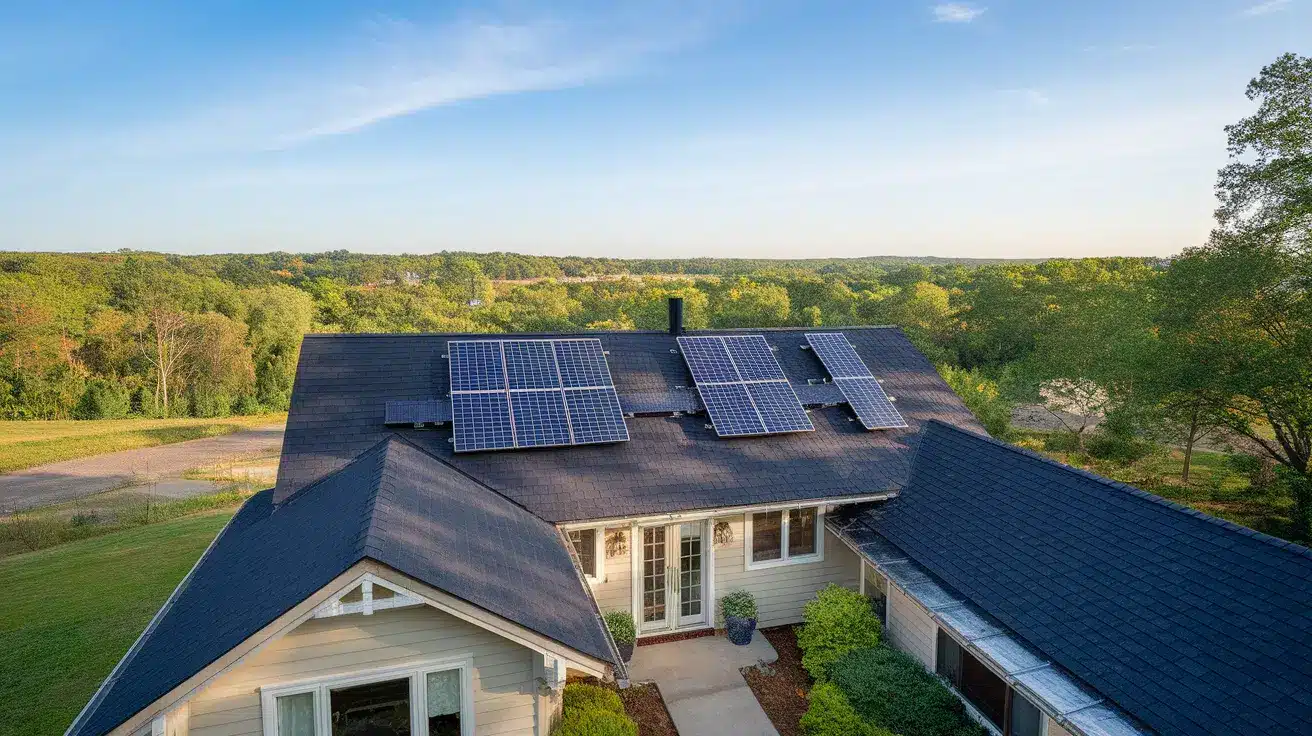
A permanent solar system is a fixed, hardwired energy installation designed to power your entire home. Photovoltaic (PV) panels are mounted on racking attached to your modular home’s roof trusses or anchored to a ground-mount frame in your yard.
The panels connect to string inverters or microinverters that convert DC sunlight into grid-synchronized AC electricity, feeding directly into your home’s main electrical panel (breaker box). Most permanent systems are grid-tied, meaning excess power flows back to the local utility grid for billing credits (net metering), while utility power seamlessly covers your needs at night or during cloudy stretches. Homeowners can also add a hardwired whole-home battery bank to store energy for nighttime use or blackouts.
Key Differences Between the Two Options
Although both systems rely on photovoltaic technology, they differ dramatically in scale, installation complexity, and financial return.
Feature | Portable Solar Generator | Permanent Solar System |
| Typical Upfront Cost | $800 – $4,500 | $15,000 – $30,000+ (before incentives) |
Installation | Zero installation; plug-and-play | Professional permitting, roofing, and wiring |
Power Output | 1,000W – 3,600W+ (essential circuits/appliances) | 5kW – 12kW+ (whole-home energy demand) |
| Blackout Protection | Built-in; works immediately off-grid | Shut off during outages unless paired with batteries |
| Portability | Fully portable; moves with you | Permanently attached to the property |
| Monthly Bill Impact | Modest reduction on targeted devices | Major reduction or elimination of electric bills |
Power and Backup Capability
A portable solar generator is engineered to run targeted loads rather than an entire household simultaneously. For instance, a versatile mid-sized system like the Jackery Solar Generator 1000 Plus (1,264Wh capacity, 2,000W output) easily keeps a full-size refrigerator cold, powers Wi-Fi routers, charges laptops and phones, and runs LED lighting or medical devices like a CPAP machine during a blackout. If you step up to a higher-capacity unit from Jackery’s solar generator lineup—such as the Jackery Solar Generator 2000 Plus (3,000W output)—you can even run a window air conditioner or space heater for extended stretches without overloading the inverter.
Conversely, a permanent solar array is sized to offset 80% to 100% of a modular home’s total electricity usage, including central HVAC systems, electric ranges, clothes dryers, and water heaters. However, there is an important catch: standard grid-tied permanent solar systems automatically shut down during a power outage to prevent back-feeding electricity onto utility lines. Unless you spend an extra $10,000 to $15,000+ on a permanent whole-home battery wall, a permanent solar roof alone will not keep your lights on during a blackout.
Installation and Flexibility
Because modular homes are built in sections inside a factory and assembled on-site, roof warranties, structural load ratings, and future relocation plans play a major role in solar planning.
A solar generator requires zero roof penetrations, no structural engineering reviews, and no building permits. You simply unfold the panels in a sunny spot on your deck, patio, or lawn and run a cable indoors. If you ever decide to move—or relocate your modular home to a new lot—the entire system packs neatly into your vehicle.
Permanent solar requires local building permits, utility interconnection approvals, and physical mounting hardware bolted into the roof framing. While modern modular homes built to the International Residential Code (IRC) can almost always support standard rooftop solar, penetrating the roof membrane can affect manufacturer roof warranties if not installed by a certified contractor.
Cost and Long Term Value
From a budget standpoint, the two options sit in completely different brackets. A capable solar generator setup typically costs between $800 and $3,500 depending on battery capacity and panel wattage. While it can shave small amounts off your monthly electric bill if used daily to run home office gear or kitchen appliances, its primary value lies in convenience, off-grid versatility, and emergency preparedness rather than rapid utility payback.
Permanent solar requires a substantial upfront capital outlay—often $15,000 to $30,000 or more—though federal clean energy tax credits, state rebates, and net metering policies significantly reduce net costs. Over a 20- to 25-year lifespan, a permanent system routinely saves tens of thousands of dollars in avoided utility bills. Additionally, when installed on a modular home affixed to a permanent foundation on owned land, rooftop solar generally increases the property’s appraised resale value.
Which Option Fits Your Modular Home?
The right choice depends on how your modular home is sited, your energy consumption habits, and what problem you are trying to solve.
When a Solar Generator Makes Sense
A portable solar generator is the better choice if:
- Backup power is your top priority: You want reliable, fume-free emergency power during storms and grid outages without paying five figures for a whole-home battery bank.
- You lease your land or plan to move: If your modular or manufactured home sits on leased land, in a community park, or may be relocated in the future, a portable system protects your investment.
- Your roof isn’t ideal for panels: Heavy tree shade, complex rooflines, or strict manufacturer roof-warranty restrictions make permanent rooftop mounting impractical.
- You want a low-risk starting point: You prefer a modest upfront cost with zero permitting, HOA battles, or contractor scheduling.
When Permanent Solar Makes Sense
A permanent solar installation is the stronger investment if:
- Your home is permanently sited on owned land: You own the real estate, have a permanent foundation, and plan to live in the home for at least seven to ten years to recoup installation costs.
- You have high monthly electricity bills: All-electric modular homes equipped with heat pumps, electric water heaters, and EV chargers benefit dramatically from large-scale daytime generation and net metering.
- You have strong southern or western roof exposure: An unobstructed roof plane—or ample yard space for a ground-mounted array—allows the system to operate at peak efficiency year-round.
When a Combined Setup Makes Sense
For many modular homeowners, pairing a grid-tied permanent solar system with a mid-to-large portable solar generator offers the best financial middle ground.
Instead of spending $12,000 or more on a permanent whole-home battery backup system that sits idle most of the year, you can install a standard grid-tied rooftop array to eliminate your monthly electric bills. Then, keep a heavy-duty, expandable unit like the Jackery Solar Generator 2000 Plus on hand for emergencies. During a grid outage, it keeps your refrigerator, internet, lights, and critical electronics running effortlessly—and unlike a wall-mounted battery, you can unplug it and take it camping, tailgating, or out to a detached workshop the rest of the year.
Frequently Asked Questions
Can Solar Panels Be Installed on Any Modular Home?
Most modern modular homes are constructed to the same state and local building codes (such as the IRC) as traditional site-built homes, meaning their roof trusses can easily handle the weight of permanent solar panels. However, older factory-built homes or HUD-code manufactured homes sometimes feature lighter roof framing with lower dead-load ratings. Before installing rooftop panels, a structural engineer or solar installer should verify your roof’s load capacity. If your roof cannot support the weight, a ground-mounted array or portable solar panels offer an easy workaround.
Can a Solar Generator Connect to a Home Electrical Panel?
Yes, provided you install the proper transfer hardware. You should never plug a solar generator directly into a standard wall outlet—a dangerous and illegal practice known as “back-feeding” that can electrocute utility workers and destroy your equipment. Instead, a licensed electrician can install a manual transfer switch or a dedicated generator inlet box wired to select circuits in your main breaker panel. Once installed, you simply plug your solar generator into the inlet box during an outage to power hardwired ceiling lights, your furnace blower, or kitchen outlets safely.
Can a Solar Generator Run an Air Conditioner or Well Pump?
It depends on the size of the solar generator and the electrical demands of the appliance. Small, compact solar generators (around 1,000Wh) can power a high-efficiency window AC unit or portable room air conditioner for a few hours, but they cannot run a central HVAC system or a deep well pump. Central air conditioners and submersible well pumps typically require 240V split-phase power and draw massive surge currents when their motors kick on. To run these heavy loads, you would need a heavy-duty, 240V-capable solar generator system rated for at least 3,000W to 6,000W of continuous output—and even then, you will need substantial battery expansion packs to run them for extended periods.
Final Thoughts
Choosing between a solar generator and permanent solar for a modular home comes down to matching the technology to your lifestyle and property setup. If you want affordable, immediate protection against power outages, zero installation headaches, and complete portability, a solar generator delivers practical peace of mind from day one. On the other hand, if your modular home sits on a permanent foundation with strong sun exposure and high electricity usage, a permanent solar system remains unmatched for long-term utility savings and property value. And if your budget allows, combining grid-tied solar with a portable power station gives you both lower monthly bills and reliable backup power without overpaying for whole-home battery storage.
Whether you are looking for an entry-level backup unit for storm season or a high-output 240V system capable of powering heavy appliances, browsing Jackery’s portable solar generators makes it easy to compare capacities, solar panel bundles, and expansion options tailored to your modular home.