
A kitchen can look beautiful in photos and still be frustrating to use. Maybe there’s no room to chop vegetables because the countertop is crowded with appliances. Perhaps opening the dishwasher blocks a cabinet, or the coffee machine sits too far from the cups. These little inconveniences might seem insignificant, but they quickly become part of everyday life.
For homeowners, a well-designed kitchen makes cooking and cleaning easier. For entrepreneurs in real estate, interior design, and home improvement, it can also be a way to deliver more value to clients. The secret isn’t filling the room with the latest gadgets. It’s choosing the right appliances, giving them sensible places, and making sure the entire space works together.
Choose a Kitchen Layout That Fits Your Daily Routine
Before choosing cabinets or shopping for appliances, think about what happens in the kitchen on an ordinary day. Does the household cook dinner from scratch most evenings? Is breakfast usually a quick coffee before work? Do friends regularly come over for dinner?
These questions might seem basic, but they help determine which layout will actually work.
The traditional kitchen work triangle, which connects the sink, refrigerator, and cooking area, is a useful starting point. Keeping these three areas within comfortable reach can reduce unnecessary steps while preparing meals. In larger or open-plan kitchens, it may make more sense to organize the room into separate zones for cooking, cleaning, food preparation, and drinks.
The shape of the room matters, too. An L-shaped layout can work well in an open-plan home, while a galley kitchen makes efficient use of a narrow space. U-shaped kitchens offer plenty of work surfaces, although it’s important to leave enough room to move comfortably between cabinets.
Consider a household that prepares fresh juice every morning. A small beverage station near the refrigerator and sink could make the routine easier, especially if glasses and cleaning supplies are stored nearby. The same principle applies to coffee machines, blenders, and other frequently used appliances.
For home improvement professionals, understanding these habits before recommending a layout can make a real difference. Clients don’t necessarily need more space. Often, they need a space that makes better use of what they already have.
Choose Appliances That Earn Their Place
It’s easy to get carried away when shopping for modern kitchen appliances. Manufacturers constantly introduce new features, sleek finishes, and clever ways to automate everyday tasks. But an appliance that looks impressive in a showroom isn’t necessarily the right choice for every household.
Start with the essentials, then consider which additional appliances would genuinely make life easier. A dishwasher might be a priority for a busy family, while someone who enjoys preparing fresh meals may get more use out of a food processor or juicer.
Before buying anything, ask three questions: How often will it be used? Where will it go? And how much effort will it take to clean and maintain?
Take a slow juicer as an example. For someone who makes fresh juice several times a week, a model such as the Hurom H80 Slow Juicer might be worth considering. However, the decision shouldn’t come down to the product alone. Its dimensions, accessibility, cleaning requirements, and compatibility with the available counter space all deserve attention.
Think about placement early, too. Frequently used appliances should be easy to reach without taking over the main food preparation area. Heavy equipment belongs on stable, accessible surfaces, while appliances that generate heat or require ventilation must be installed according to the manufacturer’s instructions.
Electrical outlets also need to be part of the plan. Adding them after the cabinets and backsplash are finished can mean extra work and expense. It’s better to identify appliance locations during the design stage and have outlets installed in accordance with local electrical requirements.
For entrepreneurs working with renovation clients, this is an opportunity to demonstrate practical expertise. Rather than recommending the most expensive equipment, explain which features solve a particular problem. Clients are more likely to appreciate an investment when they can see how it fits into their everyday routine.
Make Storage Work as Hard as the Rest of the Kitchen
Even a spacious kitchen can feel cramped when every countertop is covered. A blender sits next to the coffee machine, the juicer takes up the remaining space, and there’s barely enough room to prepare lunch.
The answer isn’t always installing more cabinets. It’s making better use of the storage already available.
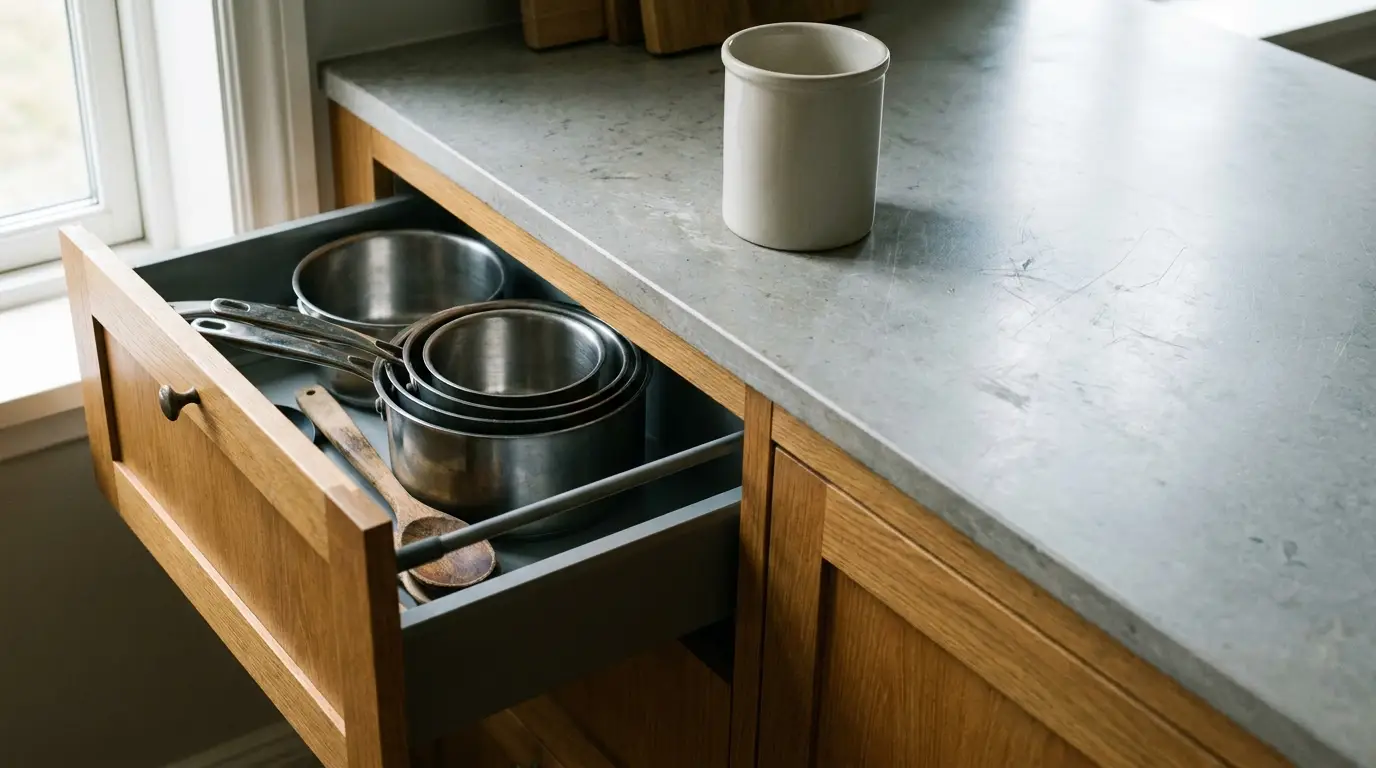
Start by looking upward. Tall cabinets can accommodate appliances that aren’t used every day, while shelves and wall-mounted organizers keep frequently used items within reach. Deep drawers work well for pots and pans, and pull-out organizers can make awkward corners more accessible.
It’s also worth thinking about how different items are used together. If someone makes coffee every morning, storing mugs, coffee supplies, and the machine in one area makes sense. The same goes for a juicing station with glasses, fresh produce, and cleaning accessories nearby.
Not every appliance needs to stay on display. Keep everyday essentials accessible and store occasional-use equipment in cabinets or a pantry. This leaves more room for the tasks that require a clear work surface, such as chopping vegetables or preparing ingredients.
Small details matter here. Cords shouldn’t trail across preparation areas, and accessories shouldn’t be scattered throughout different drawers. A dedicated place for attachments, cleaning brushes, and other small parts makes it easier to keep everything organized.
For home improvement businesses, storage is also a useful way to demonstrate the value of a design. Clients can see the difference between a kitchen that simply looks good and one that makes their daily routines easier. Sometimes, a well-planned drawer or a thoughtfully positioned appliance station delivers more practical value than an expensive decorative feature.
The aim isn’t to hide every appliance. It’s to make the kitchen feel organized without making the things people use every day difficult to access.
Don’t Overlook Lighting, Maintenance, and Long-Term Costs
A kitchen may look perfect when the renovation is complete, but what matters is how it performs six months or several years later. Lighting, ventilation, cleaning, and maintenance all influence whether the space remains convenient over time.
Good lighting is a sensible place to start. Ceiling lights provide general illumination, while under-cabinet lighting helps brighten countertops where most food preparation takes place. This reduces shadows and makes everyday tasks easier. Accent lighting can add warmth, but practical visibility should come first.
Ventilation deserves the same attention. Cooking produces heat, moisture, and odors, so an appropriately sized range hood or other suitable ventilation system can help keep the room comfortable. The right solution depends on the cooking equipment, kitchen layout, and applicable installation requirements.
Then there’s the question of cleaning. Countertops and backsplashes should be durable enough for regular use and easy to maintain with suitable cleaning products. It’s worth checking material care requirements before making a final decision, particularly for surfaces that may be exposed to heat, moisture, or food stains.
Appliances need room for maintenance, too. If a machine is squeezed tightly between other items, even a simple cleaning task can become annoying. For equipment such as a juicer, easy access to removable components and cleaning tools can make the difference between using it regularly and leaving it untouched in a cabinet.
Before purchasing an appliance, check the manufacturer’s warranty and understand what it covers. Looking up the Hurom juicer warranty, for example, can help buyers investigate the applicable coverage terms, exclusions, and service requirements before committing to a particular model. Warranty conditions can vary by product and market, so it’s important to consult the relevant official documentation rather than assume that every model has identical protection.
Finally, consider running costs. Energy-efficient appliances and water-saving fixtures may reduce utility consumption, although the actual savings depend on usage patterns, local rates, and the initial purchase price. A slightly more expensive product may be worthwhile in some cases, but only when its practical benefits justify the difference.
For entrepreneurs, explaining these details helps set realistic expectations. Clients aren’t just paying for a kitchen that looks attractive on installation day. They want one that’s comfortable to use, straightforward to maintain, and built around their needs for years to come.
Conclusion
A functional kitchen doesn’t require every new appliance on the market. It requires a little planning and an honest assessment of how the space will be used.
Start with the layout, choose appliances that serve a clear purpose, and make storage work around everyday routines. Pay attention to lighting, ventilation, cleaning, and maintenance before the renovation is finished, rather than treating them as afterthoughts.
For entrepreneurs in the home improvement industry, these decisions can help create a better customer experience and stronger long-term value. A kitchen that works well is easier to appreciate than one that simply looks impressive.
Ultimately, good design is about making everyday tasks feel less complicated. When every appliance has a purpose and every area works as it should, the entire kitchen becomes a more useful part of the home.