Table of Contents:
- Start With The Room, Not The Furniture
- Measure the space and the route
- The aspect of furniture scale
- Use Furniture That Serves More Than One Function
- Ensure That The Space Allows Movement And Light To Enter
- Plan Your Furniture According To Each Room
- Add More Storage While Maintaining Visual Order
- Strike A Balance Between Comfort, Style, And Materials
- Steering Clear of Common Mistakes with Furniture for Small Spaces
- Make Use of the Furniture Shopping List
- Frequently Asked Questions
Designing a small room is not only about purchasing tiny pieces of furniture, but it is also about making sure that the furniture chosen makes daily life easier. Small spaces offer limited opportunities for design, and simply buying a bunch of small items will not achieve the desired look.
Determine what the room has to accomplish before shopping for furniture. If seating is the main focus, shop for the best couch at Poly & Bark only after getting a clear understanding of the actual size and layout of the room.
It is easier to create a comfortable small space by using limited pieces of furniture rather than filling every conceivable free space with items. Ensure furniture pieces are selected with due consideration for the area of the room, movement in the room, and space-saving elements. The point is not to create an empty space but to have every piece of furniture serve its purpose and fit the room.
Start With The Room, Not The Furniture
Establish the purpose of the room first. A reading area needs a chair, light, and a place to put a drink or a book. The living room needs enough seating for family members, as well as a space they can get through.
Then, the guest room can have a bed, while the home office must have the required desk and chair before other furniture becomes the focus of the design.
Define the main parameters of the room before making a decision about materials, colors, and finishes. A small living room may call for seating for three, space for snack items, and storage for blankets.
The dining area may have to cater weekday meals with added capacity for certain occasions. Clearly identifying priorities allows one to easily weed out good items that don’t meet any actual requirement.
Measure the space and the route
Measure the room’s length, width and height of the ceiling. Make a note of windows, radiators, vents, outlets, any built-ins and swings of the doors. This should also include measuring the hallways, lifts, staircases, and the door itself. Even when a sofa perfectly fits the wall, it might be impossible to take it through a narrow passage.
Prior to placing the order, outline where the furniture would go by using the painter’s tape on the floor.
It is critical to take into account the space necessary to open drawers, pull out chairs, recline the seat, or walk past it. This simple exercise will show whether the plan will work in reality or only in the description. Hence, designers frequently use this floor planning strategy.
The aspect of furniture scale
Scale refers to the way in which a piece of furniture compares in size to the dimensions of a room.
This means that although width matters, other dimensions like depth and height also play an equally important role. Even though a deep sofa may occupy a narrow room, a tall cabinet can cause problems in low rooms.
Some examples include:
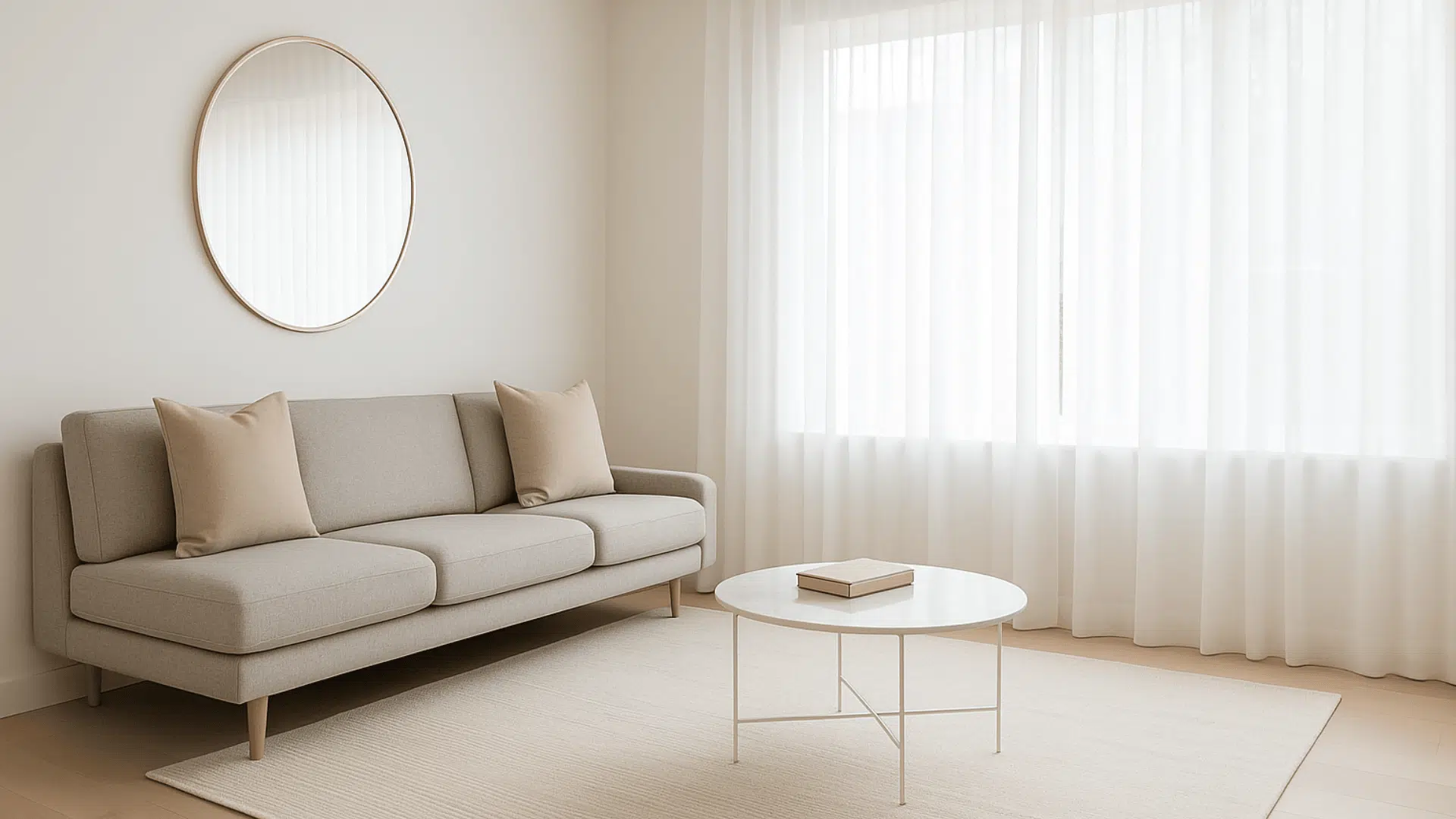
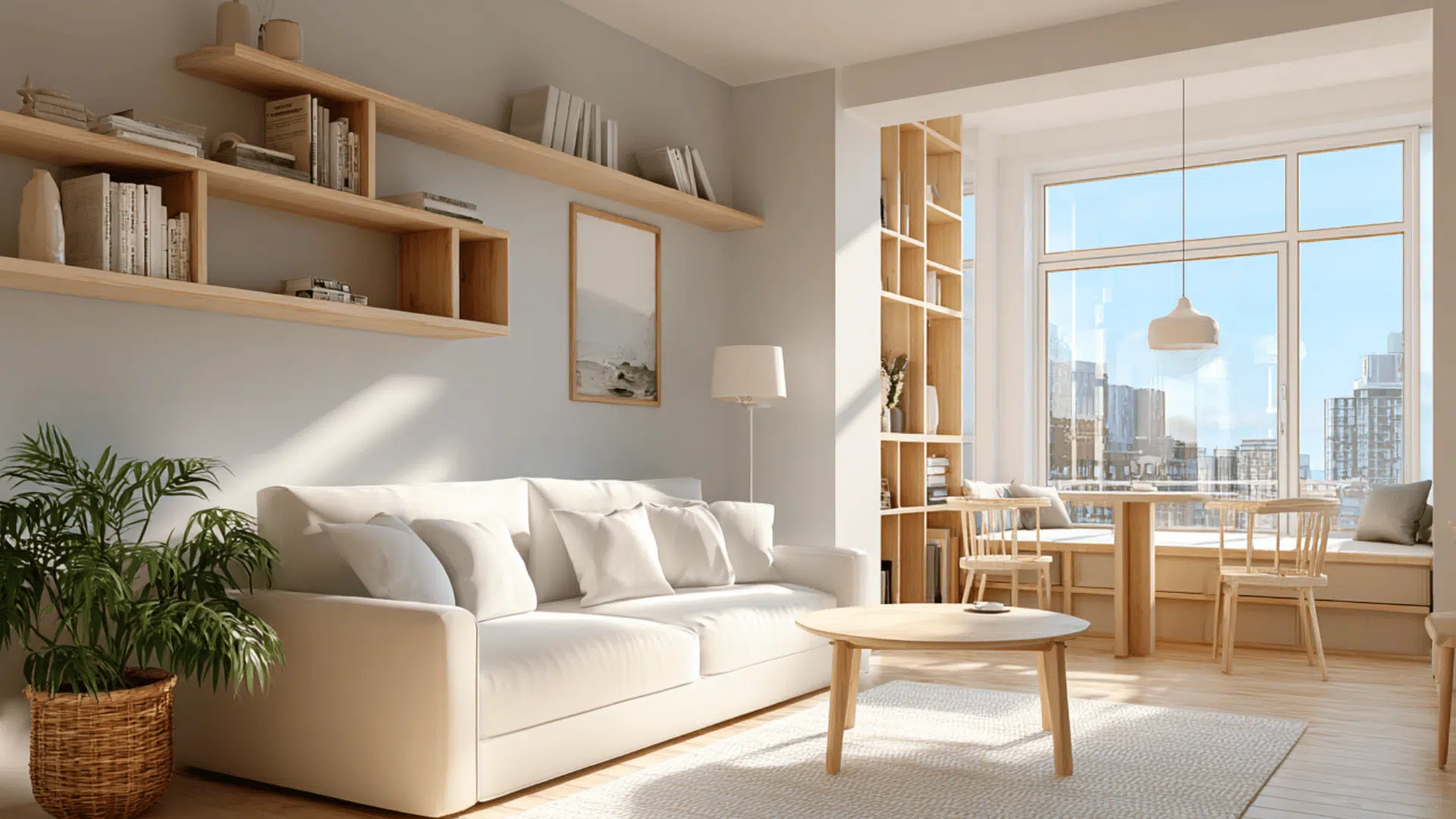
- Raised leg sofas are capable of showing more ground and thus making the design look lighter
- Round tables can reduce the sharpness of corners and facilitate moving in small areas.
- An armless chair will offer a seating option with less bulk.
- Nesting tables allow occasional surfaces being presented without being bulky.
Do not think that using a variety of small furniture pieces will big room. A good sofa, one comfortable armchair, and a useful table look much less overwhelming than a heap of various stools, small tables, and shelves.
Use Furniture That Serves More Than One Function

Furniture that serves one purpose at least is welcome in the home, provided it is replacing some other type of furniture that would otherwise need to be purchased separately.
For instance, the function of a storage ottoman is that of both storage space and a footstool, extra seat, or coffee table if a tray is placed on it. A sleeper sofa assists a home office in being even more useful in accommodating visitors during the night.
A drop-leaf table, gate-leg table, or expandable table makes it possible to preserve space for daily activities, only to be expanded to make room for guests when needed.
However, the possibility of adding additional purposes to furniture should not create additional problems. Do not buy any large convertible items if their second function is rarely going to be utilized, or if the item is difficult to handle, or if you simply do not like the way it works in a single mode of utility. Also, furniture that can be adjusted for use should ideally match the person’s lifestyle.
Ensure That The Space Allows Movement And Light To Enter
To ensure that the primary pathways remain clear so you can move from a door to a chair, window or a room connected with another, refrain from placing tall furniture pieces in front of windows.
Do not block the location of any heating vents or doors. Being placed in the right place, rugs can assist you in organizing the areas, such as dining room or sitting room, but they may also present an obstacle along a busy walkway.
Plan to provide access to your storage space. Everyday utensils must be available on a regular basis while those that may rarely come into use may be put up high, down low or in some hidden storage area. If chairs are used at the dinner table, provide room for extracting them without preventing someone from passing by.
Plan Your Furniture According To Each Room
Living Room
Begin with the sofa or the main seating element, and see if a second chair is a must in daily use. One handy small ottoman can be a good alternative to a soft chair or a coffee table. When making the choice of a coffee table or a side table, opt for something that leaves enough access to each of the seats.
Bedroom
Make sure the bed remains the main visual object. Choose bedside tables according to the actual wall space, and not the usually offered size in matched sets. Think of wall shelves, a tall dresser, or under-bed storage instead of adding a short cabinet that will occupy even more space on the floor.
Dining Space and Outdoors
Make sure the shape of the table corresponds to the function of the space. Round tables are suitable for places with busy areas since they do not have corners that may block the way, and a bench can easily be pushed under the table as opposed to a chair.
In case of deciding on the second piece of furniture for the balcony, consider door blocking, railings, grills, or the use of a vacuum cleaner beforehand. Furniture arrangements for patios that are compact generally depend on multi-use, foldable, and armless furniture for keeping the outdoor area small but useful.
Add More Storage While Maintaining Visual Order
Just increasing storage is not a solution to storage problems. A huge cabinet may allow storing more items but a small unit with better organized compartments may have more value. Concealed storage should be used for things that create some visual noise, accessories for media, linens, and things for certain seasons. The best option for open shelving is to place a limited number of items on it which will be easy to arrange well.
Strike A Balance Between Comfort, Style, And Materials
When choosing between the essentials it is better to test them: the depth of the seat, firmness of cushions, height of the back, height of the arms, and height from the ground.
The choice of upholstery and finishing should be based on the functions of the room. Homes with pets, children, receiving light directly, and eating regularly will require materials which correspond to their degree of cleanliness and to the frequency of their use.
A small room may be full of colors. It is necessary to choose a small palette of colors and add texture, light, art or a special chair instead.
Steering Clear of Common Mistakes with Furniture for Small Spaces
- Do not purchase before
- you measure your room, including the access route.
- Do not choose by looks alone.
- Do not use all available corners when there is not enough walking room.
- Do not decorate with too many small items and tables.
- Do not cover windows, vents, drawers, and doors.
- Do not use weak materials in spaces where they will get a lot of use.
Make Use of the Furniture Shopping List
- Measure the dimensions of your room including the entryway size.
- Take note of width, height, depth and clearance around the piece.
- Determine what the piece will be used for on a daily basis as well as other potential uses.
- Find out information about the care and maintenance required for the material in the room.
- Look into the delivery and assembly process before making a purchase.
Frequently Asked Questions
Does it mean that small rooms have to contain small furniture?
No. The idea instead is to scale furniture according to the size of the room.
What should make a small room feel spacious while keeping it compact?
The answer is keeping the way clear for walking, the right proportion of furniture and the number of items in it.
Does it make sense to have multipurpose furnishings?
Multipurpose furniture is only advisable if it comes along with the solution to a chronic problem. Comfort, as well as everything else that can be useful in everyday life, should come first before you choose the features of furniture that you might use in practice.