The first time I watched a tiny house get winched onto a flatbed, my honest thought was: what happens to the air conditioner? Nobody around me had a clean answer. That confusion is more common than you’d think, because the moment a home becomes movable, every assumption you had about heating and cooling gets a little shaky.
Here’s what actually happens when a house has to travel, and how you keep it comfortable on both ends of the trip.
Why Moving a House Changes Everything About Comfort
Your HVAC system isn’t a piece of furniture. It’s a set of components calibrated to a specific structure: duct sizing, insulation values, window placement, and even which direction the house faces. When you move that structure, you change the whole equation.
A stick-built home never moves. Its ductwork runs through walls that stay put, and the outdoor condenser sits on a concrete pad that isn’t going anywhere. A modular or tiny home is different. The walls flex during transport, the home sits on a trailer or foundation system, and the outdoor unit might not even be installed until the home arrives.
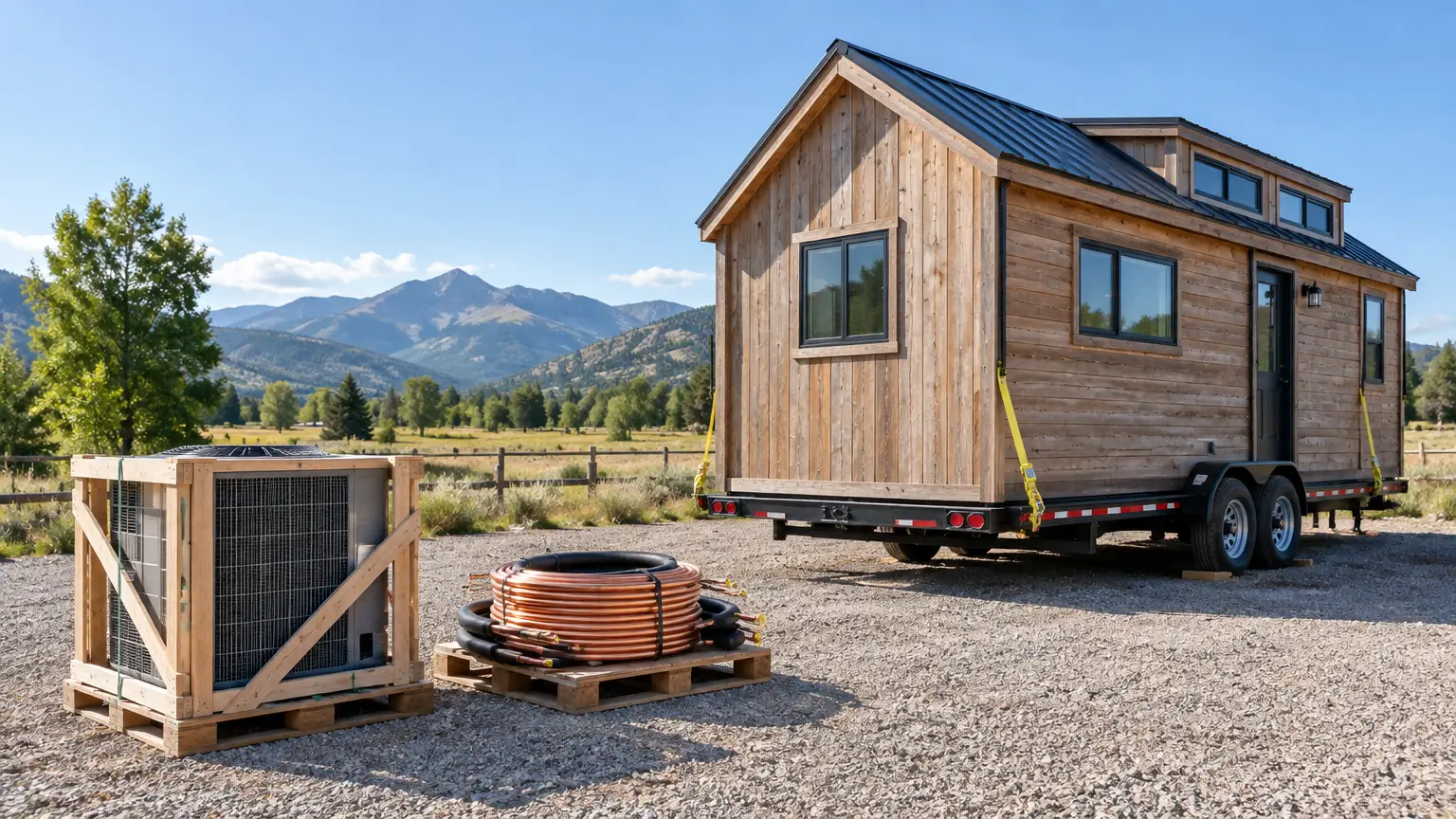
That’s the part people underestimate. They assume the AC just comes along for the ride. In practice, a portable home often ships without a permanent condenser at all, and the buyer handles installation on site.
According to baseline guidance from the U.S. Department of Energy, heating and cooling account for the largest share of a typical home’s energy use. That baseline matters here because a poorly matched system in a home that just traveled 500 miles will burn through far more energy than one sized correctly for its final location.
Solar, Shore Power, and the Reality of Off-Grid Cooling
If you’re setting up a tiny home or container living space away from a utility connection, you’ve got three practical routes: shore power, a generator, or a solar and battery setup. Each one changes what kind of cooling equipment even makes sense.
A standard central air system needs a serious power draw. Running one off a modest solar array isn’t realistic without a large battery bank. That’s why most off-grid builds lean on mini-splits or high-efficiency window units instead. They sip power compared to a traditional central system, and they’re easier to size to a small footprint.
I’d pick a ductless mini-split every time for a home under 500 square feet. You get heating and cooling from one unit, no ductwork to lose energy through, and the install is simple enough that a decent tech can finish it in a day.
If you’re still on the fence about which setup f
its your build, talking through your specific square footage and climate with a professional who handles hvac services san antonio can save you from buying equipment that’s oversized for your space. Sizing mistakes are the most expensive error in this whole process.
What Moves With the House and What Doesn’t
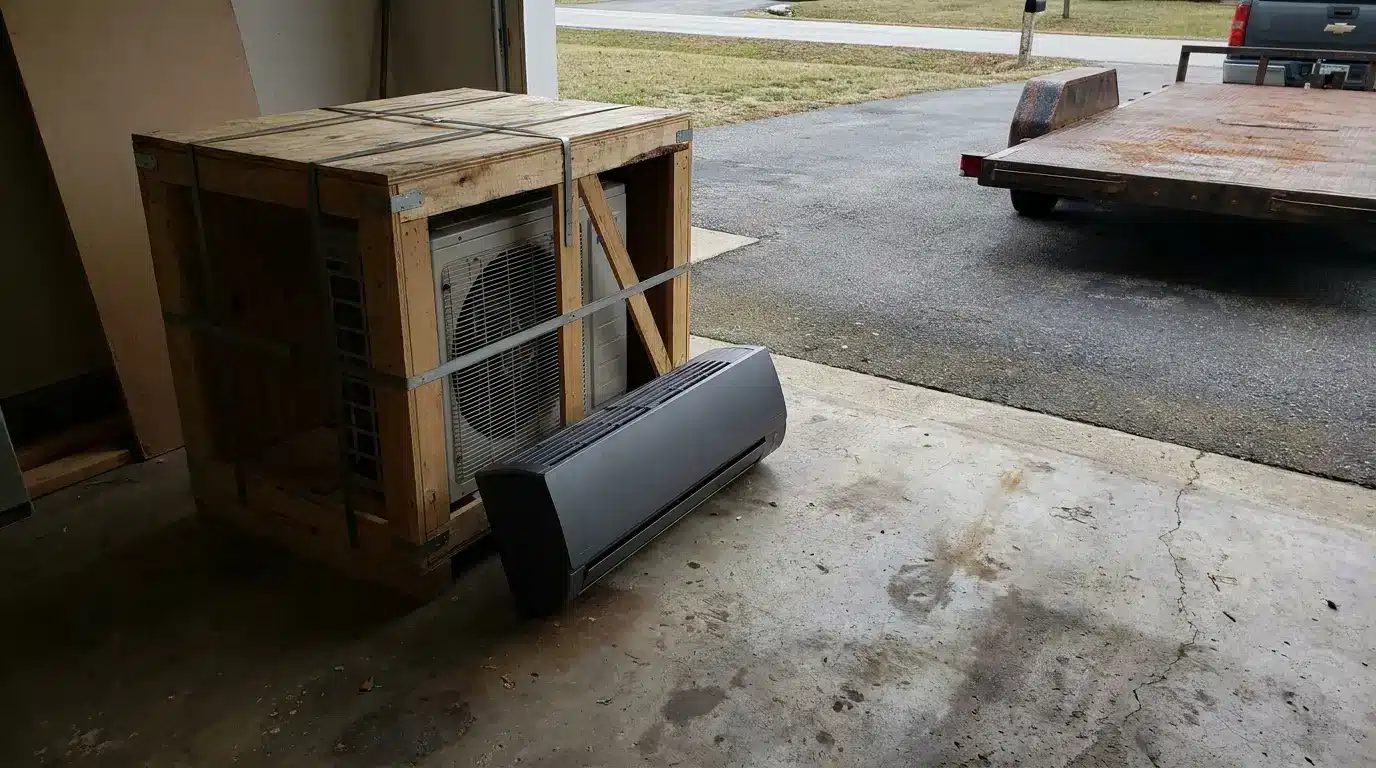
Before you sign anything with a moving company, figure out which HVAC components travel and which get installed fresh. Getting this wrong means paying twice.
Here’s the short list I’d hand any client:
- Outdoor condensers and heat pumps usually stay behind or ship separately, crated, because they’re heavy and easily damaged in transit.
- Mini-split wall heads can travel inside the home if they’re properly secured and the refrigerant lines are capped.
- Ductwork is generally built into the structure for modular homes, so it moves as part of the module.
- Thermostats, filters, and control panels almost always need reinstallation or replacement on site.
That last item trips people up. A smart thermostat tied to a home’s Wi-Fi and zone settings won’t just power on after a move. You’ll need to reconfigure it, and sometimes reset the whole unit to factory settings before it behaves.
If any refrigerant work is involved, the rules change again. Federal law governs how refrigerants get handled during installation and service, and according to the Environmental Protection Agency, only certified technicians can legally handle certain refrigerant types. That’s not a paperwork formality. It’s the reason you can’t just buy a can and top off your own system.
A Simple Pre-Move Checklist for Your HVAC
You don’t need a technical background to get this right. You need a sequence.
- Photograph everything before disconnection, including wiring, mounting brackets, and line positions. Photos are the fastest way to answer questions weeks later.
- Schedule the disconnect with a licensed technician, not the moving crew. Movers handle logistics, not refrigerant lines.
- Confirm the destination’s power supply before the home arrives. Voltage, amperage, and available circuits determine what you can install.
- Book installation for arrival week, not after. Waiting until you’re already sweating in a hot box makes you rush decisions.
- Get the system matched to the new climate. A unit suited to a mild coastal region won’t perform the same way in a place with brutal summers.
The Bureau of Labor Statistics tracks installation and repair occupations as a steady, growing field, and demand for skilled trade workers in heating and cooling has stayed consistent for years. The practical takeaway: you shouldn’t struggle to find qualified help, but you should book it early. Good technicians fill their calendars fast during peak season.
The Mistake That Costs the Most
People treat HVAC as an afterthought in a move. They spend months choosing flooring and cabinet finishes, then scramble to figure out cooling in the final week. That order is backwards. Your comfort system determines whether the home is livable the day you arrive. Everything else can wait a month. Size the system for the final location, plan the installation before the house lands, and keep your documentation organized from the start. What’s the one thing you’d check first before your home hits the road?