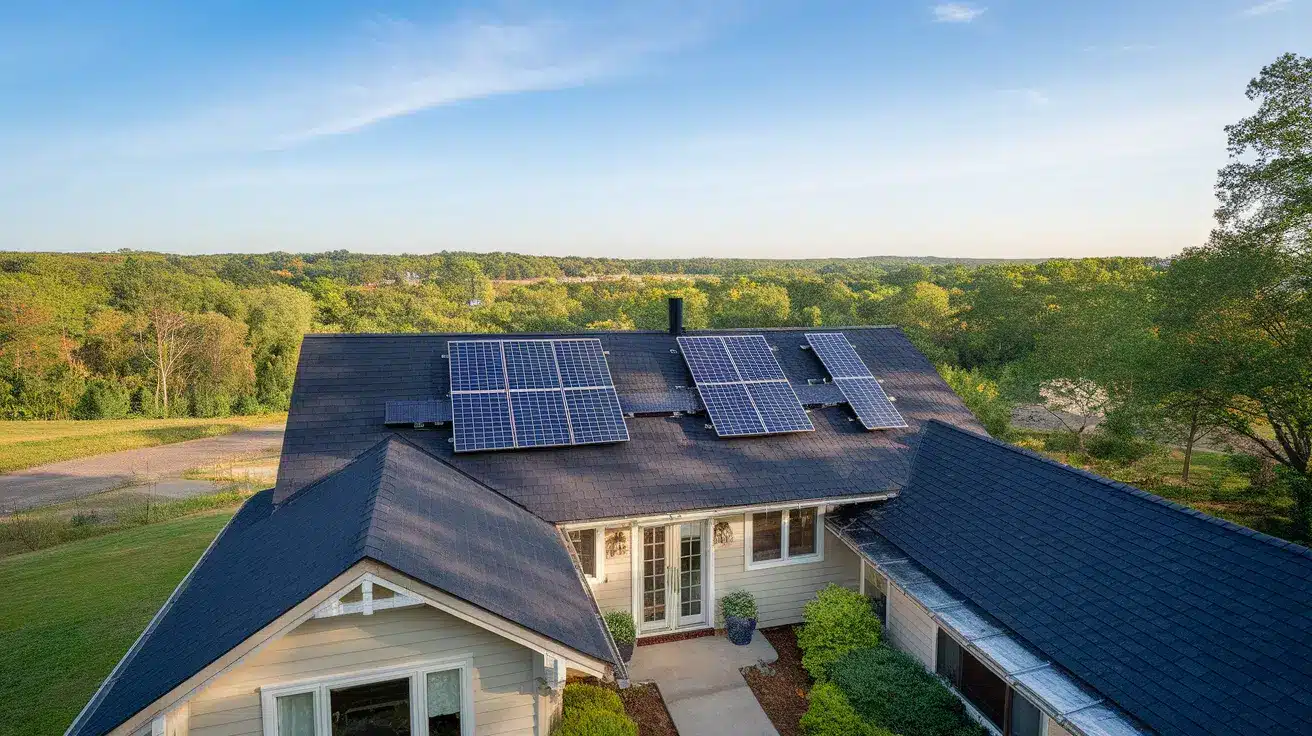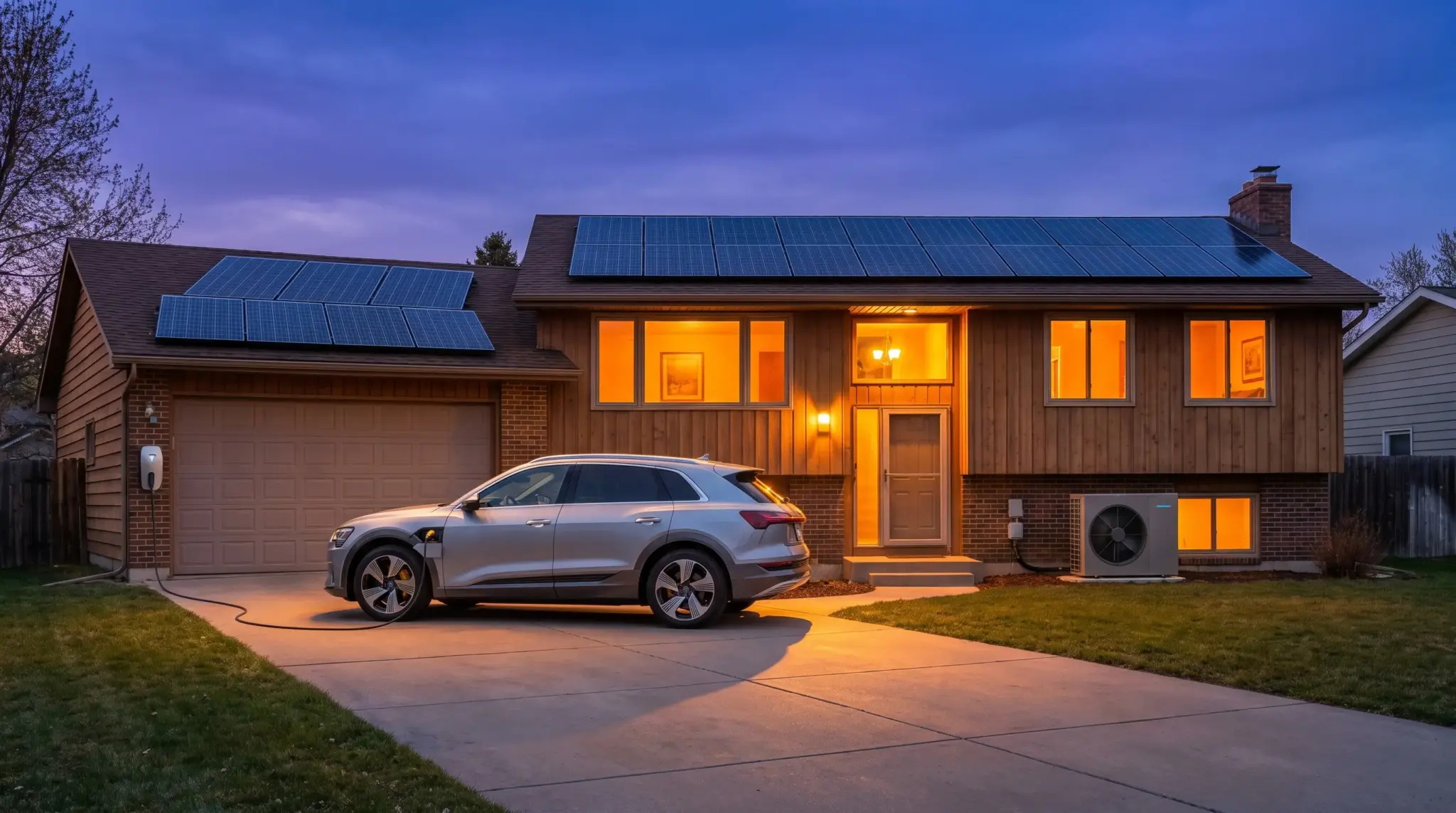
Here’s a problem that catches a lot of homeowners completely off guard: you order a Level 2 EV charger, schedule the installation, and the electrician shows up only to tell you that your panel can’t handle it. Maybe you also have solar panels on the roof, a smart thermostat, and a heat pump water heater you added last year. Suddenly, a relatively simple upgrade turns into a $3,000 panel replacement you weren’t expecting. That scenario plays out across the country every single week, and it’s entirely avoidable if you know what to look for before you spend a dollar on new tech.
Your electrical panel is the single gating factor for almost every modern home upgrade. Get it right and everything else snaps into place. Ignore it and you’re chasing electrical problems for years.
Why Today’s Homes Are Outgrowing Their Panels
Most American homes built before 2000 were designed around a 100-amp service. That was plenty for the time. A couple of window air conditioners, a refrigerator, a washer and dryer, and standard lighting. That was the whole electrical story for most families.
The story has changed completely. A Level 2 EV charger alone draws 32 to 48 amps. A central heat pump can pull another 30 to 40 amps at peak demand. Add smart appliances, a home battery backup system, and a whole-home surge protector, and a 100-amp panel is already straining before you even think about solar. The infrastructure underneath modern home tech hasn’t kept pace with the tech itself, and that gap is exactly where problems live.
According to the U.S. Energy Information Administration (EIA, 2024), the average American household’s monthly electricity bill reached $138 in 2023, up from $121 just two years earlier, an increase driven largely by higher electricity prices. Household demand is set to climb too as more homes electrify their heating, cooking, and transportation.
The practical consequence: a panel that felt oversized five years ago can feel genuinely undersized today.
The Panel Readiness Score: A Simple Self-Assessment
Before calling an electrician, run your home through this five-point check. Think of it as a Panel Readiness Score. Each “no” or “unsure” answer is worth one point. Score 0 and you’re probably fine. Score 3 or above and upgrading your panel before your next big purchase is the right move.
| Check | What to Look For | Red Flag |
|---|---|---|
| 1. Panel age | Find the manufacturer date inside the panel door | Older than 25 years, or a Federal Pacific / Zinsco brand |
| 2. Service amperage | Look at the main breaker label | 100 amps or less |
| 3. Open breaker slots | Count unused slots in the panel | Fewer than 4 open slots |
| 4. Tandem breakers | Check for “stacked” thin breakers sharing one slot | More than 2 or 3 tandem breakers |
| 5. Planned additions | List upcoming high-draw devices (EV, HVAC, battery) | Any single device pulling 30+ amps |
This isn’t a diagnostic tool that replaces a licensed electrician. What it does is give you a confident, informed starting point before that conversation happens. You’ll spend less time guessing and less money on surprises.
The Scenario That Changes Everything
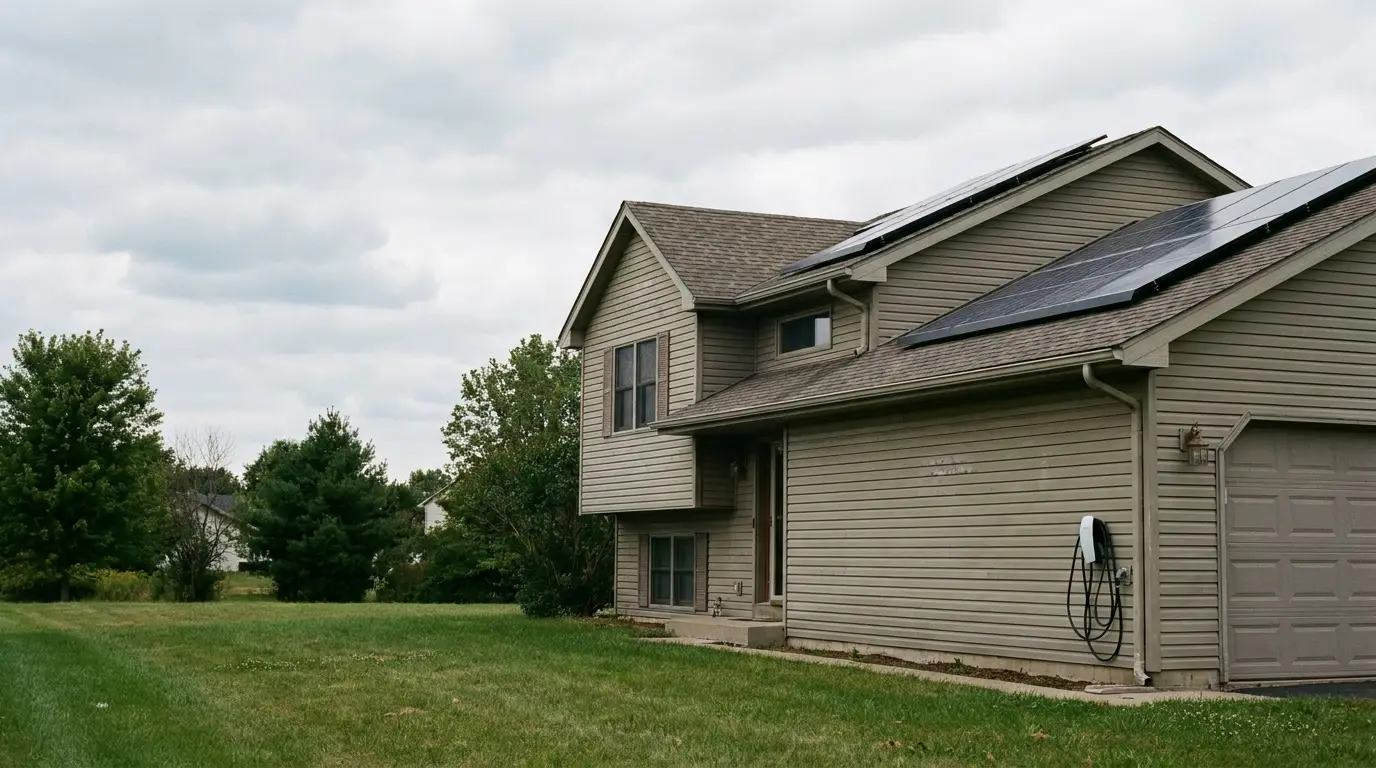
Picture a 1988 split-level home in the suburbs. The owners installed a 4.5 kW solar array last spring. They’re buying an EV and need a Level 2 charger. They also just upgraded to a smart thermostat connected to a two-stage heat pump. On paper, three reasonable, forward-thinking home improvements. In reality, all three feed into or draw from the same 100-amp panel.
The solar system generates power and routes it back through the panel. The EV charger needs a dedicated 50-amp circuit. The heat pump’s second stage kicks on the same moment the charger is running at peak, and the house is also pulling demand from the HVAC fan, refrigerator, and kitchen. The math doesn’t work. The main breaker trips. And the solar install company, the EV charger company, and the HVAC contractor all point at each other.
The fix is a 200-amp panel upgrade, which in most markets costs between $2,000 and $4,000 installed. Straightforward work for a licensed electrician. But if you’d done the Panel Readiness Score before signing any contracts, you would have budgeted for it from the start instead of discovering it mid-project.
200-Amp vs. 400-Amp Service: Which One Do You Actually Need?
For most single-family homes, 200-amp service is the right upgrade. It comfortably handles an EV charger, a heat pump, solar inverter backfeed, and typical household loads with room to spare. You’re not going to outgrow it in the next decade unless you’re adding a serious home workshop or a large battery storage array like a Powerwall system intended to run the whole house during an outage.
400-amp service makes sense in a narrow set of cases. A large home with two EV chargers, a whole-home generator transfer switch, a pool pump, and a significant home battery backup might genuinely need it. But most homeowners who think they need 400 amps don’t. A qualified electrician can run a load calculation in about 20 minutes that gives you a definitive answer based on your specific devices and usage patterns.
My honest take: default to 200 amps unless a load calculation proves otherwise. The extra cost of going straight to 400 amps “just in case” rarely pays off.
Finding the Right Electrician for a Panel Upgrade
When you’re choosing who to hire, look for a licensed master electrician or a NECA-affiliated contractor. Any panel or service upgrade has to be done to the NEC electrical code, the standard that governs service size, load calculations, and how new circuits for EVs and heat pumps are added, so hiring someone trained and current on that code is a solid reference point when you’re vetting contractors. Ask candidates for references from panel upgrade jobs specifically, not just general residential work. Panel upgrades involve coordination with your utility provider that general electrical work doesn’t, and experience with that process matters.
Get three quotes. Not because price is the only factor, but because the spread between quotes often reveals scope differences you want to understand before committing.
What the Labor Market Tells You About Timing
Here’s a practical reality that most homeowners don’t factor in: the U.S. Bureau of Labor Statistics projects electrician employment to grow 9 percent from 2024 to 2034, with roughly 81,000 openings per year on average. Demand is outpacing supply in most regions, which means scheduling a licensed electrician for a panel upgrade can take four to eight weeks in busy markets.
If you’re planning to buy an EV, add solar, or install a home battery this year, start the panel conversation now, not after the equipment arrives. The bottleneck is almost never the hardware. It’s the licensed labor.
Plan the panel first. Everything else follows from there, and you’ll avoid the one mistake that turns a satisfying home upgrade into a months-long headache.