Replacing a Warehouse Roof Without Stopping Shipments
I’ve seen what one bad leak can do to a warehouse in the middle of peak season. Water finds the top of a pallet rack, soaks a row of cartons, and suddenly a dock is closed, a carrier is waiting and a customer order is late. A roof that has reached that point needs replacing, and the question becomes how to do it while trucks keep moving.
Whether a new roof barely touches the shipping schedule or shuts down a loading dock for a week usually comes down to the planning habits of the commercial roof replacement contractor you hire. Two crews can install the same membrane and leave you with very different months.
Below, I’ll walk through how good contractors phase the work, how they protect inventory, what safety rules apply overhead, and how to compare bids so the cheapest number doesn’t become the most expensive choice.
Why a Warehouse Reroof Is Different From Any Other Roofing Job
On a house, the family can leave for a few days. A warehouse keeps receiving, picking and shipping under the same roof the crew is taking apart, so every decision on top of the building affects the floor below.
Inventory and Racking Directly Under the Deck
High-bay racking often stands a few feet below the roof deck. Anything that falls through during tear-off, from dust to old fasteners, lands on product. Moisture that slips in overnight ends up inside cartons.
Docks, Yards and Truck Traffic Around the Building
Roofing needs space on the ground for cranes, material deliveries and debris containers. That same space is where trailers back in and forklifts turn. A contractor who parks equipment in front of the busiest dock creates a shipping problem before the first sheet comes off.
Peak Seasons That Leave No Room for Delays
Most distribution operations have a few months when every dock door counts. A project that slips by three weeks can collide with that window, so schedule buffers matter as much as the start date.
How Experienced Contractors Keep a Warehouse Running
The best crews I’ve come across build the roofing plan around the warehouse calendar. They ask for your floor plan, your shipping peaks and your dock assignments before they talk about materials.
Dividing the Roof Into Zones That Match the Floor Plan
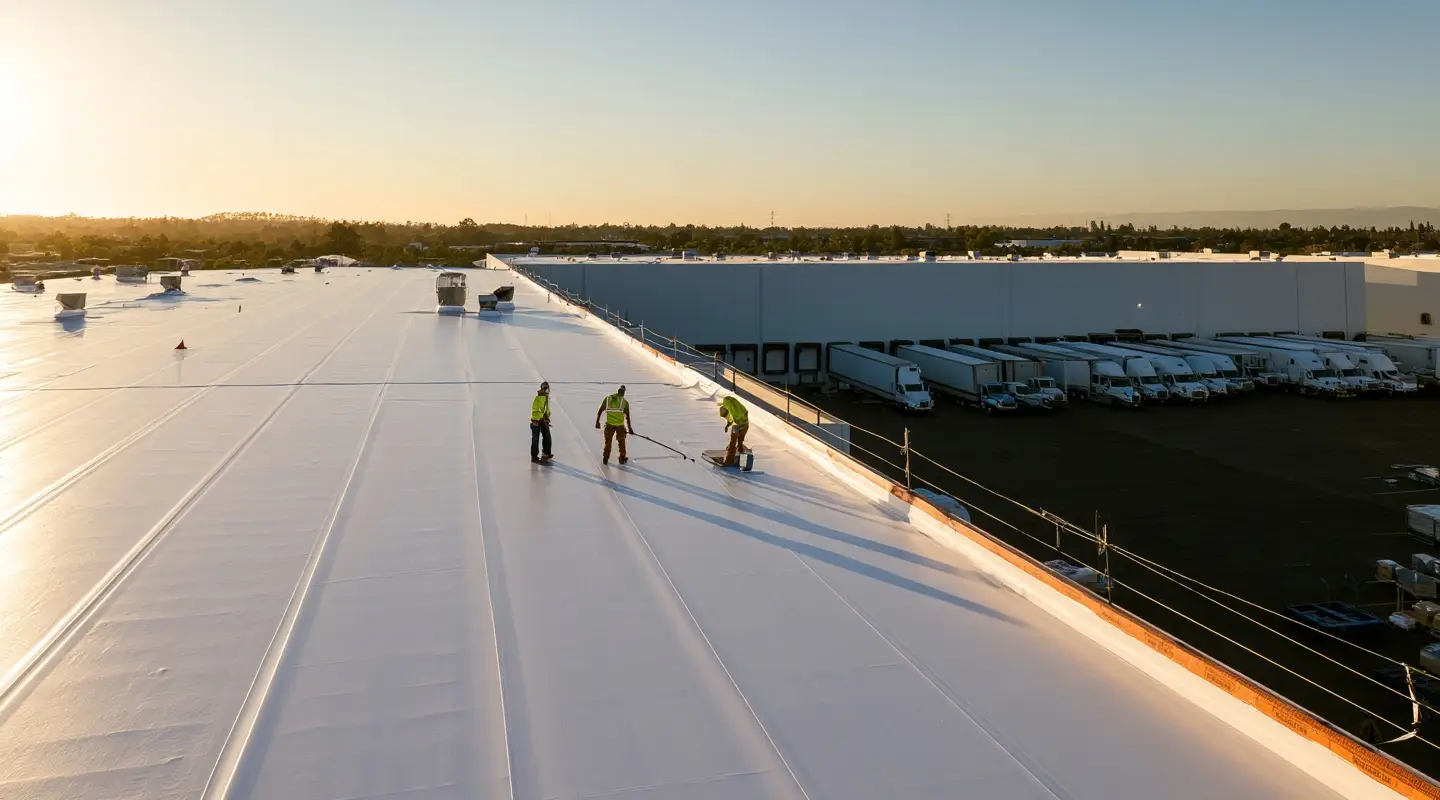
A large roof gets split into sections that line up with areas below: bulk storage, pick zones, offices, docks. The crew finishes one section before opening the next, so only part of the building sits under active work at any moment.
Tearing Off Only What Can Be Sealed the Same Day
A reliable crew removes only as much old roofing as it can cover and seal before leaving. If a storm rolls in overnight, the building stays dry. Ask every bidder how they handle this, and listen for specifics about daily tie-ins.
Night, Weekend and Off-Peak Work Windows
Loud or messy tasks, like tearing off above a busy pick area, can move to nights or weekends. Some contractors charge more for these hours, and the premium can cost less than a lost shift.
Placing Cranes, Hoists and Dumpsters Away From the Docks
Material staging should sit on the side of the building with the least truck traffic. A good site plan shows where the crane goes on each phase, where debris drops and how carriers will reach every open door.
Protecting Inventory and Racking Under the Work Zone
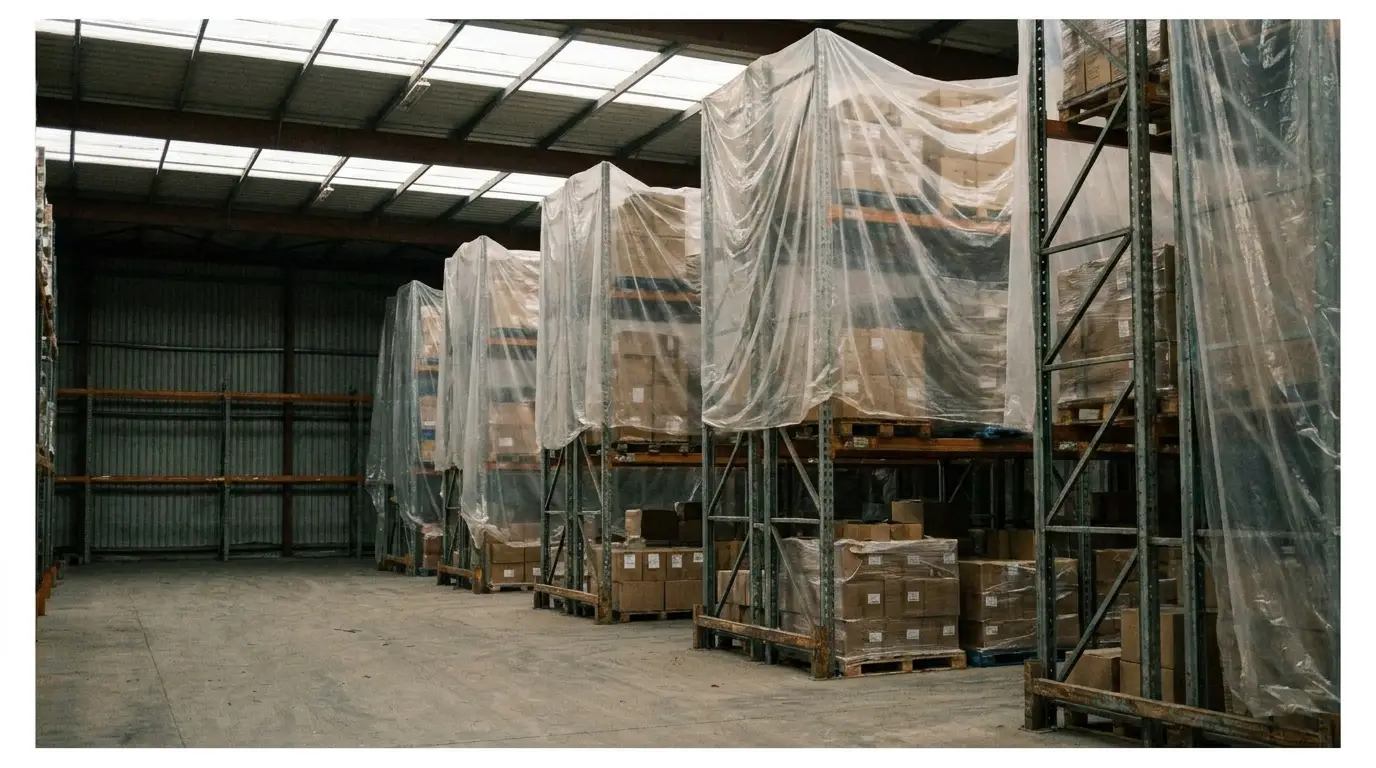
Even careful tear-off shakes the deck. Protection inside the building belongs in the contract, with a clear line on who installs it and who pays if product gets damaged.
Plastic Sheeting, Debris Netting and Temporary Relocation
Crews typically cover racking under the active section with heavy plastic sheeting or hang debris netting below the deck. High-value or moisture-sensitive stock is safer moved to another zone until that section is finished.
Hot Work Rules for Torch-Applied Roofing
Some systems use open flames to bond layers. In a building full of cardboard and shrink wrap, that calls for hot work permits, fire extinguishers on the roof and a fire watch that stays after the torches go off. Some owners avoid the issue by choosing a system installed without open flame.
Safety Overhead: What the Contractor Owes Your Workforce
Warehousing already carries more injury risk than the average job. An earlier Jack Cooper article cited 4.8 injuries per 100 workers in transportation and warehousing, compared with a national average of 2.7. A roofing project shouldn’t add to that number.
Fall Protection Rules on Low-Slope Roofs
Federal rules require fall protection for roofers working near edges 6 feet or more above a lower level. On low-slope roofs, a warning line combined with a dedicated safety monitor is one accepted option, and on roofs 50 feet wide or less a monitor alone is allowed. Ask each bidder which system they’ll use and who the monitor will be.
Skylights as Hidden Hazards
Skylights look like solid roof from above, and workers have died stepping on them. Fall protection is required around every skylight regardless of height, and any cover must support twice the load that could be placed on it.
Keeping Forklifts and Foot Traffic Clear of Drop Zones
Inside and outside, the areas under active work need barriers and signs. Your supervisors should know each morning which zone is closed.
Comparing Contractor Bids Side by Side
Price is one line on a bid. The plan behind it tells you far more about how the project will go.
Criterion | What to ask | Red flag |
Phasing plan | How will you divide the roof and in what order? | “We’ll figure it out on site” |
Same-day sealing | How much do you tear off per day? | No clear daily limit |
Inventory protection | Who covers racking, and who pays for damage? | Protection left to the owner |
Safety plan | Which fall protection system and who monitors? | No written plan |
Insurance | Can you send current liability and workers’ comp certificates? | Expired or missing certificates |
Manufacturer status | Are you certified to offer the full manufacturer warranty? | Workmanship warranty only |
References | Which occupied warehouses have you reroofed? | Only residential examples |
Weather buffer | What happens to the schedule after rain days? | No contingency |
How to Prepare Your Warehouse Before the Crew Arrives
Part of a smooth project happens on your side of the contract. Before day one, it helps to:
- Clear aisles under the first work zone
- Move high-value stock out of risk areas
- Tell carriers about any dock changes
- Mark drains and rooftop units on the roof plan
- Name one person as the crew’s contact
- Agree on crane and dumpster locations
Finding a Contractor in Pennsylvania, New Jersey and Delaware
For owners in the Mid-Atlantic, Paramount Home Solutions replaces commercial roofs on warehouses, offices and restaurants across Pennsylvania, New Jersey and Delaware. The company has more than 20 years of experience, holds GAF Master Elite and President’s Club status, offers GAF warranties covering products and workmanship, and provides financing plans for large projects. Whoever you hire, write the phased schedule into the contract and tie it to your shipping calendar, so a missed date has consequences on paper before it has consequences at the dock.