Most people buying a forklift focus on lifting capacity and price. Both matter, but they’re not the decisions that will cost you the most if you get them wrong. The fuel type is.
Get the fuel type wrong and you end up with a machine that’s too noisy for your warehouse, or one that can’t handle your outdoor yard, or one that keeps stopping mid-shift because nobody planned for charging time. These aren’t edge cases. They happen all the time, usually because the decision was made in a hurry or based on what was available rather than what the operation actually needed.
Here’s a clear breakdown of each option so you can make the right call.
Electric Forklifts
If you’re running a warehouse, a distribution center, or any indoor operation, electric is almost certainly where you should start.
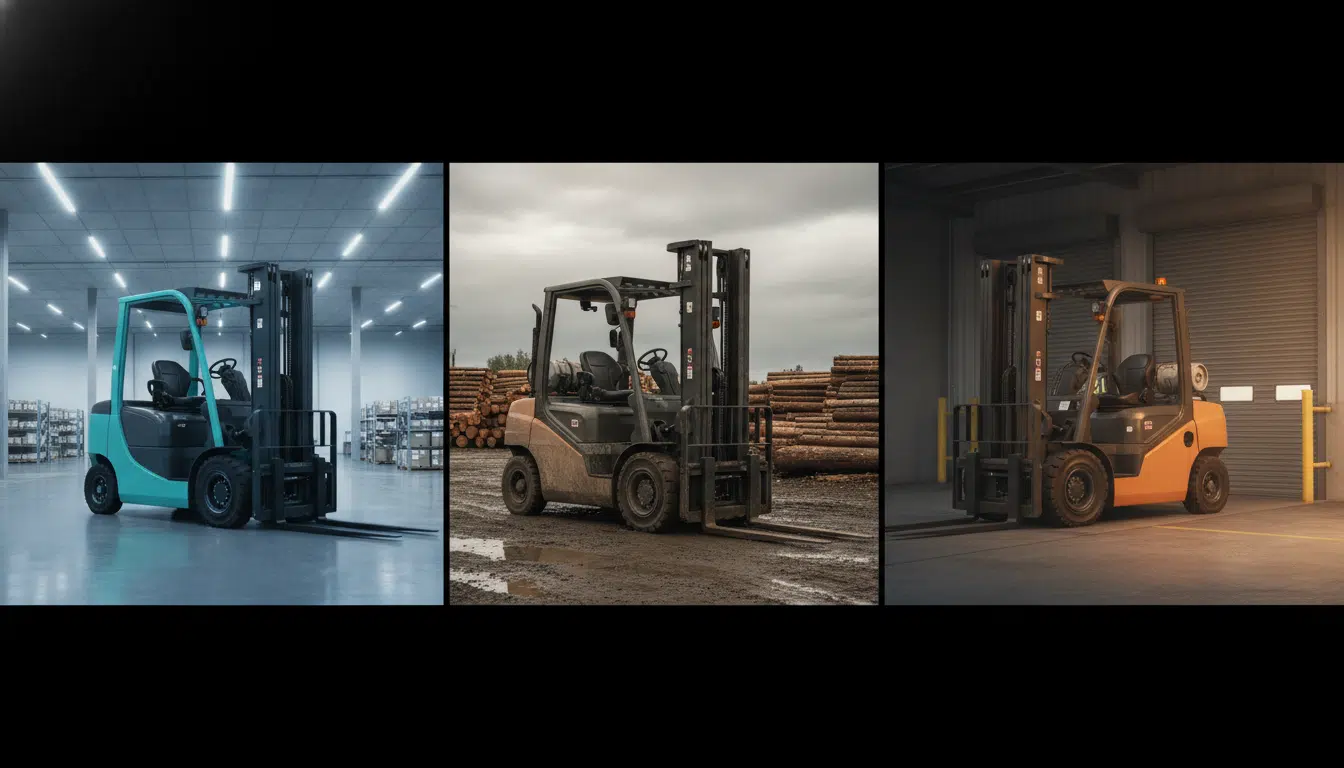
No exhaust fumes means no ventilation headaches. That’s a big deal if you’re working in an enclosed space, handling food, or operating in a facility with air quality requirements. Electric machines are also quieter than the alternatives, which matters more than most people expect once you’re actually working an eight-hour shift next to one.
Running costs are lower too. Electricity is cheaper than fuel in most places, and electric motors are simpler mechanically, so you spend less on maintenance over time. Modern lithium-ion batteries have mostly solved the old problems with charging time, and a lot of operations now use opportunity charging during breaks rather than running a separate set of batteries for each shift.
The honest limitations: electric forklifts don’t like wet conditions or rough outdoor terrain. If your operation takes machines outside into a yard that gets muddy or uneven, the cushion tires on most indoor electric machines aren’t built for it. Battery performance also drops in very cold environments, which matters if you’re running in refrigerated storage.
For a single or double-shift indoor operation in reasonable conditions, electric is hard to argue against.
Diesel Forklifts

Diesel is the outdoor machine. Timber yards, ports, construction sites, anywhere you’re dealing with heavy loads, rough ground, rain, or all three at once.
The performance case is straightforward. Diesel engines produce high torque at low speeds, which means they handle heavy loads well. They don’t need charging stops or cylinder swaps. You fill the tank and the machine works until the tank is empty. In demanding outdoor environments, that reliability matters.
The problem is emissions. A diesel forklift running indoors without serious ventilation isn’t just unpleasant, it’s a safety issue. This rules them out for most warehouse environments, food facilities, and anywhere with enclosed space and limited airflow. They’re also louder than electric or LPG, and they need regular maintenance, oil changes, filter replacements, exhaust system checks, that adds up.
If your operation is primarily outdoor and involves genuinely heavy or demanding work, diesel is usually the right answer. If you’re mixing indoor and outdoor, it gets more complicated.
LPG Forklifts
LPG sits between the other two, which is either exactly what you need or a compromise that serves neither environment particularly well, depending on your situation.
The practical case for LPG is flexibility. The machine can move between indoor and outdoor environments in a way diesel can’t, because LPG produces significantly lower emissions. It’s not emission-free, so you still need reasonable ventilation indoors, but it’s workable in semi-enclosed spaces where diesel would be a problem. And because you swap cylinders rather than waiting for a battery to charge, there’s no downtime pressure in multi-shift operations.
LPG tends to suit dock operations, facilities where machines regularly move between a warehouse and an outdoor yard, or operations running multiple shifts where the infrastructure investment of a large electric charging setup doesn’t make sense yet.
The downsides are fuel costs, which sit between diesel and electric in most markets, and the operational overhead of managing cylinder storage and exchange logistics. It’s a layer of complexity that electric and diesel don’t have in the same way.
The Total Cost Question
According to Jofson, the UK’s leading independent Mitsubishi forklift dealer, the most consistent mistake they see businesses make is focusing on the purchase price rather than the cost of running the machine for five or six years. An electric forklift that needs a charging infrastructure investment looks more expensive upfront. But when you factor in lower fuel costs, less maintenance, and fewer breakdowns across the life of the equipment, the calculation often flips.
This is worth modeling before you buy, not after.
The Questions That Actually Matter
Before you decide on fuel type, answer these first.
Where does the machine mostly operate? Indoors in controlled conditions points to electric. Primarily outdoor or in rough terrain points to diesel. Regularly switching between the two is where LPG often fits.
How many shifts are you running? Single shift with an overnight charging window makes electric simple. Multi-shift operations with no downtime tolerance need either LPG cylinder swaps or a larger battery fleet with a proper charging plan.
What are you moving? Standard warehouse loads up to a few tonnes, electric handles comfortably. Very heavy loads in outdoor conditions, diesel typically performs better.
What does your facility require? Food-grade and pharmaceutical environments usually require zero emissions at point of use. Enclosed spaces with limited ventilation rule out diesel. Semi-enclosed with reasonable airflow can accommodate LPG.
What does the real cost look like over five years? Factor in fuel, maintenance, expected downtime, and any infrastructure costs alongside the sticker price.
The Bottom Line
Electric if you’re indoors. Diesel if you’re outdoors and handling serious loads in demanding conditions. LPG if you need flexibility between both environments or can’t manage the charging logistics for electric across multiple shifts.
None of these answers are universal. The same operation running two shifts instead of one, or adding an outdoor yard to an indoor warehouse, can change the right answer entirely. If you’re not sure, get someone who knows the equipment to look at what you’re actually doing before you commit to a machine you’ll be running for the next seven years.
Always factor in local emissions regulations and workplace safety requirements before selecting equipment. A specialist assessment of your specific site and operation is recommended.

![[Cargo ship being loaded with shipping containers at a commercial port for insured freight transport]](https://www.jackcooper.com/wp-content/uploads/2026/06/cargo-ship-being-loaded-with-shipping-containers-at-a-commercial-port-for-insure.webp)