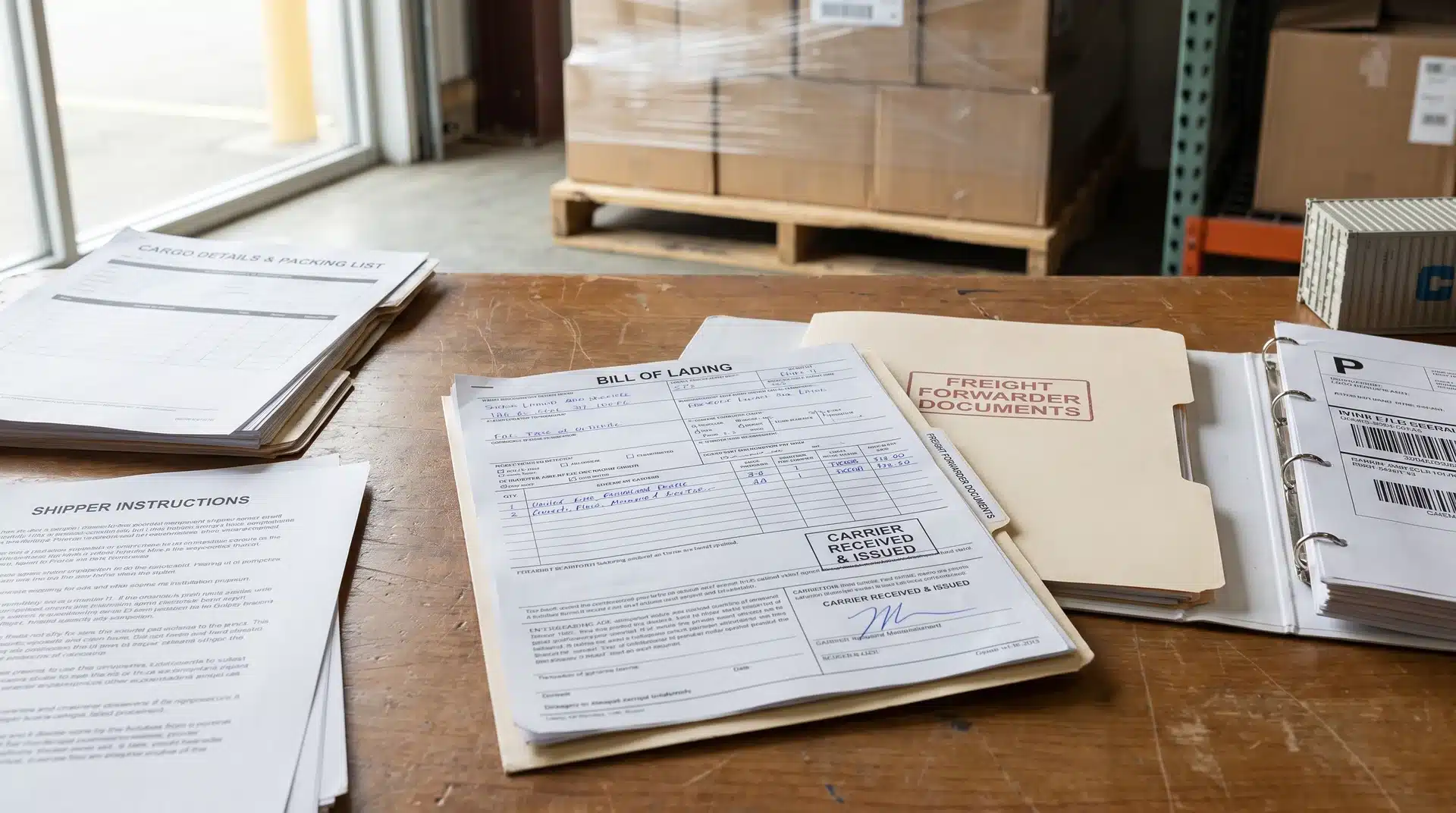
One incorrect detail on a shipping document can delay cargo, trigger a billing dispute, or stop the receiver from collecting the goods. If you handle freight, you need to understand what each document means before the shipment moves.
Understanding the bill of lading meaning makes that paperwork much easier to manage. A BOL identifies the shipment, records important transportation details, and may determine who can claim the cargo.
Some types are transferable, while others name a fixed receiver. Below, you’ll see how a bill of lading works, its main functions and types, who issues it, and which details deserve the closest attention.
Bill of Lading Meaning in Shipping
A bill of lading is a legal transportation document issued by a carrier or its authorized agent after accepting goods for shipment. It identifies the cargo, shipper, consignee, carrier, origin, destination, and other important transportation details.
The document can perform three main functions: confirm receipt of the goods, provide evidence of the transportation terms, and, for certain negotiable bills, represent rights to the cargo.
Bills of lading are commonly associated with ocean freight but are also used in trucking, rail, and multimodal transportation. International shipments may involve additional documentation as part of the broader cross-border freight movement.
A BOL is not proof that a buyer has paid for the goods. Commercial invoices and financial records serve different purposes.
Three Main Functions of a Bill of Lading
A bill of lading is more than a basic list of goods because it can serve several roles throughout a shipment.
1. Receipt for the Goods
The BOL provides a record that the carrier received the shipment described on the document.
It can show:
- Number of cartons, pallets, or containers
- Commodity description
- Shipment weight
- Packaging type
- Apparent condition of the cargo
Visible shortages, damaged packaging, or other noticeable problems may also be recorded when the freight is accepted.
2. Evidence of Carriage Terms
The document records important details associated with moving the shipment. These may include the destination, routing, freight terms, delivery instructions, carrier responsibilities, and special handling requirements.
If questions later arise about delivery, charges, or cargo condition, the BOL provides an important reference for the parties involved.
3. Document of Title
Certain negotiable BOLs can represent rights to the goods and allow those rights to be transferred during transit. This feature is especially useful in international trade when goods are sold or financed before reaching their destination.
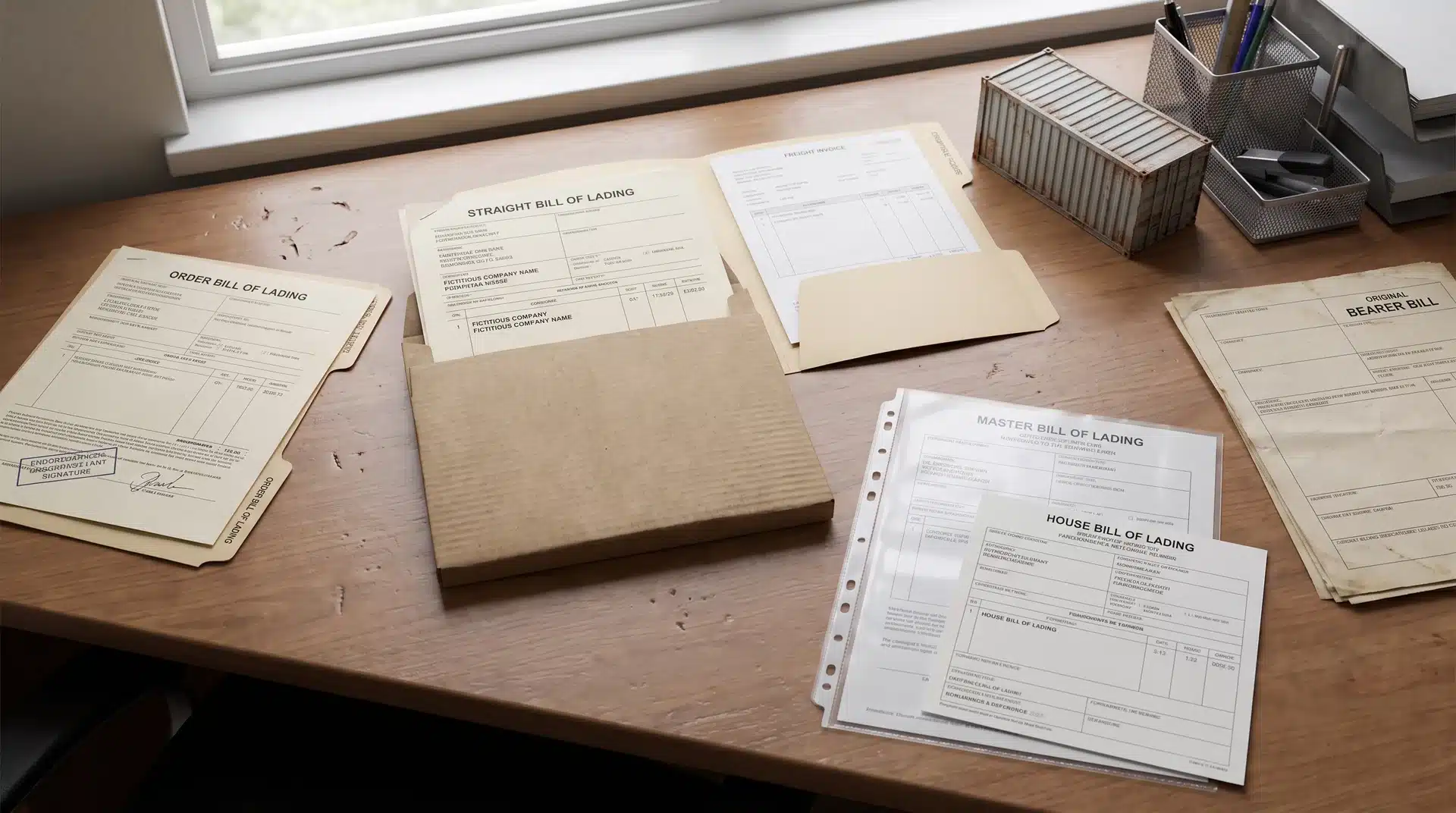
However, not every BOL works this way. Straight bills are generally non-negotiable, while order bills are commonly transferable through the required endorsement process.
Types of Bills of Lading
Bills of lading differ based on who can claim the cargo, whether rights can transfer, the cargo condition, and which transportation party issues the document.
| BOL Type | Main Purpose | Key Detail |
|---|---|---|
| Straight BOL | Sends cargo to a specifically named consignee | Generally non-negotiable |
| Order BOL | Allows rights to the cargo to transfer | Negotiable through the required endorsement |
| Bearer BOL | Allows the lawful holder to claim the shipment | Transfer can depend on possession of the document |
| Clean BOL | Shows no visible cargo or packaging problems were recorded | Describes apparent condition at receipt |
| Claused BOL | Records visible damage, shortages, or packaging issues | Includes qualifying carrier remarks |
| Master BOL | Covers the carrier-to-forwarder transportation arrangement | Issued by the underlying carrier |
| House BOL | Covers the forwarder or NVOCC’s arrangement with its customer | Issued by the forwarder or NVOCC |
Choosing the appropriate BOL clarifies transfer rights and cargo-release requirements. When a forwarder is involved, understanding the forwarder handling process also helps clarify who manages documentation and carrier coordination.
Information Found on a Bill of Lading
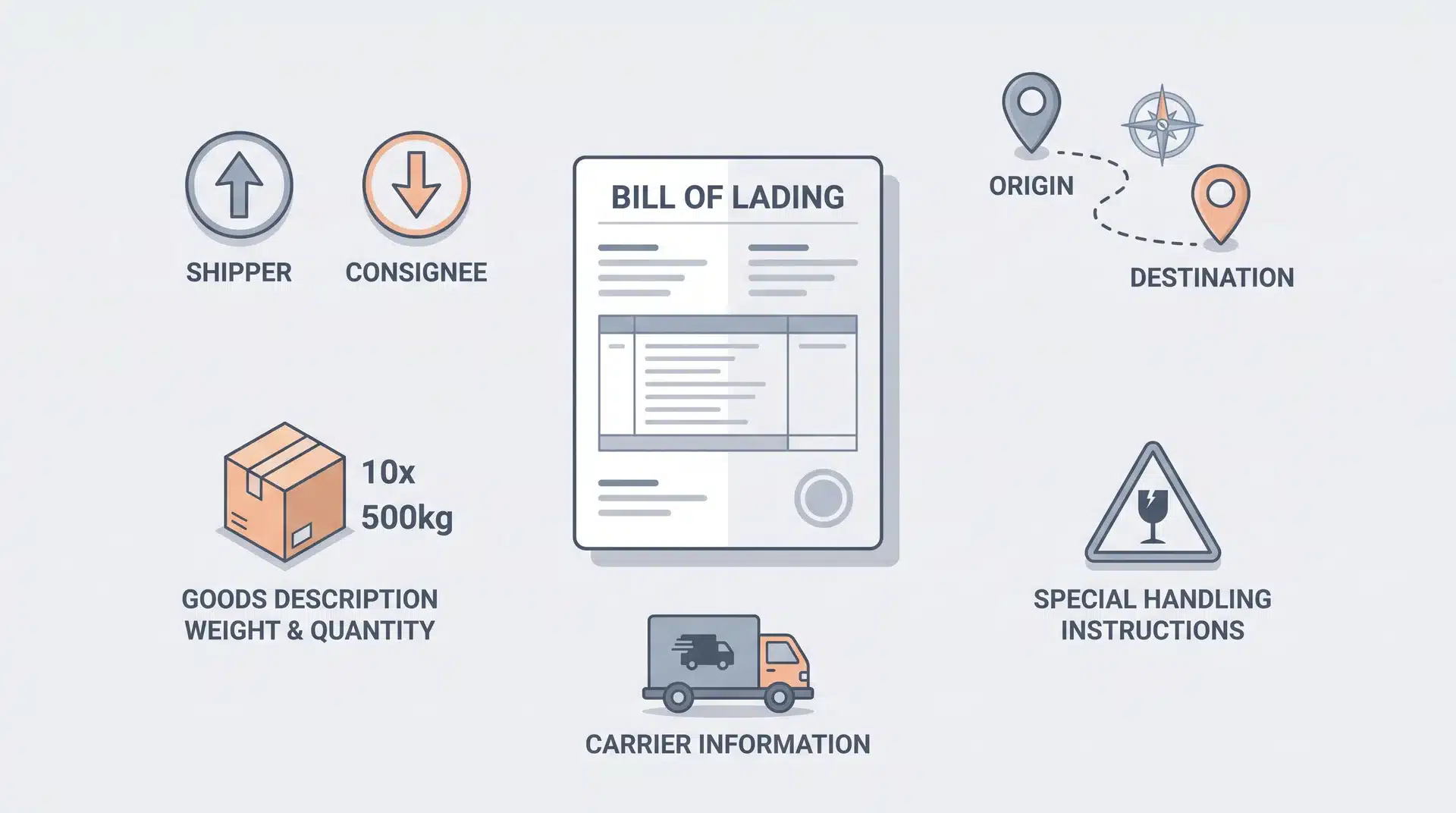
Most BOLs follow a similar structure, although individual carriers and transportation modes may require additional information.
Common details include:
- Shipper: Person or company sending the freight
- Consignee: Party designated to receive the goods
- Carrier: Company transporting the shipment
- Origin: Point where transportation begins
- Destination: Final delivery or discharge location
- Cargo description: Identification of the goods being transported
- Quantity: Number of pallets, cartons, crates, or containers
- Weight: Recorded shipment weight
- Freight terms: Prepaid, collect, or third-party billing arrangements
- Reference numbers: Purchase order, booking, container, or BOL number
- Special instructions: Handling requirements for sensitive or regulated freight
Quantity, weight, and packaging information become especially important during pallet shipping preparation, where incorrect freight details can affect handling and charges.
The shipment details should be checked against the physical cargo and booking information before transportation begins.
How a Bill of Lading Works
A BOL becomes relevant before pickup and may remain important after delivery.
- Shipment details are provided: The shipper supplies the cargo description, consignee, weight, quantity, destination, and other required information.
- The carrier receives the freight: The carrier accepts the cargo and may record visible damage, shortages, or packaging concerns.
- The BOL is issued or authenticated: The carrier or its authorized representative confirms receipt under the stated shipment information.
- The cargo moves through the network: Carriers, terminals, warehouses, and freight forwarders use the document details to identify and process the shipment.
- The shipment is released or delivered: Applicable document and delivery requirements must be satisfied before the goods reach the consignee.
- The record may be retained: The BOL can later support billing, freight claims, audits, customs procedures, or dispute resolution.
The exact process depends on the transportation mode and type of bill being used.
Who Prepares and Issues the Bill of Lading?
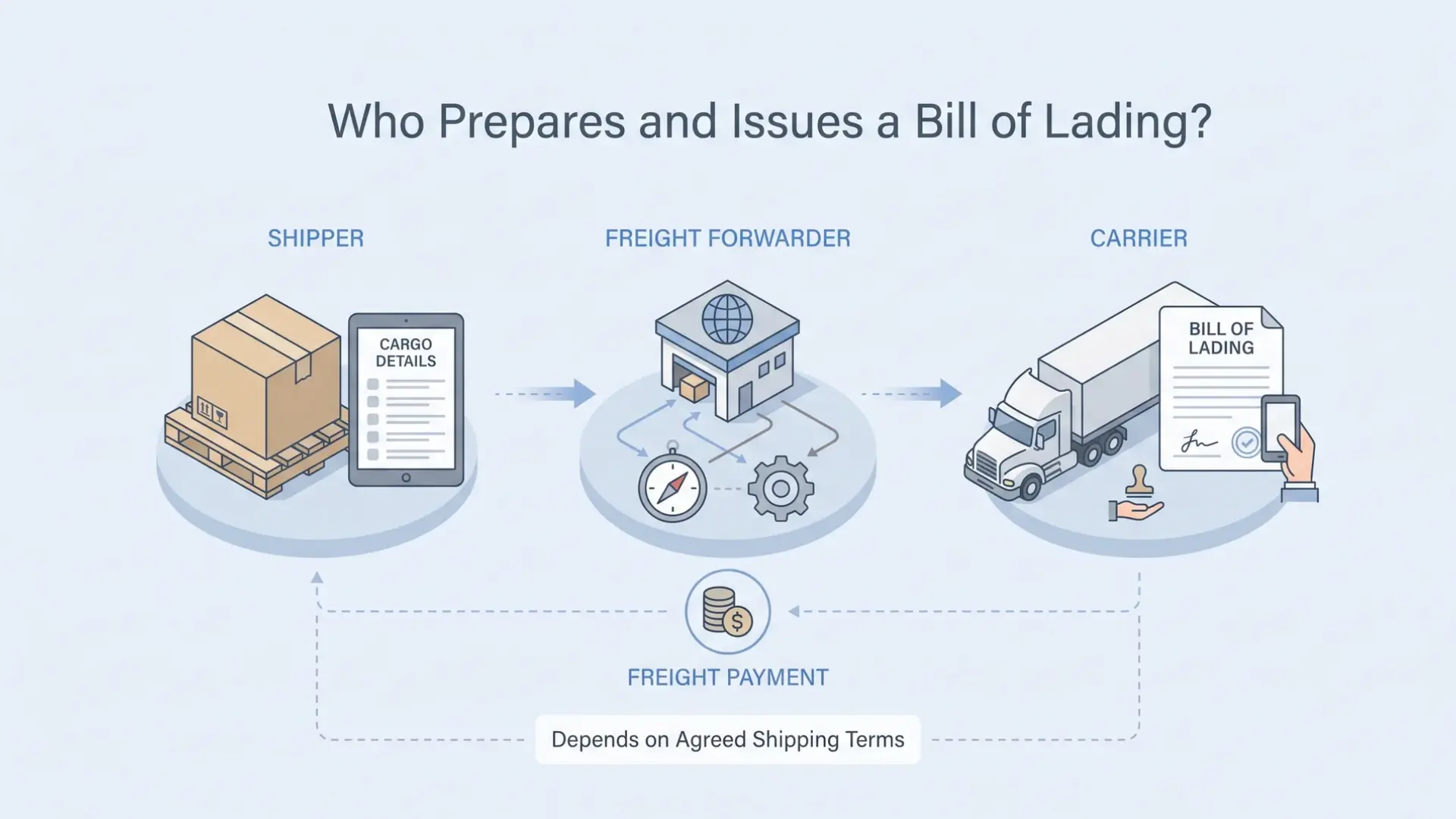
The shipper normally provides the shipment information, including the consignee, cargo details, quantity, weight, destination, and handling instructions.
The carrier or its authorized agent issues or authenticates the bill of lading after accepting the freight.
A freight forwarder may prepare paperwork on the customer’s behalf and may issue a house BOL when it manages the transportation arrangement.
Preparation and payment are separate issues. Freight charges may be prepaid, collect, or billed to another party depending on the agreed shipping terms.
Bill of Lading vs Other Shipping Documents
Shipping documents may appear similar, but each serves a different purpose. Knowing their roles helps prevent errors in transportation, billing, customs, and receiving.
| Document | Main Purpose | Usually Prepared By | Transfers Cargo Rights? |
|---|---|---|---|
| Bill of Lading | Records cargo receipt and transportation terms | Carrier or authorized agent | Yes, if negotiable |
| Commercial Invoice | Records the sale, price, and amount due | Seller | No |
| Packing List | Lists the physical contents of the shipment | Shipper or seller | No |
| Waybill | Provides shipment and delivery instructions | Carrier | No |
| Shipping Bill | Supports export customs clearance where applicable | Exporter or authorized agent | No |
The BOL focuses on transportation and, in some cases, cargo rights. Other documents support payment, packing, delivery, or customs without performing the same legal function.
Common Bill of Lading Mistakes
Small documentation errors can cause unnecessary delays, incorrect freight charges, or cargo-release problems. Check these details before shipment:
- Wrong consignee: Confirm the receiver’s correct legal name and address.
- Incorrect quantity: Match the documented units with the physical cargo.
- Wrong weight: Use accurate shipment weight for billing and transportation planning.
- Vague description: Clearly identify the commodity rather than using broad terms such as “products.”
- Missing instructions: Include required handling details for hazardous, fragile, refrigerated, or oversized cargo.
- Incorrect BOL type: Make sure the bill matches the commercial and transportation arrangement.
A final check against the booking details, purchase order, and physical shipment can catch many problems before freight leaves the origin.
Bill of Lading Example
Suppose a manufacturer in Dallas sends 16 pallets of packaged automotive parts to a distributor in Denver.
The BOL may identify:
- Dallas manufacturer as the shipper
- Denver distributor as the consignee
- Trucking company as the carrier
- Dallas as the origin
- Denver as the destination
- 16 pallets as the quantity
- Total shipment weight
- Automotive parts as the commodity
- Purchase order or shipment reference
- Applicable freight terms
- Required handling instructions
If only 15 pallets arrive, the BOL and related receiving records can help establish how many units were originally tendered to the carrier and support an investigation into the shortage.
Conclusion
A bill of lading connects the cargo, transportation parties, and important terms governing a shipment. Understanding the bill of lading meaning helps you see why the document matters beyond simply listing what is being moved.
Before freight leaves, check the consignee, addresses, quantities, weights, commodity description, freight terms, and handling requirements. You should also confirm that the BOL type matches the transaction, especially when cargo rights may need to transfer during transit.
Accurate documentation gives shippers, carriers, forwarders, and receivers a clearer shipment record. Careful review can also reduce preventable billing disputes, delivery delays, cargo-release problems, and freight claims.
Frequently Asked Questions
What Is a Bill of Lading Used For?
A bill of lading confirms that goods were received for transportation and records important shipment information. Depending on the type, it can also provide evidence of carriage terms or represent rights to the cargo.
What Does BOL Stand For?
BOL stands for bill of lading. The abbreviation B/L is also commonly used. Both refer to the same general type of transportation document.
Who Issues a Bill of Lading?
The carrier or its authorized agent generally issues or authenticates the BOL after accepting the shipment. The shipper usually supplies the cargo, consignee, weight, quantity, destination, and other required information.
Is a Bill of Lading Proof of Payment?
No. A BOL primarily concerns transportation and cargo receipt. Commercial invoices, receipts, banking records, and other financial documents are normally used to record payment or amounts owed.