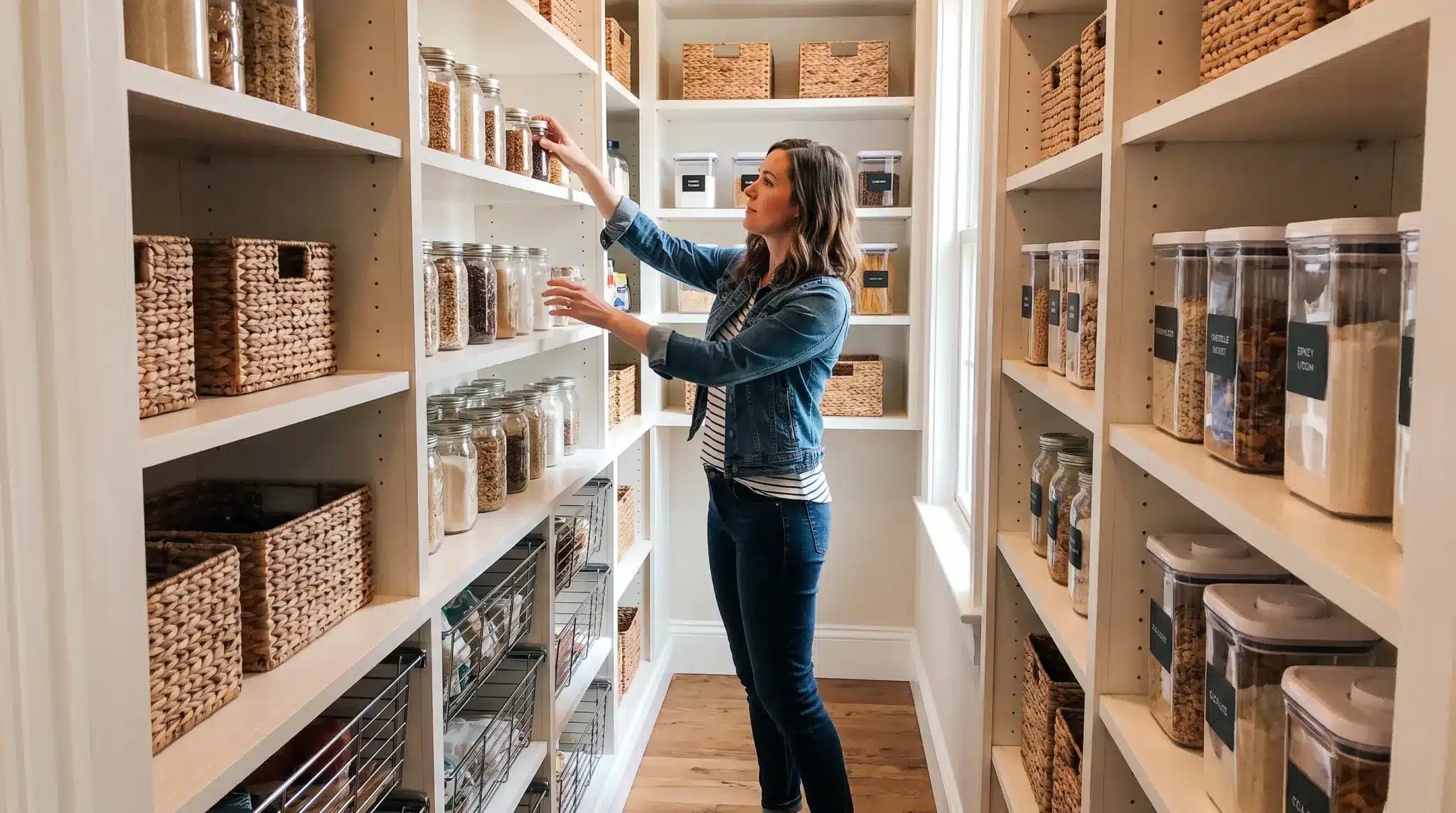
A compact pantry can hold plenty without covering every wall in deep shelves. The better approach is to make each part of the room serve a clear purpose.
I find that good small walk-in pantry ideas focus first on shelf depth, visibility, and comfortable movement rather than adding more containers. I also start with the items used most often because they deserve the easiest positions.
The same thinking matters when considering narrow walk-in pantry ideas. A tight aisle leaves less room for deep shelves, swinging doors, and bulky storage.
Smart shelf placement, useful vertical space, and a few space-saving fittings can make the room easier to use every day.
Start With the Layout Before Adding Storage
Measure the room before choosing shelving or organizers. Check each wall, the doorway, corners, and the clear space left for walking.
I usually look at how the pantry needs to function before deciding how much shelving it can hold. One long wall may work better than shelving on both sides if the aisle is narrow. An L-shaped layout may suit a room with a usable back wall.
This same logic applies to tight closet layouts, where the room’s shape determines the storage approach before any shelving goes in.
Think about large packages, appliances, bins, and other bulky items at this stage too. Giving them planned locations prevents them from taking over shelves meant for daily groceries.
The goal is not to fill every open surface. The goal is to create storage that remains visible, reachable, and comfortable to use.
Small Walk-In Pantry Ideas for Compact Rooms
These ideas make better use of shelves, corners, wall height, and other areas that often go unused in a compact pantry.
1. Install Adjustable Shelves
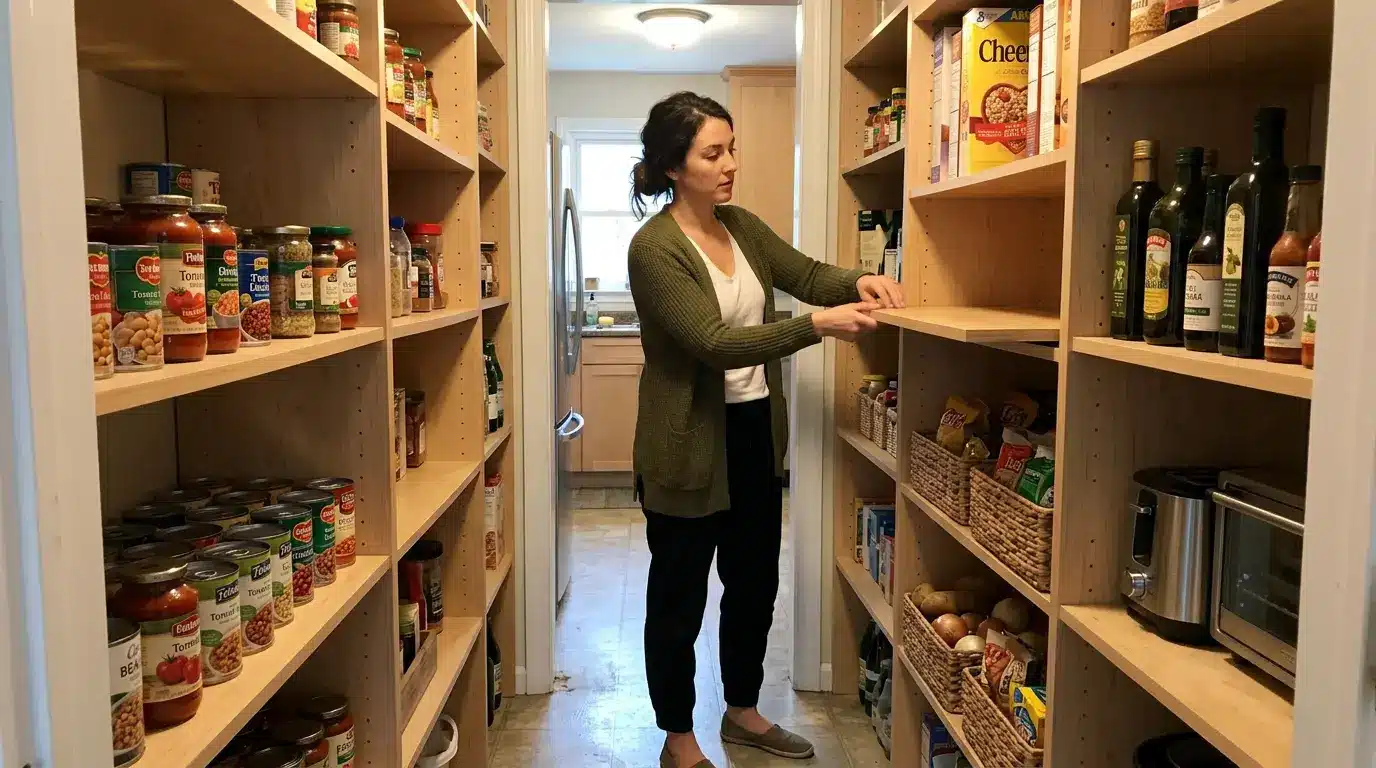
Fixed shelf spacing can leave large empty gaps above cans, jars, and shorter boxes. Adjustable shelves let you change that spacing around the products stored in each area.
Use closer spacing for canned food and small packages, then leave taller openings for cereal boxes, baskets, or appliances.
This flexibility also helps when your shopping habits change. Shelves can move instead of forcing every new product into a layout designed around old storage needs.
2. Make Better Use of the Space Between Shelves
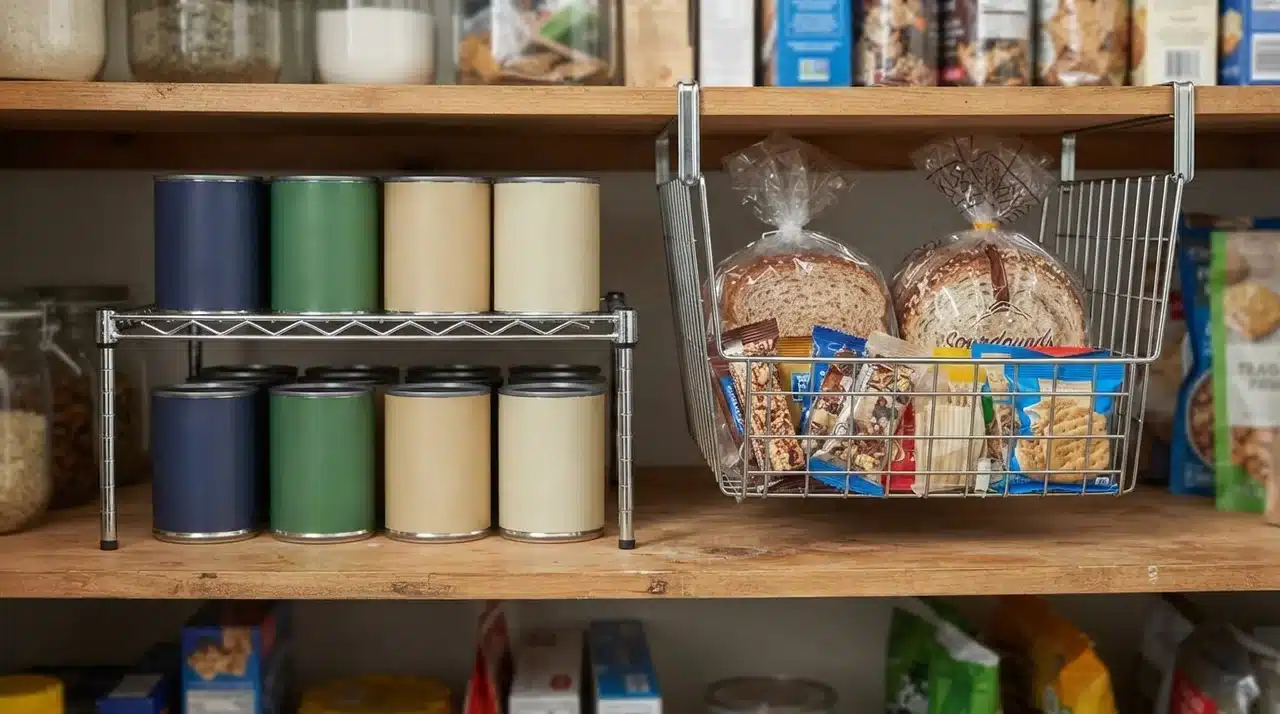
Not every shelf needs another permanent level added above it. Shelf risers and under-shelf baskets can use smaller gaps that would otherwise remain empty.
Shelf risers work well for short cans and jars because they create two visible rows. Under-shelf baskets suit lightweight products such as wraps, bread, snack bags, and small packets.
Use these fittings only where the available height makes sense. Filling every shelf with extra accessories can make the pantry harder to use.
3. Put Turntables in Difficult Corners
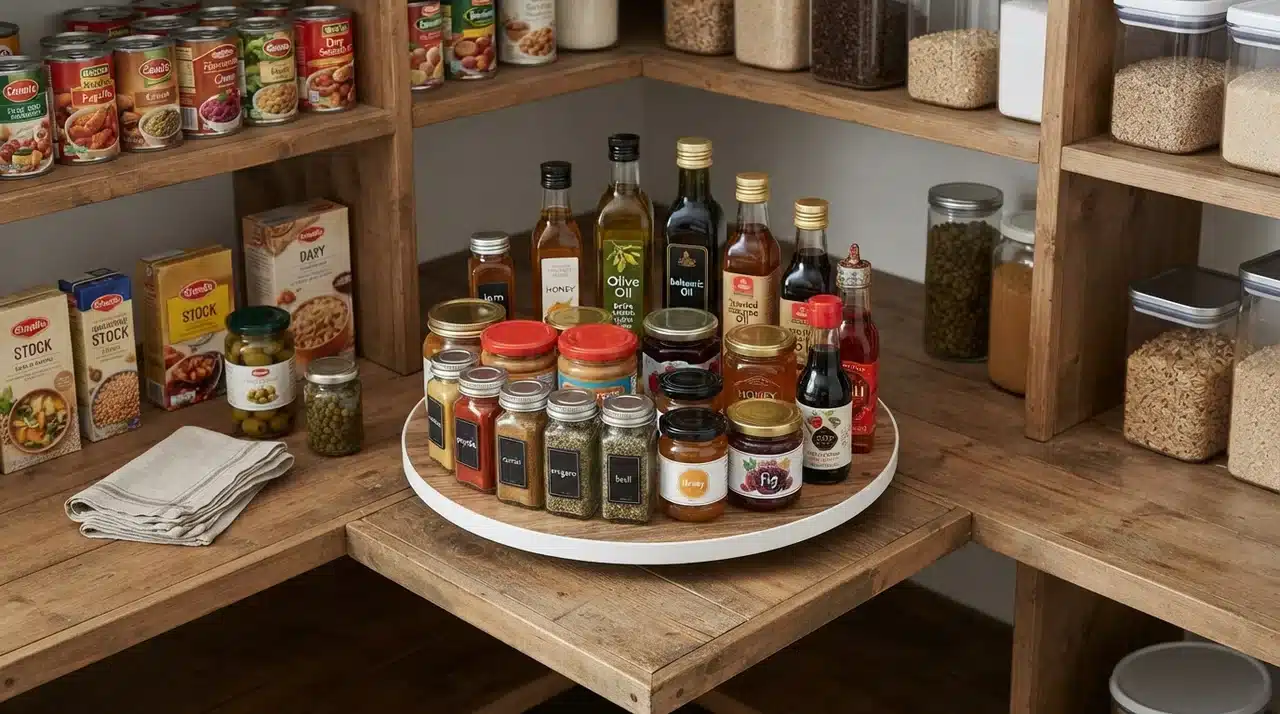
Deep corners often collect small jars and bottles that are hard to see from the aisle. A compact turntable makes those products easier to reach without moving several items first.
Condiments, spreads, oils, and small jars are good candidates.
Keep the turntable smaller than the available shelf area. An oversized model can create unused gaps around its edges, which defeats the purpose in a pantry where shelf space is limited.
4. Use Drawers for Loose Small Items
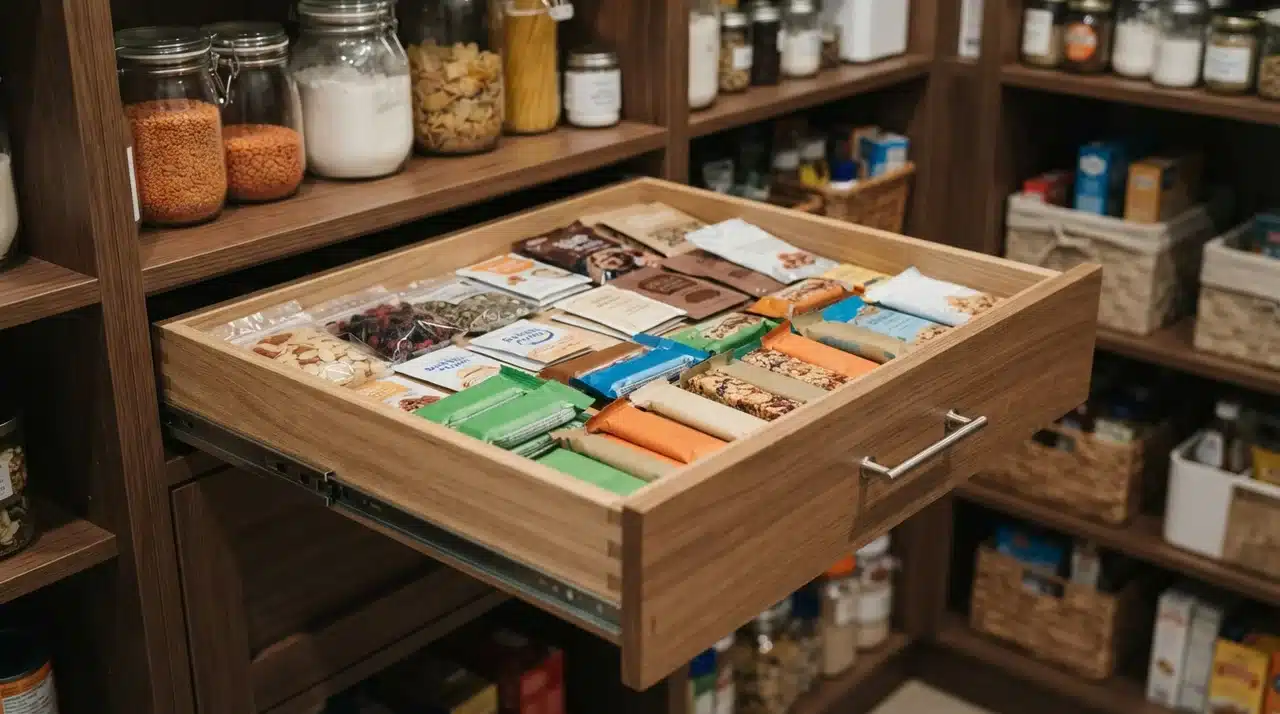
Small packets, baking supplies, snack bars, and similar products can spread across shelves quickly. A drawer keeps them contained while still allowing easy access from above.
Match drawer depth to the available aisle rather than choosing the largest option.
A drawer that holds slightly less but opens fully is more practical than a deep one that blocks movement whenever someone needs something from inside.
5. Store Flat and Tall Items Vertically
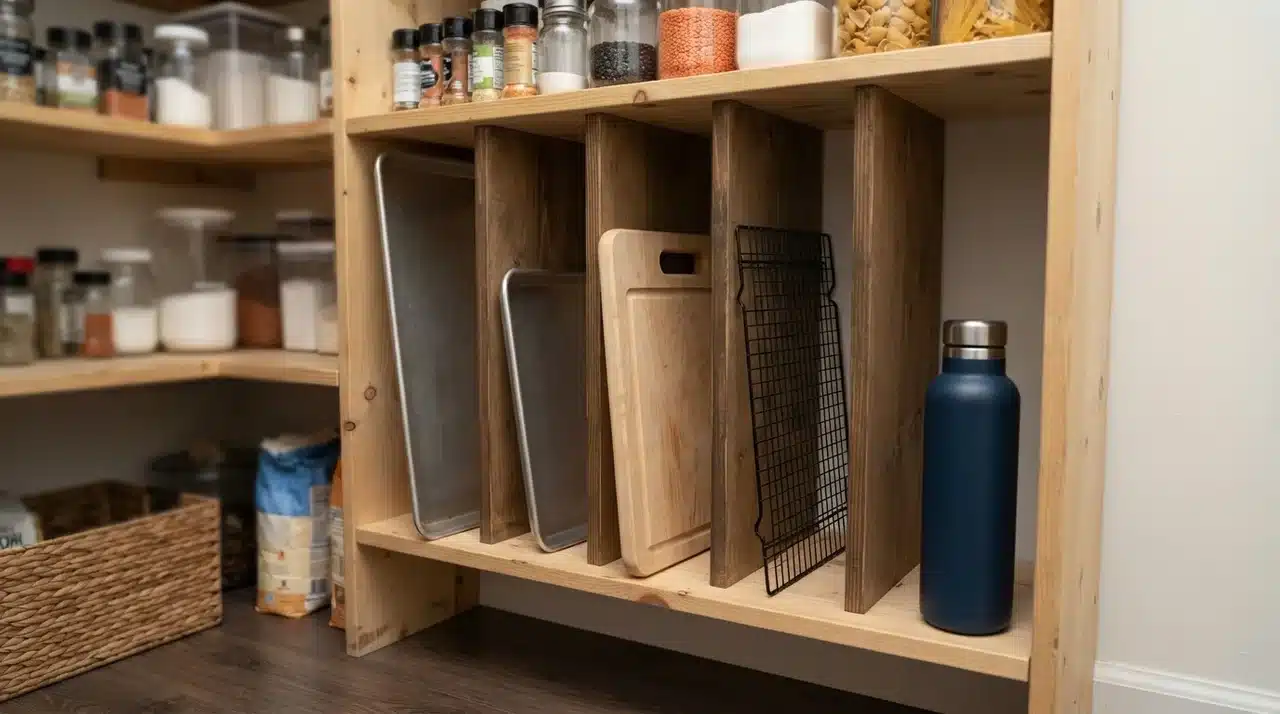
Some pantry items take up more shelf space when stacked horizontally. Baking sheets, cutting boards, serving trays, cooling racks, and reusable bottles can often fit into narrow vertical sections instead.
Use dividers or cubbies to keep them upright.
Lower sections work well for heavier trays and boards, while slim vertical openings can hold bottles or similar tall products. Each item stays accessible without unloading an entire stack.
6. Soften Shelving Around Tight Corners
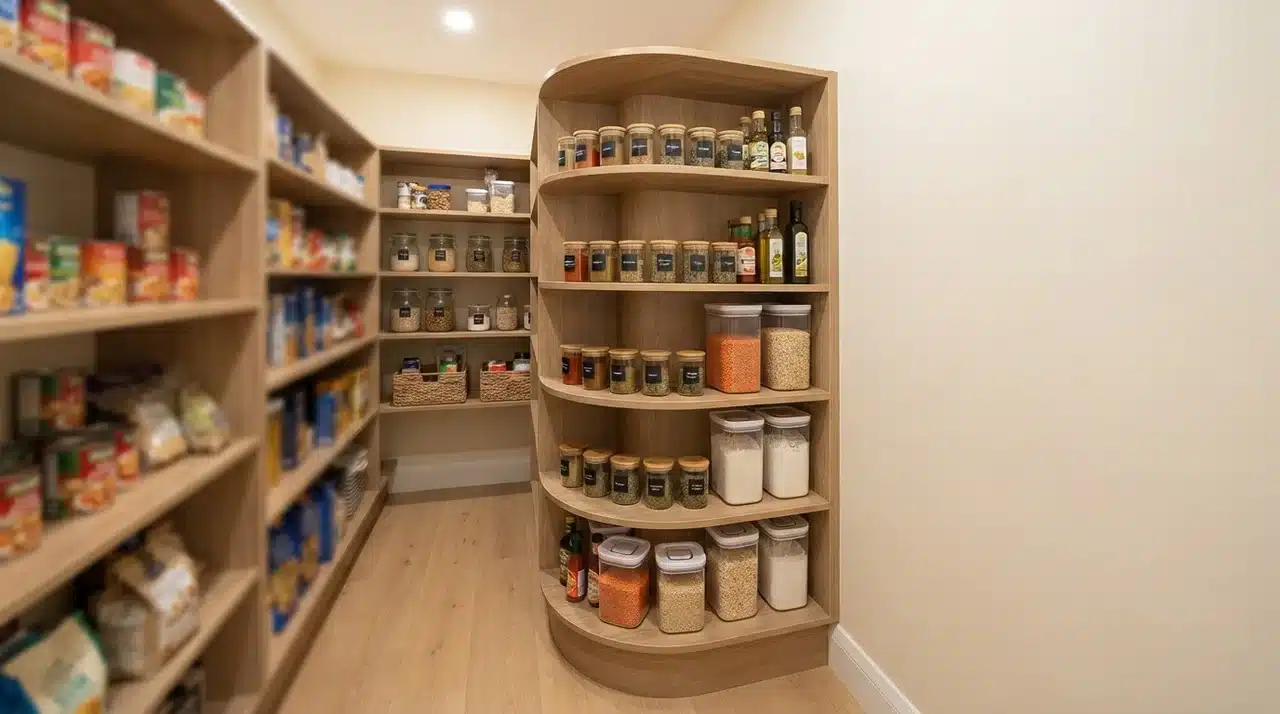
Square shelf corners can project into the walking area, especially where shelving turns onto another wall.
Rounded corner shelves keep the corner usable while creating a little more room to move, carry groceries, or turn inside the pantry.
Keep these shelves relatively compact. Smaller jars, containers, and ingredients suit the area better than oversized packages that extend toward the aisle.
7. Fit an Organizer to the Back of the Door
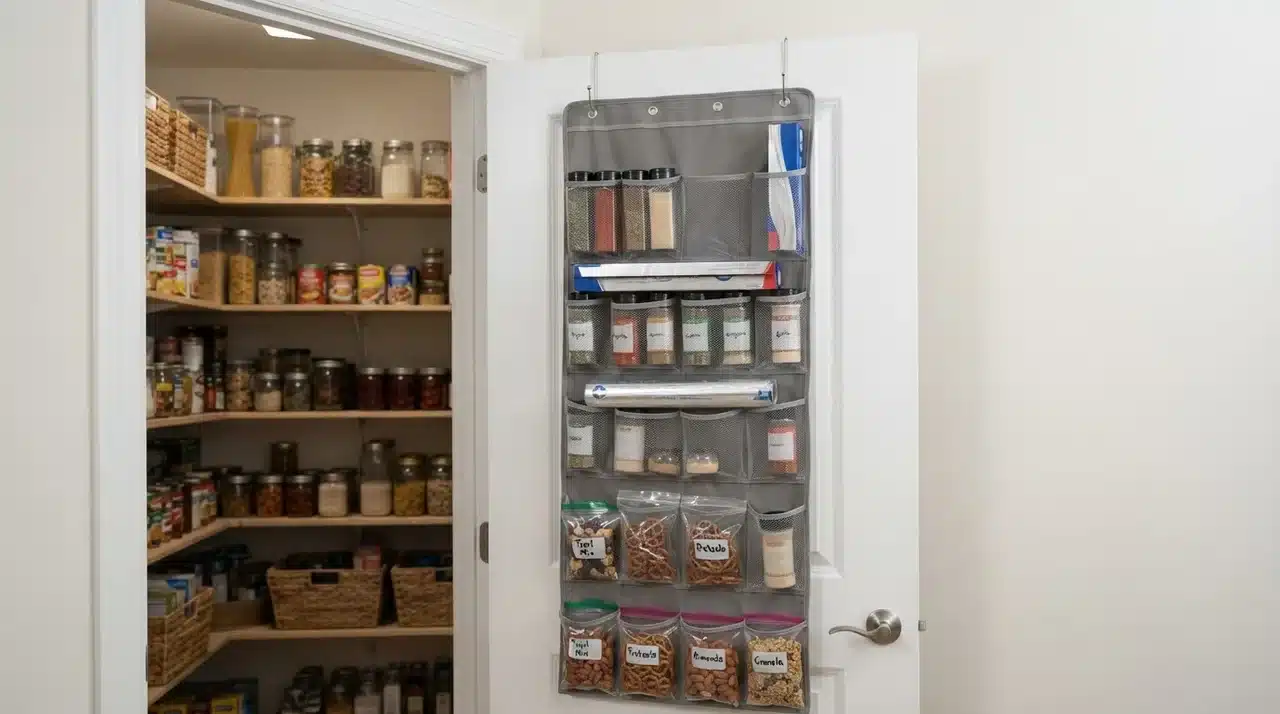
The back of a pantry door is often left bare despite being one of the easiest surfaces to add storage. Over-door racks and pocket organizers mount without permanent fixtures and can hold a surprising amount when chosen carefully.
Spice jars, foil boxes, cling wrap, small packets, and snack bags suit this location well because they are light and accessed frequently. Keep heavier items on shelves where the load is better supported.
Choose a rack that sits close to the door surface. A deep organizer can prevent the door from closing fully or knock against the nearest shelf when opened, which limits how useful the space actually becomes.
8. Bring Light Into Dark Sections
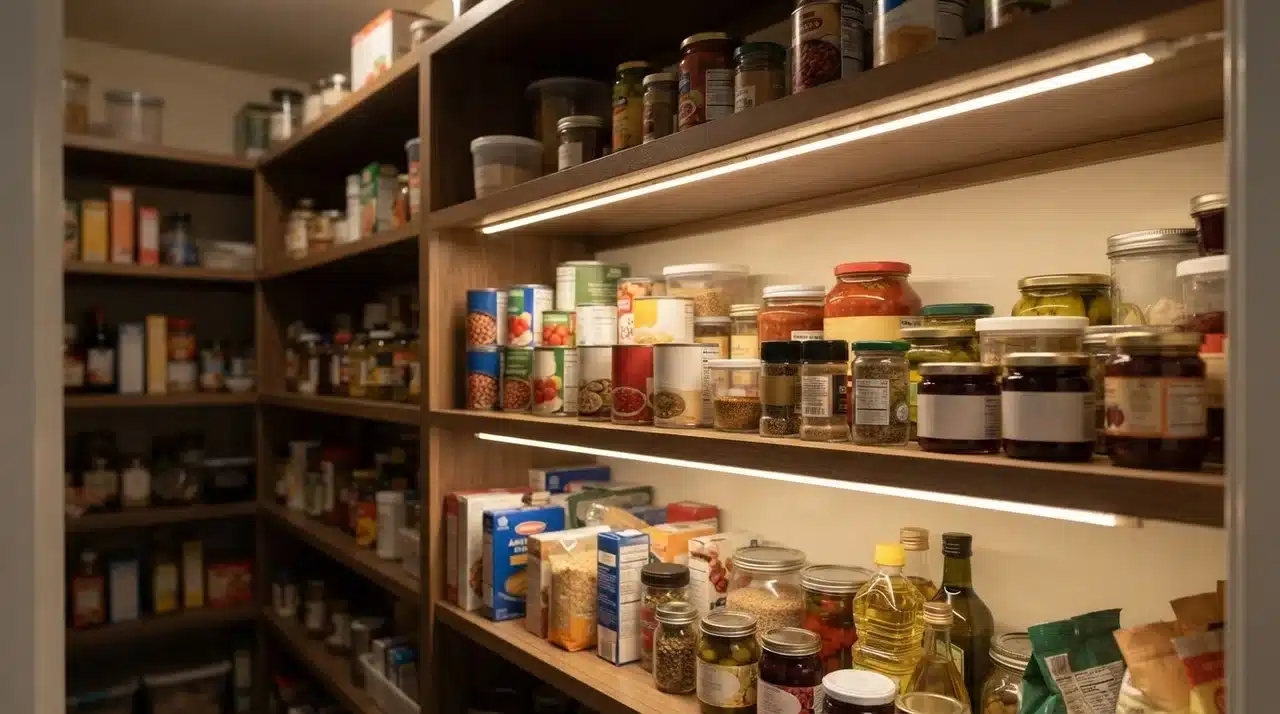
Deeper shelves and lower sections often stay shadowed when the overhead light is the only source. Products pushed toward the back become hard to spot, leading to duplicate purchases or forgotten items already in stock.
Battery-powered puck lights or adhesive LED strip lights placed under shelf edges solve this without wiring. Position them toward the front underside of each shelf so the light reaches the items below rather than reflecting off the shelf surface itself.
Focus on the areas that stay darkest rather than fitting lights everywhere. A few well-placed additions improve visibility without cluttering the shelf fronts with hardware.
9. Arrange the Pantry in Zones by Use
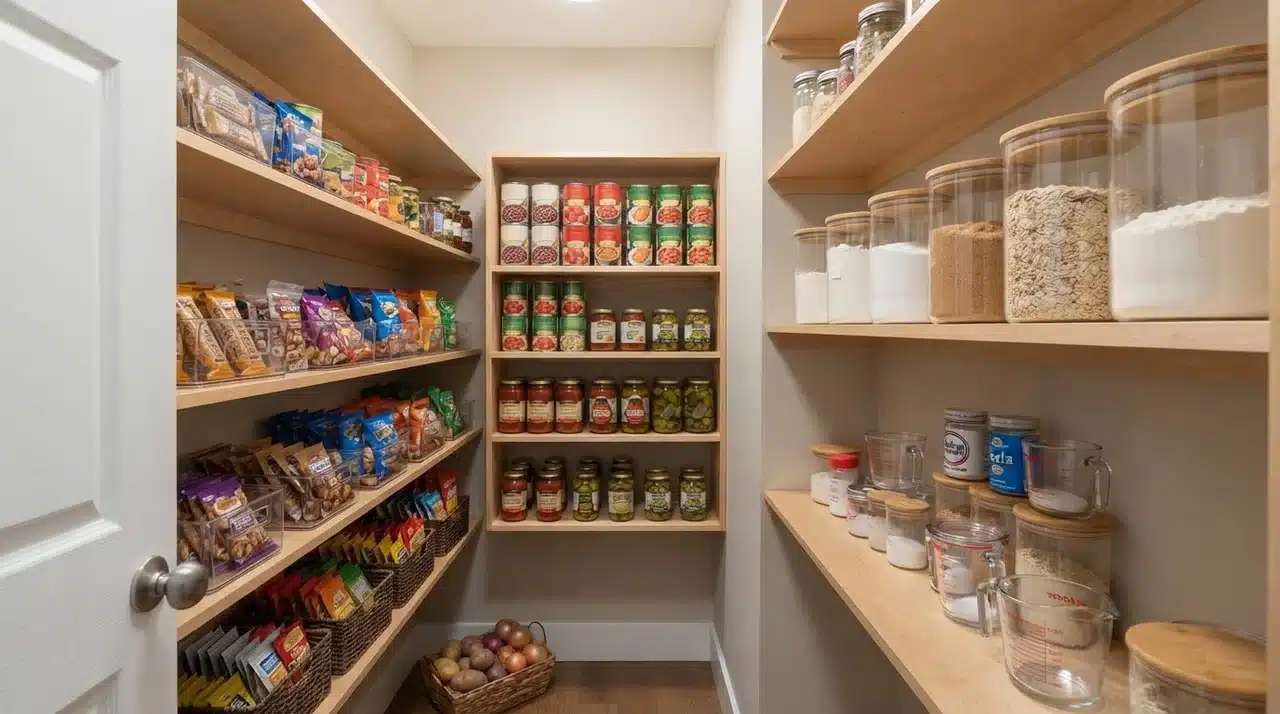
Grouping items by how often they are used reduces the time spent searching and makes it easier to notice when something is running low. Everyday staples belong at eye level and within easy reach, while rarely used items can sit higher or toward the back.
A rough example might be a baking zone on one section, tinned goods on another, and snacks near the door for quick access. The specific arrangement matters less than keeping each zone consistent so restocking and retrieval follow the same logic each time.
The same grouping principle shows up in broader storage tips for small rooms, where sorting by function rather than size usually reduces clutter more than adding bins.
Revisit the zones occasionally. Shopping habits shift, and a layout that made sense when the pantry was first organized may no longer reflect how the space is actually being used.
Narrow Walk-In Pantry Ideas for Tight Aisles
A narrow walk in pantry needs storage that adapts the the room’s shape. Shelf placement matters more than simply adding another row of cabinets.
10. Change Shelf Depth Based on Location
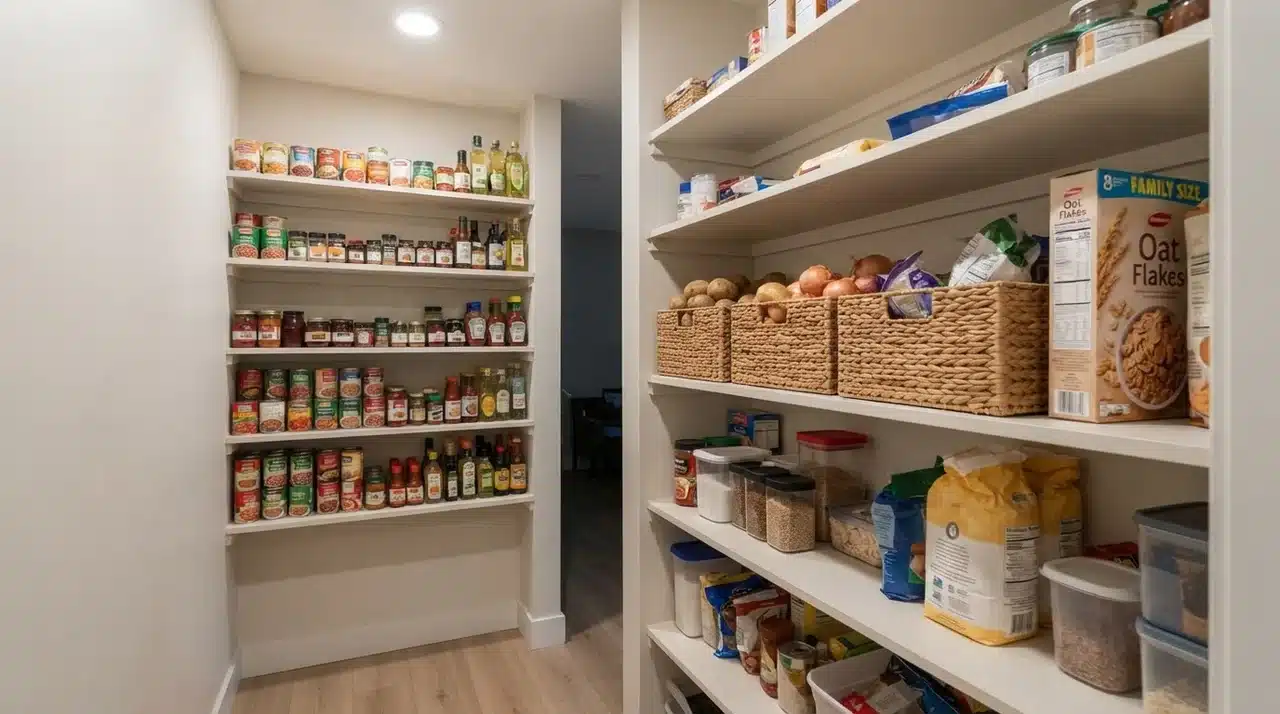
Using the same shelf depth on every wall can make a narrow pantry feel cramped.
Keep shelving near the entrance and along busy side walls relatively shallow. Use these areas for cans, jars, packets, sauces, and other foods that benefit from being easy to see.
Move deeper storage toward the back wall or another section where it does not reduce the full length of the aisle. Bulky baskets, large packages, and appliances suit those deeper areas better.
This one decision handles both visibility and walkway clearance without repeating the same storage rule across several parts of the pantry.
11. Use an L-Shaped Layout Instead of Two Deep Walls
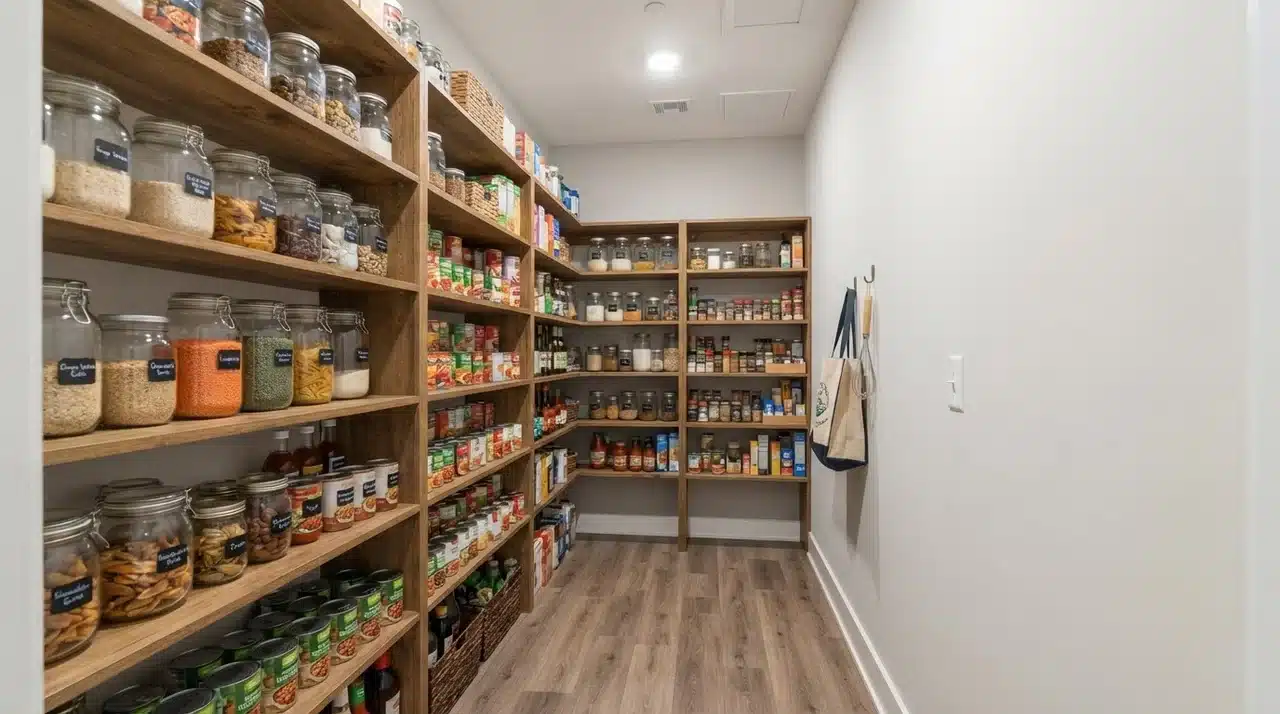
Shelving on both long walls can leave too little room in the middle. An L-shaped layout offers another option.
Run the main storage along one wall, then continue shelving across the back. The return can be slightly shallower if the corner feels tight.
Keep the corner easy to reach. Adding shelf length has little value if products end up hidden in a deep pocket that is difficult to access.
12. Use the Full Height of the Pantry
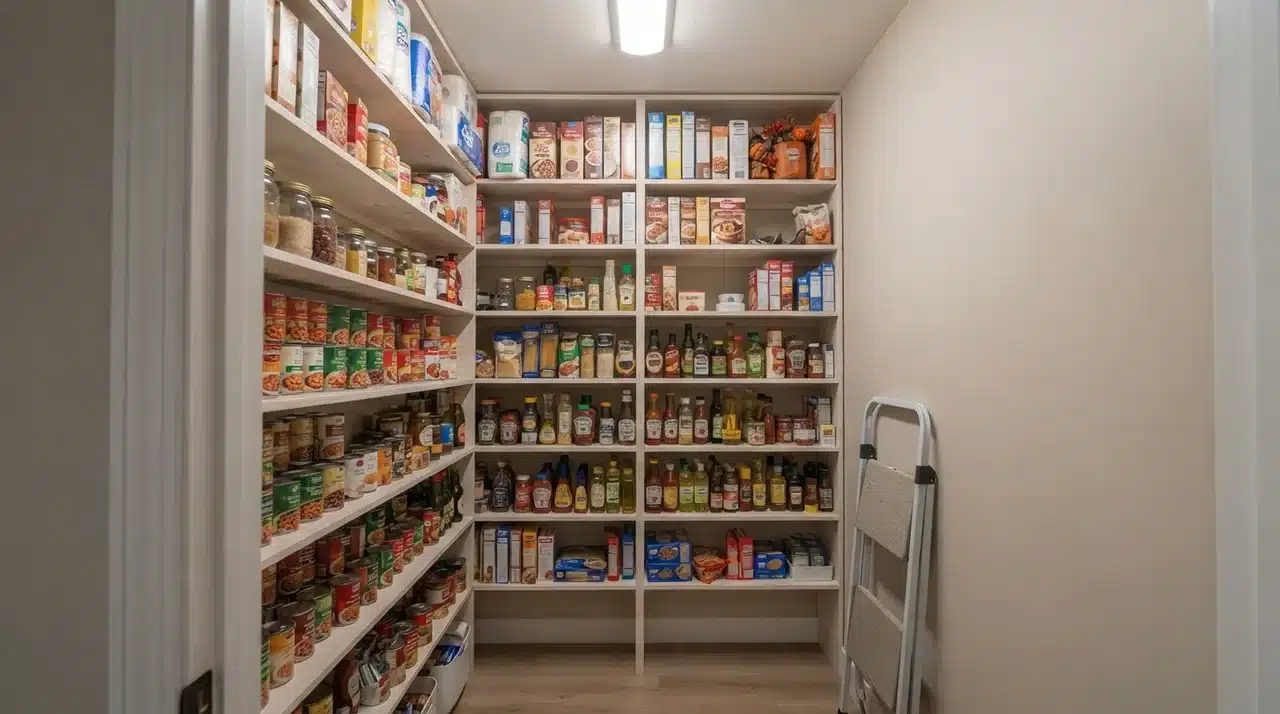
Limited floor area makes upper wall space more useful.
Extend suitable shelving upward and reserve the highest levels for lightweight backup goods or items used less often. Keep daily groceries at comfortable-to-reach heights.
The area above the doorway can also hold a shallow shelf when there is enough clearance. It works well for occasional-use supplies that do not need daily access.
If upper shelves form an important part of the layout, leave a slim location for a folding step stool rather than keeping one permanently in the aisle.
13. Make the Pantry Door Work With the Layout
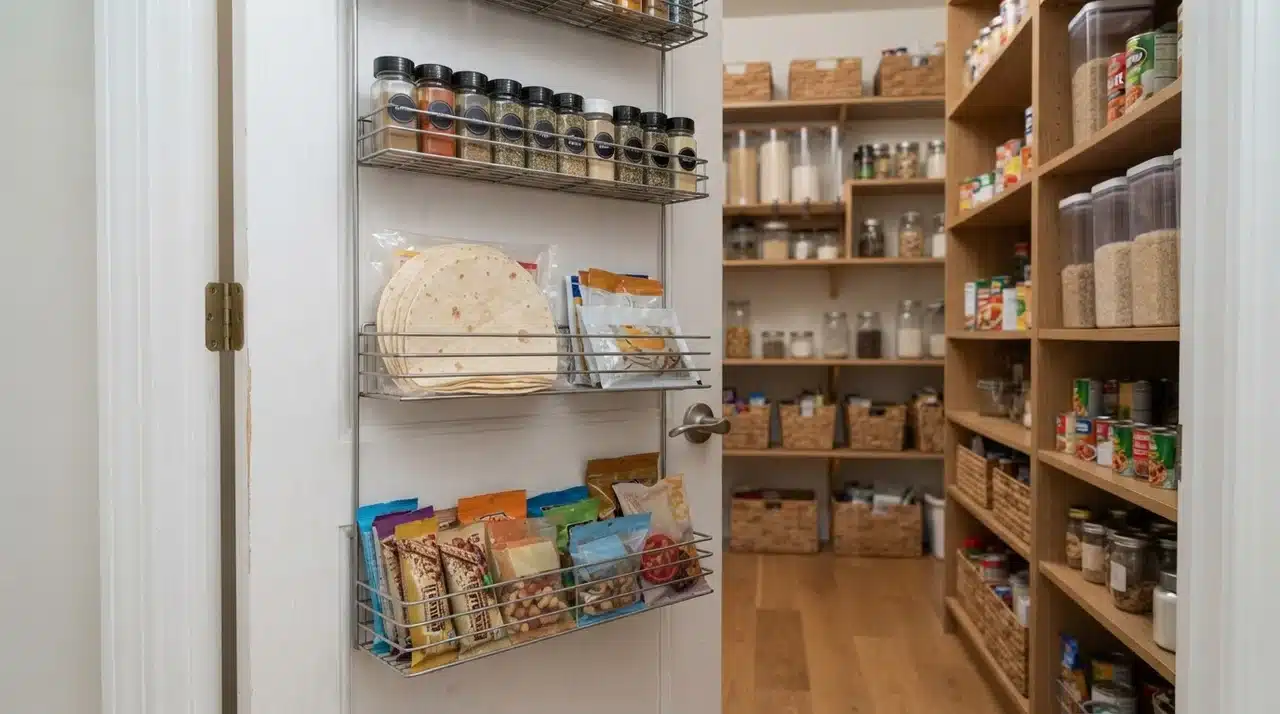
A traditional swinging door can create problems when it hits nearby shelving or takes up valuable clearance around the entrance.
A sliding or pocket-style door may suit layouts where the door swing causes regular conflicts.
If the existing door has enough clearance, its inside surface can also carry shallow storage for lightweight packets, wraps, spices, or snacks.
Check both approaches against the surrounding shelves first. Door storage only helps when the door can still open freely without pushing stored products into the aisle.
14. Add Narrow Pull-Out Storage
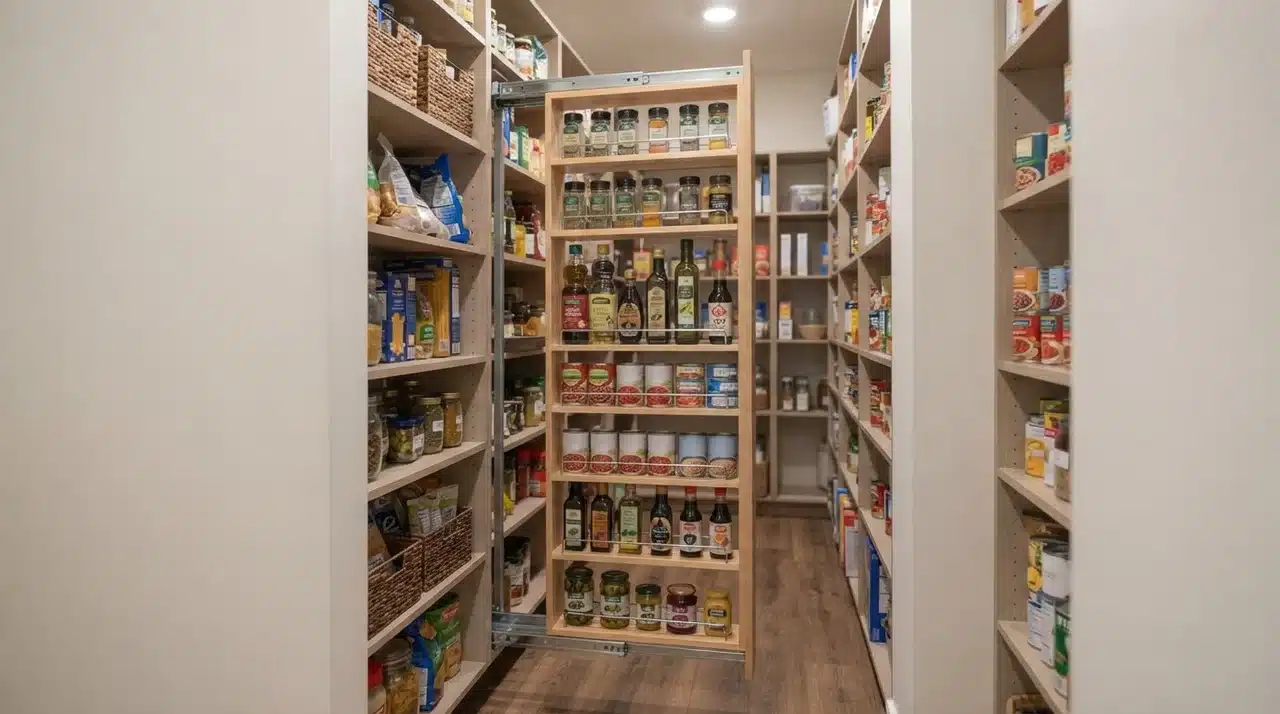
A slim unused gap can sometimes hold a narrow pull-out better than another fixed shelf.
Pull-outs work well for bottles, canned food, jars, and packets because the full contents move toward the aisle when opened.
Check nearby doors and drawers before choosing the location. Two storage features that need the same aisle section at the same time can make a narrow pantry frustrating rather than useful.
15. Add Shallow Storage Inside the Wall Line
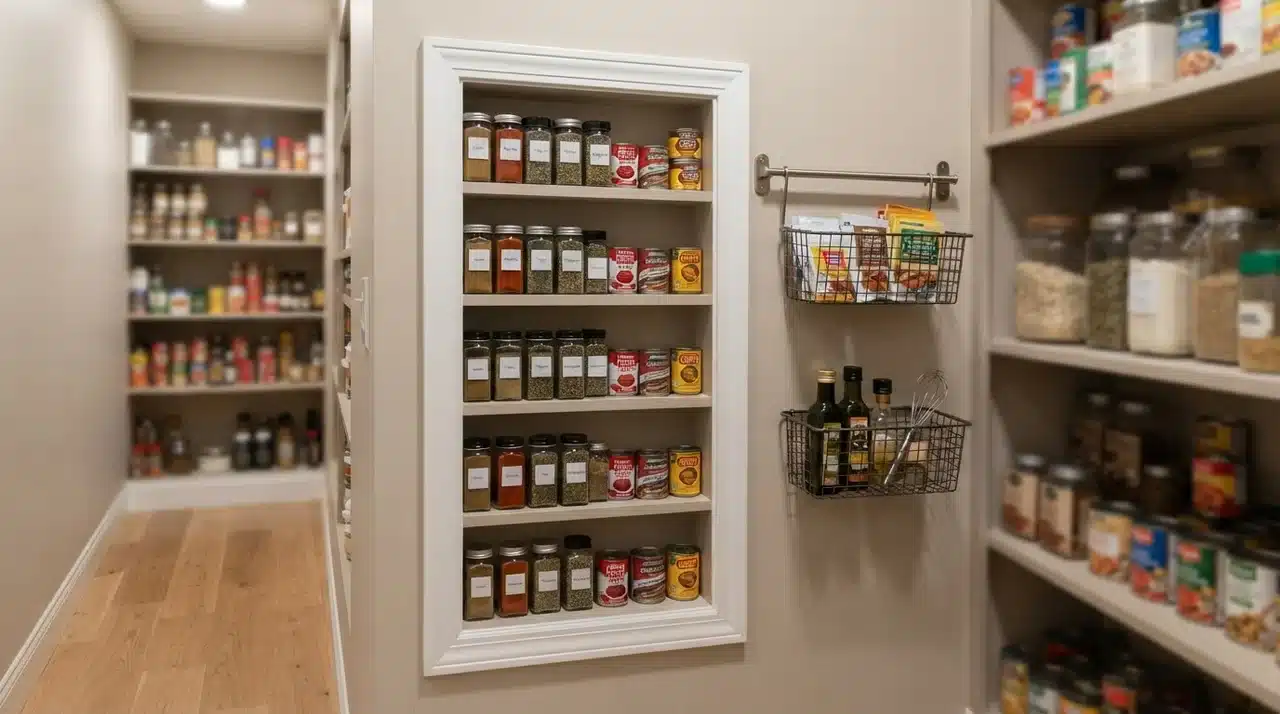
A standard shelf may be too deep for an empty wall beside a narrow aisle. Recessed niches or a slim wall-mounted rail system can use that area without projecting as far into the room.
Recessed storage can hold jars, spices, cans, and smaller pantry staples.
A slim rail can support compact baskets or lightweight accessories. Keep anything mounted on the wall close to the surface and away from shoulder or hip level where it could interfere with movement.
Small Storage Details Worth Adding After the Layout
Organizers work best after the main shelves and walkway are settled. They should solve a specific storage problem rather than become another layer of clutter.
- Clear Containers: Use them for products such as rice, pasta, cereal, flour, or baking staples when seeing the remaining quantity is useful. Original packaging can stay when it already stores well.
- Slim Baskets: Choose baskets that fit completely inside the shelf depth. Oversized bins can quietly reduce usable aisle space by hanging over the shelf edge.
- Stackable Bins: Use two sensible levels where shelf height allows. Very tall stacks make the bottom container harder to reach.
- Shelf Dividers: Add them for cereal boxes, packaged foods, snack bags, and baking mixes that tend to fall sideways or spread across the shelf.
- Shelf Labels: Label broad areas rather than every container. Categories such as breakfast, baking, snacks, canned foods, and drinks are easier to maintain when groceries change.
These smaller fittings should support the pantry layout rather than determine it.
Optional Features for Pantries With Enough Room
Not every compact pantry needs an appliance station or landing ledge. Both can be useful, but only if they don’t compete with the main storage.
A small appliance station can move frequently used machines away from kitchen counters. Keep heavier appliances at a comfortable height and check electrical access, ventilation, and heat before using them inside the pantry.
A compact wall-mounted ledge near the entrance can also help while putting groceries away. Keep it shallow and clear it after restocking so it does not become permanent overflow storage.
Avoid Small Walk-In Pantry Mistakes That Create New Problems
A few choices can make good storage systems harder to use. Instead of repeating the earlier shelf-depth advice, check for problems that often appear after storage is installed.
- Buying Before Measuring: Check shelf width, depth, and height before ordering baskets, containers, drawers, or turntables.
- Stacking Too High: Extra vertical storage stops helping when the lower container becomes difficult to reach.
- Creating Moving-Part Conflicts: Drawers, doors, and pull-outs should not compete for the same aisle space.
- Using Too Many Organizers: Containers should solve visibility or grouping problems rather than replace packaging that already works.
- Ignoring Appliance Safety: Pantry appliances need suitable electrical access, ventilation, and enough surrounding clearance.
Test how each storage feature works while standing in the pantry, not just how neatly it fits on paper.
Conclusion
The strongest small walk-in pantry ideas are usually the ones that solve a clear problem instead of adding more storage for its own sake. I would start with shelf placement, aisle clearance, and the products used every day before buying organizers.
For narrow walk-in pantry ideas, I prefer changing shelf depth according to location, using wall height carefully, and keeping moving parts away from the main walking path. A compact pantry does not need every option listed here. Choose the few changes that match the room, then build the smaller storage details around them.
Frequently Asked Questions
What is the smallest size for a walk-in pantry?
There is no single minimum size. A small walk-in pantry needs enough room to stand, turn, reach the shelves, and move comfortably without shelving taking over the walkway.
Do all dry foods need clear pantry containers?
No. Clear containers are most useful when visibility helps track quantities or when original packaging stores poorly. Products that already stack and store well can remain in their packaging.
Can appliances be used inside a small walk-in pantry?
They can work when there is enough room and suitable electrical access. Check heat, ventilation, working height, and surrounding clearance before creating an appliance station.