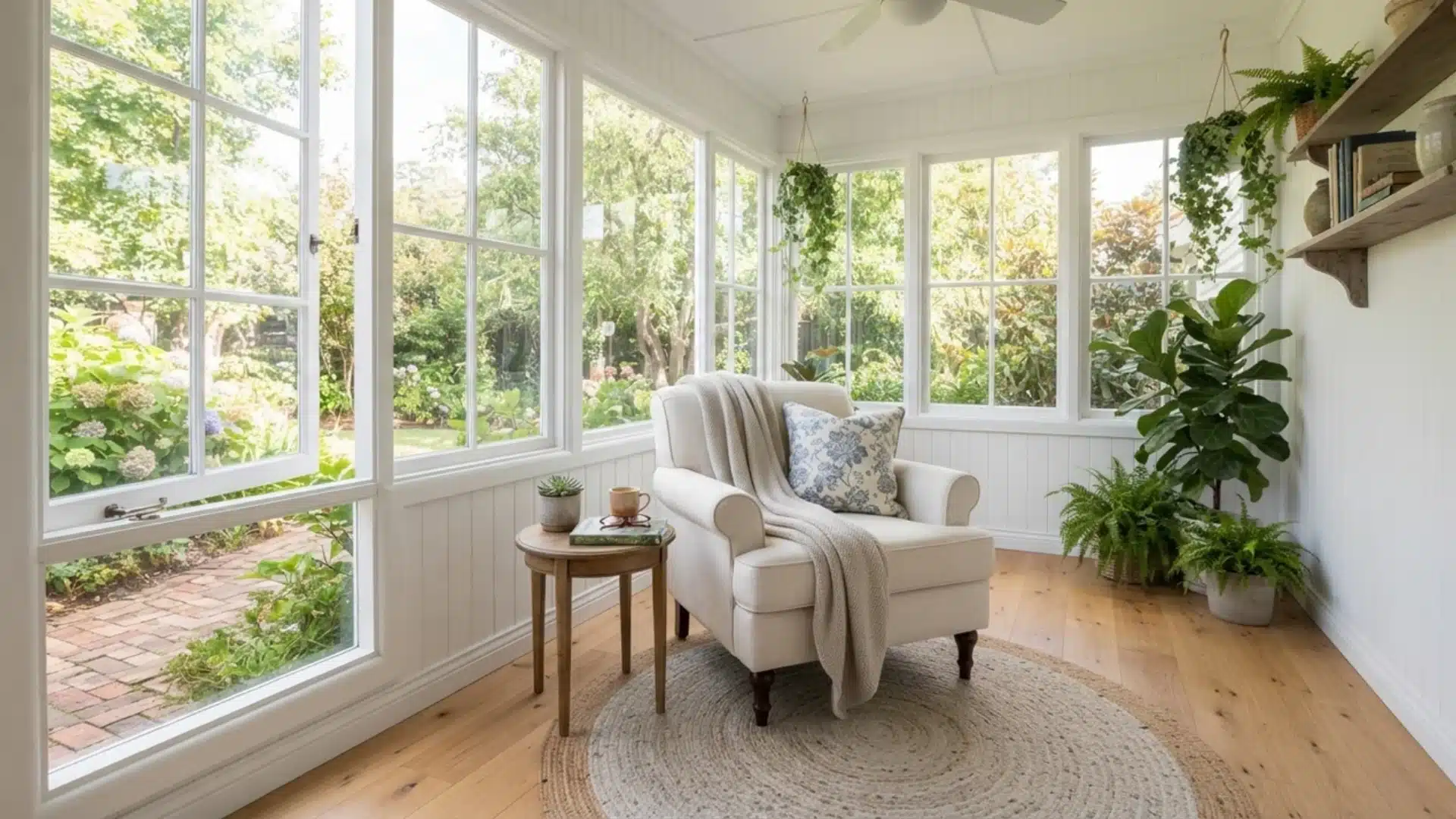
Small sunrooms can feel cramped before you even add much furniture. I know how frustrating it is to want a cozy space while still keeping enough room to move, relax, and enjoy the windows. That is where smart small sunroom ideas can make a real difference.
You do not need to fill every corner or replace everything you own. I have focused on practical layouts, compact furniture, space-saving storage, cozy decor, and porch-friendly choices that work with limited square footage.
You will also find simple ways to avoid common layout mistakes, so you can create a comfortable sunroom that feels open, useful, and easy to enjoy every day.
What Makes a Small Sunroom Feel Cozy?
A small sunroom feels cozy when the space balances comfort, natural light, furniture, and texture without becoming crowded. The right layout can make even a compact room feel inviting while keeping its windows and outdoor views as the main feature.
Key elements include:
- Comfortable, appropriately sized seating
- Soft rugs, cushions, and throws
- Warm, layered lighting
- Plants and natural materials
- Light colors that keep the room feeling open
- Smart storage that reduces clutter
- Window treatments for privacy, glare, and temperature control
The goal is not to fill every corner. Instead, each piece should serve a purpose while leaving enough open space for sunlight and movement. The same thinking behind compact home layout elsewhere in the house applies just as well to a sun-filled add-on room.
Small Sunroom Layout Ideas
Smart layouts help you use every available inch while keeping pathways clear, windows unobstructed, and seating arranged around the room’s main purpose.
1. Give the Room a Reading Nook
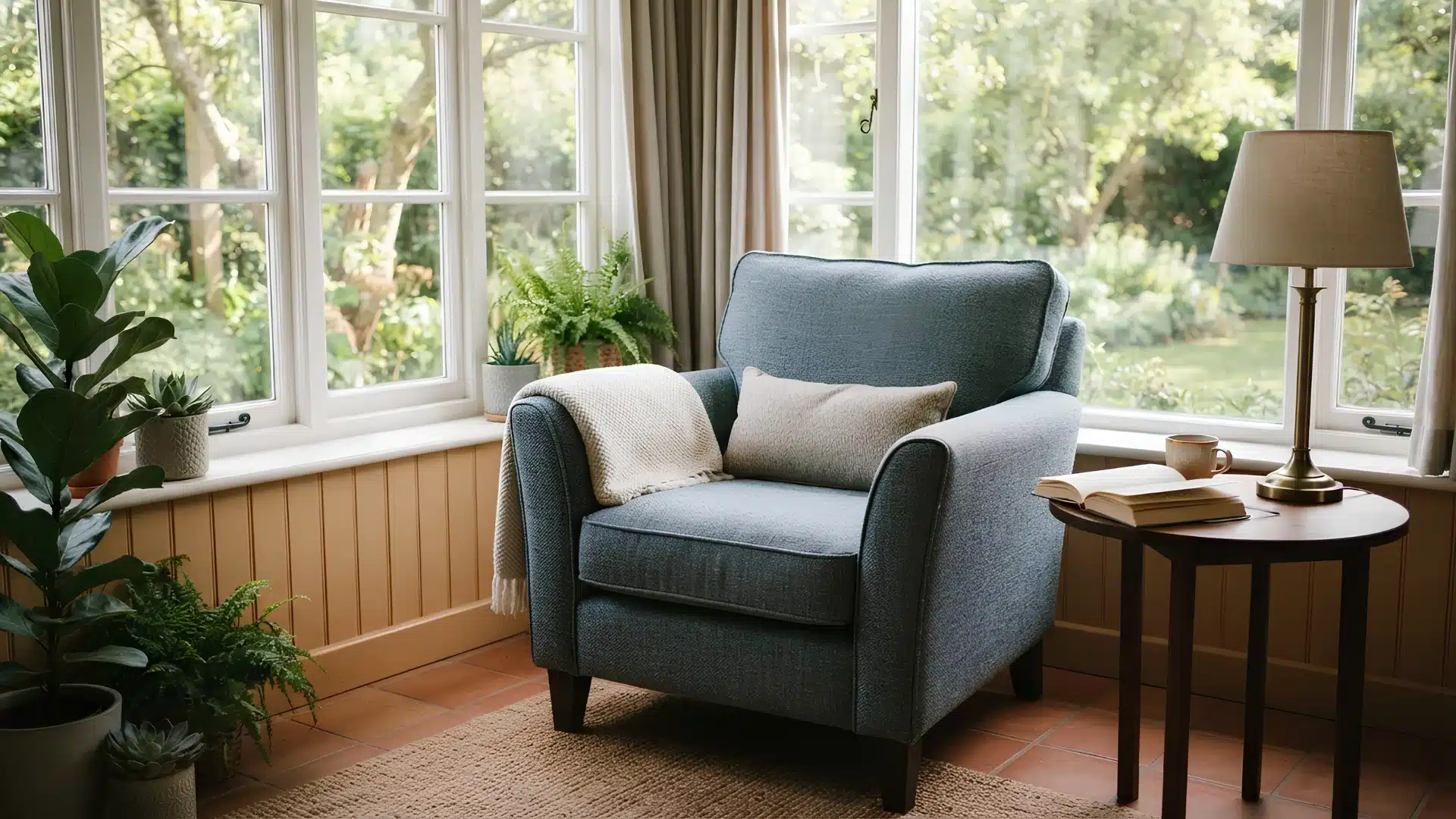
Turn the sunroom into a reading nook with one comfortable chair, a compact side table, and a focused reading lamp. Position the chair toward the strongest window view so the space feels intentional and relaxing.
Avoid adding another chair simply because room remains. Keeping the setup minimal protects movement, reduces visual clutter, and gives the nook a clearer purpose overall. The same habits behind clutter-free room organization can help you decide what actually earns a spot in a small nook like this.
2. Set Up a Compact Conversation Area
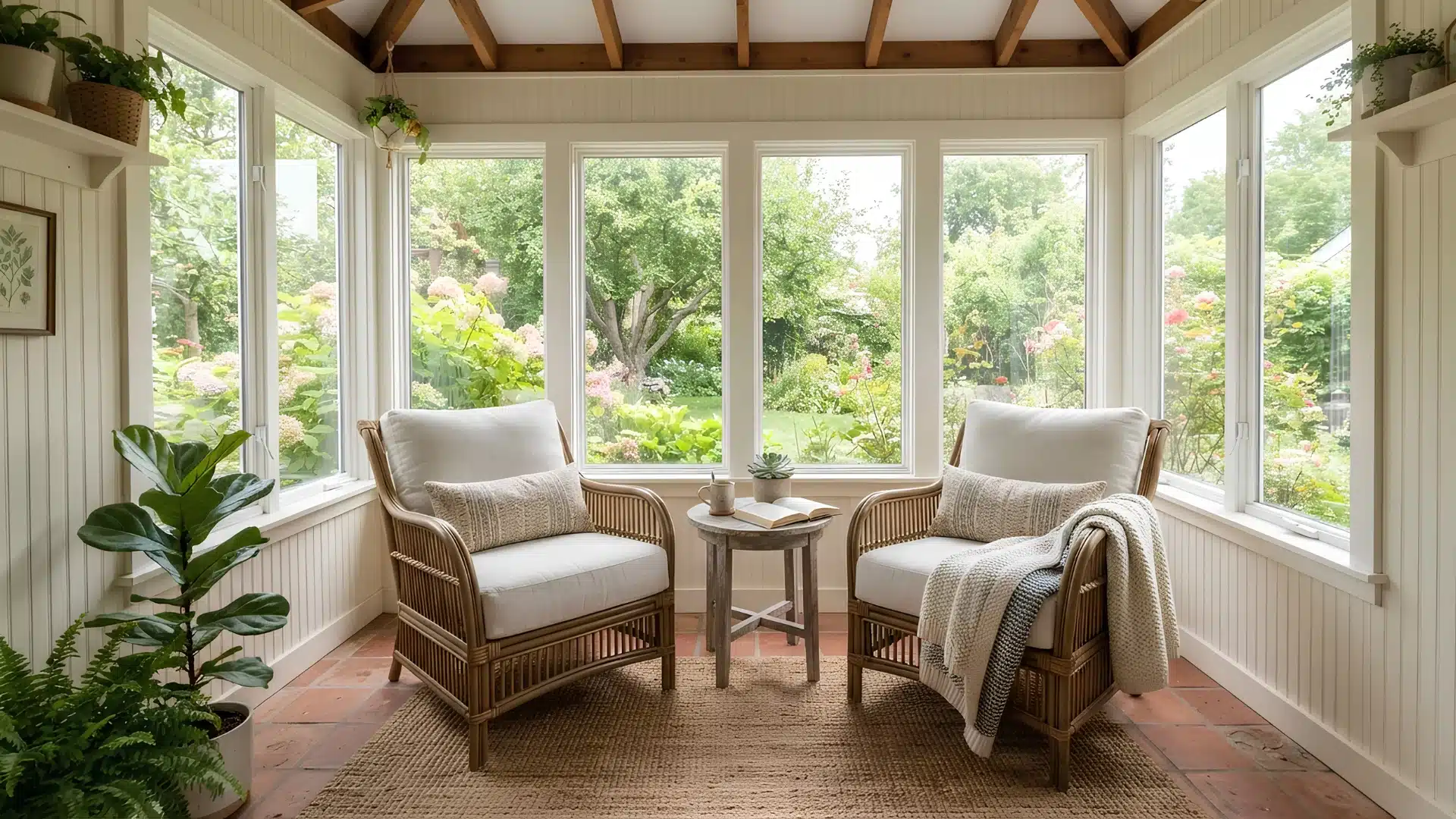
Create a compact conversation area with two chairs angled toward each other, which usually takes less room than a loveseat. This arrangement encourages easy conversation while keeping the center of the sunroom feeling open.
If you prefer a loveseat, place it against one wall. Maintain at least two feet of walking space around the seating so movement always feels comfortable.
3. Fit In a Small Dining Space
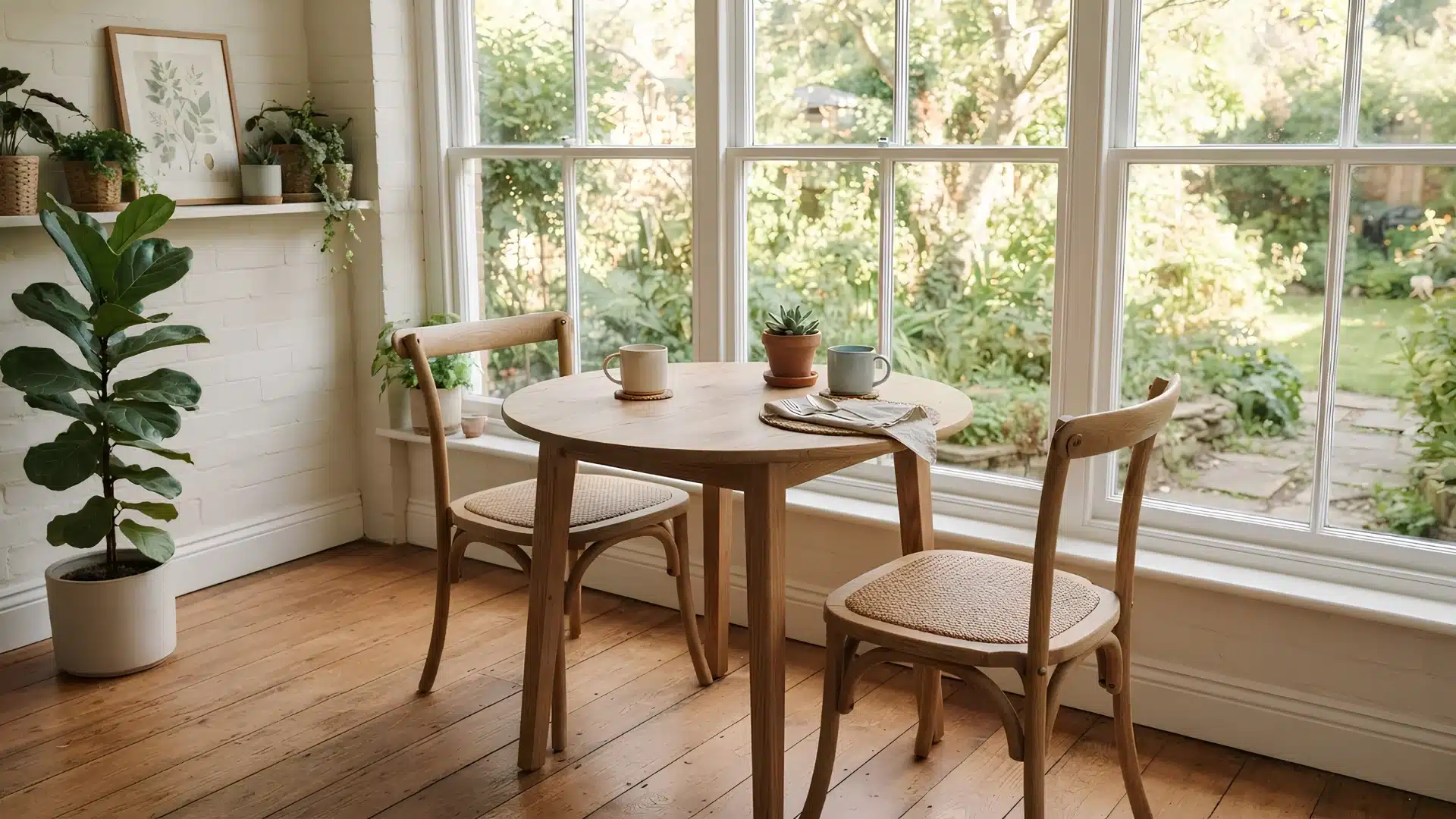
Fit a small dining area into the sunroom with a round table, which provides seating without requiring as much clearance as a square option. Place it near a window rather than directly in the center.
Keeping the table slightly to one side preserves a cleaner walking path. This setup works especially well in narrow porch sunrooms where every inch matters, and it borrows a lot from small space kitchen design, where every surface has to earn its footprint too.
4. Decide Between a Loveseat and Two Chairs
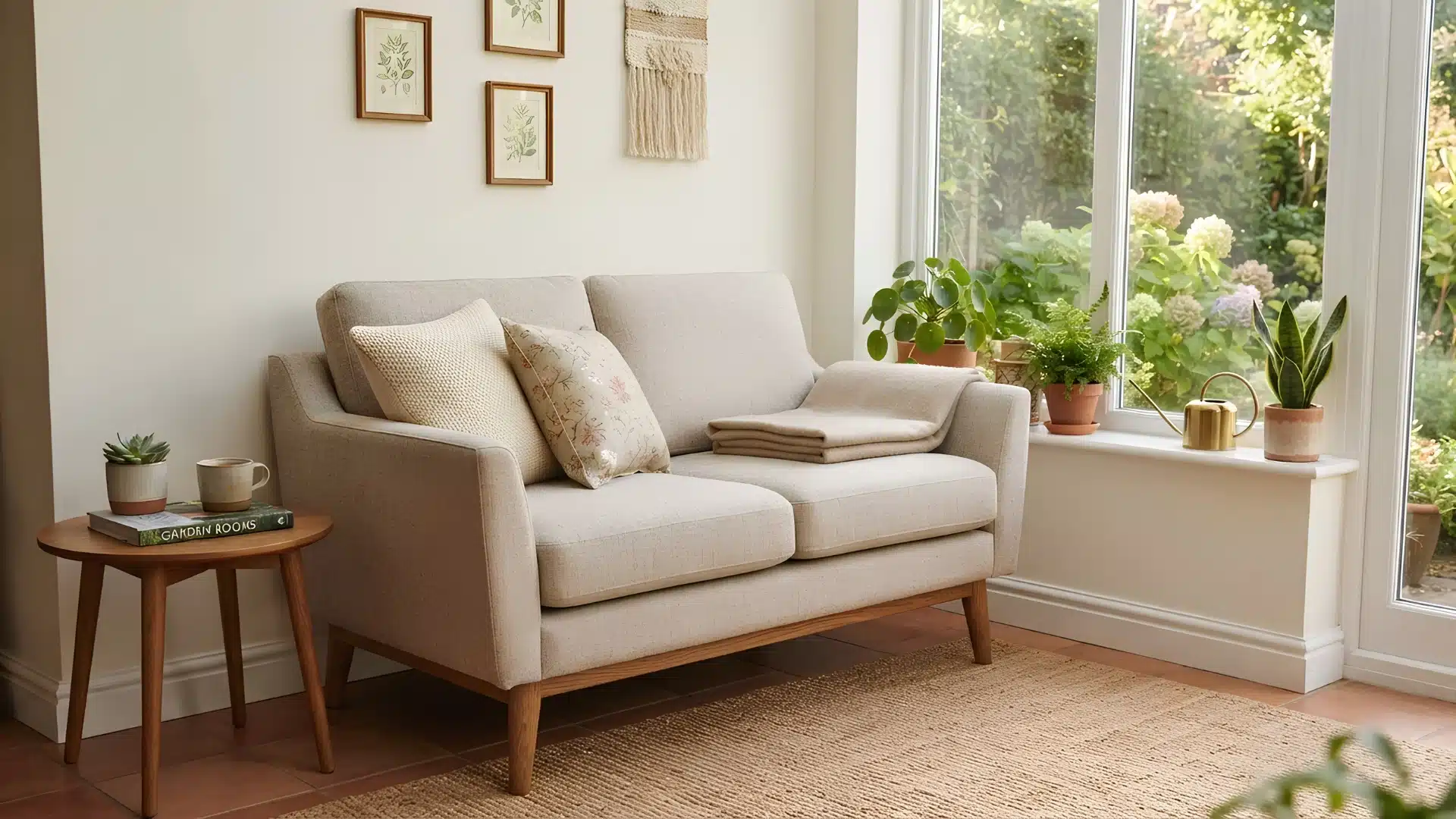
Choose between a loveseat and two chairs based on how flexible you need the room to be. A loveseat creates one strong anchor and keeps the overall arrangement visually simple and grounded.
Two chairs are easier to angle, separate, or move when needed. If the sunroom also serves as a walkway, individual chairs usually make circulation easier and less restrictive.
5. Work With a Long, Narrow Porch Layout
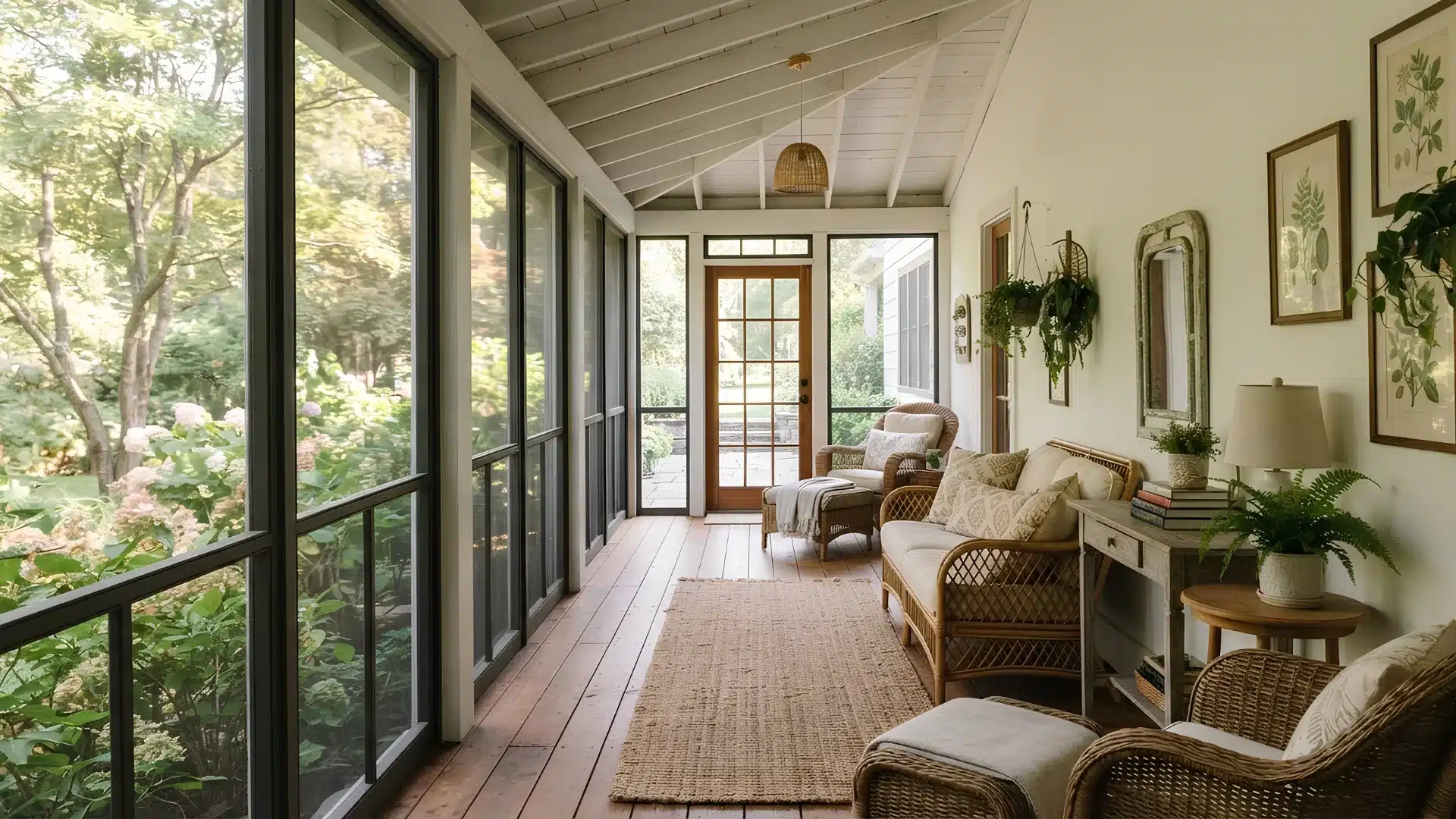
Work with a long, narrow porch by placing furniture along the longer wall instead of centering everything. This keeps the walking path open from one end of the space to the other.
Choose a slim bench or console instead of deep furniture. If the porch connects two doors, keep both sightlines and pathways clear so the layout never feels blocked.
6. Try a Daybed or Window Seat for Dual-Purpose Lounging
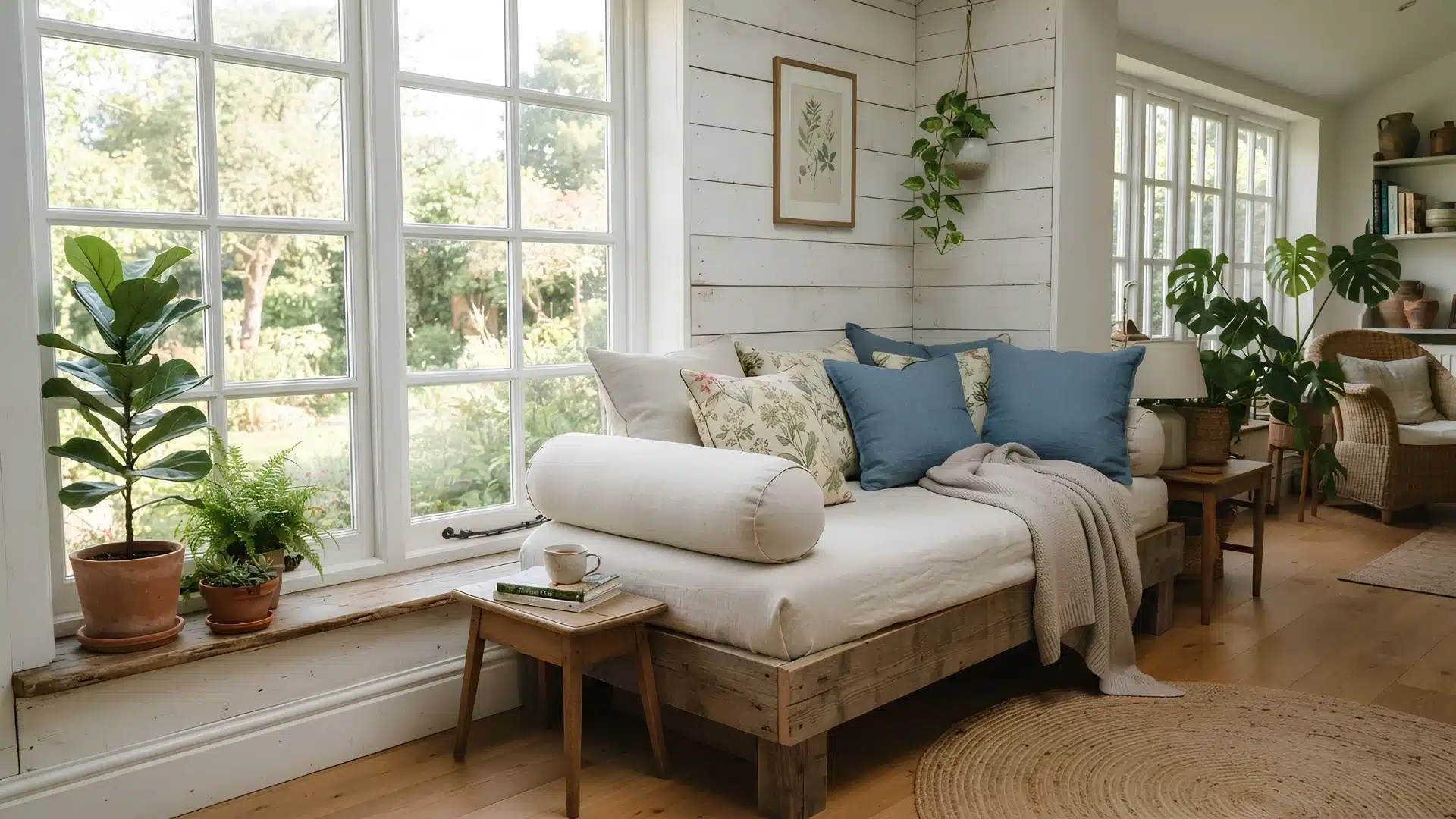
Use a daybed or window seat when you want lounging and extra seating from one piece. Placed against a wall, a daybed creates a comfortable place to stretch out without dominating the room.
A built-in or freestanding window seat can offer similar flexibility while adding storage underneath. Either choice helps replace several separate furniture pieces with one more efficient solution.
7. Add a Swivel Chair to Capture Every Window View
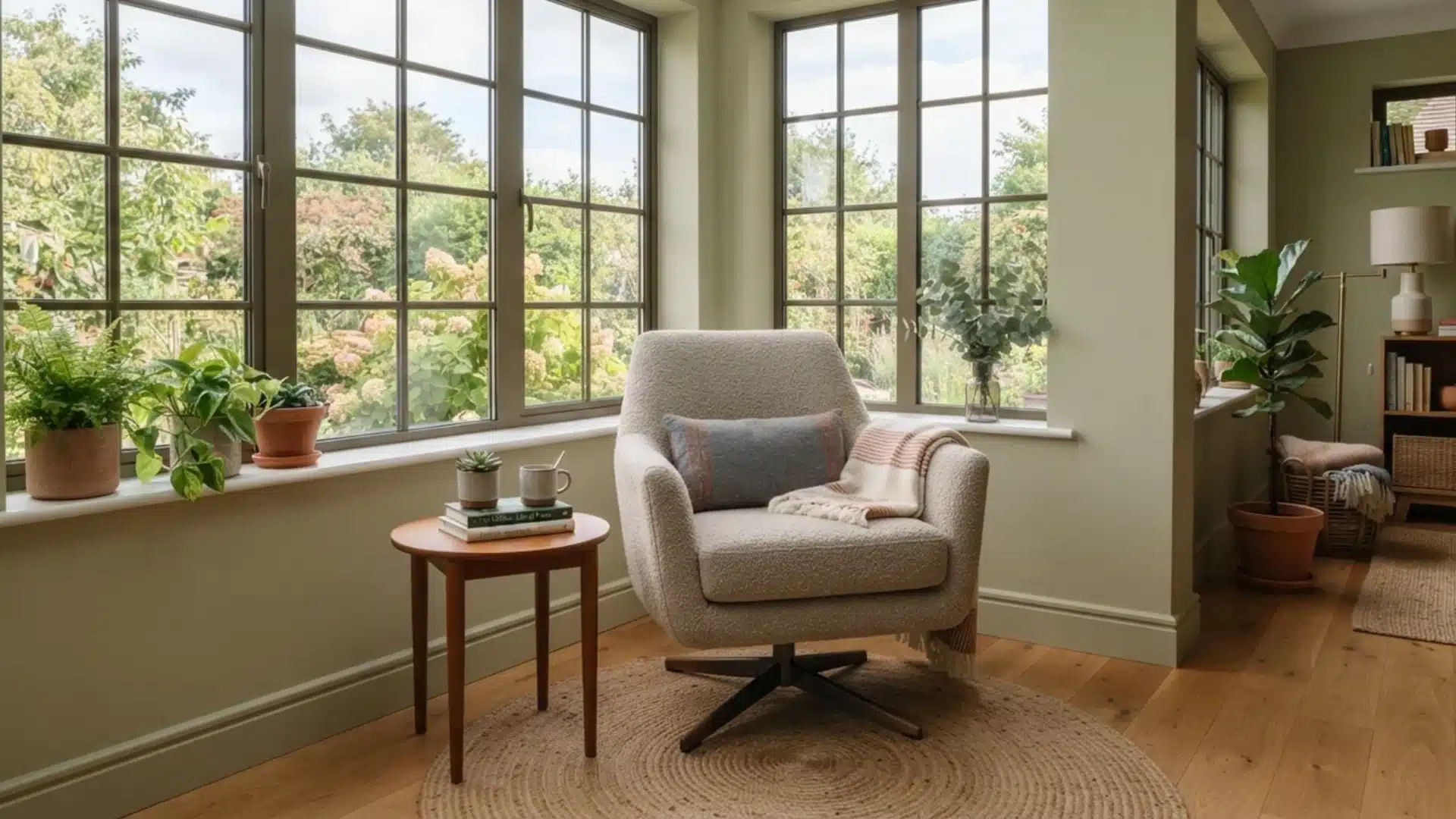
Use a swivel chair when the sunroom has views in more than one direction. The rotating base lets one seat face windows, conversation areas, or focal points without adding chairs.
Choose a slim base that feels proportionate to the chair and the room. This keeps the furniture visually light while giving you flexibility to enjoy the space throughout the day.
Small Sunroom Furniture Ideas
Choose compact, multipurpose furniture that provides comfort and function without overwhelming the room or blocking valuable sunlight, views, doors, or walking paths.
8. Add Small Tables That Do Not Crowd the Room
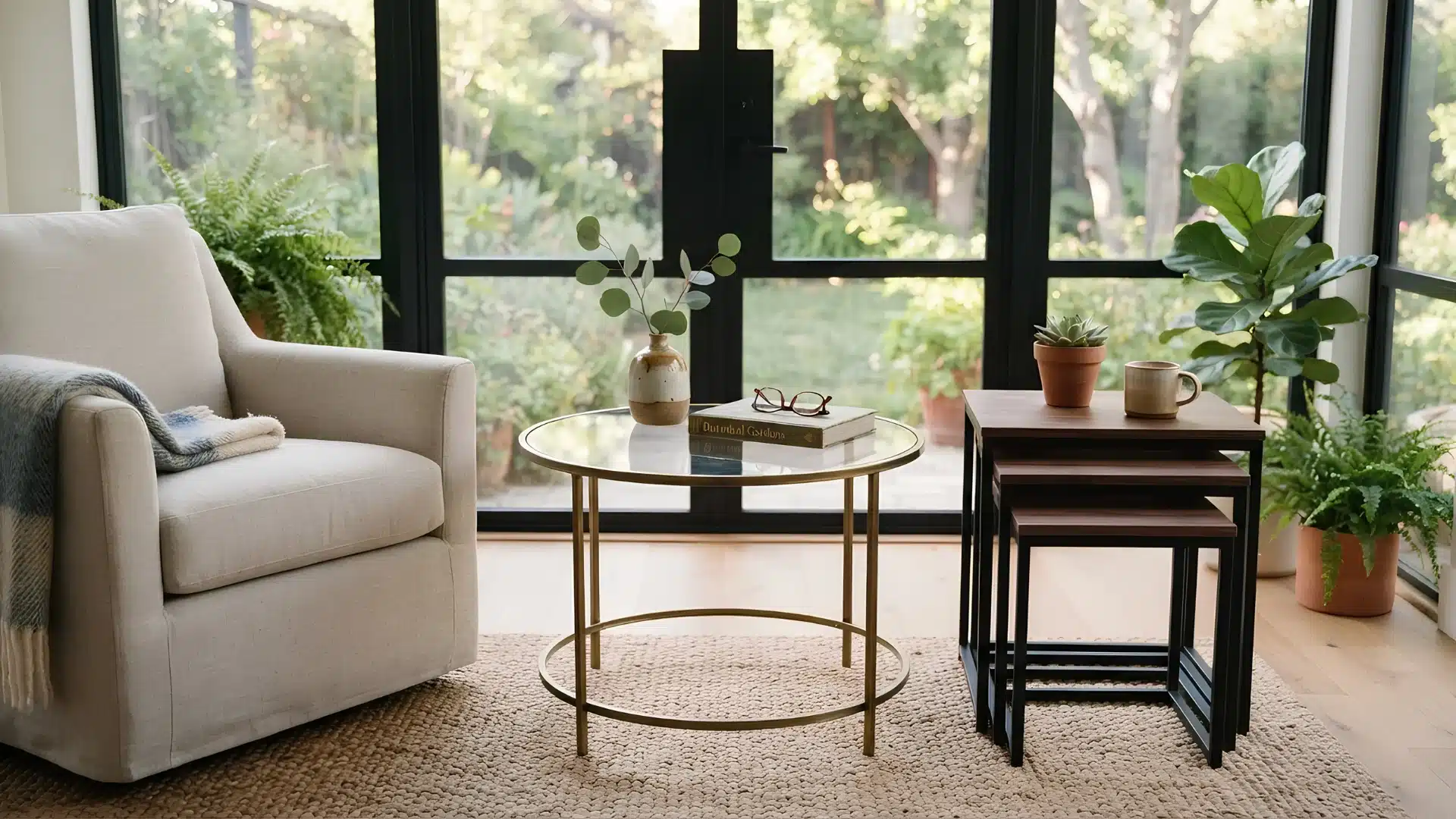
Use small tables that provide useful surface space without making the sunroom feel crowded. Glass tops work especially well because they allow light to pass through and reduce the visual weight of the furniture.
Nesting tables are another smart option because they expand when guests arrive and tuck away afterward. Avoid bulky bases near important walking paths or narrow corners.
9. Use Storage Furniture for Tight Spaces
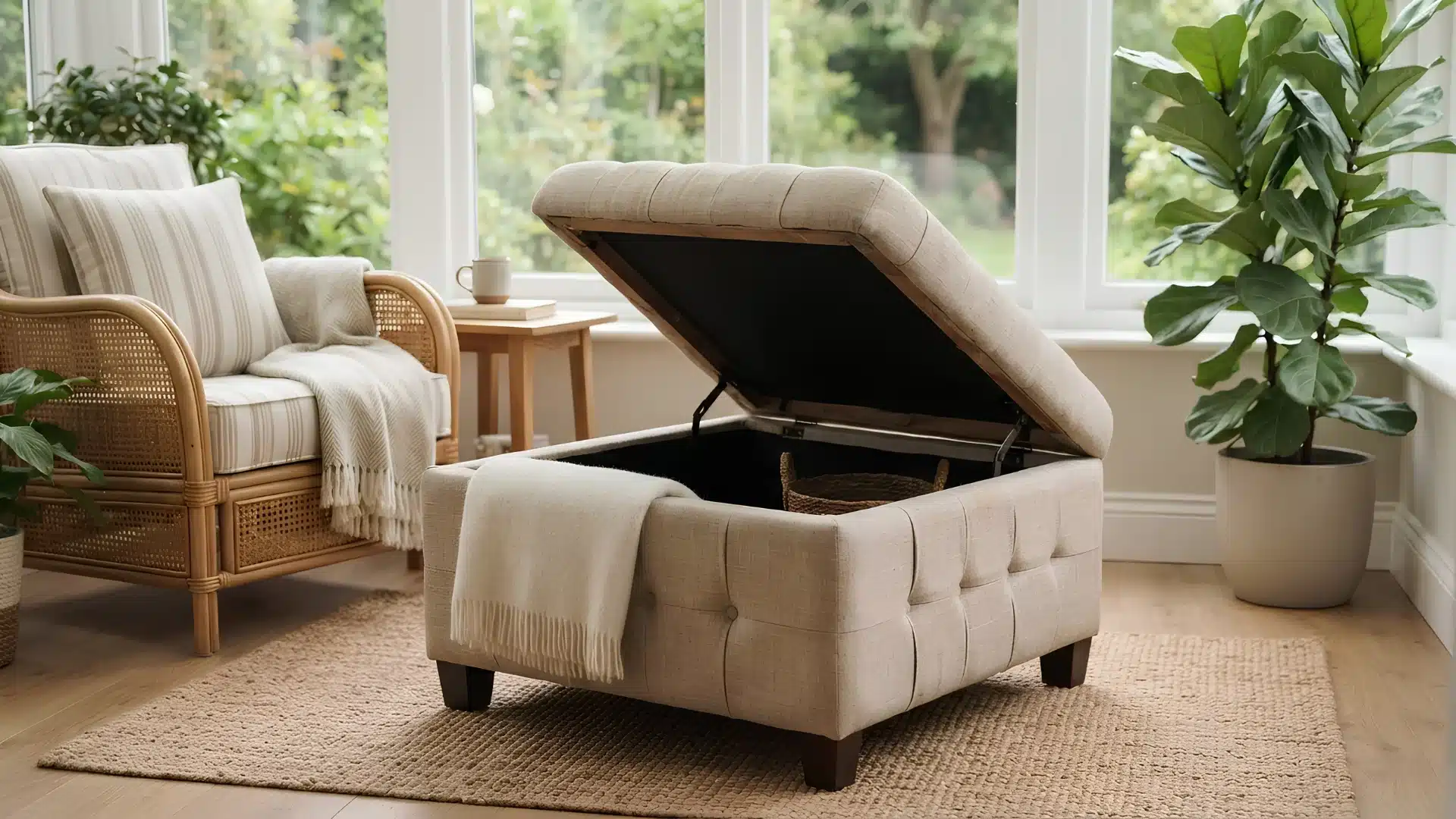
Choose storage furniture that handles more than one job in a tight sunroom. A bench or ottoman with a lift top can provide seating while hiding throws, cushions, or seasonal items inside.
This approach saves space because you do not need a separate cabinet. One practical, multipurpose piece keeps the room organized while preserving valuable floor area for everyday movement.
10. Add Flexible Seating for Occasional Guests
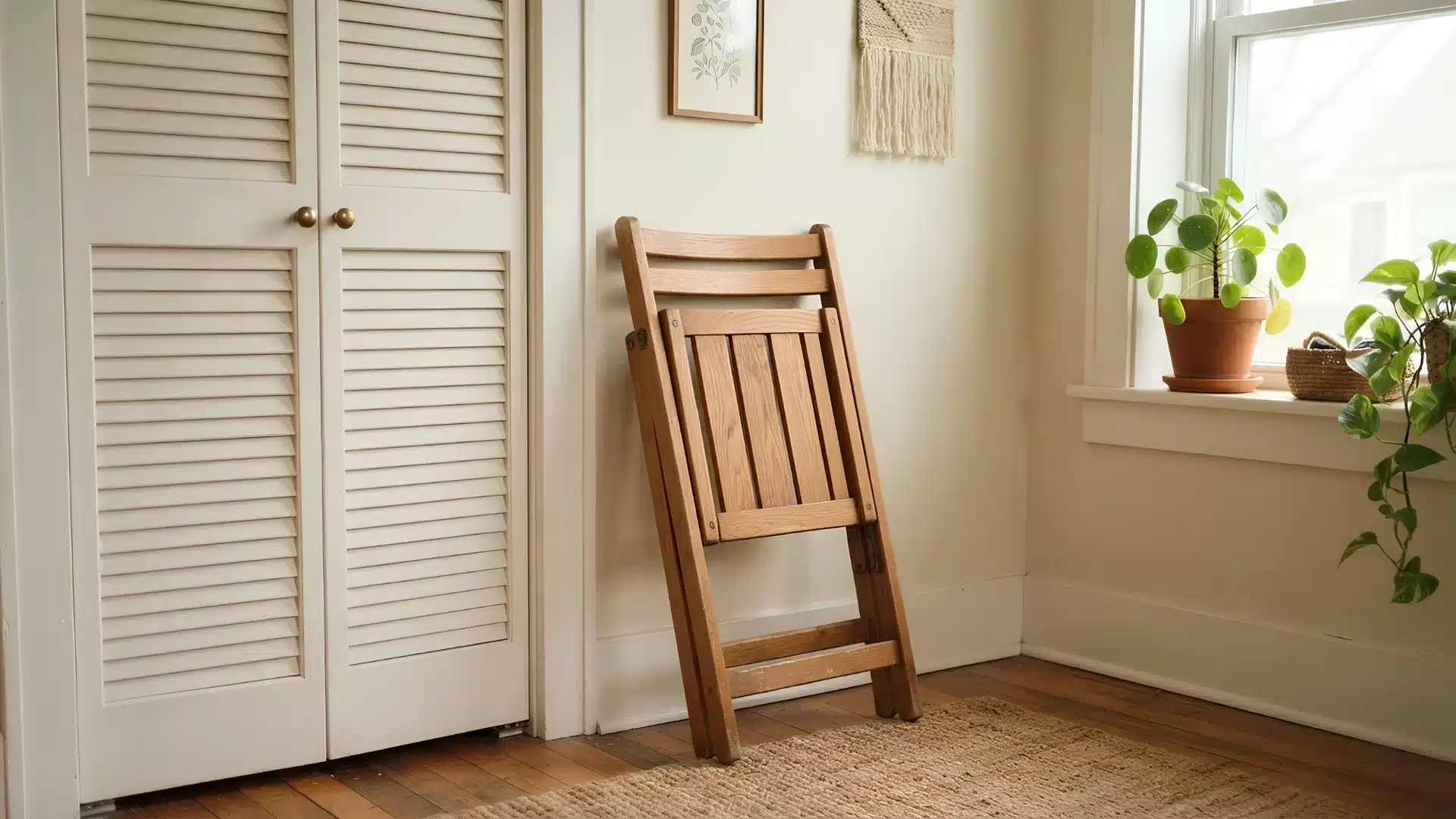
Add flexible seating for guests without giving permanent floor space to chairs you rarely use. A folding chair or stackable stool can stay stored elsewhere until extra seating is needed.
Choose lightweight wood or metal frames that are easy to move and feel sturdy when used. Once guests leave, store the piece again and return the sunroom to its layout.
11. Swap the Coffee Table for a Multi-Use Pouf
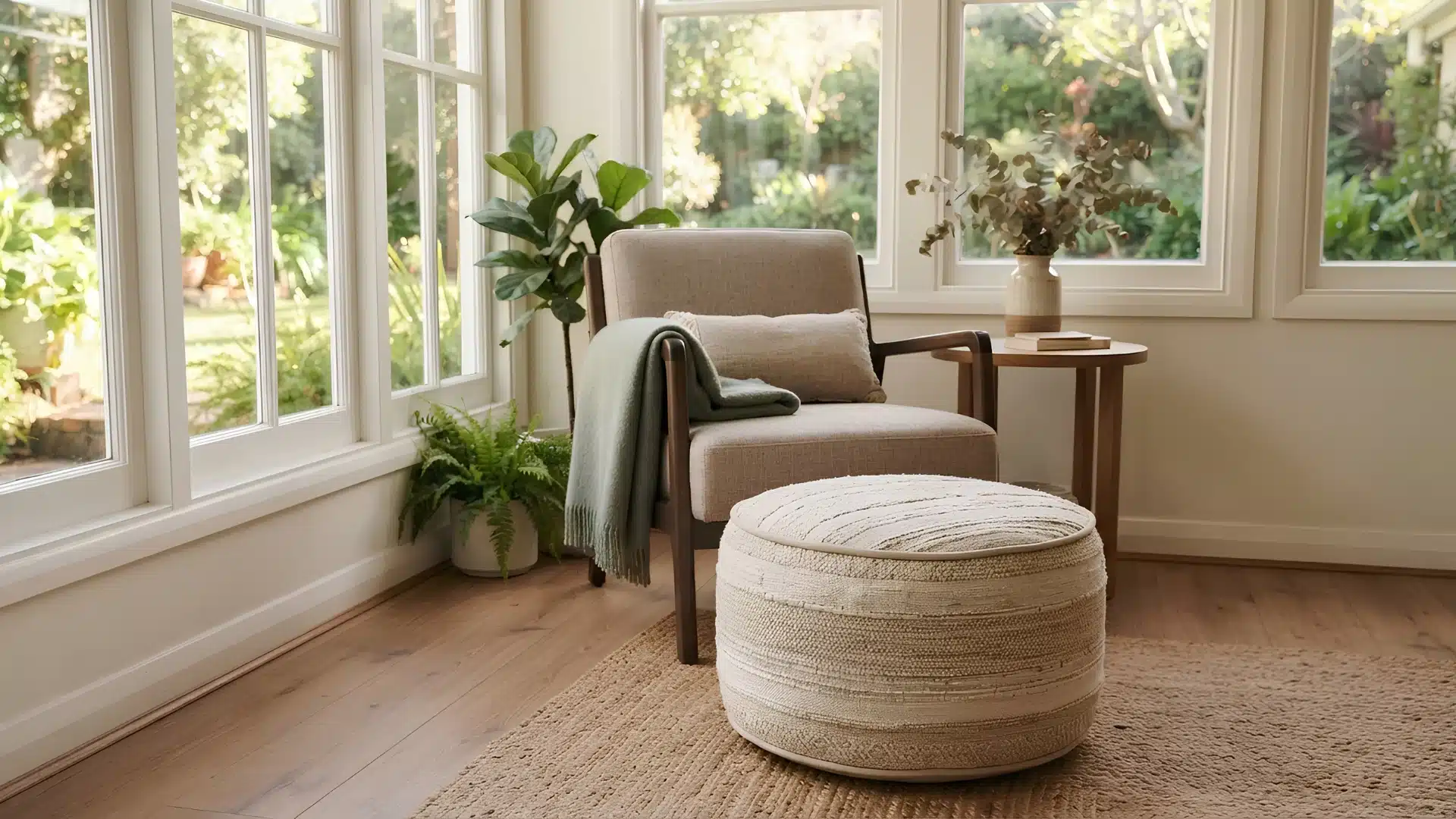
Replace a coffee table with a pouf when you need flexibility in a small sunroom. A pouf can work as a footrest, extra seat, or side table.
Its shape and visual footprint make the seating area feel less crowded. Choose one with a firm, flat top so you can place a tray on it whenever you need a stable surface.
12. Add a Small Bar Cart for Drinks or Extra Plants
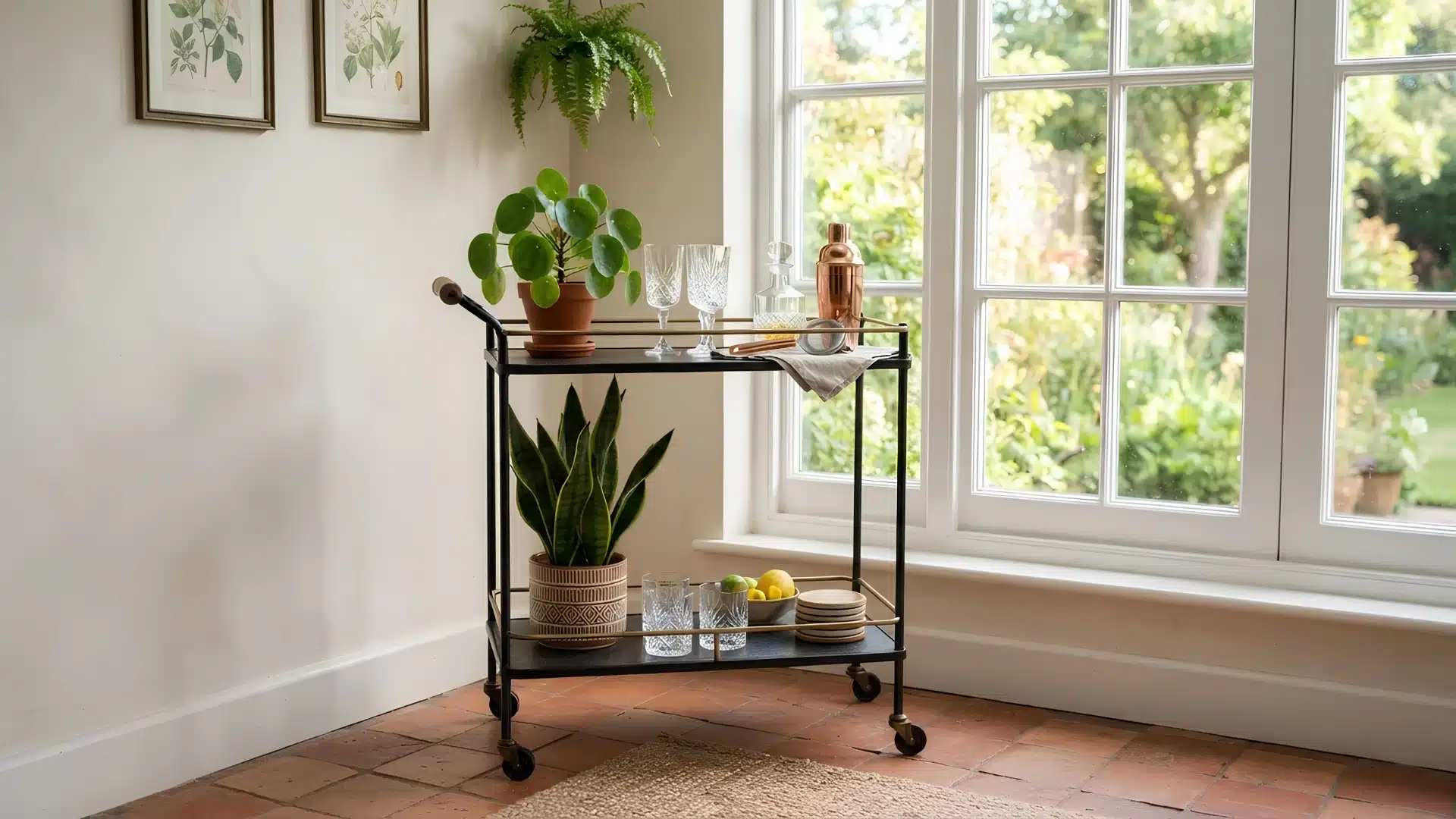
Add a narrow bar cart when you need flexible storage for drinks, glassware, plants, or accessories. Open shelving keeps the cart visually lighter than a cabinet in a compact sunroom.
Wheels make the piece more useful because you can shift it when the layout changes. Keep the cart edited rather than overloaded so it remains functional without turning into clutter.
13. Mount a Fold-Out Table for Quick Coffee or Snacks
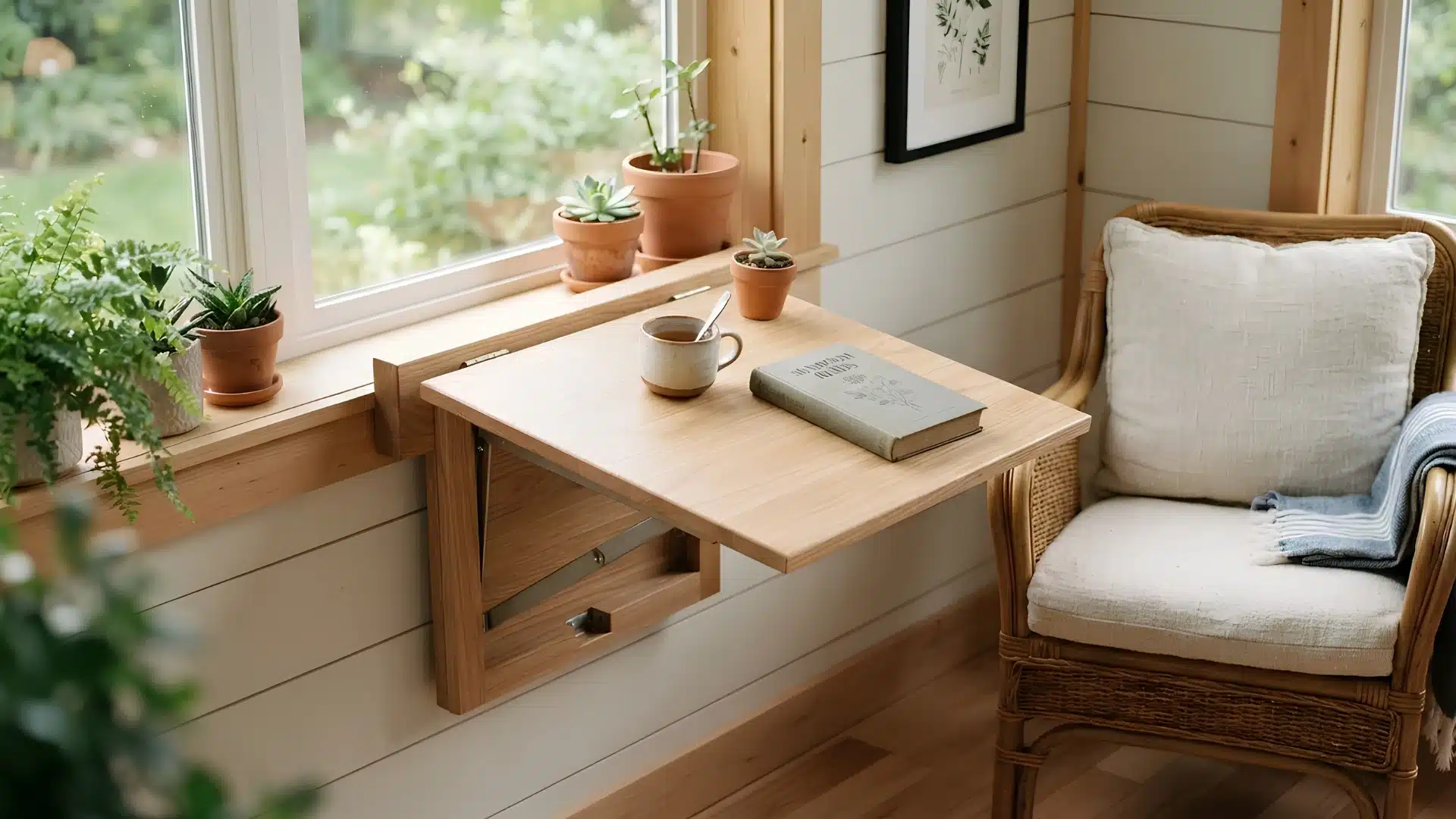
Mount a small fold-out table beside a chair when you need space for coffee, snacks, or a laptop. Fold it down when needed, then close it against the wall afterward.
This approach avoids adding a side table to a tight layout. It works well beside a reading chair, where a surface can provide convenience without unnecessarily limiting movement when not in use.
14. Add a Corner Ladder Shelf for Books and Small Plants
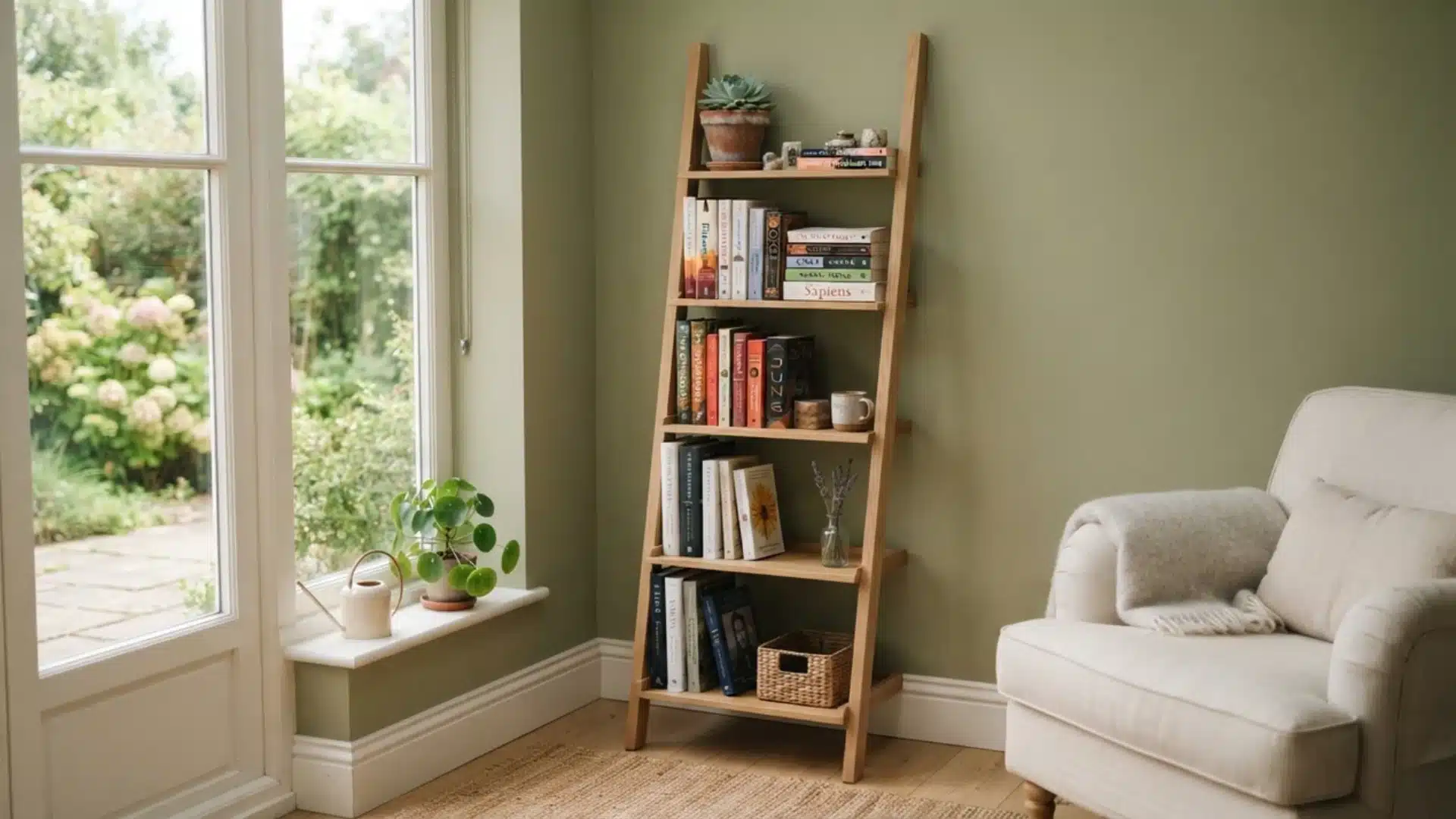
Use a slim ladder shelf in an empty corner to hold books, plants, and decorative pieces without consuming much floor space. Its narrow shape works well in compact sunrooms.
Keep the styling restrained instead of filling every shelf. A stack of books, one plant, and a simple object are enough. The open-back design prevents the corner from feeling enclosed.
Cozy Small Sunroom Decor Ideas
Use rugs, cushions, plants, coordinated colors, window treatments, and lighting to add warmth and personality while keeping the limited space visually balanced.
15. Layer In Rugs and Textiles for Warmth
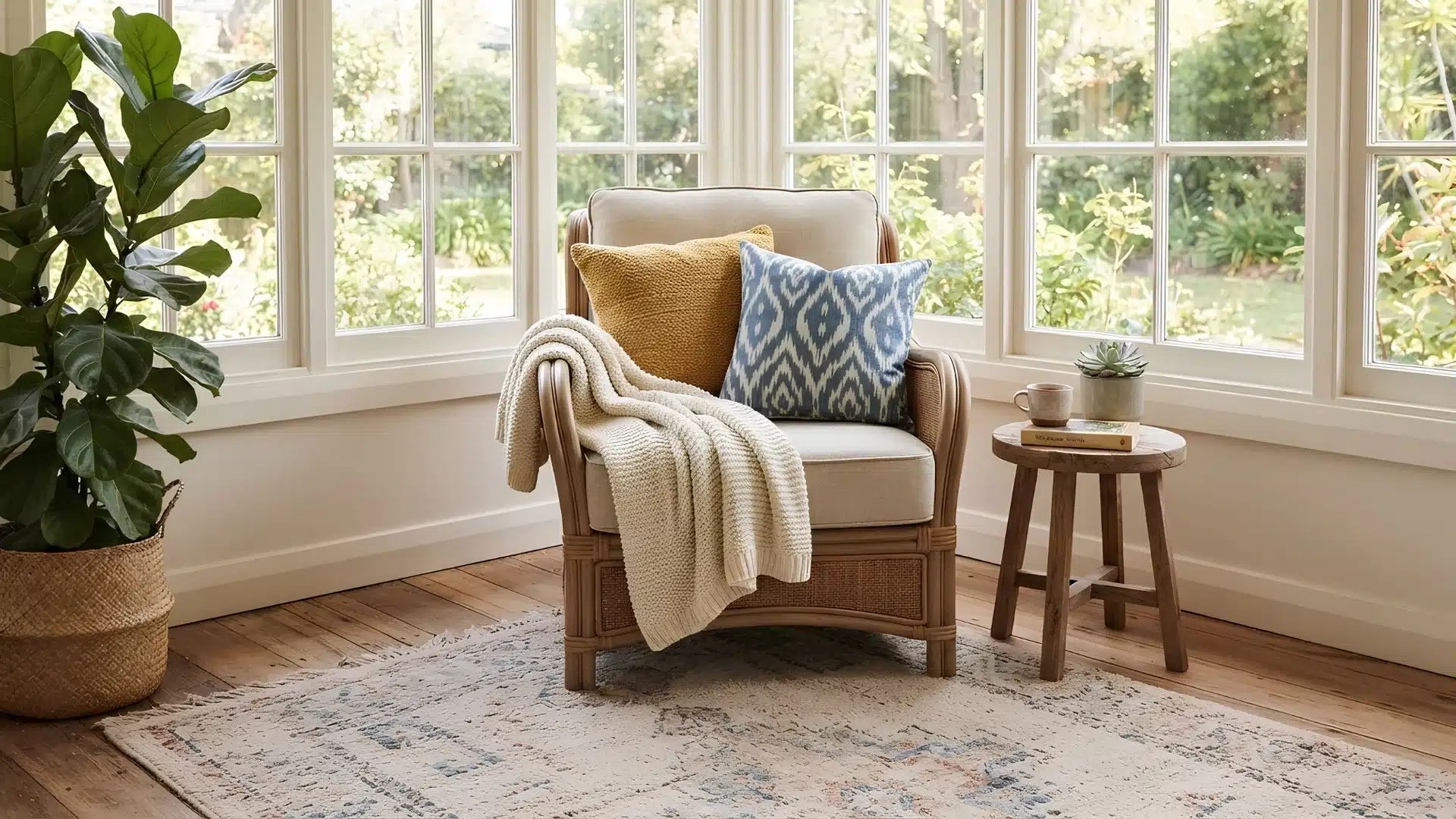
Layer rugs and textiles so the sunroom feels warmer without becoming visually heavy. Choose a rug sized for the seating area rather than one that stretches across the entire room.
Add one or two cushions to each chair and keep a single throw near the main seat. That amount of texture feels comfortable, balanced, and finished without adding unnecessary clutter.
16. Add Plants Without Losing Floor Space
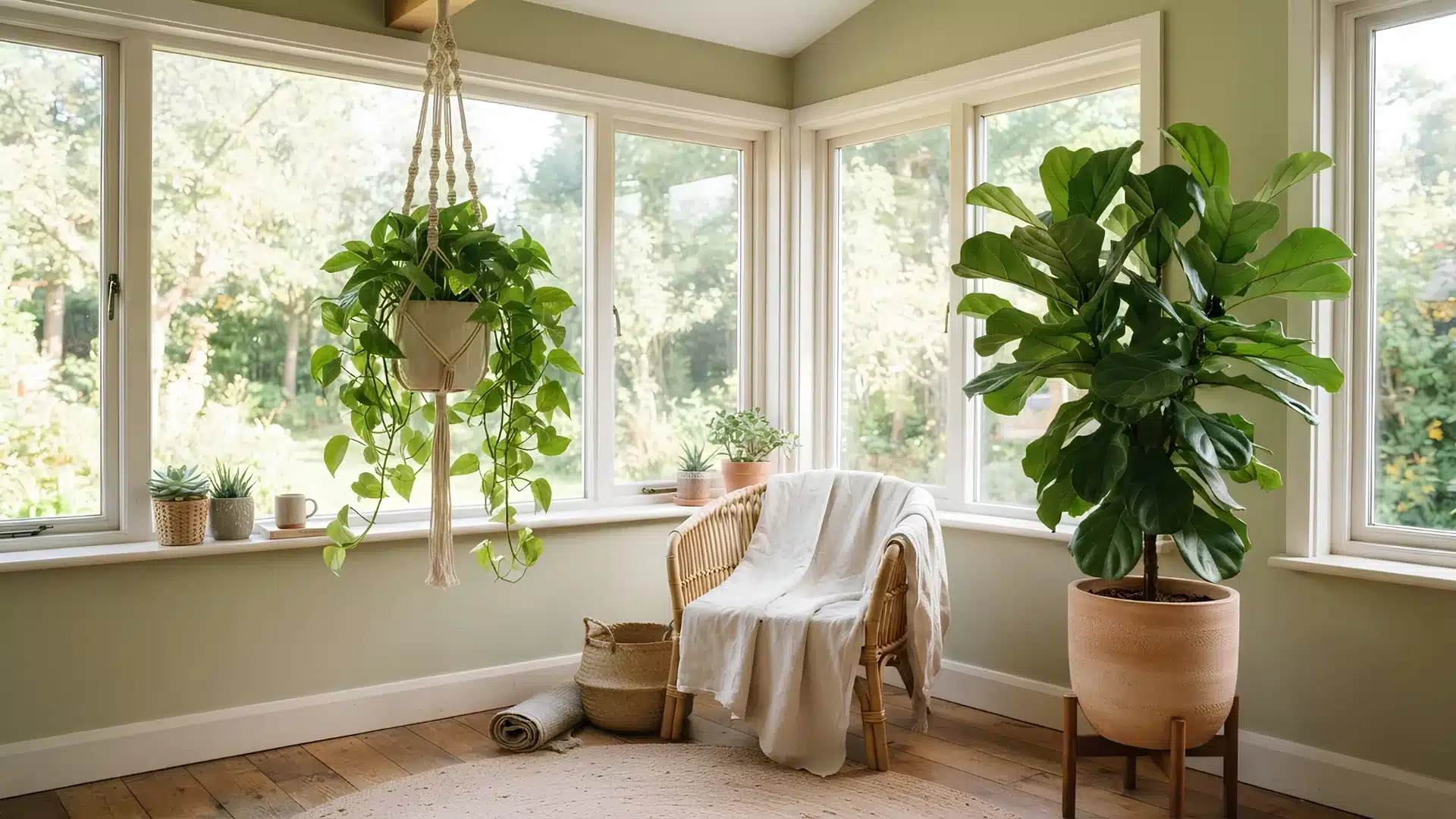
Bring plants into the sunroom without giving up floor space. Hanging planters and wall-mounted shelves let you add greenery while keeping walkways, corners, and furniture areas clear.
Instead of scattering many small pots around the room, choose one larger plant for a corner. A single strong plant looks more deliberate and works beautifully with the natural light sunrooms already receive.
17. Keep the Color Palette Visually Connected
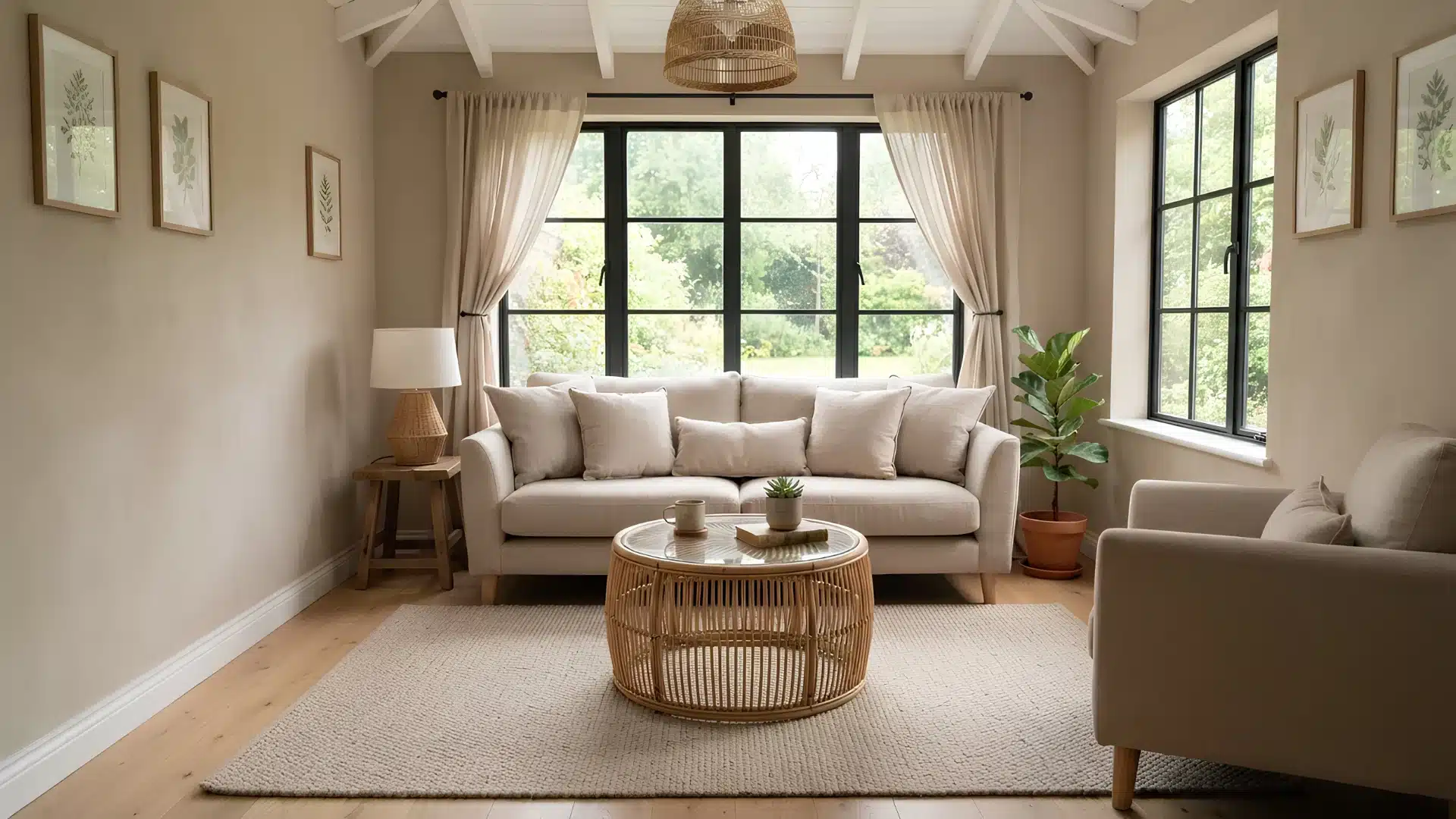
Keep the color palette connected so a small sunroom feels calmer and more spacious. Choose two or three tones, then repeat them across the rug, cushions, furniture, and wall details.
Too many unrelated colors can make the room feel busier than it actually is. Repeating a limited palette creates consistency, helping separate pieces feel like part of one thoughtful arrangement.
18. Choose Light-Filtering Window Treatments
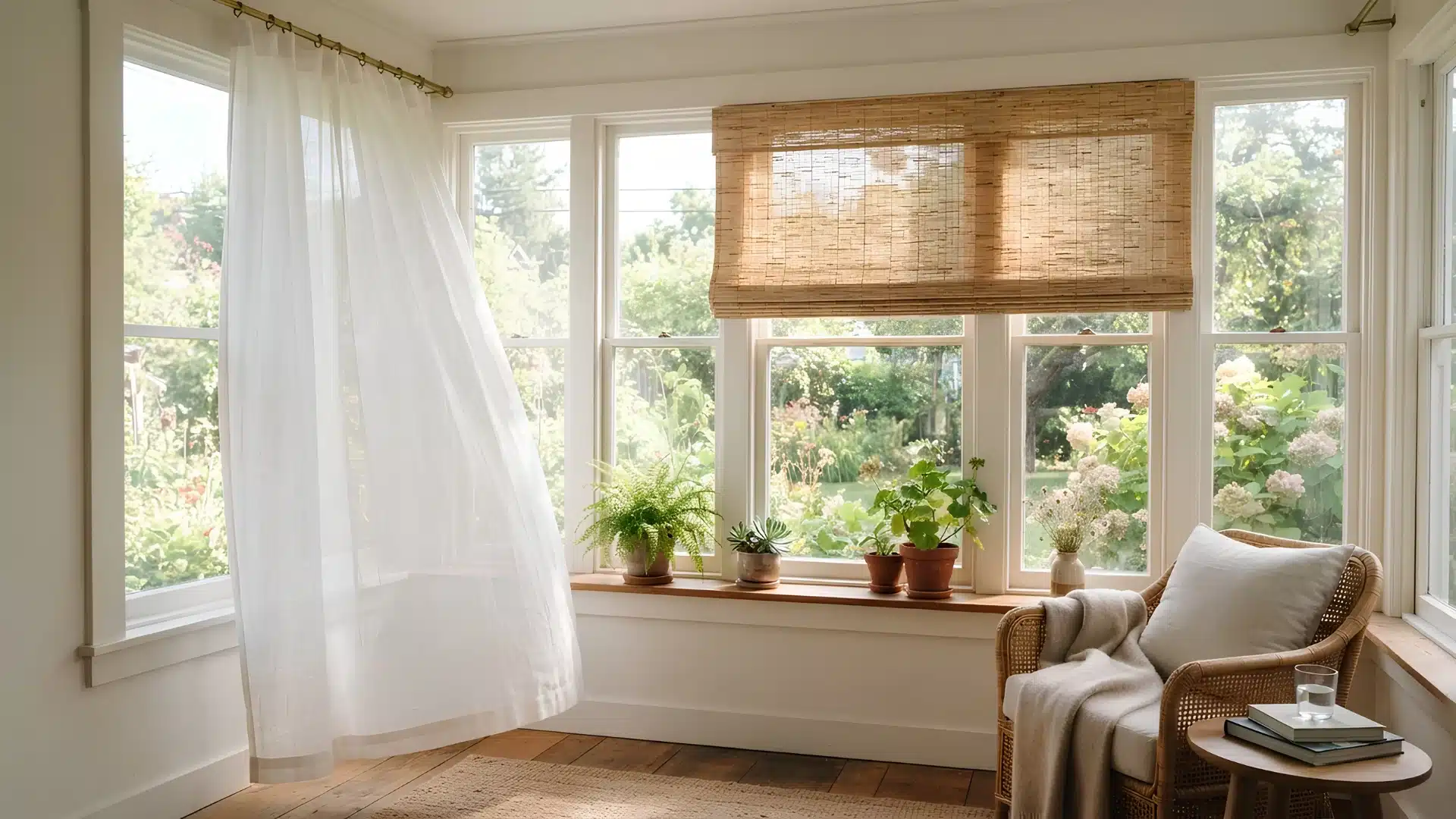
Choose light-filtering window treatments that soften strong sunlight without hiding the view. Sheer curtains and woven wood shades work well because they reduce glare while keeping the room bright and open.
Avoid heavy drapes that take up visual space and make a compact sunroom feel smaller. Simple treatments keep attention on the windows, natural light, and outdoor scenery beyond them.
19. Choose a Bold Patterned Rug as a Focal Anchor
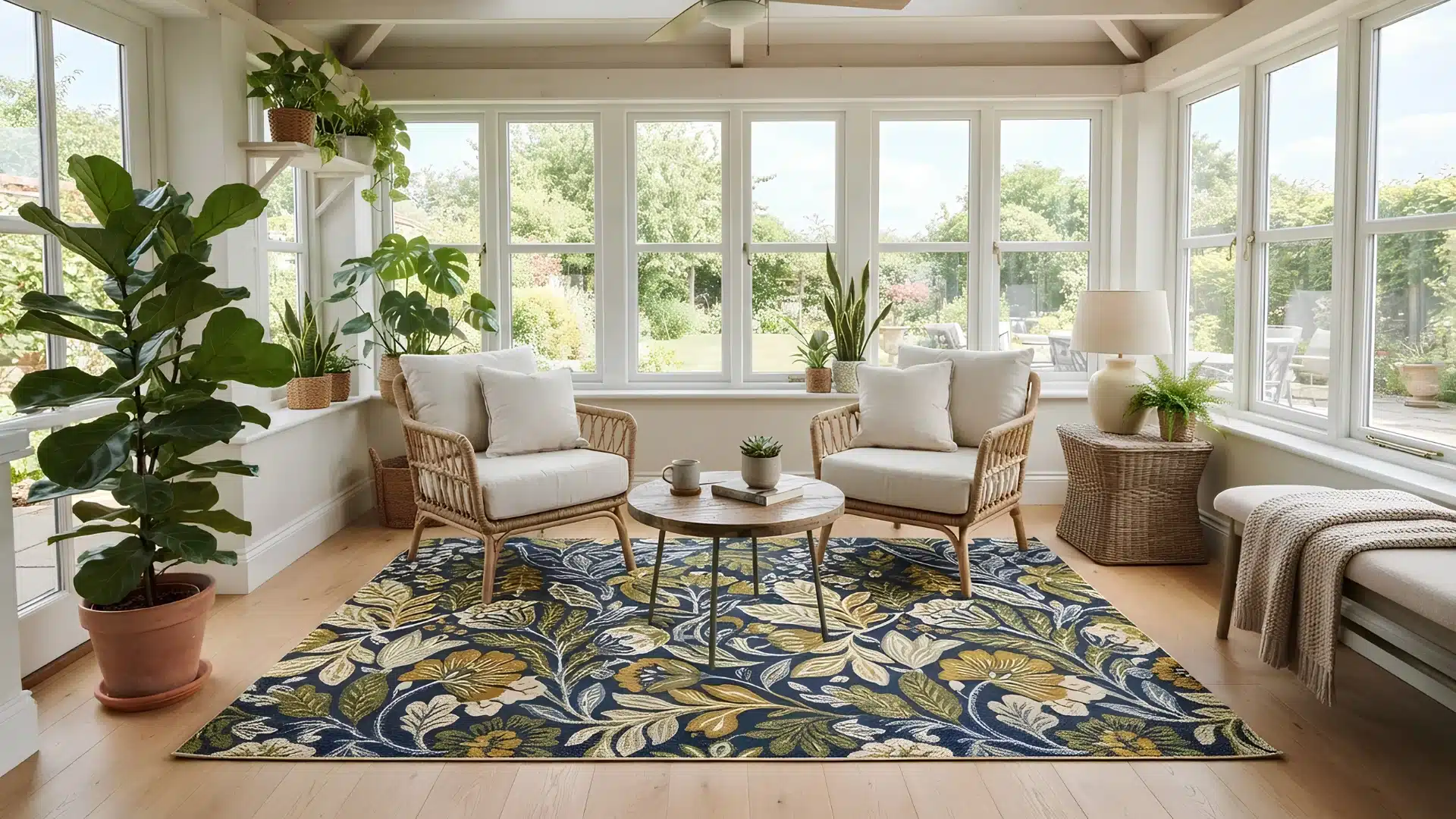
Use a patterned rug as the focal point when you want personality without adding furniture or decorative objects. One pattern can anchor the seating area and give the room direction.
Keep surrounding furniture, walls, and textiles relatively simple so the rug remains the statement. Limiting other patterns prevents visual competition and helps the sunroom feel intentionally styled rather than busy.
20. String Warm Lights Along a Window Frame for Evening Glow
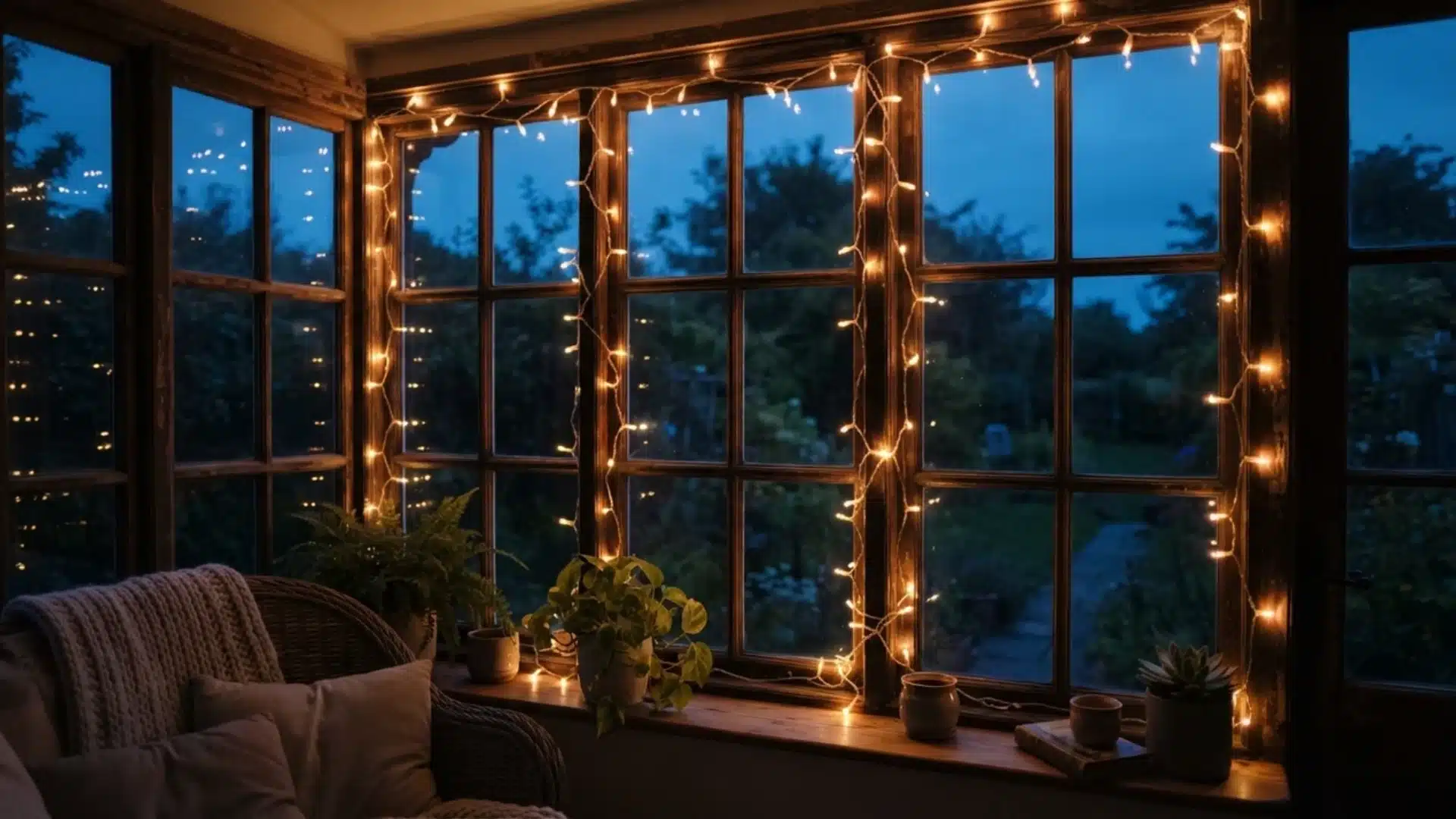
Run a strand of warm string lights around one window frame to create soft evening light without adding a lamp or taking up floor space. The effect feels intentional.
Keep the lights to one area instead of covering every window. During daylight hours, leave them off so they do not compete with the natural light, still the sunroom’s main feature.
Space-Saving Small Sunroom Ideas
Make a compact sunroom work harder with vertical storage, movable seating, fold-out surfaces, and furniture that serves multiple purposes without consuming valuable floor space.
21. Hang a Hammock Chair From a Ceiling Beam
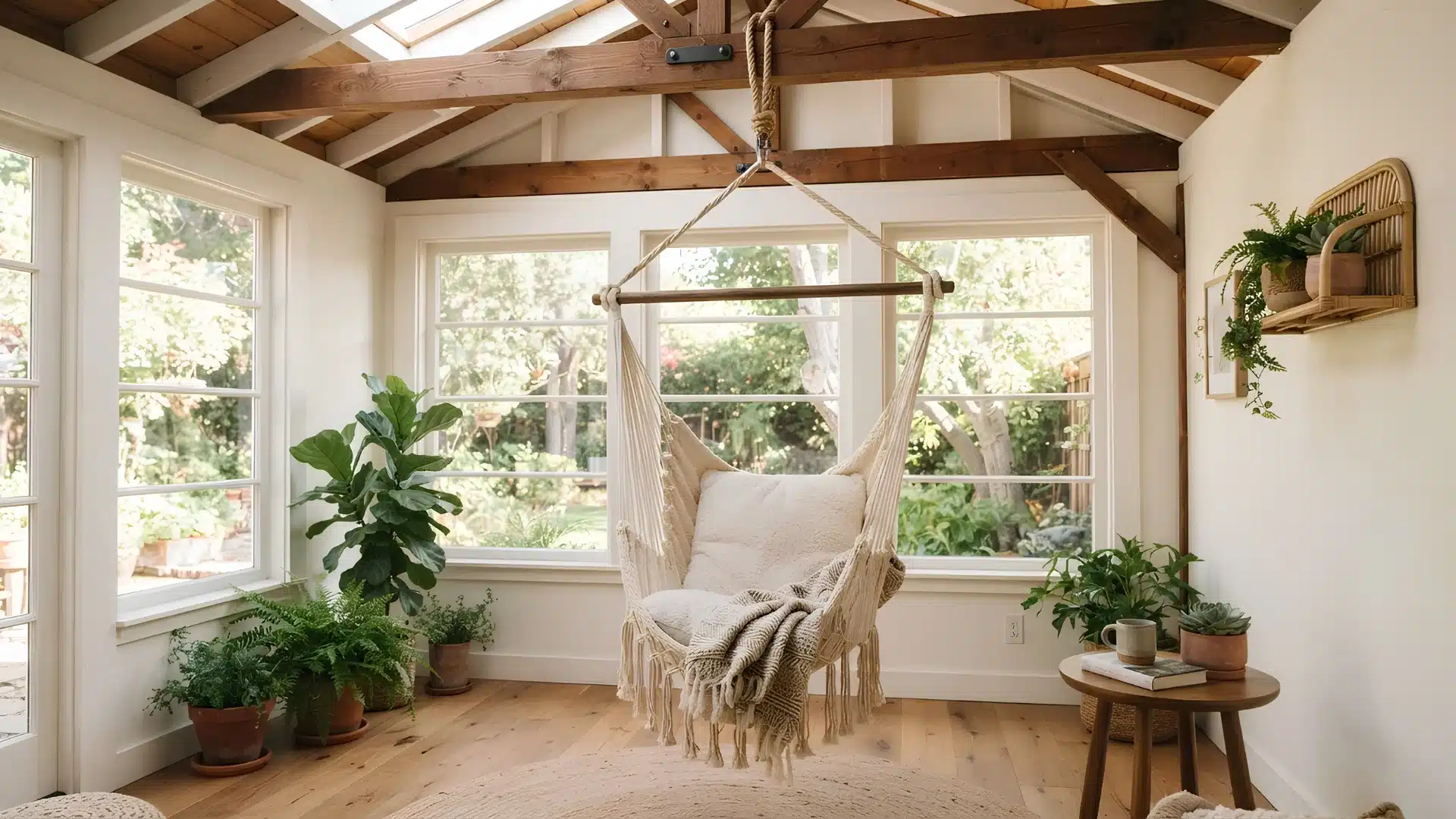
Hang a hammock chair from a supported ceiling beam to create seating without using the floor footprint of a standard chair. Its suspended shape gives the room a relaxed feel.
Keep enough clearance around the chair so it can move safely without hitting furniture or walls. Always confirm the ceiling structure can support the load before installing the mounting hardware.
22. Use a Room Divider Screen to Create Two Zones
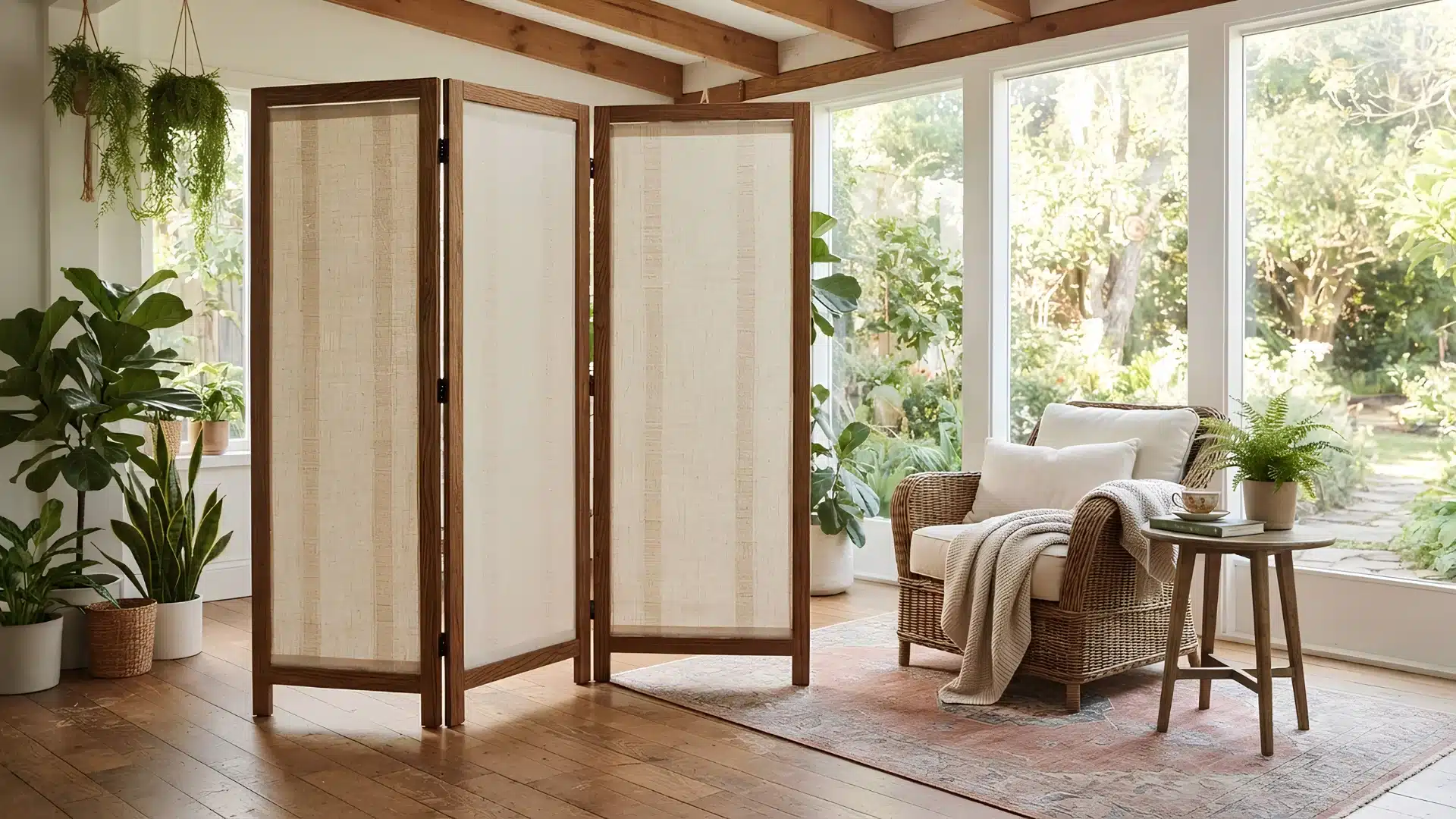
Use a folding room divider when one sunroom needs to support two separate zones. A lightweight screen can separate a reading area from plants, storage, or activities.
Because the divider folds, you can move it aside whenever you want the room to feel open again. Choose a slim design that defines each zone without making the layout feel boxed in.
23. Stack Crates as Modular, Movable Shelving
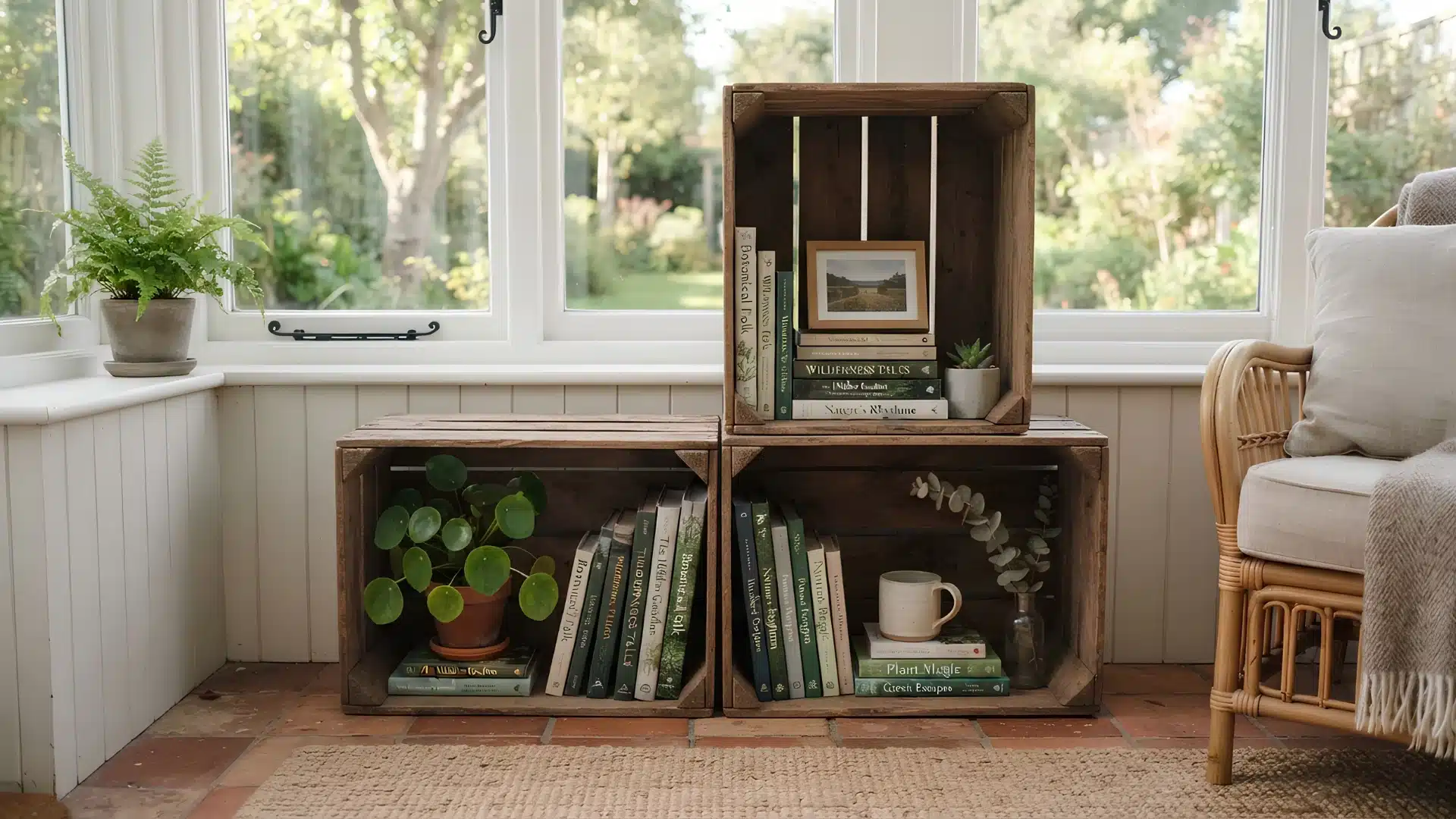
Stack wooden crates two or three high to create flexible shelving that can move or change when the layout does. Their open construction keeps storage from appearing heavy.
Use the crates for books, plants, baskets, or throws, but avoid filling every section. Leaving open space helps the shelving feel lighter and prevents the arrangement from becoming unnecessary visual clutter overall.
24. Add Flexible Storage to Unused Corners
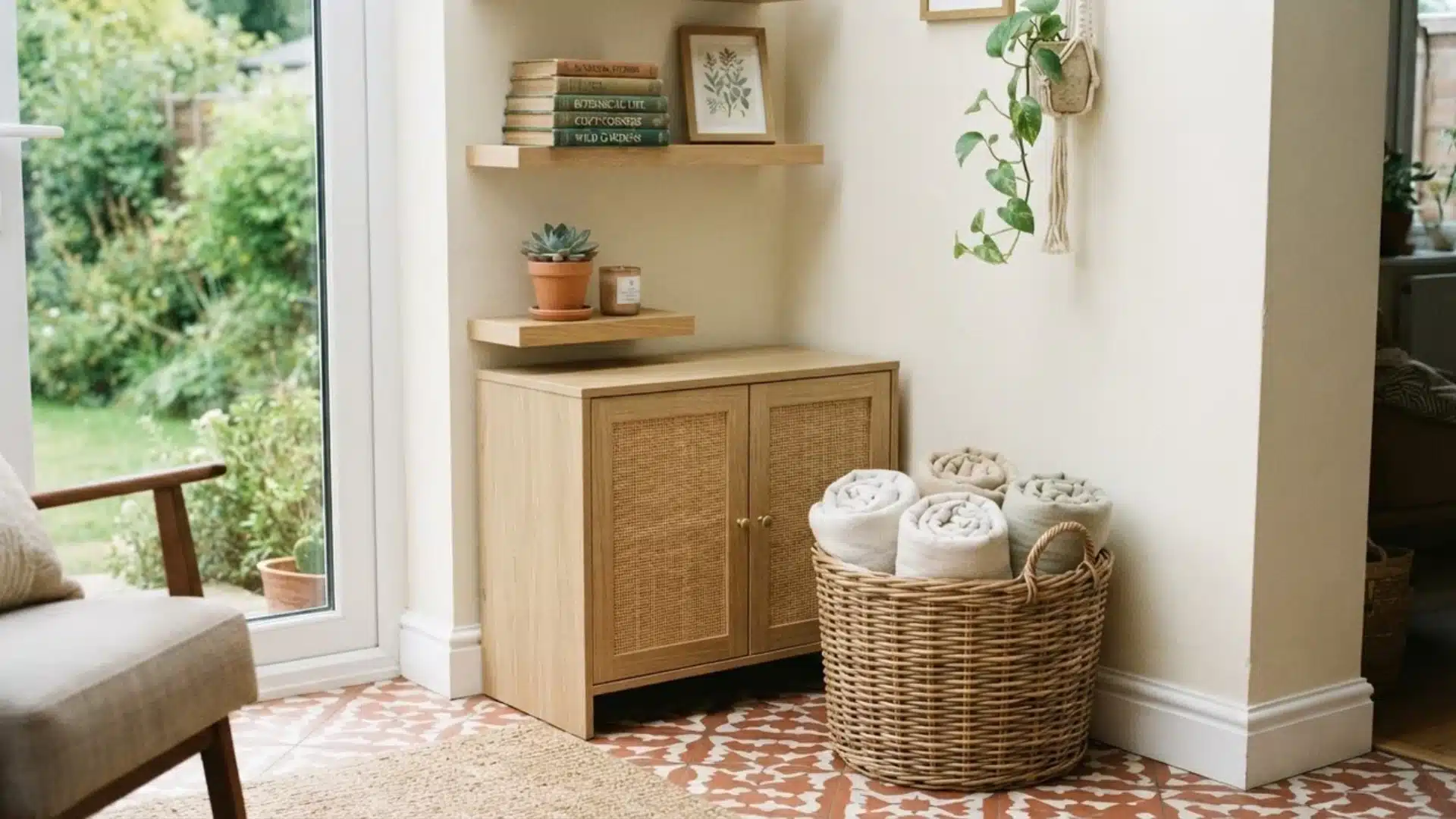
Make overlooked corners useful with narrow cabinets, floating shelves, baskets, or storage benches that fit neatly against the wall. Choose pieces with a shallow depth so they do not interfere with walking paths or make the room feel tighter.
Baskets can hold blankets, books, and seasonal items, while wall-mounted shelves keep smaller belongings off the floor. This approach adds storage without sacrificing valuable seating or movement space.
25. Use Furniture With Exposed Legs
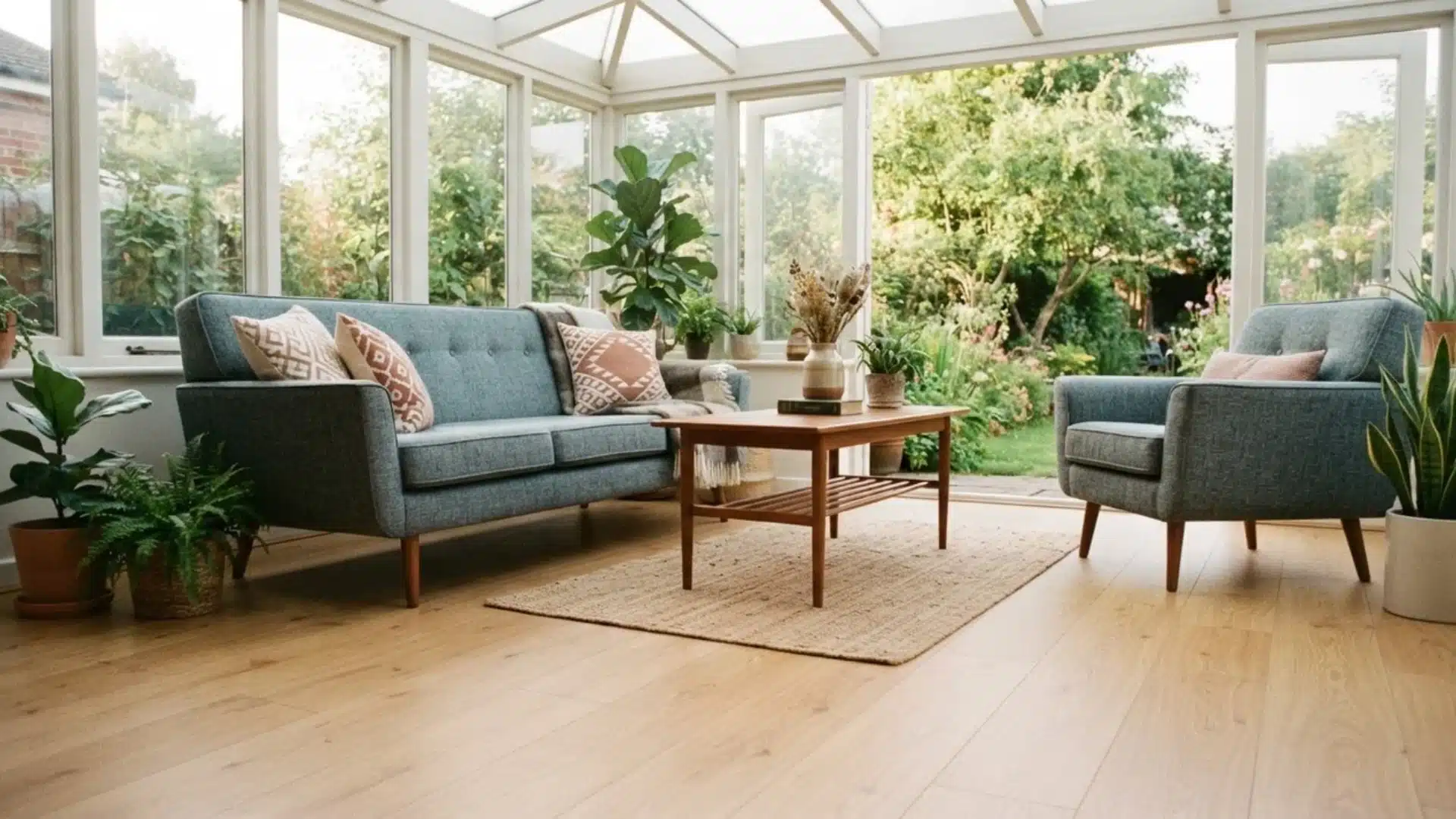
Choose chairs, benches, sofas, and tables with visible space underneath to make the floor feel more open. Exposed legs allow more of the flooring to remain visible, which can reduce the heavy appearance that solid, enclosed furniture creates.
This works especially well in compact sunrooms where every visual detail matters. Pair lightweight furniture with simple finishes and avoid oversized pieces that can quickly dominate the room.
Porch Small Sunroom Ideas
Porch-style sunrooms need practical materials, flexible furniture, shade solutions, and clear pathways that handle sunlight, humidity, outdoor access, and changing conditions.
26. Use a Pergola-Style Shade Panel for a Porch Ceiling
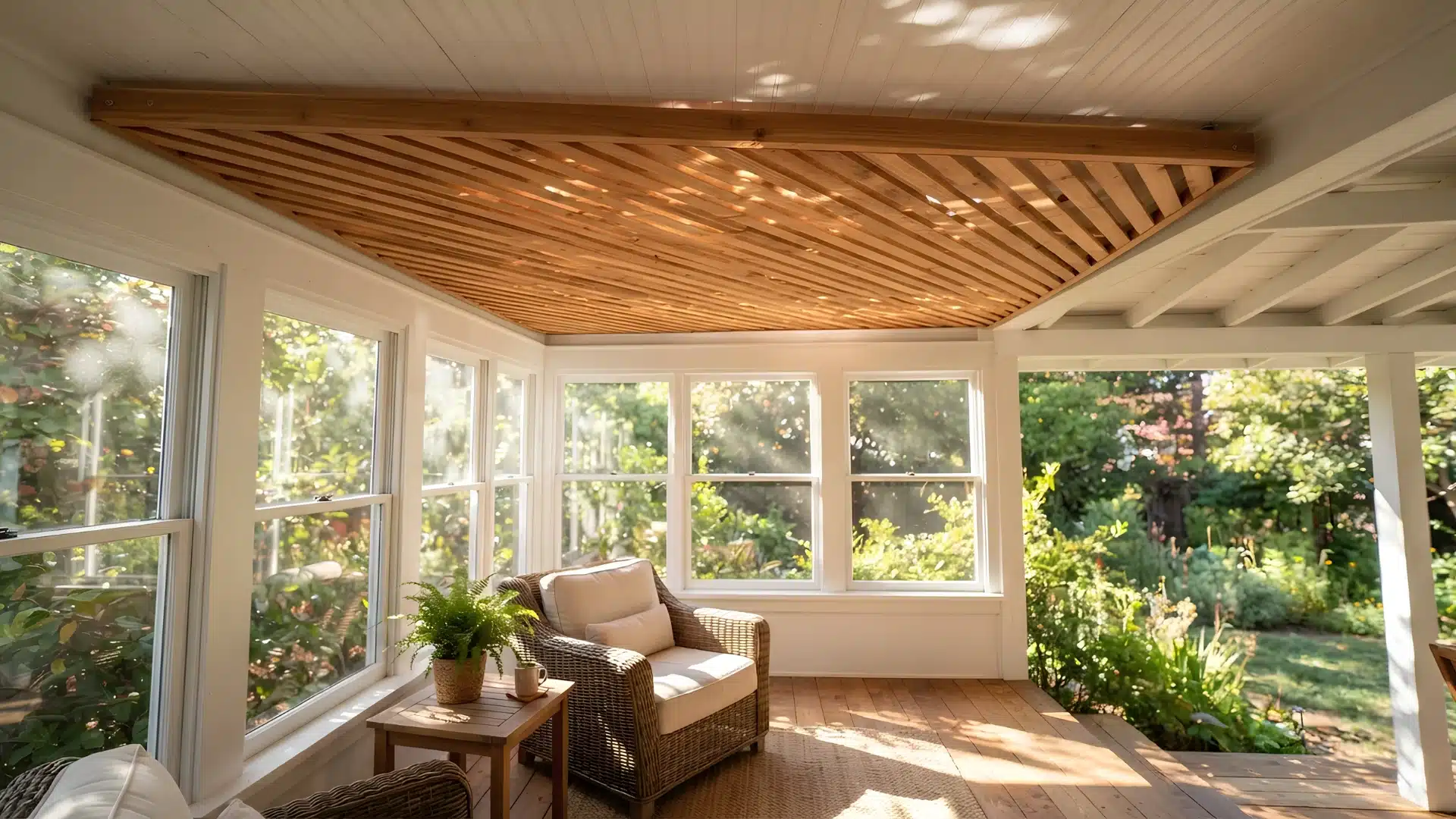
Add a pergola-style shade panel above a porch sunroom to filter harsh sunlight without blocking brightness or outdoor views. The slatted structure also brings texture to an otherwise plain ceiling.
Use lighter furniture and finishes underneath so the area does not feel too shaded or heavy. The combination creates useful sun protection while keeping the porch open, comfortable, and inviting.
27. Choose Materials Built for a Porch Sunroom
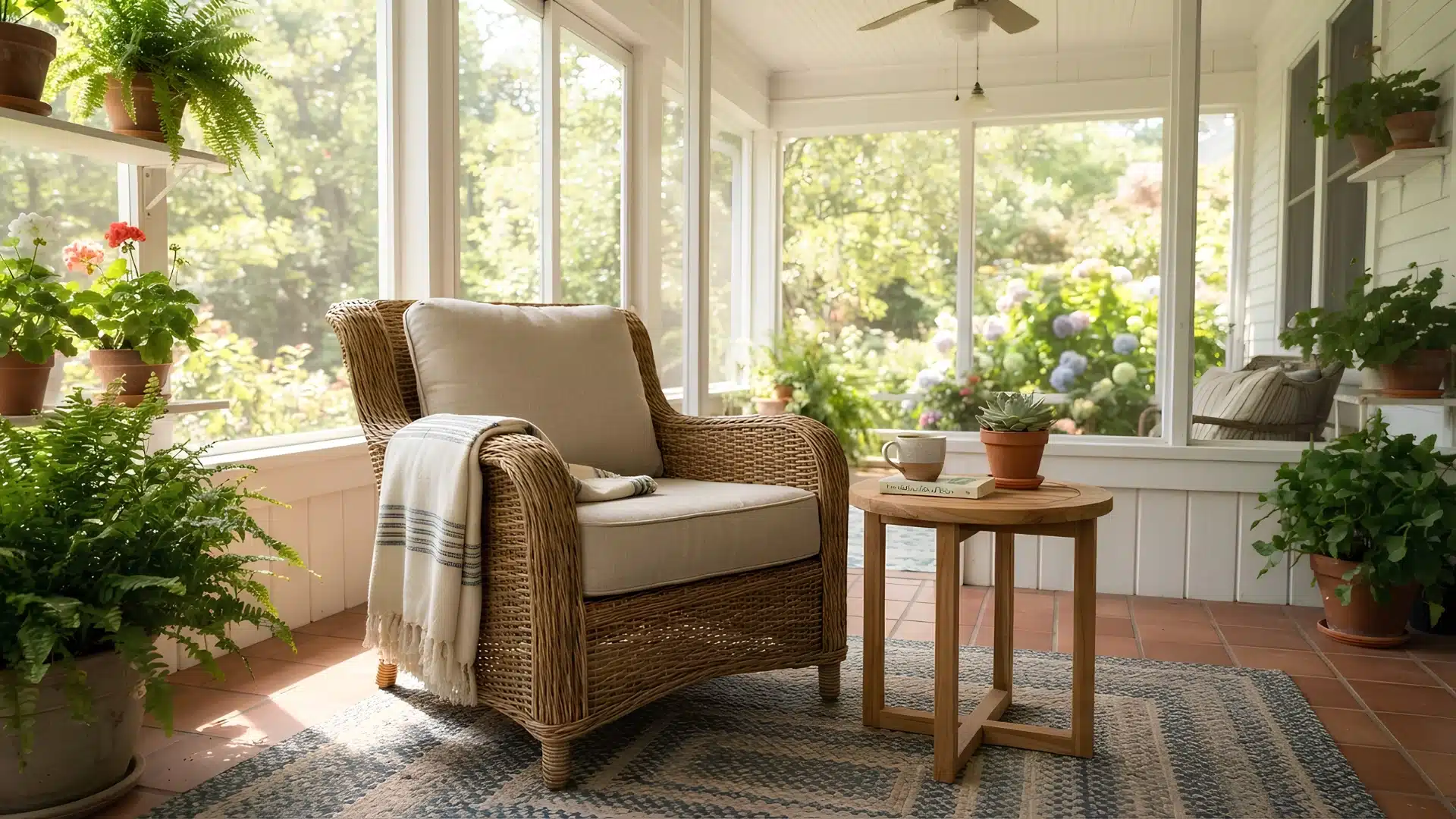
Choose materials that can handle the conditions of a porch sunroom. Performance fabrics resist fading and moisture, making them a stronger choice for spaces exposed to direct sunlight and changing humidity.
Wicker, rattan, and sealed wood can work well in these conditions. Pair them with rugs designed for outdoor or high-moisture areas, so the setup stays practical and attractive longer.
28. Add Outdoor-Ready Textiles
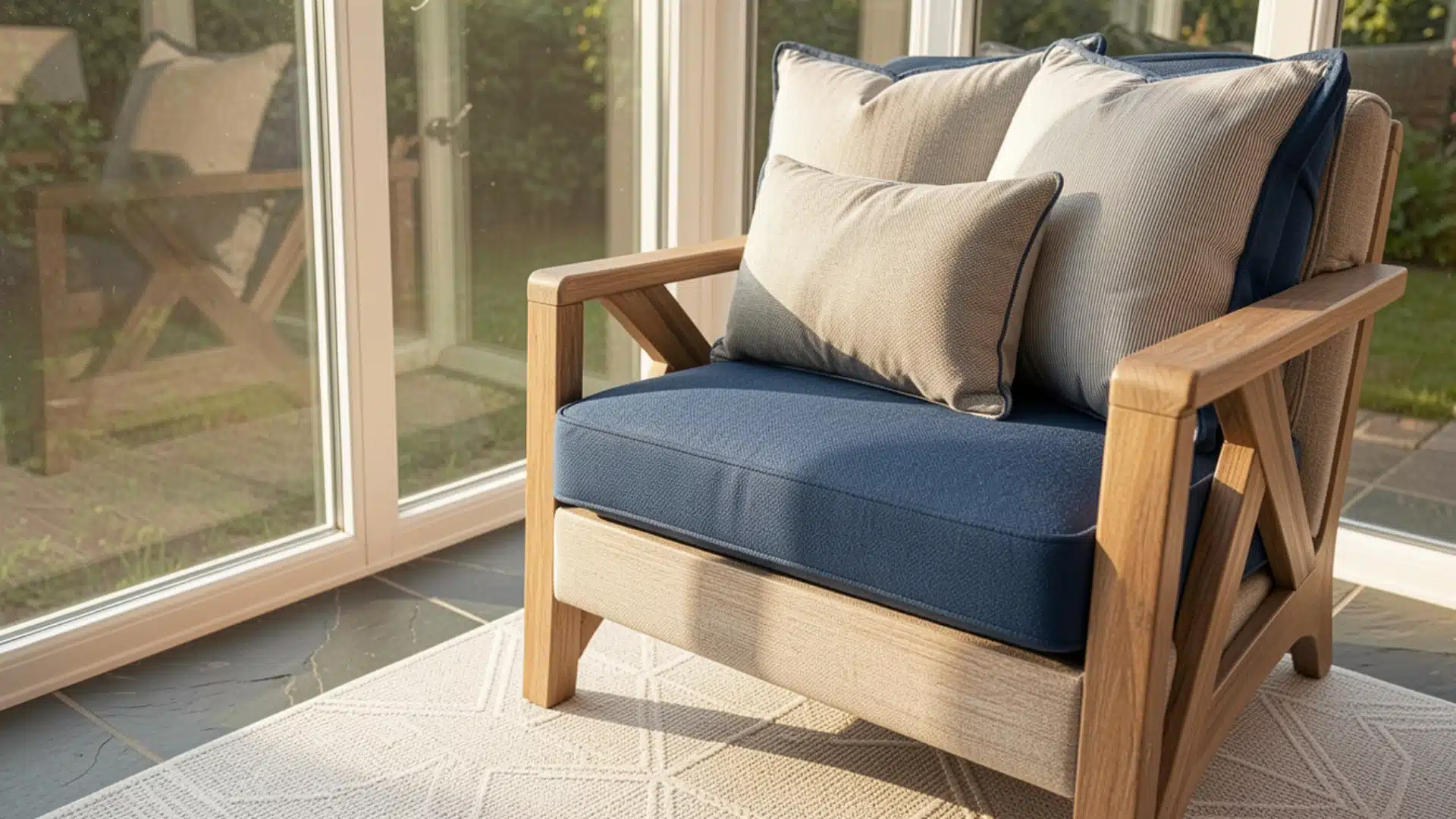
Choose textiles that can handle the extra sunlight, humidity, and temperature changes common in porch-style sunrooms. Fade-resistant cushions help fabrics keep their color, while washable rugs make everyday maintenance easier.
Look for moisture-resistant or quick-drying materials if the space is not fully climate-controlled. Keep patterns simple and coordinate them with the existing furniture so practical fabrics still feel comfortable without making the small room look busy.
29. Keep Doorways and Porch Paths Clear
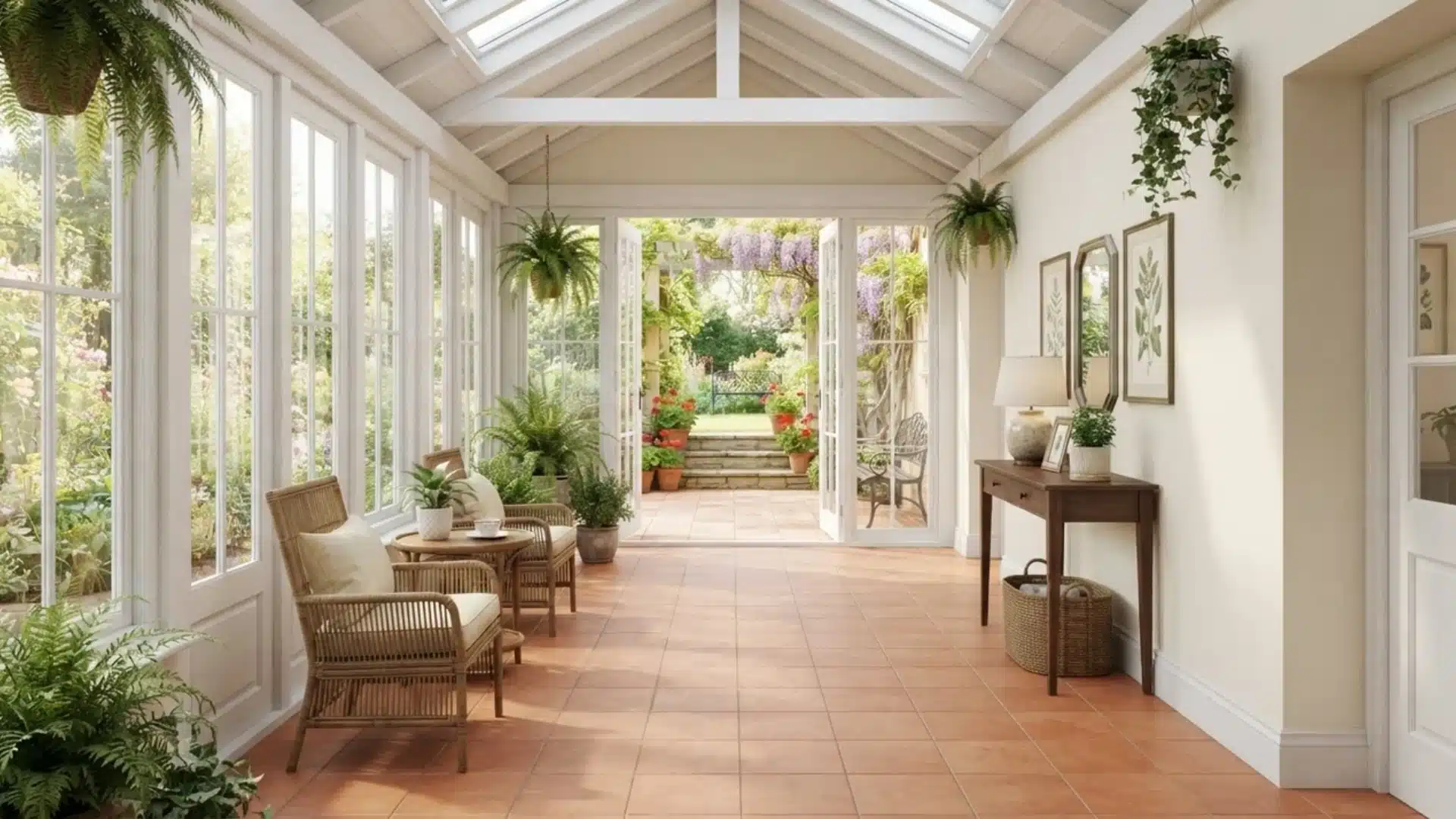
Arrange furniture away from frequently used doors and keep the main walking path open from one end of the sunroom to another. This matters even more in narrow porch-style spaces where oversized furniture can quickly restrict movement.
Place chairs, benches, and tables along the sides rather than in circulation areas. A clear path makes the room easier to use while helping the compact space feel more open.
30. Connect the Sunroom With the Outdoor Space
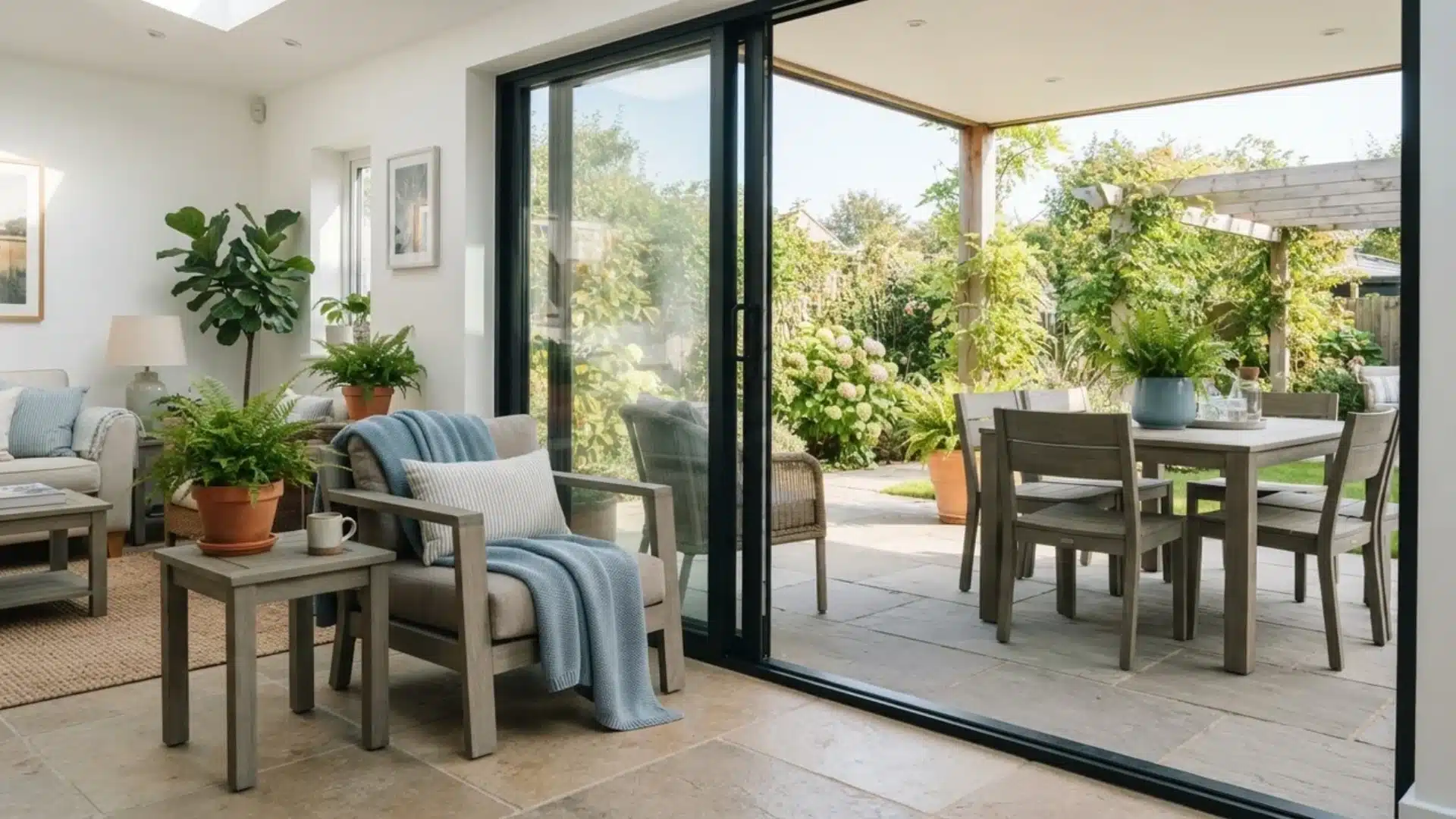
Create a natural connection between the sunroom and the adjoining porch, patio, or garden by repeating a few colors, materials, or plant types. For example, use similar wood tones indoors and outdoors or repeat greenery near the windows.
This creates visual continuity without adding unnecessary decor. Keep the transition simple so the sunroom still feels like a comfortable interior space rather than an extension filled with outdoor furniture.
How to Arrange Furniture in a Small Sunroom
Start with the room’s main purpose, then position larger furniture before adding smaller pieces. Keep windows, doors, and walking paths clear.
- Choose the room’s primary function
- Position the largest furniture piece first
- Keep at least 2 feet for main walking paths
- Avoid blocking windows or doors
- Use compact, proportional furniture
- Leave some visible floor around furniture
- Add rugs and decor after the layout works
Once the main arrangement feels comfortable, add plants, cushions, lighting, and other decorative touches without overcrowding the space.
Common Small Sunroom Mistakes to Avoid
Small sunrooms need careful planning because oversized furniture, blocked windows, and too much decor can quickly make the space feel cramped.
| Mistake | Better Approach |
|---|---|
| Choosing oversized furniture | Select compact, proportional pieces |
| Blocking windows | Keep window areas open and visible |
| Filling every corner | Leave some negative space |
| Using too many colors | Stick to two or three connected tones |
| Ignoring glare and heat | Add light-filtering shades |
| Creating narrow walkways | Keep main paths clear |
| Adding too much decor | Choose fewer, useful pieces |
Avoiding these mistakes helps your sunroom stay comfortable, functional, and visually open while making better use of its limited floor space.
Summing It Up
A small sunroom works best when comfort and space are planned together. You can create a welcoming room without filling every corner with furniture or decor.
Start by choosing the main purpose, then arrange compact seating around clear walking paths and open windows. Add warmth with rugs, cushions, plants, soft lighting, and a connected color palette.
For porch spaces, choose durable materials and keep doors and outdoor paths accessible. These small sunroom ideas can help you make better use of limited space while keeping the room comfortable and practical.
I recommend starting with one simple change, such as moving furniture or adding a flexible piece. Try an idea today and share what works best for your space.
Frequently Asked Questions About Small Sunrooms
How do you style a very small sunroom?
Start with one clear purpose, such as reading or conversation, and use only the furniture needed for it. Choose compact pieces, keep the main walking route clear, and leave windows visible. Add coziness with a rug, cushions, natural texture, and a few plants rather than filling every surface with decor.
What furniture is best for a small sunroom?
Compact loveseats, slim armchairs, benches, nesting tables, and visually light tables work well in small sunrooms. Pieces with exposed legs can keep more floor visible and reduce visual heaviness. The best choice depends on the room’s purpose, available walking space, window height, and door placement.
How can I make a small sunroom look bigger?
Keep furniture proportional to the room, maintain clear sightlines, expose some floor around major pieces, and avoid blocking windows. A connected light or neutral color palette can reduce visual fragmentation. Mirrors and glass tables may also help, but good furniture placement usually has a greater effect than decorative tricks alone.
How can I make a small sunroom cozy on a budget?
Focus on a few changes with strong visual impact. Add a comfortable rug, cushions, a throw, plants, and warm natural textures before replacing major furniture. Rearranging existing seating to improve circulation and window views can also transform the room without adding anything new or increasing clutter.