Most people think of shipping containers as backyard studios or storage sheds. But businesses have quietly turned these same steel boxes into working commercial infrastructure, from kitchens to classrooms.
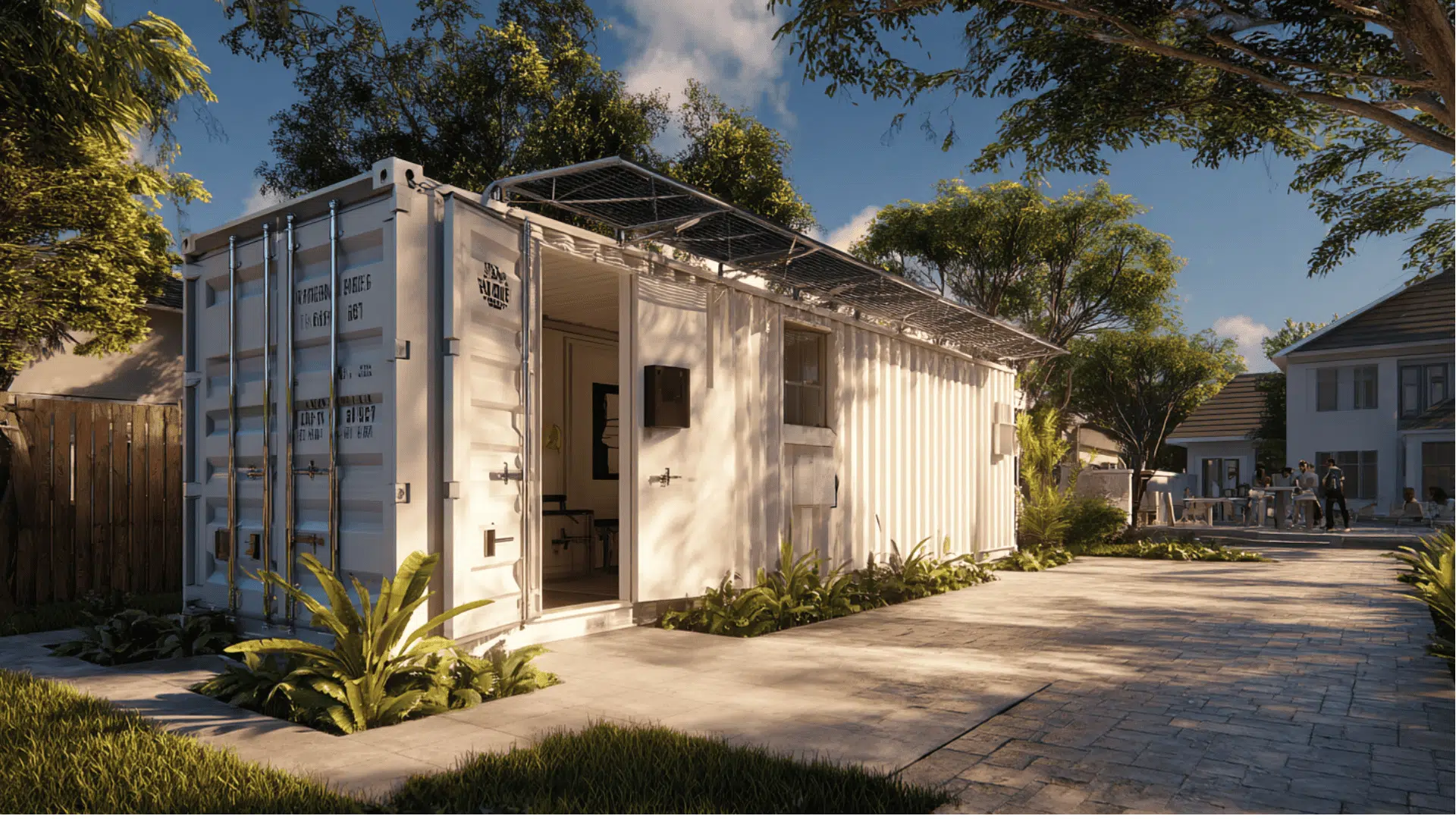
A container starts out as a standardized shell, not a finished space. It’s steel, insulation, and four walls until someone adds plumbing, wiring, or shelving, and that’s what actually determines whether it becomes a kitchen, an office, or something else entirely.
This article covers seven practical business applications, and unlike most container roundups, it also covers what each one requires to work.
What Containers Bring to the Table
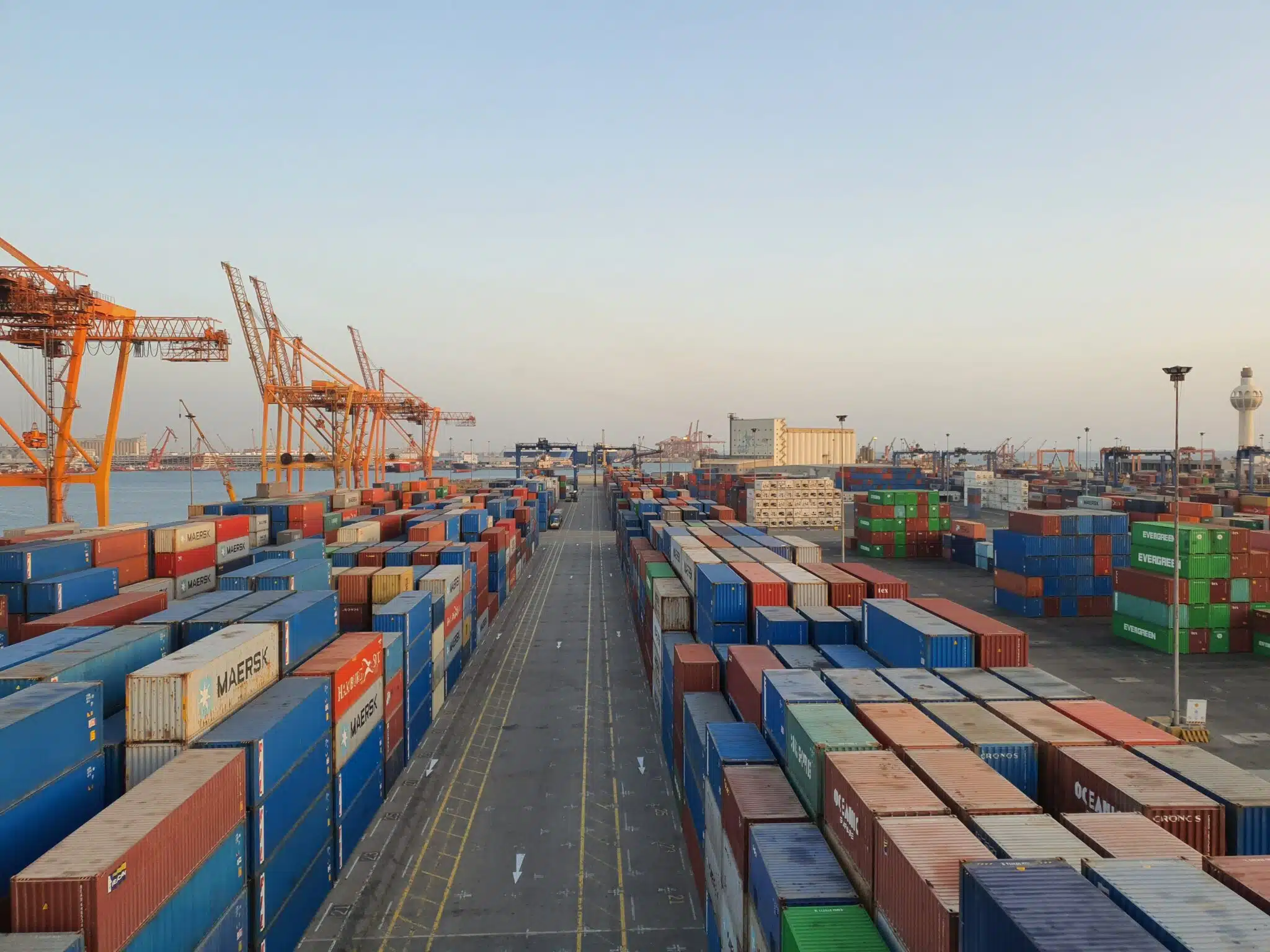
A shipping container’s biggest advantage starts with its dimensions. Because 20-foot and 40-foot units follow ISO standards, they come with predictable floor plans, known structural ratings, and easy compatibility with standard trucks and cranes. That consistency makes planning simpler from the start.
Steel construction adds another layer of appeal. It holds up against weather, resists break-ins, and survives rough job sites better than most temporary structures do.
And since fabricators can modify units off-site, a container often arrives close to turnkey instead of needing weeks of on-location work. That portability also means businesses that expand, relocate, or test new markets can move their space right along with them.
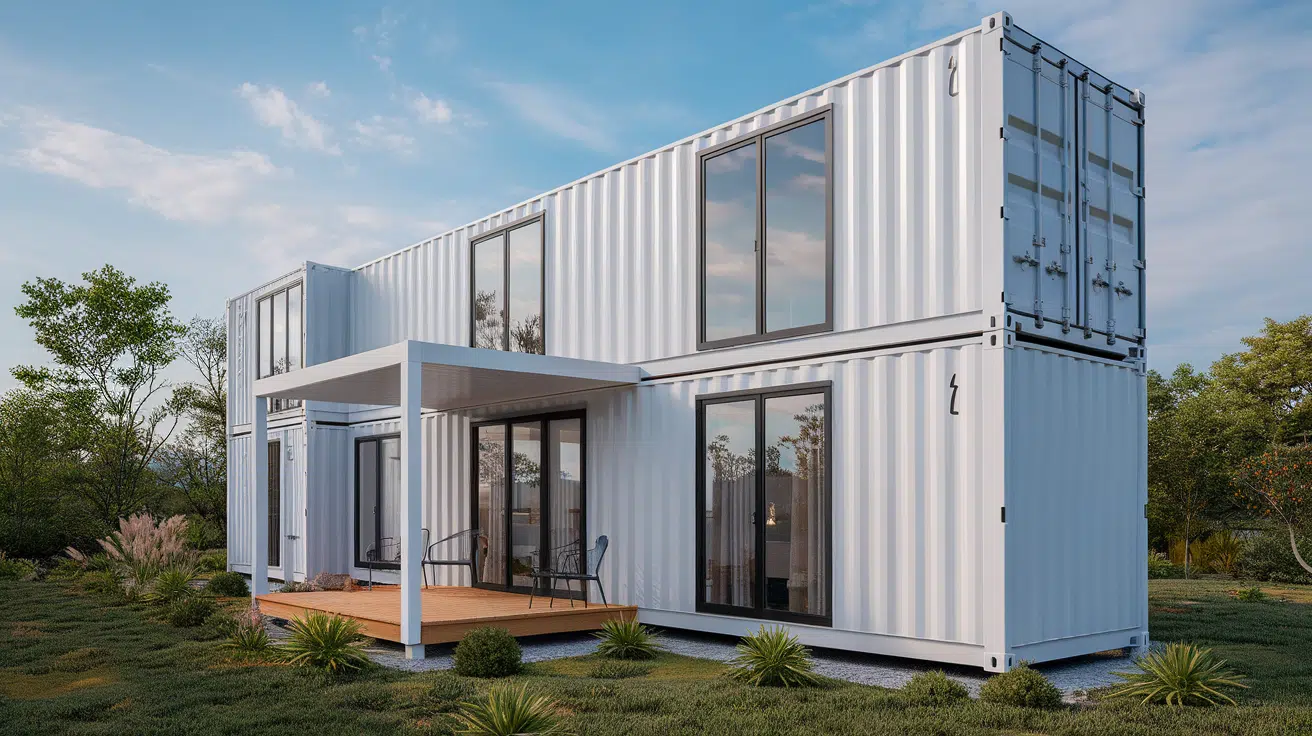
Still, a container isn’t a finished commercial space. It’s a shell. Utility hookups, structural changes, local permitting, and equipment all come separately, on their own cost and timeline.
7 Ways Businesses Use Shipping Containers
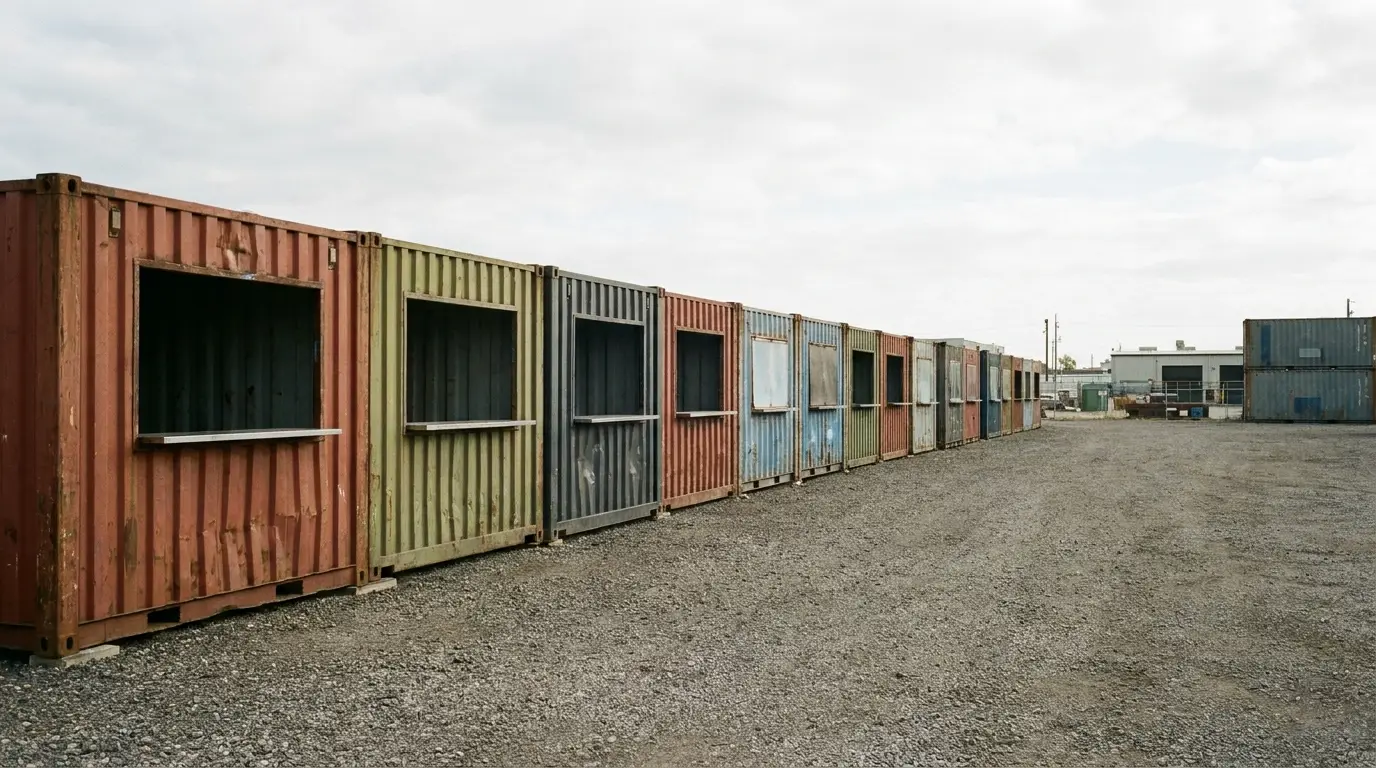
The shell stays the same, but the planning doesn’t. A pop-up shop and a commercial kitchen need very different engineering, permits, and utilities.
Pop-Up Retail and Service Counters
Seasonal markets, product launches, and branded kiosks all lean on the same setup. Retailers cut a service window into the container, add signage, and wire in power for POS systems and lighting.
Weather sealing keeps products safe, and a secure closure locks everything down after hours. ADA-compliant access matters just as much as the branding does. For brands testing a physical footprint before signing a lease, this setup offers a low-commitment way to find out if it works.
Field Offices and Workshops
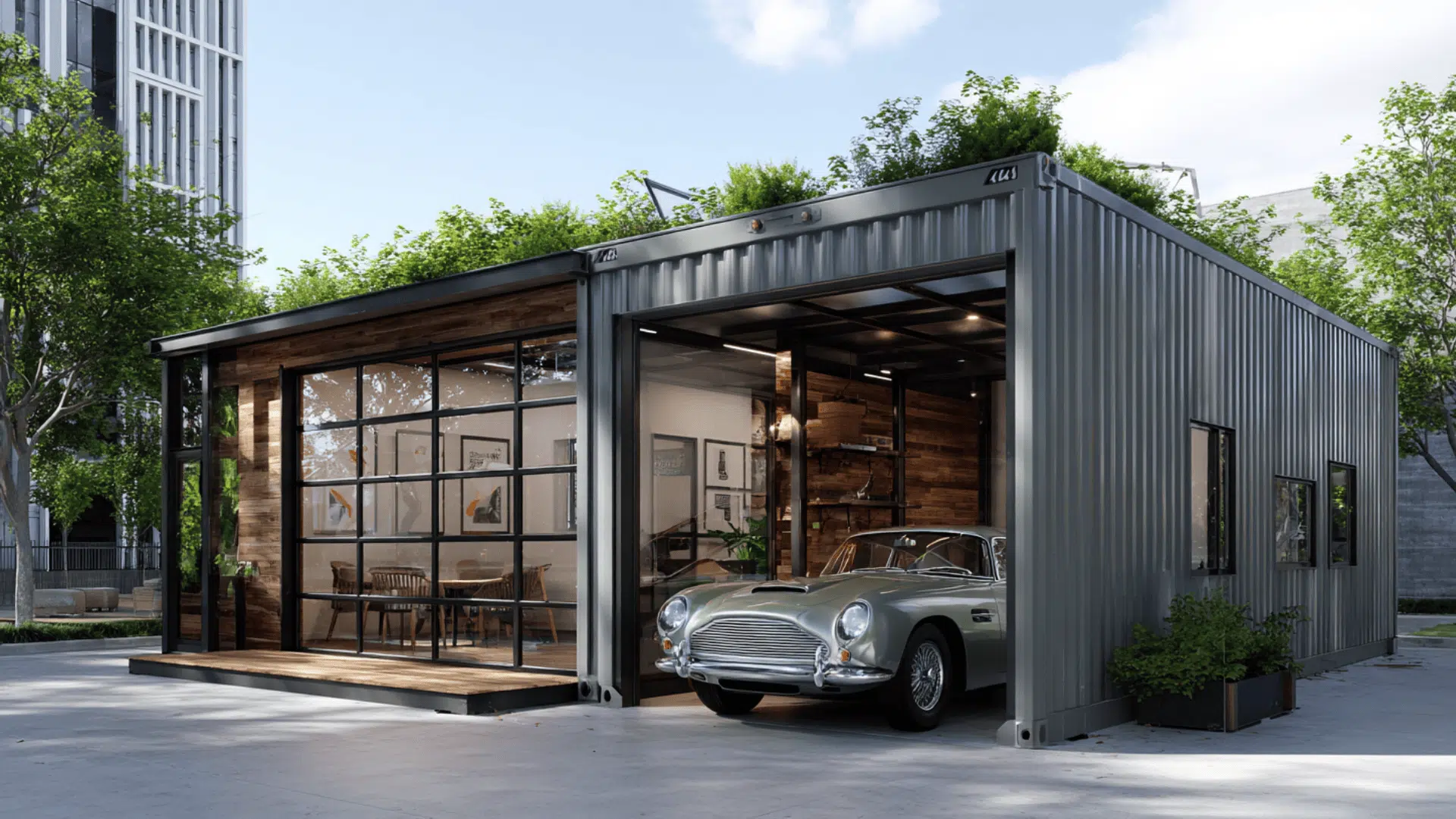
Construction crews and remote project teams have used containers as job-site offices for years. HVAC keeps the space workable in extreme weather, built-in communications keep crews connected, and well-placed windows bring in natural light.
Delivery access matters too, since equipment and vehicles tend to crowd a site fast, and getting a crane or truck gets harder once that happens. Working out logistics early saves a headache down the road.
Commercial Kitchens and Foodservice Hubs
Food-production containers cover more ground than trendy pop-up cafes suggest. Restaurants use them to keep cooking during a renovation, schools and campuses use them to handle overflow feeding, and event caterers rely on them for high-volume service.
Remote construction sites and disaster relief operations depend on them too, and each scenario carries its own planning stakes.
For operations that need food-production capacity without a permanent build, commercial kitchens in shipping containers by Response Logistics come configured with layouts and equipment matched to the job.
Planning still runs deep. Hood and ventilation systems, a three-compartment sink, and wastewater lines all need engineering, and electrical and gas loads have to match the equipment inside.
The FDA Food Code sets a model standard, but the local health department decides what actually applies. Add building, electrical, plumbing, mechanical, and fire review to that list before service starts.
Clinics and Emergency-Support Units
Disaster response teams and rural health providers turn to containers when a permanent clinic isn’t realistic on the timeline they have. Privacy compliance and sanitation standards still apply, so the layout has to account for patient confidentiality and clean water access from day one.
Backup power keeps equipment running when the grid can’t be trusted, and clinical standards shift by jurisdiction, so what passes review in one state might not in another.
Classrooms and Training Labs
Schools and training programs add containers when construction cuts into existing space or when a conventional build would take too long to approve. Occupant load, egress requirements, and accessibility compliance all shape the layout from the start, and ventilation has to keep pace with a room full of people.
Technology infrastructure matters too, since most classrooms need reliable power and connectivity. Many of these units start as a temporary fix and end up staying permanent once the need doesn’t go away.
Urban Farms and Controlled Growing
Hydroponic and vertical farming operations push a container harder than most other uses on this list. Grow lighting and climate control systems draw serious electrical load, and all that heat has to go somewhere, which makes ventilation and heat rejection a real design challenge from day one.
Water circulation and environmental monitoring add more complexity on top of that. Because of the engineering involved, this use case needs specialized input well before conversion starts, not after.
Event and Exhibit Spaces
Ticketing booths, branded exhibits, concession stands, and pop-up activations all put containers to work at festivals, fairs, and trade shows. How often the unit moves changes the planning, since assembly and anchoring have to happen fresh at every venue.
Crowd flows around the structure need attention too, and power access at the event site can make or break the setup. The best results come when the container itself becomes part of the brand’s look, not just a box hiding the real display.
5 Questions Before You Commit
Before signing anything, run the project through these five questions.
- What does this use require? Health review, occupancy permits, and specialized utility systems vary by application, so know what applies before committing.
- What does the site allow? Zoning setbacks, delivery access for a crane or truck, and available utility service all shape what’s possible.
- Who has jurisdiction here? Find out which local authority reviews the plan and what that process looks like.
- Are the utilities already there? If not, budget for new service connections, not just the container itself.
- Will this unit need to move again? Relocation means transport, lifting, site access, and utility disconnection, and none of that happens for free.
Design Starts With the Use Case
A steel shell only becomes useful commercial infrastructure once the specific use shapes the design around it. A pop-up retail unit and a commercial kitchen might start from the same box, but from there, planning, permitting, utilities, and equipment all pull in different directions.
That’s the real lesson behind every example in this list. The shell doesn’t do the work on its own; the planning does. Get that part right, and a container turns into practical, scalable space that moves when the business needs it to, all without the timeline of a permanent build.