
Ever struggled to move a bulky mattress without scratching the walls or bending the springs?
Transporting a mattress takes more than just lifting. It takes the right prep, careful handling, and the right technique to avoid damage.
I’ve helped friends and family move mattresses more times than I can count. I’ve seen how a little planning turns a stressful day into an easy one.
This guide walks you through how to prepare, load, secure, and unpack your mattress. You’ll also see the mistakes that cause the most damage.
Why Proper Mattress Transport Matters
Transporting a mattress without care can bend coils, tear fabric, or trap moisture. Any of these shortens its life and hurts your comfort.
Bad lifting causes back injuries too. A strain from one wrong lift can turn a moving day into a bad week.
Good prep protects more than comfort. A torn mattress bag or a bent frame usually can’t be fixed. You end up buying a new mattress instead.
Most of the damage I’ve seen comes from small mistakes. Things like leaving a mattress out in the rain, or stacking boxes on top of it.
The Challenges of Moving a Mattress

Moving a mattress looks simple until you’re halfway down a staircase. These are the challenges that catch people off guard, and the ones worth planning for.
- Size and Bulkiness – Mattresses are big and hard to steer through narrow doorways or staircases. One wrong angle and you’ve scratched a wall or scuffed the frame.
- Weight and Lifting Strain – Even a bare mattress is heavy and awkward to carry. Bend at the knees, not the waist, and keep it close to your body as you lift. I’ve thrown my back out skipping this step. It’s not worth the shortcut.
- Flexibility Differences – Innerspring and memory foam behave differently under pressure. Fold an innerspring mattress and you risk bending the coils for good. Foam can compress for a bit, but it still needs careful handling.
- Vehicle Fit – Not every mattress fits in a car, SUV, or truck bed. A cargo van usually holds a queen and box spring. A king normally needs a 15-foot moving truck or bigger. If you’re using a car or SUV, fold down the back seats and measure the space first.
- Weather and Dirt Exposure – An uncovered mattress picks up dirt, moisture, and debris fast. A good cover keeps it clean and stain-free during the trip.
- Securing During Transport – A mattress that isn’t secured can shift, slide, or fall off mid-drive. Straps, a roof rack, or laying it flat all cut that risk down.
Most of these problems come down to two things: rushing, and skipping a second pair of hands.
How to Prepare Your Mattress for Transport?
Good prep starts before you ever lift the mattress. These steps keep it clean, protected, and ready for the road.
- Use a Mattress Bag or Protective Covering – Wrap the mattress in a thick bag or heavy plastic. Tape every seam and opening shut so nothing slips through.
- Gather the Right Equipment – A dolly or hand truck makes solo moves much easier. Strap the mattress on its side and wheel it instead of dragging it. Furniture straps also give you a better grip than the bare edges.
- Handle Different Mattress Types Correctly – Spring and coil mattresses move best on their side. Strap them upright against a wall or wedge them between two heavy pieces of furniture. Memory foam should stay flat with nothing stacked on top. Never fold an innerspring mattress. It can bend the coils for good.
- Protect Corners and Edges – Slide cardboard corner guards over each corner before wrapping. Corners take the hardest hits against doorframes and stair rails.
- Label and Inspect – If you’re moving more than one mattress, label each one clearly. Check the wrapping is tight before you load it.
- Final Check – Confirm every corner and seam is covered. A few extra minutes here save a lot of trouble later.
None of these steps take long, but skipping one is usually where the damage starts.
Moving a Mattress on Your Own
Moving solo is harder, but it’s doable if you adjust your approach.
Double up your protection first. Tape a second layer over the mattress bag, since you’ll likely drag it at some point.
Use gravity instead of fighting it. Slide the mattress across carpet rather than lifting the full weight.
A dolly does most of the heavy lifting on the way to your vehicle.
If you’re loading a car alone, thread the straps through the interior before you lift the mattress in.
For a queen or bigger, get one extra set of hands just for the doorway-to-vehicle stretch. That part carries the most risk.
How to Secure Your Mattress During Transport?
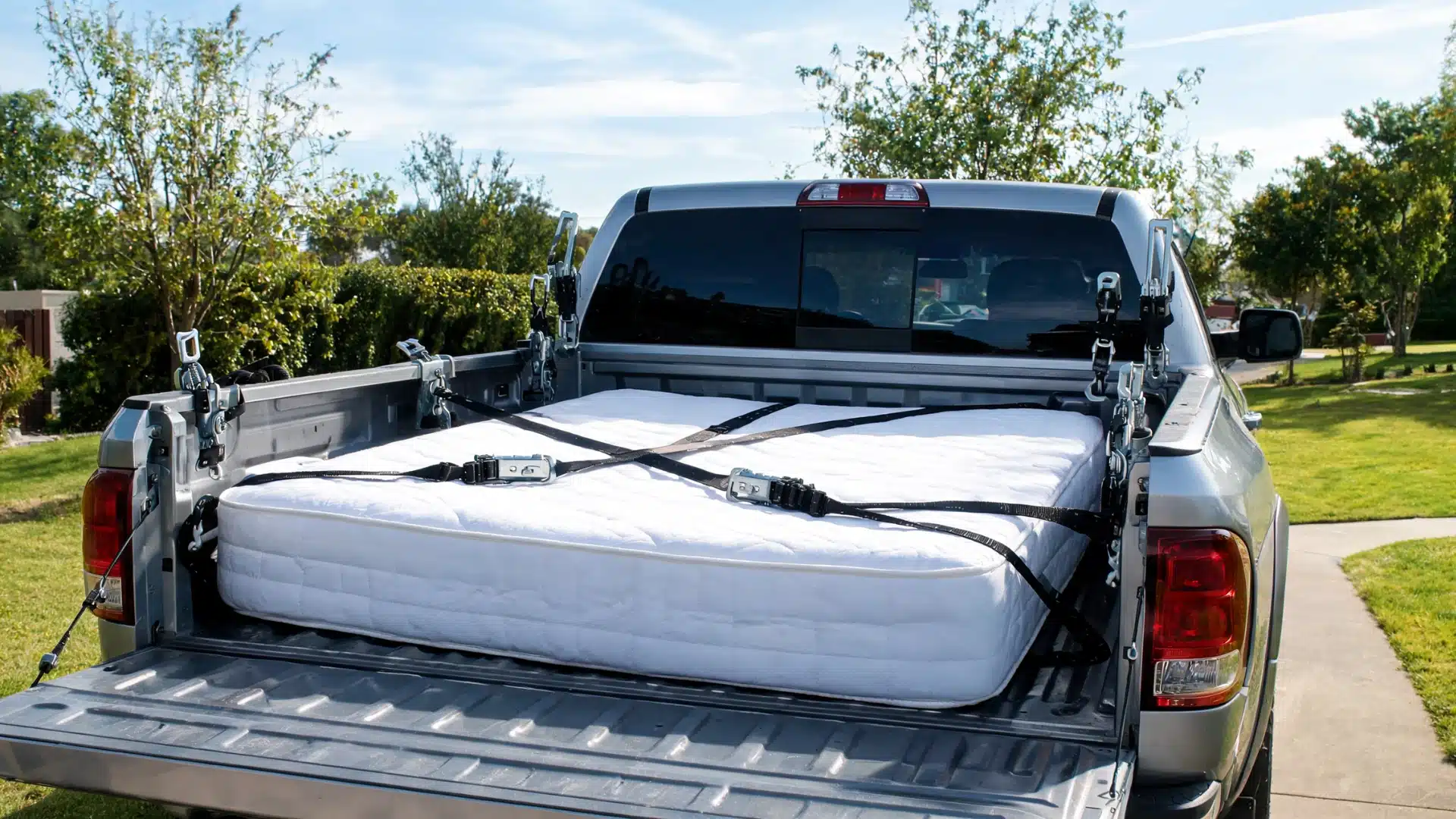
Once it’s wrapped, how you load it matters just as much.
A mattress that shifts mid-drive can damage itself, your car, or someone on the road. The right method depends on your vehicle.
| Vehicle Type | Securing Method |
|---|---|
| Car or SUV | Center the mattress on the roof. Use ropes or ratchet straps in multiple directions. No roof rack? Thread straps through the doors and tighten from inside. |
| Pickup Truck | Lay flat in the bed. Attach straps to the D-rings on all sides. Secure the tailgate end firmly if it stays open. |
| Moving Truck or Van | Lean spring mattresses on their side against the wall. Lay foam mattresses flat. Skip stacking anything on top, and tighten straps to the rails. |
Once it’s strapped down, give the load a firm shake. If it moves more than an inch, tighten it again before you drive.
Unpacking and Post-Transport Care
Unpacking matters just as much as loading did. A few minutes here keeps the mattress clean and in good shape.
- Remove protective covering carefully: Skip sharp tools that could puncture the mattress. Unwrap it slowly to protect the seams and corners.
- Inspect for damage or moisture: Check every seam and corner for stains, tears, or damp spots. Catching a problem early makes it easier to fix.
- Allow memory foam to decompress: Lay it flat and give it a few hours, or overnight, to regain its shape.
- Check support surfaces: Make sure the frame or slats are clean, level, and sturdy. A weak base causes sagging over time.
- Air out the mattress: Leave it in a ventilated room to clear trapped odors and moisture.
- Rotate and position correctly: Set it on the frame as intended, and rotate it as the manufacturer suggests.
- Allow settling time: Give it a few hours before adding sheets or sleeping on it.
Skip these steps and you might not notice the damage until weeks later.
Common Mistakes and Safety Tips
Most mattress damage comes from a handful of repeat mistakes. Here’s what causes the most trouble, and how to avoid it.
| Common Mistake | Tip to Avoid |
|---|---|
| Folding innerspring mattress | Always move flat or upright, never bend |
| Unsecured roof transport | Use a proper roof rack and heavy-duty straps |
| Stacking heavy furniture on top | Keep the mattress surface clear |
| Poor lifting technique | Lift with legs, get a helper |
| Blocking pathways while moving | Plan the path, remove obstacles |
| Ignoring mattress size/space | Measure the vehicle and doors before loading |
Moving a mattress feels daunting, but the right prep makes it manageable. Protect it with a good cover, lift with your legs, and secure it properly in the vehicle.
Remember your mattress type and your vehicle’s limits. Most damage comes from folding innerspring mattresses or stacking heavy items on top.
Gather your supplies, review these steps, and go into your next move with confidence.
Frequently Asked Questions
What is the easiest way to transport a mattress?
The easiest method is a pickup truck or cargo van with the mattress flat on the floor. If it has to stand upright, strap it against a side wall. A good cover and an extra pair of hands lower the risk of damage.
Can you fold a mattress to move it?
Standard innerspring mattresses shouldn’t be folded. Bending can permanently damage the coils. Memory foam or latex can bend slightly for short periods, but avoid folding it long-term. Wrap it well to prevent creases.
Is it safe to tie a mattress to a car roof?
Yes, but only with a real roof rack, heavy-duty straps, and solid anchoring. Thread straps through the door frames when you can, and check the tension often. Drive slowly, and skip highway speeds for long distances.
How do I prevent damage to a mattress during a move?
Use a sealed mattress bag and keep it away from dirt and moisture. Secure it firmly in the vehicle, and pad it against anything nearby. Skip stacking heavy items on top, and inspect it once you arrive.