
The unity and passion of sports fans are hardly a new concept. However, the advent of the internet has done away with geographical constraints that limited the sense of unity to the arena or the town where a game takes place. Fans in different time zones now discuss the same match on the same platforms, share the same reactions to goals, and discuss the same stats. The role of digital platforms is to provide audiences with the opportunity to communicate and exchange their ideas in real time. They have changed the experience of competition and invited all to participate. If you are interested in it, you can try it yourself at any moment.
The Change From Local Crowd to Global Community
Until recently, the only way to support a particular sports team was to either attend a match personally or listen to a radio broadcast. The loyalty depended on geography, and access to international leagues was available only to satellite TV owners and those willing to pay for a costly subscription service. Now, thanks to various online platforms, streaming services, and mobile applications, one can watch almost any match and access related information. Thus, the fan in West Africa can follow a match from a European league as if watching it from his seat in the stadium.
All of the changes mentioned above have transformed people’s habits regarding the days when a match takes place. Previously, one could only read about the results and details of the match in the newspaper the day after it. Now, it is possible to find the live score, players’ stats, and match breakdown in minutes. In order to gain access to all of the features, a quick MelBet login will be enough to access live odds, match statistics, and other information directly from the platform. Betting platforms have adjusted to this pace and provide users with real-time odds and the possibility to make transactions in a matter of seconds.
Social Media as a Stadium Terrace
Whereas online streaming has replaced the traditional TV broadcasting of the matches, social media has replaced the stadium terrace where fans would debate the game with people sitting next to them. Currently, it is possible to debate a match with strangers who are located on another continent just a few minutes after the final whistle blows. Social media such as Instagram and Twitter are unofficial pressrooms in which injury updates, transfer news, and watch parties for away matches airing on foreign TV channels are posted by clubs.

Brands related to the sports and betting industry understand the shift and have started to use social media to communicate with their target audiences. Regional social accounts help companies address a particular nation by posting match previews on the MelBet Instagram Mauritania account with community-related content relevant to the country of the account’s followers. This kind of approach makes fans feel as if they are a part of a community rather than an anonymous fan.
Streaming, Data, and the New Match-Day Experience
One could say that live stream technology became the cornerstone of this change. Where previously fans had no choice but to watch their favorite team on one particular TV channel, now they can pick between a number of streaming platforms that offer various camera angles, languages of commentary, and statistical overlays. This diversity means that a fan can analyze a team’s tactics much more deeply than it was possible by watching a TV broadcast only. Statistical and data visualization tools allow for tracking possession patterns, seeing heat maps, and evaluating shot accuracy while the match is going on.
Thanks to mobile applications, fans can enjoy this luxury at all times, regardless of the place where they are. One can check the live scores while commuting on a train or following a match while attending a children’s event through push notifications. This constant availability allows fans to stay engaged even when they cannot spare the time for ninety minutes of uninterrupted viewing. Take a look at how various digital platforms help fans to do that below.
Platform Feature | Fan Benefit |
Live streaming | Watch matches from any location in real time |
Push notifications | Get instant score and event updates |
Statistical overlays | Understand tactics through visual data |
In-app chat and forums | Discuss matches with fans worldwide |
Mobile account access | Manage betting or viewing preferences on the go |
These tools work in combination with each other to provide fans with constant engagement between the matches.
Building Trust Through Local Relevance
The platforms that are successful on a global level understand this and are capable of creating the impression of a localized product. In other words, a fan feels more comfortable with a service that reflects his or her native language, currency, and culture than with those that treat all users equally regardless of where they come from. That is why many platforms create regionally relevant content, customer support services in the respective language, and collaborate with local clubs and associations.
Local relevance means supporting regional payment methods and following local laws and regulations, too, which plays a more significant role for a common fan than most of them think. By doing this, a platform creates the feeling of reliability that a purely international platform cannot achieve. Fans know about the presence of these features and value them, although they may not understand why one service is more reliable than another.
The Next Chapter of Connected Fandom
The future development of this system will probably move towards greater personalization and interactive features. At this moment, artificial intelligence drives recommendation engines, suggesting particular matches and statistics to follow. Augmented reality overlays, initially used by only a few companies as a means of experimentation, are increasingly integrated into live broadcasts, allowing fans to see statistics about the players right on the screen while the match is being played. Virtual watch parties, when fans around the world share the experience of synchronized viewing of a game with live chats, are also becoming popular.
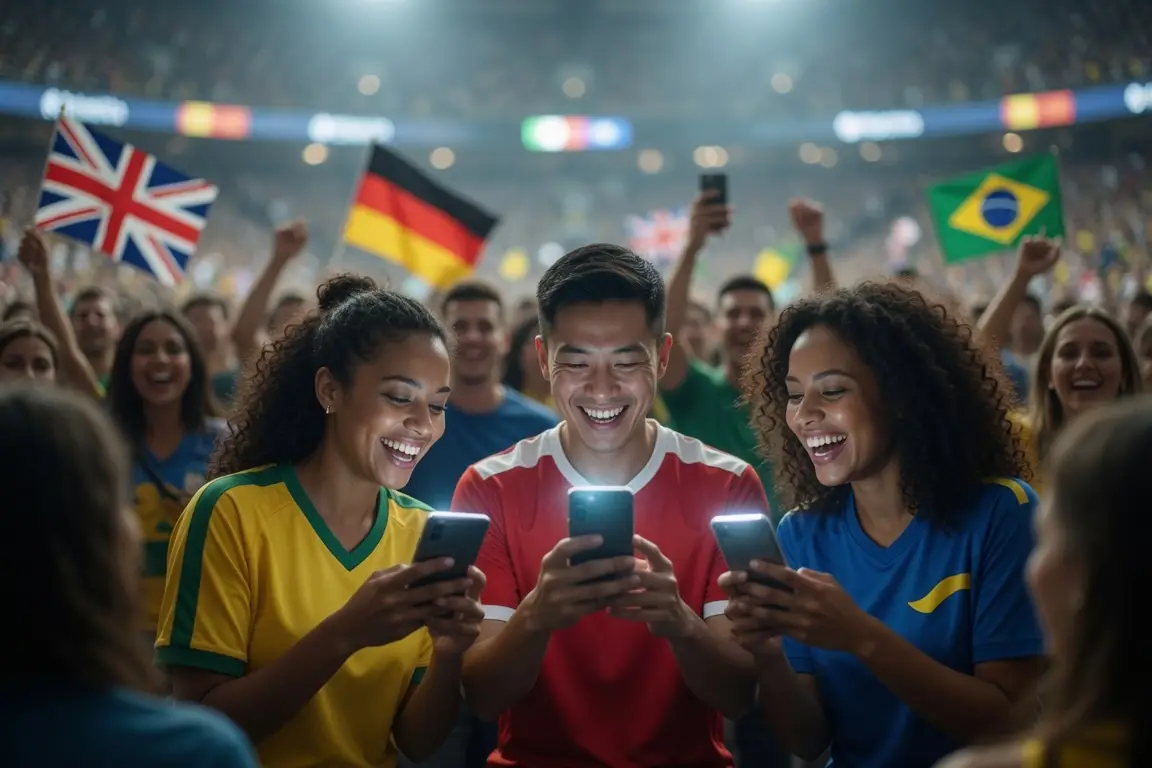
Whatever changes come in the future, one thing stays unchanged – this trend aims at making distance irrelevant for shared passion. The fan does not have to go to the stadium in order to feel that he or she is a part of the event, and the internet proved itself a remarkable tool for filling this gap. With technological advancements, the gap between watching the match and taking part in its community can become even smaller in the future, allowing fans to connect with their favorite sports more tightly than ever before.
At the same time, connected sports fandom imposes certain requirements on the platforms operating in this area. Fans expect high-speed loading, accurate live data, and interfaces as user-friendly as possible, both on a phone and on a computer. The platforms failing to provide this experience will quickly lose the attention of fans who prefer those solutions that offer a better experience.
Community moderation is another rather quiet but necessary component of the whole process. As discussions move from offline communication to comment sections and live chats, platforms need to provide an environment where passionate debates do not degenerate into hostility. In general, communities that are managed effectively tend to retain the audience longer, as fans prefer a friendly environment.
Where Does Sports Fandom Go From Here?
In conclusion, one can say that the history of connected fandom of sports is just beginning to unfold. Each new feature, from notifications to live streaming, is weaving yet another strand in the web connecting people whose lives would have otherwise remained separate but who share their enthusiasm for the same last-minute goal.