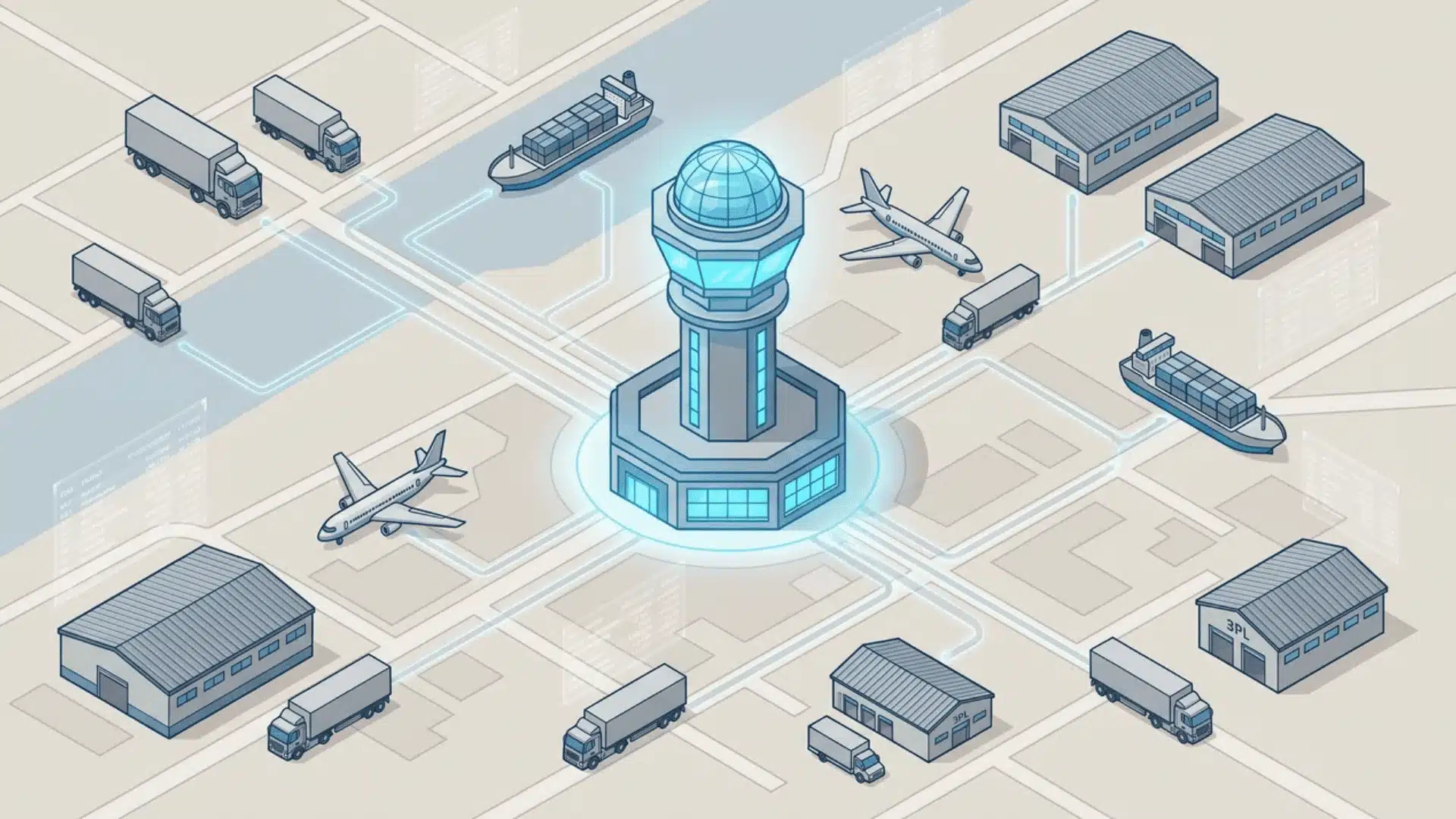
Supply chains rarely struggle because of transport alone. Challenges usually build earlier, where coordination between vendors breaks down, visibility gets fragmented, and decision-making spreads across multiple partners.
As operations scale, managing carriers, warehouses, freight brokers, and 3PLs through separate relationships starts to create structural inefficiencies. Information moves slower, accountability gets diluted, and optimization becomes harder to control end-to-end.
This is where 4PL logistics comes into play, a centralized approach to supply chain management that focuses on unifying control rather than adding more layers of oversight.
Here you’ll find exactly how it operates, where it creates genuine value, and the conditions that determine whether it fits your business.
What is 4PL (Fourth Party Logistics)?
Fourth-party logistics (4PL) is a model where a company outsources the management of its entire logistics network to a single external partner. This partner owns no warehouses, trucks, or inventory, which sets it apart from other logistics models.
Traditional logistics providers have assets they must use efficiently.Carriers want full trucks, and warehouse operators want occupied space. Their recommendations can be influenced by these ownership interests, unlike those of a 4PL, which has none of these pressures.
A 4PL operates as a control tower over the entire supply chain. It selects, contracts, monitors, and can replace every vendor in the network, including carriers, 3PLs, freight brokers, and warehouses.
For the client, this collapses logistics communication into a single point of contact: one relationship to manage instead of a dozen separate vendor calls, emails, and escalation chains.
Different industry terms describe the same 4PL structure: Fourth-Party Logistics Provider, Lead Logistics Provider (LLP), and Managed Transportation Provider. These terms are interchangeable and refer to the same service.
Logistics models exist on a spectrum: 1PL handles everything internally, while 2PL, 3PL, 4PL, and 5PL represent increasing outsourcing. Fourth-party logistics marks the point where external management is total.
How Does a 4PL Model Actually Work?
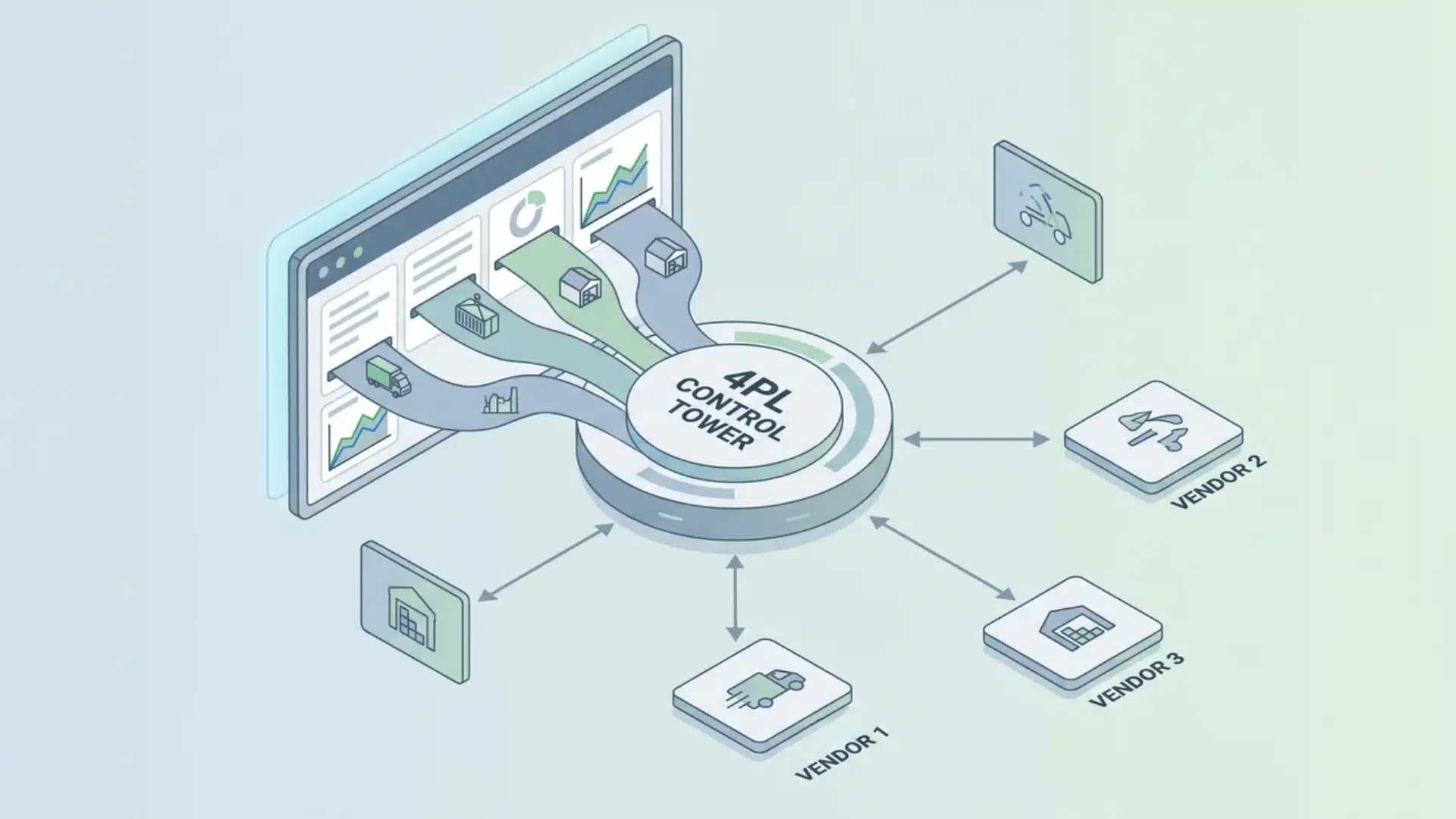
A 4PL sits above the entire logistics network, ingesting data from all vendors, creating a unified operational view, and making interventions that no single vendor could achieve alone.
This unified visibility is critical because most vendors operate in isolated data environments. Carriers, warehouses, and 3PLs optimize locally, but the network as a whole remains uncoordinated, causing delays and bottlenecks.
1. Data Integration and Control Tower Function
A 4PL integrates and normalizes vendor data, creating a single operational view that enables cross-network decisions and interventions no individual vendor could make independently.
- Integrates shipment status, inventory, performance, and demand signals from all vendors.
- Normalizes data so risks flagged in one system are visible across the network.
- Enables cross-network interventions in rerouting freight, substituting carriers, or adjusting demand forecasts.
Centralizing orchestration removes coordination costs that existed invisibly across multiple vendors, eliminating friction caused by misaligned data, duplicate communication, and conflicting priorities.
For example, when a carrier flags a delay, a fragmented network requires manual escalation across three or four separate systems before a rerouting decision can be made. A 4PL’s unified layer surfaces that flag and trigger the response from a single environment.
2. Vendor and 3PL Network Management
The 4PL actively manages vendors by holding contracts, monitoring performance, and replacing underperforming partners, maintaining neutrality and faster, less disruptive transitions.
- Holds contracts with carriers, warehouses, and fulfillment providers.
- Sets performance benchmarks and monitors compliance.
- Replaces underperforming vendors quickly and neutrally, leveraging broader network relationships instead of running the multi-month RFP cycle that an internal team would need to start from scratch.
A 3PL within the network serves as an execution partner, not a strategic peer, while the 4PL maintains oversight and neutrality.
3. Network Design and Performance Management
Execution handles today’s shipment. Network design determines whether the structure those shipments run on is still the right one, and a 4PL holds both responsibilities simultaneously.
- Designs supply chain architecture, inventory placement, lane assignments, regional capacity, and response to demand or trade changes.
- Continuously monitors friction, cost accumulation, and structural inefficiencies. A regional warehouse that worked fine at 10,000 monthly orders but turns into a bottleneck at 50,000 gets flagged before it shows up as missed delivery windows.
- Redesigns networks for new regions or channels rather than layering vendors onto suboptimal structures.
Network optimization relies on cross-vendor data, combining technology integration with structural decision-making for effective results.
4. Technology and Data Integration
Technology underpins the 4PL’s control tower, connecting all vendor systems into a single operational layer, enabling real-time visibility and actionable network-wide insights.
- Connects WMS, TMS, ERP, and carrier tracking systems into a single operational layer.
- Provides real-time visibility for shipment status, inventory, carrier performance, and demand signals.
- Enables actionable insights, preventing decisions based on partial data and reducing delays or excess stock.
Platforms like SAP EWM form part of the backbone, supplemented by transportation, demand planning, and analytics layers, ensuring real-time, network-wide operational visibility.
5. Procurement, Forecasting, and Demand Management
Leveraging integrated data, the 4PL enhances procurement and forecasting, improving inventory placement, sourcing efficiency, and reducing stockouts and excess safety stock.
- Aggregates sales, inventory depletion, seasonal patterns, and supplier lead times across the network.
- Produces more accurate demand and inventory forecasts than any single vendor.
- Improves inventory positioning and sourcing, reducing stockouts, excess safety stock, and emergency procurement events.
Forecasting accuracy is a direct result of complete network visibility, not a standalone service, highlighting the critical role of the integrated technology layer.
Understanding the Limits of a 4PL
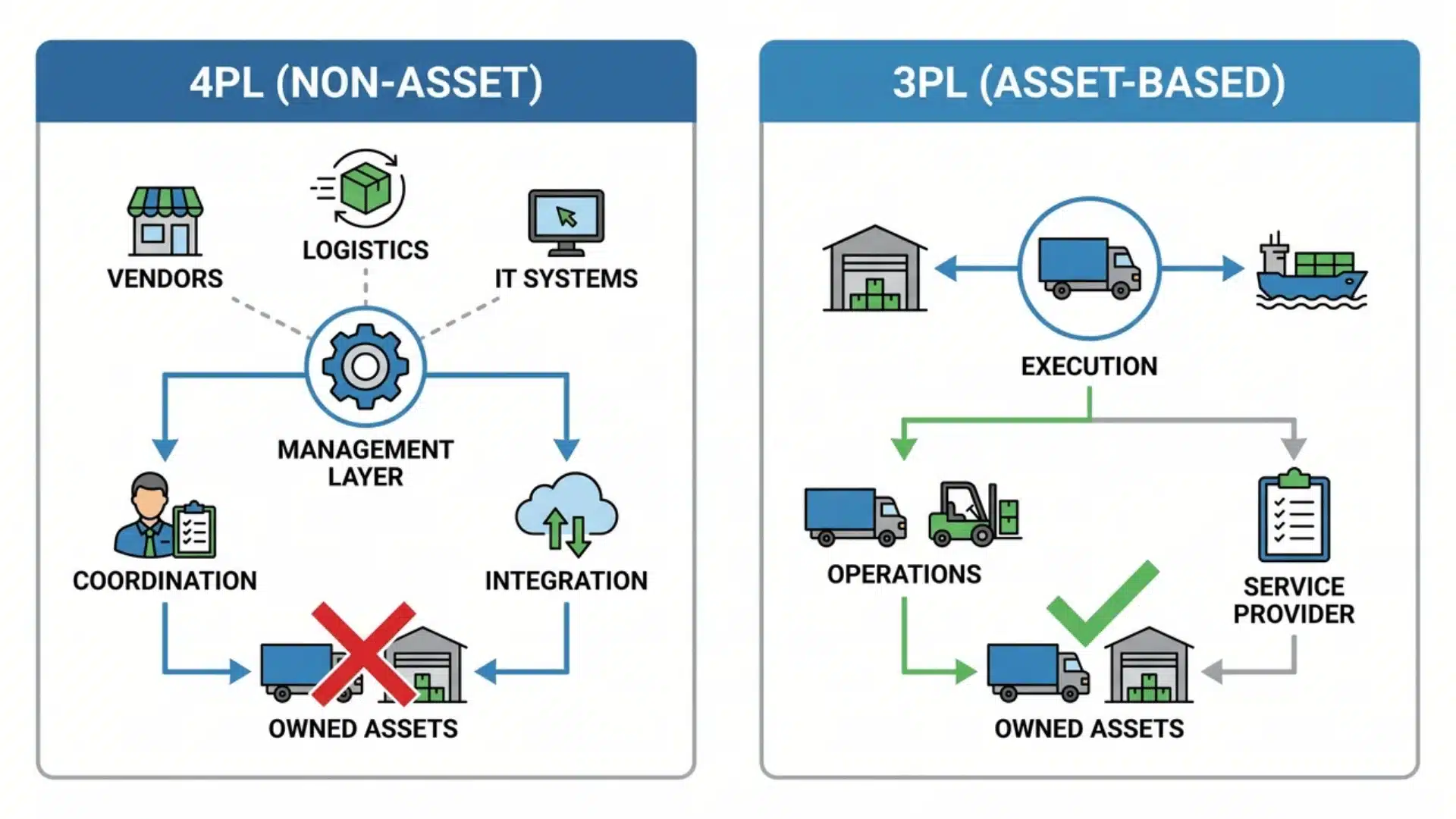
The label is used loosely, which creates confusion for companies evaluating providers. Knowing where 4PL responsibilities end is as important as knowing what they include.
A 4PL is Not a 3PL with Added Services
A 3PL executes logistics operations using physical assets. A 4PL manages the companies performing that work, occupying a structurally different layer in the supply chain.
Adding dashboards, reporting, or network analysis to a 3PL does not change its execution layer. The provider still deploys assets, and service expansions alone do not make it a 4PL.
A 4PL is Not an In-House Supply Chain Team
Internal teams are limited to company-built systems, existing vendor relationships, and internal priorities. Those constraints do not disappear with headcount or investment.
A 4PL brings an existing vendor network, a dedicated technology layer, and cross-client data accumulated across engagements. That combination enables a level of oversight and scalability internal teams cannot replicate as supply chain complexity grows.
A 4PL is Not a Logistics Consultancy
Consultancies diagnose problems and recommend solutions. A 4PL owns operational results, manages vendors directly, and remains continuously accountable for network performance.
The distinction is ongoing responsibility. A consultancy delivers a recommendation and exits. A 4PL is measured against outcomes and stays accountable for them.
Not Every Provider Claiming 4PL Status Qualifies
The key test is asset ownership. If a provider owns warehouses, fleet, or fulfillment infrastructure, its network recommendations are filtered through those asset needs, limiting true neutrality.
FedEx illustrates this clearly. Its core transport services are 2PL, warehousing and fulfillment are 3PL, and any 4PL-like services are constrained by its owned infrastructure. A genuine 4PL owns no assets; its product is orchestration quality.
Structural neutrality defines a true 4PL. Asset ownership determines the layer, and buyers should be mindful of potential bias when evaluating hybrid or 3PL-based providers claiming 4PL status.
Why 4PL Works and Where It Breaks Down
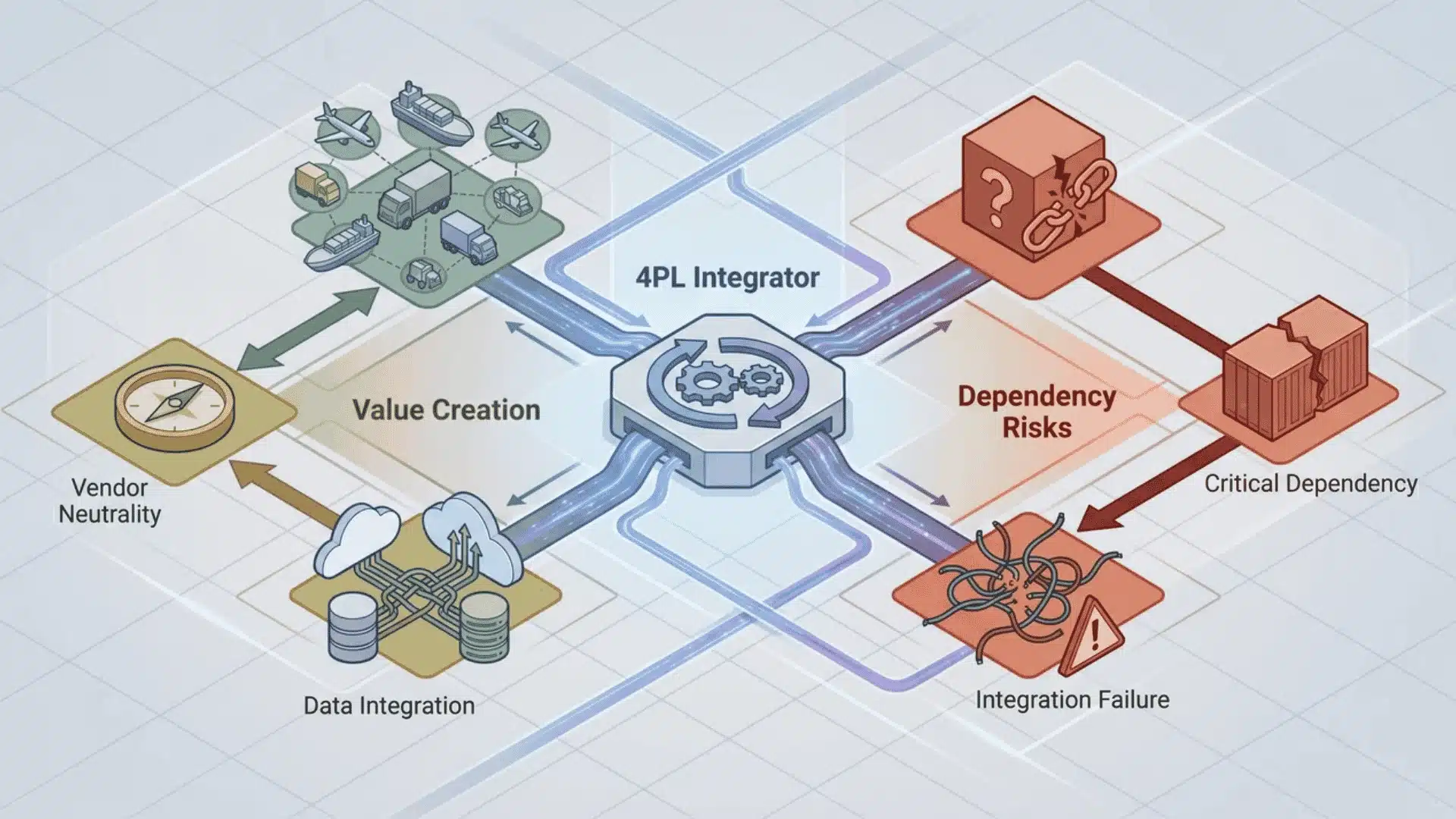
The case for 4PL is well documented. The case against it, or more precisely, the conditions under which it fails, almost never appears in the same conversation. Both matter, and treating them separately produces an incomplete picture of what the model actually involves.
Where 4PL Delivers Measurable Value
A 4PL creates measurable value by combining vendor neutrality, unified data visibility, and structural scalability, enabling decisions and operations impossible in fragmented logistics networks.
- Vendor neutrality: A 4PL’s financials are tied to network performance, not asset utilization. Carriers, warehouses, and 3PLs have no leverage over its recommendations.
- Unified data layer: Carrier performance, supplier lead times, and regional demand signals aggregate into a single environment, so interventions are based on the full picture, not whoever reported first.
- Operational response: Stockouts get flagged before they materialize. Freight reroutes around delays without manual escalation. Sourcing adjusts in response to real inventory depletion across the network.
- Scalability: Entering a new region activates an existing vendor relationship rather than building one. That difference is most visible under time pressure.
The compounding benefit is structural: no single 3PL can optimize across the full network because no single 3PL can see it.
Where 4PL Introduces Compounding Risk
Outsourcing to a 4PL shifts risk from fragmented networks to a strategic dependency on a single external party that manages vendor relationships, technology, and institutional knowledge.
Dependency grows as the client’s internal capability atrophies. Staff loses contract knowledge, and network expertise resides entirely with the 4PL, limiting fallback options.
Warning signs:
- Your internal team can no longer independently verify a carrier’s performance claim — the dashboard is the only source available.
- Vendor turnover accelerates without a clear explanation, or new partners are introduced without client sign-off on the transition.
- SLA misses recur across two or more consecutive review cycles with explanations but no structural change.
The model carries a cost premium, typically a management fee in the 5–12% range of total logistics spend on top of an upfront integration cost. That premium has to be weighed against the coordination costs it eliminates, and compared with what managing 3PLs directly would cost instead.
A 4PL trades fragmented logistics complexity for dependency risk. The choice depends on which risk the company can better monitor, mitigate, and recover from.
When is 4PL the Right Model?
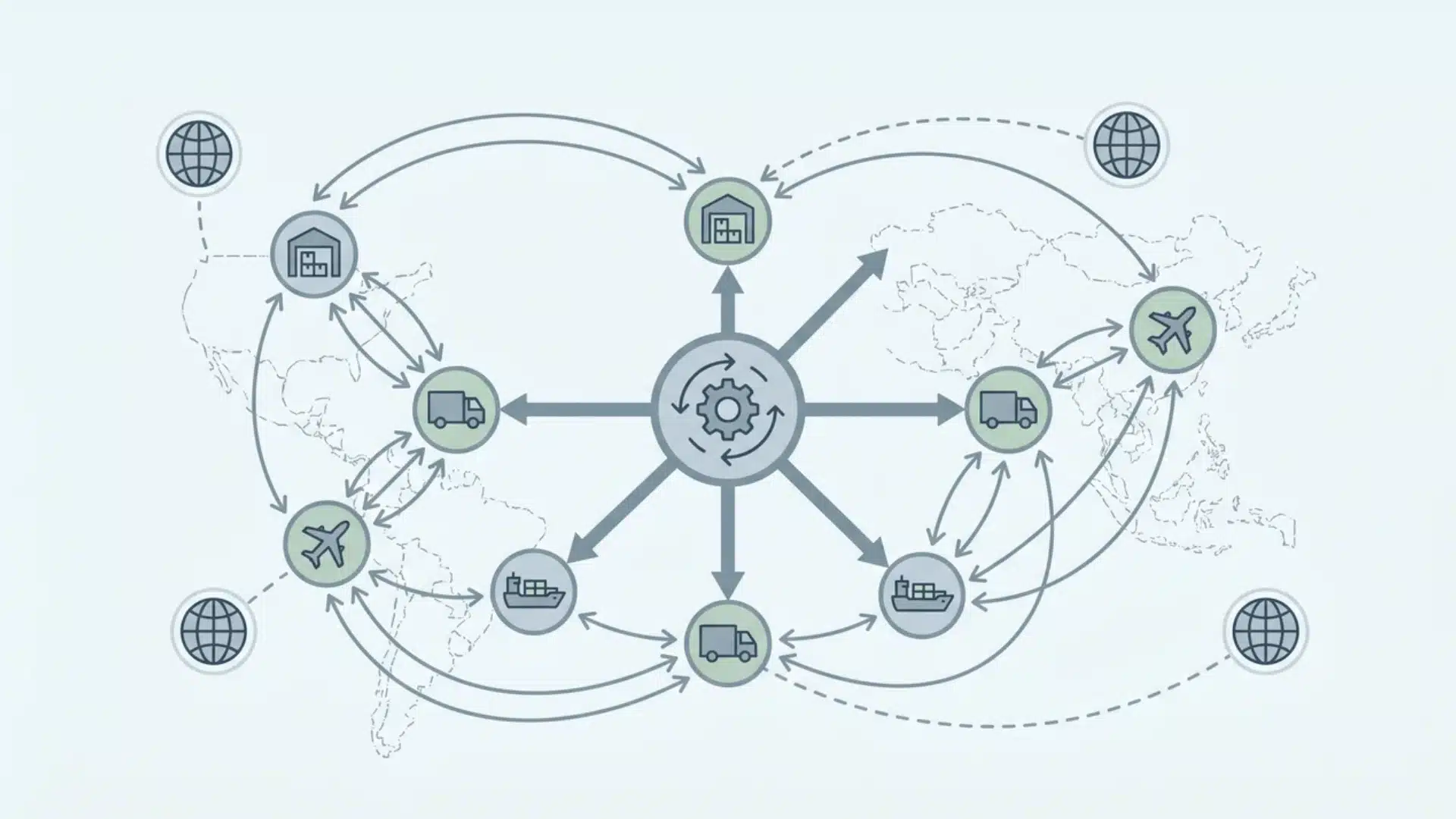
The 4PL model is not an upgrade. It is a fit decision that only works when operational complexity matches what the model was built to solve.
Companies that regret 4PL adoption chose it for sophistication, not necessity. The threshold question is whether your supply chain has genuinely outgrown internal management capacity.
Conditions Where 4PL Makes Sense
Managing multiple 3PLs across regions creates coordination burdens no single vendor resolves. A 4PL consolidates oversight, reduces friction, and establishes accountability across the entire provider stack.
International supply chains involve customs, compliance, and shifting demand signals. A 4PL replaces reactive firefighting with structured orchestration, enabling cross-border operations to scale without proportional management overhead.
Omnichannel or direct-to-consumer expansion requires network redesign, not additional vendors. A 4PL treats growth as an architectural problem, aligning inventory, fulfillment, and demand flows from the start.
Fragmented data slows decisions. A 4PL’s unified technology layer enables faster, better-informed action on inventory, sourcing, and network adjustments across the entire supply chain.
Conditions Where 4PL Is Premature or Counterproductive
A single well-functioning 3PL does not justify a 4PL. Adding a management layer over an effective network increases cost without delivering meaningful operational benefit.
Strong internal supply chain teams risk losing institutional knowledge and vendor relationships to an outside operator, reducing competitive advantage and limiting strategic control over logistics.
Speed-critical industries may find outsourcing operational visibility counterproductive. Key data and vendor relationships held by a 4PL can be strategic assets when kept in-house.
Mature operators like C.H. Robinson and Kuehne+Nagel run large-scale managed logistics programs. Gartner reviews offer structured guidance for evaluating providers before committing.
4PL is appropriate only when orchestration complexity exceeds internal capacity. Premature adoption adds cost, dependency, and risk without improving network performance.
Wrapping Up
4PL logistics is not a bigger version of what you already have; it is a structurally different model built for a specific problem.
That problem is orchestration complexity: too many vendors, too little visibility, and no single party accountable for how the network performs as a whole.
The model resolves that, but it also introduces dependencies, costs, and strategic risks that warrant the same clear-eyed assessment as the benefits.
Now you know what separates a genuine 4PL from a relabelled 3PL, start by asking any provider one question: What assets do you own?
Frequently Asked Questions
What is 4PL logistics?
4PL logistics is a model in which a single external partner manages your entire supply chain network without owning any physical assets, such as warehouses or trucks.
What is the difference between 3PL and 4PL?
A 3PL executes physical logistics operations. A 4PL manages the vendors that perform those operations, including 3PLs, which occupy a completely different supply chain layer.
When should a company use a 4PL?
When managing multiple 3PLs across regions creates more coordination work than it eliminates, or when a lack of unified data is delaying sourcing, inventory, and routing decisions, the operational complexity has likely reached the threshold where a 4PL adds more than it costs.
Is FedEx a 3PL or 4PL?
FedEx is primarily asset-based, with trucks, aircraft, and facilities, which places it at the 2PL and 3PL level. Asset ownership disqualifies true 4PL status.