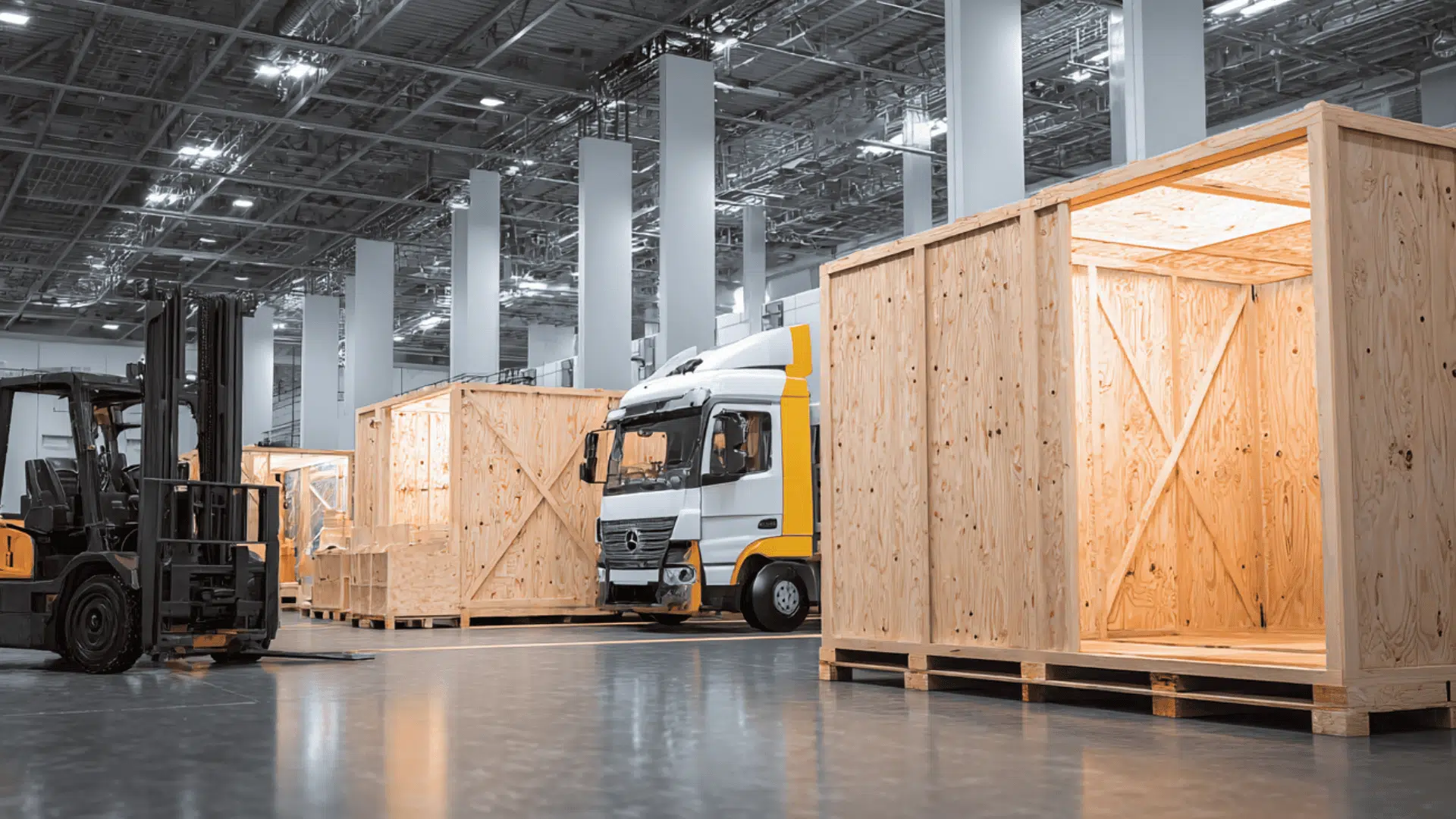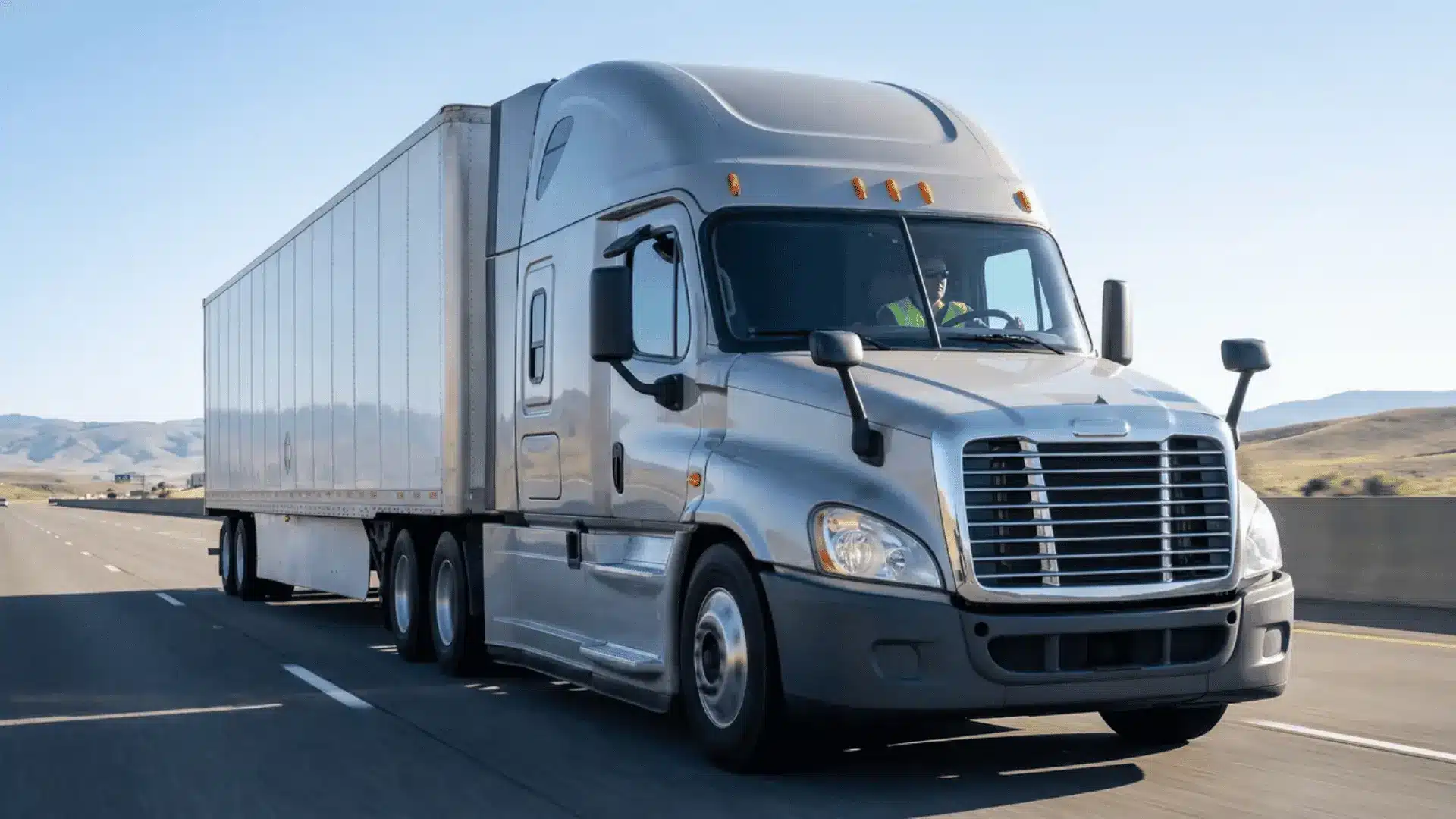
Choosing full-truckload carriers often appears simple at first, but complexity emerges when options overlap, and differences become harder to distinguish in practice.
Multiple carrier models exist within the same space, and mismatches can lead to delays, freight damage, and disrupted delivery expectations for customers.
What often becomes clear later is that evaluation matters as much as selection itself, since the decision-making process shapes outcomes more than the carrier name alone.
Understanding how these providers operate within broader freight systems helps clarify the search for the right logistics partner for shipments.
What is a Full Truckload Carrier?
A full truckload (FTL) carrier moves your freight in a dedicated trailer, with no shared space, no stops for other shippers, and straight to the destination.
That single trailer is yours alone. Your load goes on, the doors close, and it doesn’t open again until delivery.
FTL makes sense when a shipment is large enough to fill most of a trailer, heavy enough to hit weight limits, or sensitive enough that shared handling is a real risk.
“Carrier” covers more ground than most people expect. It includes companies that own their fleets, third-party logistics providers that book capacity through carrier networks, and independent owner-operators operating under their own authority.
What Full Truckload Shipping is Not?
Full truckload shipping is often confused with other freight types. It is not:
- Shared shipping, where multiple companies use the same trailer
- Small parcel or courier delivery
- Partial load shipping, where space is split between shippers
FTL always means one shipper, one trailer, one direct trip.
How Full Truckload Carriers Actually Move Freight?
Once a shipment is booked, the carrier assigns a truck and driver to the load. The trailer goes to the pickup location, gets loaded, and then travels directly to the delivery point.
There are usually no stops in between. This reduces handling, which lowers the chance of damage or delay.
After delivery, the truck is either assigned a new load nearby or repositioned to another area with higher freight demand.
Types of Equipment Used in Full Truckload Shipping
Full truckload carriers use different types of trailers depending on what is being shipped. The type of equipment decides how safe, fast, and cost-effective the shipment will be.
- Dry van: A closed trailer for general goods that don’t need temperature control. It’s the default choice for most palletized freight.
- Refrigerated (reefer): Keeps food, pharmaceuticals, and other temperature-sensitive cargo within a set range from pickup to delivery.
- Flatbed: An open deck built for heavy, oversized, or irregularly shaped loads that won’t fit through a trailer’s rear doors.
- Drop deck: Sits lower than a standard flatbed, giving tall or bulky freight the extra vertical clearance it needs.
Choosing the right equipment is just as important as choosing the carrier because not every carrier offers every trailer type.
The Three Carrier Models You’re Actually Choosing Between
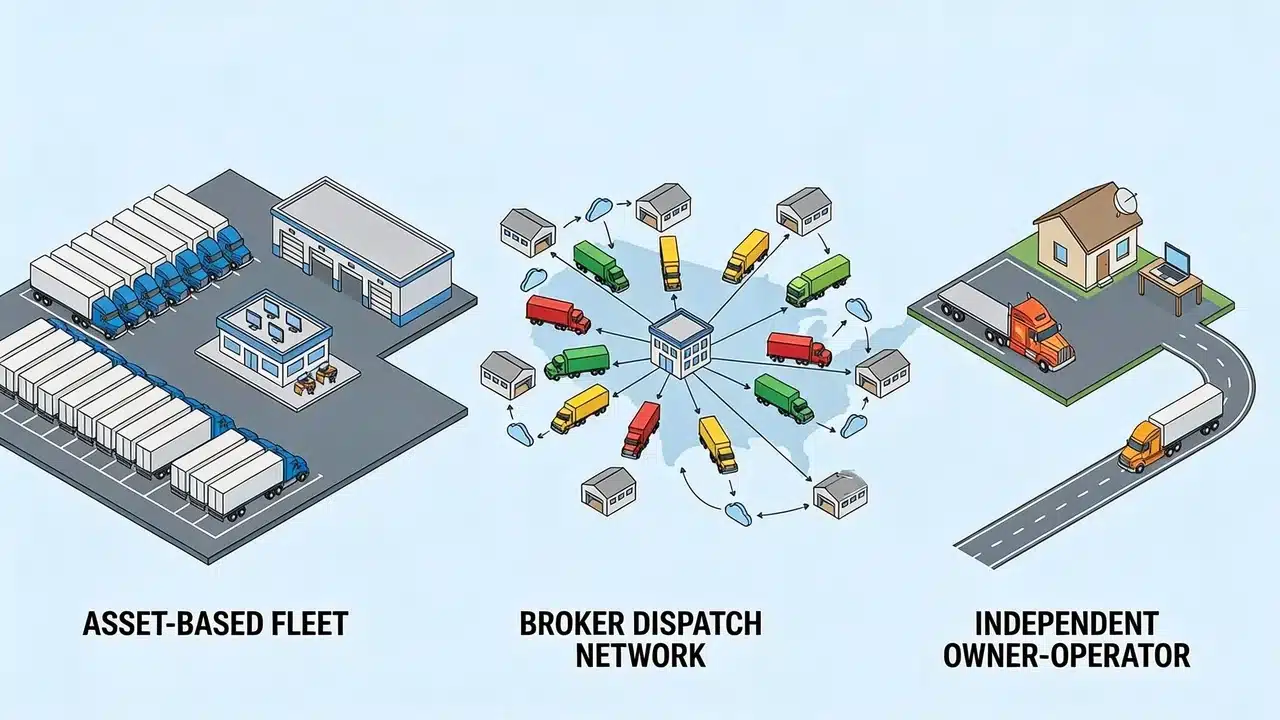
Most carrier lists mix different business models without clearly separating them. The name on the truck does not always reflect how the freight is actually moved.
These models often overlap in real operations. Many companies operate across multiple structures depending on lane, demand, and capacity conditions. What matters most is how each model performs in terms of reliability, pricing behavior, and control.
Asset-Based Carriers
Asset-based carriers own trucks and employ drivers directly. This gives them direct control over operations, routing, and service consistency.
Examples: Knight-Swift, Schneider, and Werner.
Predictability comes from in-house fleets and dispatch systems. These carriers are usually more consistent on established high-volume lanes. On the other hand, they may be less flexible on low-volume or irregular routes.
Asset-based carriers are best suited for shippers who need stable service and strong accountability on repeat lanes.
Asset-Light and Broker Models
Asset-light companies and brokers do not rely on owned trucks. Instead, they source capacity from a network of third-party carriers and independent operators.
Example: C.H. Robinson connects shippers with available carriers through its network.
This model provides access to a large pool of capacity without requiring direct carrier relationships. It is flexible and useful when shipping needs change or when quick coverage is required.
However, pricing and availability can shift quickly in tight markets since capacity is shared across many shippers.
In real-world operations, many providers work as hybrids, combining brokerage services with managed carrier programs.
Owner-Operator Networks
Owner-operator networks use independent drivers who operate under a central brand or agency system. These drivers own their equipment but move freight through a coordinated network.
Example: Landstar uses a large network of independent owner-operators to cover a wide range of lanes and freight types.
This model offers strong geographic reach and flexibility, especially for niche or irregular routes that larger fleets may not serve consistently.
Drivers often choose loads based on availability and rate conditions, which can affect capacity during peak demand periods.
Owner-operator networks provide flexibility and reach but are generally less predictable than fully asset-based fleets.
Carrier vs. Broker Network Explained
A full truckload carrier physically moves freight using its own trucks or contracted drivers. A broker does not move freight. Instead, it connects shippers with carriers that have available capacity.
A 3PL (third-party logistics provider) may also act as a broker but often adds services such as pricing management, tracking, and carrier coordination.
The key difference is responsibility. Carriers are responsible for transporting the freight and handling delivery or damage issues. Brokers coordinate between the shipper and the carrier but do not physically handle the shipment.
Top Full Truckload Carriers in North America
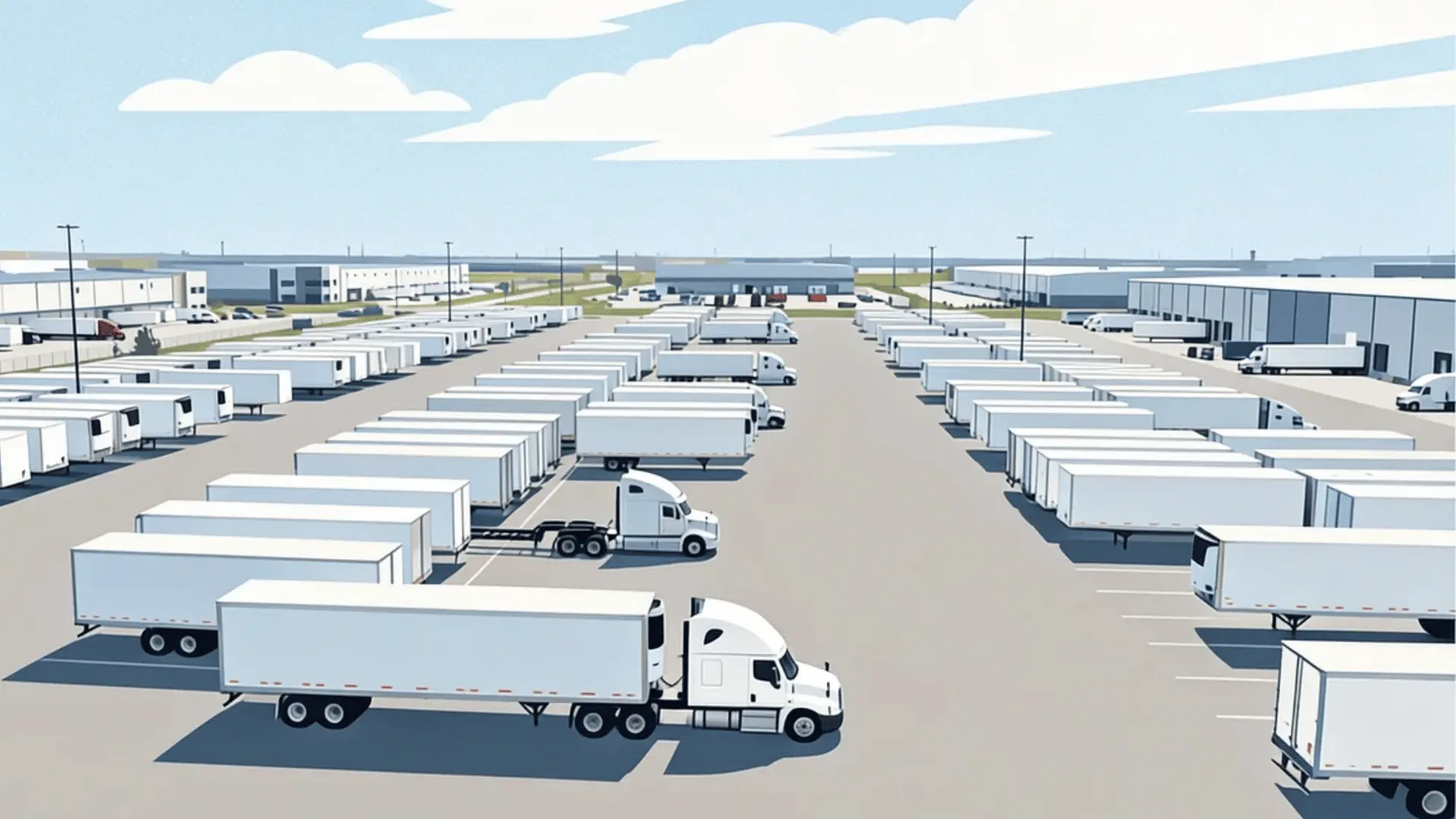
Carrier size and carrier fit are not the same thing. A shipper moving irregular flatbed loads on regional lanes has different needs than one running high-volume dry van between major distribution hubs.
The carriers below are the most established in North America, but what matters is where each one performs, not just how large it is.
1. Knight-Swift Transportation
Knight-Swift is the largest asset-based truckload carrier in North America by revenue. That scale means genuine lane density across long-haul and regional corridors.
For high-volume shippers with consistent freight, that depth is an advantage. For smaller shippers, volume commitments often determine service priority.
2. J.B. Hunt Transport Services
J.B. Hunt’s differentiator is intermodal integration. If your lane runs parallel to a major rail corridor, J.B. Hunt can move freight by truck, rail, or a combination of both.
For shippers open to intermodal options, swapping a long-haul dry van lane for rail on the middle leg can lower cost on lanes running 750+ miles, since rail covers most of the distance at a lower per-mile cost than over-the-road trucking, while a truck still handles the first and last mile.
3. Schneider National
Schneider runs one of the largest 53-foot dry van fleets in North America. Its strength is high-volume, standardized freight on established lanes.
It also operates dedicated contract services, a separate arrangement in which Schneider equipment and drivers run exclusively for one shipper’s operations.
4. Werner Enterprises
Werner is asset-based, mid- to large-scale, and covers both regional and long-haul lanes.
It tends to be a strong fit for shippers who want direct carrier relationships without the volume thresholds the largest carriers require.
5. Landstar System
Landstar’s owner-operator network gives it lane coverage that asset-based carriers don’t match. That’s a real advantage on niche or irregular routes.
The nuance is capacity behavior. During peak freight seasons, independent operators have more discretion over which loads they accept. Plan around that if your freight is time-sensitive.
6. Prime Inc., CRST, and C.R. England
These carriers fill important gaps that the top five don’t always cover well. Prime has a strong temperature-controlled capacity. CRST is a significant player in team driving for time-critical loads. C.R. England specializes in refrigerated freight, particularly in western US lanes.
If your freight is temperature-sensitive or requires expedited transit, these carriers belong on your shortlist alongside the larger names.
What to Look for When Choosing an FTL Carrier?
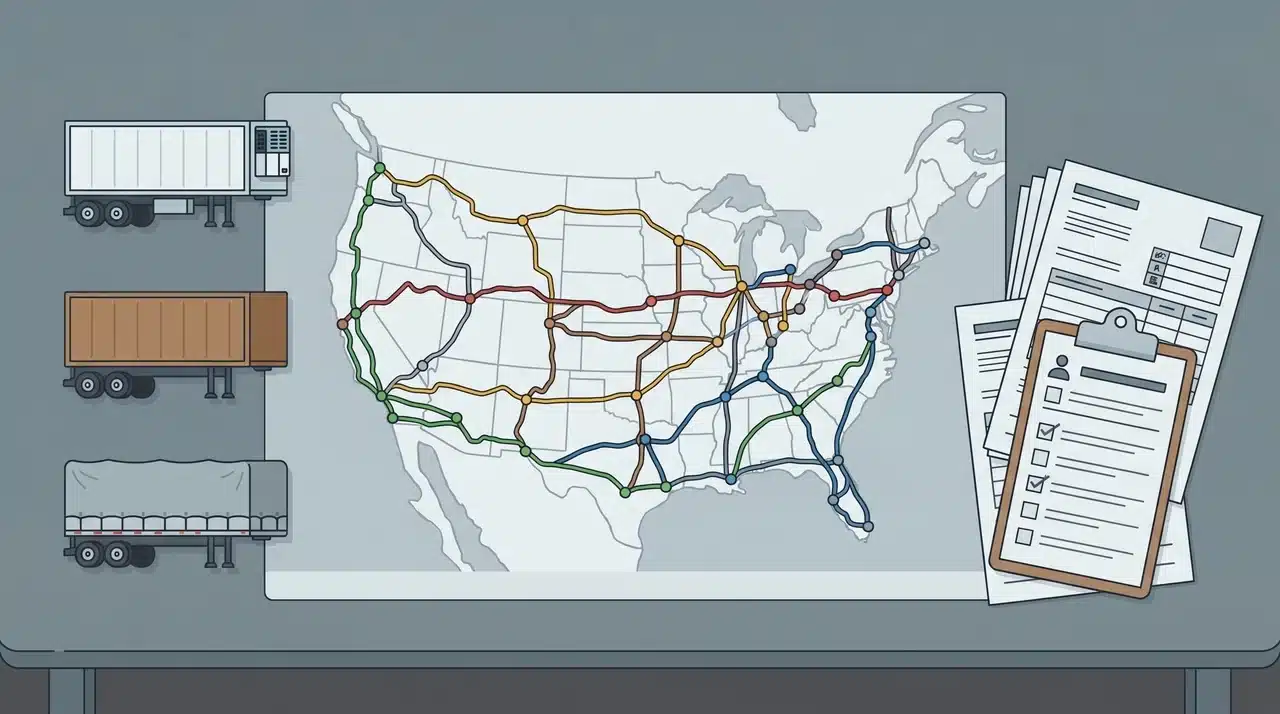
The right carrier isn’t the biggest or the most recognizable. It’s the one that performs on your lane, with your freight type, at the volume you actually ship. These are the criteria that separate a good fit from an expensive mistake.
Lane Coverage and Density
A carrier’s overall on-time record means less than their performance on your specific route. A carrier moving thousands of loads between Chicago and Dallas runs that lane efficiently. Put them on a thin regional corridor, and the picture changes.
Ask for lane-specific performance data, not company-wide averages. If a carrier can’t provide it, that’s worth noting.
Equipment Match
Dry van, flatbed, and refrigerated capacity don’t tighten at the same time or in the same places. A carrier with strong dry van availability may have limited reefer capacity and vice versa.
Confirm that the carrier has the right equipment type for your freight before anything else. Availability matters more than a carrier’s general reputation.
Carrier Vetting
Three things to check before committing to any carrier: their FMCSA safety rating, their insurance coverage minimums, and their claims ratio.
Safety ratings are public and updated regularly. Insurance minimums vary by freight type; high-value cargo needs higher coverage than standard dry goods. The claims ratio tells you how often freight arrives damaged and how the carrier handles it when it does.
Most shippers check safety ratings. Far fewer check claim history. That’s usually where problems surface after the fact.
Volume and Relationship Leverage
Asset-based carriers prioritize capacity for shippers with consistent, committed volume. If you ship irregularly or in small quantities, you may be deprioritized during periods of tight capacity, regardless of the rate you’re paying.
Be honest about your shipping profile when approaching carriers. A mid-tier carrier where you’re a meaningful account often outperforms a top-five carrier where you’re a rounding error.
How Do Full Truckload Carriers’ Pricing Work?
FTL pricing looks simple on the surface: a per-mile rate applied to your lane. In practice, several factors shift that number in ways that catch shippers off guard.
Understanding the structure matters more than knowing any specific figure.
The Base Rate and What Gets Added to It
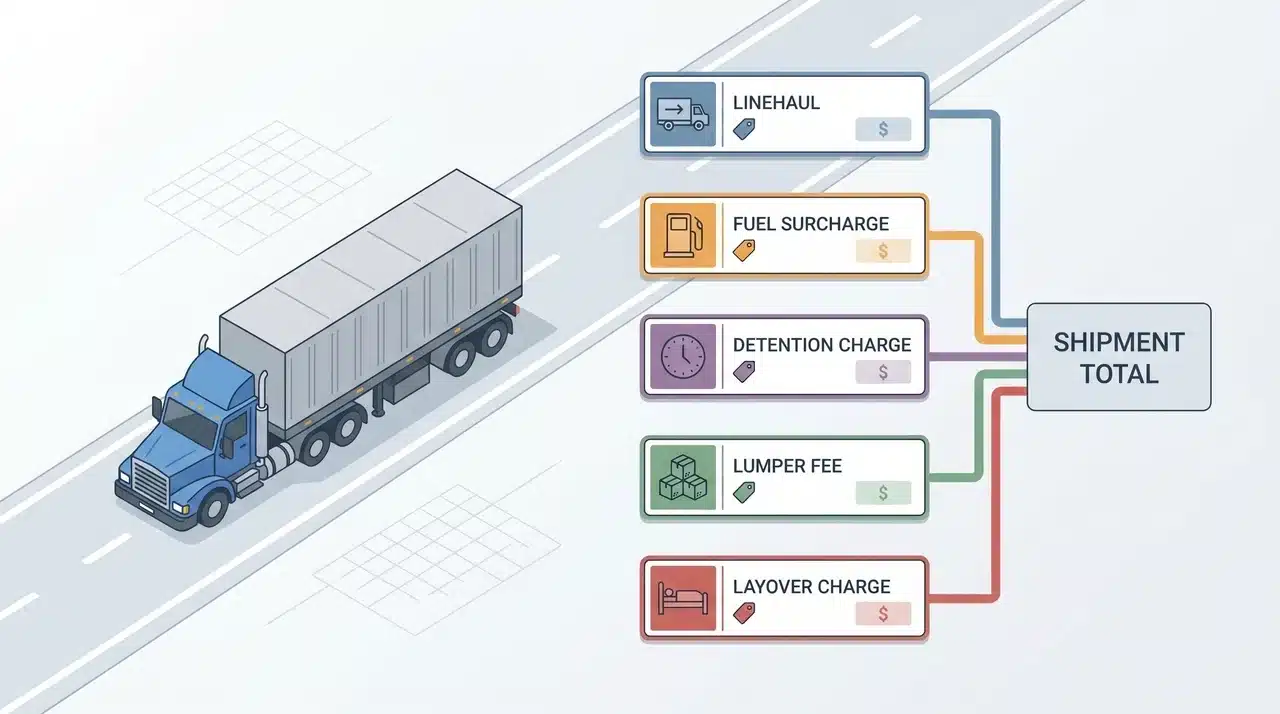
Every FTL quote starts with a linehaul rate, a per-mile charge covering the distance from pickup to delivery. That’s the number carriers lead with.
The base freight rate is only part of the total shipping cost. Additional charges are often added depending on fuel prices and what happens during pickup or delivery. Common extra charges include:
- Fuel Surcharges: Tied to a published diesel index, so they move up or down with fuel prices rather than staying fixed.
- Detention Charges: If a driver sits at pickup or delivery longer than the agreed free time, this is what covers the wasted hours.
- Lumper Fees: Covers the cost when the carrier pays third-party workers to unload the trailer instead of the receiver’s staff doing it.
- Layover Charges: Apply when a load can’t be picked up or delivered on the original schedule, leaving the driver waiting on a delay that isn’t theirs to absorb.
A quote that looks competitive at the linehaul rate can land differently once accessorials are factored in. Get clarity on those before committing.
Why Your Lane Direction Affects Your Rate
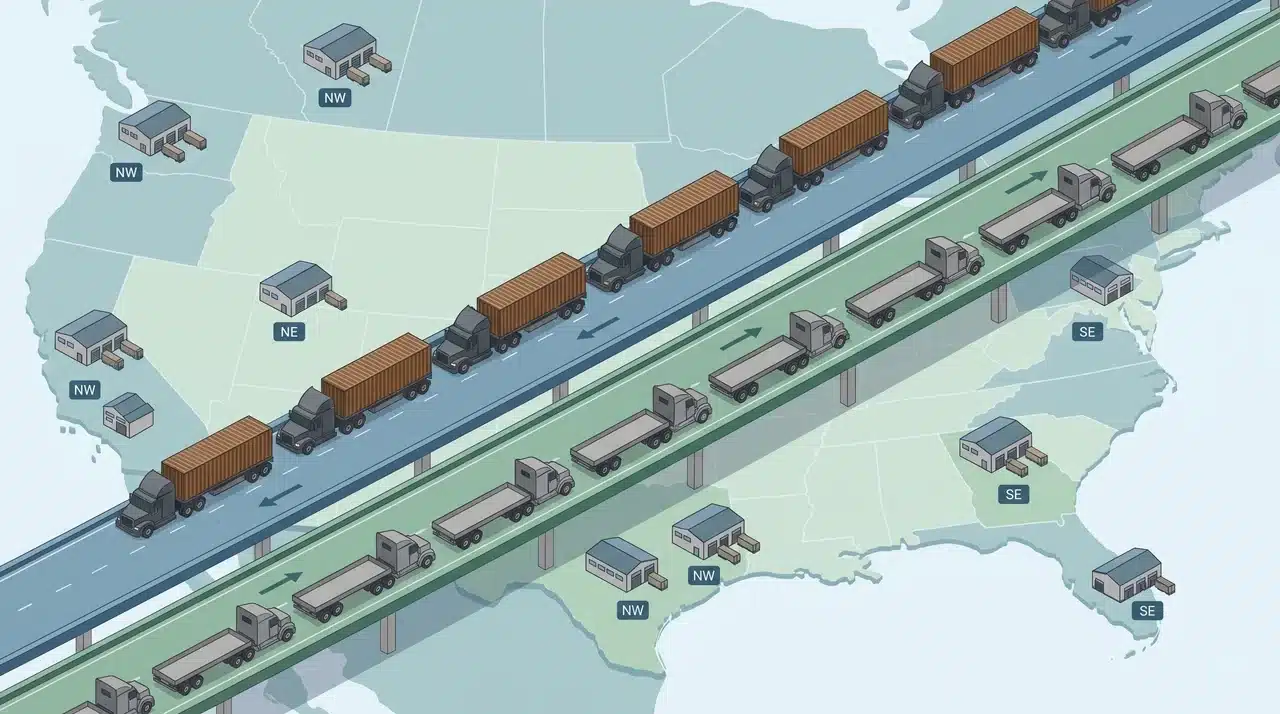
Carriers need their equipment repositioned after every delivery. On lanes where freight moves heavily in one direction, the return trip, the backhaul, is harder to fill.
A shipper moving freight into a backhaul market pays less. A shipper moving freight out of one pays more because the carrier is absorbing repositioning costs either way.
This has nothing to do with carrier quality or your relationship. It’s a structural feature of how trucking capacity works. Two shippers paying different rates on nominally similar lanes are often just sitting on opposite sides of that imbalance.
Spot Rates vs. Contract Rates
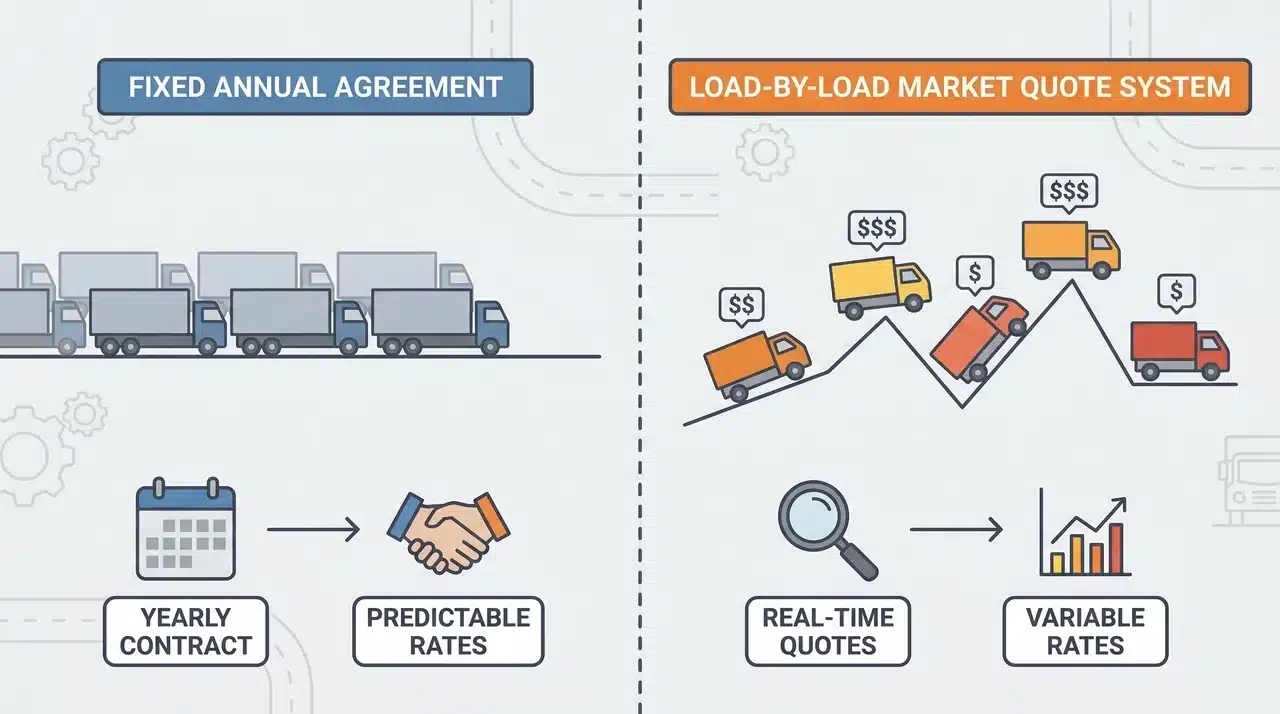
The table below compares the key differences between spot rates and contract rates to help businesses choose the right approach for their freight strategy.
| Aspect | Contract Rates | Spot Rates |
|---|---|---|
| Pricing | Locked in for a set period | Quoted per load based on the current market |
| Pricing Stability | Stable and predictable | Changes frequently with the market |
| Capacity Assurance | Higher priority during tight markets | Lower priority when capacity is limited |
| Flexibility | Less flexible due to commitments | Highly flexible for changing volumes |
| Best For | Shippers with steady, predictable freight | Shippers with irregular or unpredictable freight |
Most shippers don’t pick one model exclusively. A common approach is committing the bulk of predictable volume to contract rates for cost stability, then using the spot market for overflow loads or shipments that come up outside the regular schedule.
Why Do FTL Prices Change So Often?
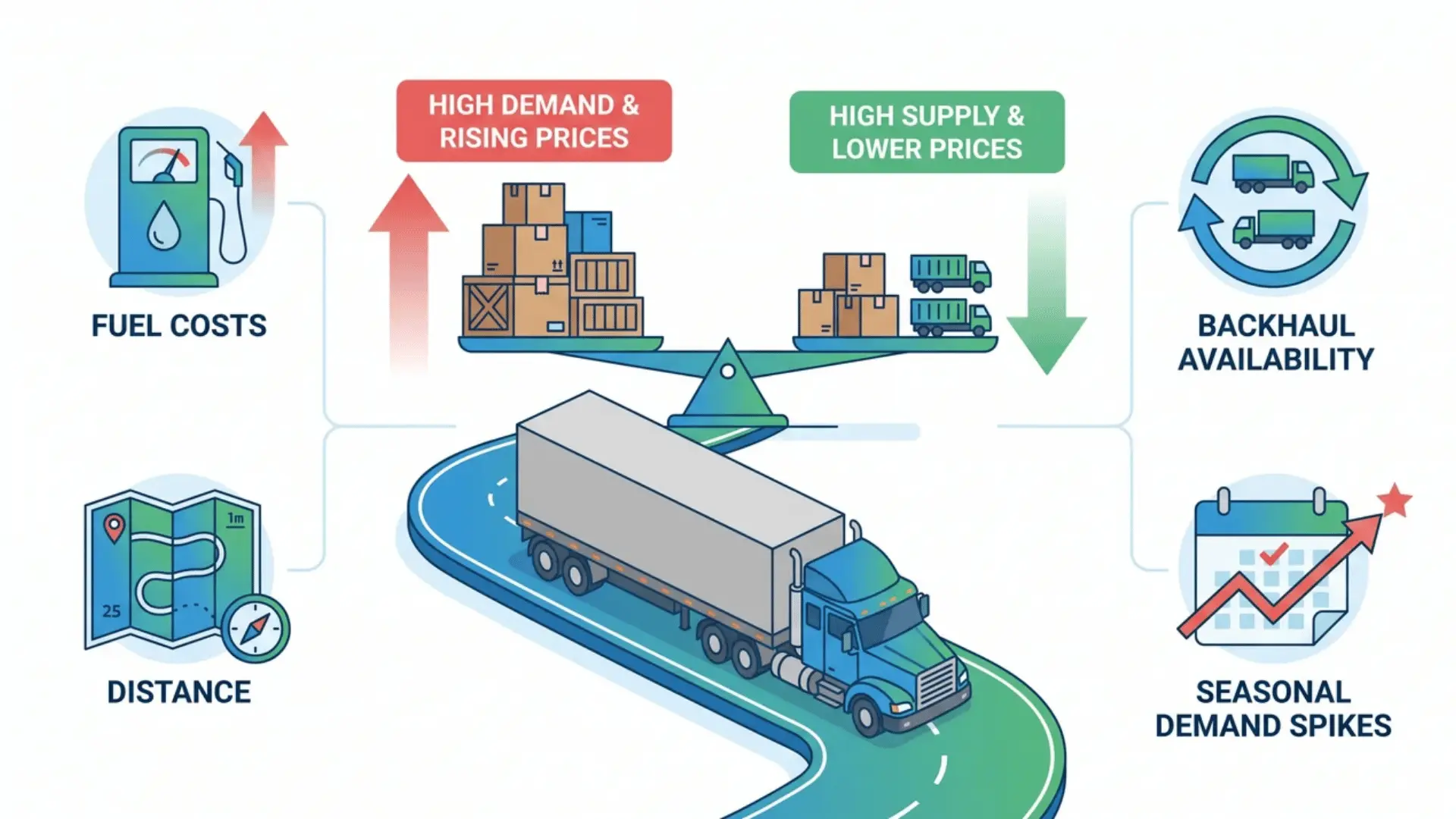
Full-truckload pricing varies based on supply and demand. When there are more shipments than available trucks, prices go up. When trucks are available but fewer loads are moving, prices go down.
Prices also change based on:
- Fuel costs
- Distance between pickup and delivery
- How easy it is for the truck to get a return load
- Seasonal demand spikes
This is why two similar shipments can have very different prices depending on timing.
A dry van lane quoted around $2.10 per mile in early spring can climb toward $2.50 once produce season pulls capacity out of a region, then ease back once volumes settle. Same lane, same equipment, different month.
Conclusion
Full truckload carriers play a major role in determining freight speed, cost variation, handling risk, and overall shipping performance across logistics networks and supply chains.
Understanding carrier models, equipment types, and pricing factors helps explain why similar shipments can yield very different outcomes under real-world freight conditions today.
A clear understanding of how these companies operate helps improve decision-making when comparing service levels, capacity reliability, and cost efficiency across providers.
Compare carriers based on lanes, equipment, and pricing behavior, then request multiple quotes before finalizing your shipping partner.
Frequently Asked Questions
How do full truckload carriers differ from LTL carriers?
Full-truckload carriers transport one shipment per trailer, while LTL carriers combine multiple shipments into a single truck. FTL reduces the risk of handling and damage, while LTL is more cost-efficient for smaller shipments that do not require a full trailer.
How do I choose the best full truckload carrier?
The best full truckload carrier depends on lane coverage, equipment availability, pricing stability, and reliability. Shippers should compare carriers based on their specific routes and freight type rather than brand size or industry rankings.
What affects full truckload shipping rates?
Full truckload shipping rates are influenced by fuel prices, distance, lane demand, equipment type, seasonal demand, and backhaul availability. Rates often fluctuate based on market conditions, even for similar shipments moving on different dates or routes.
What is the difference between an FTL carrier and a freight broker?
An FTL carrier physically transports freight using its own trucks or contracted drivers. A freight broker does not move freight but connects shippers with available carriers and manages coordination, pricing, and communication between both parties.