An ADU, or accessory dwelling unit, is a secondary living unit located on the same property as a primary home. In real estate, ADUs matter because they can change how a property is used, how it functions for a family, and how attractive it may be to future buyers.
Most ADUs include independent living features such as a sleeping area, kitchen or kitchenette, bathroom, and separate entrance. They are not simply spare bedrooms, sheds, offices, or finished garages. A true ADU is usually designed and permitted as a livable residential unit.
For homeowners, buyers, sellers, and investors, understanding what an ADU is can help clarify rental potential, multigenerational living options, property value, and local building requirements.
What Does ADU Mean?
ADU stands for accessory dwelling unit. It is called “accessory” because it is secondary to the main home on the property. It is still a residential unit, but it is not the primary dwelling.
Depending on the region, ADUs may also be called backyard cottages, granny flats, in-law units, secondary suites, garage apartments, or detached accessory dwelling units. The terms vary, but the core idea is the same: a smaller independent living space on the same lot as a main residence.
ADUs Are Secondary Housing Units
An ADU is built on the same property as a primary home. It is usually smaller than the main house and designed to support independent living.
That means an ADU typically includes space to sleep, cook, bathe, and live. It may be detached in the backyard, attached to the main home, converted from a garage, or created within existing space.
ADUs Are Not Just Extra Rooms
A spare bedroom is not an ADU. A backyard shed is not automatically an ADU. A finished office or bonus room is not automatically an ADU either.
To be considered an ADU, the space usually needs to meet local housing standards. That may include building permits, code compliance, utility planning, fire safety, proper access, and inspections.
Common Types of ADUs in Real Estate

ADUs can take several forms. The right type depends on the property, budget, local rules, and homeowner goals.
Detached ADU
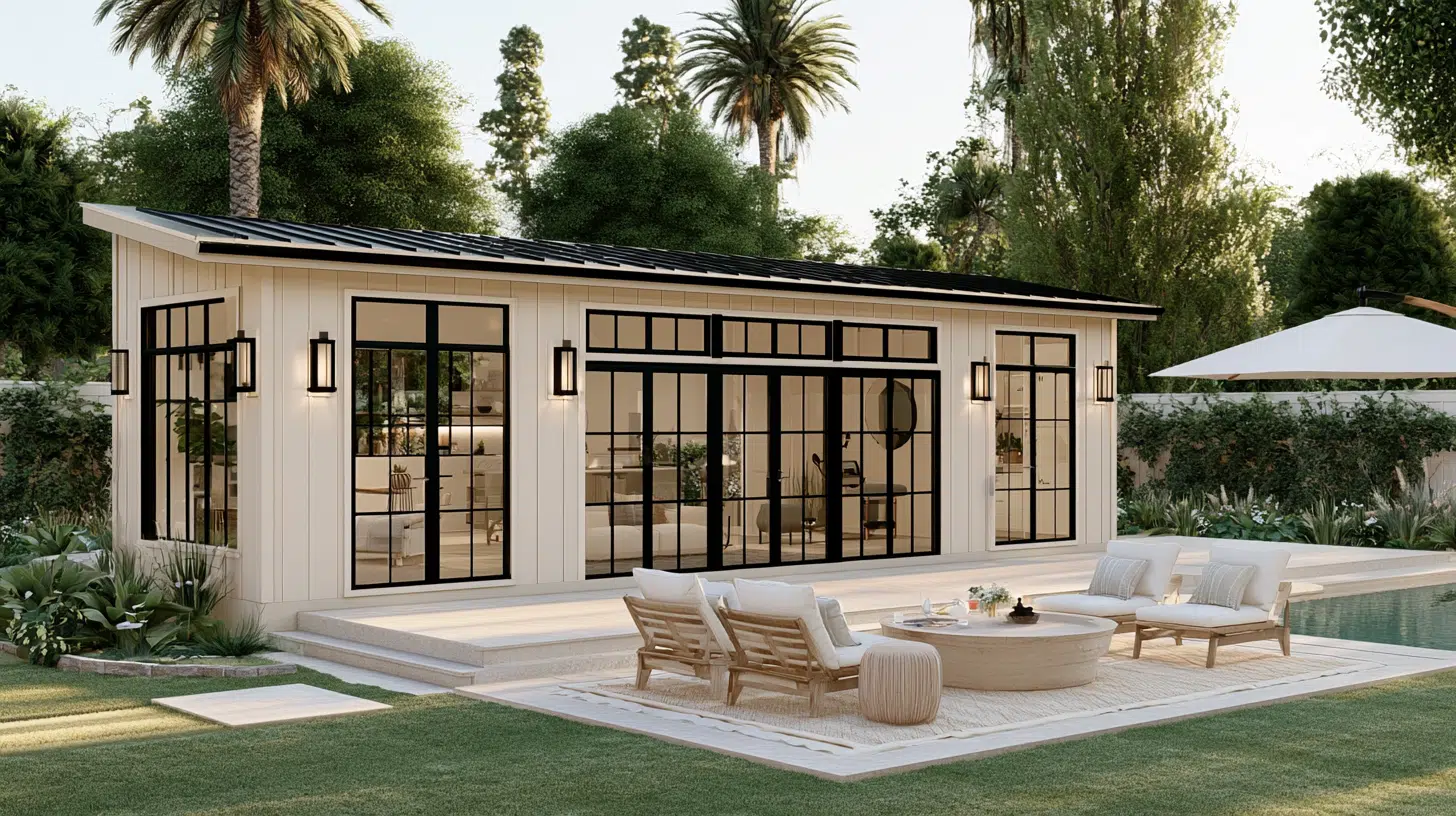
A detached ADU is a separate structure from the main home. It is often built in the backyard and may be used for rental income, family housing, guest space, or long-term flexibility.
Detached ADUs are popular because they offer more privacy than attached units. However, they can also cost more because they require new construction, utility connections, foundation work, and site planning.
Attached ADU
An attached ADU is connected to the primary home. It may share a wall with the main house but still functions as an independent living space.
This can be useful when the lot does not have enough room for a detached structure. Attached ADUs may also work well for families who want close access between the main home and the secondary unit.
Garage Conversion ADU
A garage conversion ADU turns an existing garage into a livable unit. This can be a space-efficient option because the structure already exists.
However, garage conversions still need proper insulation, plumbing, electrical work, windows, ventilation, fire safety, and code compliance. Homeowners should not assume a garage can be converted without permits or upgrades.
Basement or Interior Conversion ADU
Some ADUs are created inside the existing home. A basement, lower level, or unused section of the house may be converted into an independent unit.
This can sometimes cost less than building a new detached structure, but it still requires careful planning. Ceiling height, exits, light, ventilation, safety, privacy, and utilities all matter.
Junior ADU
A junior ADU is usually smaller and created within the existing home. Rules vary by location, but junior ADUs may have different size limits and kitchen requirements than standard ADUs.
They can be a lower-impact option for homeowners who want more flexible housing without building a full detached unit.
ADU vs. DADU vs. Backyard Cottage

The terms ADU, DADU, and backyard cottage are closely related, but they are not always used the same way.
A DADU is a detached accessory dwelling unit. It is separate from the main home, usually located in the backyard. In some cities, this type of unit is commonly called a backyard cottage.
In Seattle and many Pacific Northwest communities, homeowners often use “backyard cottage” or “DADU” when discussing detached ADUs. Homeowners in the Pacific Northwest who are exploring detached ADUs or backyard cottages should work with a trusted professional team like Seattle Modern Buildings ADU Builder to understand how design, permitting, site planning, and construction fit together.
The wording may differ by city, but the important thing is how the local building department defines and regulates the unit.
Why ADUs Matter in Real Estate
ADUs have become more important in real estate because they make one property more flexible. A single-family home with a permitted ADU may support multiple uses over time.
For homeowners, that flexibility can be valuable. For buyers, an ADU can make a property more appealing. For investors, it may create rental possibilities where allowed.
More Flexible Living Space
ADUs can be used for aging parents, adult children, extended family, guests, caretakers, or long-term household flexibility.
They can allow family members to live close while still maintaining privacy and independence. This is one reason ADUs are often associated with multigenerational living.
Potential Rental Income
In some areas, ADUs may be rented out as long-term housing. This can help offset housing costs or create additional income.
However, rental rules vary. Cities may treat long-term rentals, short-term rentals, and owner-occupied properties differently. Homeowners should check local rules before assuming an ADU can be rented in a certain way.
Property Value and Resale Appeal
A permitted ADU may increase buyer interest because it adds usable living space and flexibility. The impact on value depends on location, quality, legality, layout, rental demand, and overall property condition.
Unpermitted units can create problems during sale, appraisal, financing, or inspection. In real estate, legality matters as much as the physical space.
What Makes an ADU Legal?
A legal ADU usually needs to follow zoning rules, building codes, permit requirements, and inspection standards. The details vary by city and state.
Homeowners may need to consider lot eligibility, setbacks, height limits, parking rules, fire access, utility connections, environmental restrictions, and occupancy requirements.
Zoning and Lot Eligibility
Not every property automatically qualifies for the same ADU options. Lot size, location, existing structures, easements, slopes, and access can all affect feasibility.
Before investing in plans, homeowners should confirm what is allowed on their specific property.
Building Permits and Inspections
ADUs typically require permits before construction. Inspections may include foundation, framing, plumbing, electrical, mechanical, insulation, energy compliance, and final occupancy.
Permits can feel like an extra step, but they help ensure the unit is safe, legal, and usable as real housing.
Utilities and Separate Access
An ADU may need water, sewer, electricity, heating, cooling, ventilation, and safe entry. Some projects may also require utility upgrades or new connections.
Utility planning can affect cost, timeline, and design. It should be reviewed early, not after the layout is already finished.
ADU Rules Vary by Location

ADU regulations are not the same everywhere. State laws may create broad standards, but cities and counties often still have local requirements.
This is especially important in states with active ADU development, including California and Washington. Homeowners should research local rules before designing, pricing, or building.
California ADU Considerations
California has statewide ADU laws, but local details still matter. Setbacks, utility connections, fire access, size limits, local review, and site conditions can affect the project.
California homeowners exploring an ADU project in areas like Orangevale can use Golden State ADUs as a local resource for understanding ADU design, permitting, and construction considerations.
A California ADU may be a strong option for family housing, rental flexibility, or long-term property use, but the project should still be planned around local requirements.
City and County Requirements
Even within one state, ADU rules can vary by city or county. A design that works in one jurisdiction may need changes in another.
Before starting, homeowners should check with the local building department or work with professionals who understand local ADU requirements.
How Much Does an ADU Cost?

ADU costs vary widely. The final price depends on the type of ADU, size, site conditions, utilities, finishes, permitting, design complexity, and local labor costs.
Detached ADUs usually cost more than garage or interior conversions because they require new foundation work, framing, roofing, exterior finishes, utility connections, and full construction.
Garage and interior conversions may cost less because they use existing space, but they can still require major upgrades. Insulation, plumbing, electrical, windows, ventilation, fire safety, and structural work can all add cost.
Site work and utilities are often major budget drivers. Trenching, sewer connections, water lines, electrical upgrades, drainage, grading, and access should be estimated early.
ADU Benefits for Homeowners
ADUs are useful because they give homeowners more options.
For families, an ADU can support multigenerational living. Aging parents can live nearby while maintaining independence. Adult children can have a separate space. Extended family can stay close without crowding the main home.
ADUs can also be used for guest housing, a home office, studio space, or flexible living space depending on local rules. Over time, the same ADU may serve different purposes as the homeowner’s needs change.
For long-term planning, an ADU can make a property more adaptable. It can help respond to rising housing costs, family transitions, future rental goals, or changing work-from-home needs.
ADU Challenges to Consider Before Building
ADUs can be valuable, but they are not simple projects.
Permitting can take time. Design review, plan checks, corrections, utility coordination, and inspections may affect the schedule.
Privacy also matters. The ADU should work with the main home, yard, parking, windows, entries, fencing, and outdoor space. Poor placement can make both the main home and ADU feel crowded.
Construction can also disrupt daily life. Building an ADU may affect parking, noise, yard access, utilities, and outdoor use for several months.
Financing is another consideration. ADUs can be a major investment, so homeowners should understand the full project cost before starting.
ADU Planning Checklist for Homeowners

Before building an ADU, start with property eligibility. Check zoning, lot size, setbacks, utility access, local ADU rules, and any site constraints.
Next, decide the type of ADU. Detached, attached, garage conversion, interior conversion, and junior ADU projects all have different costs and requirements.
Define the main goal. Are you building for rental income, family housing, guest space, aging-in-place, or future resale value? The answer should guide the design.
Estimate the total project cost, including design, permits, construction, utilities, site work, finishes, landscaping, and contingency.
Finally, work with qualified professionals. ADU projects involve design, code, permitting, construction, inspections, and utility planning. Good guidance can help prevent expensive mistakes.
Common ADU Mistakes to Avoid
One common mistake is assuming any backyard structure counts as an ADU. A shed, studio, or guest room is not automatically a legal dwelling.
Another mistake is designing before checking local rules. If zoning or setback requirements are ignored, the design may need major revisions later.
Homeowners also often underestimate utility costs. Water, sewer, electrical, and drainage work can affect both budget and feasibility.
Privacy is another common issue. Entries, windows, patios, fencing, and landscaping should be planned so the ADU and main home both feel comfortable.
Final Thoughts: An ADU Is a Real Estate Asset When It Is Planned Correctly
So, what is an ADU in real estate? It is a permitted secondary living unit on the same property as a primary home. It is not just extra space. It is a real dwelling that can affect property function, housing flexibility, rental potential, and resale appeal.
ADUs can be powerful real estate assets when they are planned correctly. They can support family needs, create additional housing options, and make a property more adaptable over time.
The key is to start with local rules, thoughtful design, legal permitting, realistic budgeting, and quality construction. When those pieces come together, an ADU can add long-term value far beyond its square footage.