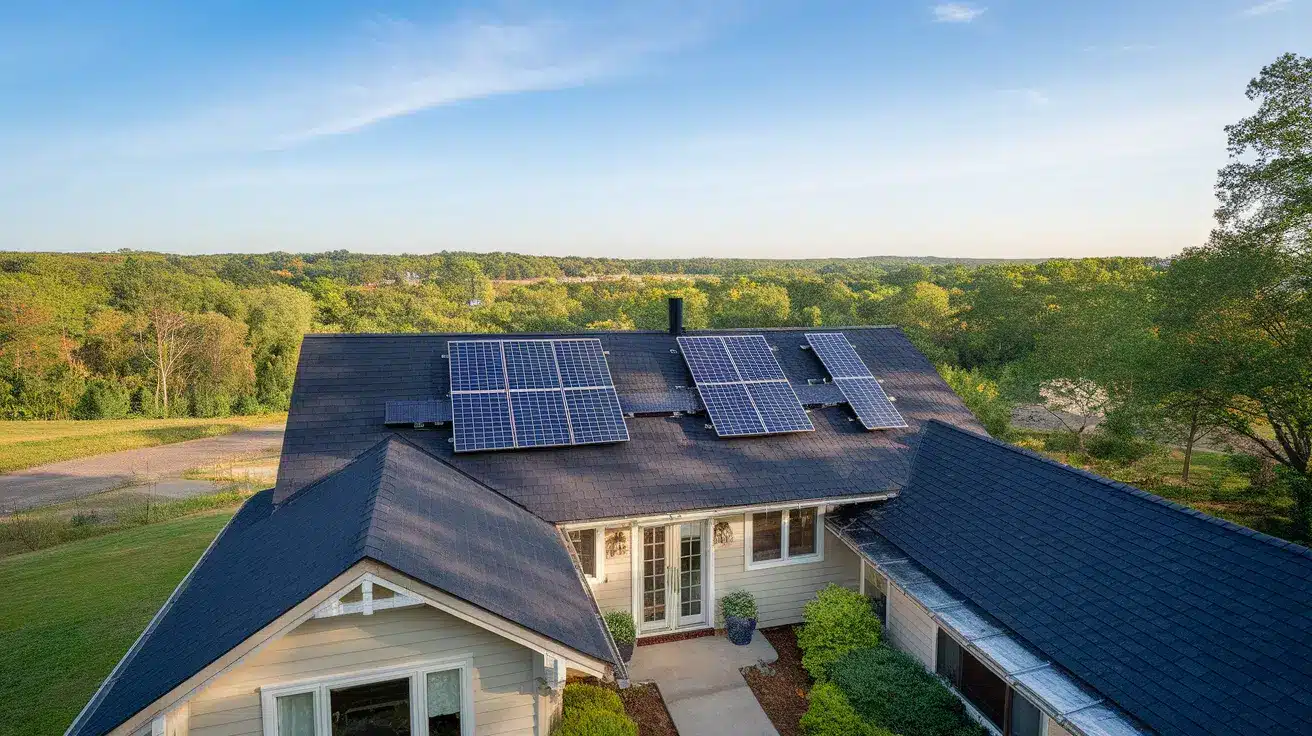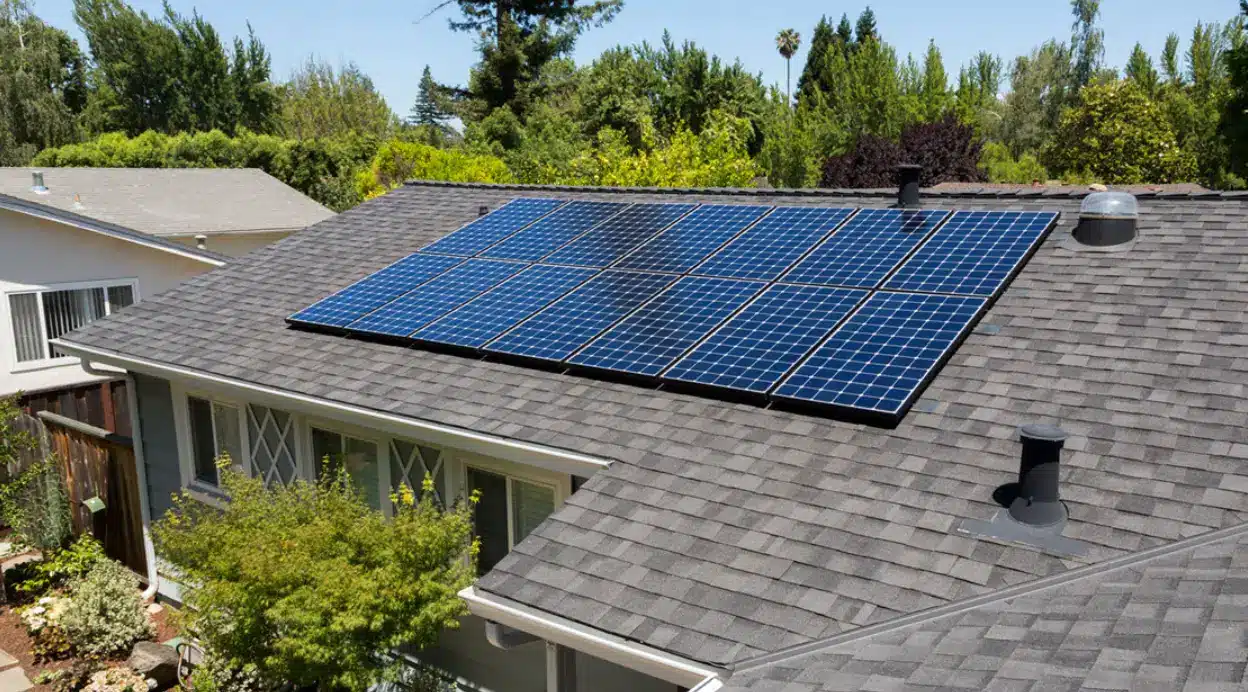
Britain might not be blessed with abundant annual sunshine, but that hasn’t deterred homeowners and businesses from investing in solar energy. Solar now accounts for over 6 percent of the country’s total electricity generation. With energy costs exploding, rooftop solar is a viable alternative to gas and mains electricity, and has cushioned rising energy bills for both households and businesses alike.
Small-scale rooftop installations are at an all-time high with over 1.8 million units, mirroring the country’s transition to clean, renewable and sustainable energy. The wider availability and falling purchase and installation costs of eco-friendly roof solar panels, inverters and batteries, paired with numerous government incentives are key driving factors, especially in residential setups.
How Rooftop Solar Works
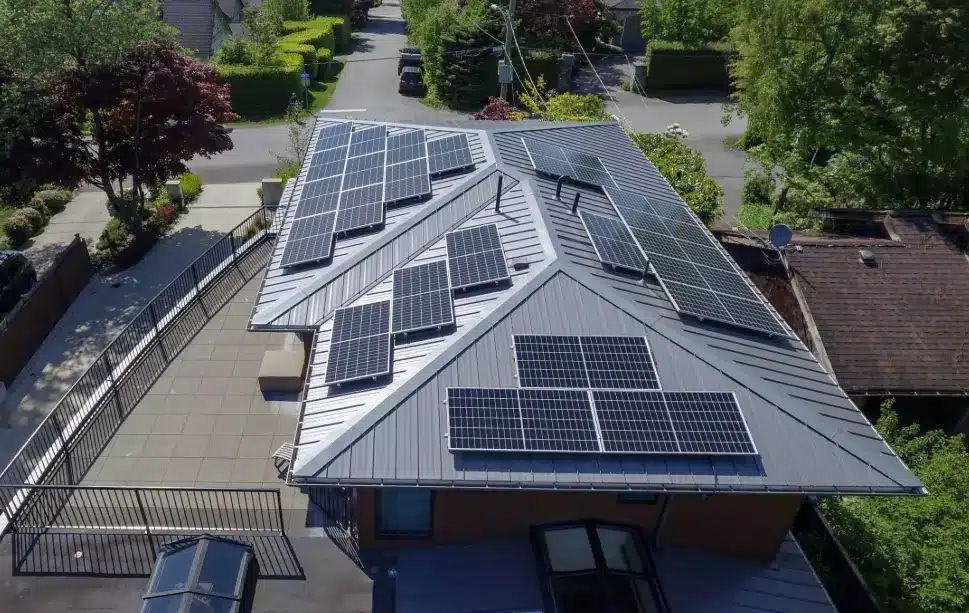
Solar power is electricity generated by converting sunlight into energy. This is done with photovoltaic (PV) cells in panels. When sunlight hits the cells, it agitates electrons to generate an electric charge. This is direct current (DC), that is converted into usable alternative current by solar inverters. Excess energy can be stored in batteries, or passed on to the grid. At night, or during overcast weather, homes can draw stored energy from batteries, or from the electrical grid.
Full rooftop setups also rely on additional equipment. Aluminium rails and brackets ensure panels remain secure on roofs in all weather conditions, isolators and safety switches disconnect different parts of system (such as the panels, or batteries) to stop the flow of electricity and generation. Then, there are also smart export meters that monitor how much power your rooftop setup produces and how much of this is exported to the grid as excess power.
Panel Types
The type of solar panel you need in a rooftop setup depends on factors like efficiency, cost and appearance. Monocrystalline panels are the industry standard for residential rooftop solar systems due to their high efficiency, reduced space requirements and more cohesive aesthetics. Choose older polycrystalline solar panels if cost is your main concern or opt for thin-film types for restricted spaces, such as architectural features or vehicle and caravan roofs.
Monocrystalline Panels
These are produced by melting pure silicon and shaping it into a single large crystal. This is then sliced into thin wafers that form individual photovoltaic cells. Monocrystalline panels are instantly recognisable by the uniform dark-black colour and distinctive octagonal or rounded-corner shape, with cells arranged in a grid pattern.
The single crystal design and high efficiency rates (ranging between 20% and 24%), means fewer panels are needed to generate the same amount of electricity. This saves space and reduces labour costs or future maintenance needs. Moreover, higher silicon purity ensures monocrystalline panels handle extreme heat better than older panel technologies. leading to lower long-term degradation rates and slightly longer lifespans than cheaper polycrystalline types.
Polycrystalline Panels
Made by melting multiple fragments of purified silicon, polycrystalline solar panels are the budget-friendly choice for larger roofs. Recognisable by the speckled blue appearance (due to multiple silicon pieces and the anti-reflective coating), polycrystalline panels have lower efficiency rates (between 15% and 20%) making them more prevalent in solar farms, flat commercial roofs or smaller home and hybrid setups. As mentioned, the design means somewhat lower thermal coefficients, with efficiency falling as the panels get hot. Choose polycrystalline roof solar panel if you’re on a tighter budget, have unlimited roof space and aren’t bothered by the pedestrian appearance.
Thin-Film
Thin-film panels were first developed in the 1970s, as flexible and more lightweight alternatives to already standardised monocrystalline solar panels. Instead of silicon wafers, thin-film panels produce electricity from deposited layers of semiconductor materials (such as Cadmium Telluride – CdTe) on flexible materials like glass and plastics. This makes them ideal for uneven and curved surfaces, such as architectural features or on recreational vehicles. While designs provide higher mounting flexibility, thin film panels have generally lower efficiency rates of 10% to 18%, limiting their use in residential installations.
Newer panel technologies include Passivated Emitter and Rear Cell (PERC) panels – which add a reflective layer to monocrystalline designs to convert unabsorbed light for higher energy efficiency, bifacial designs – which absorb sunlight on both sides, and solar tiles integrated into the roof itself. While innovative, limited availability and high production costs means these are reserved for specialised uses.
Choosing the Right Roof Solar Panels
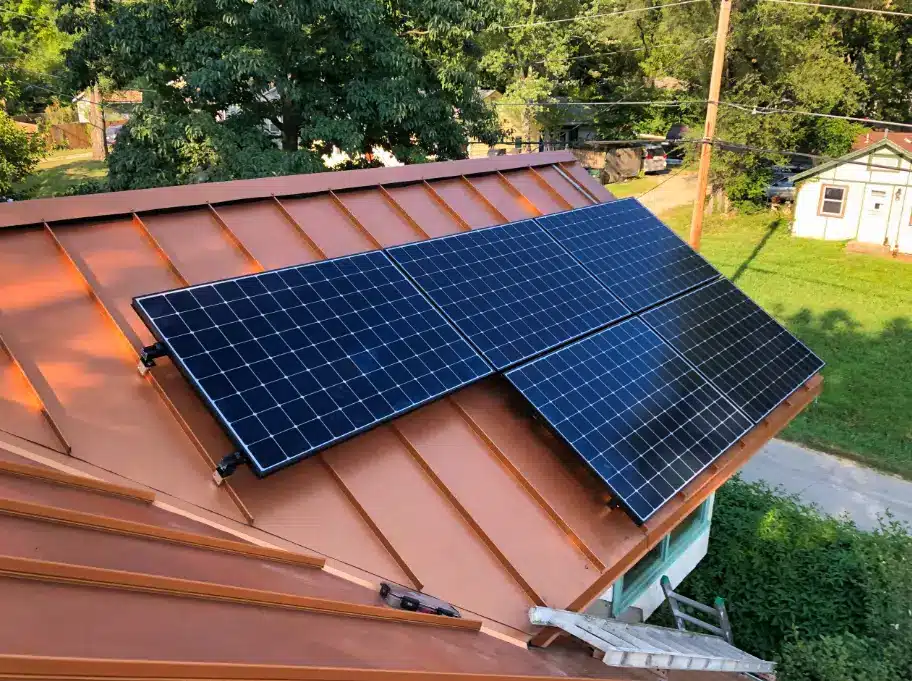
Before committing to rooftop solar solutions, assess your power needs, the condition and size of the roof and individual panel sizes and power output. A good estimate of monthly energy usage are electricity bills. UK households use on average 225 to 275kWh a month, meaning installations with 8 to10 400W to 500W monocrystalline panels (in a 3 to 5kW system), with higher output and a possible surplus in summer, and lower output by 10 to 15% in winter.
Roof compatibility is another factor. Larger sloped square roofs facing south and free from obstructions will generally produce higher outputs. Consider roof orientation, overall shape and size and how obstructions such as chimneys, satellite dishes and air-conditioning units reduce output with unwanted shading. Most metal, concrete and clay tile roofs can comfortably handle the weight of panels and supporting racking and mounts, with average panel weights of 25 kilos and 10 to 15 kilos per square metre for mounts and racking. Flat roofs often use heavier concrete ballasted mounts, especially in commercial buildings.
Lastly, match power needs, roof sizes and space availability with the number and size of required panels. Generally, the higher the output, the larger the panel. 450W to 600 W variants top out at 2.0m by 1.1m, with standard 1.7m by 1.0m sizes in units generating between 300W and 450W.
More than Panels
Panels are just one piece in the puzzle of a functional rooftop solar system, Besides roof mount solar panels, there’s considerable variation and price differences in inverters, batteries, cabling, switches and solar accessories. Choose string inverters for roofs with no shading or obstructions, or costlier but more efficient micro-and hybrid inverters for panels facing different directions and if you intend to store generated power in dedicated batteries. These are often Lithium-Iron-Phosphate; they come in different capacities (5 to 15kWh) and will consume a larger chunk of your overall off-grid rooftop solar budget.