Rural property owners, ranch operators, and small-municipality fire departments share a quiet problem. Full-size fire apparatus cannot reach many access roads, gated rear pastures, or service trails fast enough to make a difference. A skid-mounted fire suppression unit on a UTV, ATV, or pickup truck closes that response gap.
Property owners and fleet managers searching for rapid-deployment suppression hardware often start with specialist manufacturers. The BLZ Fire Skids team at Wildfire Skids manufactures high-performance firefighting skid units for UTVs, ATVs, and pickup trucks. The units deliver rapid-response fire suppression in areas inaccessible to full-size apparatus. Product lines include electric fire pumps, modular skid units, and durable tank-and-hose configurations built for repeated rural deployment.
What Is a Fire Suppression Skid Unit and Who Uses One?
A fire suppression skid unit is a self-contained tank, pump, and hose assembly that mounts onto the bed of a UTV, ATV, or pickup truck. The unit converts a regular work vehicle into a rapid-response wildfire and small-structure suppression tool. The skid format allows quick install and removal without permanent vehicle modification.
Three operator categories use these units consistently. Ranch and large-property owners deploy them for first-attack response on grass, brush, or outbuilding fires before the fire department arrives. Small rural fire departments use them as rapid-attack auxiliaries that reach trails and rear pastures the engine cannot. Wildland-urban-interface contractors use them across vegetation management and seasonal patrol work.
The shared advantage is reach. A pickup or UTV with a 50 to 200 gallon water tank hits a fire site 5 to 15 minutes faster than a Type 1 engine on the same road. The first 15 minutes is often where small fires become large fires.
What Should Buyers Verify Before Picking a Skid Unit?
Six criteria belong on every buyer shortlist:
Criterion | Why It Matters | What to Confirm |
|---|---|---|
Tank capacity | Reach and run time | 50 to 100 gal for ATV/UTV; 100 to 200 gal for pickup |
Pump output | Suppression effectiveness | 25 to 60 gpm typical; higher for larger fires |
Pump power source | Reliability at site | Electric, gas, or PTO with documented run time |
Hose and reel system | Operator ease | Reel-mounted, 50 to 100 ft of attack hose |
Tank material | Lifecycle cost | UV-stabilized poly, with sloshing baffles |
Mounting kit | Vehicle fit | Bolt-in install with no permanent welds |
A manufacturer that gives clear answers across these six points signals a partner worth picking. A vague reply on any of them signals friction ahead. The US Fire Administration’s home fire prevention hub outlines the framework rural property owners should reference for the broader fire safety picture.
Which Property and Fleet Situations Reward a Skid Unit Most?
Three rural situations leave the least margin for slow response.
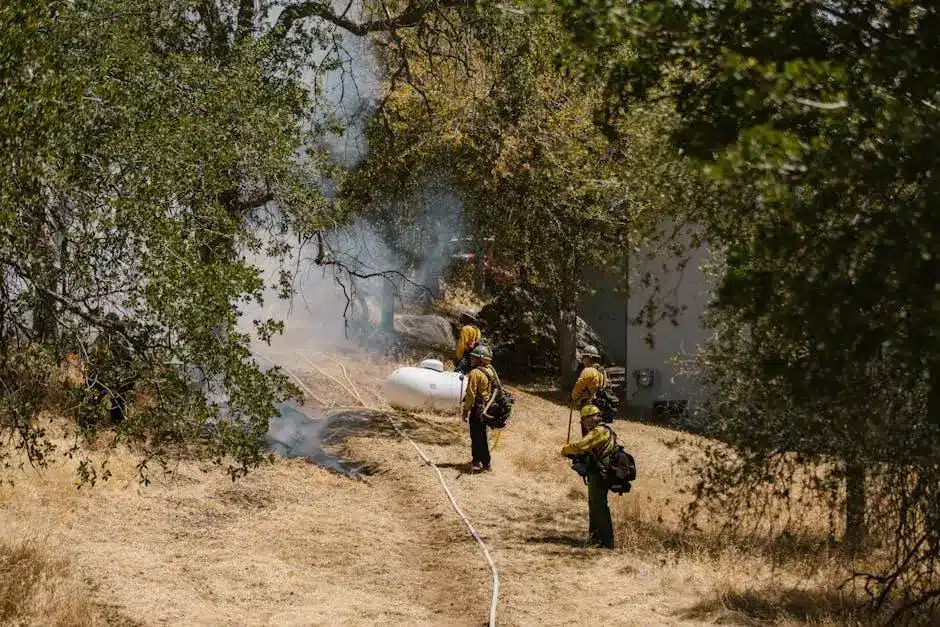
Large ranches and timber properties carry hundreds of acres with limited road access. A wildfire that starts on a back pasture can grow from incipient to running-crown stage in 20 minutes. A skid-equipped UTV on patrol or staged at the work site closes that 20-minute window.
Wildland-urban-interface neighborhoods sit on the boundary between developed properties and open vegetation. Coverage of the smoke detector red light troubleshooting reminds readers that fire safety lives across many layers from inside-the-home alarms to outside-the-home suppression. A pickup-mounted skid covers the outdoor layer that smoke alarms cannot reach.
Small rural fire departments running 3 to 8 apparatus rarely have budget for a second Type 6 brush truck. A skid-mounted UTV at one-fifth the cost gives the department a rapid-attack tool that handles the calls a brush truck would otherwise stretch to cover. The NFPA’s wildfire hazards and mitigation hub outlines the framework departments and communities should reference for the broader wildfire mitigation picture.
What Errors Surface When Buyers Pick a Skid Unit Quickly?
Several errors recur:
- Sizing the tank too small for the property’s typical fire-spread time
- Ignoring pump output ratings when a 25 gpm unit is rated for grass, not light brush
- Skipping the mounting test fit so the skid does not actually clear the vehicle’s tailgate or rack
- Forgetting nozzle and fitting standards so the hose does not connect to mutual-aid apparatus
- Treating the unit as install-and-forget when seasonal pump testing prevents failure at the worst moment
Coverage of top container home designs reminds readers that rural property infrastructure decisions compound over years. The same logic applies to fire-protection hardware on the same property.
Pre-Purchase Checklist for Rural Buyers
- Measure the host vehicle’s bed dimensions before sizing the skid
- Match the pump output to the realistic fire-spread risk on the property
- Confirm hose and nozzle standards match local mutual-aid apparatus
- Plan the water resupply route for any deployment lasting more than 15 minutes
- Schedule seasonal pump testing at the start of each fire season
- Document the operator training for every household member or fleet staff member who would deploy the unit
Where a Skid Unit Earns Its Place
The skid unit decision rewards property owners and small departments that plan rather than improvise. A buyer who runs the six-criteria shortlist once usually keeps the same unit on the same vehicle for five to ten years. The continuity matters because operators build muscle memory with one configuration rather than learning a new layout under stress.
A purpose-built skid unit closes the response gap that full-size apparatus cannot fill. Rural property owners and small departments who pick thoughtfully end up with a tool that actually deploys when the moment arrives.
Skid Format | Typical Vehicle | Tank Range |
|---|---|---|
Compact | ATV / UTV | 50 to 100 gal |
Mid-size | Half-ton pickup | 100 to 150 gal |
Heavy | Three-quarter ton pickup | 150 to 200 gal |
Frequently Asked Questions
How Much Does a Fire Suppression Skid Unit Typically Cost?
Most fire suppression skid units cost 2,500 to 9,500 dollars depending on tank capacity, pump output, and hose configuration. Smaller ATV-mount units sit at the lower end; pickup-mount commercial units sit at the higher end. A custom skid with electric pump and large hose reel typically lands between 5,500 and 8,500 dollars.
Can a Regular Pickup Truck Handle a 100-Gallon Skid Unit?
Yes, most half-ton and three-quarter-ton pickups handle a 100-gallon skid comfortably. The water alone weighs roughly 830 pounds, plus the tank, pump, and hose adding another 200 to 400 pounds. Buyers should confirm the vehicle’s payload rating before final purchase.
How Long Does a Skid Unit Last in Service?
Most well-maintained skid units last 8 to 15 years across rural property use. Pump components often need replacement at the 5 to 8 year mark depending on usage hours. Tanks built from UV-stabilized polyethylene typically outlast the pump.
Should a Skid Unit Be Mounted Permanently or Removable?
Most rural buyers benefit from a removable skid using bolt-in mounting hardware. The removable format frees the vehicle for other work during the off-season. Permanent mounts make sense for dedicated brush trucks but reduce the host vehicle’s flexibility year-round.