I’ve seen many people think shipping costs come down to weight, but that’s only part of the picture.
The cheapest way to ship a 20 lb package often depends more on box size, distance, and how carriers calculate pricing behind the scenes.
In real shipping scenarios, a slightly larger box can push a package into a higher billed weight, adding unexpected cost at checkout.
No single carrier consistently wins, and retail prices shift based on several variables. That means quick assumptions usually lead to overpaying.
The smarter move is understanding what actually drives the price before choosing a service.
Cheapest Way to Ship a 20 Lb Package
For most shipments, USPS Ground Advantage comes out cheapest, especially for shorter distances and compact packages. But it’s not always the winner.
Typical ground shipping costs fall between $30–$35 depending on distance and box size. UPS Ground and FedEx Ground are very close to USPS in pricing for 20 lb packages.
If your item is dense and fits in a USPS flat-rate box, that can be even cheaper. For longer distances or larger boxes, UPS or FedEx may actually come out ahead.
There is no single cheapest option for every situation. The right choice depends on your specific package and destination.
Here’s how the carriers typically compare for a standard 20 lb package at retail rates:
| Carrier | Short Distance (Zones 1–3) | Long Distance (Zones 6–8) |
|---|---|---|
| USPS Ground Advantage | ~$15–$22 | ~$28–$38 |
| UPS Ground | ~$18–$26 | ~$32–$42 |
| FedEx Ground | ~$17–$25 | ~$30–$40 |
| USPS Large Flat Rate Box | $21.90 (any zone) | $21.90 (any zone) |
Note: Rates reflect approximate 2026 retail pricing and shift based on box dimensions, exact origin/destination, and whether you buy online or at the counter. Use these as a starting range, not a final price.
What Actually Determines Shipping Cost for 20 Lb Packages
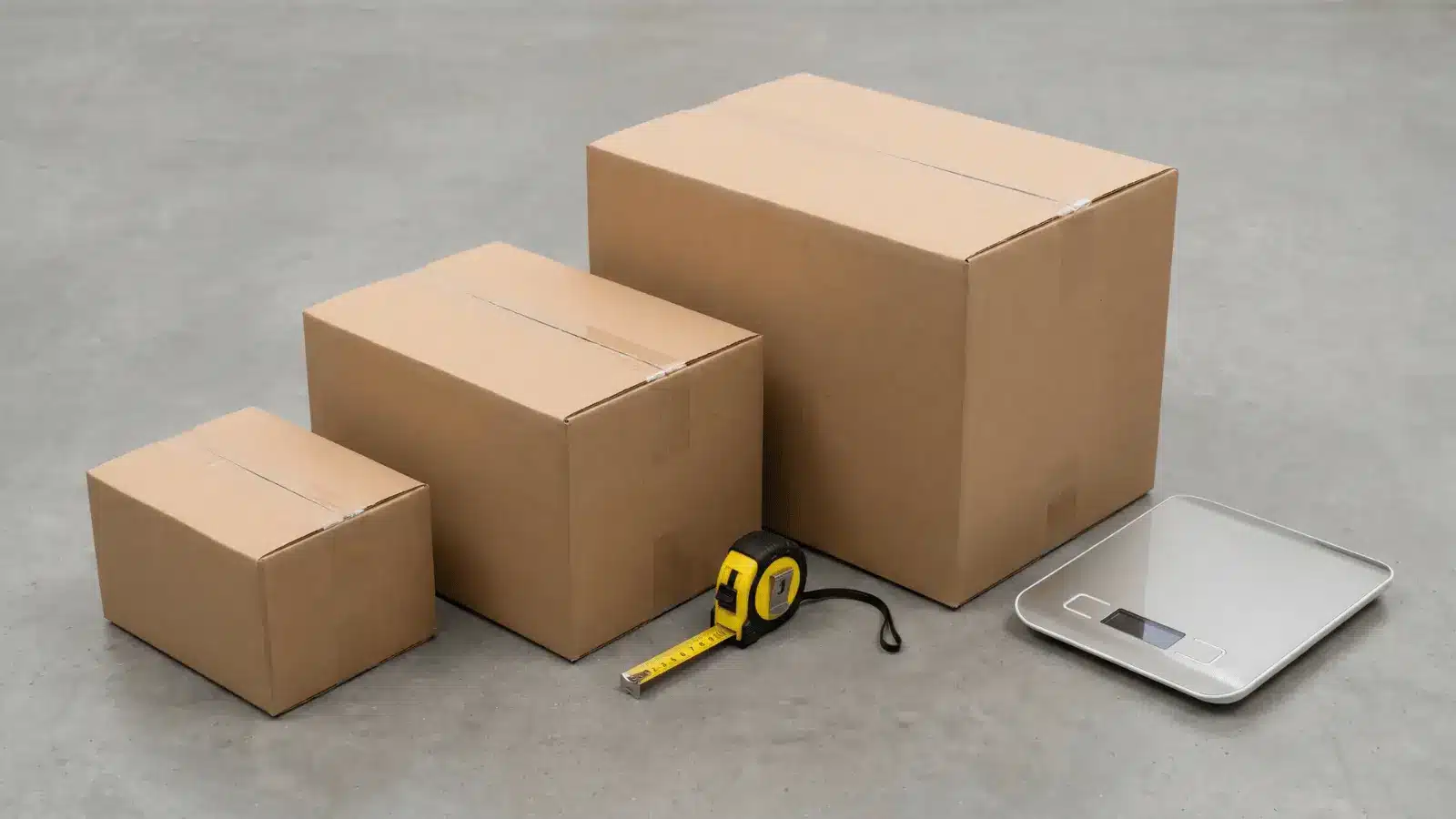
Most people assume shipping cost is just about weight. It’s not. Carriers measure both actual weight and dimensional weight, and charge whichever is higher.
Dimensional weight is calculated by multiplying the box’s length × width × height, then dividing by a carrier-specific number called the DIM divisor.
UPS and FedEx use a divisor of 139. USPS uses 166, which means it takes a larger box before dimensional weight kicks in.
If the calculated DIM weight exceeds 20 lbs, you pay for that number instead of the actual weight. For large but light packages, USPS’s higher divisor makes it the more forgiving option; a box that triggers DIM pricing on UPS may not trigger it on USPS at all.
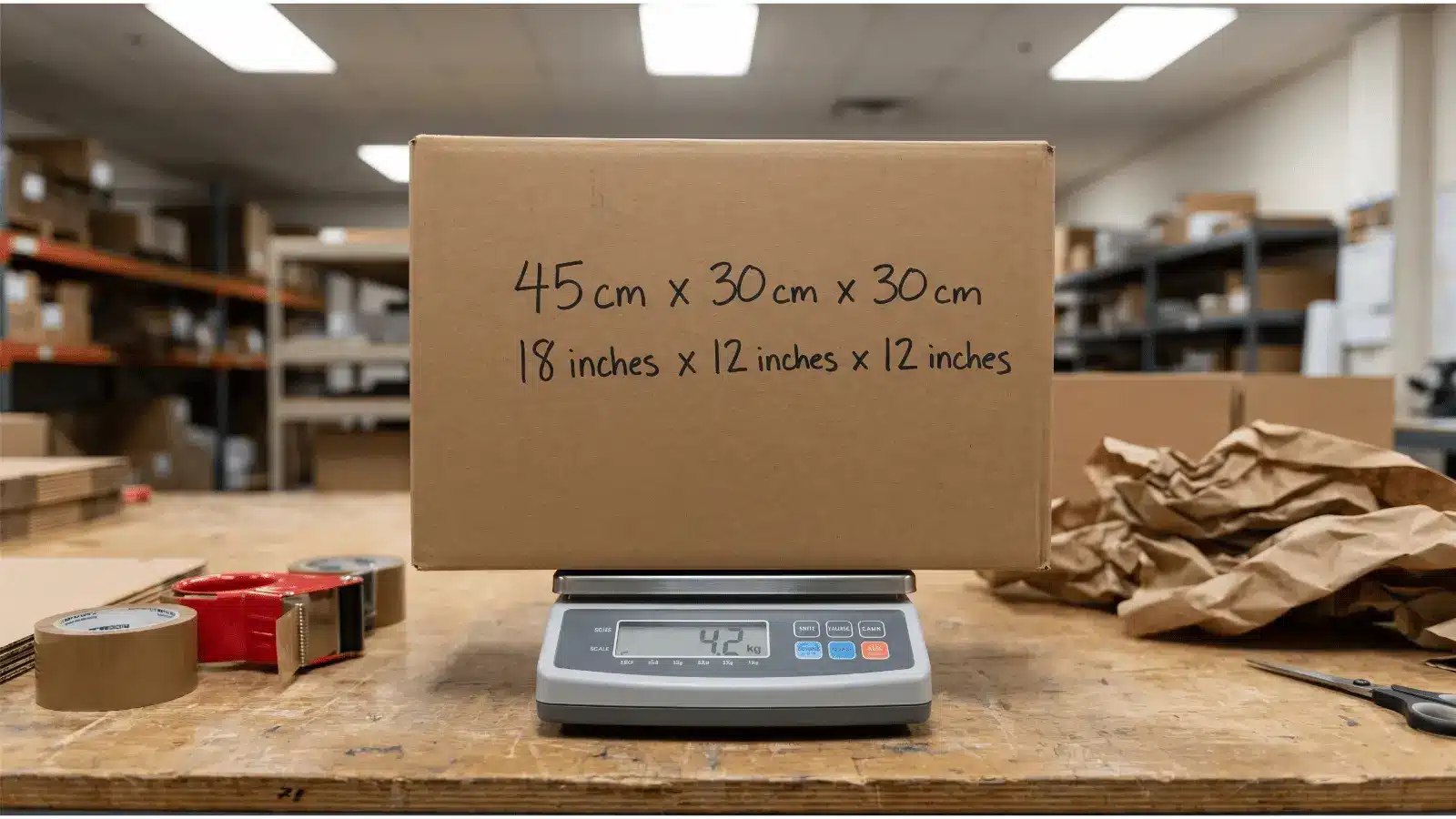
For example, a 20 lb item packed in an 18″ × 18″ × 16″ box has a DIM weight of (18 × 18 × 16) ÷ 139 = 37 lbs on UPS or FedEx. You’d pay for 37 lbs, not 20. The same box on USPS calculates to (18 × 18 × 16) ÷ 166 = 31 lbs. Still above actual weight, but noticeably cheaper.
Distance also plays a big role. The farther your package travels, the more shipping zones it crosses, and the higher the cost.
Zone 2 shipments are far cheaper than Zone 8. On top of that, USPS uses a simpler zone-based model, while UPS and FedEx apply more surcharges on top of their base rates.
Two packages with the same weight but different box sizes can have very different final prices.
USPS vs. UPS vs. FedEx: When Each One is Cheapest
The carrier that saves you the most depends on your package’s size and destination, not brand preference.
When USPS Wins
USPS tends to be the better choice in these situations:
- Short distances (zones 1–4): USPS Ground Advantage is hard to beat at these ranges
- Small, dense packages: Less surface area means dimensional weight is unlikely to apply
- Flat-rate eligibility: If your item fits the box, you pay one price — weight stops mattering entirely
USPS Ground Advantage is slower, but if the deadline is flexible, that’s where the savings are
When UPS or FedEx Wins
UPS and FedEx tend to come out ahead when:
- Long-distance shipments (zones 5–8): Their pricing holds up better across high zones
- Larger boxes: Even with surcharges, base rates can undercut USPS for bulkier items
- Commercial addresses: Both carriers discount deliveries to business addresses, USPS doesn’t differentiate
Faster delivery networks give UPS and FedEx the edge when speed matters
Tip: For a 20 lb package going cross-country in a medium to large box, always compare UPS and FedEx before assuming USPS is cheaper.
Flat Rate vs. Regular Shipping: Which Saves More Money
Flat-rate shipping is one of the most misunderstood options; it can either save you money or cost you more, depending on the situation.
USPS flat-rate boxes charge a fixed price regardless of weight, up to 70 lbs. The Large Flat Rate Box runs $21.90 at retail, whether you’re shipping to the next state or across the country.
That fixed price is what makes it powerful for long-distance shipments and items close to the weight limit, but a liability for anything large, light, or already traveling a short distance, where zone pricing is low.
The key question is simple: does your item fit the box, and is the flat-rate price lower than what you’d pay based on zones?
| Situation | Best Option |
|---|---|
| Dense item, fits flat-rate box, long distance | Flat rate — almost always cheaper |
| Near the 70 lb weight limit | Flat rate — zone pricing would be significantly higher |
| Large but lightweight item | Regular shipping — flat rate penalizes low-density packages |
| Short distance, low zone | Regular shipping — zone pricing will likely beat $21.90 |
| Item doesn’t fit available flat-rate sizes | Regular shipping — no choice |
When Shipping Costs Increase Unexpectedly
Even after picking a carrier, certain factors can push your final cost well above the estimate.
- Dimensional weight surprises: A bulky box can get priced at a higher weight even if it feels light. Always measure before buying a label.
- Oversized package fees: If any side of your box exceeds the carrier’s size limit, expect a significant surcharge on top of the base rate.
- Residential delivery surcharges: Both UPS and FedEx add fees for home delivery. USPS does not charge this.
- Fuel and peak surcharges: These adjust periodically and rise noticeably during holidays or high-demand periods.
- Express shipping costs: Overnight or 2-day shipping for a 20 lb package can jump to $180 or more. Avoid express if saving money is the goal.
Knowing these triggers in advance helps you choose the right box size and carrier before the cost surprises you at checkout.
How Discount Shipping Tools Lower Costs
You don’t need a business account to access lower shipping rates.
Platforms like Pirate Ship and Easyship offer discounted commercial rates to individual shippers.
Carriers provide bulk discounts to high-volume shipping aggregators, and these platforms pass those savings directly to you.
The same label that costs $34 at the USPS counter may cost $27 through Pirate Ship.
Some tools also compare multiple carriers at once, so you automatically see the best available rate. Buying a label online, even on the carrier’s own website, is always cheaper than walking up to the counter.
Third-party tools take it a step further. With discounted rates applied, UPS and FedEx can sometimes come out cheaper than USPS retail pricing.
Always run a quick comparison before purchasing your label.
Quick Decision Guide
Not sure where to start? Match your situation to the right option:
- Small box + heavy item → USPS flat-rate box
- Medium box + short distance → USPS Ground Advantage
- Large box or long distance → Compare UPS Ground and FedEx Ground
- Tight deadline → Expect higher costs; speed always adds expense
- Any shipment → Run it through a shipping calculator or Pirate Ship before committing
Never assume one carrier is cheaper. A 60-second comparison can easily save you $5–$15 per shipment.
Conclusion
Shipping doesn’t have to be a guessing game. Now that you know what drives the cost, you can make a smarter call every time.
The cheapest way to ship a 20 lb package comes down to box size, distance, and where you buy the label.
Always compare your options before you commit; even a quick check can save you $5–$15 per shipment, and that adds up fast. One small habit can make a real difference over time.
Want more tips on cutting shipping costs? Check out our other blogs for more practical, money-saving guides.
Frequently Asked Questions
Can I use my own box, or do I need a carrier-provided one?
You can use your own box. Just make sure it’s the right size; a smaller box reduces the risk of dimensional weight charges and keeps costs lower.
Does shipping to a home address cost more than a business address?
Yes, with UPS and FedEx, it does. Both carriers add a residential delivery surcharge that doesn’t apply to commercial addresses. USPS charges the same regardless.
Should I buy shipping insurance for a 20 lb package?
It depends on the item’s value. Most carriers include basic coverage. For higher-value items, third-party insurance is often cheaper than the carrier’s own add-on coverage.
Can I negotiate shipping rates directly with a carrier?
Yes, if you ship frequently. UPS and FedEx both offer loyalty and volume discount programs. For one-time shippers, third-party platforms are a faster way to access lower rates.