As winter weather across the country quickly transitions toward spring, countless homeowners are now expecting their HVAC systems to operate with improved efficiency due to milder temperatures.
However, these types of seamless seasonal transitions aren’t always the case for homes with heat pumps. According to Apex Clean Air’s locally loved heat pump repair experts in Salt Lake City UT, the spring months of April and May just so happen to be the most common time for homeowners to recognize efficiency dilemmas.
These issues are often the result of wear and tear that occurred during the colder winter months, but it’s also a combination of changing environmental conditions. It’s become increasingly more important for heat pump owners to understand the varied nuances associated with springtime efficiency losses, and below we’ll be detailing how today’s homeowners can better ensure an energy-efficient and comfy springtime!
Winter’s Wear & Tear Often Leaves Behind Lingering Effects On Heat Pump Systems
Heat pumps inevitably work hard during the winter season, and this particularly applies to systems in cold climates where they’re often extracting heat from outdoor air on a continuous basis.
This type of extended seasonal usage slowly but surely leads to gradual wearing on key components like fans, coils and compressors. By the time May arrives, these parts might be lacking slightly away from peak performance.
Even minor heat pump wearing can lead to efficiency reductions, which forces the entire system to utilize more energy in order to simply maintain normal comfort levels. This is why many heat pump issues carry over into the warmer months of the year when homeowners neglect investing in professional maintenance and inspections!
Dirty Coils & Air Filters
Another common cause of heat pump efficiency reductions during the springtime is dirt and grime buildup deep within the system.
Throughout the course of each winter, it’s normal for debris, dust, and all sorts of other allergens to accumulate on outdoor/indoor coils and in air filters. These clogged filters will subsequently inhibit the heat pump’s airflow, which forces the entire unit to work harder toward circulating air throughout a property.
On the other hand, dirty coils often reduce a heat pump’s overall ability to effectively transfer heat—which can be particularly problematic during the spring when many areas see rapid temperature fluctuations.
And as the spring months introduce additional airborne particles like pollen, these issues can quickly get out of hand. The good news is that homeowners can easily replace their heat pump filters on a regular basis, and professional cleaning appointments can also go a long way to improve a system’s efficiency in time for summer.
Heat Pump Refrigerant Issues
A lot of homeowners don’t realize this, but heat pumps typically rely heavily on refrigerant to properly transfer warm air between the outdoors and indoors. This means that if a system’s refrigerant levels dip too low due to leaks, the system simply won’t perform efficiently.
In the spring months, many homeowners might start recognizing how their heat pumps begin struggling to ensure consistent temperatures or begin running abnormally long cycles. These are common red flag warning signs indicating refrigerant problems, which will more than likely require a professional repair appointment.
It’s also important to keep in mind that neglecting or ignoring heat pump refrigerant issues can lead to serious system damages!
Thermostat Calibration Repairs
Seasonal household transitions this time of year can also sometimes highlight dilemmas associated with thermostat calibration or settings. If your home’s thermostat isn’t accurately recording indoor temperatures, your heat pump system might end up cycling itself on and off abnormally or run much longer than necessary.
A lot of homeowners recognize these thermostat-related issues during the spring months due to the season’s fluctuating temperatures. It’s also common for heat pumps that are routinely adjusting between cooling and heating modes to undergo reduced efficiency and increased straining.
This is why it’s so important for homeowners to guarantee that their thermostats are calibrated properly, and for a lot of people, this spring just might be the perfect time to finally upgrade to a smart thermostat to more seamlessly maintain consistent performance.
Restricted & Blocked Heat Pump Airflow
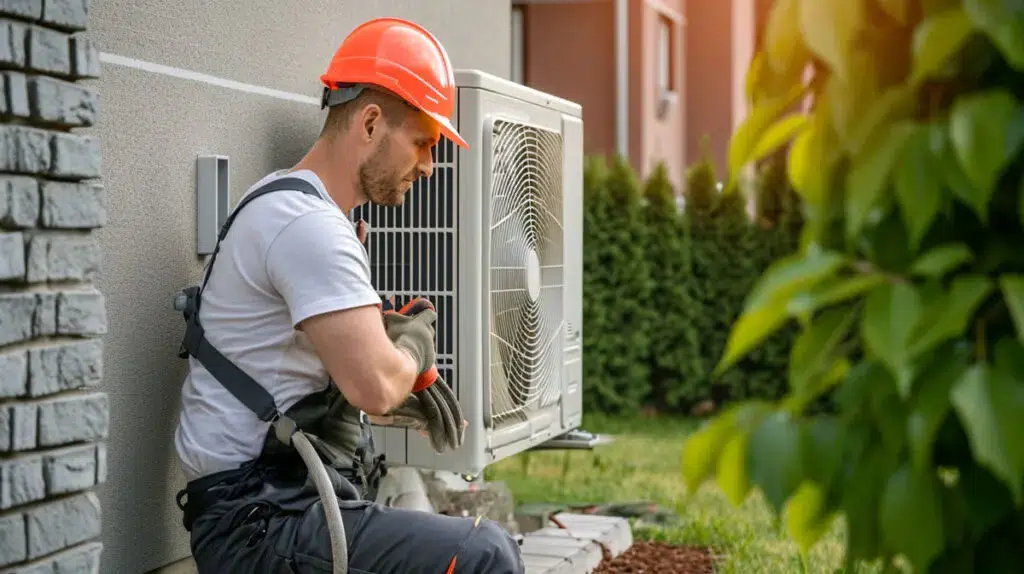
Heat pumps require proper airflow in order to operate efficiently, regardless of the season. During the spring months, many outdoor heat pump units get obstructed by things like dirt, leaves, or even overgrown vegetation.
When a heat pump’s airflow gets restricted, it forces the entire system to work much harder just to move heat—which subsequently reduces overall efficiency and increases energy consumption. It’s also common for a home’s indoor vents to become clogged by the time spring arrives, which further limits a system’s airflow.
By keeping both your outdoor and indoor heat pump components clear of debris, you can easily maintain your system’s performance when you need it most!
Increased Heat Pump Demand Due To Spring’s Fluctuating Temperatures
It’s no secret how spring often comes with unpredictable weather patterns, which often includes warm days followed up by frigid nights.
This type of daily temperature fluctuation can often cause heat pumps to switch between cooling and heating modes, and frequent cycling can sometimes create the type of added system straining that leads to efficiency losses.
Although the majority of modern heat pumps are specifically designed to handle these types of seasonal transitions, excessive system cycling is often a red flag indicating other underlying issues like improper thermostat settings or system sizing.
Keep Your Home’s Heat Pump Running Smoothly This Spring
Spring just so happens to be the perfect time of year for homeowners to give their heat pumps some added attention, and by keeping common efficiency loss causes in mind, you can be more proactive toward helping your HVAC 1 ` system run smoothly this spring.
Timely heat pump repairs, routine maintenance, and all sorts of simple daily habits all go a long way to preserve a unit’s long-term efficiency.
And with the right care, your home can benefit from reliable comfort and lower energy costs all spring and summer long!