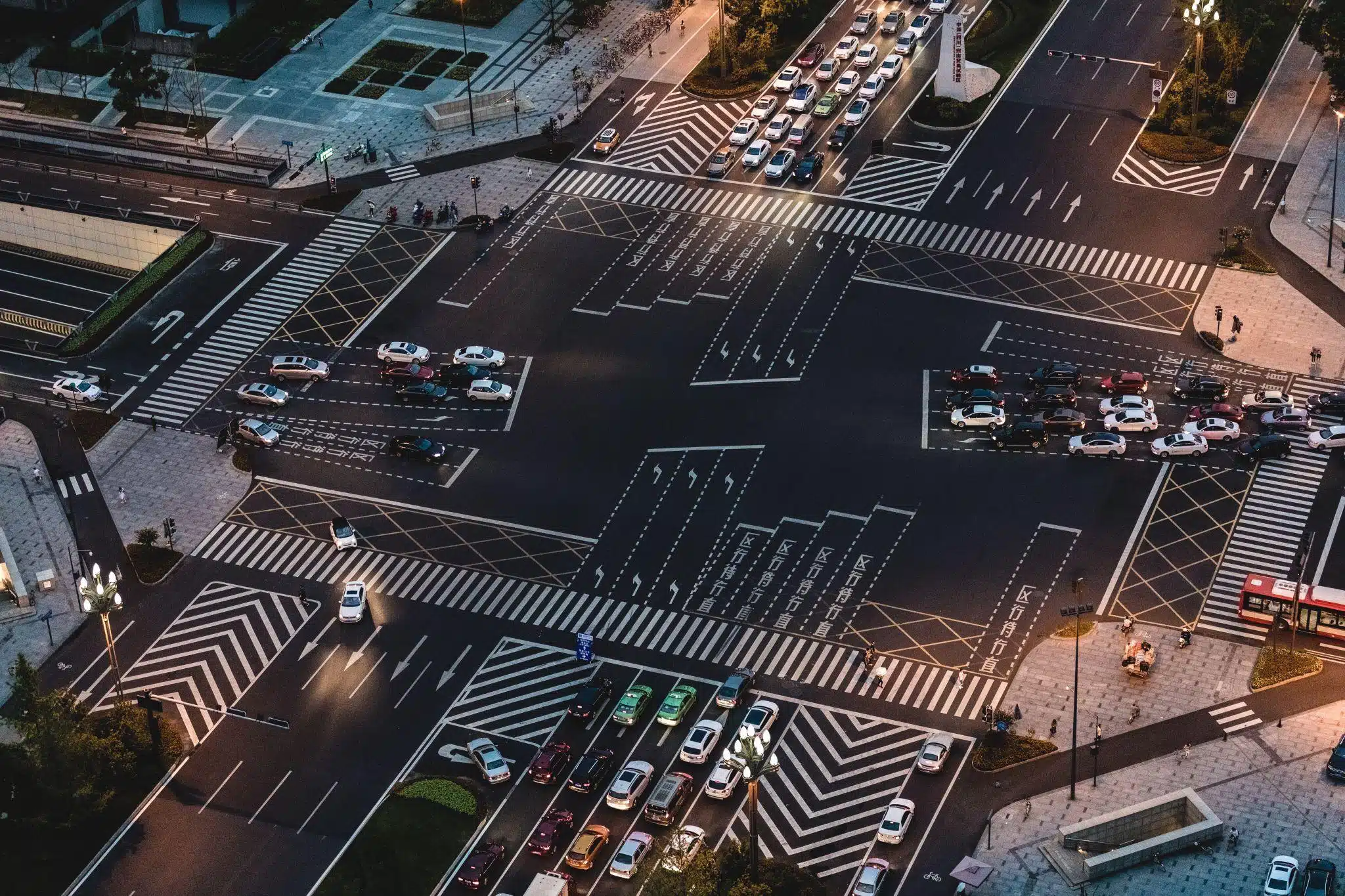
Urban transport has always been one of the engines driving the growth and transformation of cities. Every improvement to how people and goods move, from horse-drawn trams to high-speed rail, shapes not only daily commutes but also the economic and social life of entire regions. The location of a bus terminal can influence where people choose to live, just as the addition of a metro line can change the fortunes of a neglected district. For planners and policymakers, understanding these changes is critical, and one of the most powerful tools for doing so comes in the form of satellite data.
Historical Satellite Data in Urban Planning
Cities rarely grow in a straight line. Transport networks expand in bursts, responding to political decisions, population shifts, and economic demands. In this constant state of change, historical satellite images provide more than just visual records. They are archives of urban evolution. A platform for historical satellite images can supply decades of consistent, objective data, allowing planners to pinpoint when specific roads were added, where housing developments emerged, and how transport hubs influenced the surrounding landscape.
For urban planners, this is invaluable. By comparing images taken years apart, they can detect patterns that traditional records might miss. For example, historical imagery can show that a neighborhood’s traffic congestion began not with the opening of a major road but with the gradual repurposing of nearby industrial land into residential housing. This level of insight supports better decision-making by showing not just what exists today but how it got there.
It also helps cities avoid repeating past mistakes. If an older bypass failed to reduce inner-city traffic, the evidence will be clear in the historical record. Instead of relying on theoretical models alone, planners can point to specific, measurable outcomes from previous projects, making the case for alternative approaches. In an era when infrastructure investments require both public and political support, visual proof from space can be one of the most persuasive tools available.
Historical Satellite Data & Transport
In the study of transport infrastructure, historical satellite imagery offers something unique: the ability to trace the full lifespan of a project. Ground-level reports often focus on construction or operational milestones, but satellite archives provide a continuous overview. This makes it possible to study not just where a road or rail line was built but how it affected traffic flows, urban density, and land use over decades.
The value is especially high in regions with limited or fragmented planning archives. Researchers can use satellite historical imagery free sources to create a baseline understanding of when and how a transport network took shape, even without detailed local records. While free sources may not match the resolution of commercial datasets, they often go back further in time, filling in critical gaps.
These images also capture changes that might otherwise escape notice. Freight corridors can shift gradually, influenced by new industrial zones or port expansions. Bus rapid transit lanes can lose efficiency if surrounding urban growth was not anticipated in the original design. By examining multiple years of imagery, analysts can identify the root causes of such shifts and propose targeted interventions, whether that means redesigning routes, upgrading facilities, or redirecting traffic flow.
In cities where congestion is a persistent problem, the ability to view historical satellite images can reveal whether the solution lies in infrastructure upgrades or in demand management strategies. Without a clear picture of the long-term trend, short-term fixes risk failing to address the real issues.
New Satellite Images in Urban Transport
While historical data is about learning from the past, modern satellite imagery is about reacting to the present and planning for the immediate future. Today’s high-resolution images can capture daily and seasonal variations in transport use, construction progress, and even environmental conditions that affect mobility. With the addition of AI and machine learning, these images can be processed quickly to identify traffic bottlenecks, detect unauthorized construction, or track the rollout of new infrastructure projects.
The benefits extend beyond monitoring. In large-scale infrastructure projects, modern imagery helps ensure that construction stays aligned with environmental regulations and integration plans. For example, when a new ring road is built, planners can compare recent captures with projected layouts to verify that junctions, access roads, and public transport connections are developing as intended.
Public transparency is another advantage. Making satellite data available to residents allows them to follow the progress of major projects and better understand their impact. When modern imagery is combined with satellite historical imagery records, it becomes easier to communicate why a project is necessary and what it aims to improve. People can see for themselves how an area has changed and why a particular intervention might be urgent.
A compelling real-world example comes from July–August 2015, when the Romanian Lower Danube River Administration and the Romanian Space Agency used both Sentinel-1 and Sentinel-2 data from the Copernicus programme to track a navigation bottleneck near Zimnicea on the Danube. A heat wave and unusually low water levels caused more than 100 ships to queue up in the channel, many without Automatic Identification System transponders. Thanks to Sentinel-1’s radar imagery and Sentinel-2’s optical captures, authorities were able to identify this congestion precisely on 26 July and again on 2 and 9 August, providing critical situational awareness that ground-based tracking alone had missed. This combination of historical and current satellite data enabled real-time management of river traffic and supported safer, more informed transport decisions.
Urban transport is not just about getting from one place to another. It is about shaping how cities live, breathe, and grow. By merging the long-term vision provided by historical satellite images with the immediacy of modern captures, planners gain the ability to design systems that are both responsive to current needs and resilient against future challenges.
Author:
Kateryna Sergieieva has a Ph.D. in information technologies and 15 years of experience in remote sensing. She is a scientist responsible for developing technologies for satellite monitoring and surface feature change detection. Kateryna is an author of over 60 scientific publications.