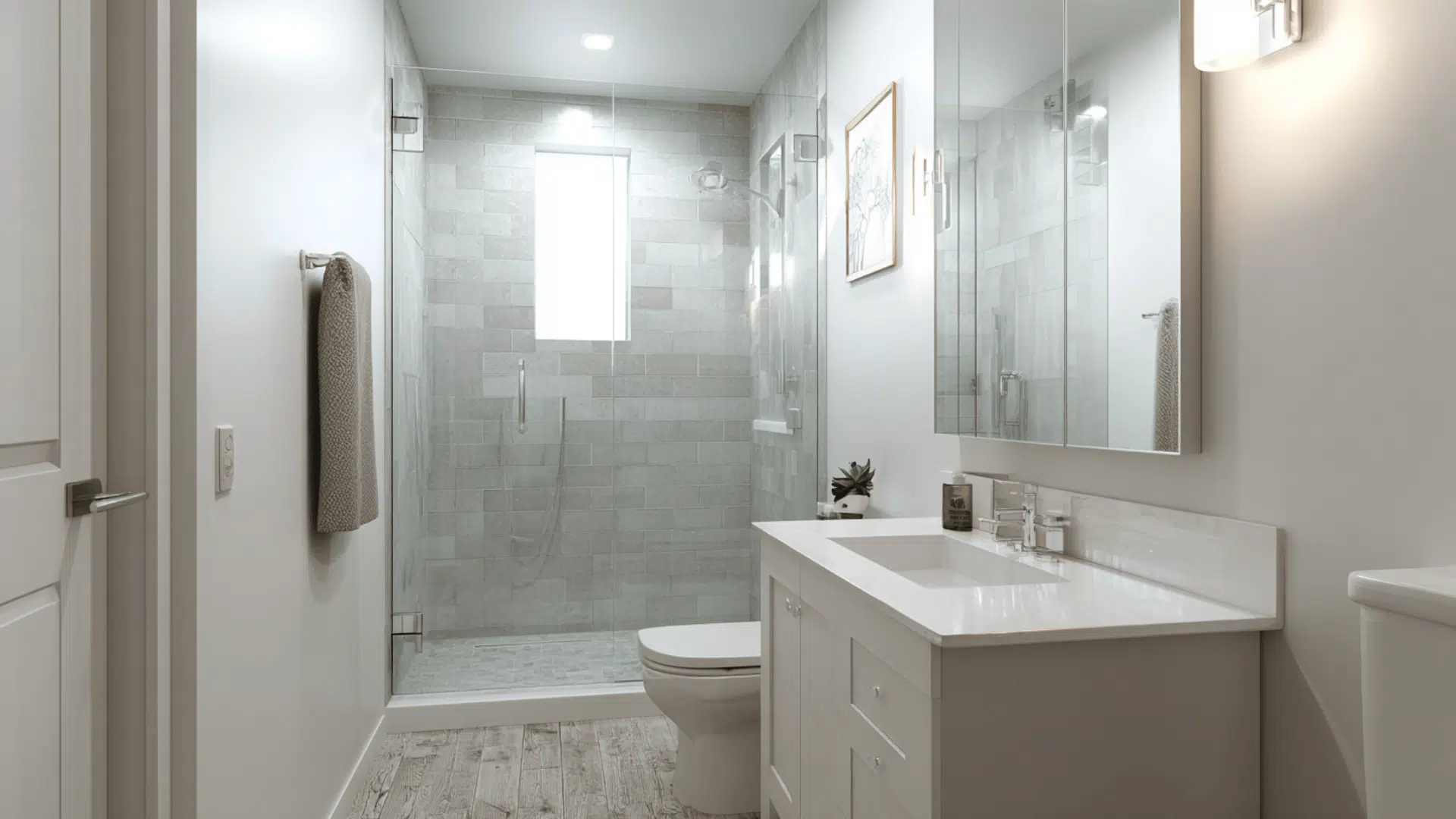
A small bathroom can feel tight fast, but the right layout can change the whole energy of the room.
You don’t need a massive remodel to make it work. You just need to understand how space flows, where people naturally move, and which details make a room feel bigger than it is.
Today, I’ll walk you through simple layout ideas, smart design moves, and space-saving tricks that help you build something practical without losing style.
You’ll also get a few tips that people often miss, especially when they’re trying to squeeze too much into a small footprint.
With that in mind, let’s start by looking at what a small bathroom really is.
What Counts as a Small Bathroom?
Alright, so here’s how I see it. When people talk about a “small bathroom,” they’re usually thinking about a space that feels tight the second you walk in.
And size matters here because the layout gets way more important when the room starts shrinking.
You don’t have the luxury of guessing. You need clear numbers so you don’t end up bumping into things or squeezing around corners like you’re in some weird obstacle course.
Once you know the typical sizes and the rules that go with them, planning gets a whole lot easier.
Typical Dimensions (5×8, 6×6, Narrow Layouts)
Most small bathrooms fall into a few common setups:
- 5 by 8 layout: Classic small-bath size that fits a tub or walk-in shower, a toilet, and a vanity comfortably enough to avoid feeling cramped when things are lined up well.
- 6 by 6 square: Slightly more open than a 5 by 8, but still compact, with every inch needing a clear purpose so the room feels easy to move through without clutter.
- Long narrow layouts: Works fine when the door placement and fixture order are intentional, because poor flow in a hallway-shaped room quickly makes the whole space feel awkward and hard to use.
Minimum Clearance Rules
This part matters more than people think. You can throw fixtures in anywhere, but if the clearances are off, the room won’t feel right. Here’s the stuff you want to keep in mind:
- A toilet needs about fifteen inches from the center of the bowl to each side wall. You want at least twenty-one inches of space in front of it so you’re not sitting with your knees jammed into something.
- A shower usually needs a minimum of thirty inches by thirty inches to not feel cramped.
- And doors? Those can mess you up fast. A standard swing door needs space to fully open without slamming into the toilet or blocking the vanity.
A lot of people forget about door swings and end up with a door that bangs into the sink or leaves barely any room to walk in. If the room is tight, a pocket door or a sliding door can save you.
Full vs. ¾ vs. Half Bath (With Exact Measurements)
These labels get tossed around all the time, but they actually mean something specific.
- A full bath has a toilet, a sink, and either a tub or a shower. Most full baths start around forty square feet. A 5 by 8 layout hits that right on the nose.
- A three-quarter bath has a toilet, sink, and a shower but no tub. These can fit into smaller footprints, sometimes down to around thirty-two square feet if the shower is compact.
- A half bath gives you just a toilet and a sink. You can fit one of these into about eighteen to twenty square feet, depending on the layout and door placement.
Once you know which type you’re dealing with, the layout decisions make way more sense. It keeps you from trying to force a full bath into a space that was never meant for it.
Best Small Bathroom Layouts
When you’re working with a small bathroom, the layout ends up doing most of the heavy lifting. The shape of the room and the way you use it day to day decide which setups actually feel good and which ones turn into a tight squeeze.
Standard 5×8 Bathroom Layouts
Simple setups that use the classic small-bath footprint in a way that feels balanced and easy to move through.
1. Tub + Toilet + Vanity in a Straight Line
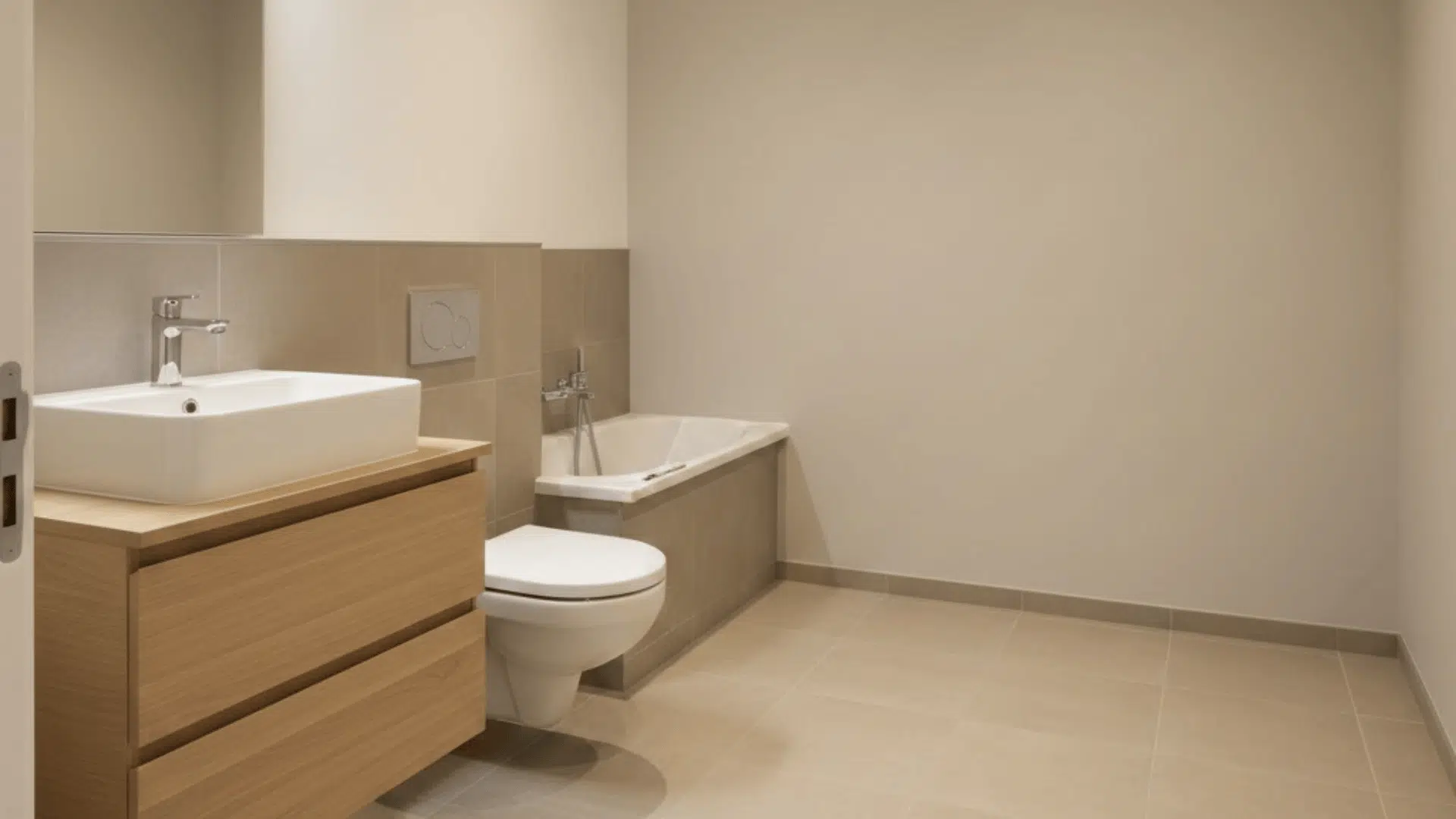
This is the classic five-by-eight setup, and it works because everything falls into one simple rhythm. The tub sits on the short wall, the toilet follows, and the vanity finishes the line.
It keeps the room predictable and calm, which helps a small bathroom feel easier to move through without any awkward tight spots.
2. Walk-In Shower Replacing the Tub
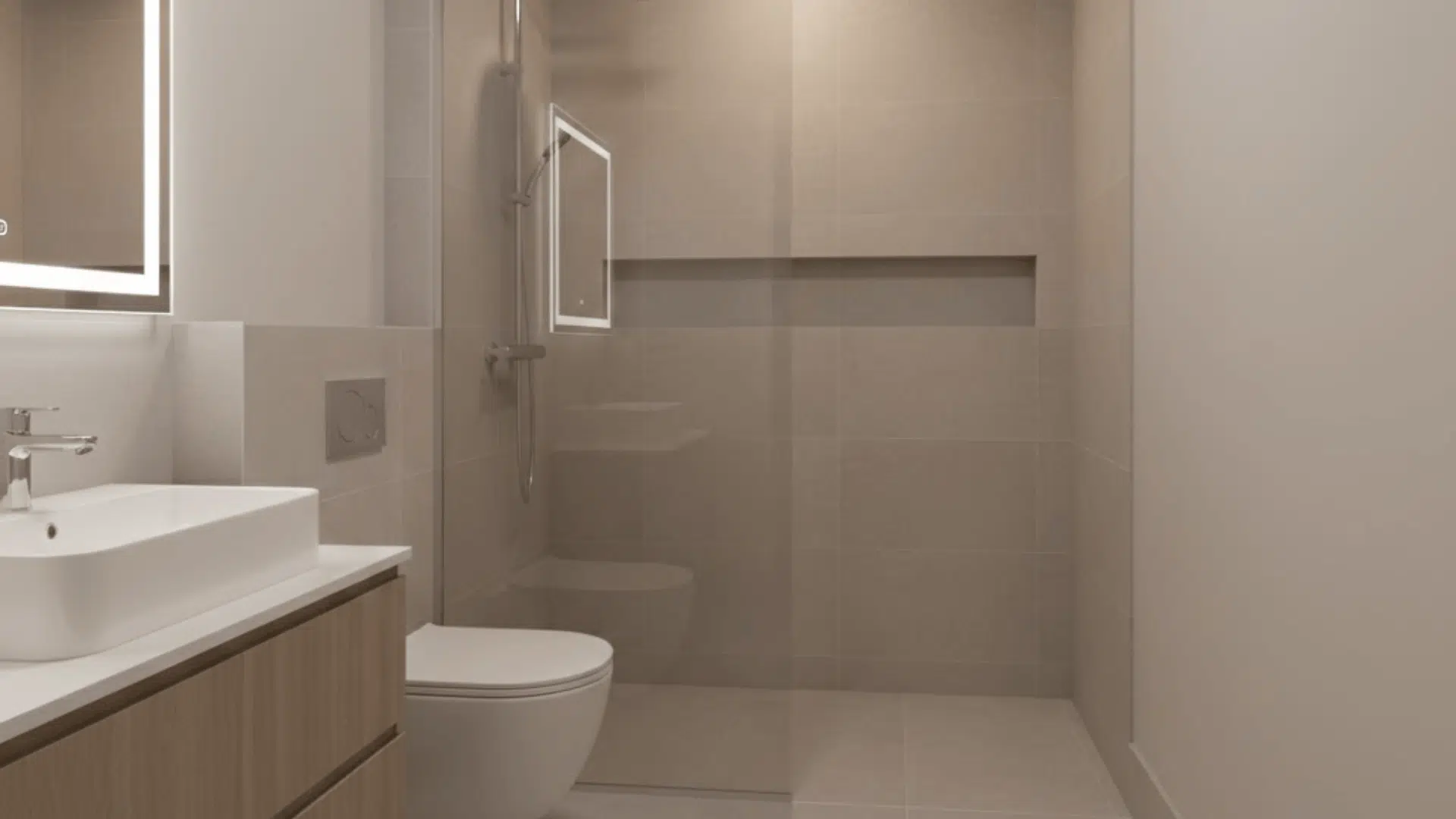
If you’re not using a tub often, swapping it for a walk-in shower can open the room up fast. A clear glass panel keeps the sightlines wide, and the shower base stays tight along the wall.
It’s a clean, modern look that makes the space feel bigger without adding any real complexity to the layout.
3. Corner Vanity with Toilet and Tub in a Row
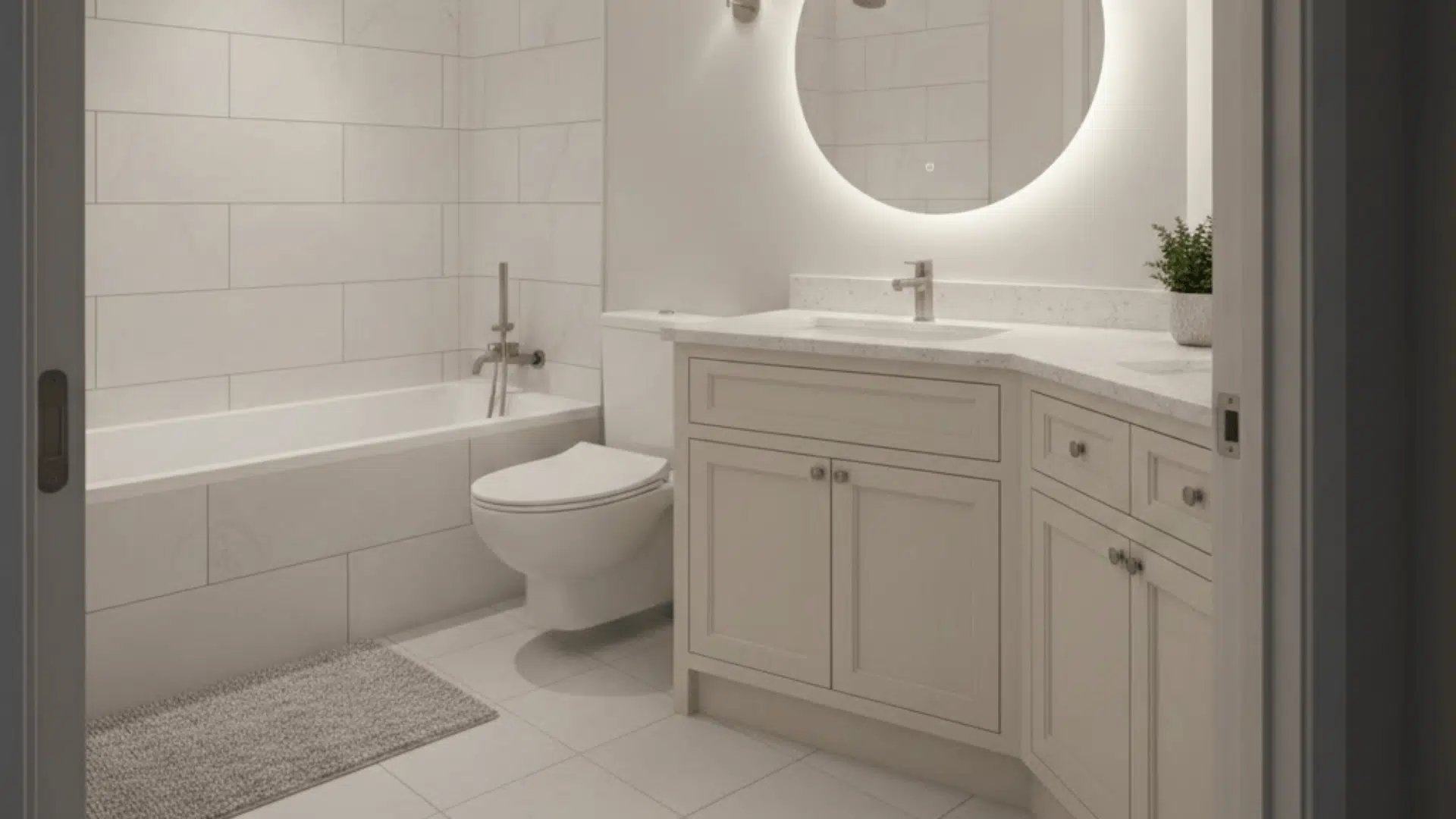
A corner vanity gives you more walkway, which matters a lot in a small room.
Depending on the layout of the room, instead of a corner vanity, a double-sink vanity can also look suitable. The double-sink vanity can sit flush against one wall instead of curving around two walls.
The toilet and tub stay in their usual line, but tucking the sink into the corner pulls everything away from the entry. It’s a small shift that makes the room feel more open when you step in.
4. Tub on the Short Wall, Vanity Opposite Toilet
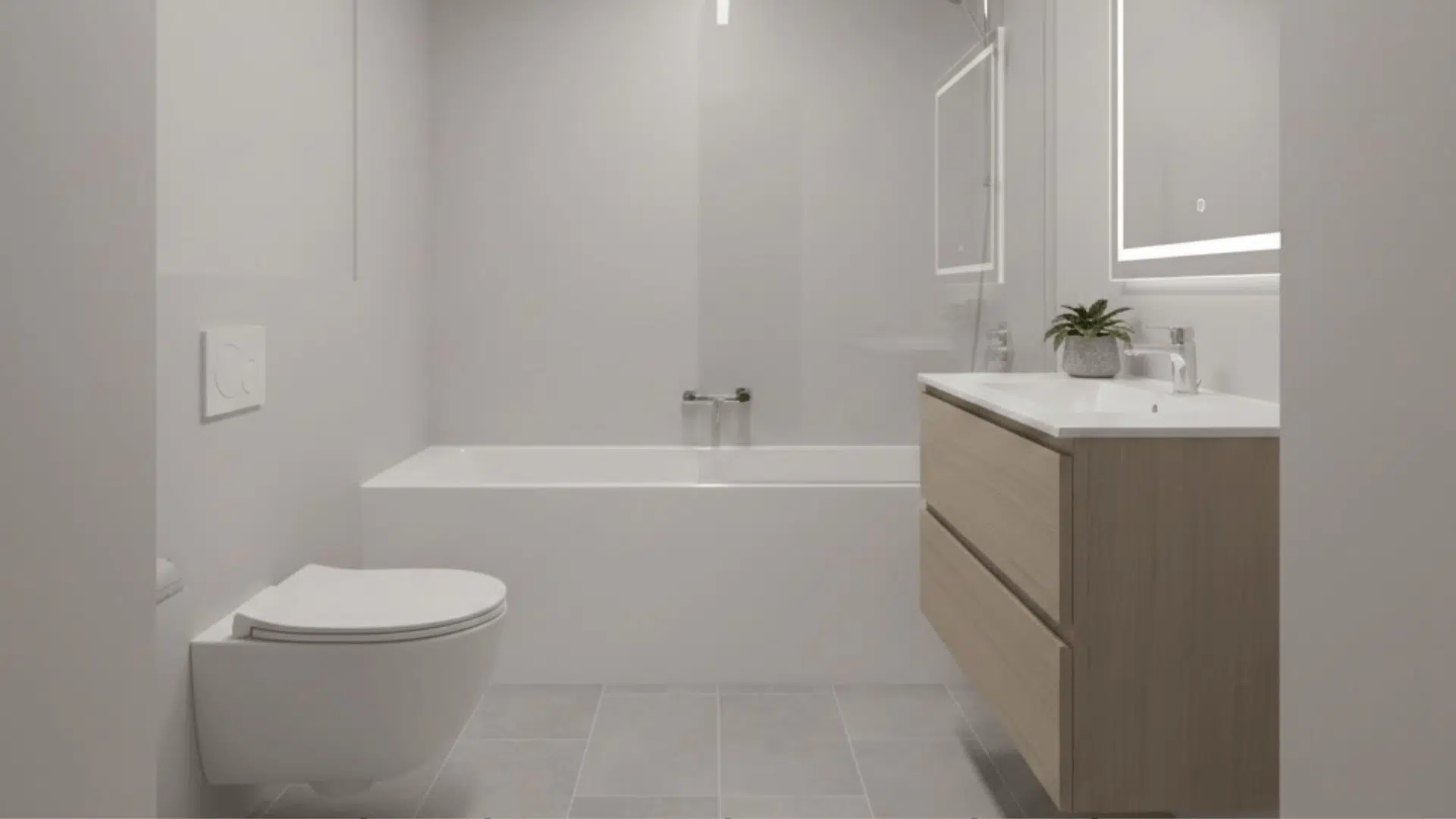
This layout breaks the usual straight line. The tub stays centered on the short wall, but the vanity sits across from the toilet instead of stacking everything side by side.
That back-and-forth placement gives the room a balanced feel and keeps things from feeling cramped when the walls are close.
5. Floating Vanity + Shower Combo
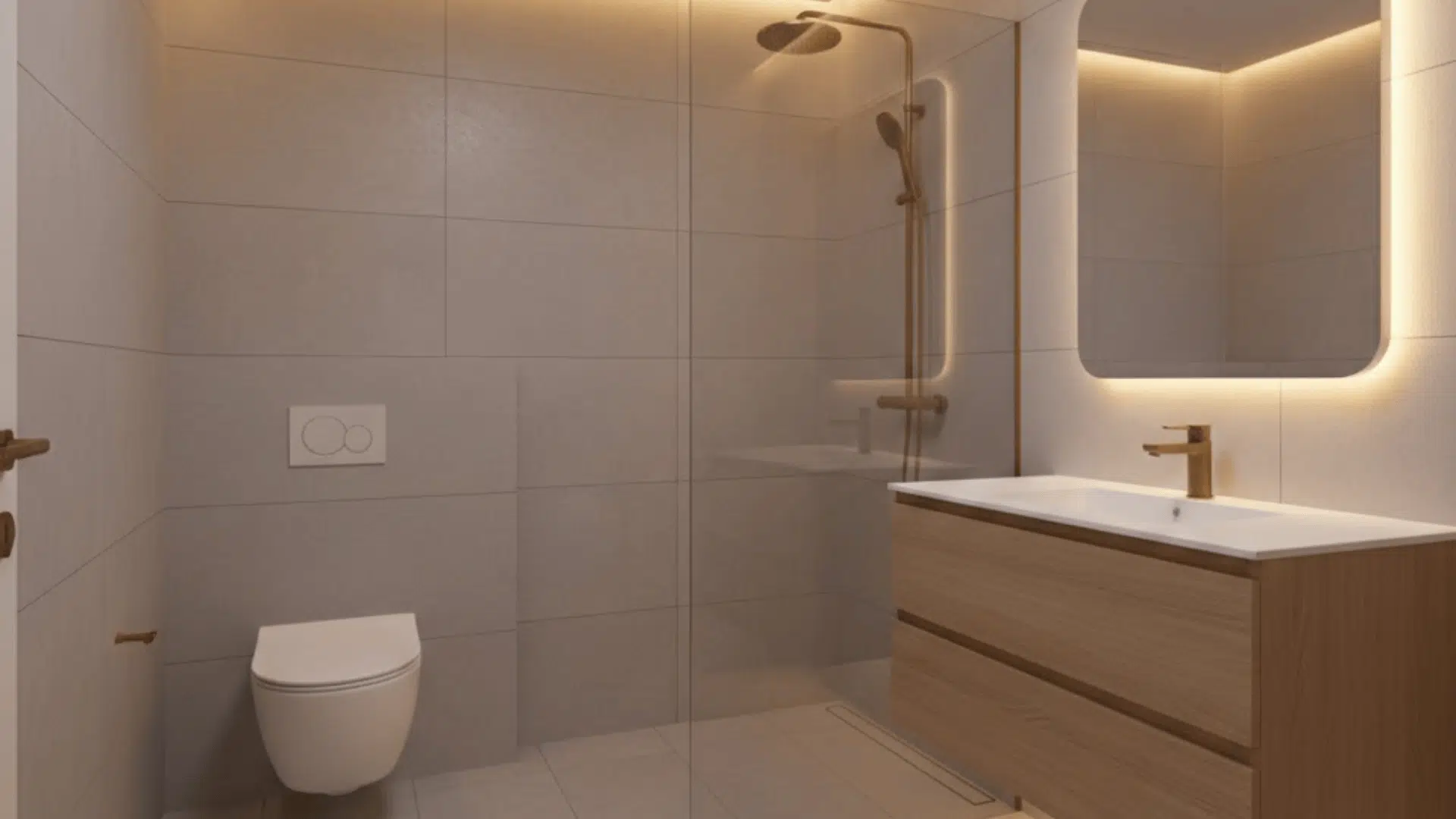
A floating vanity shows more of the floor, which helps a tight bathroom feel taller and lighter. When the shower sits right beside it, the whole space feels less weighed down.
It’s a simple way to modernize the room and gain a little visual space without changing the footprint.
Narrow Bathroom Layouts
Layouts designed to keep long, tight rooms feeling open by focusing on flow, door placement, and fixture order.
6. All Fixtures in a Single Row
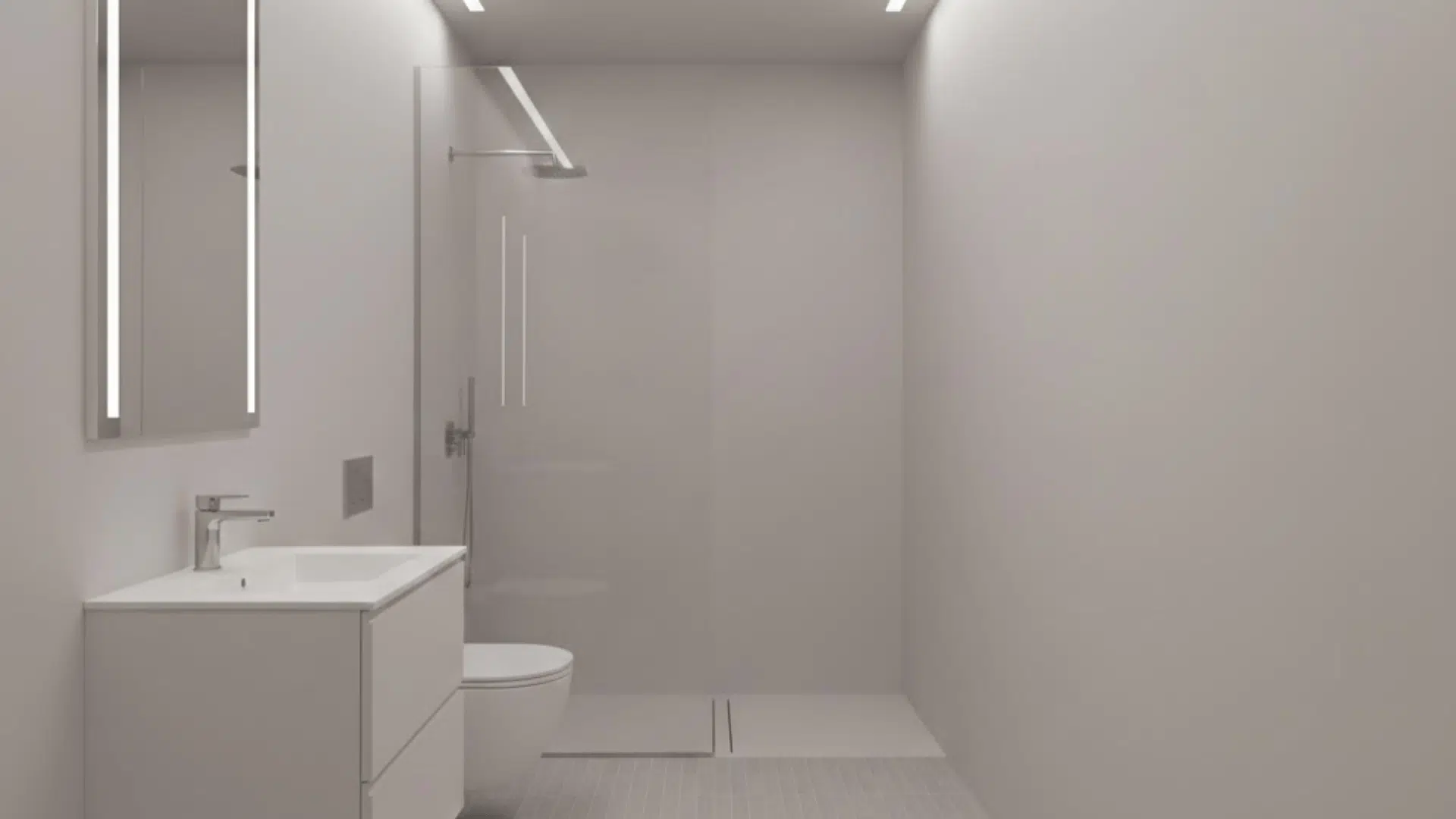
Narrow bathrooms work better when you stop fighting the shape. Putting the vanity, toilet, and shower in one clean row keeps the walkway open and prevents that twisting, sideways shuffle people end up doing in tight spaces. It’s predictable and easy to navigate, which helps the room feel more comfortable.
7. Shower at the Far End, Toilet and Vanity Together
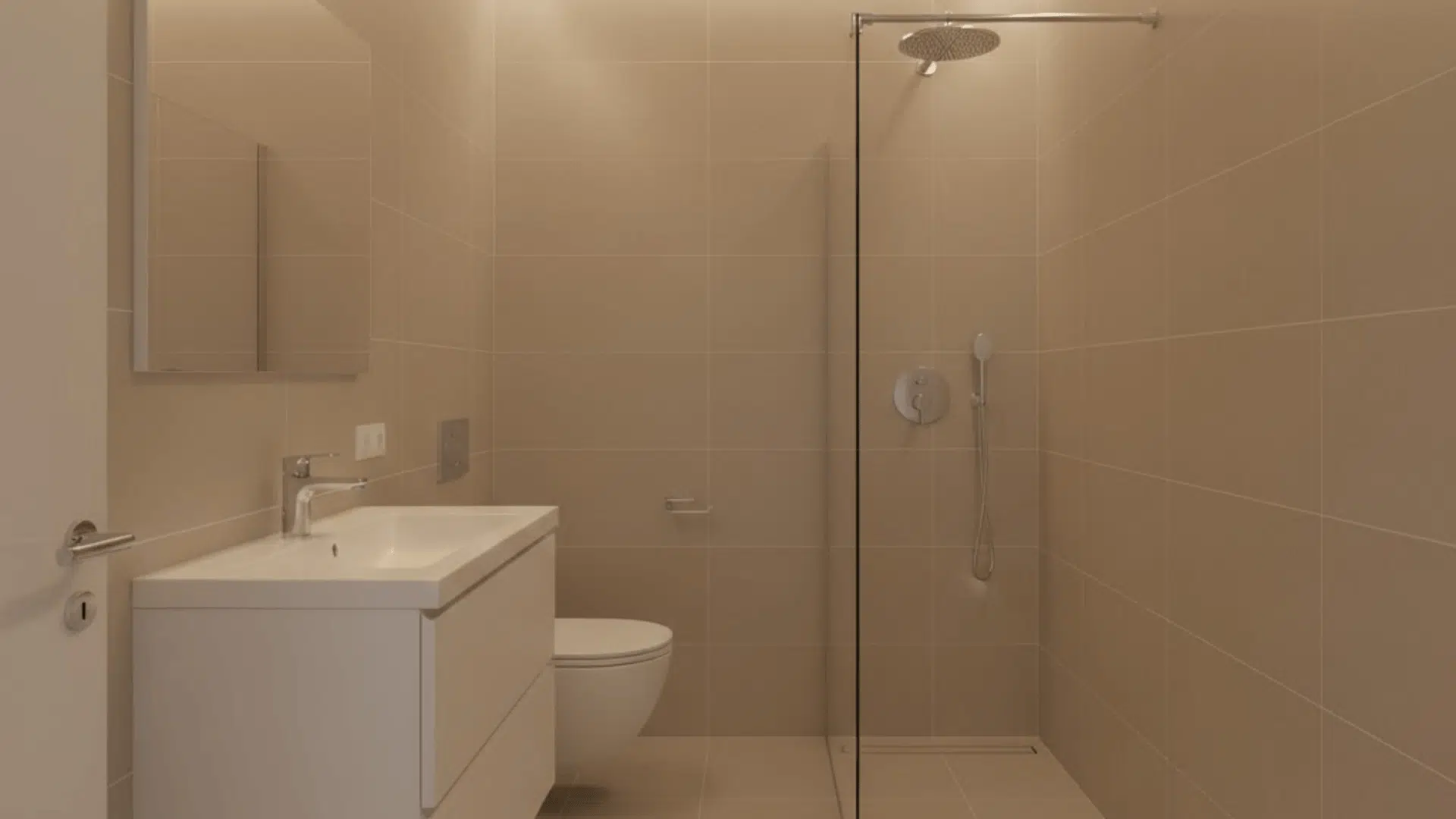
This layout uses the shower like an end point. You walk in, pass the vanity and the toilet, and the room naturally pulls your eye toward the far wall.
It makes the bathroom feel longer instead of boxed in. It’s a simple trick, but it works almost every time.
8. Toilet Centered on the Long Wall with Shower at the End
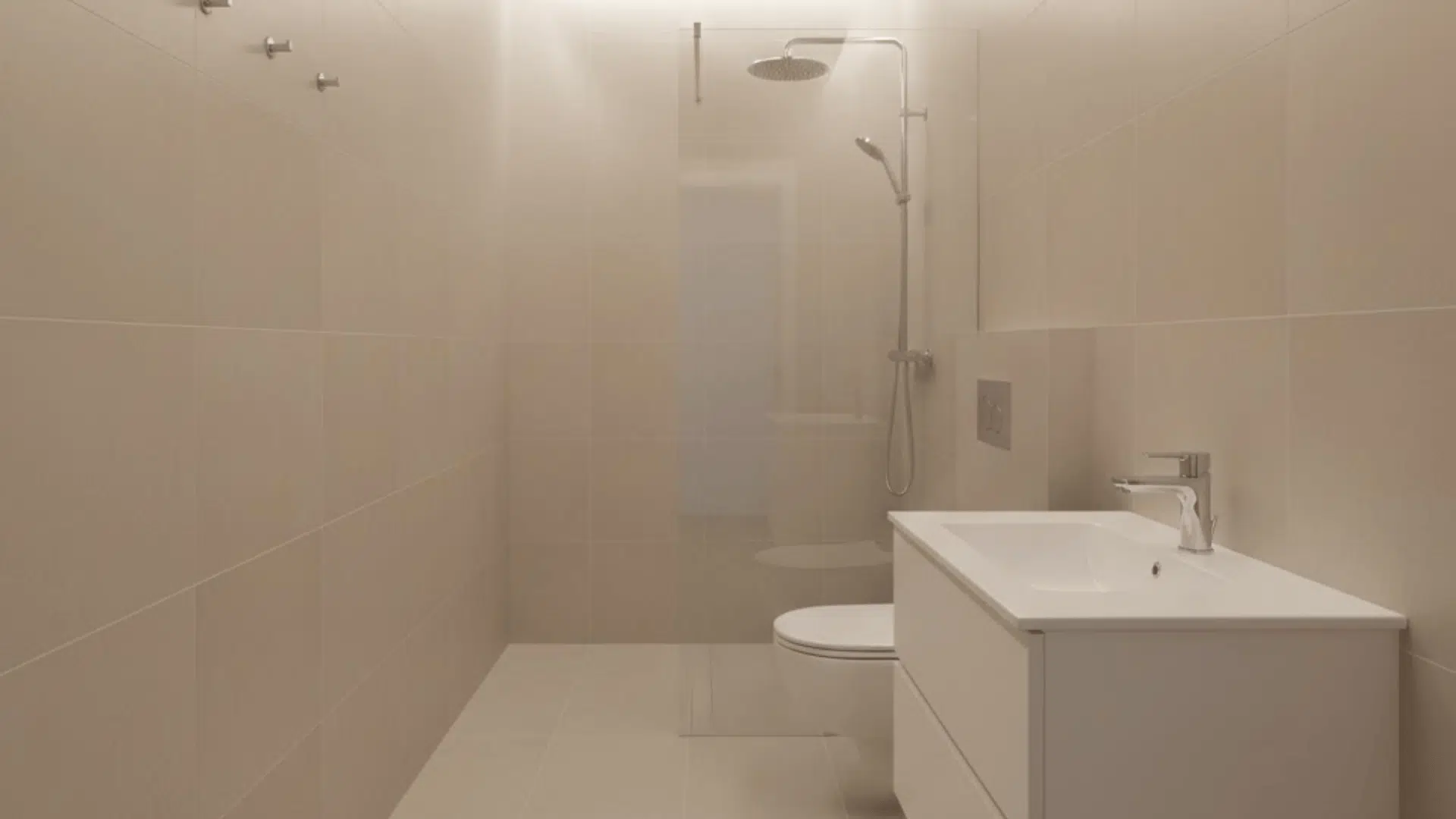
Centering the toilet on the long wall brings a nice visual balance to a skinny room. The vanity sits closer to the entry, and the shower anchors the far end.
The whole layout feels organized without being complicated, which helps the bathroom feel more open even when the width is tight.
9. Pocket Door + Row Layout
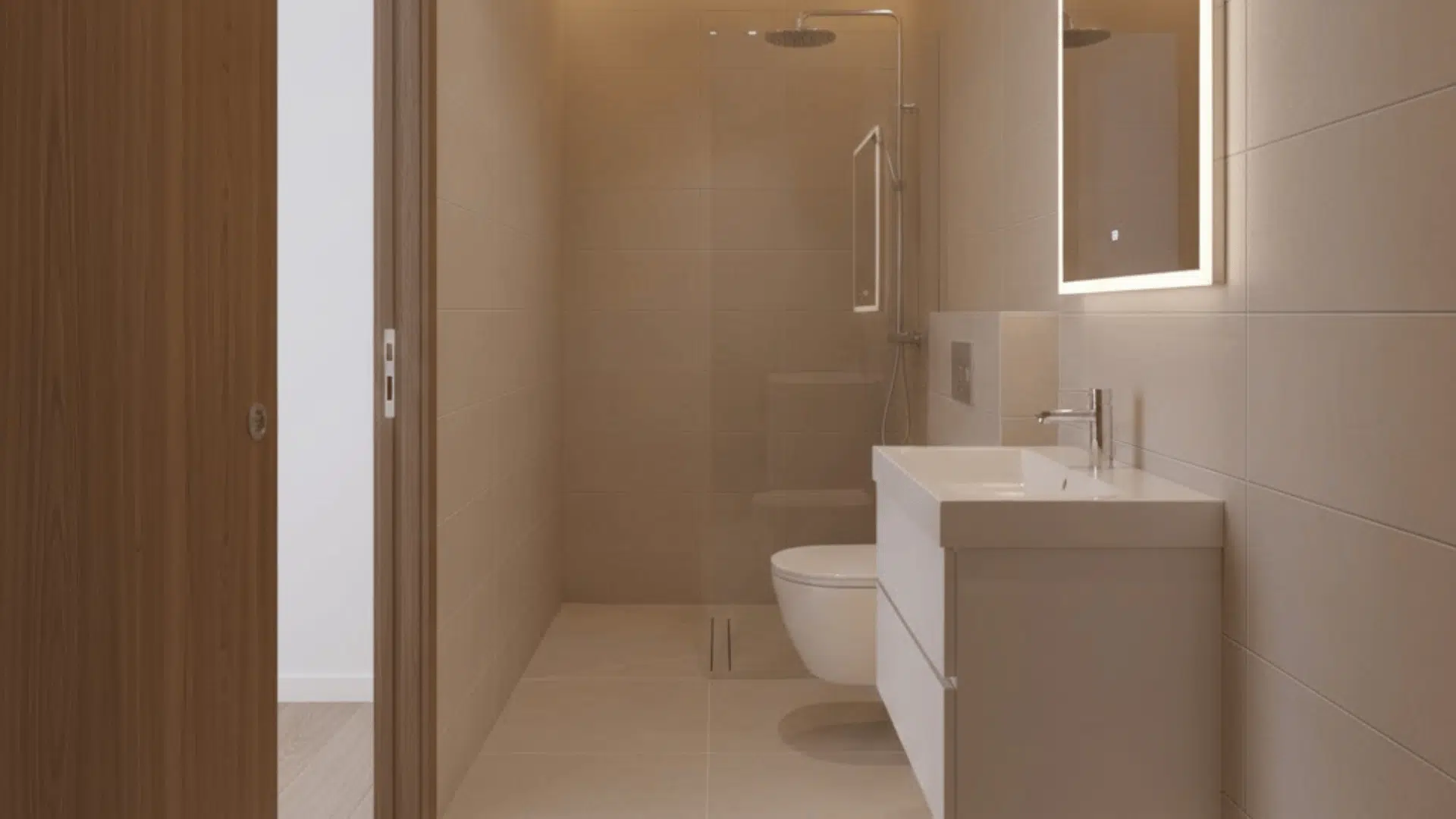
A pocket door is a lifesaver in a narrow bathroom. Instead of swinging in and hitting something, it disappears into the wall.
Combine that with all fixtures along one side, and you get a layout that feels usable as soon as you step in. It turns a tight space into something much easier to live with.
10. Entry Placed in the Middle, Shower Opposite
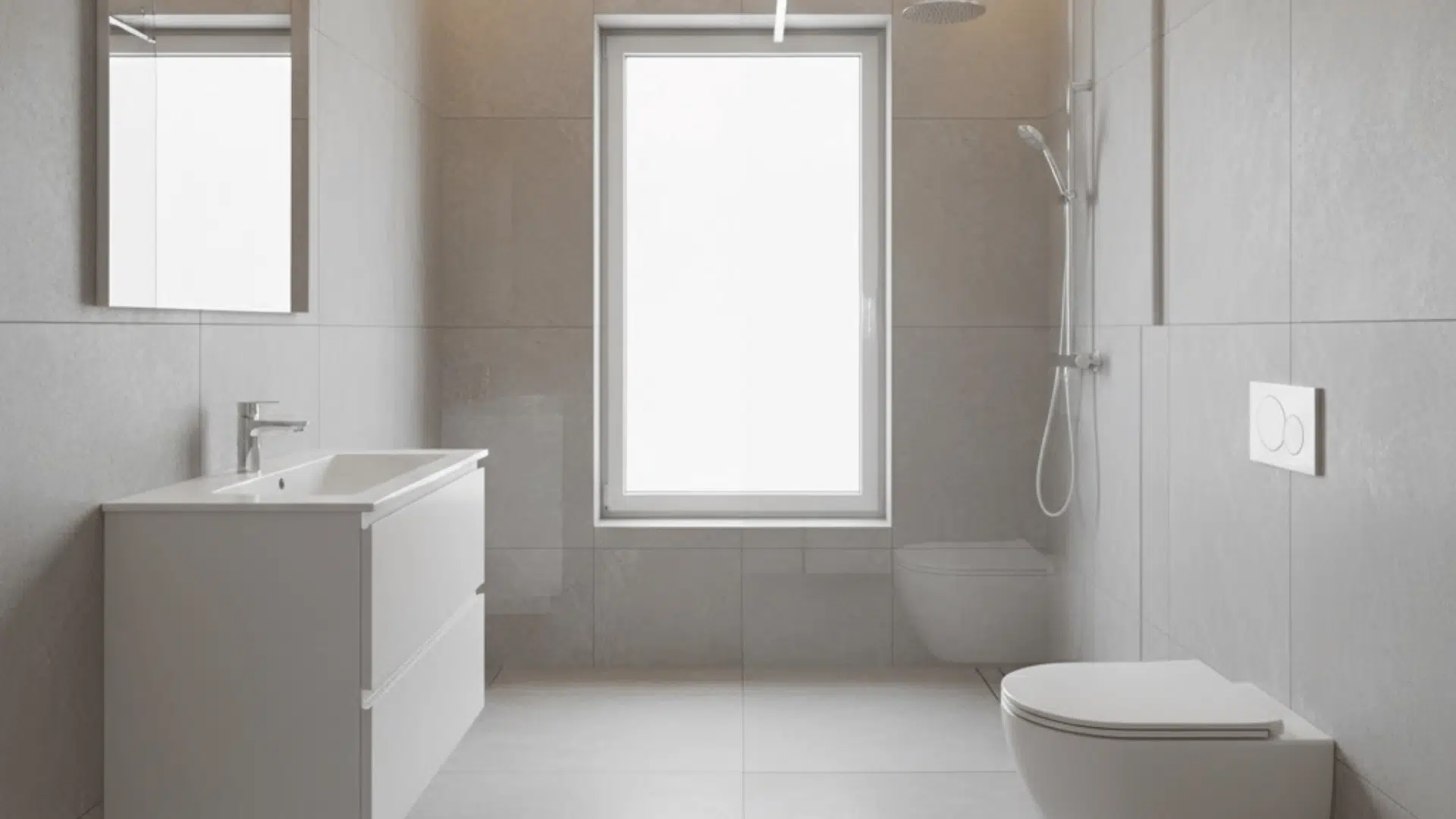
Putting the entry in the middle of the long wall creates a natural balance the moment you walk in.
The shower sits right across from the door, with the vanity and toilet splitting the space on each side. It’s simple, but it makes the room feel wider and less like a hallway.
Square Small Bathroom Layouts
Ideas that use symmetry and centered placement to make compact square rooms feel organized instead of crowded.
11. Corner Shower + Centered Vanity
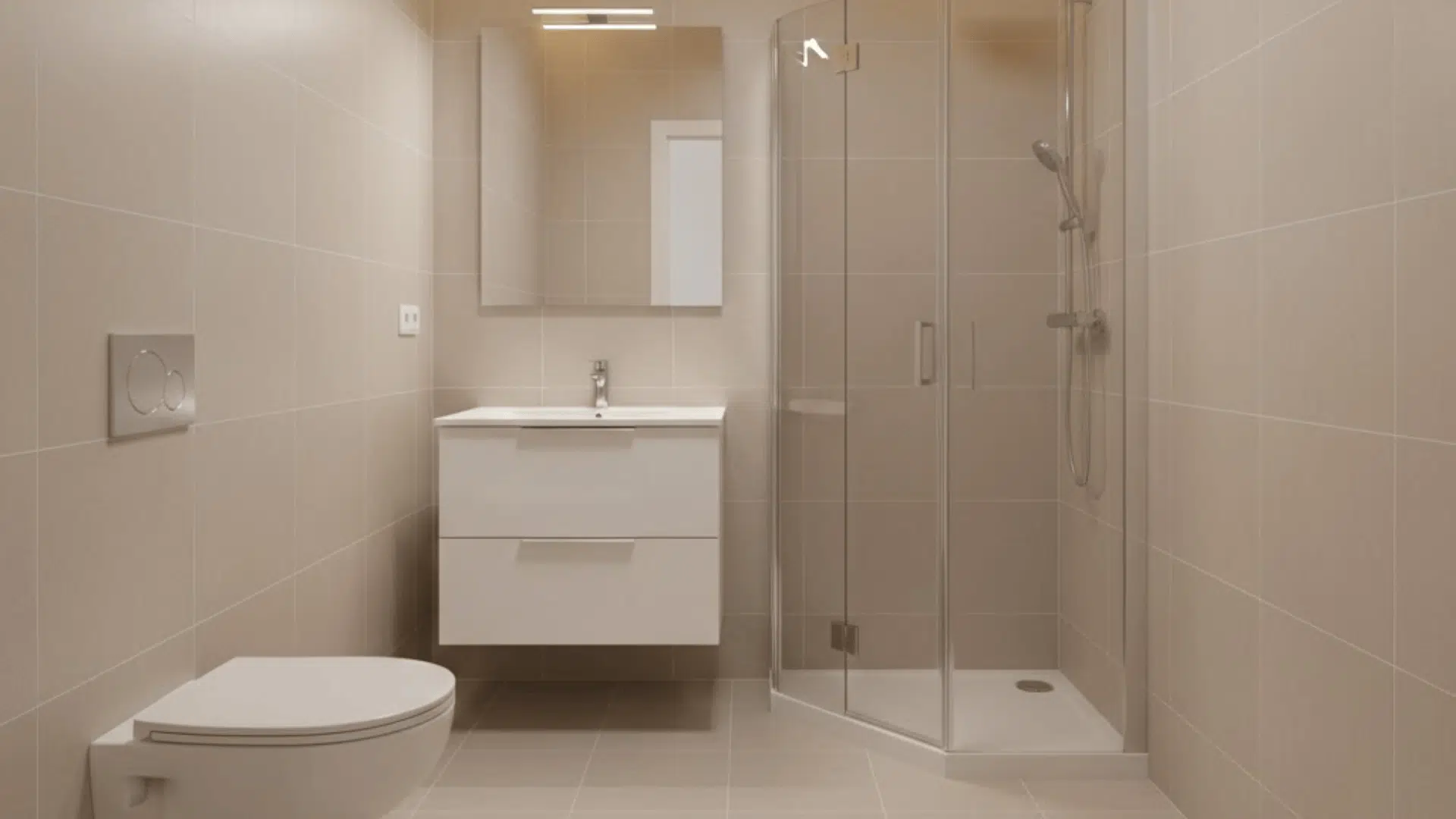
A corner shower frees up the middle of the room, and putting the vanity in the center of the opposite wall keeps everything balanced.
It’s a layout that makes a square bathroom feel organized instead of chaotic. The corner shower pulls the eye sideways, which helps the space feel wider and easier to move through.
12. Vanity Between Toilet and Shower
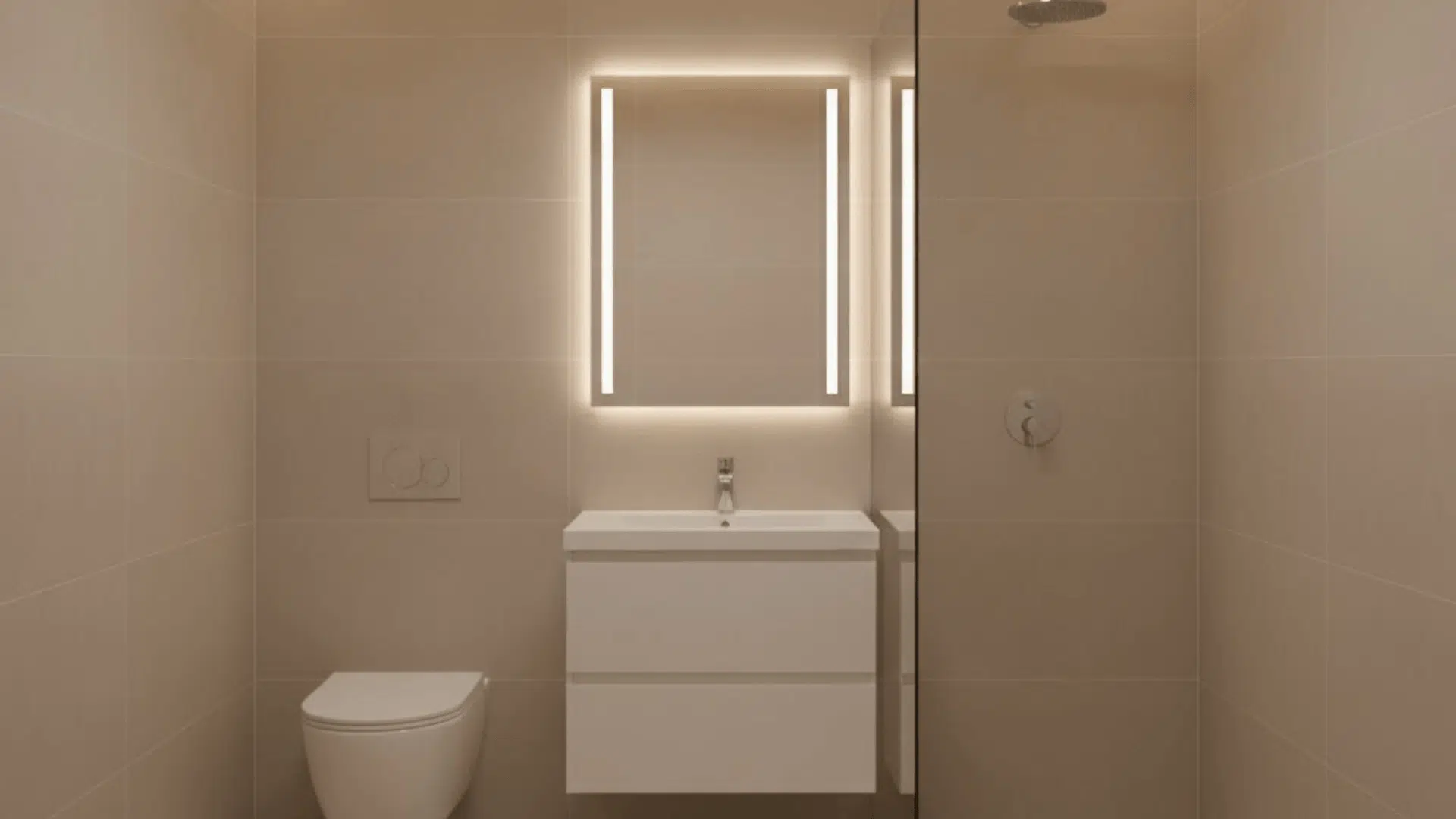
This setup breaks the fixtures into a simple left-to-right rhythm. The toilet sits on one side, the shower anchors the other, and the vanity lands between them.
That spacing keeps the room from feeling crowded. You get a clean flow when you walk in, and everything sits where your brain expects it to be.
13. Corner Vanity + Straight-Line Fixtures
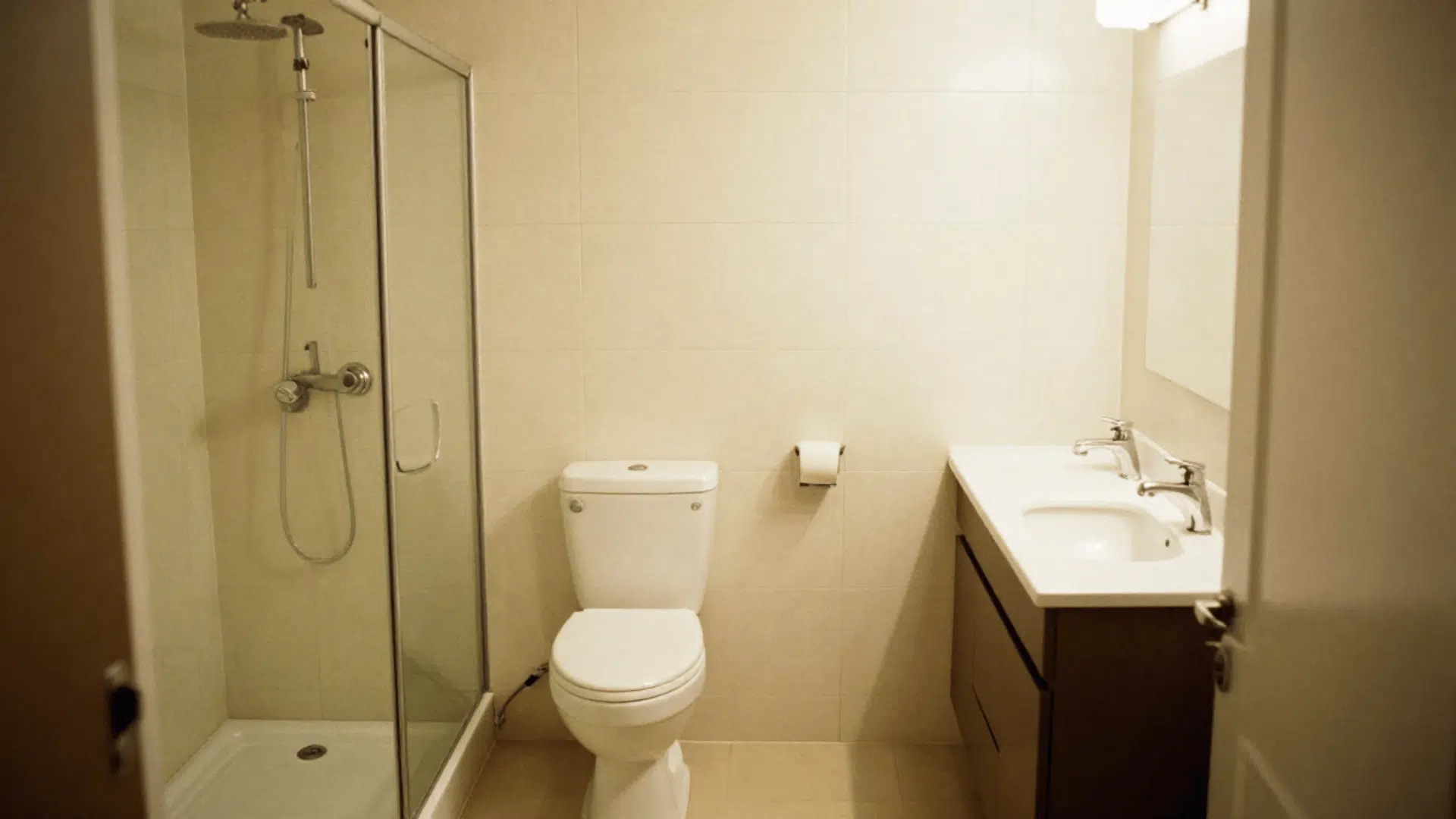
Putting the vanity in the corner opens up the walkway and gives a square room more usable floor space.
The shower and toilet stay in a straight line along one wall, which keeps the whole layout predictable. It’s an easy way to make a small square bathroom feel less boxed in without changing anything major.
14. Compact Shower + Wall-Hung Toilet
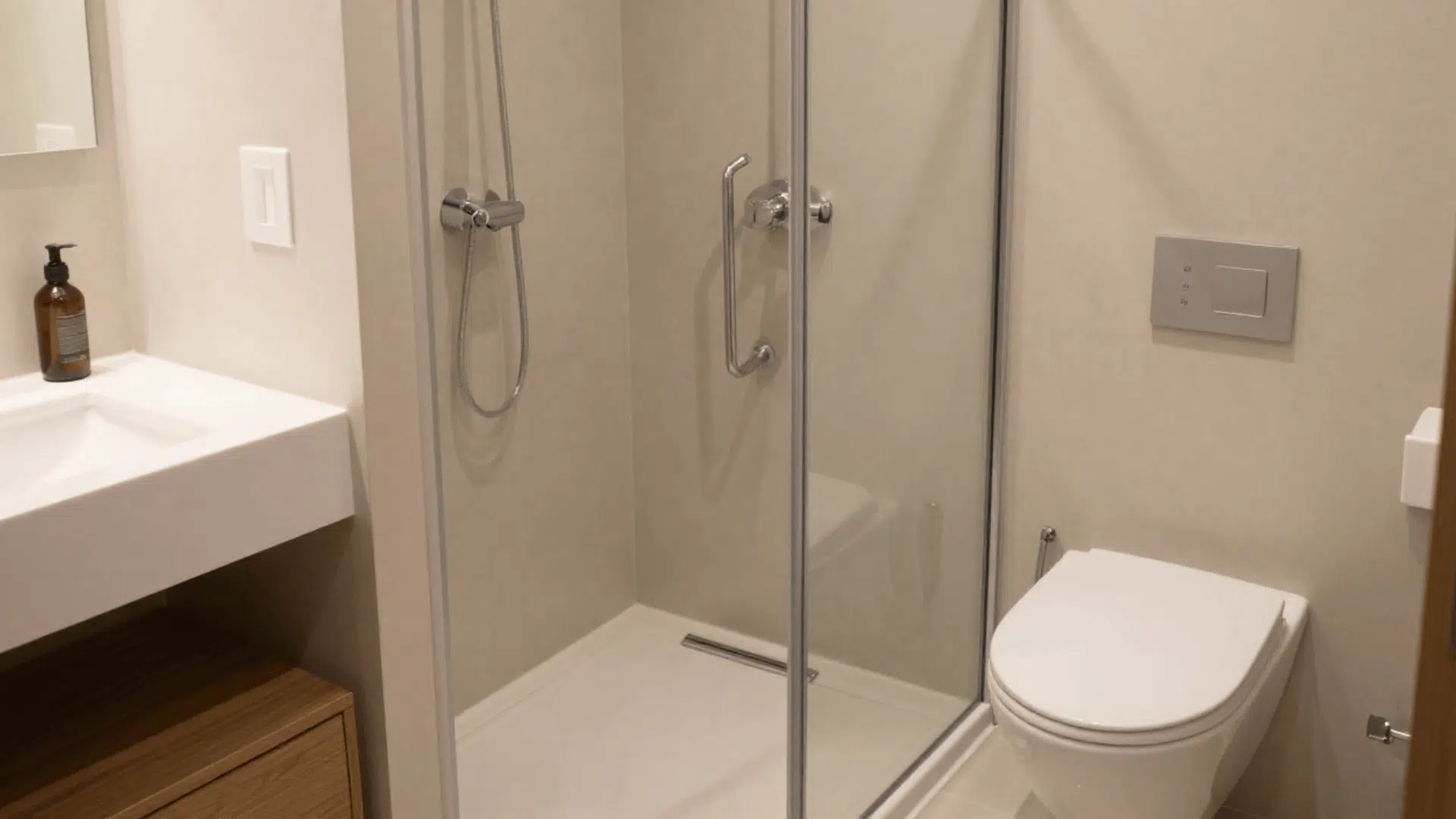
A compact shower paired with a wall-hung toilet gives you more open floor area. In a square room, that exposed floor makes a noticeable difference.
The layout feels lighter, and the room doesn’t close in on you. It’s a simple setup that works well when you want a tighter footprint without losing comfort.
Half-Bath and Powder Room Layouts
Quick, space-efficient setups that keep small guest bathrooms functional without feeling cramped.
15. Sink Across From the Toilet
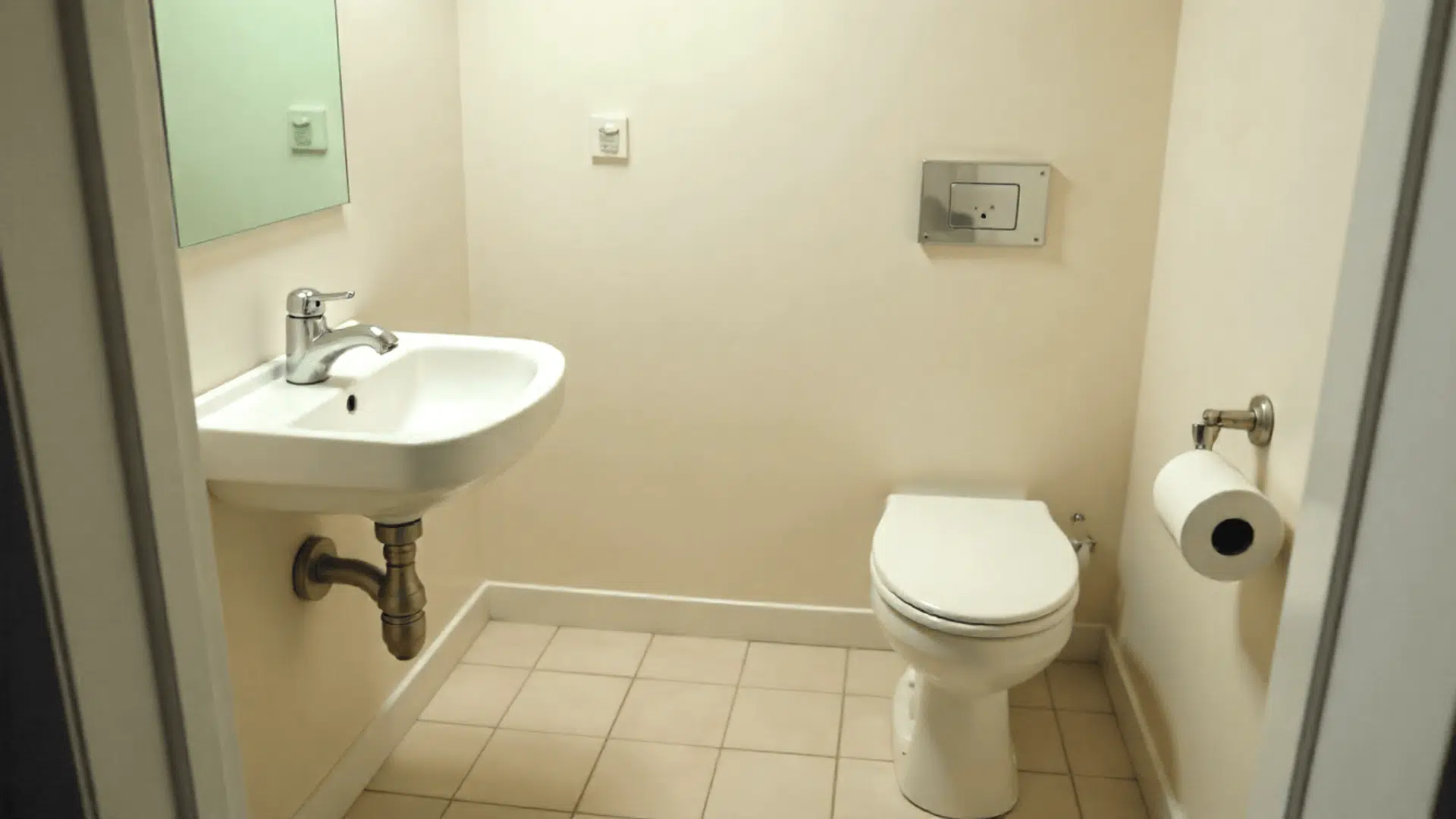
Putting the sink across from the toilet keeps a small half bath feeling open. The walkway stays clear, and the room doesn’t feel like you’re stepping straight into the fixtures.
It’s a straightforward layout that works almost anywhere and makes the most of a tight footprint.
16. Corner Sink + Front Toilet
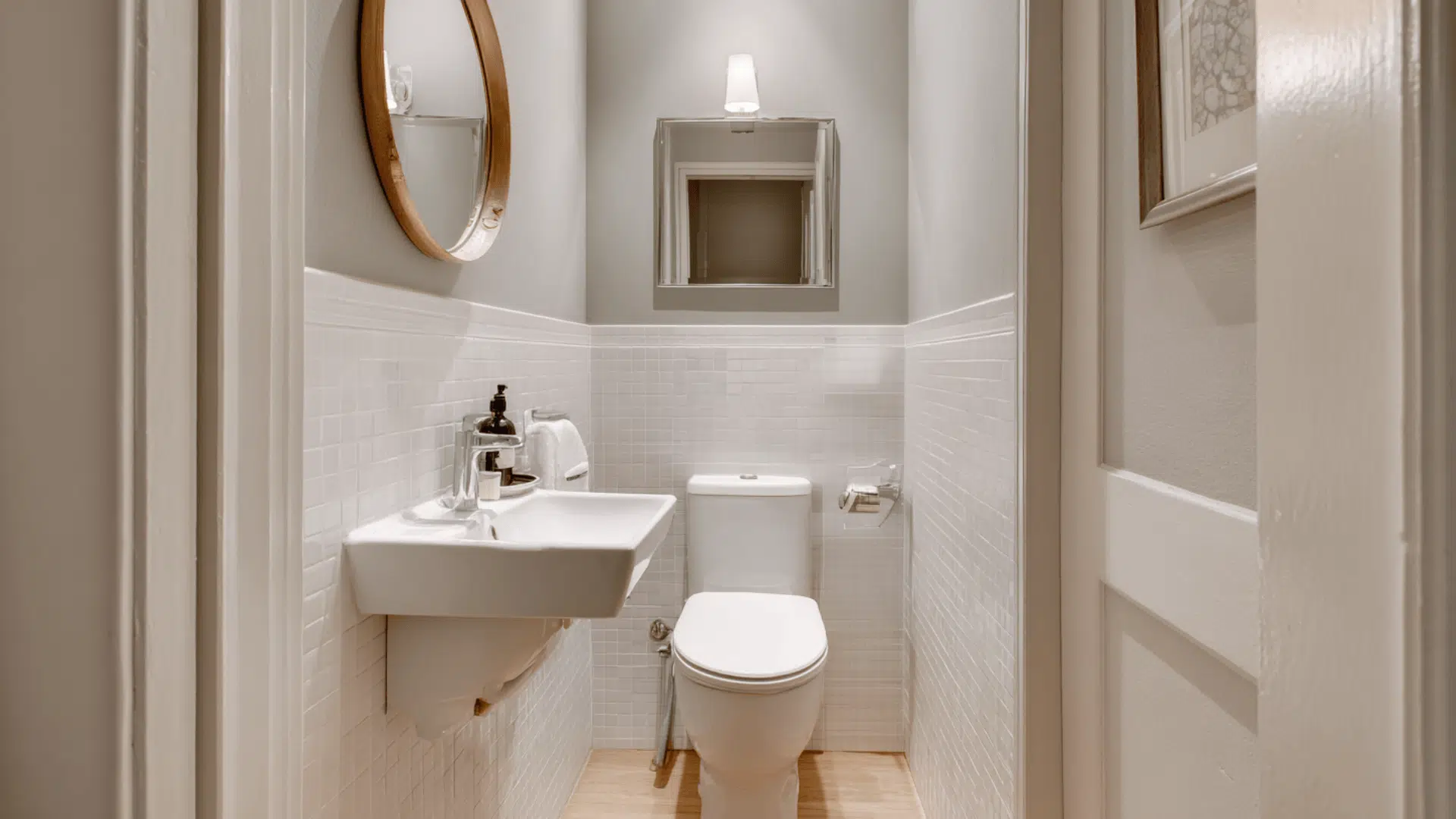
A corner sink pulls everything away from the center of the room, which helps a powder room feel more open. The toilet sits in front of it, giving you just enough space to move without squeezing.
It’s a simple little layout that solves a lot of tight-entry problems in small half baths.
17. Wall-Hung Sink + Pocket Door
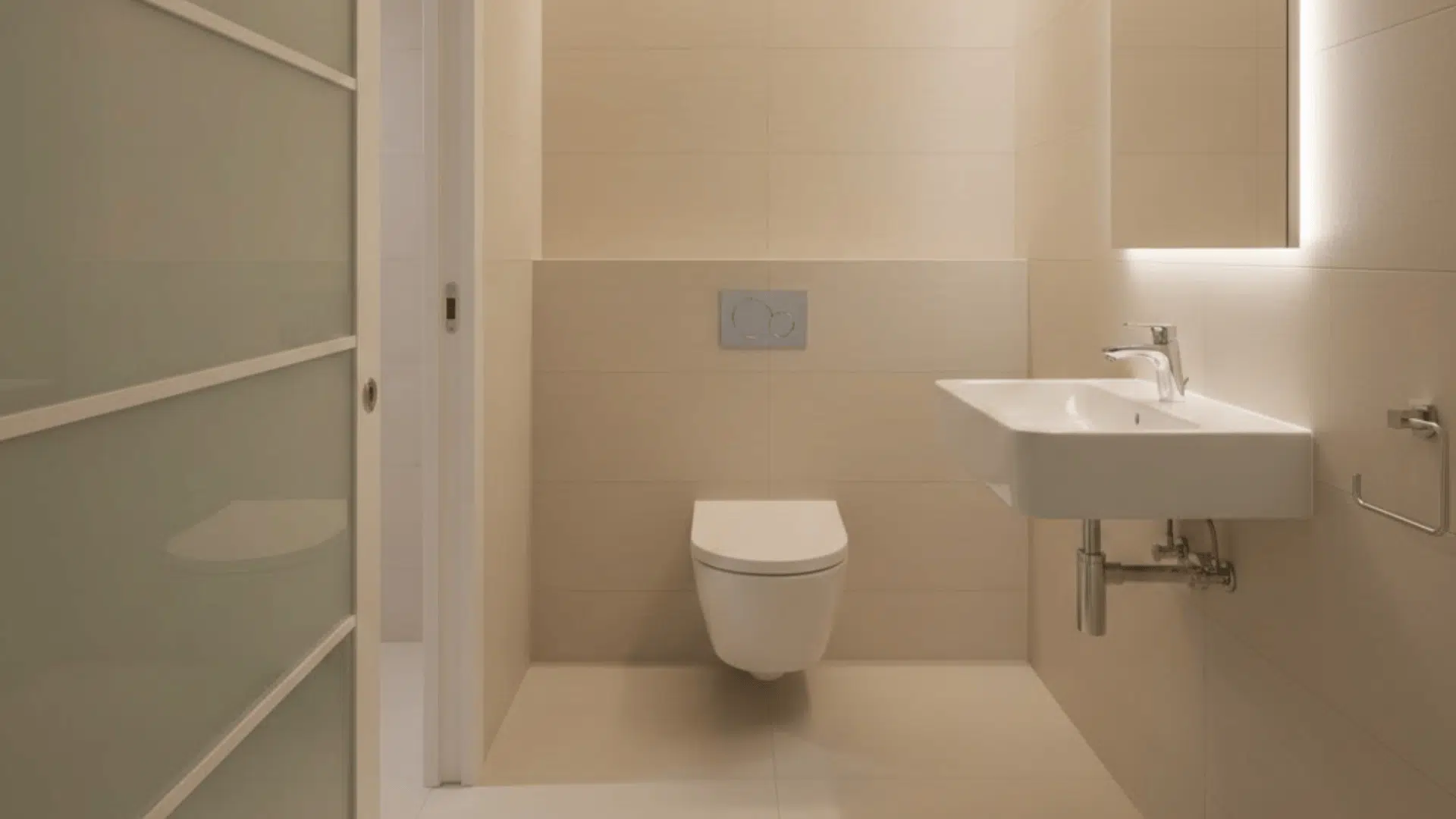
A wall-hung sink keeps things light, and the pocket door removes the whole door-swing problem.
Together, they make a tiny powder room feel usable instead of cramped. It’s one of those layouts that looks minimal but gets the job done without any extra tricks.
Small Bathroom with Tub vs. without Tub
Clear layout options that show how choosing a tub or a walk-in shower changes space, comfort, and movement.
18. Small Tub + Compact Vanity
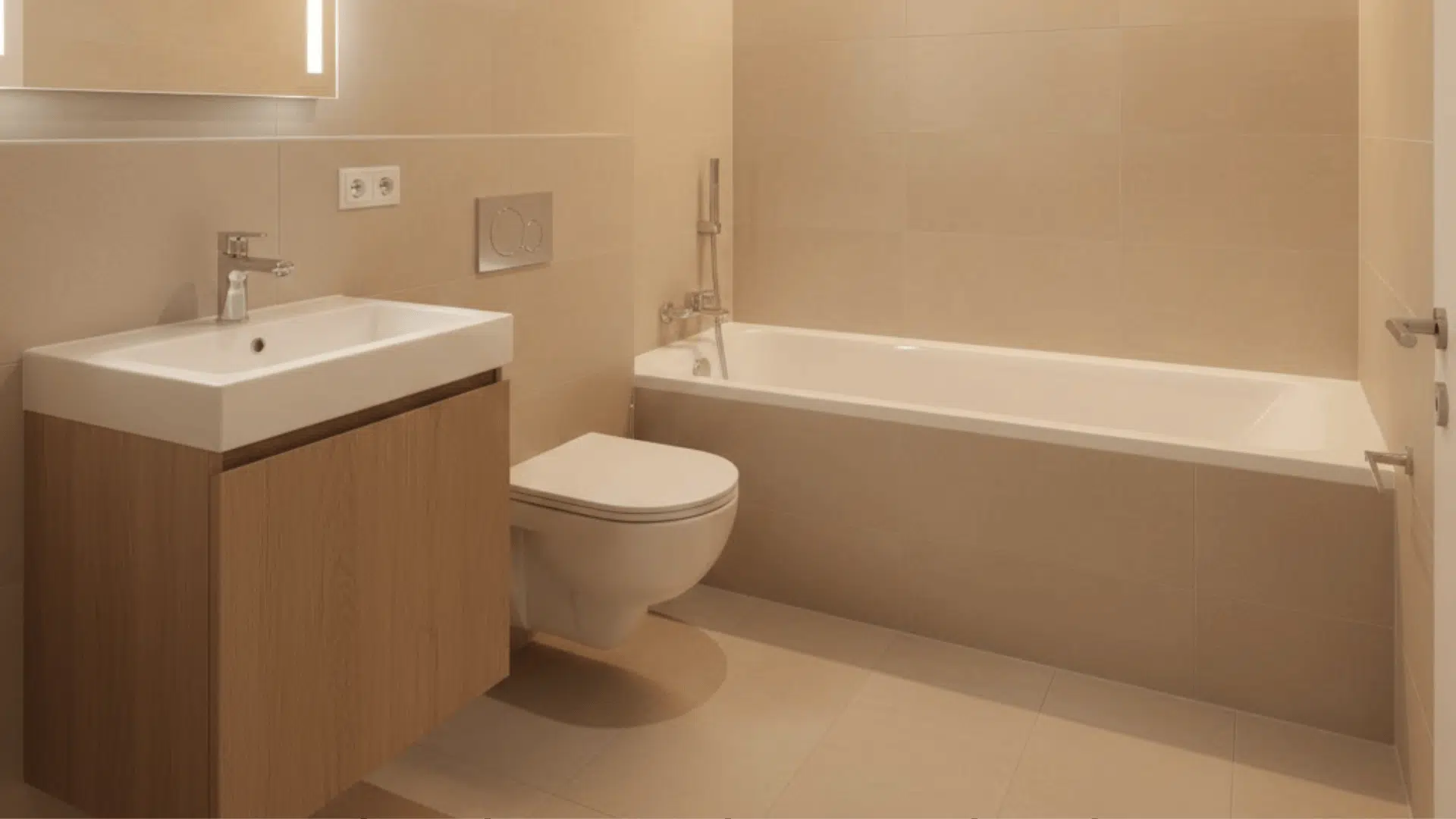
A smaller tub gives you just enough bathing space without eating the whole wall. Pairing it with a compact vanity keeps the room balanced.
It’s a good setup when you need a tub for kids or guests but still want the bathroom to feel open enough to move around comfortably.
19. Walk-In Shower with Simple Glass Panel
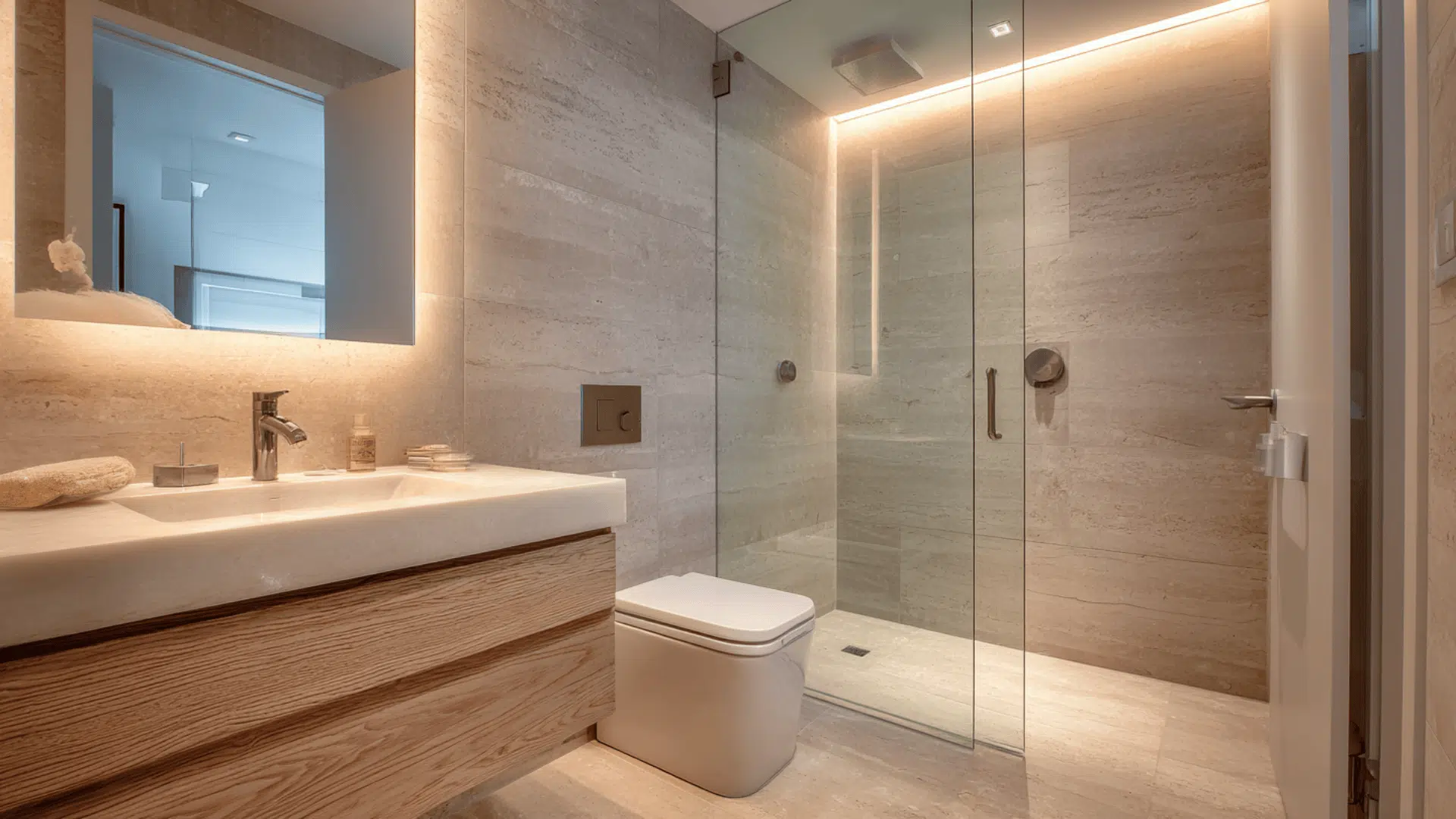
Dropping the tub and adding a walk-in shower instantly frees up space. A single glass panel keeps the room open and avoids the boxed-in feeling that small bathrooms sometimes get.
It’s clean, it’s modern, and it gives you more room to breathe without changing the footprint.
20. Tub-Shower Combo with Straight Vanity Wall
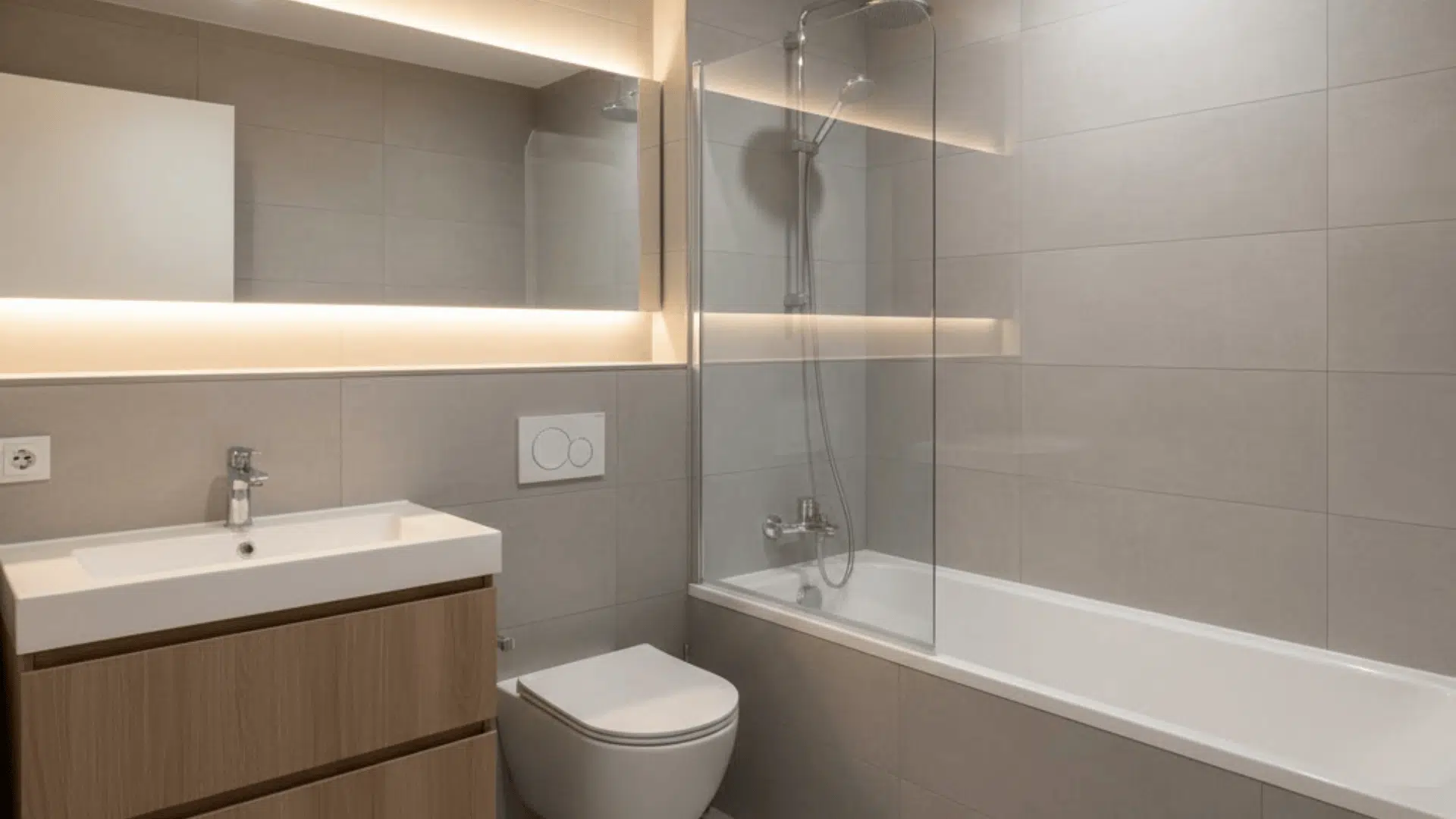
This keeps everything predictable. The tub-shower combo takes one full wall, and the vanity runs across from it with the toilet beside it.
It’s familiar and balanced, which helps the room feel steady even when the footprint is small.
21. Walk-In Shower with Built-In Ledge
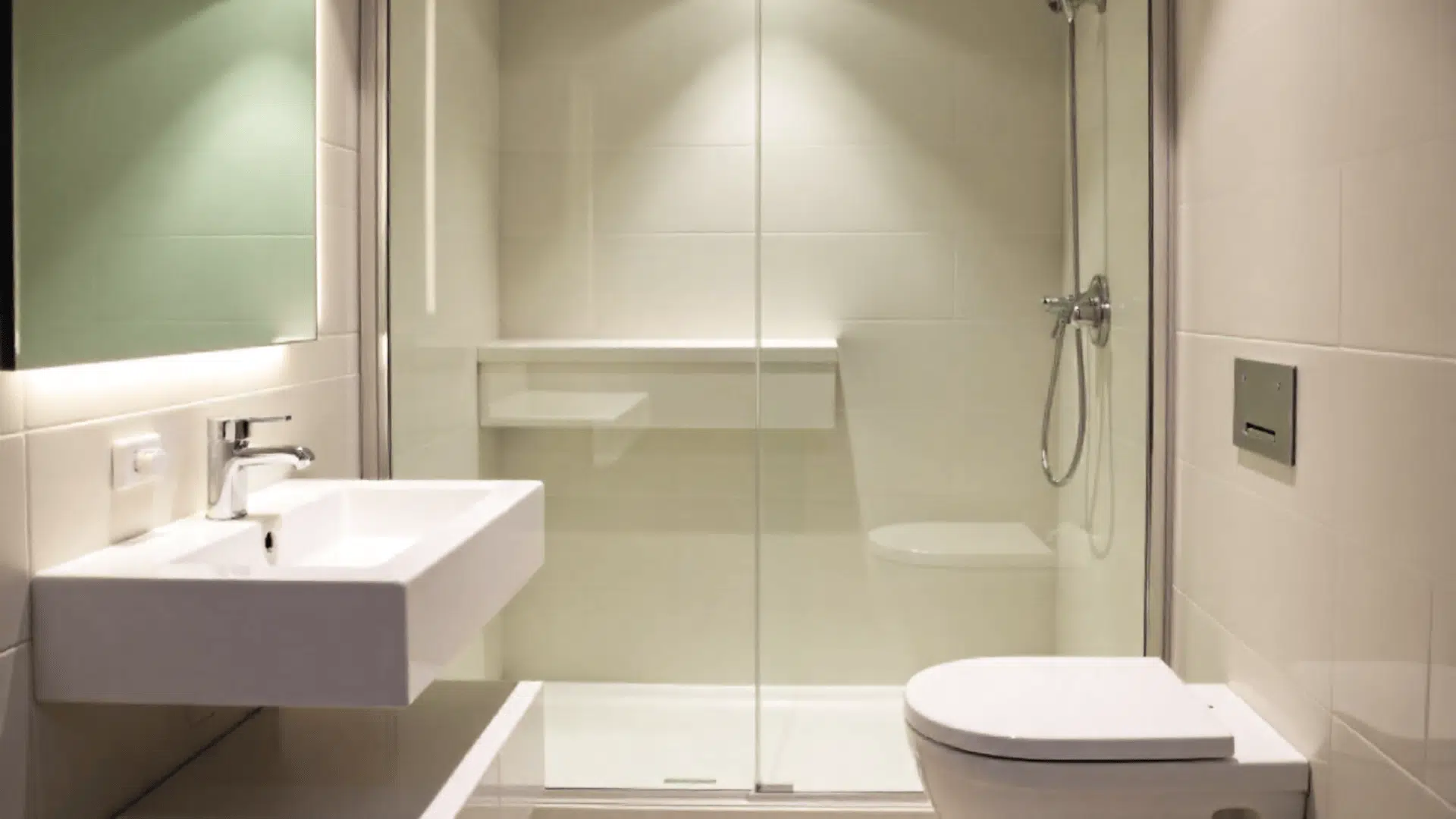
This layout drops the tub and uses a walk-in shower with a low built-in ledge along the wall. It gives you a spot for shampoo without adding bulky shelves.
The toilet and vanity sit in a clean line outside the shower area, so the whole setup feels simple and open.
Space-Saving Ideas that Actually Work
When a bathroom feels tight, the fixes that work best are usually the simple ones. Here are five high-impact moves that make the most difference:
- Vertical space solutions: Tall shelving, stacked cabinets, and storage above the toilet pull the eye upward. It makes the room feel taller instead of boxed in at eye level.
- Glass doors for openness: A clear shower panel removes visual barriers and lets the whole room stay bright. The space feels wider right away.
- Floating vanities to show the floor: Lifting the vanity off the ground exposes more flooring, which tricks the room into feeling bigger without changing the footprint.
- Large-format tiles to reduce clutter: Bigger tiles mean fewer grout lines. The walls and floor look smoother, and the bathroom feels more open.
- Built-in wall niches: These add storage without sticking out into the room. Everything stays within the wall, which keeps the walkway clear and the visual weight low.
These give you the most room for the least effort, and they work in almost any small bathroom shape.
Accessibility Tips for Small Bathrooms
When you’re trying to keep a small bathroom both accessible and comfortable, the goal is to make the space work without complicating the layout. It’s all about small adjustments that support balance, movement, and safe entry points.
1. Grab Bar Placements
Put grab bars where the hands naturally reach. One beside the toilet helps with sitting and standing, and another along the shower or tub wall gives steady support when turning. The bars should feel solid, not temporary.
2. Minimum Clearances
A little open space goes a long way. About thirty inches of clear path makes turning easier, and keeping the area around the toilet open avoids awkward angles. The whole idea is smooth, natural movement.
3. Shower Entry Modifications
A low-threshold or curbless entry keeps the shower easy to step into. Add a sturdy handle near the opening, and include a small fold-down bench if someone needs to sit. A wide, clean entry makes the shower feel safer and more usable.
Bottom Line
Wrapping up a tight space takes a little planning, but once you understand how the room moves, it’s easier to build something that feels comfortable every day.
You’ve got layout choices, simple storage moves, and a few tricks that help the room feel open without touching the walls.
The real win comes from paying attention to how you use the space, not just how it looks on paper. When you take that approach, even a small bathroom layout can feel smoother and more practical.
If you want more ideas to level up your space, check out the other guides on the site and keep the inspiration rolling.