Managing crew schedules across a logistics operation sounds straightforward until the
scale kicks in. Driver callouts, last-minute route changes, compliance requirements –
what starts as a spreadsheet problem quietly becomes an operational one. This piece
looks at where scheduling typically breaks down in freight and what actually helps.
A dispatcher I spoke with last year described her Monday mornings like this: she’d come in at 5 a.m., pull up the spreadsheet, and spend the first 45 minutes just figuring out who was actually going to show up. Not who was scheduled – who was going to show up. Two drivers out sick, one unreachable, one who switched shifts with a colleague but forgot to tell anyone. By 6 a.m. she’d already made six calls and reshuffled three routes.
That’s not an unusual story in freight. It’s almost the default for mid-size logistics operations that grew faster than their scheduling systems did.
The Gap Between a Schedule and Reality
Most logistics companies start with a spreadsheet. It works fine at 20 drivers. At 60, it starts to crack. At 120, it’s basically a shared document that no one fully trusts anymore.
The core problem isn’t the spreadsheet itself – it’s that a spreadsheet is static and logistics isn’t. Drivers call out. Routes change. A truck goes in for maintenance and suddenly the whole cascade shifts. Whoever manages scheduling ends up spending more time updating the file than actually planning coverage.
What makes it worse is that the gaps don’t always show up until the morning of. By then your options are expensive: overtime, outside contractors, or a delayed pickup. None of those are free.
Compliance Adds Another Layer
HOS regulations, rest period requirements, split-shift rules – compliance in logistics isn’t optional. But tracking it manually across a rotating crew of drivers is genuinely hard. You need to know not just who worked, but when they last rested, how many hours they’ve accumulated across the week, and whether a particular assignment would put someone over a limit.
Most spreadsheet-based systems don’t catch these conflicts until after the fact. And “after the fact” in a regulated industry means paperwork, fines, or worse.
There’s a category of tools built specifically around this – platforms that handle workforce management for logistics teams, where the scheduling layer is built with shift compliance in mind from the start. The appeal is less about automation for its own sake and more about not having to manually cross-check every assignment against hours worked.
The Data Problem Nobody Talks About
Even companies that have moved past spreadsheets often struggle with one thing: they don’t have clean data on how their crews actually performed. They know what was scheduled. They don’t always know what happened – who clocked in late, which routes ran short, where overtime crept in.
That gap matters more than it seems. Without reliable hour-by-hour data, you can’t spot patterns. You can’t tell if one depot consistently runs into coverage issues on Thursdays, or if a particular shift configuration produces more callouts than others. You’re always reacting, never adjusting in advance.
Good scheduling tools connect to attendance and clock-in data so you’re not running two separate systems. If you’re looking at how to actually close that loop – pulling shift records together into something readable – there’s a useful breakdown on tracking driver hours and analyzing shift performance that gets into the practical side of setting that up.
When Drivers Work Across Multiple Sites
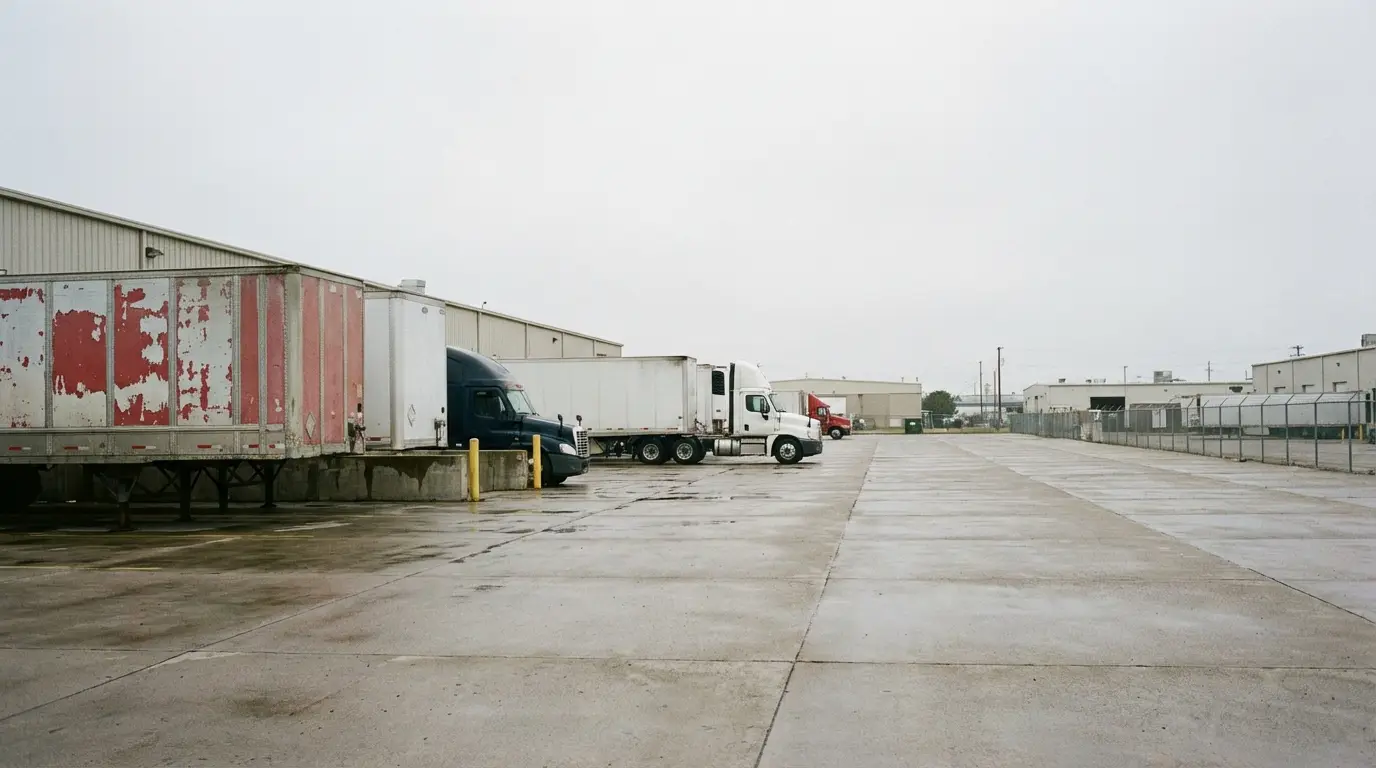
Single-depot operations are one thing. A lot of mid-size freight companies run two, three, sometimes five locations – and that’s where scheduling complexity multiplies fast. A driver based out of one hub might cover routes for another. Temporary reassignments happen. Seasonal surges hit some locations harder than others.
Coordinating this manually means someone is always making calls, sending texts, or updating a shared file that’s already out of date by the time the next person opens it. The scheduling problem at one location is manageable. Across five, it’s a full-time job just to keep the picture current.
Multi-site operations are actually where digital scheduling tools show their clearest value. Managers at different locations see the same data. Availability is visible across depots. A driver willing to pick up a shift at a neighboring hub can flag that themselves rather than waiting to be asked.
What Actually Changes When You Fix This
The dispatcher I mentioned earlier eventually moved her team to a proper scheduling platform. The first thing she noticed wasn’t some dramatic efficiency gain – it was that she stopped dreading Monday mornings. Availability was updated in real time. Shift swaps required approval and got logged automatically. She could see at a glance who was available for a last-minute route without making six calls first.
That shift – from reactive to visible – is what most operations are really after. Not a dashboard for its own sake, but a system where the information you need is already there when you need it. Fewer calls. Fewer surprises. Less time spent reconstructing what happened after the fact.
For larger freight operations, the savings can be quantified: less overtime, fewer last-minute contractor hires, lower administrative overhead. But the less-discussed benefit is operational confidence. When your schedule reflects reality instead of lagging behind it, decisions downstream get easier. Dispatch gets easier. Route planning gets easier.
Logistics is a margin business. The companies that do it well tend to have very tight control over the parts they can control – and crew scheduling is one of those parts.